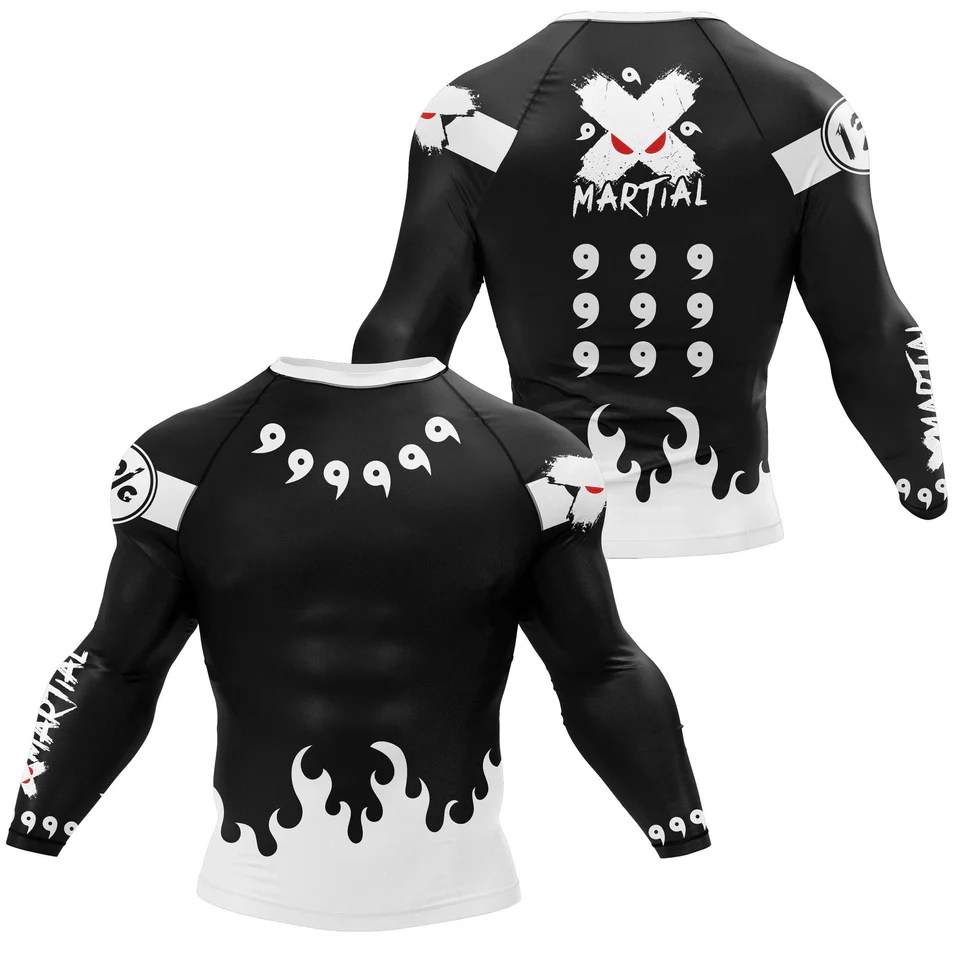
I’m pleased to announce I’m partnering with XMartial for BJJ and general gym-wear clothing. I’ve gone with XMartial because they have a genuinely fun range of designs, and also their website is full of people I actually recognise from the world of BJJ, like John Danaher, Jordan Preisinger from Jordan Teaches Jiujitsu, and B-Mac. Plus, its Reddit customer reviews for quality and shipping to the UK are good and the customer service is highly rated.
Shipping in the US is free, but there is a small $9.50 for shipping to the UK. There are lots of different designs, and XMartial sell gis and hoodies too. So, if you’re looking for new, high quality, BJJ wear and you want to support The Tai Chi Notebook then head over there and have a look at what they’ve got. Thanks!
You can think of the Tai Chi form as an exercise in claiming your space. We rarely think of the space we occupy or move around in as part of ourselves, but it is. We often let others take our space, or give it away needlessly. We move out of the way when people walk towards us in the street. Rarely do we stand our ground and own the part of the earth that is directly underneath us.
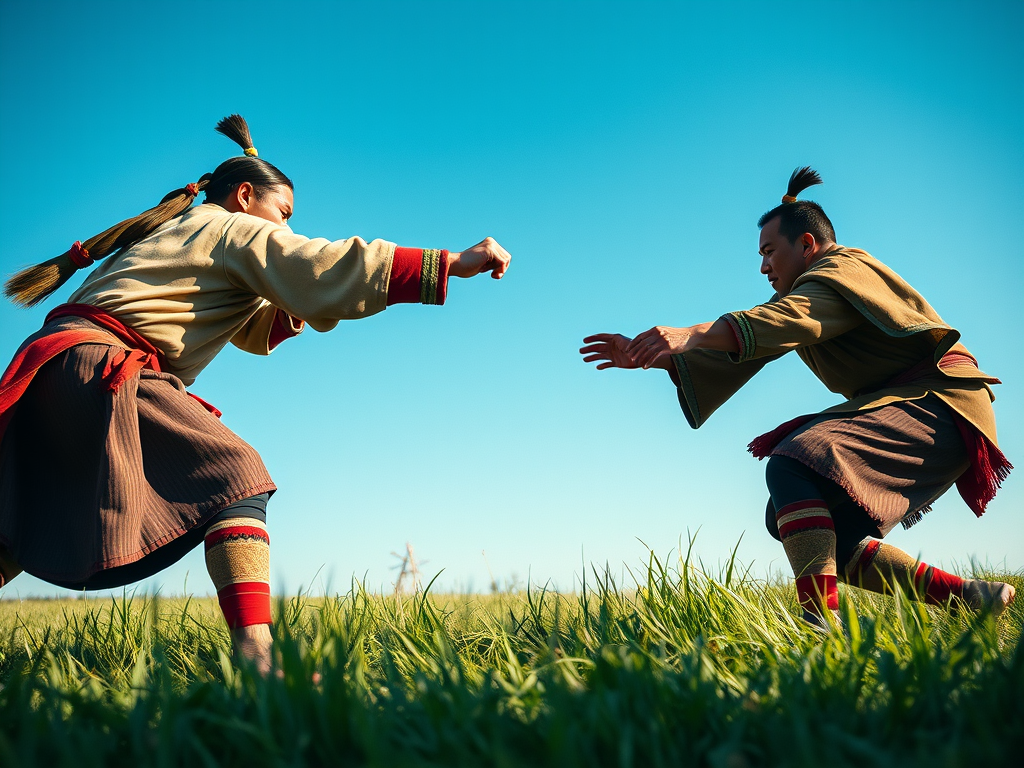
In tai chi push hands we learn to claim our space, to gently redirect people that want to come into it and also to take away other people’s space if we need to, and not let them get it back. In the tai chi form we learn to round out our movements, so that (as the classics say) there are “no hollows or projections” in tai chi. Your goal is to create a kind of sphere with your body, as if you were inside a giant beach ball. Your hands extend to the limits of the ball, and no further.
Finding your centre
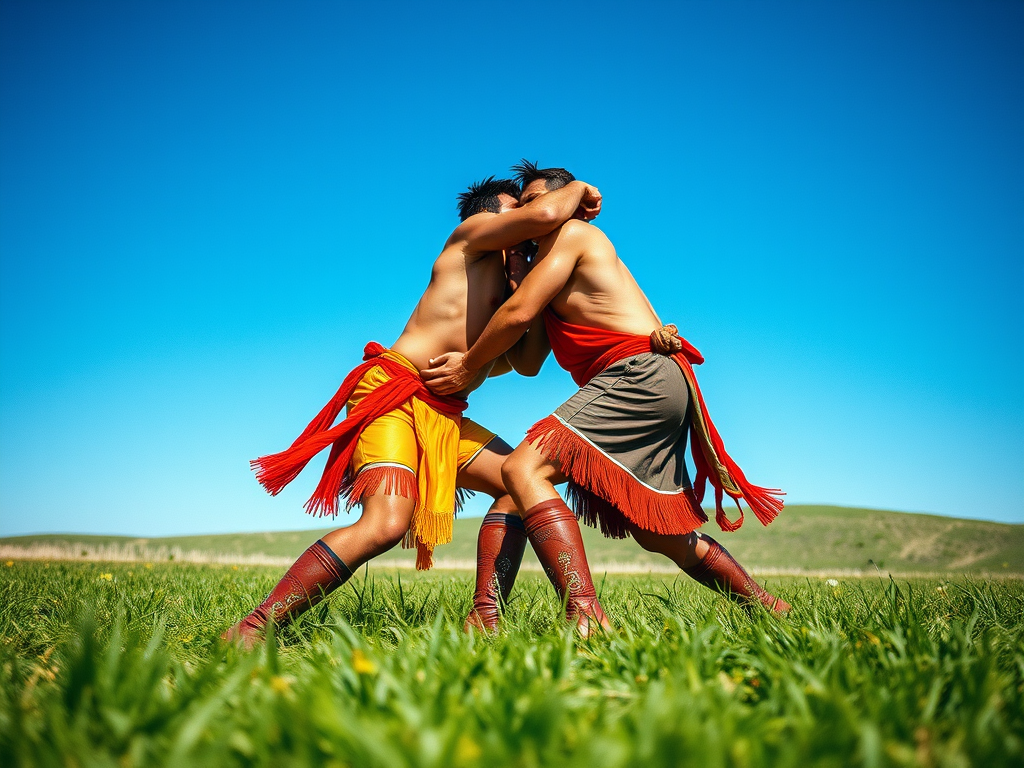
In tai chi there is ‘finding your centre’ within yourself, but there is also ‘finding your centre’ when in contact with another person. When two people are in contact, especially if engaged in some form of conflict, they are rarely both in balance, usually the advantage lies with one person or the other. The one in control is usually the person who has made both people part of their ‘centre’. Viewed from above, they become the centre of the circle, around which the other person is orbiting.
In class today I was working on the ward-off posture. I think by far the best way to think about ward off, as a martial posture, is to think about having just slipped a straight punch over your right shoulder by moving your head and turning your body to your left, you then step diagonally into the space occupied by the other person, right under their armpit using the familiar ‘ward off’ posture to keep them off balance. You need to keep that full, rounded, ‘peng’ aspect to your arms here, and once you have them off balance, you never retreat or give up the ground you’ve taken. If you do then you’re simply giving them their balance back. You need to keep them off balance continually, so that they can’t recover and they end up open to strikes or to being knocked over.
That ability is one reason why, while strikes exist in Tai Chi, they’re not really emphasised in the form. Instead, in the form you’re continually learning how to take ground from the opponent and occupying it while remaining in balance. As a means of self defence, it is highly effective, but not easy to understand without feeling it, which is another reason why so many people are confused about how Tai Chi works as a martial art.
Thank you for supporting The Tai Chi Notebook. If you are reading this on a website that isn’t thetaichinotebook.com, then it’s highly likely it’s been stolen. Please let me know so I can issue their webhost a DMCA takedown notice for copyright breach. Thanks.And if you have the great idea of starting a tai chi website by stealing other people’s work to fill it with content for clicks then take a good hard look at yourself, and do better.
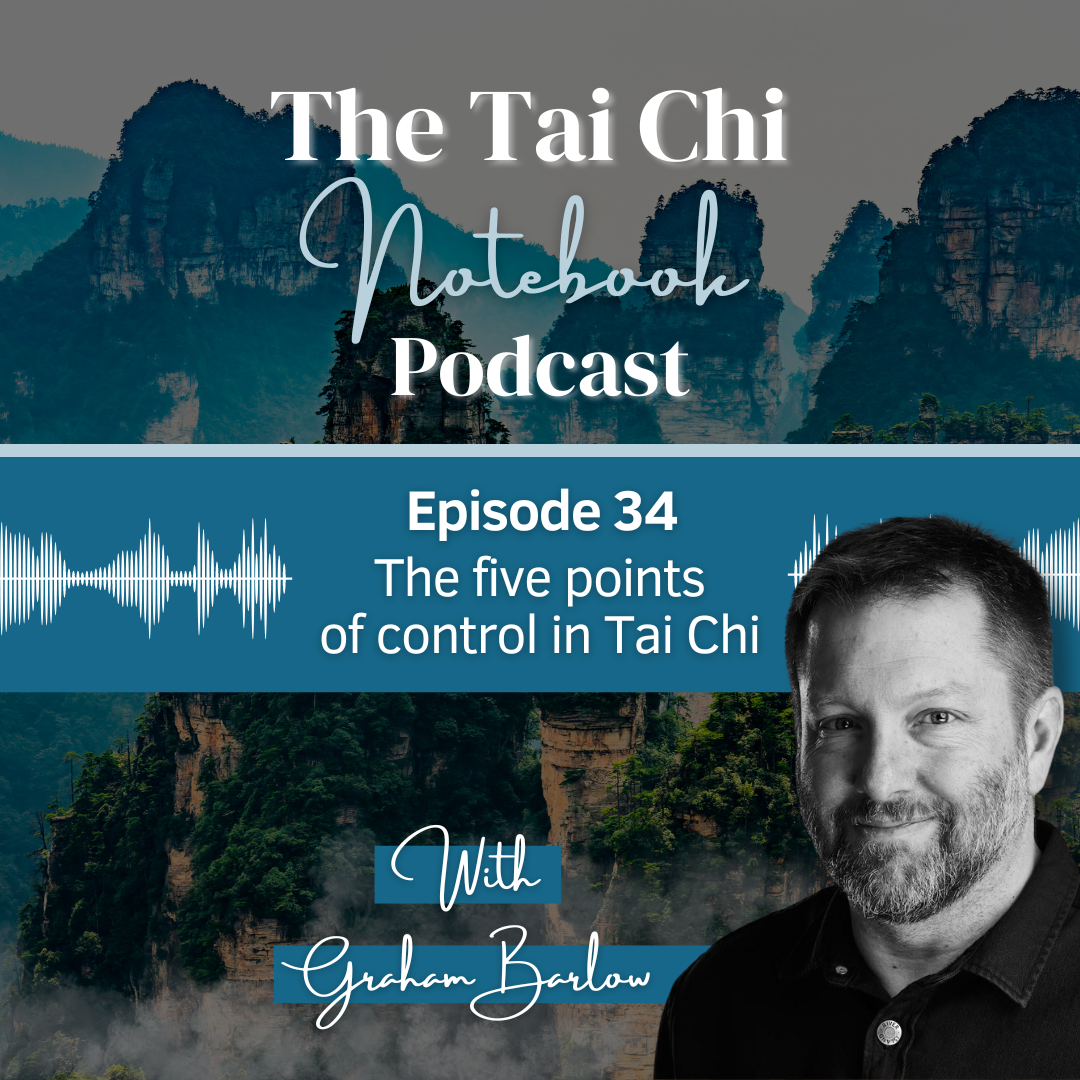
The latest episode of my Tai Chi Notebook podcast is slightly different to a regular episode. There isn’t a guest, but that doesn’t mean I’m entirely alone…
This episode is brought to you using the power of artificial intelligence. I fed a recent blog post about the Five Points of Control into Google’s NotebookLM, an AI that produces a podcast based on your article, just to see what would happen and the result was so good that I decided to put it out as a real episode!
I came across an interesting video by Ed Hines of i-Bagua.com recently that discussed some general principles of throws and takedowns. There is some good information here, especially about dead angles, and base. Have a watch:
Of course, in my ear I can hear my BJJ friend saying it’s all nonsense, “why not just do wrestling?”, or “he’s doing zero hand fighting!”. My friend tends to think that everything you can know, or ever want to know, about throwing and standup grappling is already inside wrestling.
He probably has a point, and a lot of the clever ‘internal’ things that Tai Chi teachers demonstrate are really just found in wrestling basics, or are obvious if you do wrestling. But here’s the thing – not everybody wants to do wrestling or even can do wrestling! It’s time-intensive hard, physical work, from which you will probably get injured, and, frankly, it’s for young people, not anybody over the age of 30. Not to mention that you’ll also need to invest in a good quality BJJ mat for grappling training.
If you’re going to approach takedowns without having the time or energy required to learn wrestling, then you’re going to need a softer approach. Oh, hello internal arts.
How to defend everything
I wonder if you’ve ever seen the video “how to defend everything” by Chris Paines on YouTube? (It won’t embed, so I’ve had to link it). It’s about BJJ, not internal arts, and focused ground work, not standing, but those principles he’s expounding, I feel, are universal to all grappling, and they’ve really changed my approach to takedowns. It’s also very simple. Simple is good – simple is practical.
At 50 minutes it’s quite a long video, and some of the important points don’t happen until near the end, so I’ll give you a quick summary: In a nutshell, there are 5 parts of the human body that you need to access in at least one place to achieve a throw or takedown.
Part 1. Back of the head, Parts 2-3. Armpits and Parts 4-5. Back of the knees.
(back of knee area extends down to ankle, armpit area extends down to hip).
When I do takedowns I just keep looking to insert a part of my body (arm/hand/foot/head/whatever) into one of those places. I just keep spamming it as an attack. If you keep doing that then eventually you manage to ‘own’ one of those places and a takedown will sort of present itself, especially if you get more than one.
You can analyse any throw on YouTube and you’ll find that the person who did the throw got some part of their body into at least one of those places to make it happen. Now, that might mean that the model being used is too general (i.e. it covers a lot of the body!), however, I think it’s still a useful model if you want to work on defence (which people rarely do!)
If you’re doing some grappling and you get taken down, then replay what happened in your mind – you will have let your opponent into one of the 5 spaces for too long. Long enough for them to get a takedown on you. The answer to preventing the takedown then becomes about reclaiming control over those 5 points of your body, rather than trying to do some sort of pre-scripted counter to the throw.
N.B. You can look at standing on the foot as a possible exception to these rules, however… that doesn’t tend to work in a pure grappling environment, unless you also get one of the other 5 as well. Standing on a foot and striking somebody however is a different beast – it’s much more effective. It’s the same with standing wrist locks… they can work, but 9 times out of 10 they won’t – i.e. they are very low percentage, and almost certainly don’t work against experienced people. Your time is better spent trying to get one of the 5 control points. (Apologies to Aikido 🙂 )
N.B. 2 – But what about the gi or wrestling jacket? Well, think of it this way, a collar grip is simply a very effective lever to the under armpit area, so when you grip the collar, you are effectively cheating because it’s giving you easy access to their armpit area. It’s why, when we go for chokes we grip deep on the collar, under the ear, but when we go for throws we tend to grip much lower down, so that the lever to the armpit is stronger.
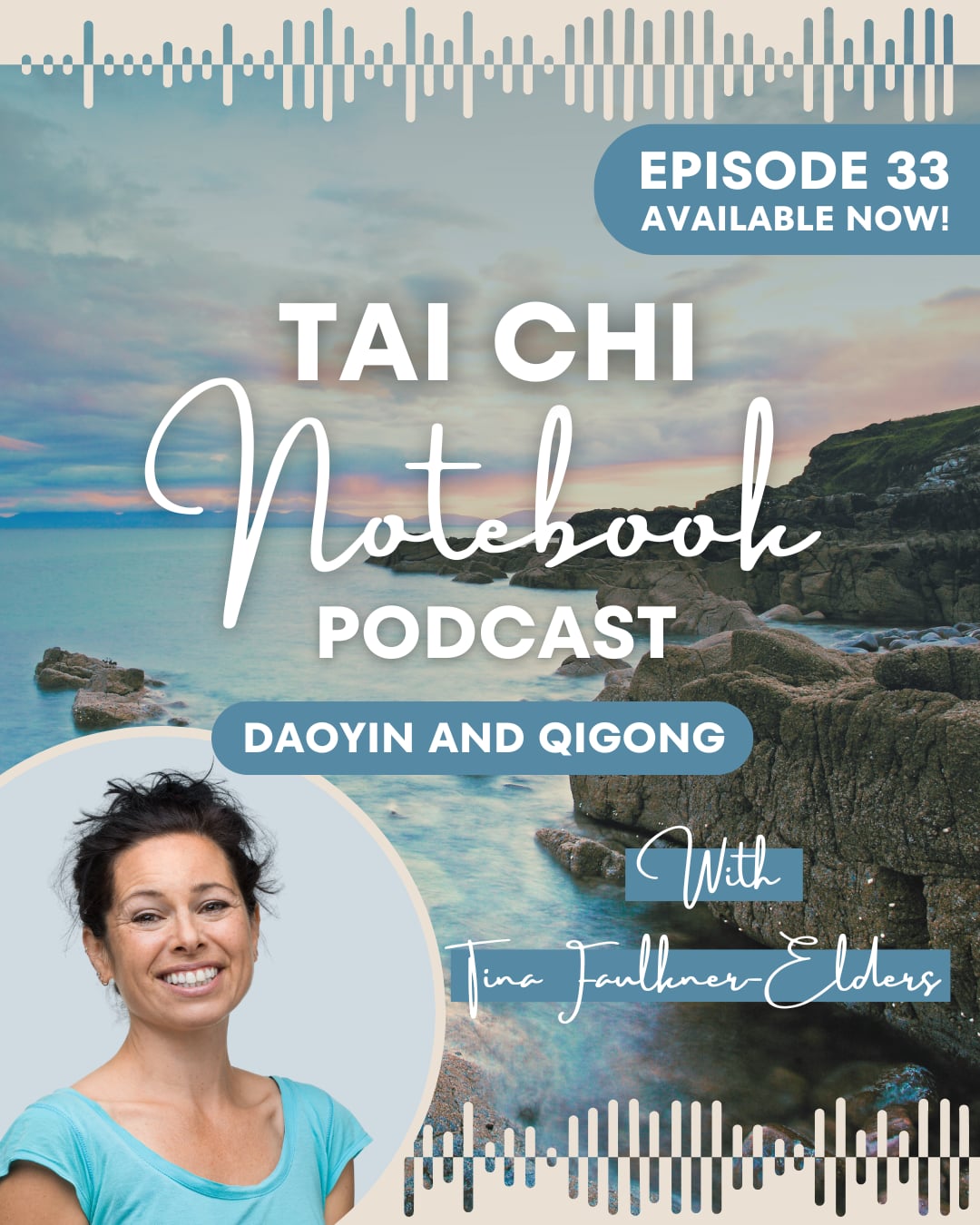
My guest for the latest episode of The Tai Chi Notebook Podcast is Tina Faulkner Elders, chief instructor of the RuYi School of Taijiquan and Qigong in Aberdeenshire. We talk about Tina’s training in qigong, first with her father, then in Beijing, China, and then on Wudang mountain itself, the legendary home of Taoism.
Paying attention to your inner thighs can bring better structure and a feeling of power to your tai chi form
If you’ve read my last post about keeping the knees bent during tai chi practice, and most importantly can do your whole tai chi form without violating this principle, then the kwa (inner thigh) is a good thing to focus on next.
Quite often in Zhan Zhuang chi kungstanding practice we use the imagery of balloons supporting various parts of the body. You can imagine balloons supporting your arms, under your armpits and that you’re sitting on an imaginary beach ball. Balloons are soft but strong when pressured, so they’re a good image to help with the idea of staying relaxed and that feeling of springy peng (‘bounce’) energy that needs to be in the body during tai chi.
We don’t tend to use the supportive balloons imagery when explaining tai chi because it’s a moving practice, so the imaginary balloons would inevitably float off at some point! But you can still use the imagery in a couple of places – imaging balloons under the armpits and one held between your thighs that is gently pressing the knees outwards is a good place to start.
The kwa needs to be kept open at all times in tai chi practice.
One of the things beginners often fail at in Tai Chi is sufficiently rounding the kwa. By kwa I mean the area of the inner thigh and groin. I’ve been told that this area is more correctly called the dang in Chinese, but kwa/dang/whatever, I mean the arch formed by the inside of the thighs and containing the pelvic floor. As I’ve discussed before, beginners tend to want to straighten their legs, rising everything up in their stance, which has the effect of collapsing this kwa area, so that it effectively closes as the thighs move together.
In tai chi we always want to maintain the feeling that we’re holding a small balloon between the thighs so that this area is always rounded. Of course, there is opening and closing going on in tai chi all the time. As you progress through a move, one side of the kwa is opening and the other is closing, but regardless of any opening and closing movement that is going on, you need to keep a general feeling of openness in the whole area throughout the form. Even in postures where the feet are together. If you stand with your legs together, then that is considered a closed kwa, but in tai chi that area always has the feeling of being open – even when the legs are together.
You might find that last statement confusing, but it’s helpful to remember that in tai chi we are not performing an exact science, but we are dealing with feelings. The feeling of being open is what I’m talking about.
The last thing to mention is the why. Why do you need to do this? That’s where you need a teacher to give a demonstration of the application of tai chi against a simple push. With the kwa rounded you create a good base from which you can receive and launch attacks. When pushed, you can use that base the rounded kwa gives you to receive and then bounce away an attacker. If your kwa collapses when your upper body is pressured then you can’t do this without using a lot of effort and strength in the upper body. In tai chi this is wrong. Using your legs is always a better way.
Thank you for supporting The Tai Chi Notebook. If you are reading this on a website that isn’t thetaichinotebook.com, then it’s highly likely it’s been stolen. Please let me know so I can issue their webhost a DMCA takedown notice for copyright breach. Thanks.And if you have the great idea of starting a tai chi website by stealing other people’s work to fill it with content for clicks then take a good hard look at yourself, and do better.
As you age your hips definitely get less flexible. If you do BJJ as well, like I do, then the wear and tear seems to add up exponentially, which is why I’m always interested in mobility routines for the lower back and hips, and I think I’ve found one I really like.
“The main goal here is to get comfortable with “uncomfortable” positions by re-searching them on a daily basis. Ideally first thing in the morning, or as a warm up to your practice. Note: A mobility sequence will not necessarily improve your mobility permanently, but is mostly useful for opening up your normal range of motion by releasing unnecessary tension. For more specific mobility issues, you need more specific and targeted practice”.
A lot of these movements remind me of Yoga for BJJ by Sebastian Brioche, which is no bad thing. I like the way the set it put together, and it makes my hips feel great afterwards. It seems to target all the right areas for me. I could see myself running through this each morning.
Have a go (N.B. consult your doctor first, you do so at your own risk, etc) and let me know how you get on!
Thank you for supporting The Tai Chi Notebook. If you are reading this on a website that isn’t thetaichinotebook.com, then it’s highly likely it’s been stolen. Please let me know so I can issue their webhost a DMCA takedown notice for copyright breach. Thanks.
Change from being ‘stuck’ in your form to smooth, effortless movements.
People often say that Tai Chi is a moving meditation. But what does that really mean?
I can think of two distinctively different ways of mediating (there are others, too). One is to focus on an object exclusively. This is a type of concentration-based meditation. Your goal is to keep that object in your mind so that other thoughts can’t intrude. The other is an awareness-based meditation. Instead of focusing on one object, you have an overview of everything going on: you, what you are doing, and the space you are in, and you try and maintain that open awareness without getting distracted. If something comes up you notice it and let it go, returning to the awareness.
An awareness mind, reflected in nature.Photo by Noelle Otto on Pexels.com
In Tai Chi we want the second type of practice. When you’re are a beginner, learning the movements, you are akin to somebody learning to drive – it feels like there’s too much to do at once. Your mind is completely occupied by what you are doing and there’s no room for anything else. The more experienced Tai Chi player knows the choreography of the form, they know what’s coming next, and they don’t need to be in the movement so much. They can afford to step back and take a more general view of the activity.
If you’re in the more experienced camp on your Tai Chi journey, then try this the next time you do your form: imagine that ‘you’ are in your head, watching yourself do the form. You can be aware of yourself, your movements, your breathing and the space around you simultaneously, without getting ‘stuck’ in any one of those things. You’re just watching them happen.
I went to see an Alexander Technique teacher for lessons once and she told me to imagine a stage, with every element that’s happening to you and around you is on that stage. In normal every day life we have a spotlight on the one thing we are doing. In Alexander Technique, she said, we allow everything to be in the light. For me that made immediate sense. Maybe it will for you? It’s the same with Tai Chi. When doing the form, we need to expand our awareness to include everything that’s going on with us right now, and not get stuck in the one thing we are doing. It’s a bigger, more expansive feeling that leads to smoother, effortless movements.
In my training my Tai Chi teacher described something very similar to this as ‘man’ in Chinese, which translates as “slowness”, which is misleading since it wasn’t about moving slowly, it was about hanging in the moment without rushing. Rushing is often the thing that takes us out of the moment.
So, slow down, stop rushing, and when you’re doing the form allow yourself to mentally step back a little so you can be aware of everything that’s happening on your stage. For me the results of doing this are profound and immediate. It’s like a light bulb going on. It also feels like the release of a lot of mental tension you didn’t even know you were carrying. And it doesn’t need to be limited to the times you are doing the Tai Chi form. You can do it when you’re sitting down and having a cup of tea, watching TV, playing with the kids, or even ‘meditating’.
Some comments from Lao Tzu, in the Tao Te Ching come to mind:
“Do you have the patience to wait Till your mud settles and the water is clear? Can you remain unmoving Till the right action arises by itself?”
― Lao tzu
Thank you for supporting The Tai Chi Notebook. If you are reading this on a website that isn’t thetaichinotebook.com, then it’s highly likely it’s been stolen. Please let me know so I can issue their webhost a DMCA takedown notice for copyright breach. Thanks.
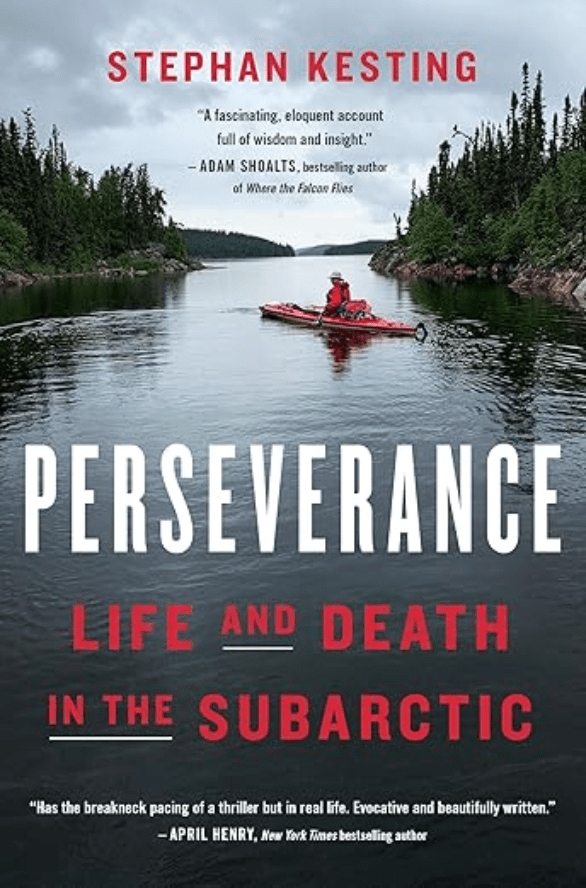
A while back, renowned BJJ instructor, Stephan Kesting, contacted me to ask if I’d like to read the draft of his new book, Perseverance, Life and Death in the Subarctic, and offer a few comments, mainly because he’d read my review of the BJJ book he co-authored with Brandon Mullins, and liked what I’d written and agreed with it. (I guess this time he wanted me inside the tent pissing out, instead of outside the tent pissing in 🙂 )
I accepted, of course. Not only because Stephan is a great guy, whose sensible comments on issues within the BJJ community have always made him a voice of reason in a community that very easily jumps on any passing conspiracy-fueled bandwagon that Joe Rogan happens to be peddling at the time, but it’s also an amazing story. Not long after a life-saving operation, Stephan single-handedly navigates various inaccessible rivers in the Canadian wilds overcoming obstacles that would defeat a mere mortal like myself on day one. We’re talking black flies, hunger, fatigue, exhaustion, map navigating, shifting rivers, fires, rationing, and not to mention encounters with dangerous wildlife – a herd of stampeding caribou and hungry bears in particular! It’s no understatement to say that Stephan had to dig deep inside himself to keep going at times and the book is packed full of the sort of wisdom you only get from facing life threatening situations and surviving.
Reading the book’s draft actually took me quite a while, a couple of months or more, since I made comments on most chapters, which Stephan said he liked. So, I’d like to think I’ve had a small part in shaping the eventual book. It’s a great story, and I think the finished book will be great. At the time the plan was for Stephan to self publish it, but since then he’s managed to get an agent for his book, which lead to a proper publishing deal, and even more edits and rewrites, and a cool new cover, and finally it’s going to be published. Now you can preorder the book on Amazon, and I’d recommend that you do, I certainly will be!
Thank you for supporting The Tai Chi Notebook. If you are reading this on a website that isn’t thetaichinotebook.com, then it’s highly likely it’s been stolen. Please let me know so I can issue their webhost a DMCA takedown notice for copyright breach. Thanks.



 The Tai Chi Notebook