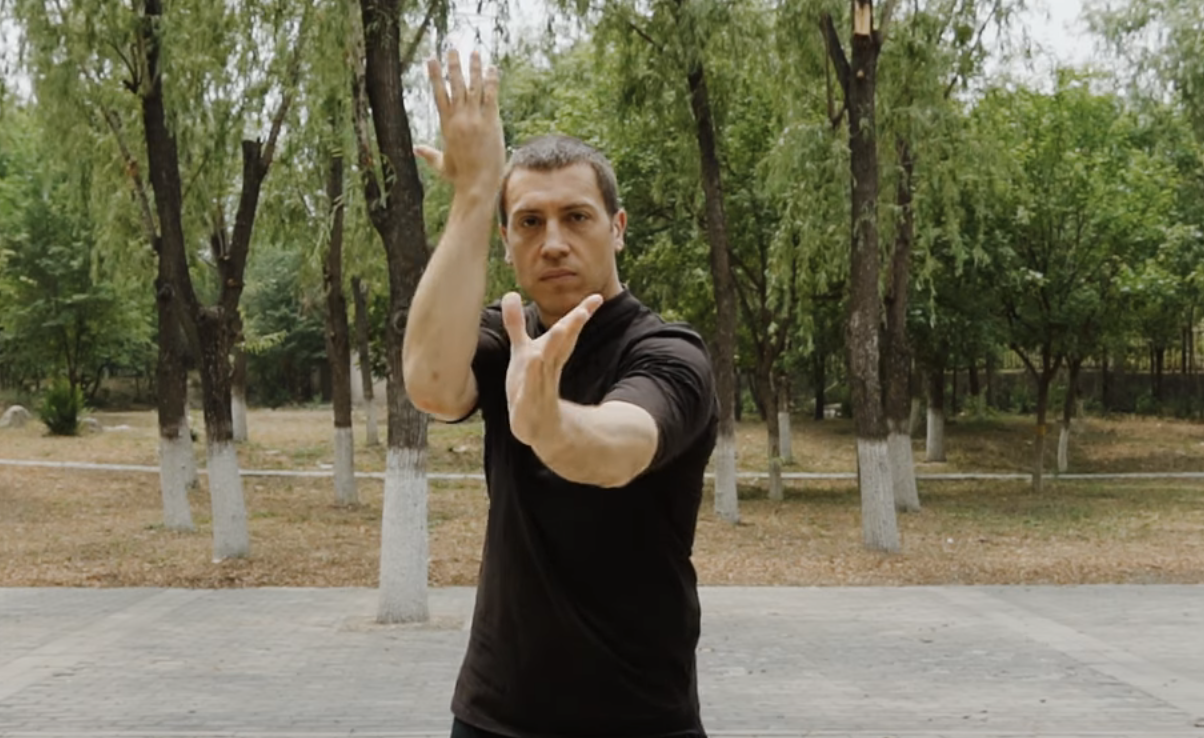
Jesse Kenkamp (AKA The Karate Nerd) has done another great video on tracing the roots of Karate. Here he is with White Crane practitioner Martin Watts in Yongchun, birthplace of White Crane, which is usually considered an ancestor style to Karate.
What I liked about this video is Martin’s no-nonsense teaching of what are generally thought of as internals in Chinese martial arts and shrouded in mystery (usually by westerners using Orientalism to sell books 😉 )
My point in posting this is that Martin covers “sinking the qi to the dantien” at 4.00 – what it is and, most importantly how what it is not is just as important.
I appreciate Martin’s simple, down to earth explanation.
We stand on the cusp of a major new martial arts movie release – Shang-Chi and the Legend of the 5 Rings. On it’s own this should be something I write about, but it’s also the last film that Jackie Chan’s prodigy, Brad Allen worked on before his untimely death at 48.
Australian choreographer, performer and stunt coordinator, Brad Allen, was the first non-Asian member of Jackie Chan’s stunt team. He was incredibly skilled – here’s a short sample of his wushu and athletic ability:
It’s not clear how Brad Allen died, but 48 is very young. RIP.
I haven’t seen Shang-Chi yet, but by all accounts it’s a Kung Fu film done right, that avoids all the usual stereotypes, and a good chunk of the film’s dialogue is spoken in Mandarin Chinese, which is then translated into English subtitles for audiences.
“As an Asian (Taiwanese) Australian, it is so obvious that the film was written through the lens of those who have a lot of love for Asian culture and have lived through the Asian experience,” wrote kabutocat on Reddit, starting a fascinating discussion about the English-language translations of Mandarin dialogue in the movie. “The Chinese lines are written so well that a lot of the times the English subtitles actually failed to convey the nuances behind each line.”
Shang-Chi’s origins lie in Marvels answer to the Kung Fu boom of the 1970s, with various Kung Fu-powered superheroes emerging, with perhaps Iron Fist being the post famous. The Shang-Chi comic was a product of its time and you can see orientalist tropes in its styling:
Shang-Chi was the first of the Kung Fu superheroes, and was designed to be the most gifted martial artist anyone had ever seen. He was trained in espionage, infiltration, assassination and more. But when he went on his first mission for his father, he broke his conditioning and dedicated himself to destroying his father’s criminal empire.
Here’s a breakdown of the film (warning SPOILERS).
Shang-Chi was the last film Brad Allen worked on, so let’s end with his excellent live performance with Jackie Chan on Saturday Night Live:
R.I.P – Brad Allan
One of the greats in martial arts and the first non-Asian member of the Jackie Chan stunt team.
Click the link above, or you’ll find it on iTunes, Spotify, or wherever you get your podcasts. Search for The Tai Chi Notebook.
Paul Bowman is a professor of cultural studies at Cardiff University. He’s the author of multiple books on martial arts, including several about Bruce Lee, and most recently, “The invention of martial arts: popular culture between Asia and America”, which was published by Oxford University press in 2020.
Paul also helped establish the academic journal Marital Arts Studies, and organised conferences for the Martial Arts Studies Research Network.
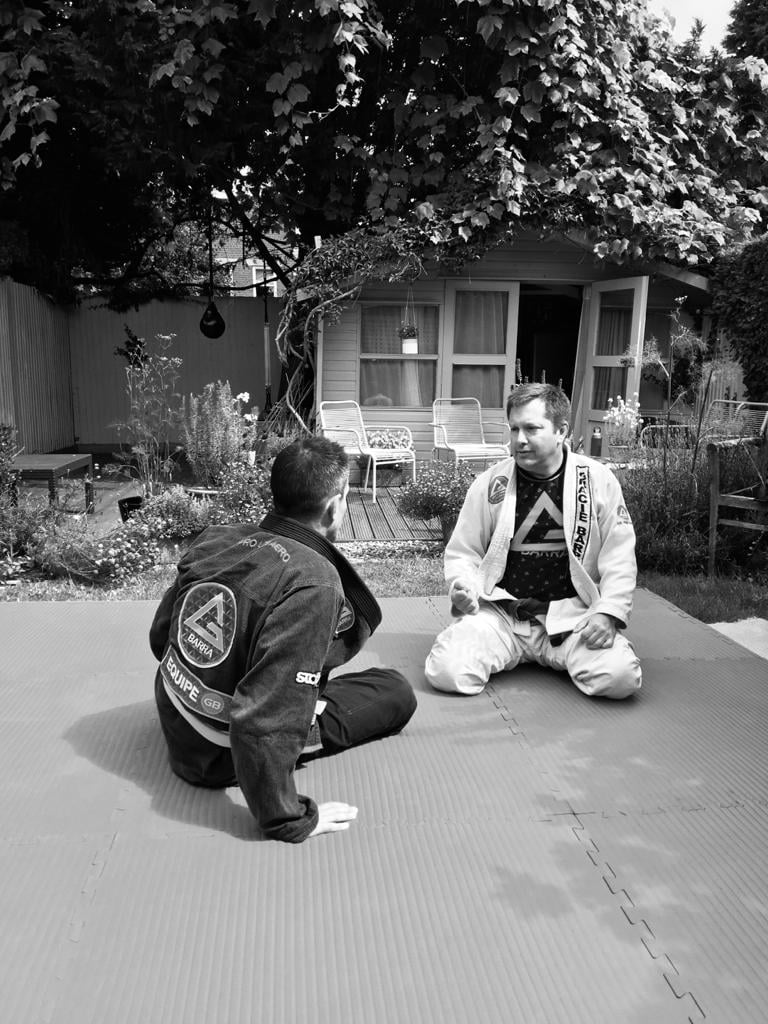
In this chat we reminisce about our times training together, talk about paul’s recent discovery of Brazilian jiujutsu and discuss the emergent field of martial arts studies.
In the last episode of the Heretics podcast we talked about Chinese wrestling – Shuai Jiao – but Damon also mentioned Manchu wrestling quite a bit. He described it, but you can’t get a proper idea of how it works without seeing it done, so let’s look a little closer.
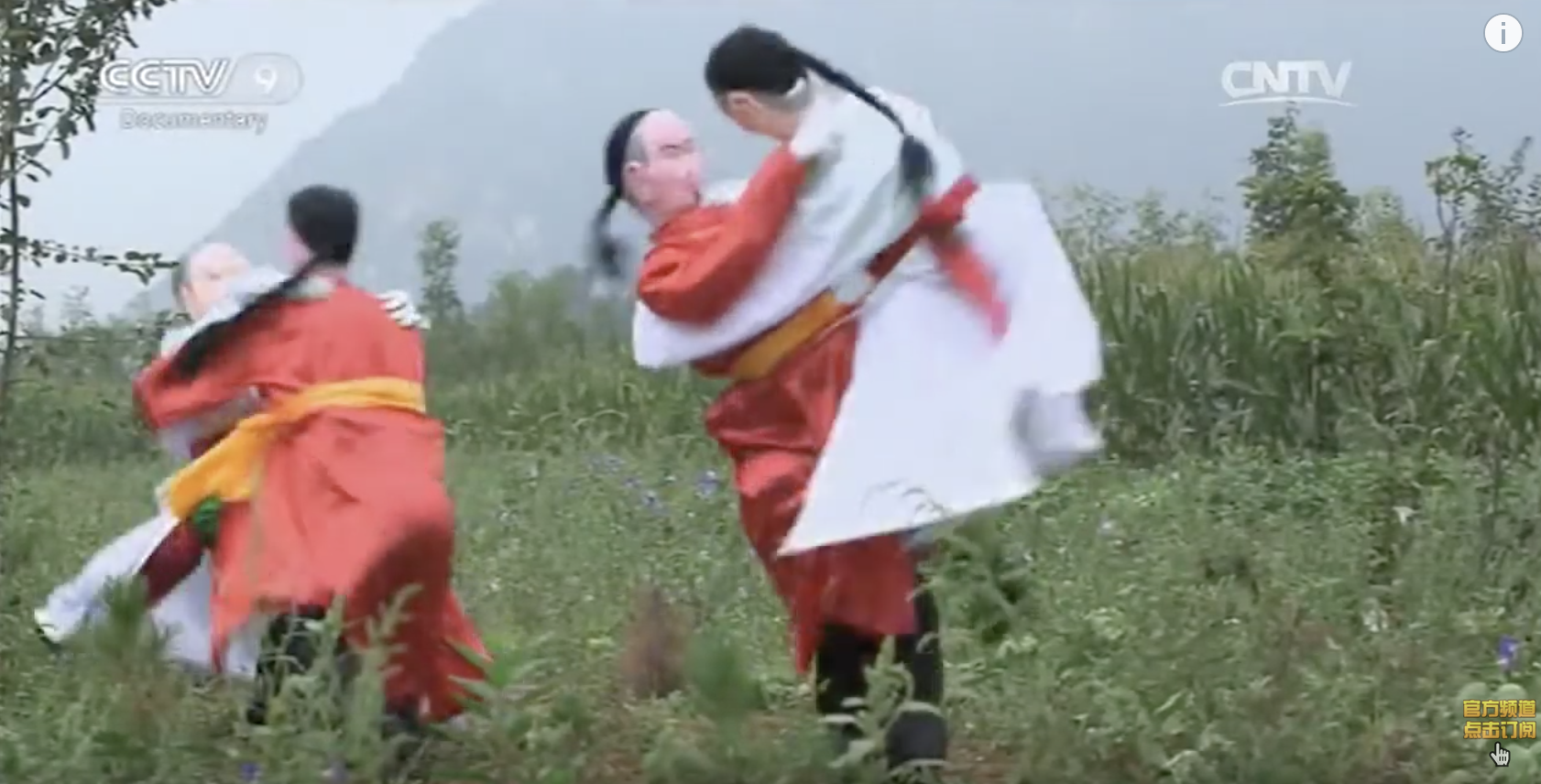
Manchu wrestling is a unique form of puppetry popular in certain parts of China where the participant wears a life-sized puppet of two wrestlers in a costume that turns ther legs and arms into both the puppet’s legs. Various wrestling maneuvers are then performed. The skill is to make it look like the two puppets are really wrestling and pulling off moves on each other.
To a western martial artist interested in only “learning how to defend myself” this might all look a bit silly, but if you watch this documentary you’ll see that there’s quite a lot to it:
There are so many things here worthy of note.
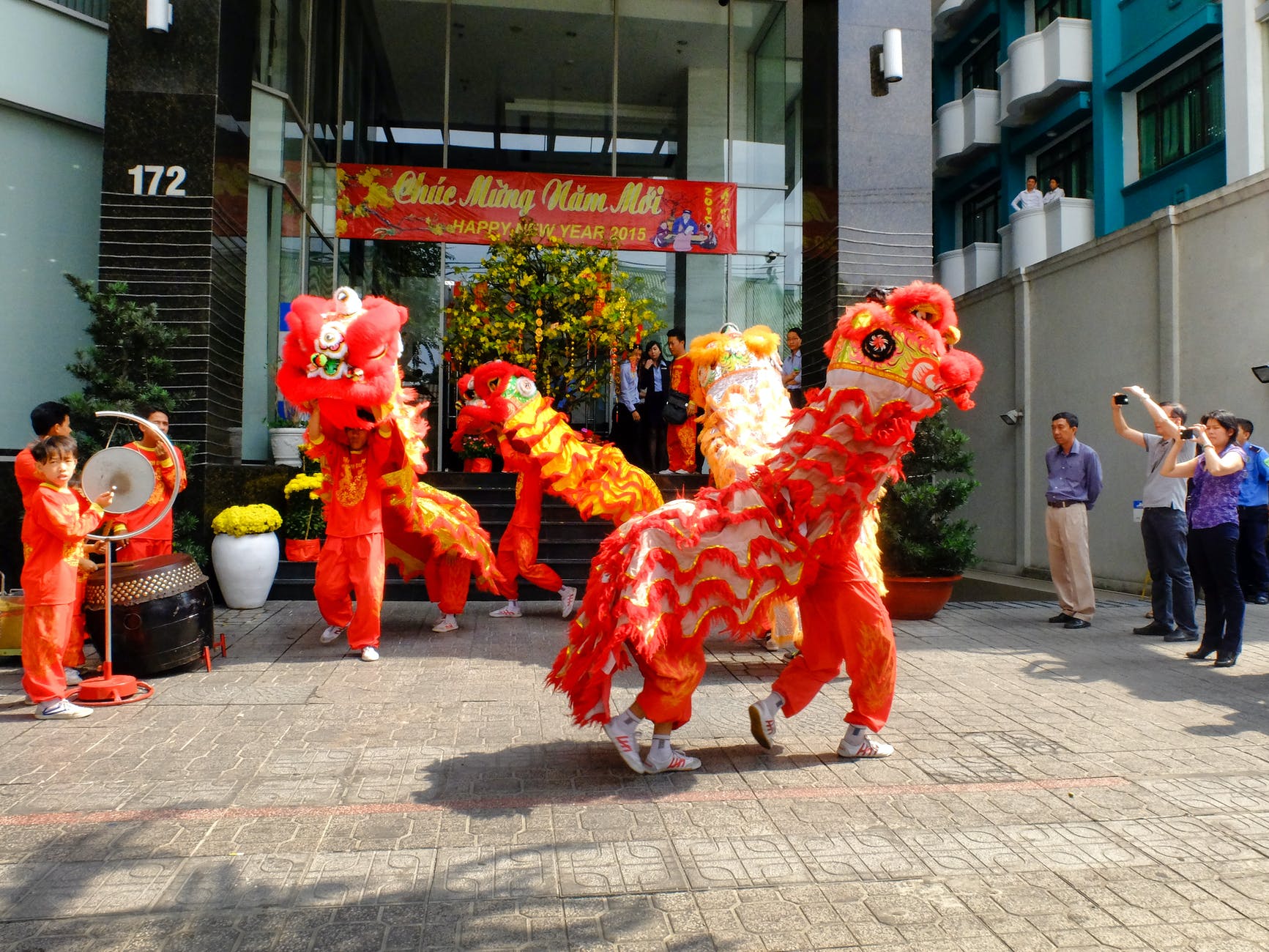
Firstly, the connection between puppetry and Chinese martial art is ripe for research – I’m thinking of the other famous puppet show that martial artists are known for – Lion and Dragon dancing. These cultural and religious practices are still done by martial arts groups at demonstrations and festivals.
Everybody in the Manchu wrestling documentary calls it “wrestling” even though it’s a solo drill. They don’t call it a dance or puppetry. To them this is “wrestling”, but we’d never call it that in Britain, for example – I find that pretty interesting.
It’s a damn good work out. If you’ve ever done any BJJ floor drills where you walk around on your hands and feet you’ll know that it’s instantly exhausting. Manchu wrestling will get you fit! If you don’t believe me then have a go at some of these drills before you tell me I’m wrong:
Manchu wrestling actually looks pretty dangerous – you can easily break a wrist with the high-speed spinning they’re doing, especially if the stick you hold in the shoe breaks.
Mental health benefits: a part of the documentary is focused on the mental health benefits of Manchu wrestling, especially looking at its life-changing benefits for rural Chinese women whose lives seem to be reduced to raising children and farming. I found this interesting in light of how much mental health benefits are talked about in BJJ culture – “BJJ saved my life” is a commonly used phrase amongst gym rats. Perhaps there is something inherently therapeutic about any style of wrestling movements and the human body?
Ryan Hall, a notable BJJ black belt and MMA fighter wrote his Open Letter to the BJJ Community 9 years ago, but it seems that not much has changed since then and it’s taken 9 years for BJJ to reach its #MeToo moment.
It’s a very thought provoking read, especially in light of the recent actions of some individuals in the BJJ community that are being illuminated by some extremely brave people. In recent weeks several high profile names have been connected to cases of sexual abuse or misconduct, in the USA and the UK.
The most recent podcast from the BJJ Mental Models crew, with special guests Emily Kwok & Dominyka Obelenyte addresses this issue directly. It’s worth a listen, especially if you train BJJ.
The UKBJJA has issues the following statement:
With the recent discussions and allegations that have come to light in our community, we wish to reinforce and make clear that the UKBJJA has always held a zero-tolerance policy for any abuse amongst our members.
Victims of any abuse are always welcome to contact us in confidence at report@ukbjja.org where all allegations of abuse will be independently investigated.
All members are reminded of our Code of Conduct and welcome to review this here.
There’s a new episode of the Heretics podcast out. In this chat, Damon and I discuss Shuai Jiao, the popular modern Chinese wrestling style and try and separate fact from fiction. We discuss what martial arts it is related to and also if there is a connection to Japanese Kempo.
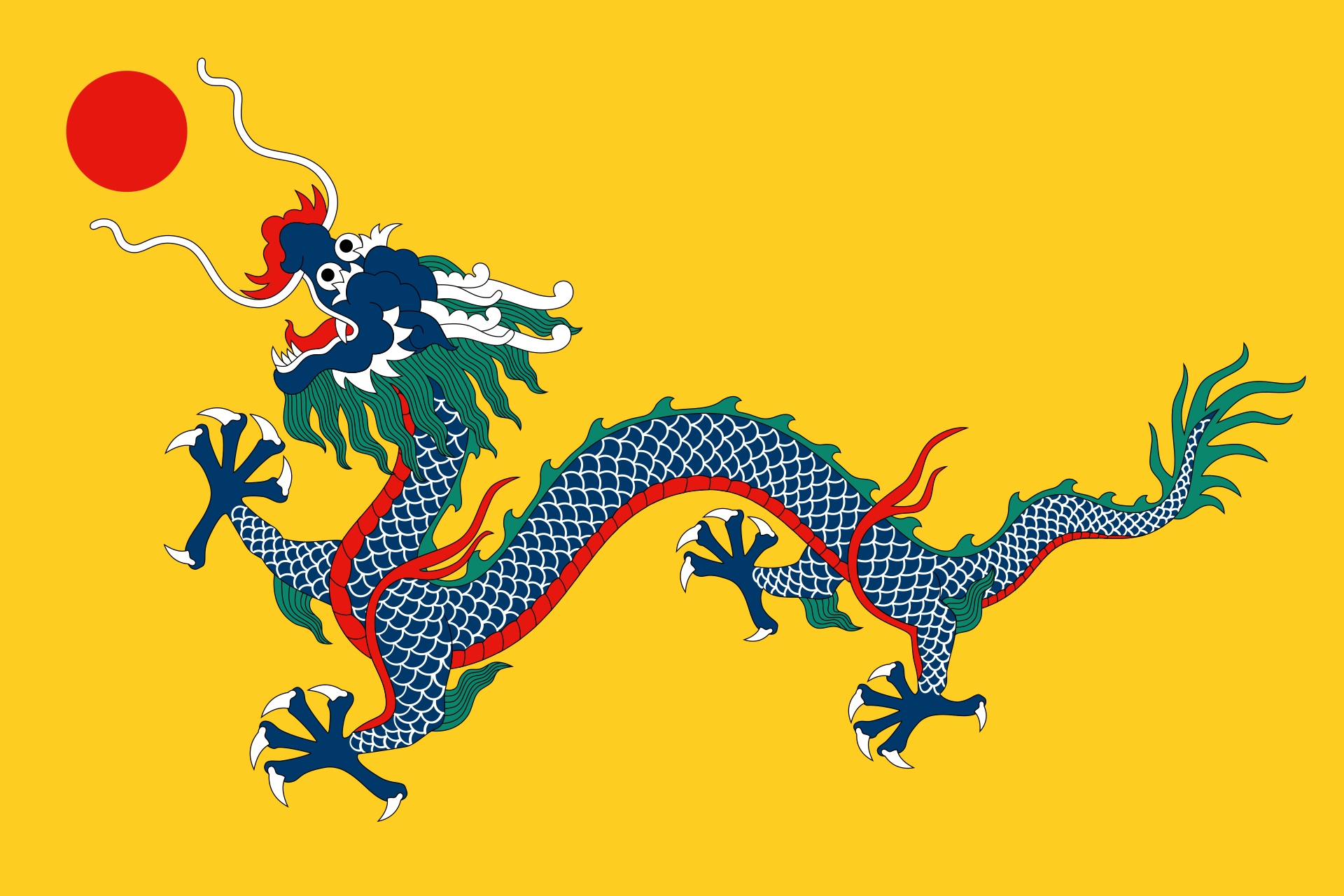
The best thing about this episode is that Damon talks a lot about Chinese cosmology, and how it may related to an earlier form of Chinese wrestling – we look at the cosmological concept of Qinglong, or the Azure Dragon.
The Azure Dragon on the national flag of China during the Qing dynasty, 1889-1912:
Saeed Esmaeli is my favourite wrestler, so I thought I’d share a couple of clips of him. I love the fact that he’s currently working out of a church with his classes, as you can see in his Instagram clips:
I like the way he’s emphasising using the whole body in his movements, not isolated leg and arms, much as we are encouraged to do in internal martial arts. “Wrestle with your hips, wrestle with your body”.
Wrestling arises spontaneously in every culture all over the world. Saeed’s branch has its roots in Iran. The story of how he comes to use a church is explained in this article from the Bristol 24/7. “THE UNLIKELY BOND BETWEEN AN IRANIAN WRESTLER AND A BRISTOL VICAR”
“Rather than striking, Pahlevani wrestling teaches students the art of grace under pressure, a great metaphor for dealing with the pressure that life can throw at us and one that reverend James Wilson can get on board with.
St Gregory the Great on Filton Road in Horfield officially opened its heavy oak doors to Wrestle for Humanity, a unique community Olympic wresting club and mental heath intervention service run by coach Saeed Esmaeli, whose mission is to make wrestling accessible and to help people feel good and perform well both on and off the mat.
Having experienced war, revolution and poverty, Iranian-born Saeed has overcome racism, bullying and grief and understands adversity. He brings a message of hope in his ‘infused psychology’ one-on-ones and in every community wrestling class.”
I really enjoyed watching the judo at this year’s Olympics. I thought the technical level on display was simply electrifying, which is why I find it odd that people sometimes refer to judo as dumbed-down jujutsu.
I’m a practitioner of Brazilian jiujitsu (which could be described as an offshoot of judo), and I’ve only ever dabbled in a few classes on Japanese jujutsu, so I’d hardly call myself an expert on it. However, from my experience, and what I’ve seen I’m going to make a bold and possibly controversial statement: Judo is more sophisticated than Japanese Jujutsu.
The question is what do I mean by ‘sophisticated’. I certainly don’t mean that there are a greater number or variety of techniques. There is certainly more content in the old jujutsu systems than there is in judo.
Kano created Judo by removing a lot of content from the Jujutsu systems he started learning in 1877, and changing the emphasis from performing kata and drilling applications to randori – free practice. There is also a big emphasis on competition in Judo. Strikes and weapon defence were originally part of Judo, but only in pre-arranged kata and are not included in competition and over time they have receded into the background. Most Judo clubs these days don’t even include the original kata or self defence techniques and simply train for competition.
Broadly speaking, the content Kano removed were the things that couldn’t be practiced safely in randori – throws that landed the opponent on their head, for example, or the sort of techniques that were designed for the battlefield and therefore irrelevant to civilian life. The change resulted in judo becoming the prominent style of jujutsu in Japan and internationally. The key to judo’s effectiveness was this switch in emphasis to randori. By trying to get the same moves to work over and over on resisting opponents, the technical level of the practitioner naturally rises. If you’re going to hip throw somebody in a setting where they know you’re going to try to hip throw them, then your setups for the technique have to evolve and get better. You cannot simply step in and expect your hip throw to work. You’re going to have to improve your ability to fake, shift weight, take balance and finish the techniques massively. This process produces a much more sophisticated level of technique.
Judo is therefore not “dumbed-down” jujutsu – it’s highly evolved jujitsu. To my eyes at least.
We talked a lot about Kano and the creation of Judo in our Heretics Podcast on the history of Kempo and Jiujitsu in Japan.
Byron Jacobs is a teacher of Xing Yi and Bagua based in Beijing, China. He’s a student of the famous Shifu Di Guoyong and is heavily involved in the martial arts scene in Beijing. As well as training traditional martial arts he’s also a BJJ practitioner and competitor.
In this wide ranging discussion we talk about training Xing Yi, Bagua and Tai Chi and whether Wu Shu will ever get into the Olympics. We also find out what it was like to train martial arts in Beijing during the Corona virus pandemic, and what the Chinese BJJ and MMA scene is like.
“What did it mean that many of the poses I was teaching were identical to those developed by a Scandinavian gymnastics teacher less than a century ago? This gymnast had not been to India and had never received any teaching in asana. And yet his system, with its five-count format, its abdominal “locks,” and its dynamic jumps in and out of those oh-so-familiar postures, looked uncannily like the vinyasa yoga system I knew so well.” –
Mark Singleton, Yoga Body: The Origins of Modern Posture Practice
I really love discovering these odd curiosities of 19th and early 20th century European gymnastic or martial arts that look incredibly like what we practice in the Asian martial arts styles, Qigong or Yoga. The link between 19th century French Savate (kickboxing) and the Japanese version of Karate is another fascinating connection that I’ve looked at before.
Recently I watched another video about 19th century Swedish Free Gymnastics:
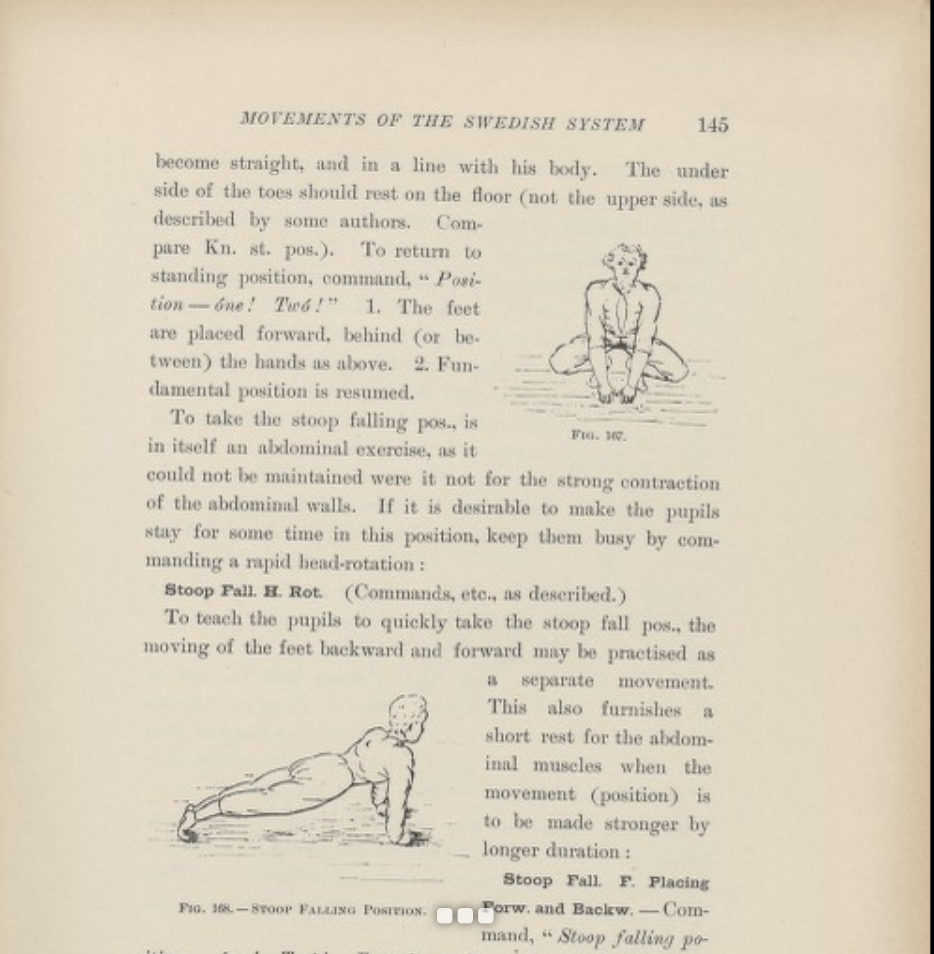
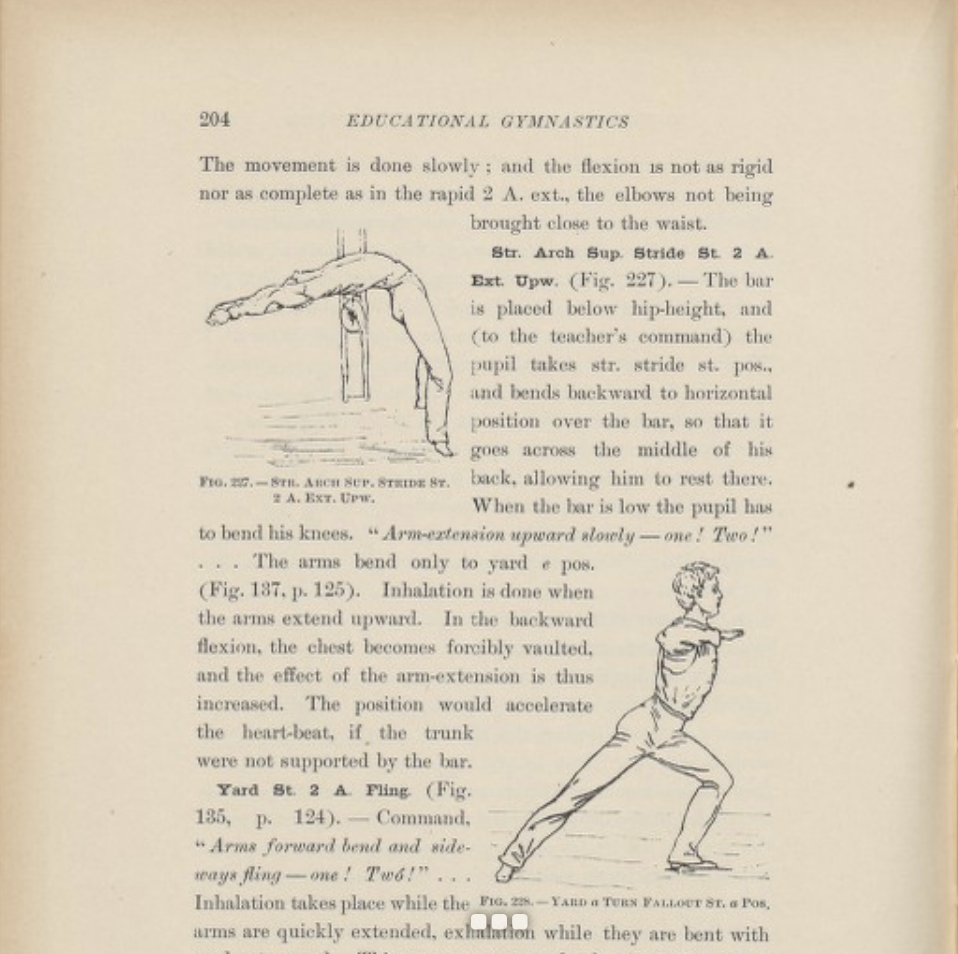
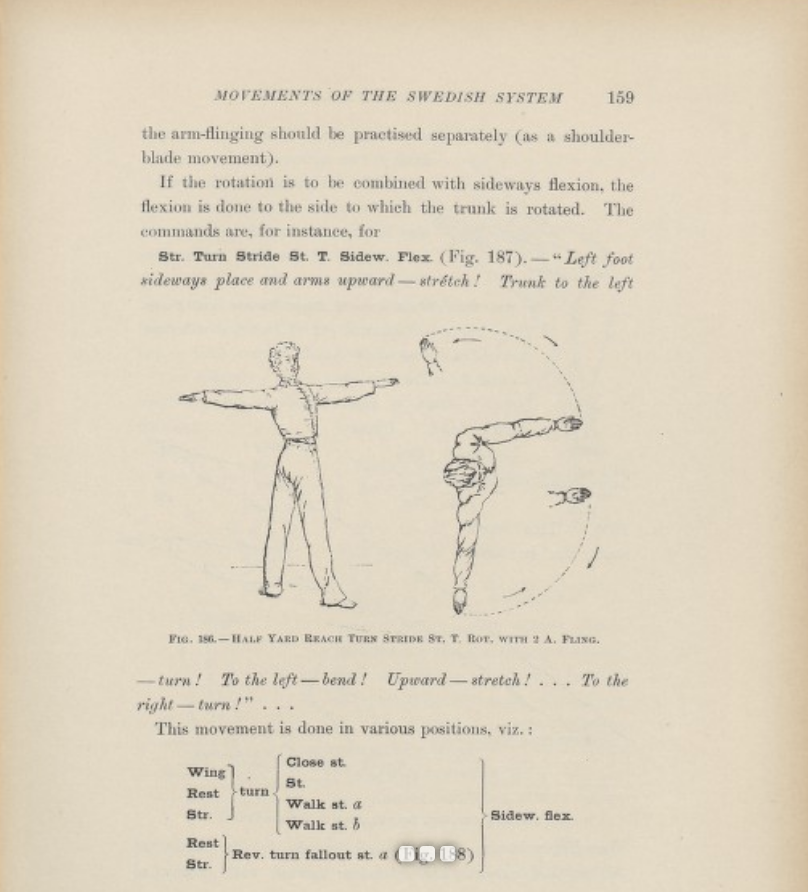
Swedish Free Gymnastics has long since declined, but was pretty popular in the 19th century. There are some great archive pictures and video of the movements in that video above, and they look incredibly like what we know in China as Qigong – the idea of slow, smooth, elegant movement with force balanced around the body. In fact, some of the positions look exactly like Qigong movements I’ve been taught and practiced myself.
“The Swedish system of gymnastics is distinguished from other methods in the fact that a special apparatus is not absolutely needed for its exercises. If any argument were necessary to prove the hygienic and intellectual benefits of physical exercise, in these days of varied athletics, a scrutiny of the handbook now under notice would excite due enthusiasm. The whole range of gymnastic performance, from the simplest to the most complex exercises, is herein put before the reader with explicit directions for practice, and with a gratifying abundance of illustrations. The fact that the English language has hitherto had no comprehensive manual on the Swedish system is the occasion of the publication ; the official service of Baron Posse confirms his fitness for the authorship of this book of rules; while in mechanical arrangement nothing seems to have been omitted that would induce fondness for gymnastic practice.”
Posse, Nils. The Swedish system of educational gymnastics. B
Pages from Posse, Nils. The Swedish system of educational gymnastics. Boston : Lee and Shepard, c1890.
As the video says, the similarities have lead some people to wonder if Tai Chi Chuan (Taijiquan) was actually the inspiration for these movements. There was, after all, a political connection between China and colonialist Europe powers in the 19th century, that culminating in the Opium Wars.
The author of the video sensibly disagrees with the connection to Tai Chi Chuan, and so do I. For a start, I think these movements from Sweden are likely older than Tai Chi Chuan, The general assumption amongst people is that Tai Chi Chuan must be really, really old, yet there’s no evidence of its existence before Yang LuChan arrived in Beijing in the 1860s.
But leaving the Tai Chi Chuan question aside, the movements of Swedish Free Gymnastics look more like Qigong than Tai Chi Chuan anyway, but there are records of Chinese health movements (“tao yin”) stretching back thousands of years in China, so I don’t think we can claim a European origin for Qigong. Some sets like the Muscle tendon change set are really famous.
However, I wouldn’t discount the role of influence. The Europeans arriving in China in the 19th century in large numbers and with superior military force resulted in huge changes. As China began to experience defeat at the hands of the European powers, it turned it attention to modernising and adopting these new methods or warfare, economics and exercise. We talked a lot about this in our podcast episodes on the history of Tai Chi Chuan.
As China looked to the West new ideas of commerce, military methods and politics were considered for the first time. I wouldn’t be surprised if some element of the gymnastics of the time slipped in as well, as it did in India, with Yoga.





 The Tai Chi Notebook