What started the Kung Fu Boom in the 1970s?

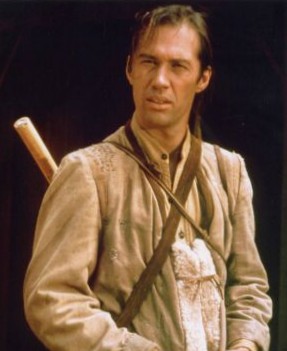
David Carradine as Kwai Chang Caine

People often claim that it was Bruce Lee who was the father of the Kung Fu boom of the 1970s, but was he really?  Sure, Bruce brought a sense of realism to the genre, but it was Kwai Chang Caine who set the ball rolling.  The other popular TV series Monkey and The Water Margin were also influential, but felt like they were aimed at a younger audience. And for kids like me it wasn’t possible to watch a Bruce Lee movie – they all tended to be rated 18.

I’d go as far as to say that Lee wouldn’t have had the movie success he had, particularly in the west, if it weren’t for the Kung Fu series.

Here’s a good documentary on the making of Kung Fu – I still remember some of these action sequences, particularly the one where he kicks the knife out of the guy’s hand and it sticks in the roof, which is shown in this video. That moment was the start of my lifelong interest in Chinese martial arts.

The middle of the Yuan Dynasty

We’ve recorded a new episode on our long running ‘history of Xing Yi’ series. There’s no actual Xing Yi in this episode – it’s more about a period of Chinese history that little is written about – the middle to end of the Yuan dynasty.

Horse and Groom, handscroll after Li Gonglin by Zhao Yong, China, Yuan dynasty, 1347, Freer Gallery

In the middle to late part of the Yuan Dynasty the former Confucian ruling class came back with a vengeance and started a downward spiral that would ultimately lead to the fall of the dynasty. In this episode we examine how and why this happened, which will set the context for the important events at the end of the dynasty in the next episode.

If you like Chinese history, then you’ll enjoy it.

Don’t try

One of my poetic/literary heroes, Charles Bukowski had “Don’t try” written as an epitaph on his tombstone. To many people he was simply an alcoholic, womanising, bum who pissed way his talent, but I bet Charles Bukowski did more honest days work in his life than a lot go his critics ever did. Writing was his way out of a life of oppressive blue collar jobs that had ground him down, and he only succeeded as a writer late in life, and that gave him a unique perspective.

 There’s a video that explains his seemingly paradoxical philosophy of “Don’t try”.

But if you don’t have time to watch it then Bukowski explained it himself in one of his letters:

“Somebody asked me: “What do you do? How do you write, create?” You don’t, I told them. You don’t try. That’s very important: not to try, either for Cadillacs, creation or immortality. You wait, and if nothing happens, you wait some more. It’s like a bug high on the wall. You wait for it to come to you. When it gets close enough you reach out, slap out and kill it. Or if you like its looks, you make a pet out of it.”

    – Charles Bukowski

I think anybody versed in the philosophy of Tai Chi can see an instant parallel here to the Taoist ideal of Wu Wei – “not doing”. Quite often if you can wait for the mud the settle the water becomes clear all by itself, and the right action becomes obvious.

There are a number of quotes you can find in the Tao Te Ching that elucidate on this idea, right from the start of the book, where in chapter 2 Lao Tzu states: “The sage acts by doing noting”, then later in chapter 22 he says “Because he (the Sage) opposes no one, no one in the world can oppose him.” And in Chapter 48, “When nothing is done, nothing is left undone.”

Now I wouldn’t say that Lao Tzu and Bukowski have exactly the same take on this idea, but they’re not a million miles apart.

There are obvious applications of “Don’t try” in all areas of your life – from creativity, as Bukowski found, to business and your home life, but one of the most obvious I find is in martial arts.

If I find I’m engaged in too much of a struggle during sparring, rather than go harder, I have slowly learned to back off. Rather than fight through something it’s much easier to change track and go around it. 

In Tai Chi push hands you can encounter this idea whenever you feel resistance from your opponent. How do you react? Do you push harder, knowing if you do, you can impose your will on them? Maybe you can, but you’re just engraining a bad habit that’s not going to lead to success when you try it on somebody bigger than you. 

In Jiujitsu I often find guard passing is the best example of this idea of Don’t Try. If you try and force a guard pass, like a knee slide for example, when your partner is defending well then quite often you can make it work, but it’s a lot of effort and ultimately you’ve depleted your energy reserves more than you had to. And again, it won’t work on somebody bigger and stronger. That’s when the words “don’t try” tend to appear in my mind. If the knee slide pass is defended then change the angle, work something else, see if you can switch to a bull fighter pass instead. Or change to a back step. There are always ways around the problem instead of having to power straight through it.

Don’t try. This is the way.

Are set forms the death of creativity?

Xing Yi Eagle link

Tai Chi is just one of a number of Chinese martial arts that have extended forms practice as a key component of their training methods. An incredible amount of time in Tai Chi is dedicated to performing the form in just the right way. Of course, there are lots of martial arts that don’t have forms, but they tend to be more sportive and wrestling based, although striking arts like boxing don’t have set forms either. Exactly why so many Chinese martial arts have forms at all is another question – one that relates back to their cultural origin and use in entertainment and religious festivals, and has relatively little to do with martial efficiency. It’s a contentious point, so for now let’s just accept that most Chinese martial arts today do have forms, and if you’re going to practice a Chinese martial art in 2022, then you’ll be practicing forms too.

In my training I’ve been exposed to various Chinese martial arts, and they all had a number of “set in stone” forms to train, until that is, I was introduced to Xing Yi. Or rather, I should say, to my Xing Yi teacher. His method of teaching Xing Yi was entirely different to most modern teachers – he really didn’t like the idea of set forms. Beyond the 5 Element form (the basics of Xing Yi) he didn’t really believe that any form should be ‘set in stone’. In fact, he wouldn’t even let you call them “forms”. You had to metaphorically put a pound in the swear jar every time you said the word “form”. He preferred the term “linking sequence” (lian huan, in Chinese) because it implied that the postures were linked together and could just as easily be linked together in an entirely different way. This is not entirely true, either. Sometimes he would teach you a particular sequence that was the way one of his teachers did it, and we’d call it the “master xyz linking sequence”, on the basis that you had to start somewhere, but if you ever quizzed him too deeply about a particular movement sequence then the answers would soon start to turn into the “well you could do it this way, or you could do it this way…” territory. He really didn’t want to be pinned down into a specific way of doing anything.

Xing Yi Bear link

I think the reason he was like this is that he didn’t want to kill the natural creativity in his students, and he wanted to keep the practice vital and alive. It should be obvious that your goal in martial arts is to be a formless fighter – even a small amount of light sparring will reveal the universal truth to you that if you try and adopt fixed methods to a live situation, the results are never good. To deal with any kind of live situation you need to be able to respond and adapt freely to whatever is happening. I think he saw the popular “fixed forms” training method as being part of the reason that some Chinese martial arts were less than successful when applied for real. It was also the way he’d been taught Xing Yi, and he wanted to teach in the manner in which he’d been taught. Of course, this makes it a lot harder to teach – having a few set forms makes teaching much easier, and also transfers to large groups well. Being spontaneous requires much closer attention from a teacher and is almost impossible to expand to teaching larger groups of people. The best class size is always 1-1, and commercially that’s a hard thing to pull off. Luckily money was never part of the equation when we trained! I can’t say his method was universally successful in creating good students either – it’s definitely not. I’ve seen students of his who ended up being pretty delusional about their own abilities from following this method. It requires time (years) of prolonged contact so that you can absorb a martial art this way. If you get separated from the teacher too much then you can easily go off on the wrong track. It’s a bit like throwing mud at a wall – sometimes it sticks, sometimes it doesn’t. And sometimes the mud decides it’s somebody who has nothing left to learn from other people, and develops delusions of grandeur while trying to maintain the illusion of being humble. But, c’est la vie.

Anyway, I’ve peppered some video of me throughout this post so you can see some examples of what I mean by linking sequences – these are little Xing Yi linking sequences I’ve create to fit the space I’m working in. I like this sort of practice where you create new links each time you practice. You can combine different animals and elements in an almost endless number of variations. You can even do the movements from one animal but in the style – the xing – of another. Each day you train is different and depends on how you feel and the environment you’re training in. In fact, letting your environment (preferably, nature) into your practice is part of the training.

Xing Yi Tiger link

Now contrast that to typical Tai Chi training – you practice the same form in the same way, every day, for the rest of your life. Sounds a bit dull, doesn’t it?

Well, perhaps not. While the sequence in a Tai Chi form never varies, you can introduce a tremendous amount of variation within that fixed frame. This was how my Tai Chi teacher taught me, years before I started Xing Yi. After you’d learned the form you’d do the form in different ways, depending on what you were working on. The size of the postures could vary, the height of the postures could vary, the speed could vary from very fast to very slow, or you could focus on the breathing, on separating empty and solid. Again, the list was almost endless. It worked better if you stuck to one particular ‘thing’ for a good few months though, before you moved on to the next. Again, close contact with a teacher is required, over years. 

Once the Communist ideology took over in China it infiltrated everything, including martial arts, and it’s influence is still there today. The Communist ideal is that everything looks the same, and is done in the same way. The individual identity is subsumed by the group identity. You can see this influence in the martial arts of the period and its effects echoing into modern times. Row upon row of silk pyjama-wearing Tai Chi people practicing exactly the same form in perfect unison. If you want to get good at martial arts, that’s the thing you want to avoid. And if you’re thinking right now that your practice doesn’t involve enough spontaneity or creativity, then perhaps some of the ideas contained in this post can help.

Xing Yi Chicken link

Medieval warhorses no bigger than modern-day ponies

Jurchen Jin Dynasty

The traditional legend handed down in Xing Yi circles is that Yue Fei’s army successfully cut down the horses of the Jin cavalry, whilst only being foot soldiers.

This legend is often scoffed at by anybody who has experience of standing near to a charging horse, and quite rightly so! But it does depend on the size of the horse…

A recent study has concluded that English Medieval war horses were no bigger than a modern day pony.

“In films and literature they are usually depicted as hulking, foot-stomping, snorting beasts but a new study has claimed that the medieval warhorse was typically a much slighter, daintier animal.

A team of archaeologists and historians searching for the truth about the steeds that carried knights into battle has concluded that most were probably only the size of a modern-day pony.”

How big were the horses being ridden into battle by the Jin, I wonder?

Wang Xiang Zhai doesn’t like Tai Chi

Somebody posted a quote by (founder of Yi Quan) Wang Xiang Zhai from his 1940s interview containing his thoughts on Tai Chi. It is pretty clear, unambiguous and to the point. Have a read:

Wang Xiang Zhai on Taijiquan (from an early 1940’s interview):As masters of the original Taijiquan, I should recommend the Yang brothers Shouhou and Chengfu. They are my friends, and I know that their Taiji has some knowledge of mechanics. But out of one hundred students, not even one gains its essence…and even then, it is still one-sided, because the skills of intuitive perception died out a long time ago. Originally, Taiji consisted of three fists, Wang Zongyue changed it into thirteen postures, and it was later embellished into as much as one hundred and fifty postures. This is the cause of the distortion.Sticking to mechanical movements, seeking beautiful postures and mistaking it for the glory of martial arts…that is terrible. Such a person cannot comprehend boxing for life. If a man of insight sees such a performance, he will feel sick for ten days.As a means of health preservation, Taijiquan restrains the spirit, and brings discomfort to its practitioner. For combat, it harms the practitioner’s limbs and trunk, and causes a useful body to become a mechanical and stiff thing…it’s nothing more than a waste of time.As for the training method—a punch with the fist here, a slap with the palm there, a kick to the left, and another one to the right—it is pitiful and laughable.As for dealing with an enemy in a fight: please do not even consider it. So ruined is this boxing that it has become useless. There are many more things, but I feel embarrassed to say them.

He doesn’t think much of Tai Chi, but there are some things to consider.

  1. Wang was building a brand – Yi Quan – in a commercial setting. Setting out how you are different to/better than your competition is the first stage of building a brand.

2. This “three old fists” idea of history I don’t put much stock in. I think it’s a reference to the three old fists of Xin Yi (info on Jarek’s website), which he is therefore assuming as the origin of Tai Chi Chuan, but there’s not much of a link there that I can see. Or if there is, it’s very tenuous.

3. I think he’s criticising the Tai Chi training method, more than the art. He seems to hold the Yang brothers in high regard, but it’s their students and training methods he thinks are flawed. Wang was never a fan of forms training.

4. I think we need to consider what was happening in China in 1940. China has never (and still doesn’t) had a free press. If this was published it would conform to the political direction of the day.

From Wikipedia:

“In 1940, the Japanese set up the collaborationist Wang Jingwei regime, with its capital in Nanking, which proclaimed itself the legitimate “Republic of China” in opposition to Chiang Kai-shek’s government, although its claims were significantly hampered due to its being a puppet state controlling limited amounts of territory.

Chinese Nationalist Army soldiers during the 1938 Yellow River flood

The United Front between the Kuomintang and the CCP had salutary effects for the beleaguered CCP, despite Japan’s steady territorial gains in northern China, the coastal regions and the rich Yangtze River Valley in central China. After 1940, conflicts between the Kuomintang and Communists became more frequent in the areas not under Japanese control. The Communists expanded their influence wherever opportunities presented themselves through mass organizations, administrative reforms and the land- and tax-reform measures favoring the peasants and, the spread of their organizational network, while the Kuomintang attempted to neutralize the spread of Communist influence. Meanwhile, northern China was infiltrated politically by Japanese politicians in Manchukuo using facilities such as the Wei Huang Gong.”

So while all this conflict with Japan is going on I think the general trend is towards westernising and modernising China, leaving behind the older traditions that had held China back. This interview – looking towards newer scientific methods of martial arts – is in keeping with that trend. Japan was also very into adopting western military methods and building an empire, like the British had.

5. Both Yang Shao-Hou and Yang Cheng-Fu died in 1936, yet Wang is talking about them as if they are still alive in the 1940s, so something doesn’t add up. This interview is either doctored, or was done a long time before it was published in the 1940s.

6. You can get a better idea of his larger themes by reading the whole interview.

Three views of qi in Tai Chi

Photo by Greg Rakozy on Unsplash

When it comes to “qi” it seems that every teacher has a slightly different view about what it is. After meeting many martial arts teachers, over the years (and ignoring the clearly delusional amongst them) I’ve paired these various views down to three models that I feel can act as a guide for helping the practitioner sort out what your teacher means when he or she says “qi”, and therefore, what you mean. I don’t think the three are exclusive at all – following one does not negate the others – and all three can be applied at once.

Many people would rather we kept qi out of Tai Chi Chuan teaching altogether, and I respect that view, however the Tai Chi Classics refer to qi quite often, so I think we’re stuck with it. And if you can’t beat ‘em, join ‘em.

Of course, qi relates to things well outside of the realm of martial arts too, so I think that it’s important to say that what follows is from a martial arts perspective. I’m looking at qi with a view to how it relates to the human body in things like Xing Yi and Tai Chi Chuan. If I was thinking about how qi related to, say the universe, or the landscape, I’d be looking in different places. Although, it has to be said that in Chinese thought the microcosm often mirrors the macrocosm.

Biological qi

The first view we’ll call the biological model. This is the view that what the Chinese call qi is simply the energy the body creates in the cells using the ATP cycle. We’re not talking about a controversial “bio energy” here, just the normal way energy is created in the cells of the body.

Adenosine triphosphate (ATP) is the energy-carrying molecule found in the cells of all living things and the universal energy carrier in the living cell. The German chemist Karl Lohmann discovered ATP in 1929.

ATP contains three phosphates and when it is converted to Adenosine Diphosphate (ADP) a phosphate is removed and energy is released that cells can use for processes like movement, synthesis and active transport.

https://www.britannica.com/science/adenosine-triphosphate

While the chemical process of the ATP cycle is hard to explain, the impact on things like Tai Chi and martial arts is quite simple and uncomplicated – qi is nothing mysterious here, and all movement therefore requires qi.
In this model, qi is related to breath because oxygen is required for the ATP cycle, which ties into the Chinese view of qi being related to breath quite nicely. The lungs therefore take over a prominent role in qi production, since oxygen is required for the ATP cycle to work.

Teachers that have this view of qi tend to focus more on the middle dantien in the body, as the the focus of movement, since qi production is higher in the body, towards the lungs, compared to the lower dantien. Stances tend to be higher and not as wide. Mobility is stressed over stability. Arts like Xing Yi and Yi Quan are good examples of these sorts of martial arts.

Qi as strength in a conditioned body

The second view of qi fits in more with Chinese concepts of acupuncture. This view sees the body as containing a number of muscle-tendon channels that run from finger tips to toes. On the soft yin parts on the front of the body we find the yin channels, and on the harder yang parts of the body, the yang channels. These qi channels are the channels along which strength can ‘flow’. By strength we’re not talking about the normal isolated limb movements, but the type of springy whole-body strength exhibited by animals and some marital artists. You can view movement in animals (and humans following this model) as a series of opening and closing movements using these channels. When we contract inwards, for example, we pull along the yin channels and when we open the body outwards we are pulling along the yang channels.

Think of the movements of a Cheetah running – as the legs stretch out the yin part on the front of the body is ‘opened’ and the back ‘closed’. As the legs retract inwards, the front closes and the back expands and opens. The process repeats in a cycle. This movement from yin to yang and back again is the Tai Chi cycle in action.

These channels are not real anatomical structures in the body, but constructed as distinct pathways containing various muscles, tendon, ligaments and fascia groups. (The acupuncture meridians that most people are familiar with are a similar idea, but came later and are obviously based on this idea of muscle-tendon channels in the body.)

In a normal human being these channels are not particularly strong or well developed, and work is required to strengthen them – to give you a “strong qi” – which is what neigong and chigong is for.
Qigong practice is therefore designed to condition these muscle-tendon channels – notice a lot of Qigong practice is to do with stretching along these muscle-tendon channels, using the breathing to assist (e.g. the baduanjin set of exercise). Over time this stretching and breathing can strengthen the channels so that they become a tangible, physical presence in the body. Once they are strong enough to physically manipulate the body with, various martial arts feats can be performed using them, like explosive punching (Fa Jin) or strong twisting and coiling movements.

You most often find this qi model used in arts like Chen Taijiquan, which is known for its twisting and coiling locking and throwing methods (chin na) and its explosive, whole body strikes called Fa Jin. Silk reeling exercises, which are part of Chen style Tai Chi, are excellent for developing this kind of conditioned strength.

Qi as a non-physical body

The final, more esoteric, view of Qi is as a non-physical body. Chinese medicine has the concept of the Sanbao – the three bodies. The physical body – Jing (related to our ability to replicate ourselves by reproduction), the energy or Qi body and Shen the mental or spiritual body. All three bodies are thought to inhabit us at once.

The physical body is the most apparent being the one we use most obviously, but through practices such as Zhang Zhuang Qi Gong, where you stand and hold postures over time, we can gradually become more aware of the more subtle energy body. The Qi body becomes apparent through sensation observed over time. The act of being aware of the qi body, usually in standing Qigong postures, (although seated or lying meditation practice also exists), strengthens your connection to it and your appreciation of it. The same is, presumably, also true of the Shen body, but that is not something I’ve ever experienced myself.

These more esoteric practices tend to be associated with spiritual groups (Taoist internal alchemy traditions), secret societies (exploited in the Boxer Rebellion) and martial arts groups that tend more towards stillness in their practice – like Yang style Taijiquan, or ones that practice seemingly impossible feats of conditioning, like iron palm and iron body practices.

While this view of qi is the one that’s hardest to ‘prove’, it’s also one of the most accessible. Practicing with stillness over a period of time can be done by anybody anywhere and usually produces some tangible results – heat in the hands, etc. But I think this is also the qi model it’s easiest to become deluded with. After all, if your only feedback is judging the things you experience yourself it’s easy to lose your objectivity. This is of course why having a good teacher is important.
Merry Christmas!

Kickboxing Santa Claus

As we find ourselves at the eve of yet another Christmas day, it’s time to reflect on what’s happened this year, the mistakes we’ve made and to think about what we can do to improve ourselves next year. So, (I’d like to own up to stealing this entirely from @arthurdent, but it’s a great message that I can totally get behind):

“In the spirit of the season, I don’t want to end the year on bad terms with anybody. So if you’ve crossed me or wronged me in some way, and you’re ready to apologise, I will be receiving DMs at this time.”

Merry Christmas!

Thoughts on Tai Chi Push Hands

Photo by mana5280 on Unsplash

Range

People tend to do push hands at the wrong range. I think the combat benefits of training push hands disappear almost entirely when you are too far out.

I notice when I train it with people they keep wanting to edge back. You need to be a range that feels uncomfortably close, until it feels comfortable.

If you look at MMA (sorry to use that as an example, if it rubs you the wrong way, but it provides brilliant examples and feedback of the dynamics of two people in a violent encounter) one of the big, high-percentage, often fight-ending, techniques is the counter left (or right) hook; the check hook. This happens after the fighter throws a jab – you move back (or slip) and throw your hook over the top – that’s the range push hands is working in, and a good practical example of what skill at that range can do.

If you watch this video of Cheng Man Ching pushing hands you can see he tries to stay in close all the time – in fact, when he’s launching people he kind of ‘cheats’ and takes an extra half step in so he’s right inside their base, which enables him to show off a bit more on the distance he can push them – this is only possible because they are keeping their ‘front door’ open with a wide stance. The way I was taught is that your toes match the opponent’s heels, fist width apart to allow for ‘shin biting’. (Lots of people do this distance correctly, but go shoulder width apart – leaving the groin too open and letting people step in to launch them. It’s just a bad habit to get into).

Don’t mistake push hands for sparring

Chinese martial art people in general I think spend too long in these double or single ‘arm contacted’ type positions – in more martial sparring sessions these moments happen in split seconds. People don’t stay here. If you end up putting your arms out looking for that position you get punched on the nose. I think doing too much of it breeds bad habits. You’re doing that ‘safe’ training to learn skills that are hard to acquire, which then get used in freer environments, rather than try to mimic the ‘safe’ environment in freer training.

Staying in this range all the time with another person doing ‘soft’ stuff like push hands seems to lead to teachers who start showing off and generating cult-like guru behaviour. It’s a trap you can fall into if you’re not careful. If your students start treating you like a holy saint, then that’s a red flag!

I’m really not a fan of the kind of following that builds around some of the big names in Tai Chi, like this guy, Adam Mizner. He plays the guru card well, and I’ve seen lots of videos where his students really overreact to him in a way that makes me think they all fell down a rabbit hole years ago. However, the guy clearly has some good skills at push hands, as you can see in this video. This video I think is one of the least worst of his I’ve seen (in terms of over reaction from his students) – yet the group still all stop what they are doing to ‘watch the master’ and play his guru game:

Fighting

It’s always worth repeating, even though its kind of obvious, – you don’t need push hands to fight. Combat sports turn out accomplished fighters quickly without these methods.

You can practice all the applications in a Tai Chi form in push hands – it’s one step up from doing them as stand alone techniques because it requires more timing, flow and ‘listening’, but this is still not ‘fighting’.

Jin

One of the reasons for push hands is to learn to use Jin not Li. For a short answer of what that means, I mean using the ground strength in your movement (jin), not local strength (li). It’s easy to fool yourself that you’re ‘doing it’ when you perform a Tai Chi form, because there’s nobody else there. Can you ‘do it’ when somebody is providing some light resistance? Or trying to ‘do it’ back to you? Push hands enables you to find out. I wish people would view push hands more as a tool for learning that, not as a competitive sport of limited wrestling. It’s like people have been given a knife, but they insist on using it like a spoon.

And the use of Jin in directions also requires a strategy to use them, which can also be practiced in the laboratory of push hands. Listen, stick, yield, neautralise and attack.

In push hands you ‘listen’ to the push from the opponent (with your body), you stick to their limbs (so you can feel and listen) then you yield to their pressure, which leads to neutralising their attack, so that you can attack yourself.

In sparring you use the same idea, but you cannot rely on being stuck to their arm. However, you need to keep the same process going that you’ve learned in push hands, just sometimes there will be no contact – you can still neautralise, and yield, through subtle changes in body posture and position, thanks to your use of sensitivity. Once you take ‘push hands’ into a more real sparring environment, I think you’re in the same territory where Xing Yi spends most of its time training. In Xing Yi it’s just the same idea, even if it looks different – you do not attack blindly at the opponent – that won’t lead to success against somebody good, bigger or stronger. In Xing Yi we have this phrase “don’t attack when you see an opening, attack when you see the heng” – I would interpret that as you only attack once the opponent’s attack has been neautralised (heng being the point of neautralisation); depending on your level of timing, this can be before the attack has even been launched. Good opponents will leave fake ‘openings’ for you to attack. Therefore you don’t attack based on what your eyes alone see – you attack based on feeling for that moment of neautralisation. Different training methods – same results.