Zuckerberg blows out his ACL doing martial arts

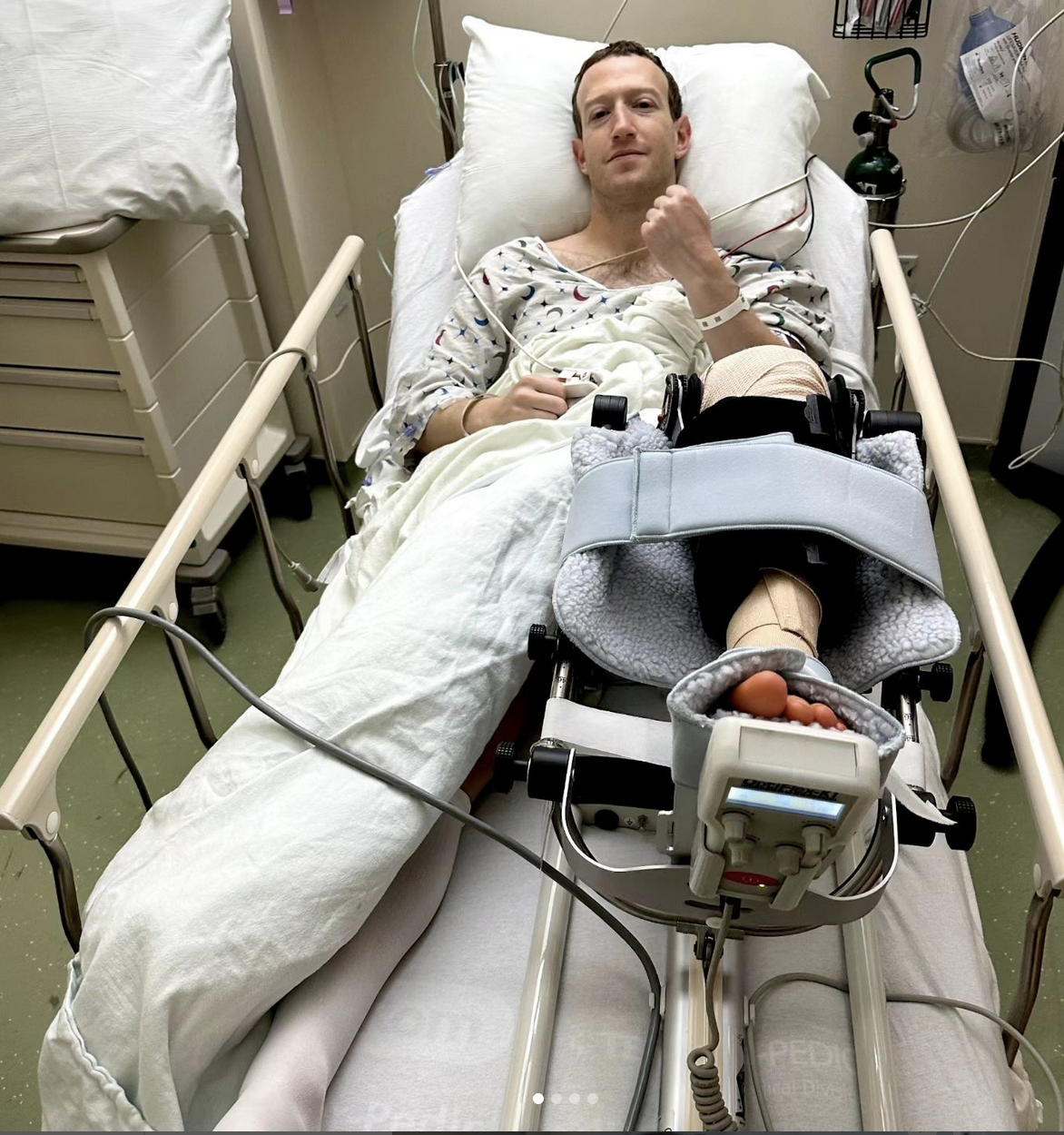
Get well soon, Zuck! (Image credit: Mark Zuckerberg).

Meta (nee Facebook) founder Mark Zuckerberg has undergone ACL surgery thanks to an injury sustained during his preparation for his first MMA fight.

Tore my ACL sparring and just got out of surgery to replace it. Grateful for the doctors and team taking care of me. I was training for a competitive MMA fight early next year, but now that’s delayed a bit. Still looking forward to doing it after I recover. Thanks to everyone for the love and support.

He wrote that on his Facebook and Instagram account along with pictures of him punching the air from his hospital bed, and also a strange one of his wife mopping his brow and tending to him as he lays there. What is that telling us about his psyche? He’s clearly a little bit proud of his injury, since it adds to his macho credentials. Especially the shot of his woman tending to his wounds! 🙂

Like many previously unathletic or “nerdy” men who discover Brazilian jiujitsu or MMA training in their middle years, it looks like Zuckerberg has been utterly consumed by his new hobby. I understand – I got consumed by a passion for BJJ when I discovered it around the time I was due a mid-life crisis. It is the perfect salve for so many things that happen to people around that time of their life. But when you combine a billionaire’s bank account with a new found passion you get the ability to take your new obsession to stratospheric levels. Zuck has done exactly what I would have done if I was a billionaire – reorganise my entire life around my new hobby and pay for the very best people in the world to train me.

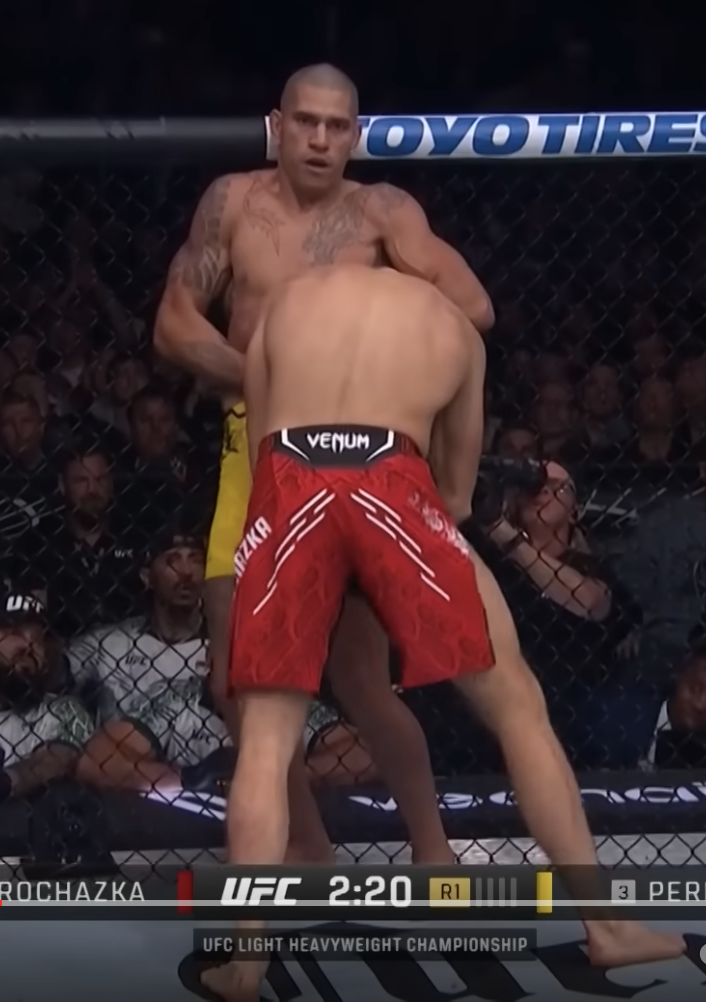
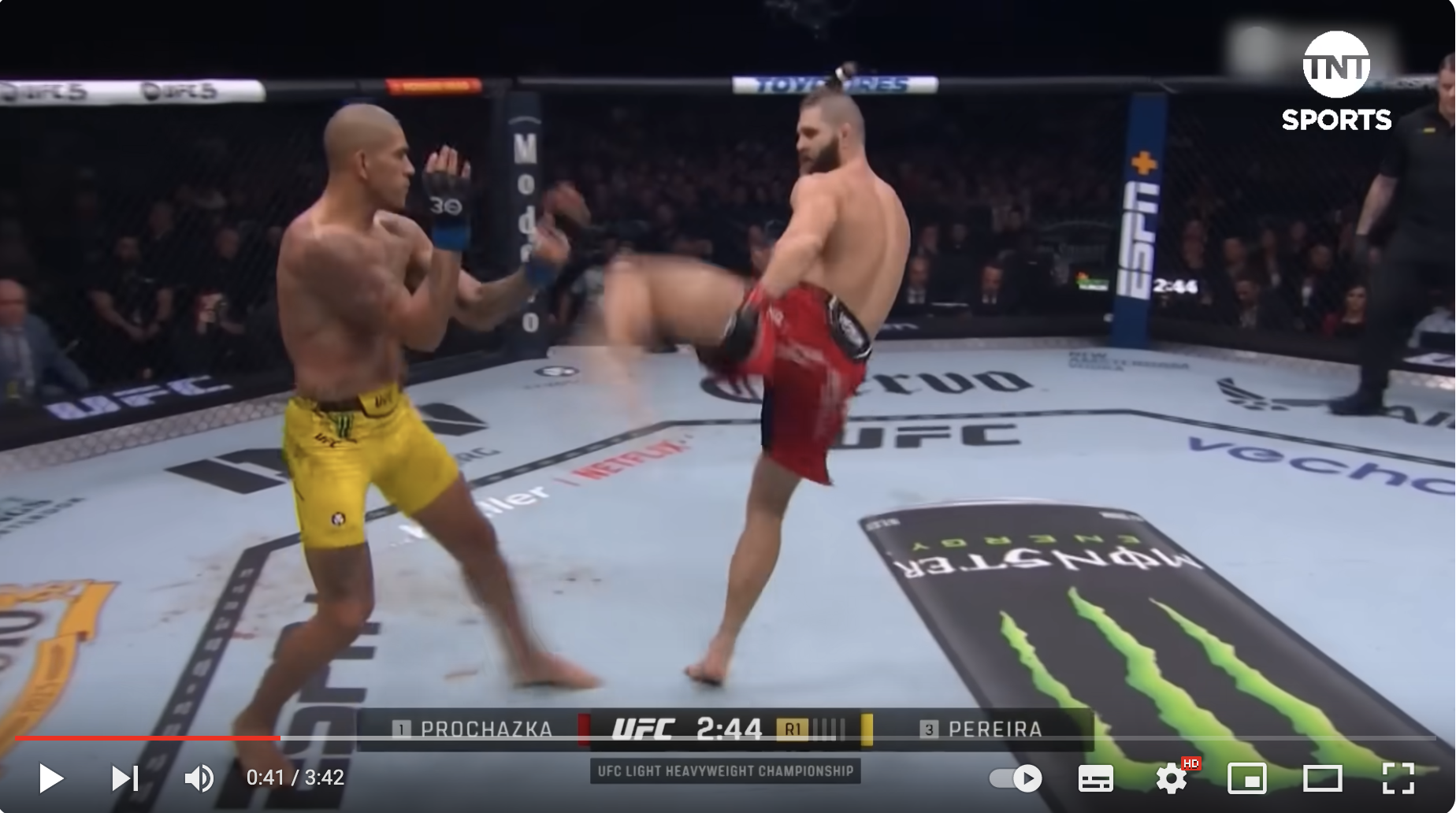
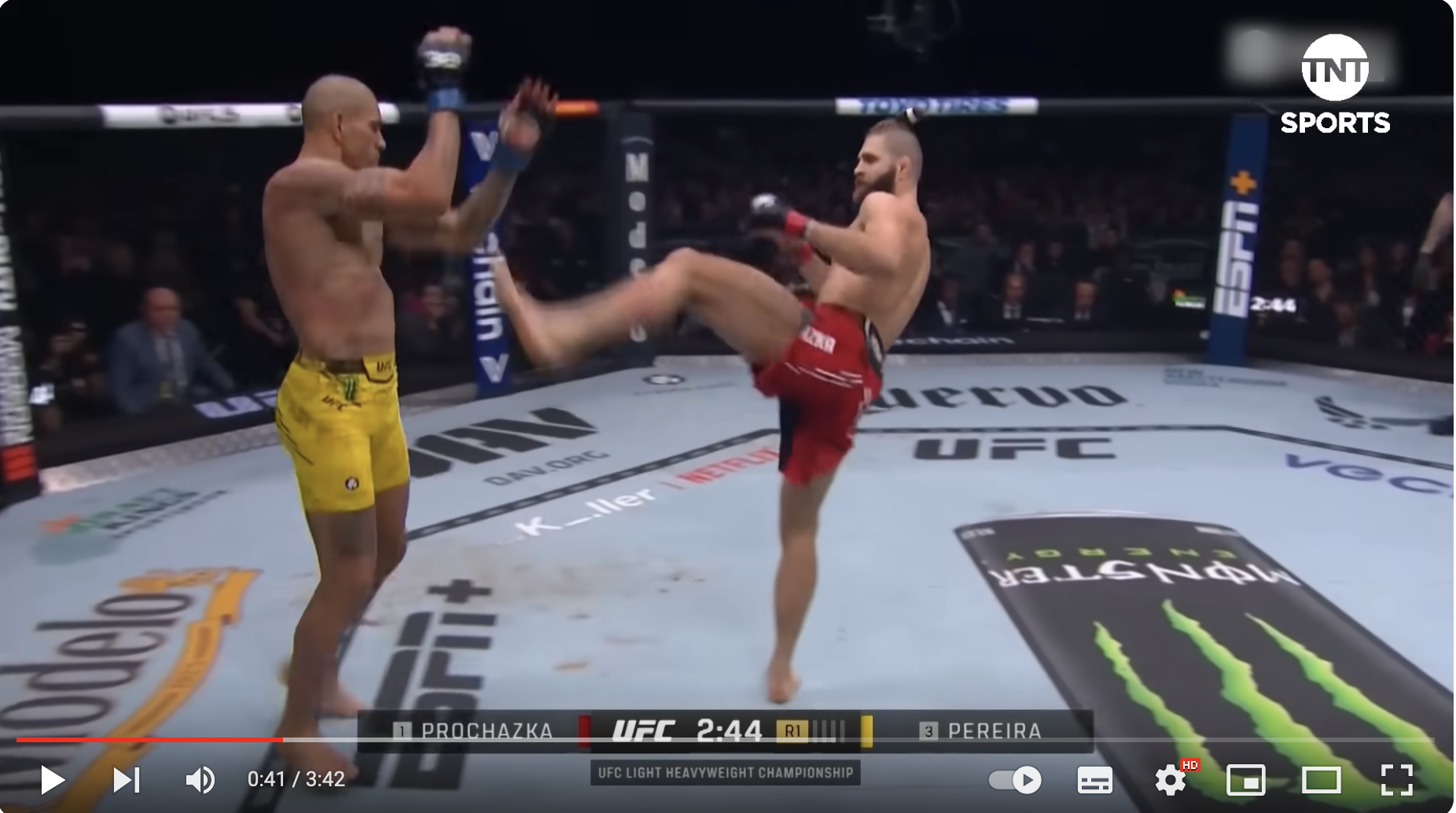
For example, there’s video of him sparring with two of the UFC’s current champions on a matted training area presumably on one of his many private yachts… That’s a ridiculous level of privilege.

However, even billionaires are human and an ACL surgery is no joke. Like most people who came to BJJ later in life, I had no idea what an ACL (anterior cruciate ligament) was before I took up BJJ. But once you do start BJJ you hear it mentioned so often you pick up knowledge of knee injuries by osmosis, or just go and google it to find out. Of the four main ligaments in the knee, it’s the one that snaps most often due to twisting injuries. That can happen in BJJ and MMA mainly due to takedowns/wresting or leg locks, some of which, (like the heel hook), are designed to specifically target ligaments in the knee. The idea is that you tap before injury occurs, but life is full of little accidents. Clearly Zuck has either had a takedown gone wrong or been on the wrong end of a leg lock and not tapped in time.

But people destroy their ACLs doing other things too – football is a classic example, and so is skiing. Pretty much any sport you decide to do has the potential to injure you, so you might as well pick something you love. In fact, I remember a few years ago when people used to talk about Tai Chi being really bad for your knees, however that craze seems to have died down recently.

Zuck will be back, but recovery from ACL surgery is a painful, slow and frustrating business. We’re talking months of physio-type movements just to get a normal range of movement back into the knee. He might be pumping his fist in pride in his photos at the moment, but this injury will change him. Hopefully it will give him a wider perspective on life.

If you’re going to train in combat sports then it is almost inevitable that at some point you will be injured. Especially if you go in with too much enthusiasm and passion. I too have been injured doing the sport I love, and sometimes there’s nothing you can do about it, but quite often it happens in moments where you’re being just a little bit reckless. The lesson for us all is that massive enthusiasm and passion for something new often needs to be tempered with a bit of restraint. Remember, look after your training partners and tap early and often.

Get well soon, Zuck!

If you liked this article then you’ll like these:

Investing in your neck can be a great way to get better at Tai Chi

Photo by Todd Trapani on Pexels.com

The Tai Chi classics talk a lot about keeping your head “as if suspended from above“, and “Head upright to let the shen [spirit of vitality] rise to the top of the head”, but they don’t mention the neck a lot.

Yang Chengfu gives it a brief mention to the neck in his 10 Important Points, but it’s not the focus of his writing: “Don’t use li, or the neck will be stiff and the chi and blood cannot flow through.”

As such, Tai Chi students don’t spend that long paying attention to their neck. I bet if you just started moving your head in a circle right now you’d hear all sorts of crunching and popping noises, right?

For the past few days I’ve been making an effort to work my neck with mobility exercises every morning, and the results have been quite astounding. Now, when I move my head around in a circle there are way less crunching and popping noises than their used to be. In fact, sometimes there are none at all. Secondly, the space between my neck and shoulders is really opening up. I can feel more room there and as such, my Tai Chi form feels quite different, in a good way. There are all sorts of nerve fibres in the brachial plexus, and having them cramped up all the time is not ideal.

I’ve talked about the importance of how you hold your head in a recent post, but I’m learning that correct head placement on its own can only get you so far – you need to invest in some neck exercises if you want to get the most out of your Tai Chi practice.

There are hundreds of different neck exercises, and I think you’re best off finding the ones that feel good to you, because they’re probably the ones you need. The three I’ve settled on are as follows, and should all be done gently *:

  1. Stir the soup – imagine there is a spoon hanging off your chin and resting in a bowl of soup. Move your chin in a circle one way so that the imaginary spoon stirs the soup, then move the other way.
  2. Diagonal Neck stretch – look forward and down to one side towards your armpit. Hang your same side arm over on the other side of your head to add a bit of weight to the stretch. Don’t pull hard downward, just add the weight of the arm. Do both sides.
  3. Reach both hands behind you against your lower back and pull down on the wrist of one arm with the other hand. Turn your head to one side, looking away from the arm you are stretching. Repeat on the other side.

You can, of course, add in others, like circling the head in the vertical plane. Try some neck exercises every morning and feel the difference it makes to your Tai Chi, and life in general.

  • * N.B. This is not medical advice – please consult a doctor before exercising.

Three more articles of mine you might like:

New podcast! Richard Johnson on Chen Style Practical Method

This month’s podcast guest is Richard Johnson a long-time student of Joseph Chen of Chen Style Practical Method.

As well as a Tai Chi practitioner and teacher, Richard is a full time movement coach working with athletes, so he brings an appreciation of athletic movement to his views on Tai Chi.

In our discussion Richard delves deeply into the internal workings of the Chen Style Practical Method and we talk a lot some interesting movement principles based around rotation. We also talk about how the Practical Method is different to the Chen Village style of Tai Chi.

Enjoy the podcast. You can get in touch with Richard using his email address ⁠trukinetix at gmail.com⁠

The number 1 mistake people make in Tai Chi push hands and how to fix it

I got to meet up with a local Tai Chi instructor recently, and it was a good chance for me to do some hands-on work in push hands. One of the things working with somebody else at Tai Chi, as opposed to the endless solo practice that mainly makes up the art, brings up is the question of range.

Range is an interesting one in Tai Chi. You actually need to be in really close for Tai Chi to work. I think this is one of the things that has been forgotten along with the martial aspects of the art. I very rarely find another Tai Chi person who is comfortable working at the correct range.

How to fix your range

To get the correct range your front foot should be one fists-width apart from your opponents foot on the horizontal axis and your front toes should be roughly matching the back of heel. His front toes are then roughly matching your heel. (Look at the foot position in the photo).

This distance feels uncomfortably close to do any sort of combat actions to most people, however, this is where Tai Chi lives. At this range you will need to use subtle movements of the kua and rotation of the body to neutralise your opponent’s force, and it takes some practice. You also need to make use of Ting – or “listening” because you are definitely within punching range here, but from here you can go even closer (body to body) and turn it into wrestling if so desired, which will protect you from punches.

At the correct distance the Tai Chi techniques will work. When you are further out, they won’t work so well at all. So, this is where you should be when practicing push hands.

When it comes to actually fighting, I’m not suggesting you should “hand around” in this range, because that will just get you clipped. However, you do need to move into this range to do all the good stuff that the Tai Chi Classics talk about – controlling your opponent, knowing him before he knows you, etc. I think a lot of the time that Tai Chi fighting is described as “bad kick boxing” it’s because of the range being used. People stay too far out and pot shots at each other. Kick boxing is perfect for this range.

More of my writing on push hands:

Key details for a good riding horse stance by connecting the upper and lower

Chen Man Ching once famously said that he only understood Tai Chi after having a dream in which he had no arms.

It’s a good indication of what you’re looking for in Tai Chi  – which is to “do” everything with the actions of the legs and waist, not the arms. The idea of moving the arms without moving the arms is, of course, contradictory, but that’s the challenge you undertake when you practice Tai Chi.

I found that I didn’t “get” this concept of “no arms” until I really relaxed my lower back and learned to sit correctly in the form. The lower back is the bridge between the upper body and the lower body. If that bridge is not open then goods and services cannot flow between the two different countries.

So, how do we do this in the correct way? I think the key is to be found in how you get into a riding horse posture properly. 

We’re all familiar with the wide-legged riding horse posture. When you start a Tai Chi form you are essentially sitting down into a narrower version of it, but it’s the same kind of stance. 

Let’s formalise what I mean by Riding Horse stance a bit more.

1. Toes point forward. 

2. Knees bent, but not further forward than the toes. 

3. Feet two shoulder widths apart. 

As aways we make sure that our upper body is relaxed (not collapsed) and upright. Just take a moment to focus not he AO joint that I mentioned in my last post, to ensure that your head is in the correct position. Your neck should feel long at the back and the chin slightly tucked at the front, crown going in the upward direction.

Now straighten your legs. This brings you out of a riding horse stance and into a leg triangle stance with straight legs.

We’re going to lower back down into a riding horse, but rather than doing what you normally do, I want you to focus on two things.

1. The knees go forward as they bend.

2. The butt does not move backward as it would if you were going to sit in a chair, but instead you open/relax your lower back so that it sinks downward.

There you go. This should feel like a different sort of riding horse stance to what you’ve normally experienced. That elongated and open feeling in the lower back is what you need to maintain during your Tai Chi form. Without that feeling you cannot connect the upper and lower parts of the body.

Play with it, experiment with it a bit, and then when you’re ready, start your Tai Chi form and as the hands come down and you sink, try and achieve the same feeling.

Then try and keep it for the whole form. If you can do that, then you’ll start to notice that Tai Chi is all about the leg movements, not the arm movements. Your arm movements can start to be directed by the leg and waist movements. 

As it says in the classics:

It is “rooted in the feet,

generated from the legs,

controlled by the waist, and

expressed through the fingers. “

The crucial detail of using the kua and hips in Needle at Sea Bottom

There’s a lot of talk in the internal arts about the “kua”, and how using the kua (as opposed to the hip joints) is central to getting the idea of internal movement in Tai Chi.

So, what is the kua?

A definition from Crane Tiger Tai Chi reads:

Kua refers to the area that extends from the inguinal folds (front of the hip where the leg and body meet) to the crest of the pelvis. It includes the hip joints, the iliopsoas, and adductor muscles as well as the sacrum and the perineum.

I’ve written about the kua several times myself, but I think Ken Gullette’s book (my review is here) does a great job of describing it. To me, moving the kua is about opening and closing the body in the space inside the hip joints. Integrating the opening and closing of the kua into your movement facilitates power moving smoothly from the legs and feet up through the body, or receiving force in the opposite direction and directing it down towards the ground.

Moving “inside” the hip joints allows for very detailed movement and enables you to create and remove space when interacting with an opponent, which has martial application.

However, I think that the focus on the kua in internal arts often risks people ignoring the pivotal (ha!) role of the hip joints. I think the hip joints are actually more important to get right – if you focus on the kua but never think about your hip joints it’s a bit like building the walls of your house without a firm foundation.

I’ve been reading a great little book called Lighten Up by Mark Josefsberg, which is a humorous description of the Alexander Technique, and only costs £2.50 for the Kindle edition.

It starts off making the great point about the pivotal (ha!) role the hip joint play in actions like sitting, standing, running, walking, bending, etc.. A good point it makes about your hip joints is that they probably aren’t where you think they are. People tend to think that you put your ‘hands on your hips’ that’s where you bend from, when in fact, your hips attach to your legs via a ball and socket joint that is much lower down.

This has real consequences for Tai Chi postures such as “Needle at Sea Bottom”, where you bend forward. If you bend from too high up then you are compromising your spine, and bending from your hip joints is always a bit lower down than you think it is.

Wu Jianquan, Needle at sea bottom

The way I do Need at Sea Bottom is to try and keep my head going “up” away from the spine and bend from the hip joints (where the legs attach to the body) keeping my spine in a straight line. In theory, at least.

I don’t know who this is, but look at this guy doing it:

To me there are all sorts of problems here – he’s rounding his spine, and the head is kinked at an unnatural angle that isn’t an extension of the spine, in an effort to go too low. I’d rather not go as low as he is, and not compromise my spine like that.

The other point that Mark continually makes in the Lighten Up book I mentioned is to be aware of the AO joint – the atlanto-occipital joint. This is where the head meets the neck, and again, it’s not exactly where you think it will be. Put your fingers in your ears and imagine they are touching. Rotate the head up and down from something on a level with that point – that’s roughly where it is. What you’ll find is that you can look up and down without your fingers moving up or down because you are rotating the head around this point. Now apply that principle to Needle at Sea Bottom and you can see how your head position is meant to be.

Here’s a video of my Sifu Raymond Rand doing the movement correctly, with martial application:

The best swordsman in the world…

Photo by cottonbro studio on Pexels.com

You might have heard this quote before:

“The best swordsman does not fear the second best. He fears the worst since there’s no telling what that idiot is going to do.”

Many attribute the quote to Mark Twain, but it was actually a summation of something Twain wrote in “A Connecticut Yankee in King Arthur’s Court”, 1889, which was:

“But don’t you know, there are some things that can beat smartness and foresight? Awkwardness and stupidity can. The best swordsman in the world doesn’t need to fear the second best swordsman in the world; no, the person for him to be afraid of is some ignorant antagonist who has never had a sword in his hand before; he doesn’t do the thing he ought to do, and so the expert isn’t prepared for him; he does the thing he ought not to do: and often it catches the expert out and ends him on the spot.”

I think about that quote a lot, mainly because I spend a lot of my time sparring with people in jiujitsu who range vastly in skill level. And the reason I think about that quote a lot is because it’s true.

When I’m rolling with a higher belt in jiujitsu, my best jiujitsu comes out – I can pull off things – clever, complicated things – I can’t do with beginners because the more experienced person is reacting correctly for a jiujitsu person. However, when you roll with a beginner even they have no idea what they are going to do next, so you are constantly stuck in this awkward stop/start phrasing of movement where you have to be constantly on guard for the unexpected because the risk of injury is real. But rolling with beginners also reaffirms another maxim for me – often you don’t need complicated jiujitsu, you just need to do the simple thing well.

New podcast: Discovering Neijiaquan, with Jess O’Brien

My guest for this episode is Jess O’Brien, author of the book Neijiaquan and co host of the Neijiaquan podcast, which he runs with Isaac Kamins.

Since 1999, Jess has studied extensively under BK Frantzis. Over the years, he has also trained with other, preeminent internal martial artists like Luo De Xiu. He has been active in martial arts since his teens.

In this episode we discuss what drew Jess to the internal arts and how he trained with various different teachers before becoming a student of Bruce Kumar Frantzis.

Why I’m a martial arts snob

So, apparently I’m a snob when it comes to martial arts! I must be because on two separate occasions now women have accused me of being one (interesting that it’s women both times!)

A recent exchange went something like this…

Me: Are you going to the seminar with master x this week?
Her: Yes, you?
Me: Yes, but if he teaches a basic hip throw I’m walking out. 🙂
Her: You’re such a marital arts snob! 🙂

As you can see, there were smilies involved, so I don’t think it was meant seriously, but there’s always a grain of truth at the bottom of most jokes.

Photo by Anete Lusina

This got me thinking. I think I am a bit of a snob when it comes to technique in jiujitsu. The popular wisdom goes that after black belt you start to really appreciate the basic techniques and find hidden value in them. Sure, I can see that. It’s true, you do revisit seemingly basic techniques and find things you’ve missed or deeper levels to the technique. But sometimes basic techniques are just… basic. And a bit boring. Show me something new and cutting edge, especially if I’m paying for a seminar!

When it comes to Chinese martial arts (CMA), I’m a snob in a different sort of way. Watching other people do CMA I don’t always express an opinion, but internally I’m very judgy. I find it hard to praise people for a mediocre performance, or even ignore all the bad bits like some people seem to be able to. But equally, when I do see something I like, I’m pretty free with my praise about it.

When watching forms done on video I always try to factor in that “everything looks 20% worse on video compared to real life”, and judge accordingly. But even so, what some people in marital arts deem worthy of sharing with the pubic makes me question their sanity. A lot of it is just embarrassing, but there is something else to look out for…

As I discuss with Jess O’Brien in an upcoming podcast, it can be hard to know what is correct in Chinese marital arts. Quite often, even within the same style, two teachers will have radically different interpretation of the same principles, and they can often both be right at the same time – i.e. they can both make it work. It’s not until you get hands on with a person that you can tell if what they’re doing works, or not. So, it’s usually a good idea to gets hands on with somebody before you criticise them too much.

With that said, I think you do need to be pretty discerning with what you’re accepting as “good” in Chinese martial arts. CMA has always been infiltrated by people who were, shall we say, not very good, but pretended to be so, especially to naive Westerners who can’t tell the difference. Then there are the teachers who hold things back and don’t teach all their skills. There are plenty of ways to waste years in CMA not really learning anything of value.

But what is being a snob? Isn’t it just having high standards? The Cambridge dictionary defines a snob as: “a person who respects and likes only people who are of a high social class, and/or a person who has extremely high standards who is not satisfied by the things that ordinary people like”

OK, ignore the first bit about social class, since that’s got nothing to do with it, but look at the second part. “Not satisfied by the things that ordinary people like”. Hell yeah! I can identify with that.

When it comes to martial arts I think that a snob is a pretty good thing to be. When there are 7 year old kids going around with black belts in Karate or Taekwondo, I’m quite happy to hold myself to higher standards. Most ‘self defence’ videos you find on YouTube are laughably bad. And a lot of Tai Chi videos appear to be cult-like and weird.

If this is what ordinary people think martial arts are, then yes, I’m a snob.

Rewire your brain in six weeks – the benefits of meditation

There’s an interesting article on the BBC website about how a six week mediation programme (that you can access free online) can produce measurable changes in the human brain. It’s interesting, but does end with the disclaimer that “A final note of caution – it is important to acknowledge that any brain changes we had seen could also be random“.

Photo by Mike Bird on Pexels.com