What to do when your Snake Creeps Down
Hello! Happy Year of the Snake, dear reader. On an occasion such as this is would normally be customary for a tai chi blog like mine to do a little post about the influence of the snake on tai chi, kung fu and Chinese culture in general.
Snake is, after all, one of the five main Shaolin kung fu animals, one of the 12 main xing yi animals and frequently appears as a menu item in Chinese restaurants, er no, sorry, I mean, appeared in Kung Fu Panda!
But, no! I’m not going to do that; partly because it’s such an obvious thing to do that I’ve done it before, and I hate being predictable, or at least repeating being predictable, but also because I’ve just recorded an excellent conversation for my next podcast with Australian national treasure and sometimes-Chinese-martial-arts-practitioner, Simon Thakur of Ancestral movement about finding your inner, ancestral animal, including, of course, the snake, and I just need to find the time to get on with editing it so I can get it out to you lovely people.
I think that what Simon says about our human connection to snake-style movement is probably more valuable than whatever I’ve got to say on the subject of our slithering cousin. So, I’ll leave the snake talk until the podcast comes out!
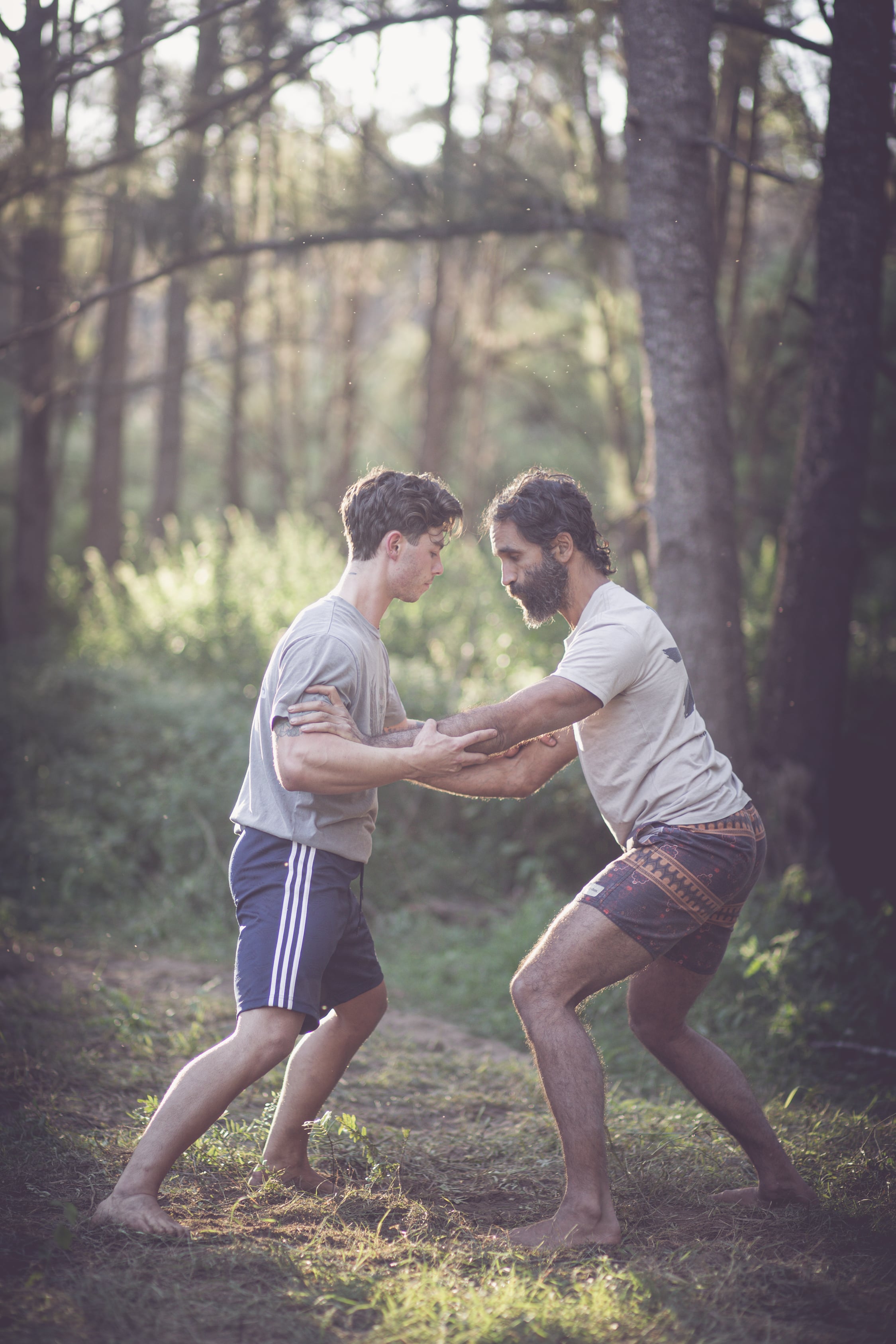
In the meantime, while you wait for that podcast to properly percolate (all the best things take time) I’ll leave you with a thought. “Tai Chi is more than the techniques, it’s the jins that make it interesting”.
If you listened to my last podcast with the esteemed Alan Wycherley of ‘In Defence of the Traditional Arts’, you might be forgiven for thinking that I’m all about training tai chi techniques. Now, while I’ve no objection to practicing a Repulse Monkey or a Part Wild Horse’s Mane (or two), or even a Snake Creeps Down, I definitely agree with the statement that tai chi is more than the moves. In fact, I think we can probably agree that tai chi applications aren’t that great as martial techniques. There are (shock!) other martial arts that have more effective techniques. Hello, Brazilian Jiu-Jitsu, I’m looking at you. Hello, Choy Li Fut. Hello, Western Boxing. Hello, Muay Thai, stop hiding at the back! Yes, all these martial arts have techniques that I would probably put ahead of anything found in a tai chi form, regardless of style. They’re practical and effective. And yet, I practice tai chi. So, why is that?
What tai chi has, and emphasises over techniques, are the eight energies – the jins: Peng, lu, ji, an, etc.. What you are doing when you practice a tai chi form is emphasising energy changes using these eight over technique. Flowing from one to the other a bit like a river flowing along smoothly. Sometimes there are fast bits, sometimes there are slow bits, sometime the river turns one way or another, but its energy flow keeps going.
When I practice other martial arts, my emphasis is more on technique. When I practice tai chi I can relax and get more inside the movement and concentrate on the energy flow.
And of course, in tai chi push hands you get to interact your energy flow with the energy flow of another person in a live situation, and that’s extremely valuable for developing martial ability. Techniques are another thing.
Now, if the analogy of a river doesn’t work for you then think of something else… perhaps, a snake? Snakes can flow along smoothly, they can change direction sharply and they can be incredibly powerful or incredibly quick, as well as slow and suffocating. They’re a great example of energy changes.
Homework
In preparation for my next podcast allow me to recommend a documentary by professional paleontologist and evolutionary biologist Neil Shubin called Your Inner Fish. (He’s written a book of the same name, if you prefer to read about him). Snakes come out to play in episode two. Here you go:


Referencing Steffan’s comment, referencing Richard’s comment:
Here’s me, from 15 years ago doing pretty much the same applications, dare I say slightly better than Dr Mark Cheng? 🙂
https://www.youtube.com/watch?v=tiZJJzvvEmM
What would you like to know about tai chi applications Richard?
LikeLike
Referencing Richard’s comment…
Firstly a disclaimer – I have no personal experience of using Taiji in even near-real world sparring let alone real-world fighting, and I lost all my (very few) Karate and Taekwondo fights as a youngster (but still had fun and enjoyed myself in a masochistic fashion!).
My comment is that I too like the look of Dr Mark Cheng’s moves and wrote about one of his YouTube appearances briefly last year…
https://www.blackwatertaichi.com/blog/yang-tai-chi-application
Enjoy the year of the 🐍!
Steffan
LikeLiked by 1 person
Regarding your comment that tai chi applications aren’t that great as martial techniques, perhaps a look at this video might give you pause for thought. https://www.youtube.com/watch?v=v4pezeJWpVM
LikeLiked by 1 person
Sure, the scales are like the qi spread evenly over the surface of the body?
LikeLike
The snake is the symbol of qi. However, it’s not because of the complex backbone and skeleton of the snake, it’s because of the outer covering of the snake.
LikeLike