From http://chentaijiquanworld.blogspot.com/ we find this nice quote about Chen Taijiquan:
“The, at first sight, seemingly humorous Chenjiagou saying to “always keep an egg under your armpit” reflects the importance of not allowing the upper arms to become stuck to the side of the body.
This idea of always keeping a space under the armpit is something I’ve heard said in other styles of Tai Chi as well, and it fits in very well with the idea of “Peng all over the body” that you’re aiming for in Taijiquan, that kind of “inflated like a balloon, but also soft, springy and heavy” feeling.
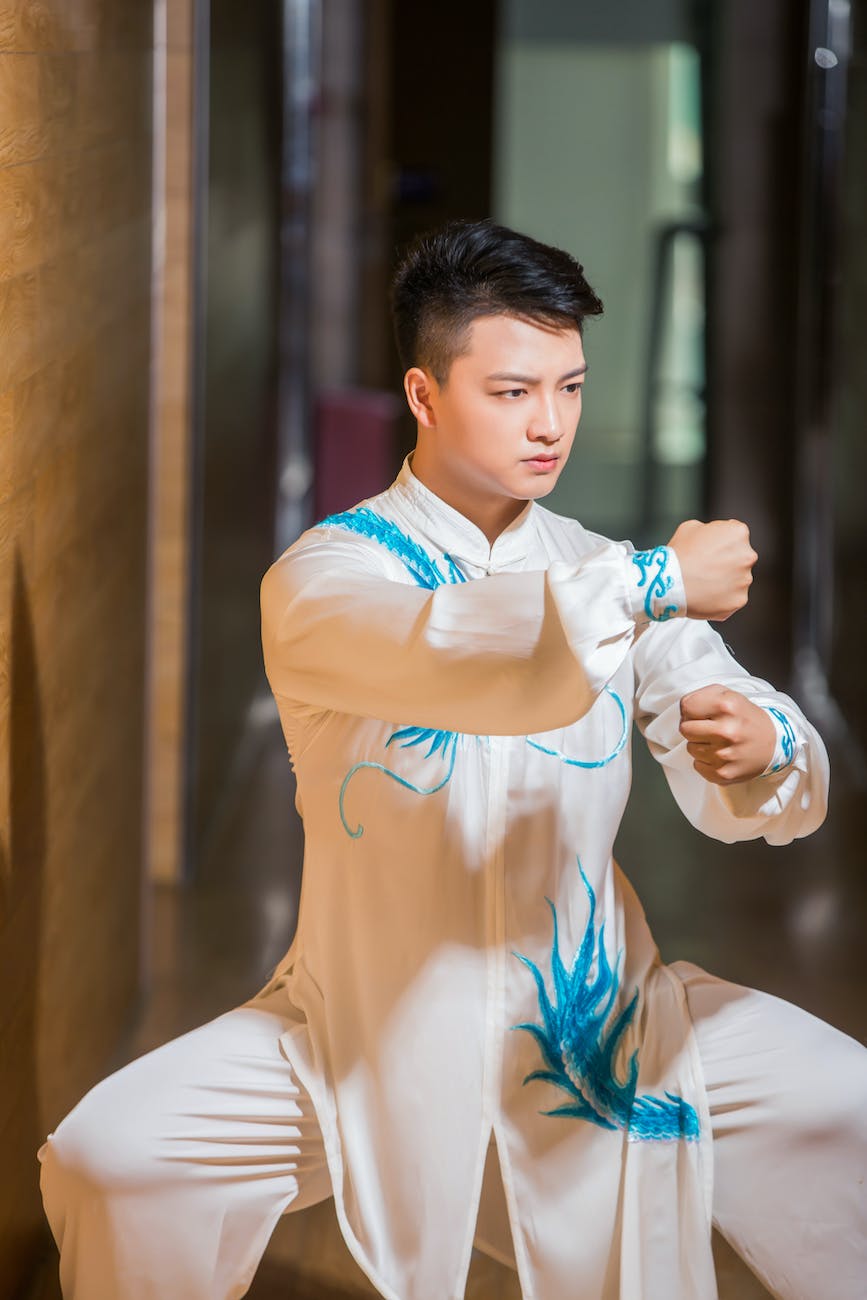
But how does that relate to the question I was looking at recently about the issue of where the elbows should be in Xing Yi? “The elbows never leave the ribs” is a line from the Xing Yi classics* (more of that later) that has caused a lot of arguments between practitioners on its interpretation and meaning.
And when you compare it to the previous saying about the armpit from Chen Village, it’s basically the complete opposite advice! And yet, both Taijiquan and Xingyiquan are said to be internal arts, and part of the same family. So, is the advice about the elbow a crucial element, as fundamental as, say, aligning the Bai Hui point (the crown) with the spine? Or is this more of a piece of strategic advice to do with the fighting style of Xingyiquan, and not anything to do with its fundamental body method?
Let me throw in a curve ball here and switch arts to BJJ. “Glue your elbows to your ribs” is something I say to my students in BJJ all the time when they are on the bottom defending a position like side control, knee on belly or mount.
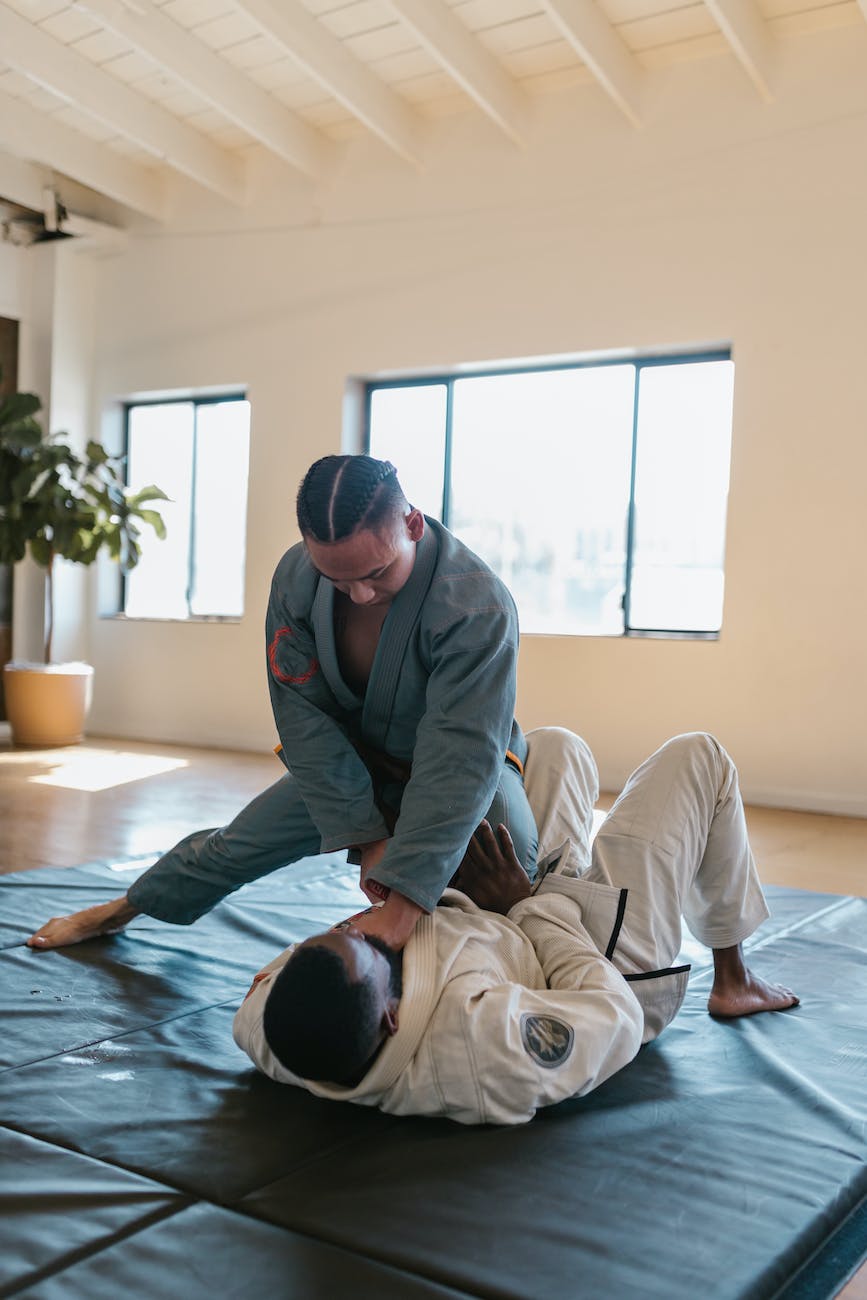
If you let your opponent separate your elbows from your ribs in that position then only bad things can happen, so it’s great advice. Normally after I submit somebody new in BJJ I stop to explain to them how I did it, so we can turn it into a learning moment. 9 times out of 10 my explanation starts with “it started when you let me into the space under your armpit”. However, it would be ludicrous to make it into a hard and fast rule, to suggest that you should never let the ribs leave the armpit at any moment in BJJ. There are plenty of other times in BJJ where you need to pull with your arm, and you can’t do that fully without separating your elbow from your ribs.
* And let’s also decide on what constitutes a “classic” in Xing Yi. My own teacher only considered the 10 Thesis of Yue Fei to be the classic writings in Xing Yi. Most of what people call the Xing Yi classics today are, in fact, writings created in the early 20th century when there was a publishing boom in martial arts manuals (See Chinese Martial Arts Training Manuals: A Historical Survey by Kennedy and Gau), and are based on the original Yue Fei writings anyway. For Xing Yi it started with Sun Lu Tang’s 1915 A Study of Xing Yi Boxing.
In the preface to his manual Sun says (Translation by Brennan), “While once at Bai Xiyuan’s home in Beijing, I got to see one of the Yue Fei manuals, not an original copy of course, but a handwritten copy made by someone in a later generation. It was not very detailed and unfortunately contained no explanations of its terminology, only the barest of text from beginning to end. I was suddenly inspired by this, immediately wishing to provide more complete information, even though I was fully aware that my level of learning and skill was superficial, and without being tempted to make anything up [in order to fill information gaps]. I secretly made my own copy and then deeply studied it, going through it posture by posture until bit by bit I had built up the material to make this book. There is no decorative language in it at all, for in my studies I have not dared to hold on to even the slightest exaggerations. Wherever flaws are found within my work, I hope my comrades will correct me, for which I would be very appreciative.
– sincerely written by Sun Fuquan [Lutang] of Wan County, Baoding, 1915, 1st month, 15th day”
In his manual Sun has a chapter called “The Essentials of Practice” in which we find the advice about elbows and ribs. (Translation by Brennan)
“ESSENTIALS OF PRACTICE
The essentials of practice in Xingyi Boxing: 1. Sink your waist. 2. Shrink your shoulders. 3. Hollow your chest. 4. Press. 5. Lift. 6. Horizontal and vertical should be clearly understood. 7. Lifting, drilling, dropping, and overturning should be clearly distinguished.
…
Your head presses up during drilling, then shrinks back during overturning. Your hands lift during drilling, then drop during overturning. Your foot lifts during drilling, then drops during overturning. Your waist lifts during drilling, then drops during overturning. [from the Xingyi Boxing Classics:] “In lifting there is a horizontal aspect, but it is invisible [because it appears to be only upward]. In dropping there is a vertical aspect, but it is invisible [because it appears to be only forward].”
Lifting is going out and dropping is striking, but when lifting is also striking, dropping is still striking. Strike with lifting and dropping, like the overturning waves of water, which are lifting and dropping. Regardless of lifting and dropping, drilling and overturning, going and coming, it should always be that your elbow does not leave your ribs and your hand does not veer off from your centerline.
These are considered to be the essentials in Xingyi Boxing. Knowing these, the right path in the art will be obtained.“
But you can see that even in this passage, Sun is quoting the older “Xing Yi Boxing Classics”. So, you have to start to wonder, how old is the advice that the elbows do not leave the ribs, really? I know some styles maintain that their “quan pu”, ancient collection of classic handwritten writings their family possesses has this advice in. At least with Sun’s work we have a published date we can be sure of.

But this also brings up the question of how much we dedicate ourselves to following the literal words of “the classics” to the letter. How much freedom are we allowed in our martial art? Were the classics intended to be a kind of set in stone, unwavering, set of rules to be followed on pain of death? The ancient writings of the founders always tend to take on this weight that gets heavier over time. If they’d been written a year ago, would we treat them with the same reverence? There are hard line Christians who treat every word of the Bible as the word of God, never to be questioned, and there are more modern progressive Christians who interpret the words in the Bible into a modern context, or see them as simply stories designed to teach an idea, and not to be taken literally.
So, the question still lingers, like a bad smell.
Where do you put your elbows in Xing Yi?
I think the best answer I’ve found so far is…..
“in between your shoulders and your wrists”.

 The Tai Chi Notebook