The latest episode of my Tai Chi Notebook podcast is slightly different to a regular episode. There isn’t a guest, but that doesn’t mean I’m entirely alone…
This episode is brought to you using the power of artificial intelligence. I fed a recent blog post about the Five Points of Control into Google’s NotebookLM, an AI that produces a podcast based on your article, just to see what would happen and the result was so good that I decided to put it out as a real episode!
I came across an interesting video by Ed Hines of i-Bagua.com recently that discussed some general principles of throws and takedowns. There is some good information here, especially about dead angles, and base. Have a watch:
Of course, in my ear I can hear my BJJ friend saying it’s all nonsense, “why not just do wrestling?”, or “he’s doing zero hand fighting!”. My friend tends to think that everything you can know, or ever want to know, about throwing and standup grappling is already inside wrestling.
He probably has a point, and a lot of the clever ‘internal’ things that Tai Chi teachers demonstrate are really just found in wrestling basics, or are obvious if you do wrestling. But here’s the thing – not everybody wants to do wrestling or even can do wrestling! It’s time-intensive hard, physical work, from which you will probably get injured, and, frankly, it’s for young people, not anybody over the age of 30. Not to mention that you’ll also need to invest in a good quality BJJ mat for grappling training.
If you’re going to approach takedowns without having the time or energy required to learn wrestling, then you’re going to need a softer approach. Oh, hello internal arts.
How to defend everything
I wonder if you’ve ever seen the video “how to defend everything” by Chris Paines on YouTube? (It won’t embed, so I’ve had to link it). It’s about BJJ, not internal arts, and focused ground work, not standing, but those principles he’s expounding, I feel, are universal to all grappling, and they’ve really changed my approach to takedowns. It’s also very simple. Simple is good – simple is practical.
At 50 minutes it’s quite a long video, and some of the important points don’t happen until near the end, so I’ll give you a quick summary: In a nutshell, there are 5 parts of the human body that you need to access in at least one place to achieve a throw or takedown.
Part 1. Back of the head, Parts 2-3. Armpits and Parts 4-5. Back of the knees.
(back of knee area extends down to ankle, armpit area extends down to hip).
When I do takedowns I just keep looking to insert a part of my body (arm/hand/foot/head/whatever) into one of those places. I just keep spamming it as an attack. If you keep doing that then eventually you manage to ‘own’ one of those places and a takedown will sort of present itself, especially if you get more than one.
You can analyse any throw on YouTube and you’ll find that the person who did the throw got some part of their body into at least one of those places to make it happen. Now, that might mean that the model being used is too general (i.e. it covers a lot of the body!), however, I think it’s still a useful model if you want to work on defence (which people rarely do!)
If you’re doing some grappling and you get taken down, then replay what happened in your mind – you will have let your opponent into one of the 5 spaces for too long. Long enough for them to get a takedown on you. The answer to preventing the takedown then becomes about reclaiming control over those 5 points of your body, rather than trying to do some sort of pre-scripted counter to the throw.
N.B. You can look at standing on the foot as a possible exception to these rules, however… that doesn’t tend to work in a pure grappling environment, unless you also get one of the other 5 as well. Standing on a foot and striking somebody however is a different beast – it’s much more effective. It’s the same with standing wrist locks… they can work, but 9 times out of 10 they won’t – i.e. they are very low percentage, and almost certainly don’t work against experienced people. Your time is better spent trying to get one of the 5 control points. (Apologies to Aikido 🙂 )
N.B. 2 – But what about the gi or wrestling jacket? Well, think of it this way, a collar grip is simply a very effective lever to the under armpit area, so when you grip the collar, you are effectively cheating because it’s giving you easy access to their armpit area. It’s why, when we go for chokes we grip deep on the collar, under the ear, but when we go for throws we tend to grip much lower down, so that the lever to the armpit is stronger.
When Josh Robenblatt got to the age of 32 and realised he wanted to fight in an MMA match, he had to confront a lot of physical problems as well as inner demons before he set foot inside the cage. While the physicality of fighting is explored, this book is mostly about Josh’s internal struggles as a lifelong pacifist coming to terms with the casual approach to violence that MMA engenders. For many people Josh’s exact internal struggles wouldn’t exist (especially his frequent reference to his Jewish ancestry), but in a general sense they do exist in some form in all of us, and that’s what makes this book fascinating for anybody who trains in a martial art. It’s also a rare insight into the realities of training for an MMA fight – how much training is actually required, dealing with injuries, how it affects your relationships with friends and family and what the brutal realities of weight cutting are all about.
Josh writes well, particularly when it comes to articulating his inner thoughts on the subject of dealing with actual violence, either as a participant or an observer, and the transformative, almost transcendent, power that coming to terms with it often provides. I found he had managed to put into words something I’d felt before in my own life, but never stopped long enough to really think about and verbalise. As such ‘Why We Fight’ kept my attention constantly until the end, and you do become drawn into his underdog story and intrigued to find out what happens when he finally gets into that MMA match. I won’t spoil it here.
I’m always fascinated by British martial arts, because, well, it’s where I’m from. Some of them have survived in small communities – mainly wrestling – and a lot more of it has been recreated from old manuals, which is mainly the weapons systems, which HEMA has promoted.
The most famous one is Catch Wrestling, which thanks to the famous Billy Robinson has an actual unbroken lineage from today that reaches back into the past. Billy Robinson trained in the famous Snake Pit in Wigan under Billy Riley. You can see them at the Snake Pit in this famous documentary:
I’d recommend giving the latest episode of the Strenuous Life Podcast featuring Oz Austwick of English martial arts a listen. It’s about the subject of British martial arts, and what we have left. Here are the show notes:
“In episode 395 of The Strenuous Life Podcast I talk to Oz Austwick, who has extensively studied armed and unarmed combat systems in England and Europe. Today we focus on the historical wrestling systems of England…
Cornish, Lancashire, Devonshire, Cumberland and Westmoreland wrestling and catchwrestling
The influence of Japanese Judo and Jiu-Jitsu on English Wrestling
The great Billy Robinson and his influence on Kazushi Sakuraba
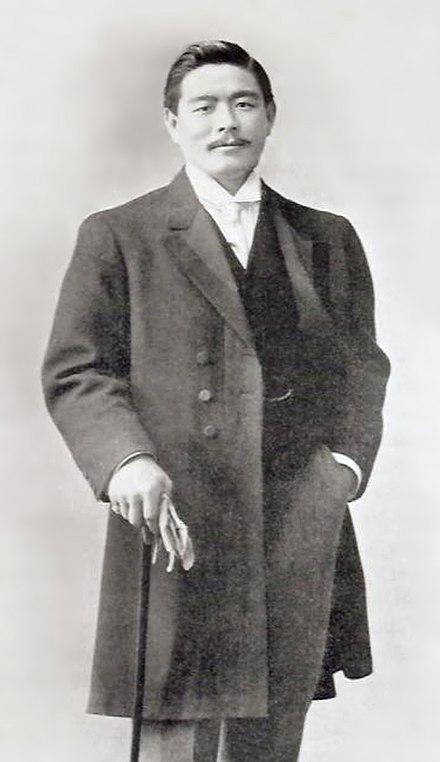
The following is said to be a video of Mitsuyo Maeda (1878-1941), the man who famously brought Jiujitsu to Brazil from Japan and (allegedly, since there is some debate about whether he was taught directly, or by a student) taught Carlos Gracie of the Gracie family, who went on to popularise Jiujitsu in the country, creating the Brazilian variation of the art, which hit the big time after UFC 1 in the USA in the 1990s, and is now practiced the world over.
I’d recommend watching it at half speed -( go to Settings/ playback speed/ 0.5 ) – since like many films of the era (circa 1908), it’s sped up.
N.B. The original YouTube video has been removed, but I found the same footage on Instagram here:
What do you think? My first reaction is that this is clearly the Pro Wrestling of the time. You can see that the performance is done purely as a kind of entertainment, not as a real fight at all. Those are real jiujitsu moves being demonstrated (sacrifice throw, hip throw, etc) but it’s also scripted like a very Chaplinesque slapstick comedy involving members of the crowd getting up on stage to join in.
As I mentioned recently, I’ve started taking my son to watch local Pro Wrestling events because he really enjoys them, and it’s given me a greater respect for Pro Wrestling and the skills of the performers.
Mitsuyo Maeda was known to have performed challenge matches as a way of earning a living, but I’ve always thought that his stage name, “Count Koma”, sounded more like a sideshow wrestling name than anything else. And here’s proof that he was earning his living as an entertainer. That’s not to say that he couldn’t have also engaged in serious challenge matches, but I can’t see how those were putting food on his table.
First though, we have to be confident that this is Mitsuyo Maeda. It certainly looks a bit like him. But can we be sure?
Maeda c. 1910
The find is credited to an Instagram account called origensdojiujitsu the text next to the video is in Portuguese, and the Google translation reads:
“In the 20th century it was common for Jiu-jitsu performances in Theaters and Circuses throughout the West, many Japanese emigrants, as a way of surviving, entered the World of Show and transformed their Martial knowledge into pure entertainment.
Due to the numerous presentations in theaters and circuses, the Soft Art gained notoriety in the West, it was common for the fighter to perform and even throw challenges to the spectators of the Audience, a common practice used by Conde Koma and his compatriots.
In silent cinema, some presentations in short films served as a trailer between one film session and another, in Brazil and in the world, both the armed forces and the shows contributed to the popularization of art.
In Brazil, the first exponents traveled both in the military environment and in circus shows such as Geo Omori, Conde Koma, and Satake, among others.”
So, this recording could have been a trailer shown between silent films. it certainly sounds credible, and if legitimate, it’s a fascinating look back at the origins of Brazilian Jiujitsu, and perhaps a refreshing break from the tough guy image that it later became associated with.
Salvatore Pace, or Salvo for short is a 3rd degree black belt in Brazilian Jiujitsu and owner of Gracie Barra Bath, the Head Quarters of Gracie Barra in the South West of the UK, Gracie Barra West Wilts and co-owner of Gracie Barra Gillingham. He is a two time NAGA European Champion and Grappler’s Quest champion. Salvo grew up in Sicily and had a passion for martial arts as a young boy, practicing everything he could get his hands on, from boxing and Kung Fu to wrestling, and then MMA in the emerging combat sports scene in the UK, but it was his first encounter with Brazilian Jiujitsu and his main teacher Professor Carlos Lemos Jnr, that changed his life forever and put him on a plane to Brazil and then the USA, where he trained with some of the biggest names in the sport.
Returning to the UK Salvo had a dream of teaching jiujitsu for a living and set up Gracie Barra Bath in 2007, back when most people hadn’t even heard of Brazilian jiujitsu. And that’s where our paths crossed, I first met Salvo way back in 2011 and I’ve been with him ever since, getting all my belts from white to black from his hands and it’s been a pleasure to watch his students and academy grow and develop and expand to new locations around the South West.
Everybody was kung fu fighting! Photo by cottonbro on Pexels.com
It’s time to say something slightly controversial, and I apologise in advance for the click-baity feel of the headline, but there’s no way to sum up a nuanced argument like this in less than 10 words. The thing is that there’s a real fascination these days with delving into Karate kata or Kung Fu forms and discovering the ‘real’ applications, hidden in plain sight, which are, always, wrestling moves, which were hidden away in the murky depths of time for vague and unspecified reasons.
This marital arts version of a conspiracy theory is a really popular idea at the moment, because, frankly, the wresting interpretations work a lot better than most of the applications of striking you see in these arts. However, that doesn’t mean its true!
Here’s a current example:
No, no, Kung Fu is NOT 90% wrestling. It’s just not!
Now look, I’m not saying that there are no throwing or takedown applications to Karate and Kung Fu moves – of course there are! But just because you can re-engineer some wrestling applications out of what are obviously supposed to be strikes, does not mean that those are the ‘original’ or ‘real’ applications. They are certainly an interpretation, but to claim some sort of historical precedent is going too far for me.
I would call my view somewhat heretical to modern orthodoxy based on the amount of comments I see under videos of people revealing the ‘real’ application of Kung Fu or Karate moves. It’s almost 100% positive, along the lines of “finally this move makes sense!”. I refer you to my previous point – just because these moves work better than the wacky traditional blocking and striking application usually taught does not mean these are the original applications. It’s a logical fallacy. A better question would be to ask, “why did they simplify or dumb these forms down so much that they’re unusable?” But I guess that’s a different topic…
Another reason why this wrestling-first approach is so popular is that learning real grappling or wrestling is just too much like hard work for some people. You’re going to need a working pair of knees and a body that’s probably 20-30 years younger than the one you’ve got, especially if you’re starting grappling from scratch. For the ageing martial artist the idea that they can just keep doing the katas or forms that they already know and now they are somehow also doing grappling is very tempting. As somebody on the wrong side of 50 I can see the attraction of this idea myself! But like all shortcuts, it cuts out the years of experience and hard work you’re going to need to put in if you want something you can use.
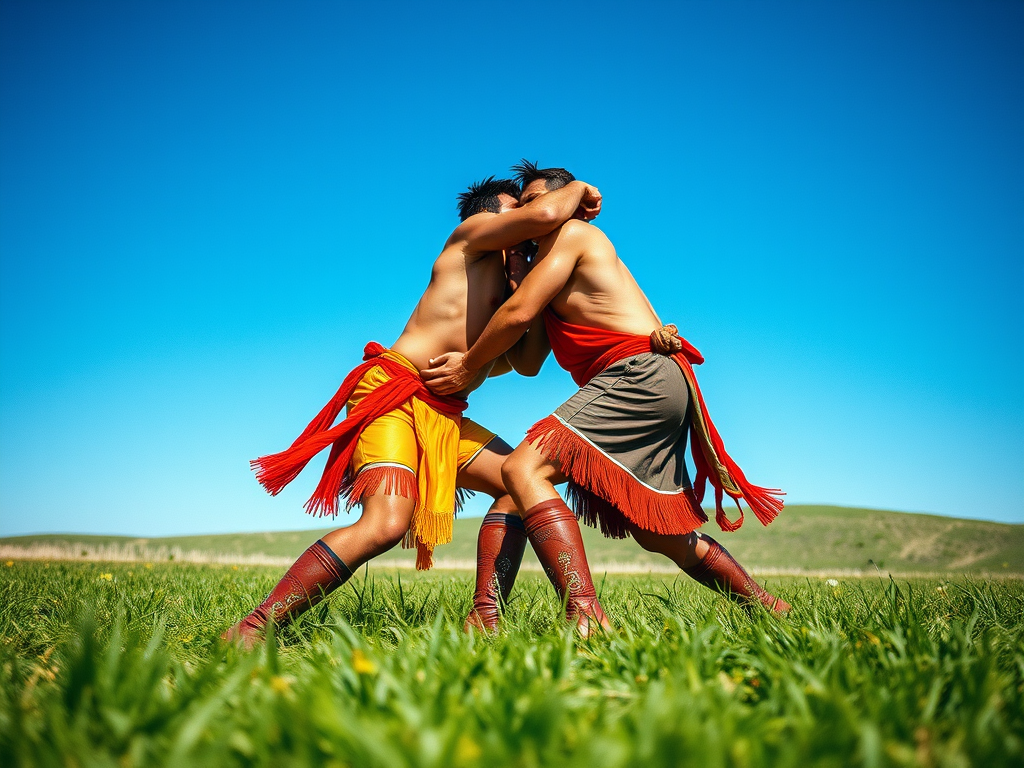
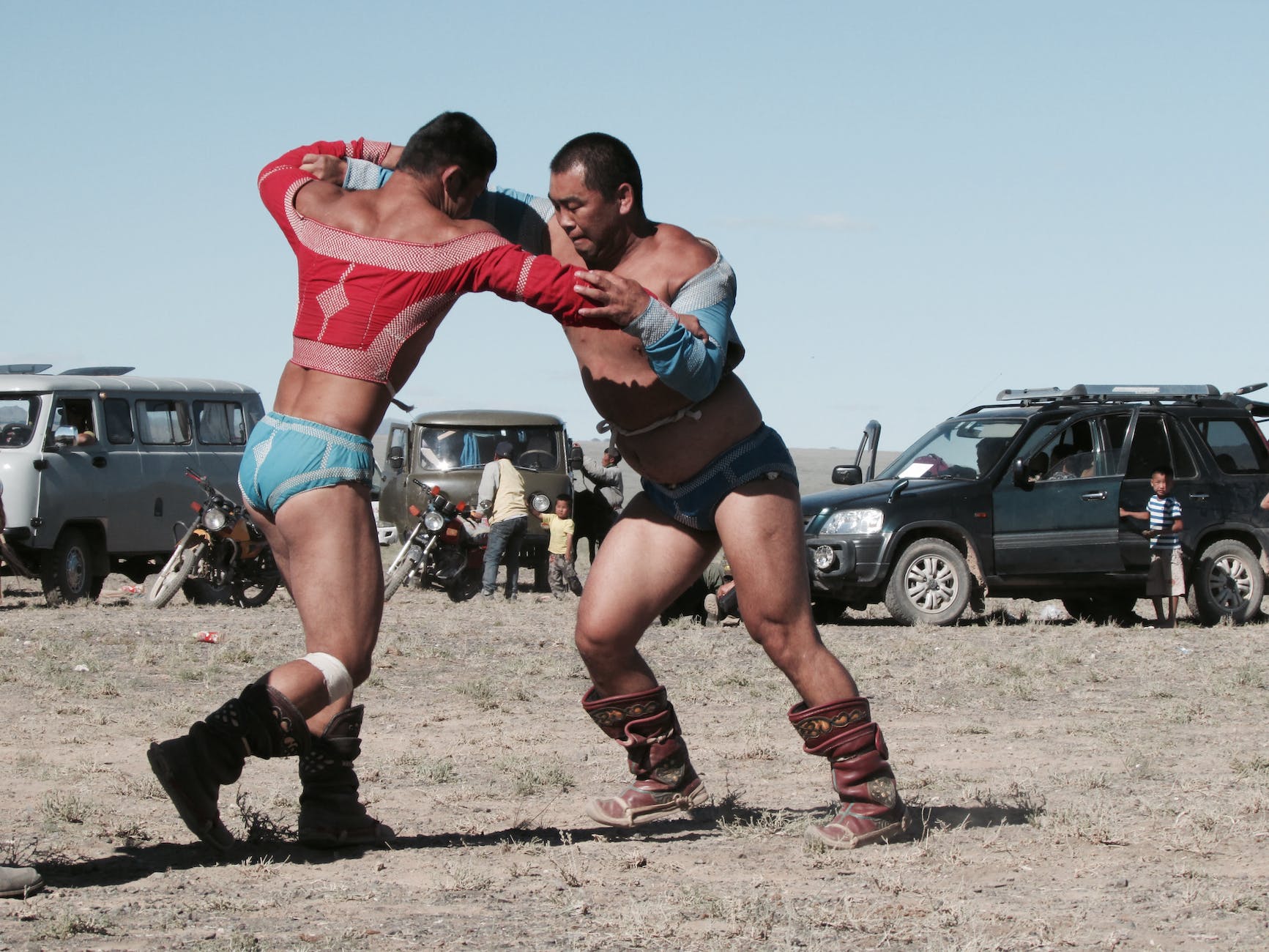
Wresting is, of course, older than martial arts, like Karate or Wing Chun, by thousands of years. This is not disputed. It seems that wherever men or women gathered, in any country, and conflicts needed to be resolved, wrestling naturally appeared as a way for this to happen, or as a way to keep people entertained, build a community connection, or in good physical shape for battle. It was a multi-purposed activity. For example, there has been Mongolian Wrestling for pretty much as long as there have been Mongolians. And it’s a tradition that has survived.
Modern Mongolian wrestlers. Photo by Agostino Toselli on Pexels.com
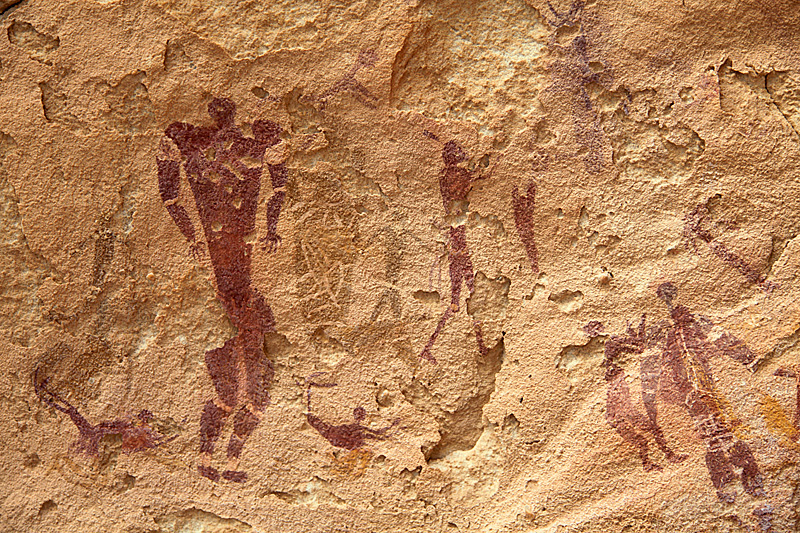
Cave paintings have been found in the Lascaux caves in France that have been suggested to depict sprinting and wrestling in the Upper Paleolithic time period, which is around 15,300 years ago.
Cave man wrestling?
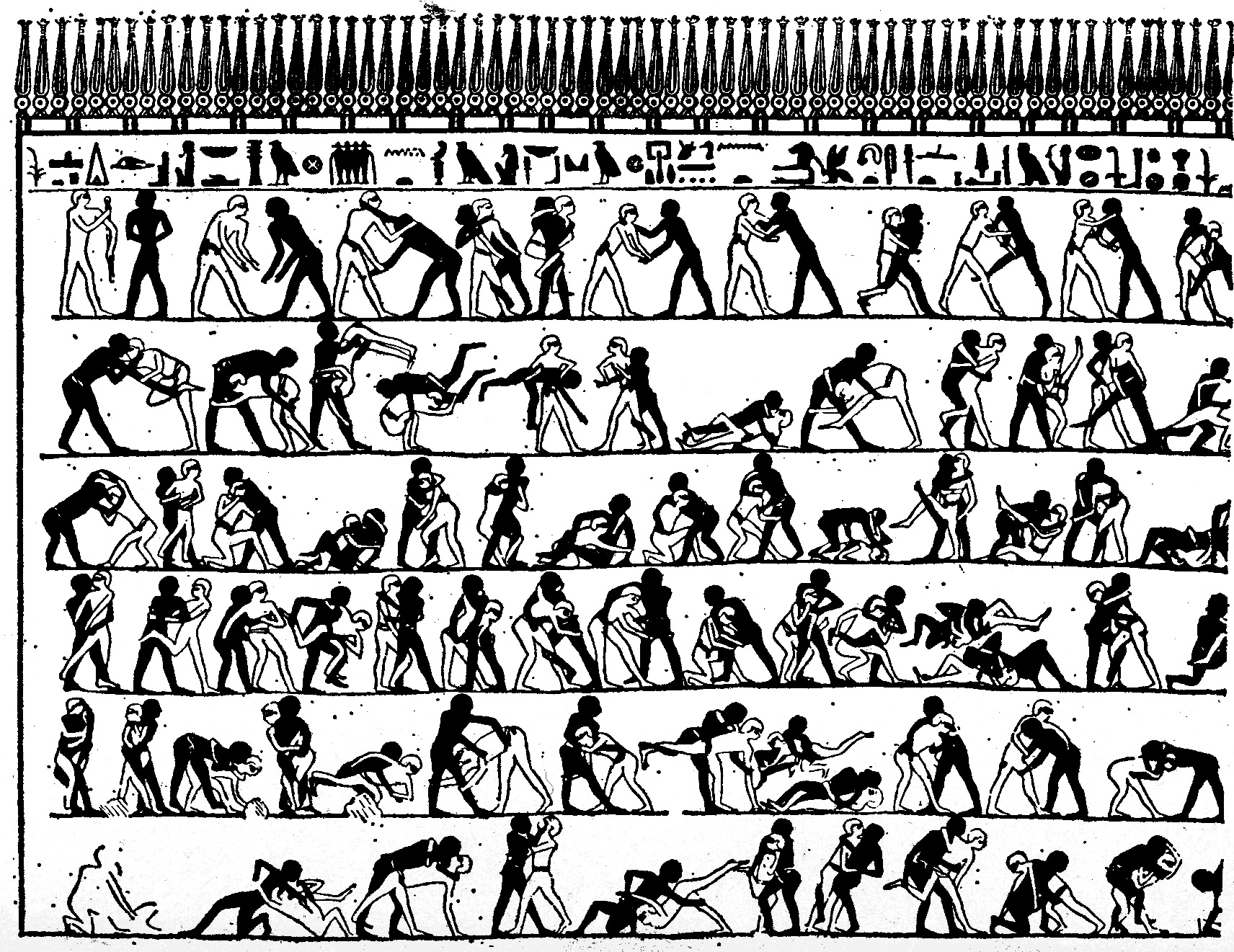
This Egyptian burial chamber mural from Khnumhotep and Niankhkhnum’s tomb dates to aroudn 2400 BC.
Wrestle like an Ancient Egyptian.
Almost every traditional culture has, or had, some form of indigenous wrestling. Many cultures that have evolved into living in villages, then towns, then cities have managed to maintain their wrestling traditions, even to the modern day. But most we have lost. For example, Collar and Elbow Wrestling was hugely popular in Ireland in the 19th century and spread to America where it again proved hugely popular with thousands of people coming to watch matches (even President Abraham Lincoln was a practitioner!)
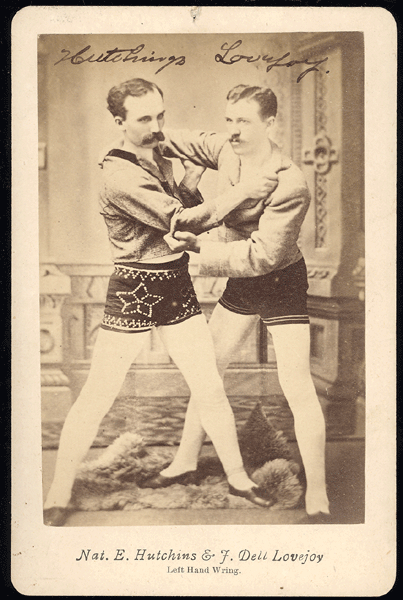
Collar and elbow from the 1880s.
But huge changes in where people lived and worked lead to its demise until it vanished completely even in its native country. It seems that whenever a country experiences its industrial revolution, requiring massive shifts in population distribution, the folk traditions tend to die off, and wrestling is a folk tradition.
But that does not mean it is the original of Karate and Kung Fu.
I appreciate that you might not agree with me, so let me give you an example.
This video is comparing a karate technique to a Shuai jiao wrestling throw:
Yes, the movements have a physical similarity, but you are never – never! – going to learn how to do that throw by doing that kata. I mean, you could make that work so long as you only wrestle fellow karate practitioners and never ever get in a match with somebody who actually does wrestling. Then you’ll be fine. 🙂 Was this the original application of this kata? Who knows? But to assume ‘yes, it must be wrestling’ is such an illogical leap that to me it’s going too far. If you want to learn wresting, then just train wrestling. It’s that simple.
Here’s the Karate Nerd with a similar take on Karate Kata. Now, I quite like the Karate Nerd, so this is not an attack on him, but rather just an example of the current trend in marital arts regarding wresting applications and where it’s going.
Anyway, I feel like I’ve made my point and I’m just repeating myself now, so I’ll leave it there. But let me just recap one last time. Yes, there are some wrestling application in Karate and Kung Fu, yes you can re-engineer pretty much any movement to make it into a wrestling move, and no that does not mean that “it’s all wrestling“.
I’ve written quite a lot on this blog (and upset plenty of people in the process!) about the deep connections between performance, ritual, religion, theatre, entertainment and martial arts, particularly in the Chinese martial arts traditions. But it’s not only the Chinese martial arts that function as this one-size-fits-all container for self defence techniques, self development techniques, pugilism and good old-fashioned raucous entertainment. There are strong traditions of wrestling-based entertainment in almost all cultures. Whether it was the gladiators of Ancient Rome or the Jujitsu mania that swept early 1900s Victorian England and America alike, or the recent ADCC 2022 grappling championship with a 14,000-strong audience, for as long as men (or women) have wrestled, sparred or boxed there have been other men working out ways of getting people to pay to watch it.
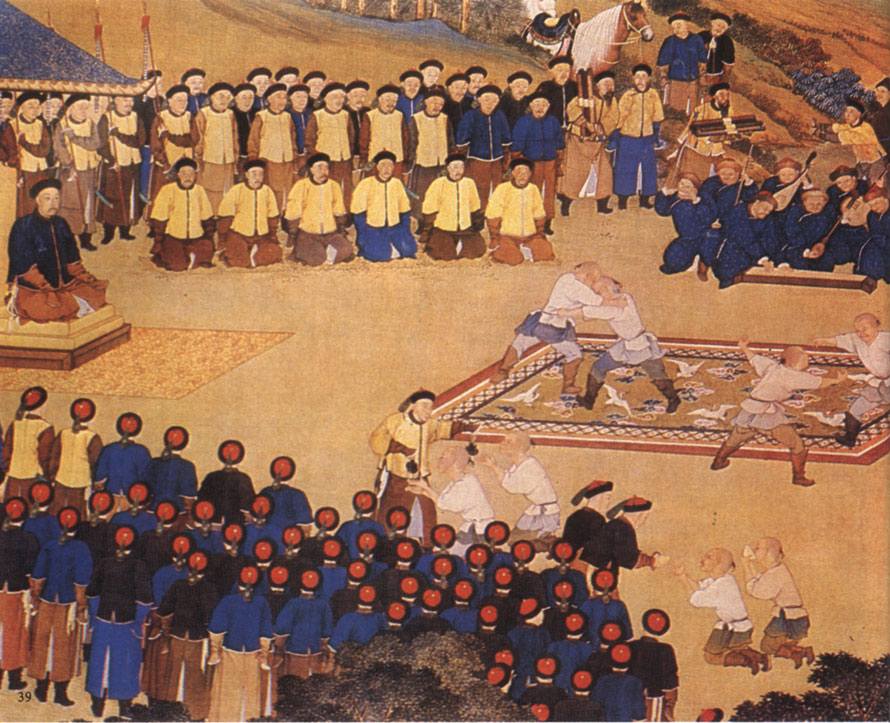
A section of Qing Dynasty (1644-1912) court painter Lang Shining’s painting depicting a wrestling contest in the royal court, performed as entertainment for the emperor.
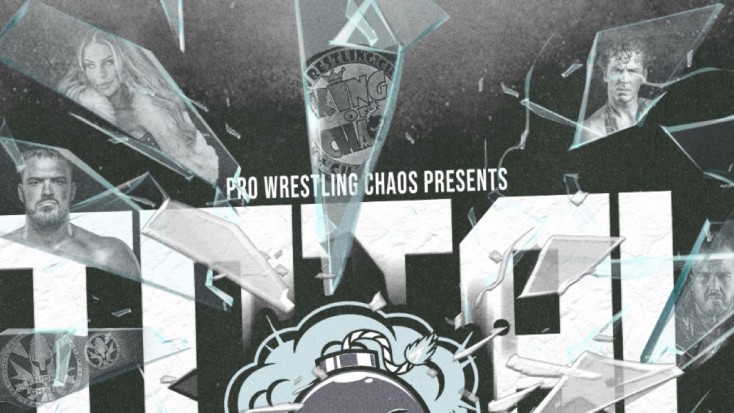
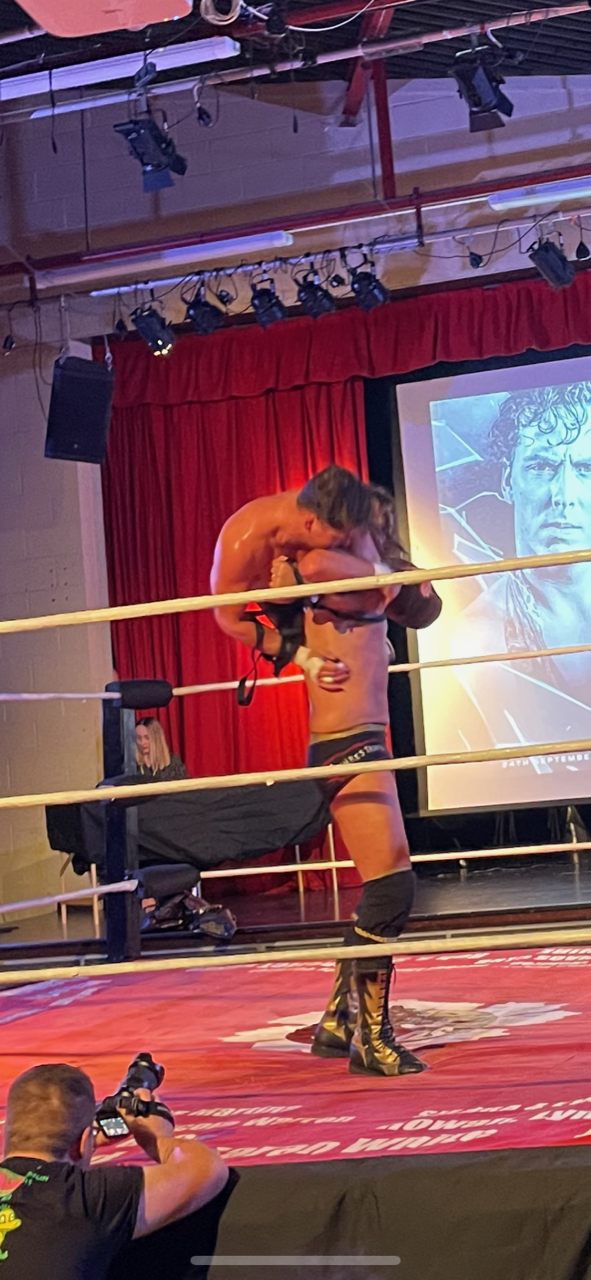
England is no different, and so I find myself at Total Chaos, in Kings Oak Academy, a secondary school in Bristol, England, for my first visit to a real life Pro Wrestling event. I’m here ostensibly because of my 13-year old son and his obsession with WWE, which he watches almost every day, but I can’t deny I’m curious to see what all the fuss is about myself; to see what martial arts looks like when the performance elements aren’t hidden, disguised or denied, but brought to the fore and celebrated.
It begins: the first match is between the heel – the obvious bad guy – Tate Mayfairs – and the face, the obvious good guy, Joseph Connors. In terms of audience participation knowing who you need to boo for and who you need to cheer for takes a lot of the mental load off you, and you can just relax and enjoy it going along with the various chants that spontaneously break out amongst the crowd. In that way it’s a lot less stressful to watch than MMA, and a lot more family friendly and less bloody.
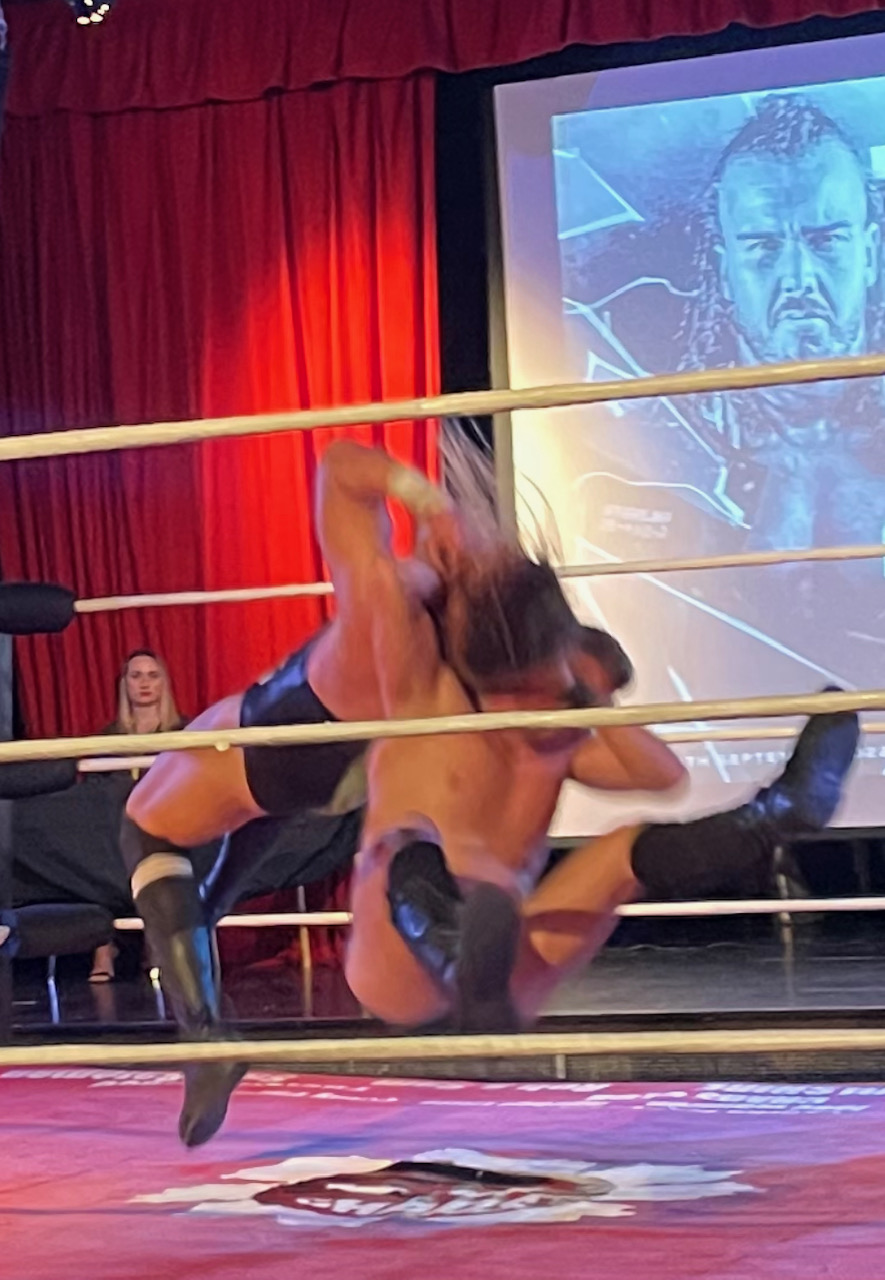
Tate Mayfairs about to be thrown by Joseph Connors
And the skill level is really impressive. Mayfairs and Connors are engaged in a ‘strap match’, in which they are tied together with a strap at the wrist which they both utilise in very technical ways that reminded me of the rope dart techniques found in Chinese marital arts.
As a child I used to watch wrestling religiously on World of Sport every Saturday morning in the 70s and early 80s, when it was on one of the only 3 TV channels you could watch in the UK. That was the era of Giant Haystacks, Mick McManus, Catweazle and Bid Daddy.
Things have come on a long way since then. Joseph Connors really looks the part of a modern day WWE wrestler: he’s lean, strong and his hair is long. Although Chris Hemsworth-lookalike Charlie Sterling who comes on next has even more hair, and even tighter pants.
There are surprises throughout the night. The central conceit of Total Chaos is that you don’t know who is coming on next, you have to see who the Chaos Generator throws out – we get to see current King of Chaos champion Danny Jones vs Mulligan (who was a properly nasty heel) in a match to be decided by who got smashed through a table first, and then there is the surprise inclusion of “Jack from the bar” a comparatively skinny teen who had been serving drinks all evening from a small hatch in the foyer. Jack gets thrown into the show to make his Chaos debut in a male vs female match against the formidable Ava White, which was great fun. The poor boy didn’t stand a chance, but what a way to go.
The Total Chaos Generator throws JACK FROM THE BAR into his Chaos Debut and the Chaos Fans are here for it!!! pic.twitter.com/Mb7x8nmQYq
There was an all-female match up with Kanji vs Rayne “Make it rain!” Leverkusen, a tag-team event featuring the DEAD SAD BOYS and, surprisingly, 3 other wrestlers, (whose names, I apologise, I forget) and then a surprise final bout – Wait! It’s not over! – as “All Wales Champion” Brendan ‘Bronco’ White storms the stage to take on Eddie Dennis. These guys really brought the house down with incredible back flips from the top ropes.
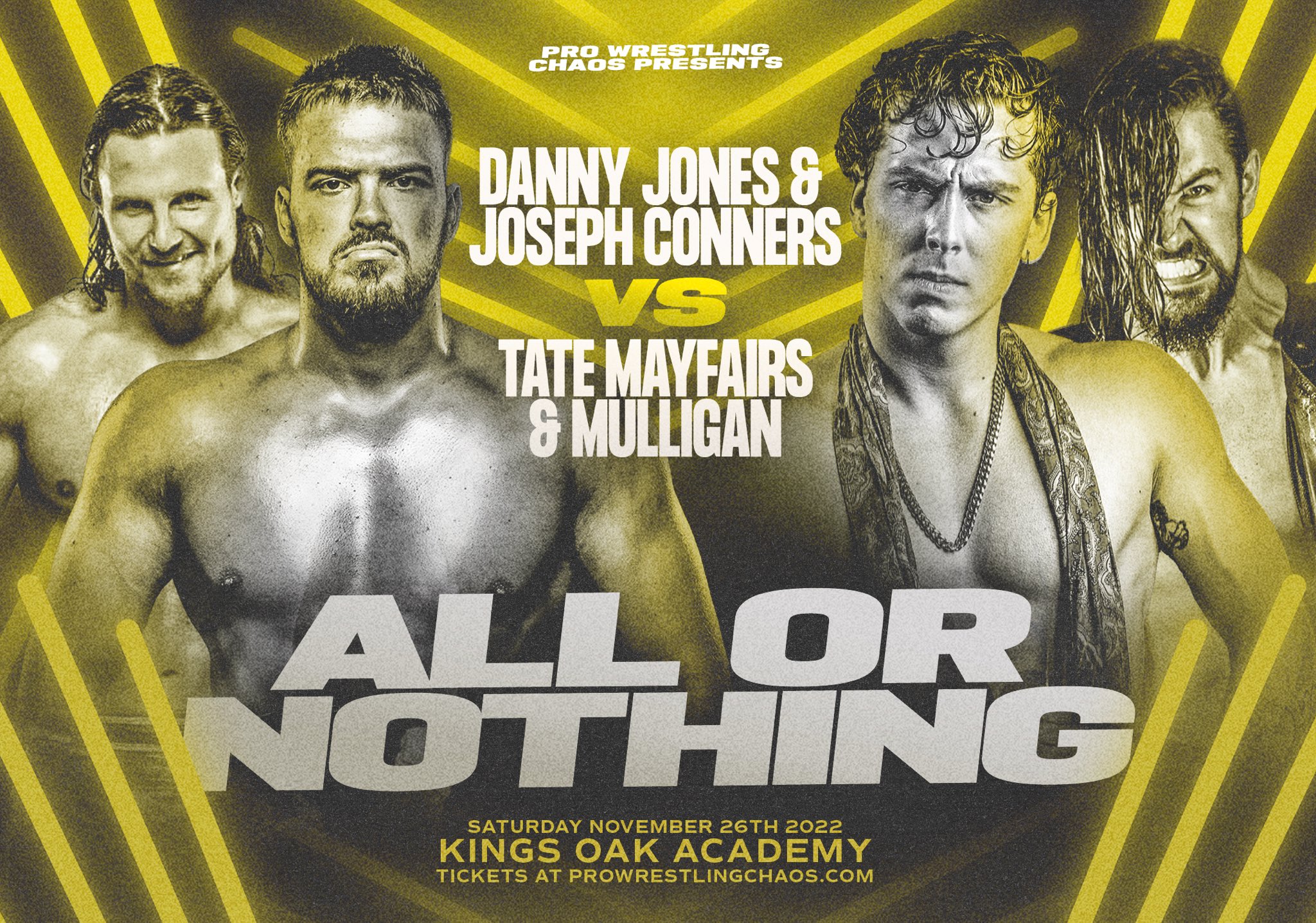
Verdict: The athleticism and skill is real and it’s fantastic entertainment. There are moments of comedy, danger, tragedy, heroism and the wrestlers put it all on the line. Throughout the show the plot line of two rival wrestling factions, personified initially by Mayfairs and Connors, is weaved and developed into a feud, building to a grudge match tag team event bringing in Danny Jones and Mulligan, that will be decided in November at the next Total Chaos event: All or Nothing. I can’t wait! I just hope my 13-year old son still wants to go, or I’m going to have to go on my own…
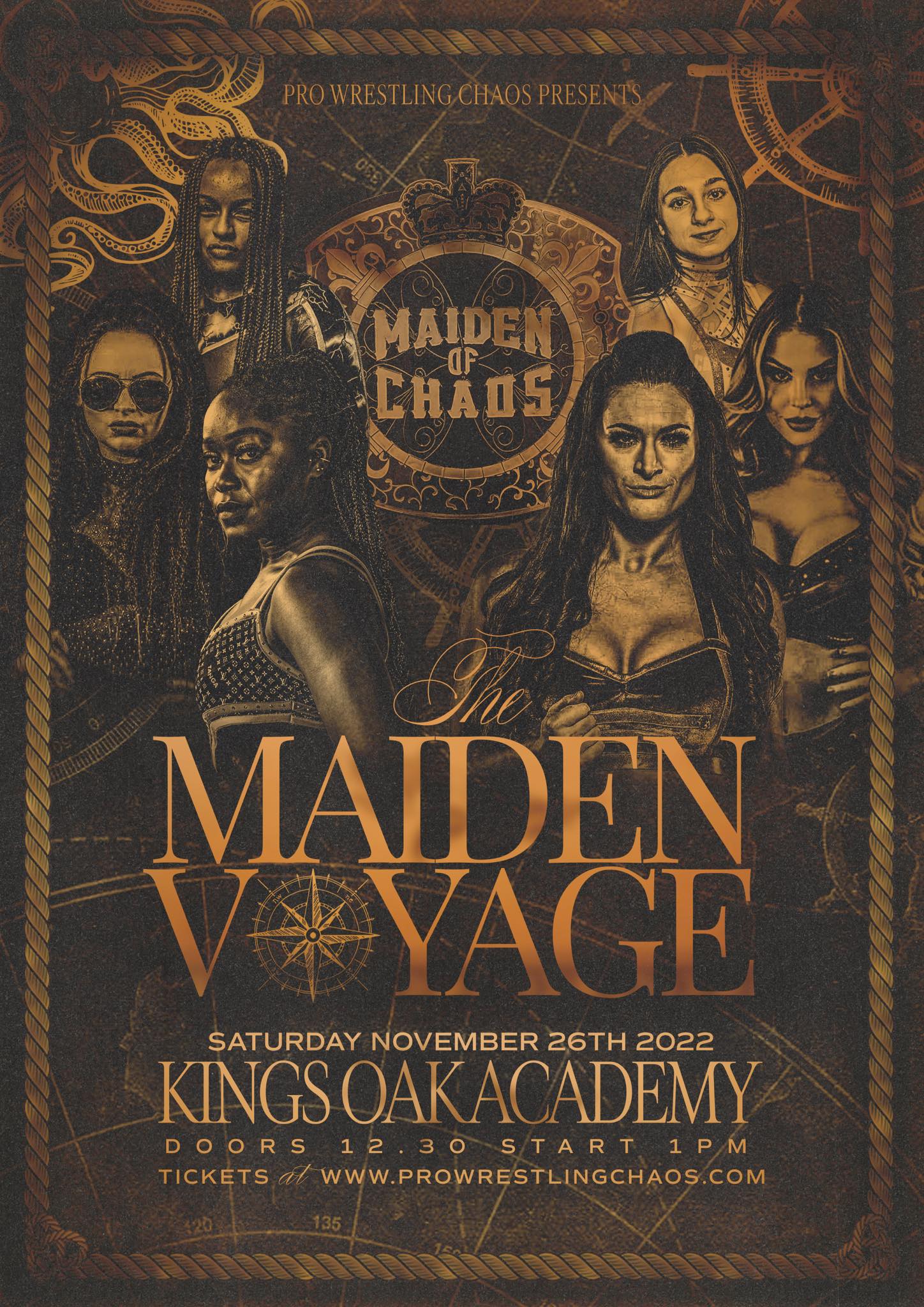
But that’s not all – there are two shows that day with the first being to decide the new Maiden of Chaos Champion. Don’t miss it!
I’ve been meaning to write a post on Shaui Jiao, the Chinese wrestling style, for a while now. We covered Shuai Jiao in one of our Heretics Podcast episodes a while ago, but you can’t say that it was a particularly good primer on what Shuai Jiao is. As usual, Damon found an obscure angle and the episode is really more about the strategies associated with the Azure Dragon in China, and linked somewhat tangentially to Shuai Jiao.
Shuai Jiao is wrestling. It’s done in a jacket, which can be gripped, and consists of a variety of throws and trips, the aim being to get your opponent to touch the ground with any part of their body other than their feet. It’s popular in various parts of China and regional styles have sprung up in different areas.
Almost any book you buy on Shuai Jiao will inevitably start with a history section, where the author links Shuai Jiao back to various ancient Chinese wrestling styles from different points in time – things like Jiao Di (‘Horn butting’) get mentioned. The idea is to establish a link between the Shuai Jiao practiced in China today and ancient wrestling arts spanning back several dynasties. The propaganda arm of the Chinese government would really like you to know that Shuai Jiao is 1) ethnically, Chinese, the ancient art of the Han peoples, and 2) Old.
Unfortunately, neither of these things are true. While things like Jiao Di, and actual wrestling styles existed in the past, there is no connection between them and Shuai Jiao.
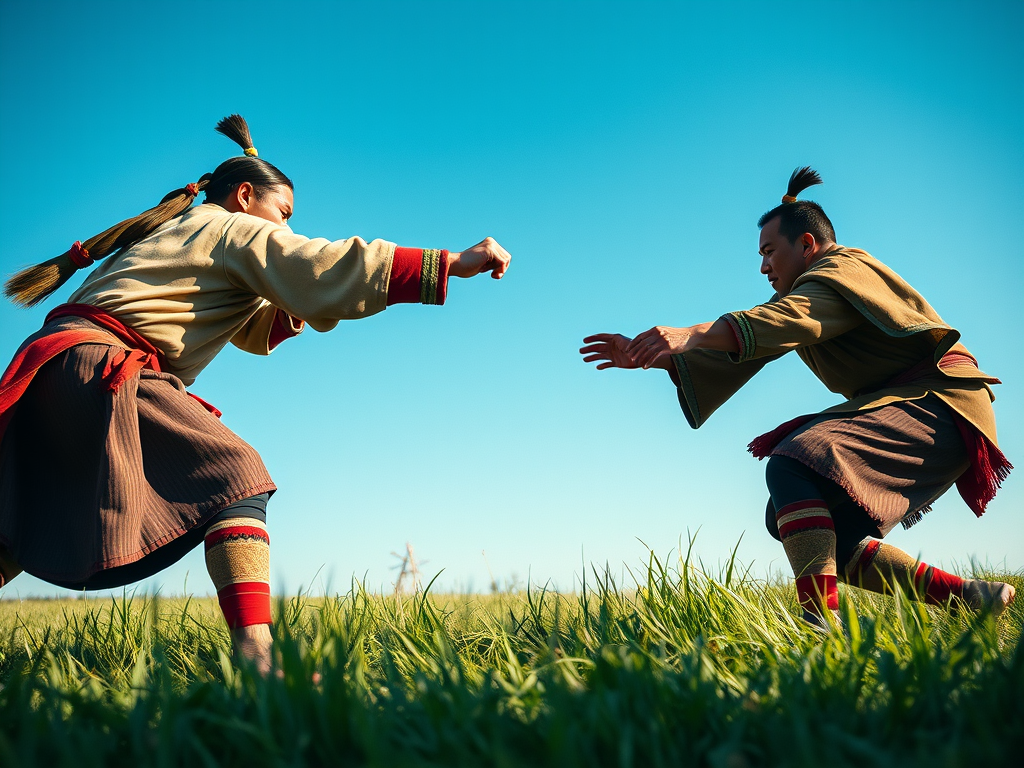
Shaui Jiao itself is neither ancient or “Chinese” in origin. It has no direct connection to anything practiced by the ethnic Han Chinese. It was actually imported by the Manchu, the northern tribe who invaded China, overthrew the Ming Dynasty and started the Ching dynasty from 1644-1912. Like the Mongols before them, the Manchu loved wrestling as a form of strengthening soldiers and entertainment.
Byron Jacobs has produced an extensive history of Shuai Jiao over three videos that’s well worth a watch if you want to understand where Shaui Jiao really came from:
Of course, the origins of an art have no direct relationship to its effectiveness. As Damon says in the Heretics episode, being good at any form of wrestling is a big advantage in any martial art. Physical conditioning, being a strong robust person who is fit and good at physical alignment is a useful thing.
But wrestling often has more of a community function than other martial arts, and it’s the same in China as it is in the West – wrestling can be great fun. There is a Chinese Shuai Jiao tradition called Tian Qiao Shuai Jiao, which is an intangible cultural heritage of China. It’s a style of wrestling-based entertainment that any body who is familiar with the same tradition in the West will instantly recognise:
There’s a new episode of the Heretics podcast out. In this chat, Damon and I discuss Shuai Jiao, the popular modern Chinese wrestling style and try and separate fact from fiction. We discuss what martial arts it is related to and also if there is a connection to Japanese Kempo.
The best thing about this episode is that Damon talks a lot about Chinese cosmology, and how it may related to an earlier form of Chinese wrestling – we look at the cosmological concept of Qinglong, or the Azure Dragon.
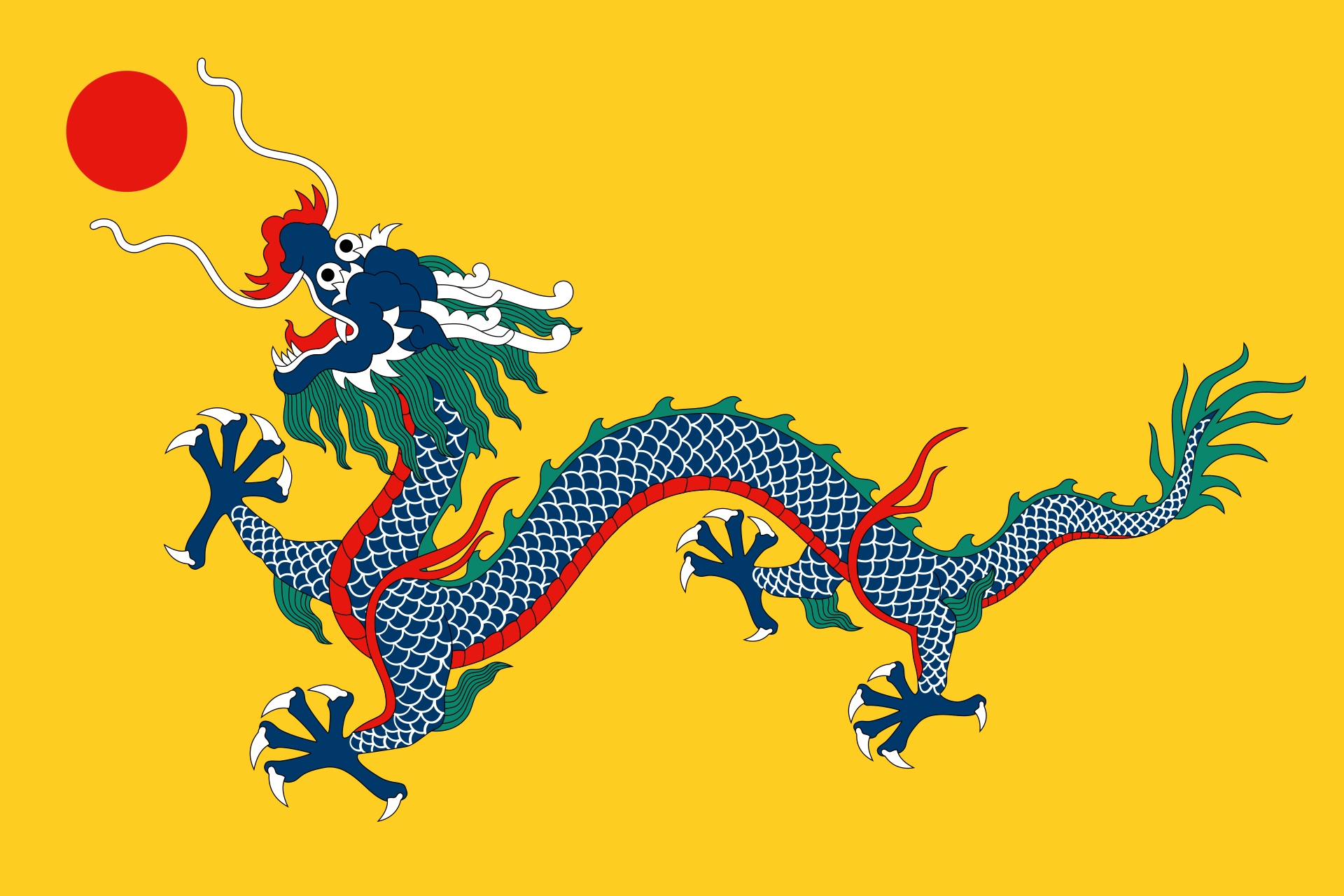
The Azure Dragon on the national flag of China during the Qing dynasty, 1889-1912:


 The Tai Chi Notebook