“I tried Tai Chi and it’s not what I expected”

This is a nicely made video about Tai Chi Push Hands:

Some quick observations:

1) I quite like the emphasis on feeling where the opponent is during push hands instruction – I think this is bang on.

2) “Sensei Seth” correctly identifies very quickly that push hands competitions are very, very, similar to Sumo. And if you’re good at Sumo then you should be good at this, and indeed, he is.

3) There are some fascinating insight into the teaching process here. Seth seems to do a few things that are “wrong” according to the laws of Tai Chi, but are working (i.e. sticking his butt out and leaning forward), however, he gets corrected by the instructor to stop doing it. I just find that interesting. The “Stop cheating, it makes you win!” mentality is rife all over the Tai Chi world. It’s one of the reasons I avoid push hands with people unless the conditions are right (i.e they are the right sort of person). I much prefer the “Hey, if it works, then it works! It’s up to you to figure out what I’m doing and stop me” mentality of BJJ.

4) In the end, with competitive push hands, the better wrestler always wins the exchange (for example, when they are doing the ‘foot outside the square’ push hands). So, if you want to be good at competitive push hands then why not just learn some wrestling? You can even keep things Chinese by learning Shuai Jiao.

5) I like this coach – he’s clearly skilled, but competitive push hands is the problem here. Even this coach gets super tense when under pressure because of the need to win. I just think that Push Hands is better used as a training exercise for learning TCC skills – when it gets competitive, all the principles go out the window (unless you are very, very, very very good).
Teaching children

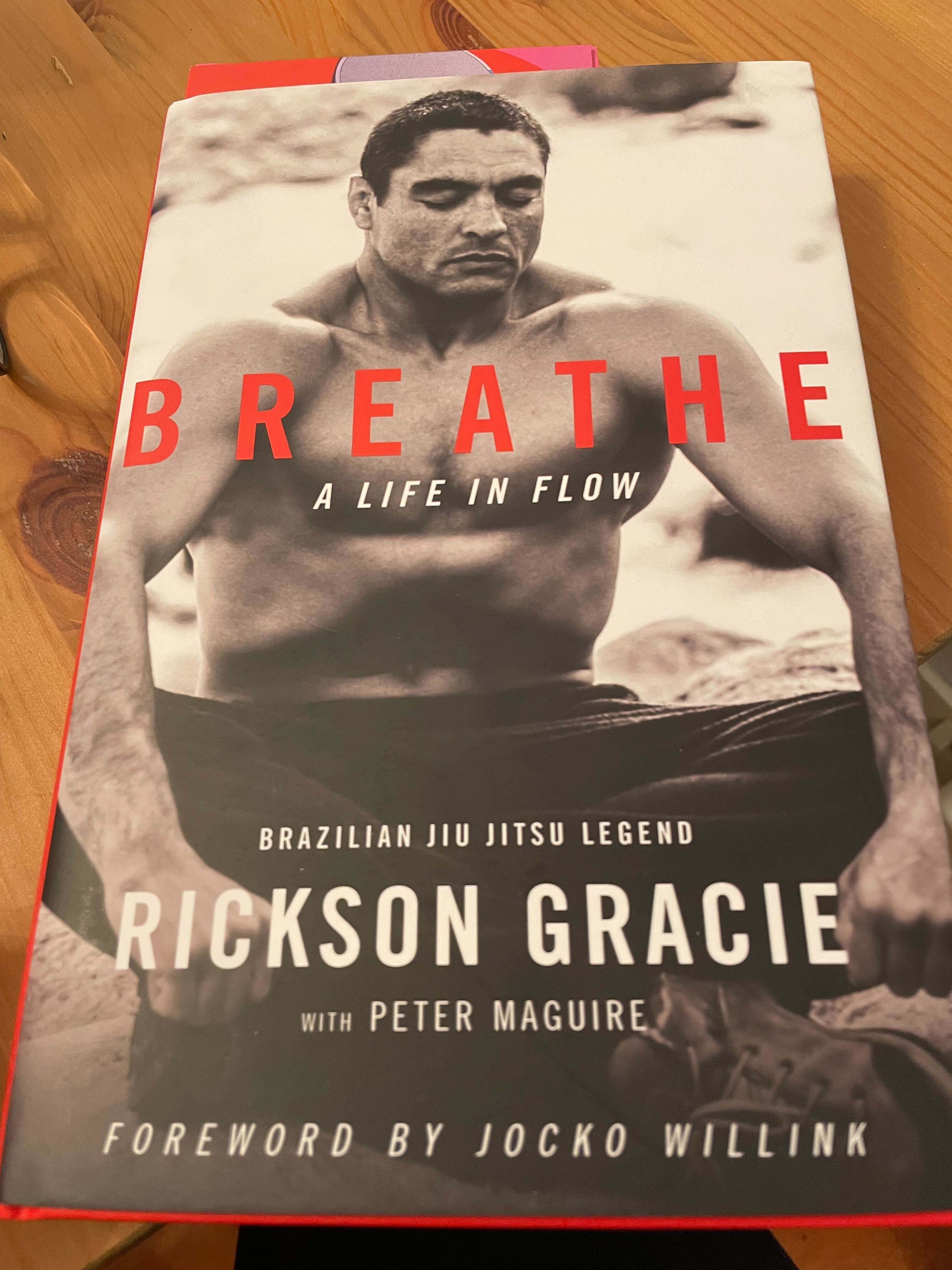
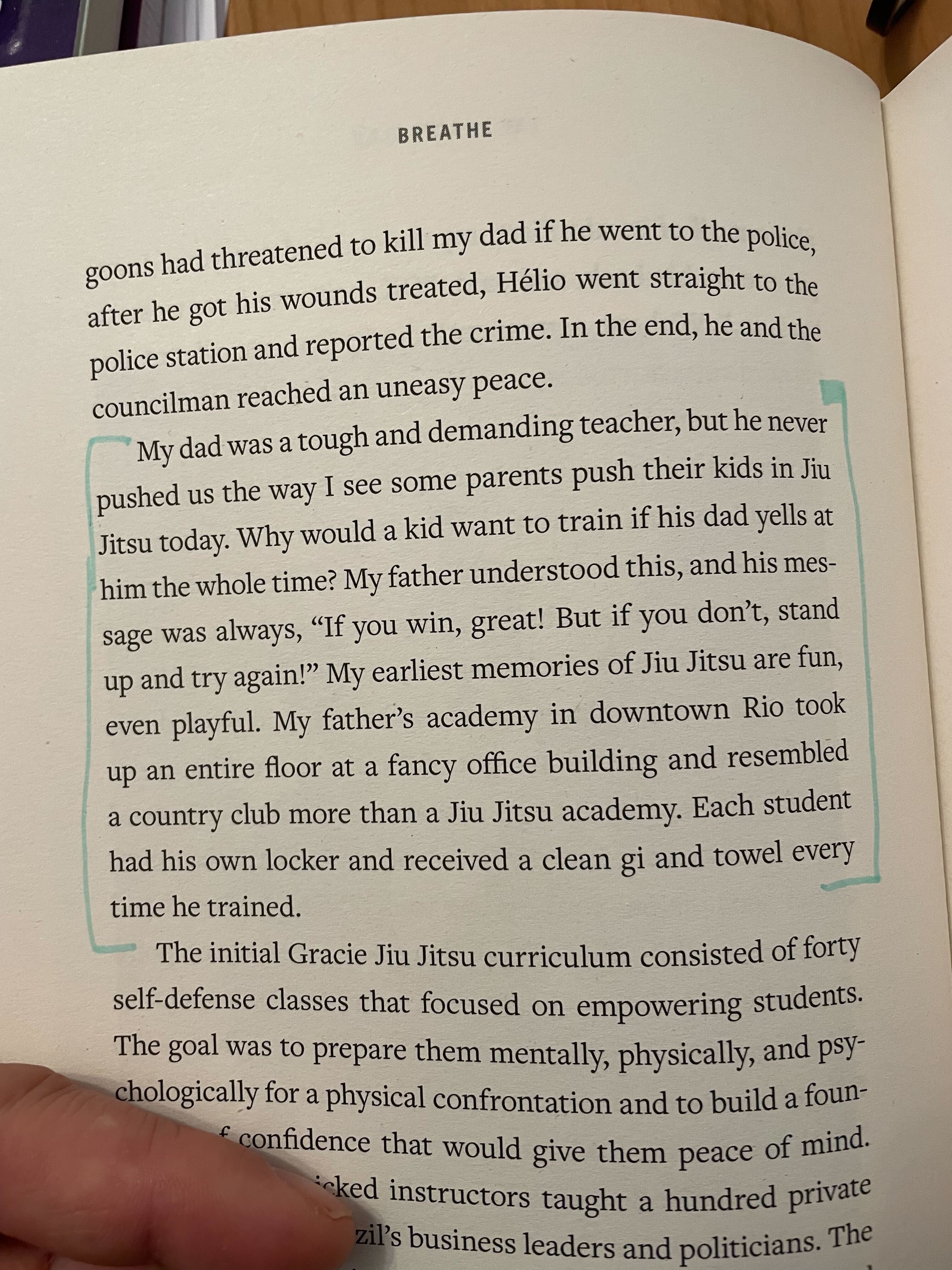
I’ve been finally getting around to reading Breathe by Rickson Gracie, which I got for Christmas last year, just before Christmas, this year 🙂 I found this paragraph near the start that resonated with me.

Over on the Heretics podcast Damon frequently talks about one of his great loves, Mongolian wrestling, and how they create the same relaxed, nurturing training environment, especially for children who start learning through games and just messing around, rather than structured lessons. The child’s natural sense of curiosity and playfulness is encouraged, not shut down, which seems to be the rule in many other ‘martial’ training systems.

The results of this type of training, is that Sumo at the highest levels is dominated by Mongolian-born Sumo wrestlers. The Japanese approach to Sumo training couldn’t be more different to the Mongolian wrestling approach, it is competitive, austere and harsh. The anecdotal evidence is that a more relaxed approach is actually better.

I’m not an expert of Sumo, or even follow it, so I don’t know, but I believe the best Sumo wrestler of all time is generally believed to be Hakuho Sho. Sho was born Mönkhbatyn Davaajargal in Mongolia. If you watch a few of his matches you can see that’s he’s a master of slipping and evading:

Mongolian Wrestling

A new Heretics podcast episode is up that covers martial arts – specifically Mongolian Wrestling – which I thought you might like.

We cover Mongolian wrestling, culture, writing, language, rivalry with the Chinese, wrestling techniques, Sumo, the three ‘manly’ arts (which are also practiced by women) and female wrestlers.

“Mongolian Wrestling is one of the three warrior arts of the Naadam that originated from Genghis Khan and the Mongol Empire. In this episode we explore the history, techniques and links with Shamanism of this surprisingly extensive and complex art which has produced both Sumo grand champions and Judo gold medalists.”

https://www.spreaker.com/user/9404101/11-mongolian-wrestling

Here are some videos that go with the episode:

Mongolian Wrestling highlights:

Asashoryu, the famous Mongolian Sumo wrestler we mention:

https://www.youtube.com/watch?v=KMkChTpTjEc


Mongolia’s first gold medal in Judo at the Olympics from Naidangiin Tüvshinbayar, Beijing 2008:

https://www.youtube.com/watch?v=aUsKrArxyOg


D. Sumiya has won a gold medal in the 2017 World Judo Championships in Budapest, Hungary, becoming the first Mongolian female gold medalist at world judo championships:

Let’s explore the Mongolian national wrestling with Stephen Pera: