
Saoirse Ronan’s viral clip and the debate around women’s safety in the UK

The UK is having a bit of a women’s safety moment right now, and since I’m in the UK and it’s a topic that crosses over into subjects I discuss on my blog, I think I should address it. As well as being about self-defence it’s also about how women and female perspectives are often ignored by a male-focused society. It all relates back to comments made by actress Saoirse Ronan on the Graham Norton Show, a clip of which has gone viral.

You can view the clip here:

She’s sitting on the sofa with fellow actors Denzel Washington, Eddie Redmayne and Paul Mescal. They’re having a lighthearted discussion about training martial arts/self defence for movie roles. While the men laugh and joke about something as ludicrous as thinking about a phone as a weapon of self defence, (can you imagine, lol!?) Ronan points out (she has to try twice to be heard) that this is something women have to think about all the time. The resulting awkward silence speaks louder than anything else.

That this one moment seems to have captured something very familiar to a lot of women – it’s captured men’s ignorance of women’s lived experience in terms of feeling unsafe when moving about in the world and having to think about using things like keys or mobile phones as weapons. Things that men generally don’t have to worry about.

I don’t want to jump on any kind of bandwagon and write an article about how to use a mobile phone as a weapon, because a) you can’t learn self defence from articles! And b) that seems like very opportunistic behaviour.

But what I would say to any women reading this, Brazilian Jiu-Jitsu (BJJ) is a great martial art that will benefit you more in the long run way more than a one-off 2-hour seminar on “self defence for women”. If you really want to feel more confident and less unsafe (of course, there is no guaranteed panacea for this, unfortunately) then I’d recommend starting regular BJJ classes at a BJJ Academy you feel comfortable with, and with an instructor you feel comfortable with (please shop around!), rather than going to a one-off seminar that aims to provide you with a quick fix.

And to the men who might need to become more of women’s lived experience (yes, you at the back!) You might like to read this article from the Guardian, detailing six women’s reactions to the clip, that’s worth a read.

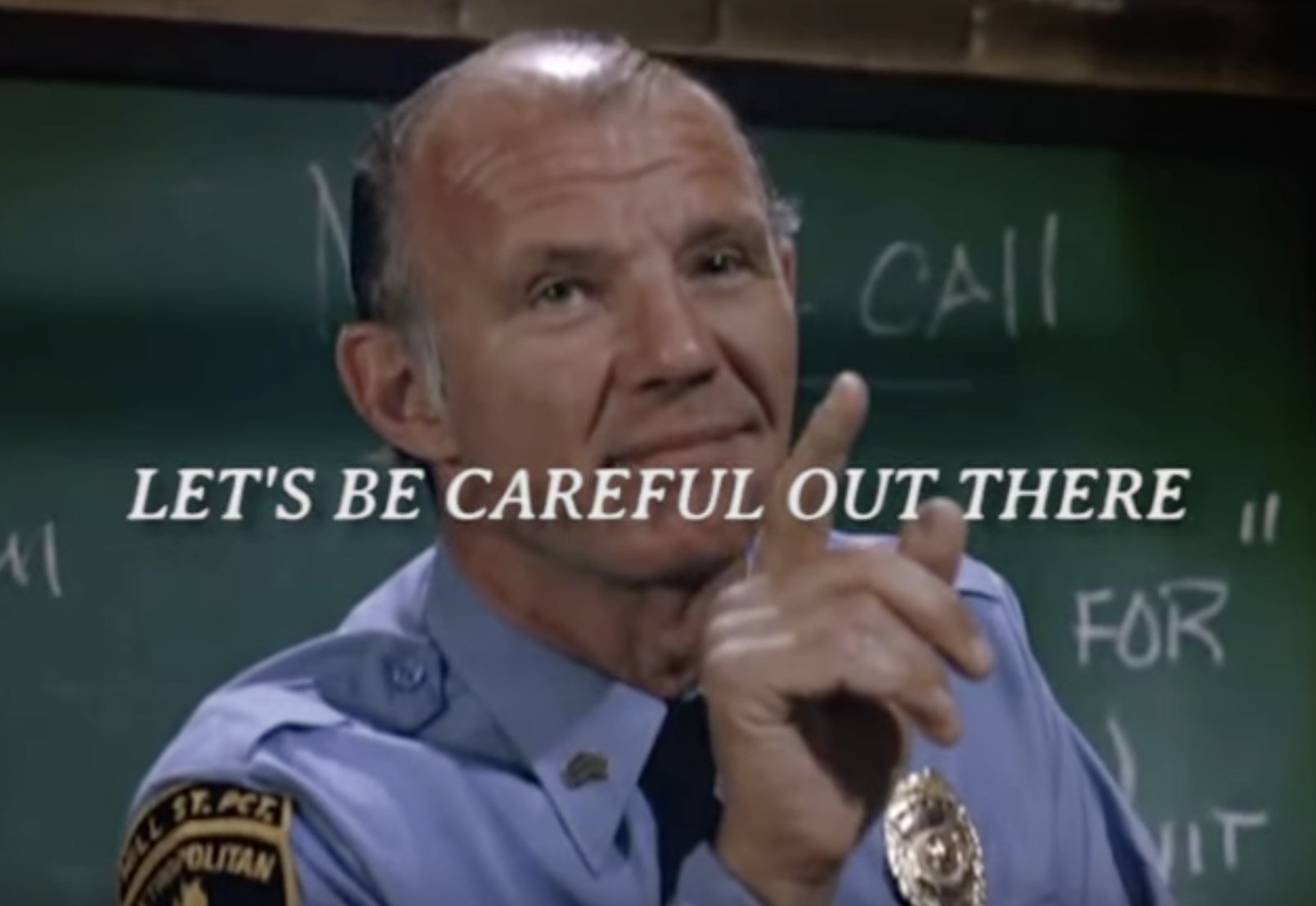
And in the words of the sergeant from Hill Street Blues, “let’s be careful out there”.
Choke theory

N.B. This does NOT look like a very well applied choke at all, but it’s the only free photo I could find!
(Photo by Kampus Production on Pexels.com)

Disclaimer: Please only take medical advice from a qualified doctor. I am not a qualified doctor!

One of the things I find quite astonishing amongst ‘martial artists’ is the generally low level of understanding of the theory of choking people.

Choking is the process of stopping or reducing blood flow to the brain until the person loses consciousness (cerebral hypoxia). It usually requires a bit of squeezing force, but can be effortless and painless if applied with high levels of accuracy, and the person will just go to sleep. It’s one of the most powerful techniques in the self defence arsenal, since chokes generally work on everyone. It doesn’t’ matter if you’re big, small, strong, super strong or even Herculean, everybody goes to sleep. In Judo and BJJ done in a Gi, chokes are often done with a collar and are commonly taught.

Chokes have nothing to do with airflow. Again, I just did a quick google search and the amount of seemingly legitimate websites talking about ‘restricting airflow’ and ‘windpipe’ is insane. There is a lot of bad information out there. Chokes are about restricting the blood flow in the two jugular veins and cartoid arteries on either side of the windpipe. For a detailed analysis of what happens, check here. Being aware of exactly where you should be applying pressure when choking somebody will increase the effectiveness of your chokes massively.

Rendering somebody unconscious by stopping their airflow is also possible, and called smothering in BJJ. Smothering is usually a pretty nasty, violent thing to have done to you. Look up the Mothers Milk submission if you are curious! And a choke that involves crushing/compressing your windpipe to make it happen could also have dire consequences. Similarly, pressure on the chest can also stop you breathing and lead to unconsciousness. That’s particularly unpleasant, too.

But a good old fashioned blood choke is the safest method of rendering somebody who is aggressive instantly harmless. Quite often when they wake up the fight has gone out of them.

Chokes can be trained and practiced safely but become incredibly dangerous in the hands of the inexperienced, as we have tragically seen in many police killings of people already restrained, so only practice them under expert guidance. And if the person has gone unconscious – LET GO! Very often it is hard to tell, so check on them, get verbal feedback, don’t just keep squeezing!

In training, the idea is that before you go unconscious you can feel the effects (a build up of pressure in the head, the world going black around the edges, etc) and tap before it happens, so that the person lets go.

If you are training with somebody that didn’t tap in time and went unconscious then don’t do the commonly seen thing of raising their legs to ‘get the blood flow back to the brain’ – you’re much better off putting them in the recovery position and waiting for them to wake up, which should happen fairly quickly. If they don’t seem ok in anyway, especially if their speech is slurred, call an ambulance.

Nothing in martial arts is ever risk free and there is some evidence of poorly applied chokes, or people struggling too hard to get out of them, causing damage to blood vessels, leading to blood clots, leading to (in rare cases) risk of stroke.

My advice is always tap early and tap often, especially if you feel like you’re going to sleep.

Understanding choke theory is important for all martial artists. If you feel like you need a primer on choke theory, then I’d recommend this new video by Chris Paines. See below.

The current state of martial arts, with Dan Hardy

I’ve been listening to, and really enjoying, Dan “The Outlaw” Hardy’s recent interview on the Raspberry Ape podcast. With a background in traditional martial arts, Dan was a pro MMA fighter and official UFC commentator.

Warning! It’s long. Over 3 hours, in fact, it’s almost 4 hours long.

The issue of how long a podcast should be is always a contentious one – you hear a lot of people say it should be as long as a commute to work, so 20 minutes to half an hour, but I have no objections to something like this one, which weighs in at over the 3 hour mark. I’m an adult – I can handle the idea of not listening to something all in one go.

Dan has a lot to say about the current state of the UFC, MMA, traditional martial arts, combat sports, capitalism, the old days, growing up and more. It’s quite a run through of various related topics. His thoughts on self defence, violence and the place of MMA in society I thought were particularly interesting.

Give it a listen – just not in one sitting!

The First 6 BJJ Techniques Everyone MUST Learn

Apologies for the click-baity headline, but:

i) it’s true

and

ii) that’s what the video was called 🙂

This is a video created by the Gracie Academy, it’s pretty long, but it’s got the essentials of BJJ for self defence in there, and why not learn it? What have you got to lose?

“But all fights start on the feet!” Well, as the video of a real attack in the clip shows – you can be attacked at any time, anywhere and potentially by anyone. You could already be sitting on public transport. You could be attacked from behind and end up on the floor. If you don’t know how to get up from there then you’ve got a problem.

Real world uses for Taijiquan, Aikido and XingYi, from a real police officer

2.2-udegaeshi-or-daojuangong

I love this article by Bill Fettes, a retired Australian police officer, I came across recently on Ellis Amdur’s blog. It discusses real world uses for the techniques found in the Internet Arts he has trained- Aikido, Tai Chi and XingYi. I like the mix of no nonsense description and practical demonstration.

What’s great is that Bill gives clear recollections of the techniques he actually used “on the streets”, then provides demo pictures of how it played out with a partner. Take a look!

My overwhelming observation is that what he’s showing looks exactly like the kind of techniques my Tai Chi teacher does all the time in push hands/sparring. In fact, I recall being on the end of them several times!

5.4-eagle-bear-or-ji

A lot of the time I see people training Chinese Martial Arts with too much emphasis on getting a single hit in, as if that would be the end of everything. It won’t. “One strike one kill” is a nice idea in theory, but I don’t think you’re meant to take that idea litterally.

One thing my Tai Chi teacher emphasises is that he wants the fight to end with the other guy controlled at his feet, pinned to the ground in some way so he can be incapacitated or restrained. If you want to run away then why not give yourself a head start by breaking something first, or calming them down? Or if you want to hold them in place until help arrives you need to have trained that skill.

You can’t just keep hitting people – it prolongs the conflict and turns what started as a self defence situation into an assault by you on the attacker, even if you were the original victim. Just imagine how it’s going to look on CCTV, which is everywhere in the UK.

Homework time

Tai Chi people! I would suggest you incorporate these techniques into your push hand if you are not doing so already – it’s not hard to see where you could fit them in.

XingYi people! – Note, there’s also a nice reference to one of my favourite XingYi animals, the bear eagle, in the article. And also check out the quote below about the observation of wild animals – this is your homework 🙂

Everyone! One more thing to consider about this article – he’s not really talking about weapon assaults or multiple opponents. How do you think that would change outcomes and what he’s doing? Discuss.

Animal observation

Quite often in martial arts like XingYi we are encouraged to observe actual wild animals and the way they fight. I really like the part of the blog post where he describes a similar instruction from a teacher, and real world example of usage:

When living in Japan, I attended several meetings of martial minded fellas, organized by Phil Relnick. Phil was kind of a godfather to most of us non-Japanese martial artists, having lived and trained in the country since 1955. At once such meeting, a U.S. student living in Singapore, who was studying the Shaolin animal forms, was invited to speak. He told us that his teacher had him go to Singapore zoo each day and study his animal: the boar. He then had to report back with anything he had learnt. I thought that was a pretty cool idea until Master Wang Zhong Dao designated me a ‘tiger,’ and gave me the same instructions. Then it became hard work. I was not sure why he designated me a tiger, maybe my big paws or shoulders, or maybe because I was always pacing or prowling, never being able to keep still. Most masters don’t explain their reasoning to plebs, anyway, so I spent a lot of time observing my namesake behind bars. One thing I did notice about the tiger was that when attacking, it generally uses its weapons on the throat; I used this a couple of times on the street with quite unusual results.