Something I read today was, “training material in my personal practice only includes the methods which have always consistently produced observable benefits and skills. Anything which hasn’t done so in a trial period of regular practice is eliminated and abandoned. I don’t have time for anything which doesn’t give a good return on the investment of time and effort to practice.”
That’s an interesting point of view, and seems logical and rational. It seems very in-line with modern efficiency-based exercise or martial arts thinking. I just don’t think it’s a realistic approach to studying the internal arts or qigong in any depth.
I remember talking to Simon Cox who trained for years at Wudang mountain in one of my podcasts and (I’m going by my failing memory here) he said something like his teacher asking them to do meditation for a few years, with barely minimal instructions, then just leaving them to it. Forget “a good return on investment”, you were just expected to do it, without any hope of a result.
I’ve often heard people say things like, “A year is not a long time in qigong practice”.
And from my own experience, I can say with confidence that you do need to practice without “observable benefits and skills” for a long, long time.
Most people simply stop, and therefore never get anywhere. They stay scratching the surface, thinking that they are deep into their practice.
It’s pretty good! I particularity enjoyed the ‘Wu chi’ standing at the start where he emphasises relaxing and releasing tension. Later on he gets into Feng’s HunYuan Qigong, but he’s using it more as a framework to teach his Ancestral Movement concepts. Fascinating stuff.
I just saw an advert for a week long “Tai Chi for beginners” intensive with the teacher in question demonstrating a tai chi posture with the head thrust forward, so the chin juts out, the hips and pelvis thrust forward so it looks like he’s doing a bad Elvis impression, the arms awkwardly twisted so the shoulders lock up and the souls of the feet rolling to the sides and coming off the floor, so the ankle joint is not stable.
And yes, he was calling himself “Master”.
I think “buyer beware” is good advice in the tai chi market.
One thing I’ve observed in so many tai chi teachers is this desire to be the teacher way before they are ready. People don’t want to be the student – that’s boring! – they want the glory of leading something, of creating something, of being the person at the front of the class sharing their vast wisdom with their adoring students…
Why is this? I think it’s just ego. I’ve definitely felt it’s twinges in me. It’s a subtle trap that you need to avoid. And one I try actively to avoid all the time when I teach.
It is undoubtedly a nice feeling when people ask you for advice, and look up to you. However, I think it’s nearly always a mistake to want to be that person. People are rarely ever ready to teach tai chi when they start. You could say it’s the curse of tai chi in the western world. That’s why we have people called “master somebody” who can’t do basic tai chi postures or understand tai chi movement leading week-long intensives.
But what do we do about this? After all, somebody has to teach something or there would be no tai chi for anyone!
Perhaps some guidelines if you are teaching:
1. Think of yourself as a coach, or a guide, not ‘a teacher ‘master’. After all, people need to do the work themselves, you can’t do it for them.
2. Don’t let people start to treat you like some guru or master – if they do instantly stop that behaviour developing. You’ll be surprised, a lot of people want a guru to take away all their self responsibility.
3. Self reflect. Are you constantly talking about things you can’t actually do? If so, just stop. There’s never any need for that.
4. The most important thing: Be honest. Tell people what you know, how long you’ve been training, where you got it from. Don’t make yourself into something you’re not in other people’s eyes.
5. Finally, you also need a teacher. Find people you can learn from and don’t stop learning.
I often wonder what most people’s biggest fear is in Tai Chi. Or what it is that stops them trying it out? Is it looking silly? Is it the fear of other people in the class looking at you as you struggle to get the movements? That you won’t fit into the group?
Believe me, everybody feels the same. You do need some willingness to be open to new experiences if you’re going to try a Tai Chi class for the first time, but just say to yourself, what’s the worse that could happen?
You can learn Tai Chi online these days, but nobody I’ve met in real life who learned online had much of a real practice, as far as I could see anyway.
To learn Tai Chi you need somebody to point out everything you’re doing wrong, because on your own, you won’t see it. Even if you know that your knees aren’t supposed to bend inwards, and are supposed to be in line with your toes, you’ll let your knees collapse in without realising your doing it.
Often those ‘light bulb’ moments in Tai Chi occur when somebody points out what you’re doing wrong without even realising you’re doing it, and for that you need a teacher.
If you’re thinking about starting Tai Chi classes in the new year then dig deep and give it a go. You won’t be the only one who is a bit nervous, and once you realise that everybody else is just as worried as you are you can relax a bit and enjoy it. Believe me, your teacher will simply be pleased to see you. What have you got to lose?
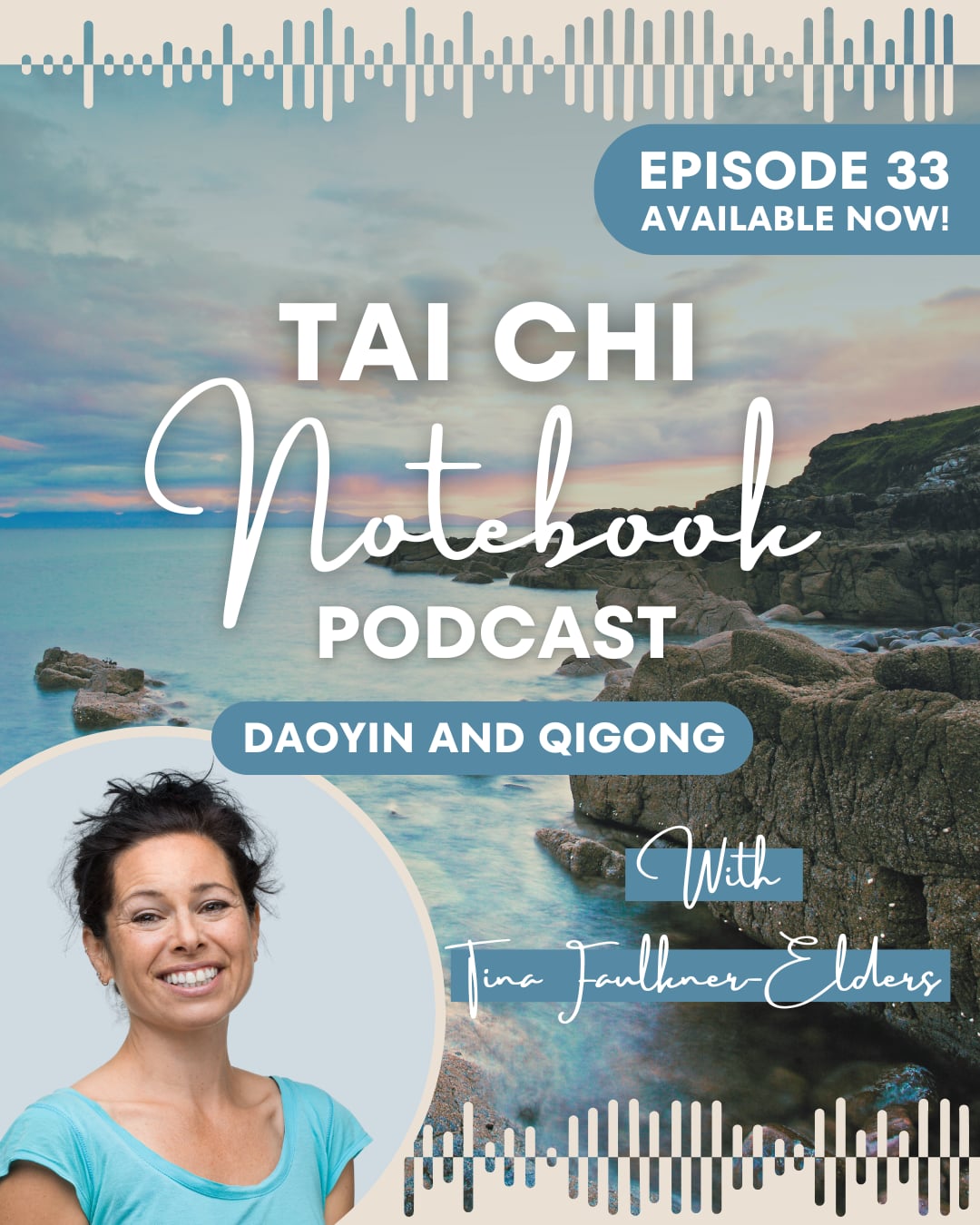
My guest for the latest episode of The Tai Chi Notebook Podcast is Tina Faulkner Elders, chief instructor of the RuYi School of Taijiquan and Qigong in Aberdeenshire. We talk about Tina’s training in qigong, first with her father, then in Beijing, China, and then on Wudang mountain itself, the legendary home of Taoism.
“According to Chinese medicine, all diseases are caused by blocked meridians (energy channels in the body). Hence, disease prevention and healing can be as simple as clearing meridians and expelling toxins and waste in the body.”
The above quote is from the Amazon description of the book PaidaLajin Self-Healing by Hongchi Xiao. If you’re a Tai Chi practitioner, have had acupuncture or are “into” Chinese medicine then you’re probably thinking, hmm that sounds quite reasonable, right? Wrong…
Well, the reason I’m not linking to that book on Amazon (which you can still buy for £5.20, btw) is that Hongchi Xiao, 61, of Cloudbreak, California, is currently on trial for manslaughter by gross negligence at Winchester Crown Court, in the UK.
“Danielle Carr-Gomm, 71, died in October 2016 while taking part in a workshop in Wiltshire which promoted Paida Lajin therapy, which sees patients being slapped or slapping themselves repeatedly.
Prosecutor Duncan Atkinson told Winchester Crown Court Mrs Carr-Gomm had been seen to be “vomiting, tired and weak” and had been “howling in pain”.
Mrs Carr-Gomm had Type 1 diabetes, meaning she had to take insulin every day to keep her blood glucose levels under control.
But Mr Atkinson told the court that she announced on the first day of the workshop that she had stopped taking her insulin, which Mr Xiao “congratulated” her on.
“He did nothing to alert others to the risk. He simply congratulated her and allowed a Type 1 diabetic to commence fasting without insulin,” he added.
There’s a strong crossover between Chinese martial arts and Chinese healing systems. In fact, it’s the link between the two that is often quoted as one of the strengths of the Chinese systems – that the practitioner learns how to heal the body as well as destroy it. And yet, these things keep happening.
One of Cheng Man Ching’s close western students died of a burst appendix that was left untreated because of a distrust of western medicine. I can think of at least one Qigong master who died from a hernia caused by their practice, or the Qigong student who died after not eating for 54 days. I was shocked to learn recently that the Wim Hof Method has a surprisingly high body count.
Let’s see this as a teaching moment. Qigong, massage, Tai Chi, breathing therapy, etc, can all be useful complementary practices to help the healing process, but no matter how wise, guru-like or charismatic your Qigong teacher, Kung Fu master, or alternative-healing therapist appears, you should not hand over your brains at the studio door along with the class fee. Remain skeptical, and trust only qualified medical practitioners if you have serious issues with your health.
One of my projects for 2024 is to start teaching Tai Chi again. I’m looking forward to the new challenge, and a new bunch of students. My class details are here. Hope to see you?
I’ve just finished listening to an interesting podcast where Dr. Rangan Chatterjee talks about about how to form daily habits in a way that actually works. The takeaway is that you need to make the habit as easy as possible and also tack it onto something you already do every day if you want it to stick. Dr Chatterjee makes the good point that we don’t have to force ourselves to brush our teeth in the morning and at night – we just do it. We don’t decide, oh, I’m a bit tired tonight or I’ve got a lot of work on, so I’ll just skip it for a couple of days. No, we just do it, and it’s easy.
Doing Tai Chi could be as easy as brushing your teeth. Photo by Andrea Piacquadio on Pexels.com
Forming a regular practice Tai Chi habit however can be hard. It’s very easy to convince yourself to not practice because you’re tired or just not feeling like it.
Tai Chi, Qigong or stretching is also a bit like brushing your teeth, because you don’t get much benefit from not brushing your teeth for a week, and then doing a massive 1 hour deep clean on a Sunday. No, brushing your teeth needs to be done a little every day if it’s going to work, and so does Tai Chi, Qigong and stretching.
Which brings us to the question of how we actually develop a strong practice habit like this for Tai Chi, and that takes me back to Dr. Rangan Chatterjee. Most of us make a pot of coffee, or cup of tea in the morning. It’s a ritual we’re already doing and nobody needs to force us to start doing. (If you don’t do this, I bet there is something similar you do in the morning?) What we need to do is start hacking that existing habit with the new habit we want to instill, in this case Tai Chi, stretching, standing, meditation, or whatever it is.
It’s all about maximising those moments of dead time. Photo by Rachel Claire on Pexels.com
While your coffee is brewing, stop looking at your phone and spend those minutes doing the thing you want to do. One thing I’ve started to do is pour the water on my tea bag, then do a stretching routine while it is brewing. This way I don’t need to rely on motivation to do the routine each morning, because motivation is great when it’s high, but a rubbish thing to rely on when you are feeling tired, rushed or grumpy.
Even a few minutes of whatever it is will make a difference. I already feel like I’m more flexible in my hips because of these few minutes. And doing those few minutes might make me feel like doing more immediately afterwards. Other ideas for things to do while the coffee is brewing would be some single arm silk reeling circles, some standing Qigong, or repeat small sections of the form, like Grasp Birds Tail. The choice is yours. Try it!
Yesterday was World Tai Chi and Qigong day (note the crazy mix of Wade-Giles and Pinying Romanisation going on there!)
So, I hope you celebrated the day by doing some sort of practice somewhere. I saw a couple of posts in my feed showing groups practicing Tai Chi in the park. Here’s one taken by Donald Kerr of Spinning Dragon Tao. Check out his YouTube channel.
Just a group of people getting together and peacefully practicing Tai Chi. Given the state of the world today, that’s no small thing.
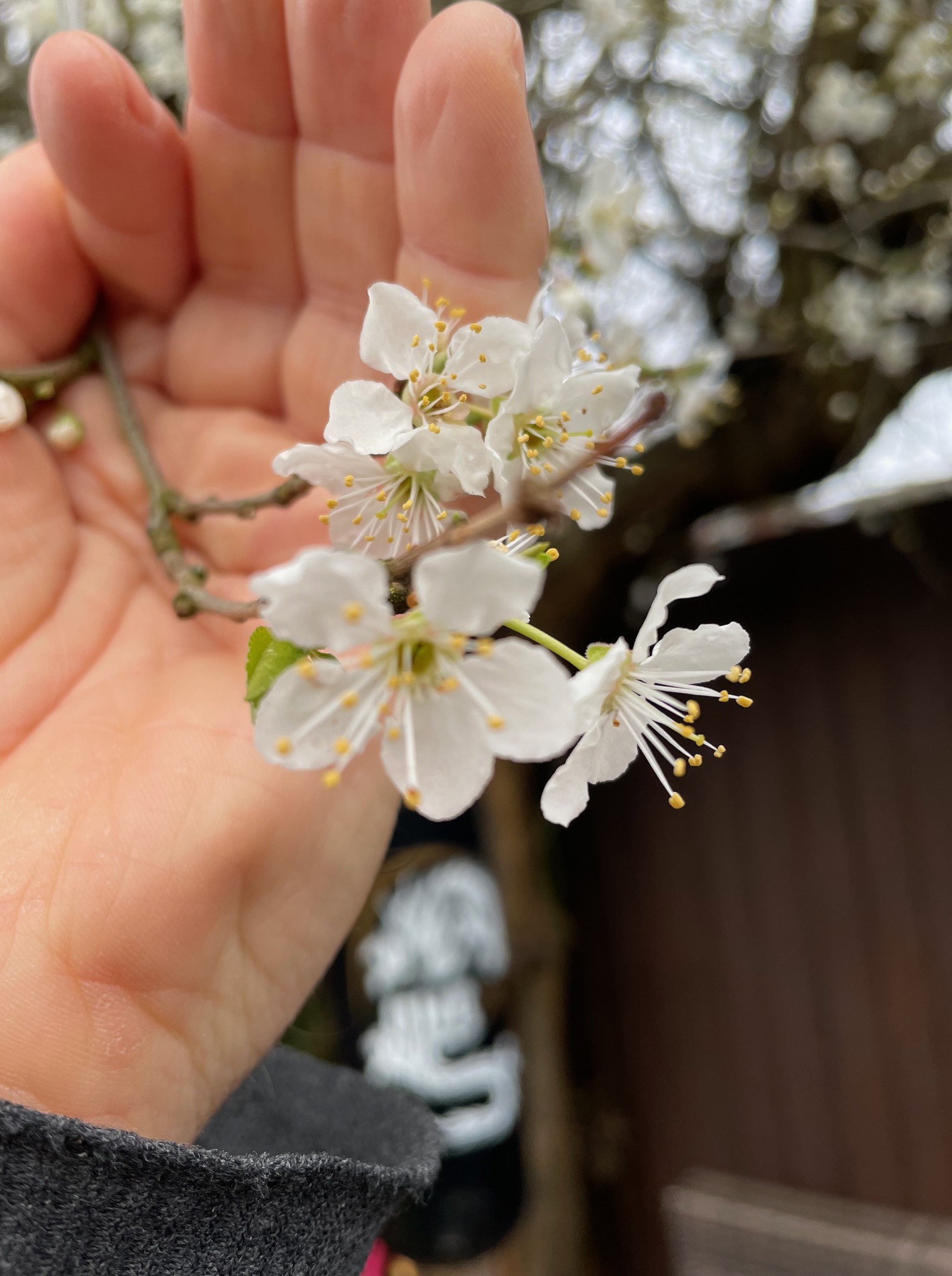
The plum tree in my garden is blossoming, and that can mean only one thing: Spring is here!
Without getting too poetic about it, the potential energy trapped within the tree over Winter is releasing and opening out to the world. So, in keeping with the cycle of the seasons, let’s return our Tai Chi practice to a similar aspect – opening and closing.
All Chinese martial arts contain movements that open and close the body, but I’d go as far as to say that a repeated pattern of opening and closing your body in movement is the fundamental action of Tai Chi Chuan. It’s perhaps the one thing that makes Tai Chi Chuan (Taijiquan) different to other Chinese martial arts.
Then there are also Chinese martial arts that use ‘open’ postures a lot, and produce power from the big turning actions of the waist and shoulders – Choy Li Fut is a good example of this.
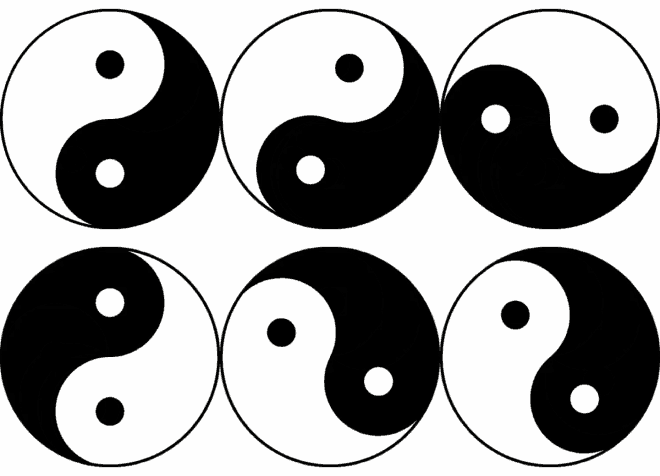
Of course, both these arts make use of both opening and closing movements in application, but what makes Taijiquan different is that it seems to have a rule that the body must constantly cycle through a series of opening and closing postures. You can see this when you look at Tai Chi forms – it shouldn’t matter which style you’re looking at, the opening and closing movements should follow each other in a cycle, very much like the Yin Yang symbol. If you imagine the Yin Yang symbol turning in a clockwise direction then the white fish becomes the black fish, which becomes the white fish, and on and on.
Silk Reeling exercises are a great way to focus on understanding open and close movements, as you just keep repeating the same pattern over and over, so your brain doesn’t get occupied thinking about the movement you are doing next (as it would in a Tai Chi form) and you can focus on the opening and closing actions.
So, what are the opening and closing actions? Well, I went over it in a video series a while ago. You can watch it here:
But it takes a while to watch all that series, so long story short, here’s a written explanation: an opening movement generally stretches out the front of the body (the Yin side – the soft parts, like the inside of the arms, and thigh, calves, and belly) and a closing movement generally stretches out the back of the body (the Yang side – the harder parts, like back of the arms, back and outside of the thighs and shins).
You can see these actions everywhere in nature: Cats tend to stretch along the front and back (yin and yang) of the body when stretching. (And it’s the same with the Yoga “Cat stretch” posture). But you see them in humans too – when you do one of those involuntary yawning/stretching movements in the morning, it tends to be opening the chest (yin stretch), occasionally followed up by a Yang side stretch.
It’s been noted that animals running are opening and closing the Yin and Yang sides of their bodies in sequence. So, this opening and closing action is fundamental to human and animal movement and the more we can utilise it, the more we are returning to our own natural systems of movement. Now, I don’t want to get sidetracked into a debate on what exactly “natural” movement is, but simply put, this opening and closing movement done in the human body feels good, it seems to put you in a good mood and you feel like your body and mind are returning to the way they are supposed to work. It requires less effort to perform tasks using it because it’s very efficient and it feels natural. If you watch skilled workmen and women then you’ll notice that they tend to gravitate towards easy body movements that have this natural opening and closing quality. Many of the people in ancient China who practised kung fu systems would have been agricultural village works who were familiar with natural movement patterns through necessity.
4 Directions Breathing exercise
Silk reeling exercises belong to the Chen style of Taijiquan, and while I (a Yang stylist) have no problem borrowing what works from other styles, a lot of Tai Chi practitioners might not want to do something from another style. However, almost all Qi Gong/Tao Yin type breathing exercises follow the same idea of opening along the Yin side of the body and closing along the Yang side that you find in Silk Reeling exercises.
You probably have some sort of exercise already that’s in your system to try this with, but let’s try one simple exercise to get our heads around the idea of open and close.
Stand in a Horse stance,
Breathe in as you bring your hands up facing you and then move them around a large imaginary ball that’s in front of your chest, so that your hands are facing away from you.
Push the imaginary ball forward away from you as you breathe out.
Turn the hands over and bring them back in towards you as you breathe in, going around the outside of the ball.
Push to the sides as you breathe out.
Bring the hands back in, circling the ball, getting underneath it as you breathe in.
Push upwards as you breathe out.
Bring the hands back in, circling the ball, getting on top of it as you breathe in.
Push downwards as you breathe out.
Bring the hands back in, going around the ball as you breathe in.
Let the palms face down and hands return to your sides as you breathe out.
Adding the opening and closing:
As you bring your arms up and towards you and go around a big ball that’s the opening movement. You can feel the slight stretch opening around the chest area, and you use that slight tension to help push your hands forward. As you do you’ll feel a slight stretch developing along your back. That’s the closing movement. You then use that slight tension to help bring your arms back. This is opening. Then as the arms push to the side, this is closing, and so on.
You often hear Tai Chi teachers say things like “don’t use muscle”. Normally this drives me mad, as you can’t physically make a movement without using muscles! However, what they’re really talking about is using that slight stretch you can feel to power the movement instead of just moving as you normally would, which results in making it “too physical” for Tai Chi. Finding the right words here is a delicate balance, but what we’re looking for is more of a whole body movement.
Final words
It helps to work on this in a stationary exercise, as described, but when you try your Tai Chi form, try and focus on keeping that feeling of opening and closing going throughout the whole form. The opening and closing movements are already there in the form, it’s up to you to reveal them. It’s a way of approaching the form from the inside, rather than the outside. So, if you’ve been struggling to get a movement to feel right in your form, it could be that the method described here will solve the problem for you. For it to work you have to be “sung” (relaxed) and focused on what you’re doing and the feelings inside the body. If your mind wanders off then inevitably so will your form. This is the start of what we call in the Tai Chi Classics “internal and external combine”.


 The Tai Chi Notebook