This video has been doing the rounds online, showing some tai chi (taijiquan) fighting applications.
I don’t think there’s much to say about it, but it does perhaps prove useful for answering that question you get a lot: “can tai chi be used for fighting?”.
Let’s just try to say a few things about it though:
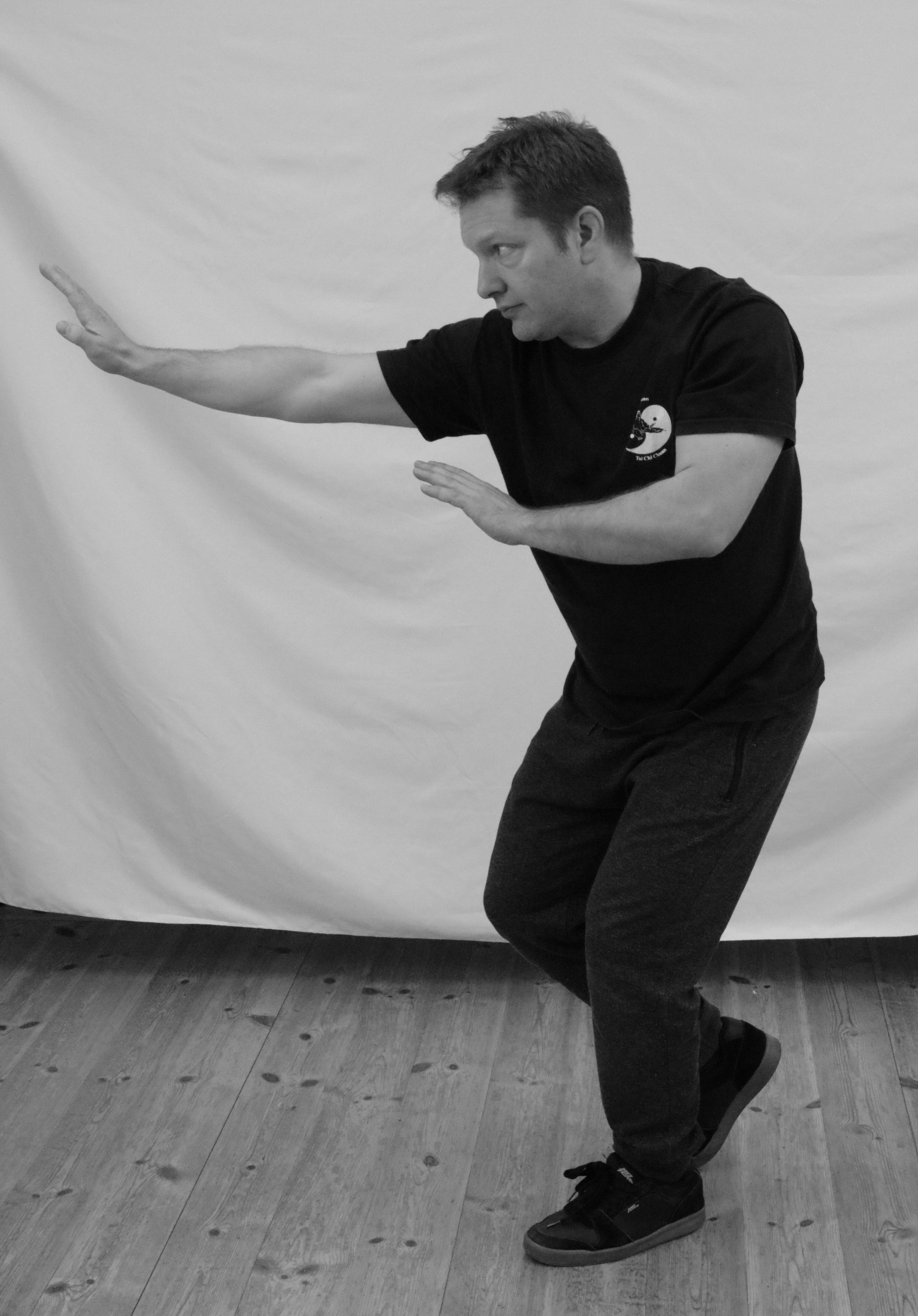
Firstly, he’s clearly just taking a tai chi posture (‘Play Guitar’) that looks very like that an ‘on guard’ position and using it in the same way a boxer does to parry and block punches. The hand he has by his chin he’s using in just the same way a boxer does their back hand to parry a jab. Is there anything wrong with that? Maybe not. You could use the posture like that, but is that its purpose?
Is that what that posture is designed to be used for? At this point, who knows. Usually you see ‘play guitar’ used as an arm locking posture, or combined with a foot sweep into a shuai jiao-style throw.
On the positive side, he’s actually getting the guy to throw the attacks properly, which is nice to see. Maybe they could be a smidgen closer together, so the punch would actually land, but compared to most applications you see from non-committal attacks, it’s not bad.
No, it’s not sparring, but not everything has to be. I don’t think it would look quite as much like ‘tai chi’ if it was sparring.
Finally, is there much ‘tai chi’ going on here? I’d be looking for smoothly flowing into sticking, yielding, and neutralising. He follows up a couple of times, but I don’t see much in the way of controlling the opponent here. The opponent is more often than not just blocked, and not controlled.
The bar for tai chi applications is pretty low. There are too many videos of people bouncing away at the slightest touch to muddy the water, so I think we have to say that this is at least a step in the right direction.
I remember reading in a Zen book that I enjoyed that you should not practice for yourself, but just practice for the sake of practice. I like that. There’s a kind of grim realism to it but it raises the issue of how exactly are you supposed to approach these sort of goaless activities, like Tai Chi and Zen? The sort of activities where even having a goal can become a problem because it interferes with the activity itself, because it needs to be about being open and aware in the moment, not thinking about things far off in the future. By definition, if you have a goal you cannot be ‘living in the moment’.
Watching that Bagua Boy documentary that I linked to in my last post I was struck by how much Mr Rogers had practiced over his lifetime. He said he spent a lot of years practicing for hours a day. It’s impressive, but it also sounds very lonely, and even if most people had the free time to do that, they wouldn’t. You need to have some sort of drive deep within you to practice anything that much.
Lots of people in the Tai Chi world practice for hours a day. Some people meditate for an hour a day. Some people stand in Zhan Zhuan for an hour.
Today I read an article by Sam Pyrah in The Guardian that asks the question, at what point does a fitness activity become a ball and chain around your neck? At some point she realised that her life long addiction to running had left her very healthy, but with a very narrow life, and at the end of the day, what was the point?
People start Tai Chi for all sorts of reasons and the reasons for doing it change over a lifetime. Since I discovered Tai Chi I’ve always practiced, but I tend to do my personal practice in little pockets of time scattered throughout the day, not in big chunks of hours at a time. Maybe when I’m too old to work I’ll do a lot more Tai Chi than I ever did before? Everything has a cost, and I wonder if the people who practice for hours a day sometimes sit down and smell the flowers and wonder if it was all worth it… Like the Bear of Little Brain, I’ve always valued doing nothing as a worthwhile activity.
Practicing a bit is good, practicing a lot is better, but sometimes you can practice too much.
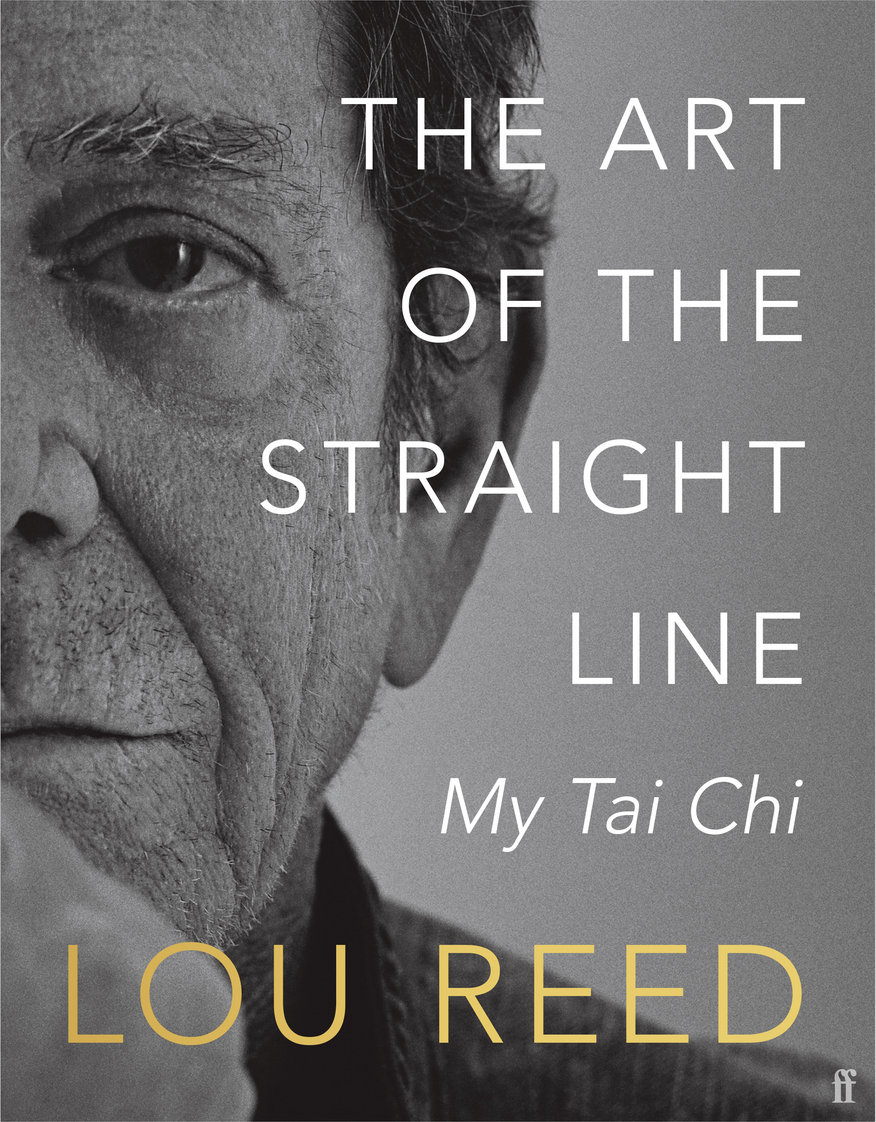
I was asked recently if I’m going to review Lou Reed’s book “The art of the straight line”, which, as you can see below, is his book about Tai Chi, released a few years after his death.
No. I’m not.
Lou was a practitioner of Chen style Tai Chi under Ren Guang-Yi. By all accounts he was quite the enthusiast. I had a quick look at a preview of the book and it looks to me like this isn’t really a complete book that he’s written. Instead, it’s a collection of old letters, scrappy notes and interviews with people who knew him about his love of Tai Chi.
But that wouldn’t be so bad if the writing was good, but it’s not. It’s meandering, scattered and the interviews are full of people talking about other people you’ve never heard of. I very quickly lost interest. It looks like it’s something for the serious Lou Reed fan, rather than the serious Tai Chi enthusiast.
Sorry Lou, but this is not my bag. I’d suggest a walk on the wild side instead.
Have you read it? Am I wrong? Let me know what you think below.
This new article in The Guardian about learning Tai Chi made me smile. “It feels like my brain is solving a Rubik’s Cube”, says the author Jennifer Wong. From my recent experience in teaching Tai Chi to beginners, that sounds about right. After their first class all of them say some variation of “I didn’t know it required so much concentration!”, to me.
The initial stages of learning Tai Chi are hard, but not in the way you’d expect. I’d say, about it’s 90% mental effort. You have to learn to remember moves with the outward appearance of simplicity, which are actually very difficult to remember. Simplicity requires a lot of effort. I often teach people the same sequence of moves over and over, then ask them to do it without me and they are instantly lost. I think this is entirely normal.
One device I’ve adopted that seems to work better than saying things like ‘left hand on top’ is visual imagery. The moves in Tai Chi already have names, like Repulse Monkey and Single Whip, which I think were used for the same kind of aid to memory. Unfortunately, after being transplanted from one culture to another and one time period to another, a lot of them are not effective any more. “Single whip” doesn’t mean much to people living in England in 2024, so I’ve started to adopt my own names to act as visual images. The opening move I call “Fountain”, as it’s like water in a fountain, coming up the middle then down to the sides. After that we “scoop water left” which makes sure that it’s the palm of the hand that is being used to scoop the water, not the back.
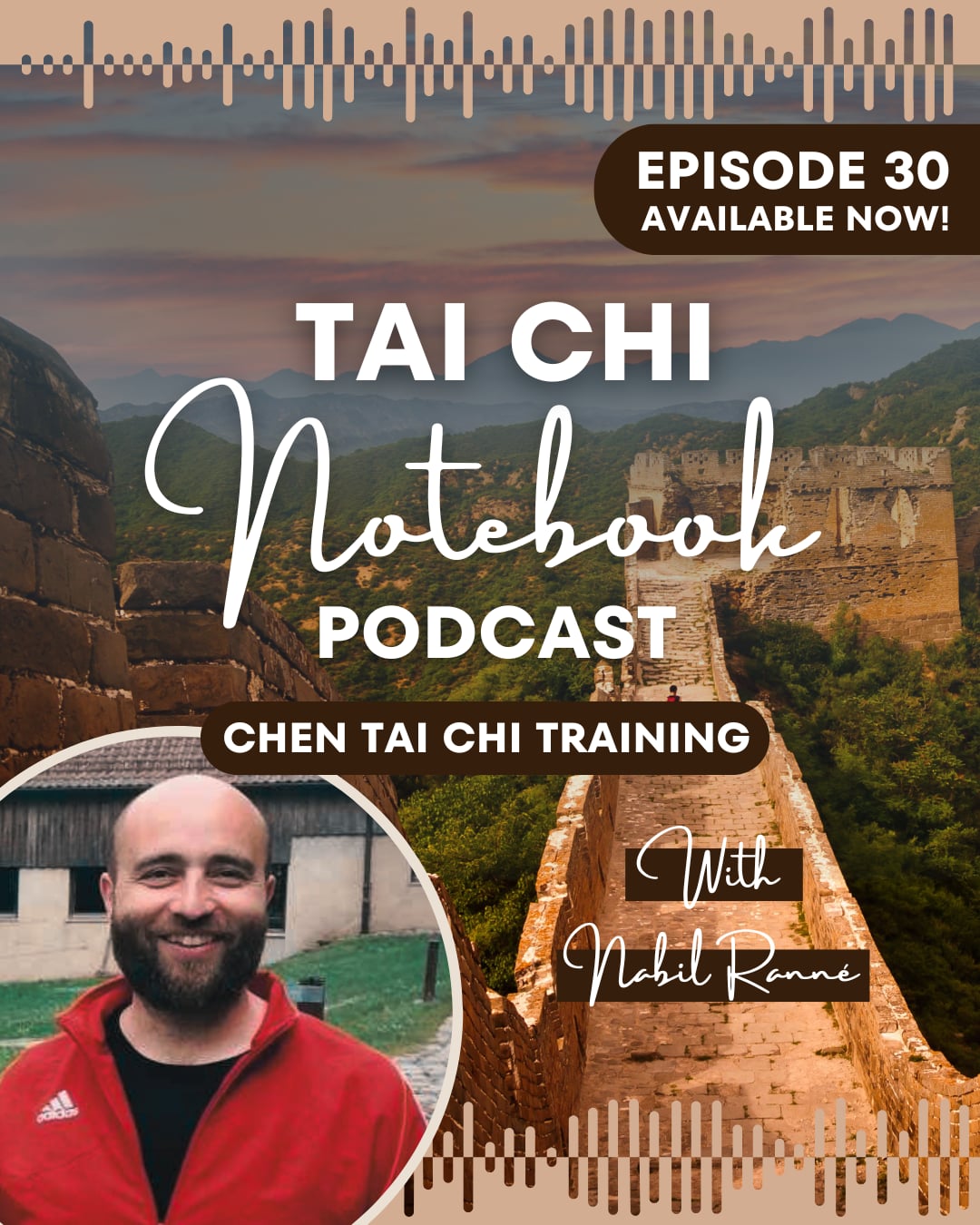
Nabil Ranné is a Chen style teacher living in Berlin who offers classes and online training at CTN Academy Nabil is a student of Chen Yu, who is the only son of Chen ZhaoKui and grandson of the famous Chen Fake. Listen here.
Here’s what we talk about:
Timestamps:
1.00: Nabil’s background in martial arts and what attracted him to Chen style Tai Chi
3.40: What is Jin in Tai Chi?
7.30: What makes Tai Chi different to other marital arts?
11.15: What is the strategy for Tai Chi?
16.00: What is the function of Tai Chi push hands?
17.55: Competition push hands vs Tai Chi push hands
22.20: The Xin Yi podcast and how do you train applications in Tai Chi
There is a phrase in Tai Chi that the whole body is a fist. I think it actually comes from Chen style, but applies to all styles of Tai Chi. Now, you can interpret that in different ways, but I think all of them are valid.
Firstly, it’s saying that it doesn’t matter what part of the body you hit with, so if you’re using Jin channeled from the ground into the target, the path it takes could go through the shoulder, or elbow, or head, for example, just as easily as it can to the fist. Tai Chi in application tends to be at close range, sometimes body to body, so limiting yourself to boxing range doesn’t make much sense.
Another way to look at it (and I think this is potentially more useful) is to think of the action of opening and closing the body as being similar to opening and closing a fist. While the concept of opening and closing the body is hard to grok, everybody is familiar with the idea of opening and closing the fist. In Tai Chi (and other ‘internal’ arts) that opening and closing is done with the whole body. While some internal arts (particularly Xin Yi) go for a open/close/ followed by a hard stop then repeat type of action, Tai Chi is particular amongst the internals in that is opens and closes in a smooth, continuous motion in a fluid series of motions. There’s never a hard stop in the form. You could say that this is defining feature of Tai Chi.
Practical training
So, let’s get to practical training. The ins and outs of how you open and close the body are to do with the 6 harmonies and silk reeling. I created a short video series years ago now, that looked at this. Watching the video is a lot easier than me trying to explain it all in text.
But here’s a training idea: do your Tai Chi form, and try and feel where the open and close movements are in the form. Even just doing the form with the mental attitude of ‘listening’ for where the body naturally opens and where is naturally closes is a practice in and of itself, that can reap rewards.
Derek frequently refers to this idea of ‘the whole body is a fist’ in the podcast and how that applies to Xin Yi. I think that it’s a good listen for Tai Chi practitioners because the idea of opening and closing the body and the 6 harmonies all come from Xin Yi – one of the oldest documented Chinese martial arts. That’s where Tai Chi gets them from.
Derek also talks a few times about another interesting idea, which is that Chinese martial arts aren’t there to teach you to fight, they’re training systems. He suggests going to learn boxing, MMA, or whatever it is that appeals to you first, to get it out of your system before you approach Chinese martial arts. Now, that’s going to be a controversial idea for a lot of my readers, but it’s also a very interesting idea that I don’t think is without merit. Have a listen and see what you think.
I’m always on the look out for interesting bio mechanical things and that search recently lead me to a character called David Weck, who is known as the ‘Head over Foot Guy’. Of course, that’s not his only idea about biomechanics- he’s got loads of them – but this video is a good introduction to his Head over Foot idea:
(It’s unfortunate that there’s a picture of the controversial social media influencer Andrew Tate in the header image for that video, because he doesn’t feature in the video. I guess they’re just using him as an example of a good walker, but while he may be a good walker, I don’t like him or his opinions, nor do I think he’s a good example for kids to follow).
The ‘head over foot’ idea can be explained very easily – if you’re going to stand on one leg, then your head has to be directly over your foot if you want your balance to be good. You can try this now, by standing on one leg and playing with where your head balances over your foot. I think he’s right – if you move your head anywhere else but over your foot then your balance starts to go.
Weck then takes this into the idea of walking, so instead of the usual description of walking that you read, which is that it’s a series of controlled falls, if you alternately put your head over your foot as you walk then you end up with a more athletic, balanced and confident walking style with a bit of swagger. You can start off over exaggerating the swagger, then work on reigning it in and making it smaller until it’s hardly noticeable.
I like it – it takes a bit of getting used to, but the alternative of trying to keep your spine neutral and upright (as we are encouraged to do in Tai Chi) ends up with a very forced, stiff, walking pattern. The alternative walking pattern of placing your foot over your head creates a kind of infinity symbol movement around the solar plexus with an alternating pattern of one side of the body shortening and the other side extending.
The idea of being upright is talked about a lot in the Tai Chi classics. For example, the Tai Chi classics say “Stand like a perfectly balanced scale” (from the Treatise) and
“The upright body must be stable and comfortable to be able to sustain an attack from any of the eight directions.” (from the ‘mental elucidation of the 13 postures’.)
But that doesn’t mean that you should look like a robot when you do it. Your body is a fluid collection of hard unbending bones connected by soft joints that allow for movement. It is designed to move in spirals, and the ‘head over foot’ idea promotes this spiral movement.
A lot, in fact, almost all, of the time in Tai Chi your weight is either on one foot or the other, or you are actually standing on one leg with the other leg kicking. So, I find that thinking about whether your head is over your foot as you do the Tai Chi form is actually a good idea. If it is then your balance will be better.
Think about the classic Tai Chi walk. We do this exercise called the Hero Stroll, which looks like this:
It’s worth doing this and thinking about the concept of keeping your head over your foot as you do it, then applying that to your Tai Chi form. Hopefully you’ll find your Tai Chi becomes more balanced, especially in the kicking movements. I find that this is where a lot of beginners have problems – they can’t balance on one leg. Well, here’s the solution!
I had an interesting comment on my last post that made me think about the whole idea of making up your own forms (or Tao Lu) – in Tai Chi, Xing Yi, or whatever.
I’ve tried to do this over the course of several years and I’ve come to a few conclusions about it, which I’ll elaborate on here. Firstly, it’s hard. Making up new forms is not as easy as you think. But secondly, it depends what martial art you are making up a form in.
Author, performing Xini Yi Chicken (Ji) posture
If your martial art has forms that are constructed like lego bricks that can be slotted together in any order and still seem to work then it’s pretty simple to concoct a new form. Xing Yi is a good example of a martial art that has this quality. I was always told never to call Xing Yi tao lu by the English name “forms” because the correct term was lian huan which means “linking sequence” for this very reason.
The idea, (in our Xing Yi at any rate), is that all the links you learn are just examples, and you need to be constantly moving towards being able to spontaneously vary them as required, and then ultimately spontaneously create them. This idea has become heretical in the modern Xing Yi world to a large extent because modern Xing Yi has lost a lot of this spontaneous feel it used to (I admit that’s a subjective point) have, and things have become set in stone – forms that were once supposed to be fluid and flexible have become fixed and rigid. Forms of famous masters from the past now tend to be fixed forever. When words like “orthodox” start appearing to describe something you know it’s already dead, or on the way to dying.
But of course, anybody can make up a form, but is it any good? That’s a different matter. And it usually depends on the person doing it, not the moves themselves. With Xing Yi animals you can also ask the question – can I see the character of the animal being used coming out through the moves?
With Tai Chi I find it a lot harder to make up a form. Tai Chi’s approach to a form is quite different to Xing Yi, or other Kung Fu styles. The Tai Chi form tends to be a highly crafted piece of work that has been honed to perfection over many years. It is fixed because you need to be able to forget about the moves and concentrate more on what’s inside. It helps to do that if you don’t have to worry about what’s coming next because you’ve done it so many times that you can let go of that part of your brain and let it be aware of other things.
Tai Chi forms tend to start and finish in the same place for this reason. Usually, anyway. While long forms don’t tend to be balanced on left and right, a lot of the more modern, shorter forms make more of an effort to balance left and right movements.
If you understand Tai Chi and how to ‘pull’ or direct the limbs from the dantien movement then, sure you can make up your own Tai Chi forms, however, there is almost zero history of doing this in Tai Chi circles and it’s not really encouraged. I think this is because Tai Chi has push hands, which can be used as a kind of free-form expression of Tai Chi, completely away from the form and in contact with a partner to give you something to respond to, which is the whole strategy of Tai Chi Chuan, at least according to the Tai Chi Classics it is. To ‘give up yourself and follow the other’ you have to be spontaneous. There’s no other choice!
So, to conclude. I think that’s it’s in its application where the spirit of improvisation and spontaneity can be found in Tai Chi, not in the forms. I don’t think Tai Chi is particularly concerned with creating endless variations of forms and patterns like Xing Yi is, at all. Xing Yi, having a weapons starting point, doesn’t use this hands-on feeling and sensitivity to get started with spontaneity. Instead, it likes to create patterns, then vary them endlessly. Of course, you work with a partner when required, but it’s a different approach. Which is all quite natural, as these are two different martial arts, created by entirely different groups of people in a different locations and time periods.
You might like our Heretics history of Tai Chi and Xing Yi for more on that.


 The Tai Chi Notebook