Bruce Lee would have been 80 years old today. Here’s a Bruce Lee Birthday blog from ‘friend of the notebook’ Paul Bowman:
“It was Bruce Lee who effectively introduced the term “martial arts” into the Western lexicon. This may not seem hugely significant. But what it also means is that he sowed the seeds of a new identity: people could henceforth identify as “martial artists.” Ultimately then, although it is true that before Bruce Lee people were practicing what we now call “martial arts,” it was only after Bruce Lee—and perhaps only because of him—that the very entity “martial arts” and the identity “martial artist” came into social and cultural existence.”
The COVID 19 pandemic has had a devastating effect on the world economy, and it’s been equally as bad on martial arts practice. Chinese martial arts have proved more resistant to complete collapse because the majority of the training can be done solo. Taolu or ‘forms’ are prevalent and can all be done outdoors and socially distanced, and on Zoom. Things like BJJ however have really suffered, since it requires close contact. A solo drill version of BJJ is really just an exercise class.
Now there is talk of a vaccine for COVID 19, and maybe before Christmas. The vaccine has the potential to return us to ‘normal’ in the martial arts. At least we’ll be able to train together safely again. You’d think that would be great news for martial artists, but now I’m noticing just how many of my martial arts associates won’t take a vaccine, because they are complete anti-vax nut cases. Sorry! I mean “vaccine hesitant”. Yes, that’s what we have to call them now.
All the conspiracy theories, stuff about Bill Gates wanting to microchip the world, COVID being made up, it all being a plan-demic, etc, it’s all, 100%, posted on my Facebook feed by martial artists, not by the other people I’m friends with.
For example, there’s one kung fu teacher I had from around 30 years ago, who I really respected, who has turned out to be a full on anti-vaxxer. He hasn’t even got his child immunised against measles because “I believe in Chinese medicine”. Well, that’s nice for you (man), but you’re putting weak, old and vulnerable people at risk from a killer disease because you have chosen to ignore science and not to get your child immunised against a potentially fatal disease. Your child might be healthy and fine, but they can pass it on to somebody who is recovering from cancer treatment and has a weakened immune system. But you don’t really give a crap about that do you? You’re too busy jabbing yourself with acupuncture needles and drinking herbs to care.
Next time you break a limb, just put some crystals on it. Job done. Photo by Alina Vilchenko on Pexels.com
As you can tell, it makes me angry. So, apologies, but I’m going to go on a bit of a rant.
There’s a reason nobody has polio anymore. We had a vaccine, and enough people took it that we achieved a herd immunity. The less people that take a vaccine the less effective it is overall, which is why measles is making a comeback in parts of the UK and the US.
“But we don’t know the long term effects!”
Hey, guess what, nobody knew the long term effects of any vaccine. It’s not like these new vaccines haven’t been tested – that’s all they’ve been doing to them. Testing them over and over to make sure they’re safe. History has told us that bad side effects happen within 2 weeks of taking a new vaccine, or generally not at all. Nothing is 100% risk free, and nobody is saying it is, but it’s all about balancing the risks.
Perhaps it’s social media, and the sorts of idiots who post links and make youtube videos packed full of conspiracy theories that are to blame. But it’s the people who think watching them counts as “research” that are the problem. And why do so many marital arts people specifically succumb to this? That, I don’t know. They seem particularly vulnerable to strange beliefs. It probably explains why martial arts cults exist and why kung fu masters in China keep getting beaten up by a middle aged MMA guy.
And before you hit the reply button with “Yeah, but what about..” Just don’t. It’s your very whataboutism that is part of the problem. You spread confusion about vaccines every time you post these things – you’re part of the problem. Please stop it!
Scott P Phillips is one of the few authors discussing the link between Chinese martial arts and Chinese Opera (also called Chinese Theatre).
I find his ideas intellectually fascinating. But, for many martial arts people he goes too far in the sense of seeing this one idea in almost everything to do with Chinese martial arts. You could say that in terms of taking the ball and running with it, he does tend to kick it out of the park (sorry) completely 🙂
Is that a fair summation of Scott’s work? Probably not. Part of the problem I think is that the world where theatre was the big entertainment of the day in China, and was simultaneously connected to religion and martial arts, has long since disappeared. From today’s standpoint it’s hard to imagine it even existed. Also, words like “theatre” and “opera” in the West have distinctly different cultural baggage attached to them already, so it’s almost impossible for us to see them as they actually were, free of our cultural biases.
So, that’s why I was pleased to see this interview with him and Ed Hines where Ed gets to ask Scott some basic questions about his theories. Ed is a Baguazhang practitioner based in Paris and he asks some of the more “down to earth” questions that need to be addressed by Scott before he can take us on his magical mystery tour. Have a listen:
I was alerted to a great post by Reddit User drkaczuz about the role of stunt men and women compared to the same scenes done by “real” martial artists who are not trained in movie-fu.
I’ll quote it here (I hope he doesn’t mind because it’s really interesting, and he makes some great points):
“Yeah, people very often misunderstand the role of stunt doubles, especially in fight scenes. It’s often not as much about skill, or risk as about production logistics. Even if you have a physically capable actor, with MA experience, you still want to use the stunt doubles, simply to squeeze the most out of pre-production time. You can’t lock the star of the show in a room with the stunt crew for a few weeks to rehearse the scene to perfection, they need to well, act. Learn their lines, prepare for their non-action scens, do marketing stuff, photoshoots, etc. What you CAN do is have the stunt double rehearse the entire choreography for months untill it’s buttery smooth and them tag them in on a moment’s notice.
Another thing with actors that have MA background is how different movie fighting is from real fighting – a lot of time real fighting skills and reflexes actually make on-screen fighting look worse.
I think Donnie Yen vs Mike Tyson is a good example showcasing a lot of issues when working with real athletes – we all know Mike is insanely fast, but in this clip he appears slow and sluggish, and you can’t really see the power behind the blows – further below I’ll try to explain why.
Anderson Silva from the same flick, notice the kicks especially, also look at all Randy Couture scenes from Expendables – they’re a dark, shakycam mess, but a lot of shakycam and bad lighting is damage control to hide hits that didn’t sell well.
I am not saying that having actual martial artists on set is bad – but you have to manage them really well, have an action director that will guide them and communicate their vision clearly. In a lot of cases a director will oh so wrongly assume that if they have the star martial artist on set they can just tell them to do their thing and it’ll come together somehow. Also it’s not that being good at actual fighting is somehow a hinderance – all good stuntpeople will be at least competent in one or more actual combat sport or martial art. It’s just they have a LOT of additional knowledge on top, as well as the ability to turn some instincts on and off.
There’s more to this post, including links to good examples of well done fight choreography.
I’m thinking again about my theme for the last couple of posts, the subject of myth busting and how it can lead to disillusionment in martial arts.
Essentially the question I grapple with is: How do we make martial arts better without all the bullshit?
One guy who is doing a lot to change things in martial arts – specifically in his area, which is BJJ, but I don’t think it takes much to apply it to a wider context – is Priit Mihkelson. In this lecture he gives one possible version of what this “how to make martial arts better without the bullshit” might look like.
Perhaps the specific things he’s talking about don’t relate to your particular martial art, but it’s the thinking behind it I like. It feels progressive, scientific, hopeful and perhaps a glimpse of a better future for martial arts: training methods based on progressive resistance, feedback and success, rather than failure.
With our Heretics podcast existing as a kind of permanent record online people can discover it at any time. Recently the Aikido Heresies episode we did has kicked off a couple of conversations.
I think they relate directly to the Myth Busting post I did yesterday. That was all about Chinese martial arts, but the same thing applies to Aikido, perhaps on an even bigger scale.
One post from a listener goes as follows:
“So recently I came across some apparently very grim details of Morihei Ueshiba’s life history. Apparently he was in good terms with far-right activists and known war criminals (including the head of Unit 731; if you don’t know what it is, do yourself a favour and DON’T google it), and was a staunch nationalist supporter of the Emperor and the Imperial regime.
I have for long held to the opinion that Ueshiba was perhaps the most complex and misunderstood figures of 20th century martial arts, but now I’ve been really left to grapple with how his legacy and ideology should be correctly dealt with during our era.
Is this more “ugly” side of Ueshiba well understood and interacted with among many Aikidoka, and what has been your solution to it?”
I see a lot of parallels between the myth-busting of martial arts and the things that are happening in modern times now in the US and UK as we unpick the uncomfortable truths of our relationships to slavery.
For example, almost all the big Downton Abby-style manor houses in the UK that have become the property of the National Trust (usually after the 2nd World War) and we all enjoy spending our Sundays visiting and enjoying the splendid gardens and architecture, were all built by fortunes made off the backs of the slave trade. And none of this is taught in our schools.
Statues like the one of the famous slave trader Edward Coulston in Bristol have been pulled down by angry crowds in the wake of the Black Lives Matter protests in the US, which have spread to the UK.
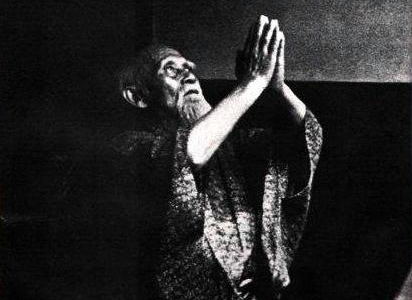
The question is how do we deal with this. Should we stop people bowing to photos of Ueshiba in Aikido dojos, for example?
I don’t know what the answer is. Walking the fine line between personal freedom and making right the sins of the past is a difficult job.
Personally, with Aikido I would look to the Aikido community to address this issue and come to terms with it.
As our friend Tammo notes:
“As a long standing practitioner of Aikido who also runs his own dojo, it was a shocked to hear these things and in the course of a year it completely changed my perspective of Aikido. Meanwhile I have come to terms with that and think I can see and value Aikido for what it is and what it isn’t.
The success of Aikido from roughly the 60s to the early 2000s (I would guess) seems to have been due to the huge efforts of myth-making around Ueshiba, modelling him into a saint-like figure… with a god-like martial ability and some strange esoteric practices which seem all very impressive. It seemed to work. Now I find it more interesting to get my head around general developments in eastern martial arts as a way to understand how different styles and branches are able to develop and become successful and why others don’t.”
In the Aikido episode of our podcast we established Ueshiba’s colonial activities in Manchuria, close ties to the leadership of, for instance 731, and (not war) but colonial crimes against the Ainu. As a member of the Kwantung army he is also associated with all of their atrocities on the continent. On that basis, I think it’s fair to say that Ueshiba was not a nice person.
I had an interesting conversation with a reader recently about Tai Chi and butts, which I thought I’d share as it’s a good topic. A lot of Tai Chi people, me included, tend to stick out their bottom slightly during form and push hands. Maybe more so in push hands… either way, it’s a fault that inhibits relaxation.
I think in push hands it happens because people try to “brace” against the incoming force to stop themselves being pushed backwards, but by going for a short term solution they are inhibiting their progress in the long term.
Q: Do you have any experience of Chen style TCC? I’ve been to a few lessons. Seems like, in order to soften the kua sufficiently, you need to stick your backside out more than in Yang….?! Having spent a whole lifetime trying not to do this, it feels weird…..!
A: I’ve never really done Chen style, but I’ve looked into their silk reeling exercises quite a bit – just the simple one hand “wave” – I really like that and do it quite often.
I’ve seen some Chen stylists that stick their butt out a lot, but to be fair I’ve also seen a lot of Yang styists do the same. I think as part of an opening and closing movement it’s ok (like in Yoga, for example), but leaving it “stuck out” all the time can’t be right. Tai Chi requires you to move from the waist (or the dantien, if you like) and that encompasses both the front (belly), sides and back of the body around the waist line – the lower back is part of that. If you put your hands on your lower back then stick your butt out you can feel your muscles contract and tighten – having a tight lower back as your default means you can’t effectively “move from the dantien” so everything else you do, no matter how clever or artful looking, has to be wrong because the foundation is wrong.
When doing silk reeling exercises I try to keep my lower back relaxed and “hanging down” – that’s the right feel – so the movement can originate there. The form should be no different. I feel like the people who stick out their butt have simply missed an obvious problem with their Tai Chi.
I got into a discussion with Byron Jacobs a while ago that we were going to turn into a podcast, but in the end the Chinese goverment didn’t seem to want a dirty foreginer like me to use its WeChat service, so it never happened.
The root of the discussion was, “Is MMA a style?”
I think it is. He thinks its just a ruleset.
I kind of agree with hin on one level, MMA is a ruleset… but I think you can also say that, at this point, it has evolved into a martial arts style of its own, and also that it is a brand, which is really the thing that differentiates it from other martial arts styles.
We have watched this process happen. In 1993, when the UFC had it’s first championship, MMA was simply a format for different marital arts styles to compete with each other in. It existed so we could see style vs style matchups. Karate vs Wing Chun, BJJ vs wresting, etc.. But I would say that in 2020 this is no longer the case. MMA athletes competing these days do not really represent a style other than “MMA”. Sure, there are people like Lyoto Machinda and Steven “wonderboy” Thompson who clearly have a karate influence to their personal style, or Demian Maia who clearly has a BJJ base, but they are proficient in all areas of the game.
The selection process for fighters these days excludes specialist traditional fighters because you need to be able to demonstrate a good range of general abilities before you’re even taken seriously.
Takedowns are different in MMA than they are in Judo or BJJ. You have to consider striking, for example. That changes the ground game too. Equally, striking is different in MMA because you have to always consider the clinch and the takedown. All these things contribute to a unique approach that means techniques from other arts have to be adapted in a specific way to form its own…. style.
If you think about how the word MMA is used in language it is used like it is a style. For example, you can go to an “MMA class” (the fact that there are MMA classes to me also indicates that it has arrived as a style/brand of its own) and there’s a good presumption about what you will be learning in the class. For example, you’re not going to go to an MMA class and learn kata, or Capoeira Jinga, or a slow movement Tai Chi-like form.
I also don’t see anything negative in MMA being called a style and a brand.
It’s Carlos Gracie’s birthday today, or it would be if he was still alive. Carlos Gracie is the man who is perhaps solely responsible for BJJ existing in the modern world, as a separate entity to Judo, which is something we should all be grateful for. He would have been 118 today. Because of this my Facebook feed is currently flooded with inspirational quotes from Carlos Gracie – particularly “Be so strong that nobody can disturb your peace of mind”.
Carlos Gracie
Unfortunately, like a lot of the stories that have built up around him, and his brother Helio Gracie, the true story is different to the myth. In fact, he stole that quote (and all his other philosophical ramblings) from a short poem called the Optimist Creed written by Christian Larson, an American New Thought leader in 1912. *
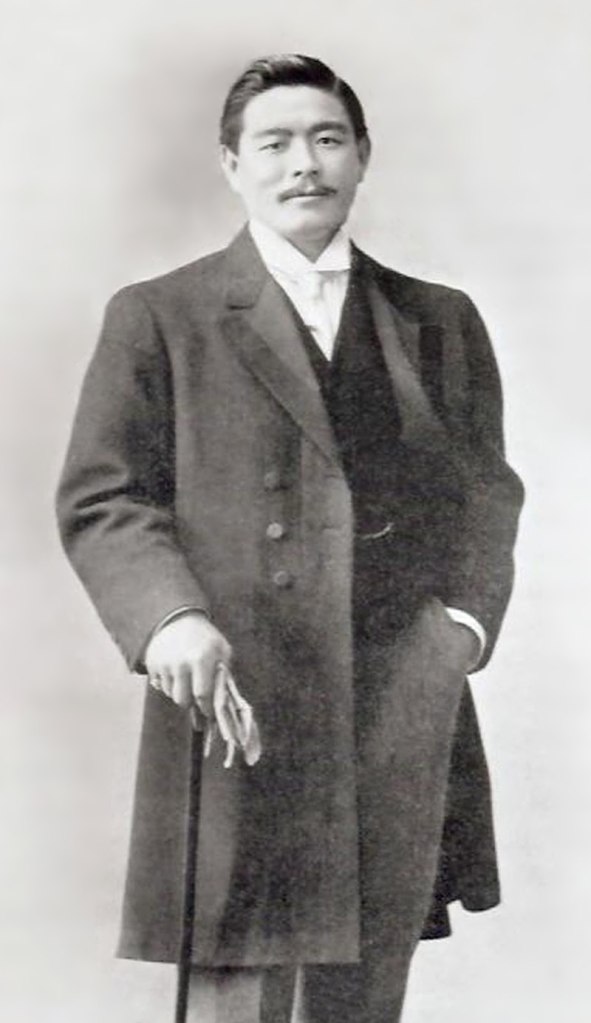
The story we are told by the Gracie family is that Carlos learned from the famous Mitsuyo Maeda – the “Count of Combat” – a famous student of the founder of Judo, Jigoro Kano, who was in Brazil teaching Jiujitsu and engaging in prize fights for money.
Mitsuyo Maeda
In a parallel to the Yang LuChan story, we are also asked to believe that Carlos’ younger brother, Helio, who was too weak and sickly to learn Jiujitsu in classes, managed to learn the whole art by simply watching Carlos train.
In reality, Maeda had come to Brazil to retire, and there’s very little evidence he actually met Carlos at all. Helio Gracie was not weak or sickly – he was an athlete, a champion swimmer. True history is never simple, it’s always complicated and the history of BJJ is no exception. Without Carlos Gracie though, and his resistance to folding his Brazilian branch of Judo into the Japanese version, there would be no BJJ today, but it might be time for a more honest look at his legacy.
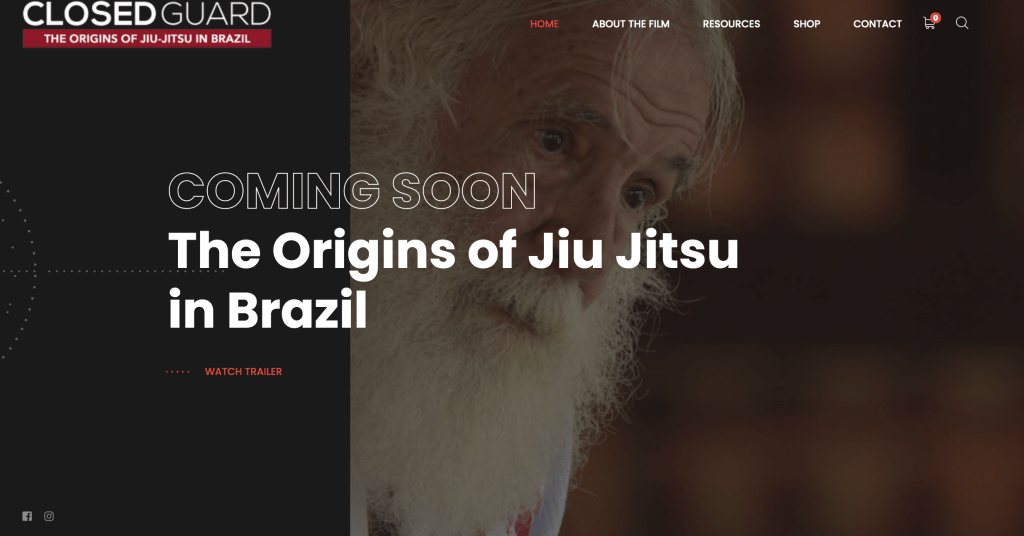
You can find out more about the true history of Carlos Gracie in the Sonny Brown Breakdown podcast where BJJ legend Robert Drysdale discusses his new upcoming film Closed Guard, about the history of Brazilian Jiujitsu.
The website for Closed Guard by Robert Drysdale.
The full text of the Optimist Creed is as follows:
The Optimist Creed
Promise Yourself
To be so strong that nothing can disturb your peace of mind.
To talk health, happiness and prosperity to every person you meet.
To make all your friends feel that there is something in them.
To look at the sunny side of everything and make your optimism come true.
To think only of the best, to work only for the best, and to expect only the best.
To be just as enthusiastic about the success of others as you are about your own.
To forget the mistakes of the past and press on to the greater achievements of the future.
To wear a cheerful countenance at all times and give every living creature you meet a smile.
To give so much time to the improvement of yourself that you have no time to criticize others.
To be too large for worry, too noble for anger, too strong for fear, and too happy to permit the presence of trouble.




 The Tai Chi Notebook