Hong Kong Martial Arts, reviewed by Kung Fu Tea

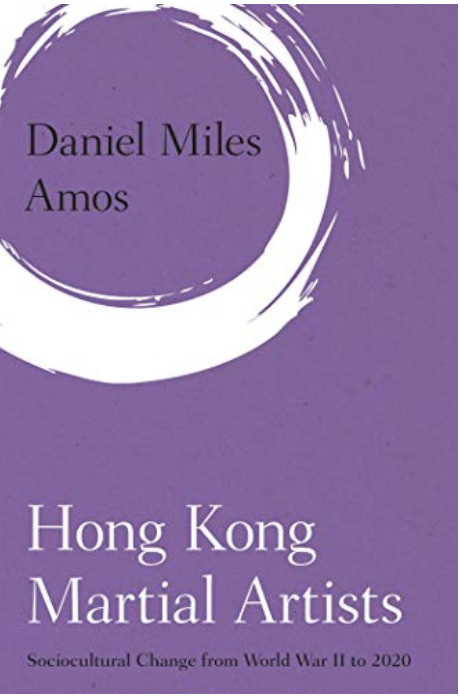
There’s a great book review by Ben Judkins over on Kung Fu Tea of Daniel Miles Amos’ 2021 book Hong Kong Martial Artists: Sociocultural Change from World War II to 2020.

The book sounds excellent and offers first hand experience of the changes in the Hong Kong martial arts scene has gone through over an extended period of years, and as such really pins down the economic and social challenges that traditional Chinese martial arts face in the modern world.

I really liked the opening of the review, because it somehow sums up the message of the whole book in one easy to follow exchange:


“Some years ago, one of my younger brothers married into a Hakka family after moving to Hong Kong to teach.  My sister-in-law finds my interest in the Chinese martial arts fascinating and even admirable.  And she insists that her children should have an opportunity to practice martial arts as well. Yet she did not enroll them in a local Wing Chun class, despite the media buzz around the art. Nor did she seek out one of the traditional Hakka styles from her family’s home village.  Like so many other parents, she placed them in one of the city’s many thriving Tae Kwon Do schools.

I asked her about this once while we were discussing martial arts films and her answer was both blunt and revealing.  “Why would I turn my kids over to some sketchy alcoholic!  Besides, after ten years in Tae Kwon Do you get a black belt and something to put on your resume when applying for University.  What did they give you after 10 years of Wing Chun?”  

Touché.”

Sinking the Qi to the Dantien

Jesse Kenkamp (AKA The Karate Nerd) has done another great video on tracing the roots of Karate. Here he is with White Crane practitioner Martin Watts in Yongchun, birthplace of White Crane, which is usually considered an ancestor style to Karate.

What I liked about this video is Martin’s no-nonsense teaching of what are generally thought of as internals in Chinese martial arts and shrouded in mystery (usually by westerners using Orientalism to sell books 😉 )

My point in posting this is that Martin covers “sinking the qi to the dantien” at 4.00 – what it is and, most importantly how what it is not is just as important.

I appreciate Martin’s simple, down to earth explanation.

The Most Important KATA in Karate 🥋

Shang-Chi is here! And Brad Allen dead at 48

We stand on the cusp of a major new martial arts movie release – Shang-Chi and the Legend of the 5 Rings. On it’s own this should be something I write about, but it’s also the last film that Jackie Chan’s prodigy, Brad Allen worked on before his untimely death at 48.

Australian choreographer, performer and stunt coordinator, Brad Allen, was the first non-Asian member of Jackie Chan’s stunt team. He was incredibly skilled – here’s a short sample of his wushu and athletic ability:

It’s not clear how Brad Allen died, but 48 is very young. RIP.

I haven’t seen Shang-Chi yet, but by all accounts it’s a Kung Fu film done right, that avoids all the usual stereotypes, and a good chunk of the film’s dialogue is spoken in Mandarin Chinese, which is then translated into English subtitles for audiences.

“As an Asian (Taiwanese) Australian, it is so obvious that the film was written through the lens of those who have a lot of love for Asian culture and have lived through the Asian experience,” wrote kabutocat on Reddit, starting a fascinating discussion about the English-language translations of Mandarin dialogue in the movie. “The Chinese lines are written so well that a lot of the times the English subtitles actually failed to convey the nuances behind each line.”

Den of Geek article.

Shang-Chi’s origins lie in Marvels answer to the Kung Fu boom of the 1970s, with various Kung Fu-powered superheroes emerging, with perhaps Iron Fist being the post famous. The Shang-Chi comic was a product of its time and you can see orientalist tropes in its styling:

Shang-Chi was the first of the Kung Fu superheroes, and was designed to be the most gifted martial artist anyone had ever seen. He was trained in espionage, infiltration, assassination and more. But when he went on his first mission for his father, he broke his conditioning and dedicated himself to destroying his father’s criminal empire.

Here’s a breakdown of the film (warning SPOILERS).

Shang-Chi was the last film Brad Allen worked on, so let’s end with his excellent live performance with Jackie Chan on Saturday Night Live:

You can find out more about Brad Allen here.

Paul Bowman on Bruce Lee, martial arts studies and martial arts comedy

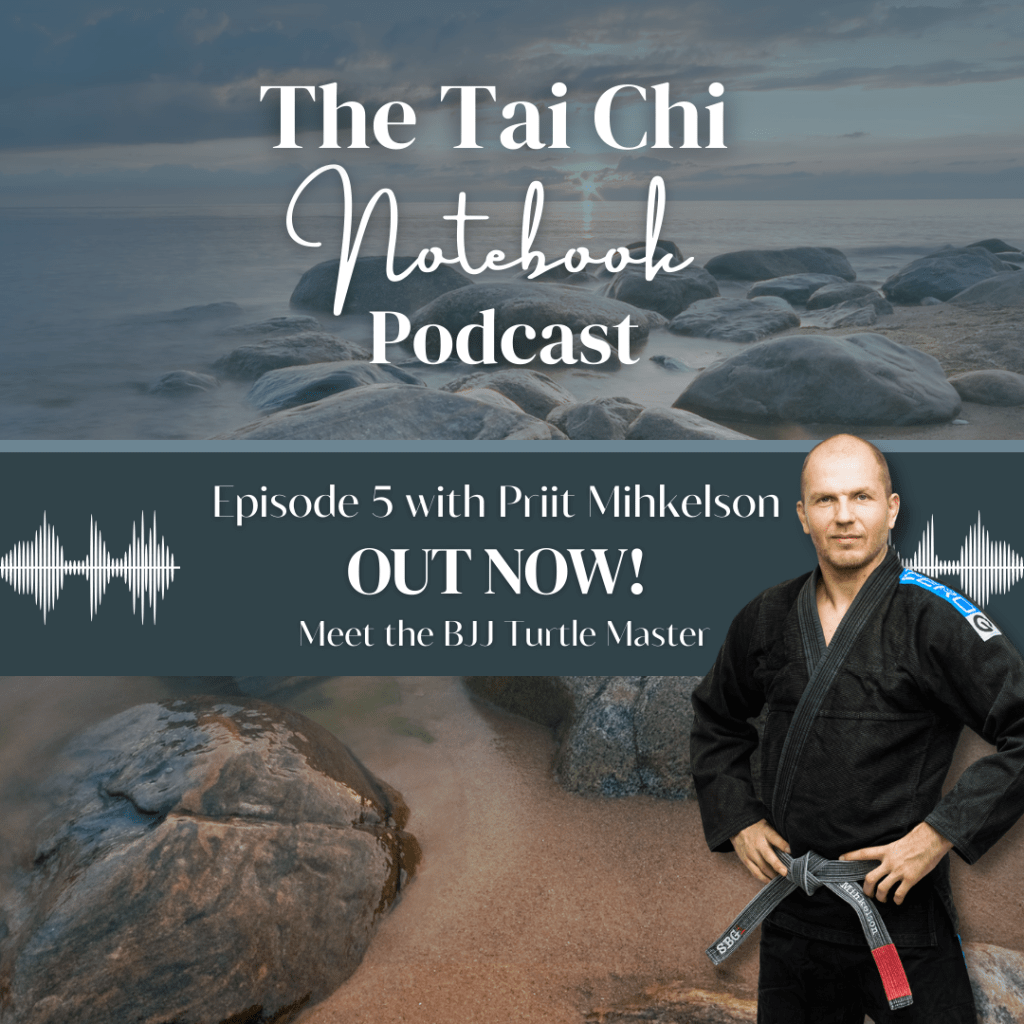
A new episode of the Tai Chi Notebook podcast is out, featuring Paul Bowman.

Click the link above, or you’ll find it on iTunes, Spotify, or wherever you get your podcasts. Search for The Tai Chi Notebook.

Paul Bowman is a professor of cultural studies at Cardiff University. He’s the author of multiple books on martial arts, including several about Bruce Lee, and most recently, “The invention of martial arts: popular culture between Asia and America”, which was published by Oxford University press in 2020.

Paul also helped establish the academic journal Marital Arts Studies, and organised conferences for the Martial Arts Studies Research Network.

In this chat we reminisce about our times training together, talk about paul’s recent discovery of Brazilian jiujutsu and discuss the emergent field of martial arts studies.

Show notes:

10.15: The Bruce Lee period
Theorizing Bruce Lee: Film-Fantasy-Fighting-Philosophy
https://www.amazon.co.uk/Theorizing-Bruce-Lee-Film-Fantasy-Fighting-Philosophy-Contemporary/dp/9042027770/ref=sr_1_1

Beyond Bruce Lee: Chasing the Dragon Through Film, Philosophy, and Popular Culture 1 Mar. 2013
https://www.amazon.co.uk/Beyond-Bruce-Lee-Chasing-Philosophy/dp/0231165293/ref=sr_1_1

16.00: I am Bruce Lee, the movie
https://vimeo.com/96517261

17.30: Marital Arts Studies
https://mas.cardiffuniversitypress.org/

22.40: Understanding Identity Through Martial Arts, with Prof Adam Frank
https://www.youtube.com/watch?v=3BZb3WjosTs

23.53: On How to Talk about Taekwondo, with Professor Paul Bowman
https://www.youtube.com/watch?v=cALt0O3Y5_s

31.05: The invention of martial arts
On The Invention of Martial Arts with Prof Paul Bowman
https://www.youtube.com/watch?v=IOyAllbfYsM
The Invention of Martial Arts: Popular Culture Between Asia and America 24 Feb. 2021
https://www.amazon.co.uk/Invention-Martial-Arts-Popular-Culture/dp/0197540341/ref=sr_1_1

44.50: David Carradine – No Limitations Be Anything
https://www.youtube.com/watch?v=3q85cV3GOMw

55.00: Comedy and honour around martial arts styles
Are Filipino Martial Arts Realistic? | Master Ken
https://www.youtube.com/watch?v=wiuTGP-jnT8

Sensei Seth: If Every Martial Arts Style Taught Each Other
https://www.youtube.com/watch?v=SGo2_f50GLo

The Azure Dragon and Shuai Jiao

There’s a new episode of the Heretics podcast out. In this chat, Damon and I discuss Shuai Jiao, the popular modern Chinese wrestling style and try and separate fact from fiction. We discuss what martial arts it is related to and also if there is a connection to Japanese Kempo.

The best thing about this episode is that Damon talks a lot about Chinese cosmology, and how it may related to an earlier form of Chinese wrestling – we look at the cosmological concept of Qinglong, or the Azure Dragon.

The Azure Dragon on the national flag of China during the Qing dynasty, 1889-1912:

https://www.spreaker.com/user/9404101/73-the-azure-dragon-and-shuai-jiao

I’d also recommend a listen to Byron Jacob’s Hidden History of Shuai Jiao, which we reference in the episode:

Wrestle with your hips, wrestle with your body

Saeed Esmaeli is my favourite wrestler, so I thought I’d share a couple of clips of him. I love the fact that he’s currently working out of a church with his classes, as you can see in his Instagram clips:

I like the way he’s emphasising using the whole body in his movements, not isolated leg and arms, much as we are encouraged to do in internal martial arts. “Wrestle with your hips, wrestle with your body”.

Wrestling arises spontaneously in every culture all over the world. Saeed’s branch has its roots in Iran. The story of how he comes to use a church is explained in this article from the Bristol 24/7. “THE UNLIKELY BOND BETWEEN AN IRANIAN WRESTLER AND A BRISTOL VICAR”

“Rather than striking, Pahlevani wrestling teaches students the art of grace under pressure, a great metaphor for dealing with the pressure that life can throw at us and one that reverend James Wilson can get on board with.

St Gregory the Great on Filton Road in Horfield officially opened its heavy oak doors to Wrestle for Humanity, a unique community Olympic wresting club and mental heath intervention service run by coach Saeed Esmaeli, whose mission is to make wrestling accessible and to help people feel good and perform well both on and off the mat.

Having experienced war, revolution and poverty, Iranian-born Saeed has overcome racism, bullying and grief and understands adversity. He brings a message of hope in his ‘infused psychology’ one-on-ones and in every community wrestling class.”

Bristol 24/7

As for the connection between martial arts and dance? Check it out!

Podcast Episode 2: Byron Jacobs on Beijing martial arts

Episode 2 of the Tai Chi Notebook podcast is out!

Byron Jacobs is a teacher of Xing Yi and Bagua based in Beijing, China. He’s a student of the famous Shifu Di Guoyong and is heavily involved in the martial arts scene in Beijing. As well as training traditional martial arts he’s also a BJJ practitioner and competitor.

If you’d like to be taught by Byron in the arts of Xing Yi and Bagua, then he has an online learning platform available .

In this wide ranging discussion we talk about training Xing Yi, Bagua and Tai Chi and whether Wu Shu will ever get into the Olympics. We also find out what it was like to train martial arts in Beijing during the Corona virus pandemic, and what the Chinese BJJ and MMA scene is like.

Show notes
—————

(9.45)
Byron’s Hua Jin Online learning platform
https://www.patreon.com/mushinmartialculture

(15.22)
Byron’s Mu Shin Martial Culture YouTube channel
https://www.youtube.com/channel/UCg_V6eznSvYOFz2naGlgRpg

(47.05)
DQ’d for Kicking TOO HARD? – Doctor Reacts to Olympic Karate Controversy and Knockout Science
https://www.youtube.com/watch?v=6QFxxM3QOws

(1.05.30)
Speed passing by Rafa Mendes
https://www.youtube.com/watch?v=Qu_9Lcdrh_w

(1.18.11)
Ku Yu Chang (Guruzhang’s) Yang style Taijiquan:
A STUDY OF TAIJI BOXING by Long Zixiang
https://brennantranslation.wordpress.com/2018/03/30/the-taiji-manual-of-long-zixiang/

(1.23.00)
Stand Still Be Fit by Master Lam Kam Chuen
https://www.youtube.com/user/StandStillBeFit

You can find it on all the usual places you find podcasts – search for The Tai Chi Notebook on Apple podcasts, Spotify, etc.. or here’s a link:

Spotify
Apple
Web

Daniel Mroz on defining Chinese martial arts – a podcast conversation

Daniel Mroz

After battling hard through various technical challenges I’ve finally managed to create a Tai Chi Notebook podcast with humans on! (Previous episodes of my podcast have been a robot voice reading my blogs). I’m pleased to have my good friend Daniel Mroz on board for my first real episode where we have a conversation about what Chinese martial arts might be.

You can find it on all the usual places you find podcasts – search for The Tai Chi Notebook on Apple podcasts, Spotify, etc.. or here’s a link:

Spotify: https://open.spotify.com/episode/6tuptU … c1bb1b468f
Apple: https://podcasts.apple.com/gb/podcast/t … 0530576920
Web: https://anchor.fm/graham47/episodes/Ep- … /a-a68h1lv

What is the relationship between Chinese martial arts and Chinese theatre, religion, mime, serious leisure activities and military tactics? How do all these factors intermingle and produce the arts we have today? In this wide ranging discussion between Graham Barlow of the Tai Chi Notebook Podcast and Daniel Mroz, Professor of Theatre at the University of Ottawa we tackle all these subjects and more. As well as being a professor of theatre, Daniel is also a Choy Li Fut and Taijiquan practitioner and has spoken at the Martial Arts Studies conference and contributes articles to various journals including the Martial Arts Studies journal.

Podcast Notes

1)
That Daniel Mroz quote in full:


“By ‘Chinese martial arts’, I refer to folkways that began to assume their present forms from the mid 19th to the early 20th centuries, at the end of the Imperial, and the beginning of the Republican periods of Chinese history. These arts train credible fighting abilities through exacting physical conditioning; through partnered, combative drills and games; and through the practice of prearranged movement patterns called tàolù  套路 (Mroz, 2017 & 2020). For millennia, up end of the Imperial period in 1912, China explicitly understood itself as a religious state (Lagerwey 2010). Communities across China not only used their martial arts to defend themselves, they performed them as theatrical acts of religious self-consecration, communal blessing, and entertainment in an annual calendar of sacred festivals (Ward, 1978; Sutton, 2003; Boretz, 2010; Amos, 2021). Modernization, and secularization at the end of the Imperial period removed the original context of these practices. The Chinese martial arts were transformed over the course of the 20th century by both their worldwide spread, and by their ideological appropriation by the Chinese Republic of 1912, and the Communist state that succeeded it in 1949 (Morris, 2004). Their religious heritage forgotten in many social, and cultural contexts within greater China, and internationally, the arts we practice today combine a legacy of pragmatic combat skill, religious enaction, participatory recreation, competitive athleticism, and performed entertainment.”

2)
THE STRENUOUS LIFE PODCAST WITH STEPHAN KESTING
334 – Ten Guru Warning Signs with Dr Dr Chris Kavanagh
https://kesting.libsyn.com/334-ten-guru … s-kavanagh

3)
Peter Johnsson
http://www.peterjohnsson.com/higher-und … reckoning/

Peter Johnsson – long video: https://www.youtube.com/watch?v=J6N3x_4 … 3gQGXHpgSG

Peter Johnsson – short video: https://www.youtube.com/watch?v=FiSoLMx3v0I

The current state of martial arts, with Dan Hardy

I’ve been listening to, and really enjoying, Dan “The Outlaw” Hardy’s recent interview on the Raspberry Ape podcast. With a background in traditional martial arts, Dan was a pro MMA fighter and official UFC commentator.

Warning! It’s long. Over 3 hours, in fact, it’s almost 4 hours long.

The issue of how long a podcast should be is always a contentious one – you hear a lot of people say it should be as long as a commute to work, so 20 minutes to half an hour, but I have no objections to something like this one, which weighs in at over the 3 hour mark. I’m an adult – I can handle the idea of not listening to something all in one go.

Dan has a lot to say about the current state of the UFC, MMA, traditional martial arts, combat sports, capitalism, the old days, growing up and more. It’s quite a run through of various related topics. His thoughts on self defence, violence and the place of MMA in society I thought were particularly interesting.

Give it a listen – just not in one sitting!

Everybody was Kung Fu Citing

A glorious analysis of Carl Douglas’ smash no.1 hit around the world, Everybody was Kung Fu Fighting, by Prof. Paul Bowman, proving once again that things do not need to be beyond a certain level of complexity to be an important cultural document.

You can get this on audio too, but you really need to watch the video as a lot of this is relying on visual performance of the song.