Victorian & Edwardian Martial & Exercise Films

If you enjoy historical martial arts footage as much as I do then you’ll find the Victorian & Edwardian Martial & Exercise Films YouTube channel an absolute goldmine of footage.

This channel displays films and film segments that were created at the beginning of film making in the 19th Century through to the first half of the 20th century in relation to martial art and exercise.

Here are few examples of the content you’ll find here that caught my eye:

1897 Boxe Francaise (Savate) & Baton Demonstration – Lyon France

Filmed: Spring – June 6th 1897
Location: Lyon-France
These films show members of the 99th Infantry Regiment demonstrating Savate & Baton. These demonstrations are not sparring sessions. They are an exchange of techniques for the camera, in the form of a flow drill. In the Savate demonstration you can see that the practitioner on the left is aware of the camera position, and motions the other practitioner back into the frame of the camera. Sparring in this era was conducted on a “touch point system” along the same lines as fencing and points were scored for making contact, and the aim was not to seek a knock out.

https://www.youtube.com/watch?v=MLcG_QZPWek

1896 Burmese Martial Art in London

“These two films were filmed in July 1896 by Lumiere camera operator Alexandre Promio. The Location was Sydenham Crystal Place Park London. The first film depicts a form of Burmese martial art which includes open hand strikes, kicking and grappling. It is unclear what style is depicted as Burma (Myanmar) has a large variety of styles. (Martial Styles of Myanmar) https://www.youtube.com/watch?v=96IBH… Both practitioners seem to be sparring in a light friendly manner for the camera. The second film presents a solo performance of the ball exercises known in Burma (Mynamar) as Chinlone. Chinlone dates back over 1,500 years, and is heavily influenced by traditional Burmese martial art and dance. It was originally conceived as a form of entertainment for Burmese royalty. It is also played as a team sport and over the centuries, players have developed more than 200 different ways of kicking the ball. Form is all important in Chinlone, there is a correct way to position the hands, arms, torso, and head during the moves. A move is considered to have been done well only if the form is good.”

Victorian & Edwardian Martial & Exercise Films

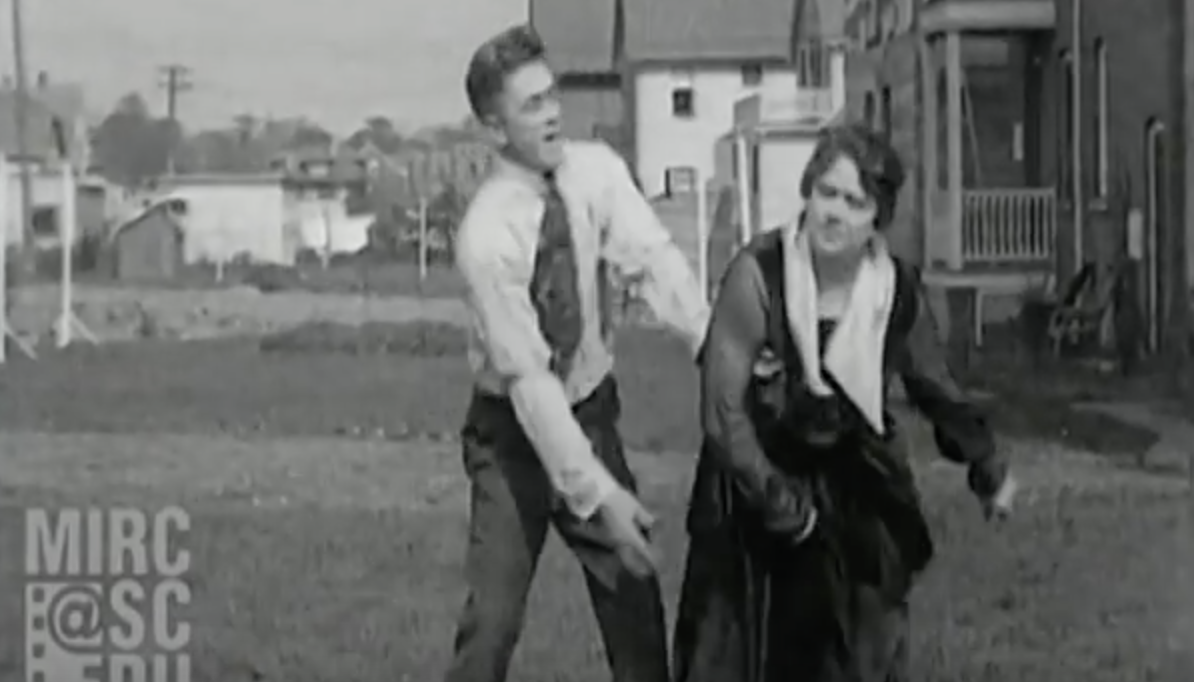
1919 Self -Defence (Jiu-Jitsu) – Johnny Kilbane

Film Date: 24-10-1919
Location: Cleveland (Ohio) U.S.A.
Description: Champion Boxer Johnny Kilbane teaching his wife self-defence (Jiu-Jitsu).

https://www.youtube.com/watch?v=flpOOrdI14I

We all use Jin already, all the time

cheng-man-ching20

Chang Man-Ching using the power of the ground to uproot an opponent.

I’ve talked a lot about the idea of Jin on this blog, usually in reference to using the power of the ground in martial technique. However, talking about Jin only in this context starts to create the impression that it’s a special skill that you may, or may never acquire.  A hidden secret, almost. It might be more grounding (no pun intended) to consider that we all already use some aspects of Jin in every day life.

Take a look at the following photos of people carrying things/other people:

two boys walking beside the grass

Photo by Dazzle Jam on Pexels.com

man in black overcoat and blue denim jeans kissing while carrying a woman in pink overcoat and knit cap on shore at daytime

Photo by Daria Shevtsova on Pexels.com


two women wearing traditional dress carrying basins

Photo by Jose Aragones on Pexels.com


beach careless carry clouds

Photo by Artem Bali on Pexels.com


The photos of people carrying weights on top of their heads provide perhaps the clearest example of what I’m talking about, but I wanted to include the other photos too, because the same principles apply.

In all cases, the human body has the ability to manage the extra weight applied to it in a constantly shifting environment of movement, without you toppling over. The weight being carried is being sent to the ground in all cases. If you hold a heavy weight out in front of you it is much more difficult, because you have to use your arm muscles in isolation, but if you can simply add the weight to your own body and let the force pass through your body to the ground then it’s a lot easier to carry, especially over long distances. Your body/mind will automatically manage these forces as you move using your subconscious. If it wasn’t doing it then you’d simply fall over as you moved because you wouldn’t be adapting to the subtle shifts of weight.

The point about the subconscious doing it is important because it means your conscious mind is free to do other things. For example, you can carry out a conversation while carrying a weight on your head and walking, rather than having to concentrate on it with 100% of your mental effort.

This ability of the subconscious mind to manage these forces is what we call Jin in Chinese Martial Arts. So, when somebody pushes on me, say in Taijiquan Push Hands, and I send that push to the ground I am using some sort of conscious control over a normally subconscious-mind ability.

That’s the skill you need to train. These Jin skills can range from the simple to the complex, but it’s all based on using an ability we already possess and use naturally, without even thinking about it.