Judo is returning to its roots and allowing leg grabs again, but only in specific Japanese tournaments

Getting rid of some of those pesky Olympic rules
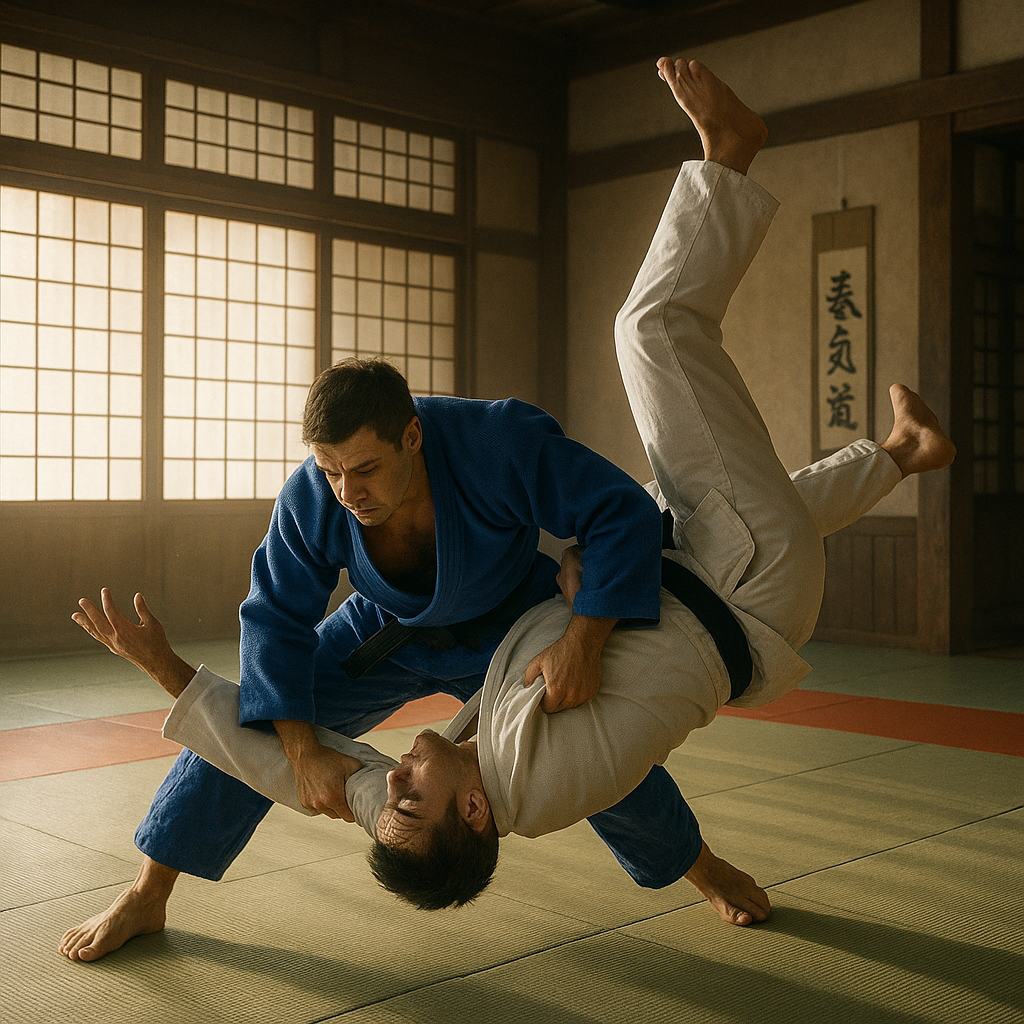

Judo and (Brazilian) Jiu-Jitsu might have exactly the same origins, but they’ve gone down really different paths in their evolution. While Judo has focused more on the sporting elements and becoming an Olympic grappling sport, BJJ has always wanted to keep things closer to its Value Tudo origins, which evolved into modern MMA.

Even today, many BJJ classes have a strong self-defence element, however BJJ is a broad church and some associations and classes are much more orientated towards sport grappling, particularly the no-gi variation.

One of the frequent criticisms of modern Olympic-style judo was that it had sacrificed too much realism in pursuit of beautiful big throws in competition. One way it did this was to make any grab of the pants or legs illegal. This seemingly simple rule change had dramatic effects on the sport. Since the legs were no longer a target the stance of judo players became more upright in their stance, leading to more possibilities for big dramatic throws.

Remember, under Judo rules a match can be won with an Ippon, a throw that lands the opponent on his or her back. In BJJ no such rule applies – a spectacular throw simply earns you two points and the match continues.

All Japan tournament rules

I hadn’t noticed before, but there has been a recent rule change in judo, in a particular Japanese tournament called the All Japan Championship, that means you are allowed to grab the legs again, opening up a whole range of possibilities for long-forgotten judo techniques to make a reemergence. 

There are some restrictions though. To grab the pants you have to have a grip on the upper body with one hand, and you cannot grab the legs with two hands. This rules out popular BJJ and wrestling techniques like the single leg or double leg.

This video explains the rules:


Will the new rules get adopted by wider judo federations and ultimately the Olympics? It’s unclear at this stage, and too early to say, but it will mean that going forward, judo could end up looking very different to the way it does now.

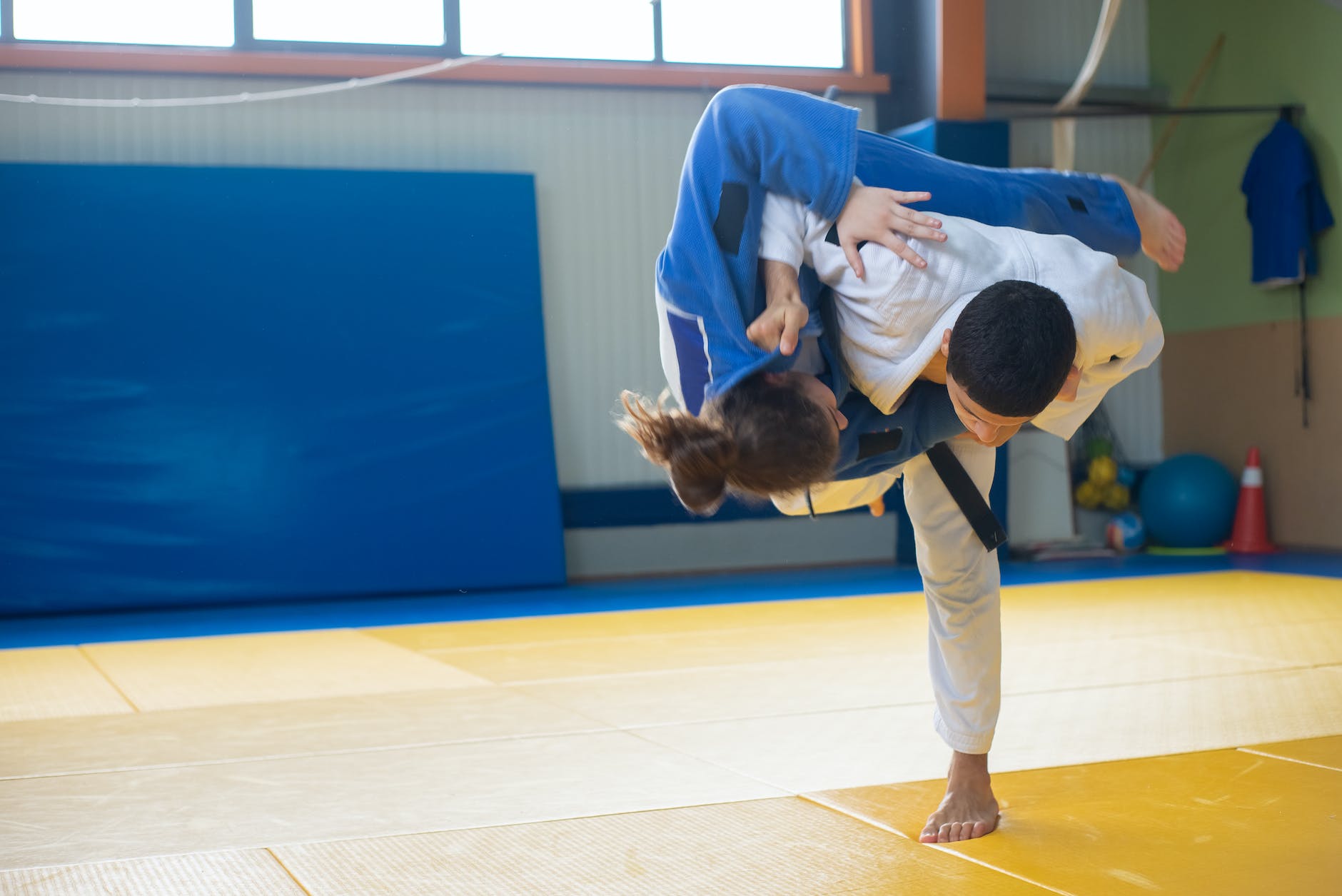
Choke theory

N.B. This does NOT look like a very well applied choke at all, but it’s the only free photo I could find!
(Photo by Kampus Production on Pexels.com)

Disclaimer: Please only take medical advice from a qualified doctor. I am not a qualified doctor!

One of the things I find quite astonishing amongst ‘martial artists’ is the generally low level of understanding of the theory of choking people.

Choking is the process of stopping or reducing blood flow to the brain until the person loses consciousness (cerebral hypoxia). It usually requires a bit of squeezing force, but can be effortless and painless if applied with high levels of accuracy, and the person will just go to sleep. It’s one of the most powerful techniques in the self defence arsenal, since chokes generally work on everyone. It doesn’t’ matter if you’re big, small, strong, super strong or even Herculean, everybody goes to sleep. In Judo and BJJ done in a Gi, chokes are often done with a collar and are commonly taught.

Chokes have nothing to do with airflow. Again, I just did a quick google search and the amount of seemingly legitimate websites talking about ‘restricting airflow’ and ‘windpipe’ is insane. There is a lot of bad information out there. Chokes are about restricting the blood flow in the two jugular veins and cartoid arteries on either side of the windpipe. For a detailed analysis of what happens, check here. Being aware of exactly where you should be applying pressure when choking somebody will increase the effectiveness of your chokes massively.

Rendering somebody unconscious by stopping their airflow is also possible, and called smothering in BJJ. Smothering is usually a pretty nasty, violent thing to have done to you. Look up the Mothers Milk submission if you are curious! And a choke that involves crushing/compressing your windpipe to make it happen could also have dire consequences. Similarly, pressure on the chest can also stop you breathing and lead to unconsciousness. That’s particularly unpleasant, too.

But a good old fashioned blood choke is the safest method of rendering somebody who is aggressive instantly harmless. Quite often when they wake up the fight has gone out of them.

Chokes can be trained and practiced safely but become incredibly dangerous in the hands of the inexperienced, as we have tragically seen in many police killings of people already restrained, so only practice them under expert guidance. And if the person has gone unconscious – LET GO! Very often it is hard to tell, so check on them, get verbal feedback, don’t just keep squeezing!

In training, the idea is that before you go unconscious you can feel the effects (a build up of pressure in the head, the world going black around the edges, etc) and tap before it happens, so that the person lets go.

If you are training with somebody that didn’t tap in time and went unconscious then don’t do the commonly seen thing of raising their legs to ‘get the blood flow back to the brain’ – you’re much better off putting them in the recovery position and waiting for them to wake up, which should happen fairly quickly. If they don’t seem ok in anyway, especially if their speech is slurred, call an ambulance.

Nothing in martial arts is ever risk free and there is some evidence of poorly applied chokes, or people struggling too hard to get out of them, causing damage to blood vessels, leading to blood clots, leading to (in rare cases) risk of stroke.

My advice is always tap early and tap often, especially if you feel like you’re going to sleep.

Understanding choke theory is important for all martial artists. If you feel like you need a primer on choke theory, then I’d recommend this new video by Chris Paines. See below.

Which is a better compliment to Taijiquan – Judo or BJJ?

Occasionally, I get questions and this one was a good one, so I thought I’d post my answer here. The question was: Is Judo or BJJ a better compliment to Taijiquan?

Photo by Kampus Production on Pexels.com

“It’s an interesting question! BJJ has less rules about what you aren’t allowed to do, and is therefore closer to self defence, but it depends on the school you go to – Judo is pretty much the same everywhere you go. I’d say both are good. My personal preference is for BJJ because it isn’t as hard on the body and I prefer ground work to throws. If you’re more interested in throws then do Judo.

If you want something that is Chinese, then Shuai Jiao would be a good compliment to Taijiquan, however, it’s hard to find outside of China. There are some online courses available.

But I think my real answer is that it’s not the art that matters, it’s the teacher. Find a teacher you like who is skillful at something, and learn whatever they have to teach you is my advice. I think in the long run that matters more than what art you choose.”

Judo Jack

The title of this video is “94 Year Old Jack Has Been Practising And Teaching Judo For 67 Years”, which tells you everything you need to know.

Some humans are exceptional.


The Tai Chi Miasma, or “No, the fight is not over just because you’ve got me off balance.”

pangu2

I had an interesting chat with another Tai Chi teacher this week. Generally, Tai Chi teachers are nice people who have trained hard at something for a number of years and developed a lot of skill in it. They’re often not that into the martial side of the art, (even if they say they are), yet they’ve managed to pick up a lot of what I call “Tai Chi Miasma” along the way.

(If you want to know what a Miasma is, I do a podcast about the subject and how it reverberates through human history. Click the link above. A brief summation of Tai Chi Miasma would be, “a set of unconscious and often faulty assumptions about combat influenced by Tai Chi training”, but I’d also have to include a lot of Chinese miasma about yin and yang, qi and tao that was incorporated into Tai Chi by the influence of the Neo Confucian Zhu Xi amongst the intellectual class.)

For example, I find that there’s a pervasive belief amongst Tai Chi practitioners that the fight is effectively over once they have taken your balance. They’ll say things like, “once I’ve got you off balance I can walk you around the room”.

I’m sorry to break it to you (pun intended) but no, the fight is not over just because you have broken my balance!

It’s not over even if you get me off balance and whack me in the face, unless I’m unconscious or too hurt to continue by your deadly 5 point exploding palm technique.

Yes, I’m sure you’ve seen your master controlling people with the lightest of touches and walking them around the room in a wrist lock or arm control of some kind, but that’s happening in a controlled training environment. In real life, it’s not like that.

Just watch any combat sport with live training against resistance. Say wrestling or judo. The players are in a constant state of flux. They are losing their balance and regaining it over and over. Often they willingly sacrifice their balance for a superior position.

giphy-1

Judo. It’s crazy.

They get thrown, they get taken down, they get pinned, but they fight their way back up and go again. The fight is not over just because one person takes the other’s balance, however skilfully or with the lightest of touches they did it.

“Ah!”, they say, “but once you get them off balance it’s easy to keep them off balance. ”

No, no it’s not.

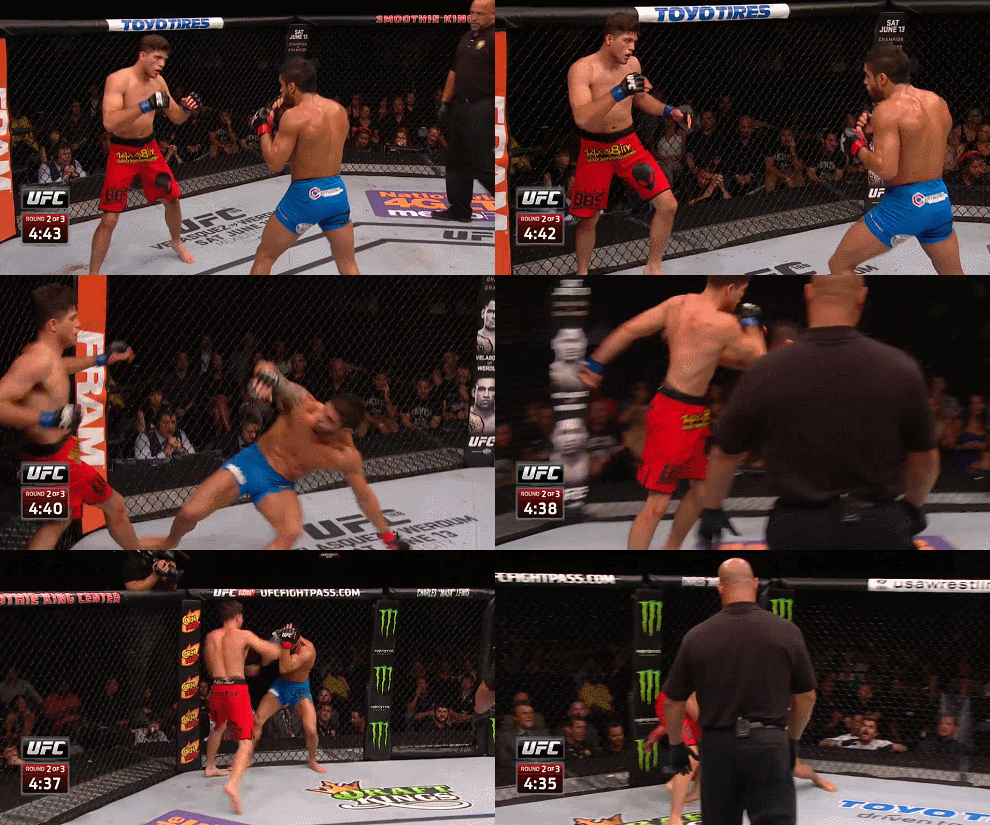
Just look at MMA. MMA is an even better example than pure grappling arts because it involves strikes. Sometimes the strikes are controlled and orderly, but a lot of the time, especially after people get hurt and tired, there are wild punches being thrown looking for a KO, resulting in people falling all over the place, people slipping, kicks missing, etc.

giphy

MMA. It’s painful.

The 80/20 rule.

In grappling sports, people spend a lot of time training what to do after the balance has been taken – or “finishing moves” if you like. That’s where 80% of the training is, because they know it’s not easy and they want to secure the win.

In contrast, Tai Chi partner work seems to be 80% about balance taking and 20% about what to do afterwards… if you’re lucky.

That’s fine if you are aware of that, but not fine if you then start to make grand pronouncements about what would happen in a combat situation because you’ve been told about what should happen next in the method you are teaching, rather than your direct experience.

Yes, I’m making a huge generalisation, and I’m sure it doesn’t apply to YOUR school. [wink emoji for sarcasm] But allow me the exaggeration to make my point.

By the way, I’m sure I have my own martial arts miasma too. We all do, but what I’m saying is that we should be aware of it.

Catch yourself saying these things about what should happen next, or what would happen next, if you can. Let your actions speak, not your words.

There’s nothing wrong with focussing on balance breaking. It’s fun, and skilful, and nobody is getting hurt, but also make it a point to spend significant time sparring with resistance.

It keeps you honest.


Mongolian Wrestling

A new Heretics podcast episode is up that covers martial arts – specifically Mongolian Wrestling – which I thought you might like.

We cover Mongolian wrestling, culture, writing, language, rivalry with the Chinese, wrestling techniques, Sumo, the three ‘manly’ arts (which are also practiced by women) and female wrestlers.

“Mongolian Wrestling is one of the three warrior arts of the Naadam that originated from Genghis Khan and the Mongol Empire. In this episode we explore the history, techniques and links with Shamanism of this surprisingly extensive and complex art which has produced both Sumo grand champions and Judo gold medalists.”

https://www.spreaker.com/user/9404101/11-mongolian-wrestling

Here are some videos that go with the episode:

Mongolian Wrestling highlights:

Asashoryu, the famous Mongolian Sumo wrestler we mention:

https://www.youtube.com/watch?v=KMkChTpTjEc


Mongolia’s first gold medal in Judo at the Olympics from Naidangiin Tüvshinbayar, Beijing 2008:

https://www.youtube.com/watch?v=aUsKrArxyOg


D. Sumiya has won a gold medal in the 2017 World Judo Championships in Budapest, Hungary, becoming the first Mongolian female gold medalist at world judo championships:

Let’s explore the Mongolian national wrestling with Stephen Pera:


Japanese martial arts: from the battlefield to MMA

img_2999.png

I’ve written a guest blog post about my Heretics podcast and our history of Japanese martial arts series for Holistic Budo, a blog run by my friend Robert Van Valkenburgh.

Here’s a quote:

After the Tokugawa-era ended with the bloody Boshin war followed by the Meiji Restoration (1868), Japan slowly opened up to the outside world. In fact, it was forced open by the British and Americans using violent gunboat diplomacy, but eventually the new era was embraced by the new rulers and also reflected in a new spirit of openness within the martial arts. Aliveness was back in fashion and innovators like Jigoro Kano breathed new life into the martial arts they inherited using the practice of randori (free sparring). His approach was so effective that Kano went from never having trained martial arts at all, to founding his own style in less than 6 years. Ultimately Kano’s Judo would outshine all the other styles of Jiujitsu and change the course of martial arts in Japan entirely, not to mention the rest of the world.

Check out the whole post here.

The ultimate guide to the guillotine choke

guillotine-choke

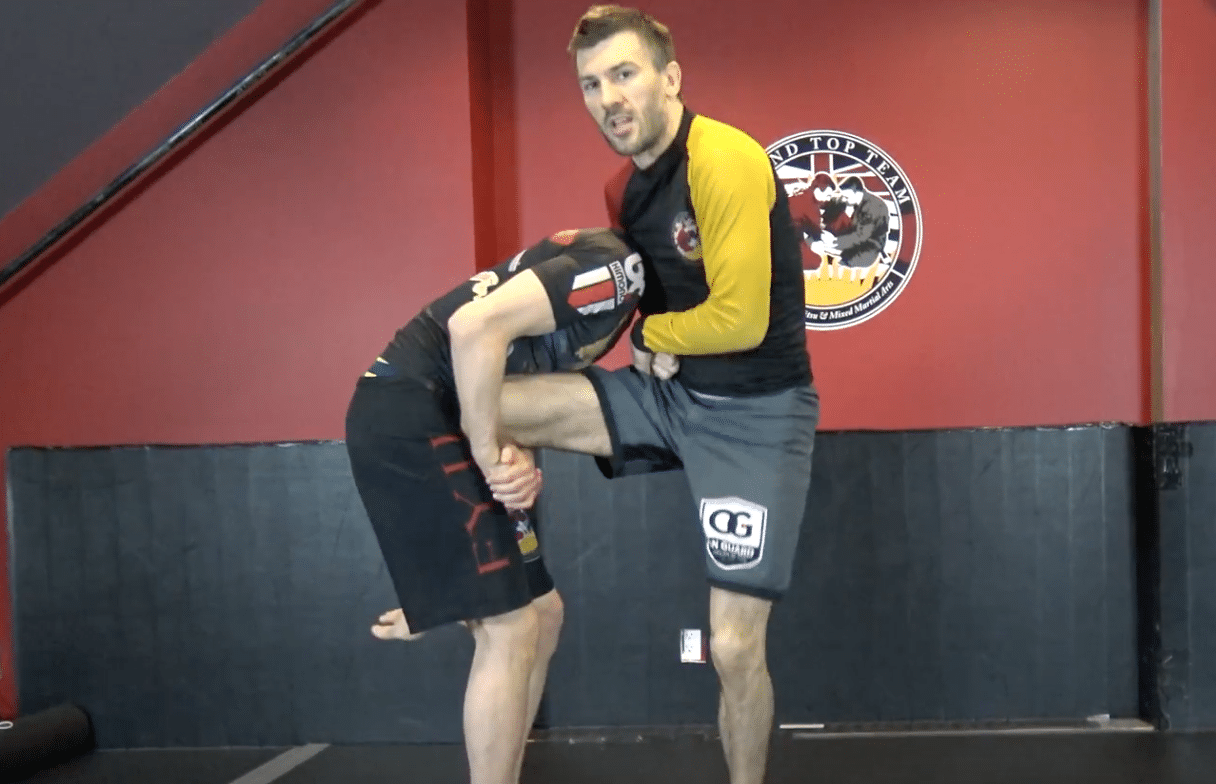
Just look at those two guys and tell me they aren’t having fun! Nothing says “macho martial artist” quite like standing on one leg and having a guys head wrapped under your armpit in a guillotine choke while he’s pulling your leg into his groin.

But seriously, I think every martial artist should know how to do a guillotine choke, not just grapplers. The power of the guillotine is that it’s a very versatile choke. You can do it standing, on the ground and in all the positions in between. It looks like a deceptively simple technique – you just wrap your arm around their neck and squeeze – but as you’ll discover, there’s a whole load of subtle variations, tricks and positional requirements you need to know about to make your guillotine effective.

Rob Biernacki has produced a series of video clips that form a great free online instructional on Grapplearts about how to perform this simple choke. Trust me, it’ll be a great use of 30 minutes of your life and it’s good enough for them to have charged for it, but they’ve kindly provided it for free.

The lost jin skills of Judo

There is an interesting theory about martial arts that I want to talk about today. Let’s call it the Golden Age theory, as it posits that at one time there was a Golden Age of martial arts, probably in China. Now, ok, you might not buy into that theory, but please bear with me. Drop your natural cynicism for a moment and allow the idea to percolate in your mind a little as we take a trip back to ancient China…

eleventh_a_vid_thumb

The knowledge the ancients had in this golden age about how the body functioned was complete, detailed and comprehensive, producing something more than normal strength. It was an overarching understanding, so it covered all sorts of skills, not just martial arts, but as time went on, and social, political, economic and geographical environments changed this knowledge slowly degraded and fewer and fewer of these old skills survived intact. Today we are left with remnants of them passed down in different traditions, most notably Tai Chi, XingYi and Bagua, and clues left in the historical record.

That body of knowledge consisted of what is known today as the Internal skills of the martial arts. Most Chinese marital arts still contain some internal skills, what you might call “basic Jin”. We can tell that all martial arts descended from this skill set as you see the remains in today’s marital arts and you can still see clues everywhere, including the names of old martial arts like ‘Six harmony spear’ or ‘Six harmonies, eight methods’. This “six harmony” nomenclature refers to a way of moving the body in a connected fashion from the toes to the finger tips.

This way of moving existed in all martial arts once, and survived amongst a special few even into the modern age. For example, Morihei Ueshiba of Aikido had it, and he died in 1969. Some people have it today, to various degrees. Usually you find these people in the Chinese Internal arts, but there are glimpses of it everywhere, even in the Japanese maritial art of Judo.

If you’ve seen Olympic Judo matches you can see it’s an incredibly athletic sport that requires supreme physical conditioning and strength mixed with a high level of technique. But is today’s Judo really where the art originally started out?

There is an old kata in Judo called Gu No Kata, which consists of a number of movements performed with a partner. It’s pretty safe to say that these days the meaning of the movements has been lost, as it’s performed with raw physical stength, not what the Chinese would call Jin, but dig under the surface and you’ll find that it’s a series of Judo techniques which serve as internal strength testing exercises, linked together.

This article provides a description of Go No Kata.

And here’s what it looks like done in modern times:


It doesn’t look very “internal”, but watch this informative video by Mike Sigman in which he explains and demonstrates how the various postures of Go No Kata are done with Jin – i.e with strength from the ground through a relaxed (‘song’) body.

In Mike’s own words:

“The “tests” in Go-no-kata resolve into Up, Down, Back, Forward, and sideways. You need to develop your qi/frame and you need to work with jin forces until you’re comfortable with them because not only can you resist forces (they’re doing it for development purposes, not as a basic strategy for good Judo), but you can learn to take kuzushi using only the mind-directed forces of jin.

Here’s the video. It’s fairly short. If you haven’t played much with jin forces, it may not be obvious what is going on, so please try to meet up with someone that has some jin skills.”

Here are the different pictures he’s referring to:


Finally, watch this comparison video between Kanō Jigorō the founder of Judo and a modern practitioner, and ask yourself, what has been lost?


The delusion of grace under pressure

Surprise! Fighting looks like…. fighting

Photo by Ivan Krivoshein on Unsplash

This blog post grew from a discussion on RSF, a discussion forum on internal marital arts where I’m a pretty active user. Some members were expressing their displeasure at what they saw as low-level skill displayed in the recent 2012 Olympics Judo contest in London.

I was incredulous, since competing on an international stage in a tough sport like Judo requires the athlete to have levels of skill far beyond those of the mere mortal. Yet phrases like “low level” and “muscling” were being thrown about with abandon. The standard thing the detractors of modern Judo say, while explaining how Judo has entered a state of decline from which it can never possibly recover, is that modern athletes are not as good as the old timers. Then they post a black and white video of Mifune (The “God of Judo”) practicing with his students back in the day.

I have one right here:

As you can see, he’s effortlessly controlling his opponent, and demonstrating what is clearly agreed upon as “high level skills”.

Well, for a start, since Kyuzo Mifune was considered the greatest Judo technician to have ever lived, nobody would compare well to him, but that’s beside the point. Their point is that it looks nothing like Olympic Judo, and of course they’re right! Competition Judo will never look like the Mifune demo, because… (drum roll please) it’s a demo!

It’s exactly the same in every martial art – put a Tai Chi fighter in a sparring contest and inevitably people say “that’s not Tai Chi” because it doesn’t look like the super smooth demonstration their instructor does every Friday night at their class, as he effortlessly repels a doddery middle-aged gentleman who is gently pushing on his arm… Quite simply, competition fights do not look like martial arts demos and never will! I am truly perplexed that people can’t understand this… it’s a sort of collective human delusion. And it’s not just martial artists that have this delusion, it’s seeped into the popular consciousness too because of movies like Enter the Dragon, The Matrix, or James Bond. Most people think that if you “know kung fu” you’ll be able to pull some Jackie Chan moves out of your ass in the middle of a real violent encounter. Nothing could be further from the truth.

There are plenty of clips of martial arts masters under real pressure on YouTube, if you look for them. They all have one thing in common – it stops looking like the perfect martial art demo and starts to look scrappy as soon as they have to deal with real resistance, and not a willing student.

Here’s the thing: We’re confusing the training methods with the end result time after time.

Example:

Here’s Kochi Tohei looking graceful, poised and in control while doing a demonstration of Aikido:

Now here he is working against an opponent offering real resistance:

Totally different, right?

This comment on that last video from YouTube is typical of the collective human delusion I am describing:

“if tohei used aikido techniques against this man,which he is not doing until the last bit of the clip,serious injury to uke could have resulted. this was only an exercise in balance.”

It’s time for people to wake up.