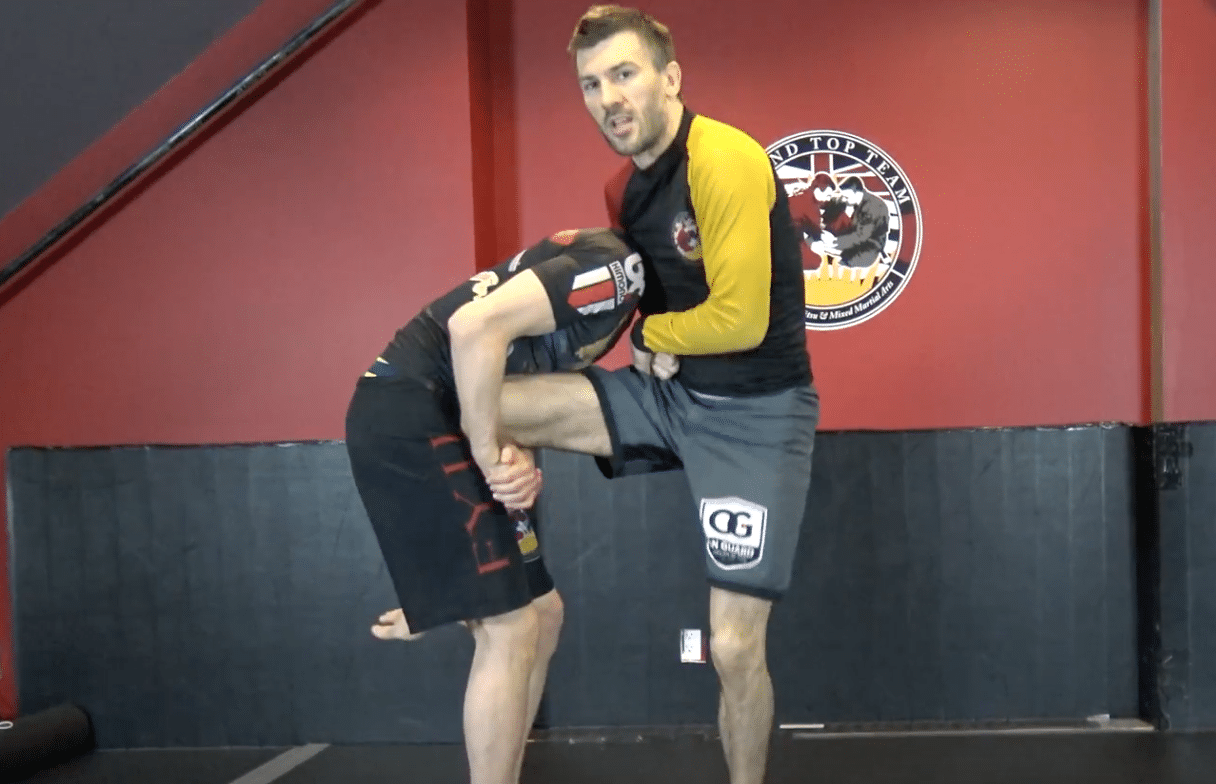
Judo is returning to its roots and allowing leg grabs again, but only in specific Japanese tournaments

Getting rid of some of those pesky Olympic rules
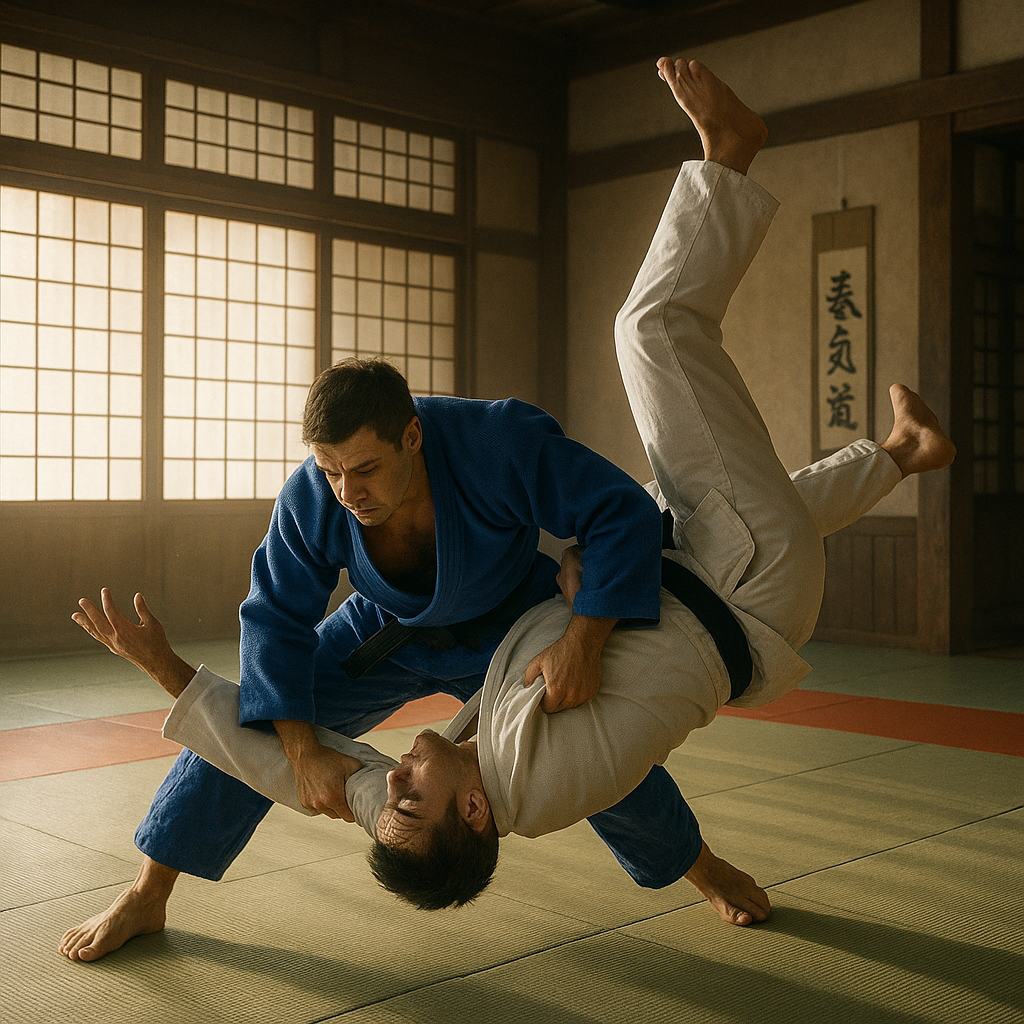

Judo and (Brazilian) Jiu-Jitsu might have exactly the same origins, but they’ve gone down really different paths in their evolution. While Judo has focused more on the sporting elements and becoming an Olympic grappling sport, BJJ has always wanted to keep things closer to its Value Tudo origins, which evolved into modern MMA.

Even today, many BJJ classes have a strong self-defence element, however BJJ is a broad church and some associations and classes are much more orientated towards sport grappling, particularly the no-gi variation.

One of the frequent criticisms of modern Olympic-style judo was that it had sacrificed too much realism in pursuit of beautiful big throws in competition. One way it did this was to make any grab of the pants or legs illegal. This seemingly simple rule change had dramatic effects on the sport. Since the legs were no longer a target the stance of judo players became more upright in their stance, leading to more possibilities for big dramatic throws.

Remember, under Judo rules a match can be won with an Ippon, a throw that lands the opponent on his or her back. In BJJ no such rule applies – a spectacular throw simply earns you two points and the match continues.

All Japan tournament rules

I hadn’t noticed before, but there has been a recent rule change in judo, in a particular Japanese tournament called the All Japan Championship, that means you are allowed to grab the legs again, opening up a whole range of possibilities for long-forgotten judo techniques to make a reemergence. 

There are some restrictions though. To grab the pants you have to have a grip on the upper body with one hand, and you cannot grab the legs with two hands. This rules out popular BJJ and wrestling techniques like the single leg or double leg.

This video explains the rules:


Will the new rules get adopted by wider judo federations and ultimately the Olympics? It’s unclear at this stage, and too early to say, but it will mean that going forward, judo could end up looking very different to the way it does now.
Episode 34: The five points of control in Tai Chi

The latest episode of my Tai Chi Notebook podcast is slightly different to a regular episode. There isn’t a guest, but that doesn’t mean I’m entirely alone…

This episode is brought to you using the power of artificial intelligence. I fed a recent blog post about the Five Points of Control into Google’s NotebookLM, an AI that produces a podcast based on your article, just to see what would happen and the result was so good that I decided to put it out as a real episode!

See what you think:

Episode 31: Mantis boxing, BJJ, self defence and heresy in martial arts

Here’s my latest podcast! Mantis boxing, BJJ, Self Defence and heresy in martial arts with Randy Brown.

Randy Brown is a Mantis Boxing and BJJ black belt coach teaching in the USA. In this podcast we explore how Randy has reworked his Mantis Boxing to explore the grappling potential hidden in its forms and how they can interact with his Brazilian Jiujitsu. We talk about a range of subjects including self defence vs sport, weapons vs barehand and how to turn dead systems into living arts again.

Links:
https://randybrownmantisboxing.com/

ADCC 2022 wrap up

We’ve just had the Olympics of grappling, ADCC 2022 and as always, there were some great matches. Unsurprisingly, Gordon Ryan dominated the 96kg+ division. He just walked through every high level opponent they threw at him, even finishing Andre Galvao in the Superfight and making it look easy in the process.

Here’s his quickest (11 second!) victory on his way to the final!

Despite Ryan’s absolutely horrible social media personality, it was refreshing to see how calm and respectful he was to his opponents on the mat. Even when Galvao resorted to dirtier tactics, like slapping him, Ryan didn’t get angry. He just laughed.

For me the Kade Ruotolo was a standout this year – he submitted all his opponents on his way to the 77kg crown. That’s a 100% submission rate on his first attempt. And he’s only 19, making him the youngest ever champion, and he’s 100% natural (i.e. no juice). I really enjoyed his match with Lachlan Giles especially because it was a perfect match up of guard player vs guard passer. The finish picked up some criticism because it looked like Kade was kicking Lachlan in the face to secure the armlock, but meh, Lachlan didn’t seem too upset about it, so it can’t have been that bad. See what you think:

Shout out to Ffion Davies who becomes the UK’s first ADCC champion. A great results for the UK and for Wales.

ADCC runs trials all over the world for people to qualify and is open to everybody who does any form off grappling, but once again no Tai Chi players made the finals…

Let’s be honest though, the only people who made it to the finals were Brazilian Jiujitsu guys and girls, because the rule set is designed to favour them. Nobody stands you up if you end up on the ground and almost all submissions are legal. Obviously, despite Push Hands being a form of grappling there is no Tai Chi on the ground, and leg locks aren’t part of the art.

Once again, I think it’s worth noting that if you want to be a well rounded martial artist, you really need to address the ground aspect otherwise there will always be a massive hole in your game.

The ultimate guide to the guillotine choke

guillotine-choke

Just look at those two guys and tell me they aren’t having fun! Nothing says “macho martial artist” quite like standing on one leg and having a guys head wrapped under your armpit in a guillotine choke while he’s pulling your leg into his groin.

But seriously, I think every martial artist should know how to do a guillotine choke, not just grapplers. The power of the guillotine is that it’s a very versatile choke. You can do it standing, on the ground and in all the positions in between. It looks like a deceptively simple technique – you just wrap your arm around their neck and squeeze – but as you’ll discover, there’s a whole load of subtle variations, tricks and positional requirements you need to know about to make your guillotine effective.

Rob Biernacki has produced a series of video clips that form a great free online instructional on Grapplearts about how to perform this simple choke. Trust me, it’ll be a great use of 30 minutes of your life and it’s good enough for them to have charged for it, but they’ve kindly provided it for free.

The delusion of grace under pressure

Surprise! Fighting looks like…. fighting

Photo by Ivan Krivoshein on Unsplash

This blog post grew from a discussion on RSF, a discussion forum on internal marital arts where I’m a pretty active user. Some members were expressing their displeasure at what they saw as low-level skill displayed in the recent 2012 Olympics Judo contest in London.

I was incredulous, since competing on an international stage in a tough sport like Judo requires the athlete to have levels of skill far beyond those of the mere mortal. Yet phrases like “low level” and “muscling” were being thrown about with abandon. The standard thing the detractors of modern Judo say, while explaining how Judo has entered a state of decline from which it can never possibly recover, is that modern athletes are not as good as the old timers. Then they post a black and white video of Mifune (The “God of Judo”) practicing with his students back in the day.

I have one right here:

As you can see, he’s effortlessly controlling his opponent, and demonstrating what is clearly agreed upon as “high level skills”.

Well, for a start, since Kyuzo Mifune was considered the greatest Judo technician to have ever lived, nobody would compare well to him, but that’s beside the point. Their point is that it looks nothing like Olympic Judo, and of course they’re right! Competition Judo will never look like the Mifune demo, because… (drum roll please) it’s a demo!

It’s exactly the same in every martial art – put a Tai Chi fighter in a sparring contest and inevitably people say “that’s not Tai Chi” because it doesn’t look like the super smooth demonstration their instructor does every Friday night at their class, as he effortlessly repels a doddery middle-aged gentleman who is gently pushing on his arm… Quite simply, competition fights do not look like martial arts demos and never will! I am truly perplexed that people can’t understand this… it’s a sort of collective human delusion. And it’s not just martial artists that have this delusion, it’s seeped into the popular consciousness too because of movies like Enter the Dragon, The Matrix, or James Bond. Most people think that if you “know kung fu” you’ll be able to pull some Jackie Chan moves out of your ass in the middle of a real violent encounter. Nothing could be further from the truth.

There are plenty of clips of martial arts masters under real pressure on YouTube, if you look for them. They all have one thing in common – it stops looking like the perfect martial art demo and starts to look scrappy as soon as they have to deal with real resistance, and not a willing student.

Here’s the thing: We’re confusing the training methods with the end result time after time.

Example:

Here’s Kochi Tohei looking graceful, poised and in control while doing a demonstration of Aikido:

Now here he is working against an opponent offering real resistance:

Totally different, right?

This comment on that last video from YouTube is typical of the collective human delusion I am describing:

“if tohei used aikido techniques against this man,which he is not doing until the last bit of the clip,serious injury to uke could have resulted. this was only an exercise in balance.”

It’s time for people to wake up.