I wrote a blog post the other day in which I mentioned that the Taoist origins of Tai Chi are historically unproven, yet the similarity in ideas is obviously there.
I got an interesting comment back on Facebook from somebody linking to a book I wasn’t aware of:
“Roel Jansen: Your information on the origins of Tai Chi is outdated. Please read ‘Tai Chi – the true history & principles’ by Lars Bo Christiansen to get up to date with the latest findings on the daoist origins of Tai Chi.”
So I looked the book up and it exists – it’s on Amazon.
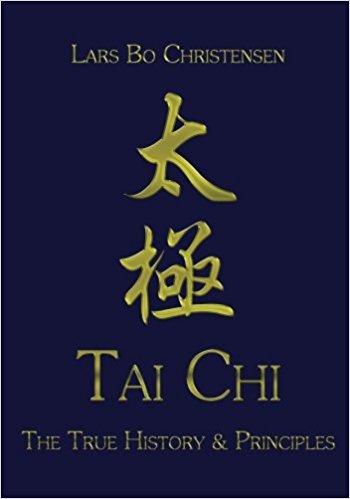
You can read a lot of the book on Amazon’s “look inside” feature. It’s about the newly found Li family manuscripts from which the author draws some pretty wild conclusions, one of which is that the Taoist link to Tai Chi has now been proved beyond doubt.
The book author has a website too, which contains his main arguments in the QnA:
I thought something seemed a bit ‘off’ with the whole thing, so I looked around and found the eminent Douglas Wile, who wrote two books on the Tai Chi Classics that are very good, and that classic essay on Chan Sang Feng, had written a massive article on these Li manuscripts, (and Lars’ book) which is here:
https://mas.cardiffuniversitypress.org/ … /download/
It’s a mammoth read, but looks at the whole thing from a more balanced perspective, including all the political leanings.
The TL;DR version is: It’s complicated. The verdict is still out 
Here’s a pertinent quote:
The question of whether taijiquan is the product of Daoism creating a martial art or a martial art absorbing Daoism is a critical issue in Chinese martial arts historiography. If anything, Daoism is an even more slippery term than taijiquan itself, but the issue has become highly politicized, which is understandable in the context of Chinese history and culture. However, for a Western scholar to stumble into this minefield bespeaks a certain naiveté. The assertion of Daoist origins has become associated with cultural nationalism and the search for Chinese identity, often called ‘Chineseness’. Chinese scholars have built entire careers out of championing either Zhang Sanfeng or Chen Wangting, but it is very unseemly for Western scholars to insert themselves in this politicized process of roots-seeking and competing attempts to identify origin, creator, or birthplace as ‘transient points of stabilization’
[Laclau 2000: 53].
I think there are other questions that need to be asked about the whole question of “Is Tai Chi Taoist?”
For instance how many of the concepts we associate with Taoism, like the Tai Chi symbol, the I-Ching, Wu Xing and Bagua are actually Taoist in origin? Chinese Folk Religion, is actually the largest religion in China, and makes use of many things that we in the West think are “Taoist”.
As HotSoup on the RSF forum posted recently:
“There is an opinion that asking a CIMA practitioner from the beginning of the nineteenth century whether his art was “Buddhist” or “Taoist” would make as much sense, as asking a medieval fence teacher whether his fencing was “Catholic” or, say, “Juwish”.
 The Tai Chi Notebook