REVIEW Martial Art Essays from Beijing, 1760

By Michael A. DeMarco, MA

Amazon link (UK)
Amazon link (US)

Martial Art Essays from Beijing, 1760, presents 64 essays written by Yang Mingbin, a painter in the Royal court of the Ching dynasty. Or does it? As well as being a painter, Yang was also a martial artist and the papers are his thoughts on his martial practice, except that Yang Mingbin never actually existed, and the work is entirely a fictional piece of writing by the modern author, Michael A. DeMarco. DeMarco is a Tai Chi practitioner who used to publish the peer-reviewed quarterly Journal of Asian Martial Arts

Yang Mingbin’s place in history is well researched, and surrounded by genuine historical figures such as Giuseppe Castiglione (1688-1766), a real Jesuit priest who was a painter in the Royal court in Beijing, and was responsible for influencing the Chinese style of painting of the era with western Renaissance ideas. You’ve likely seen some of his paintings before, such as the famous one of the Emperor Qianlong in ceremonial armour.
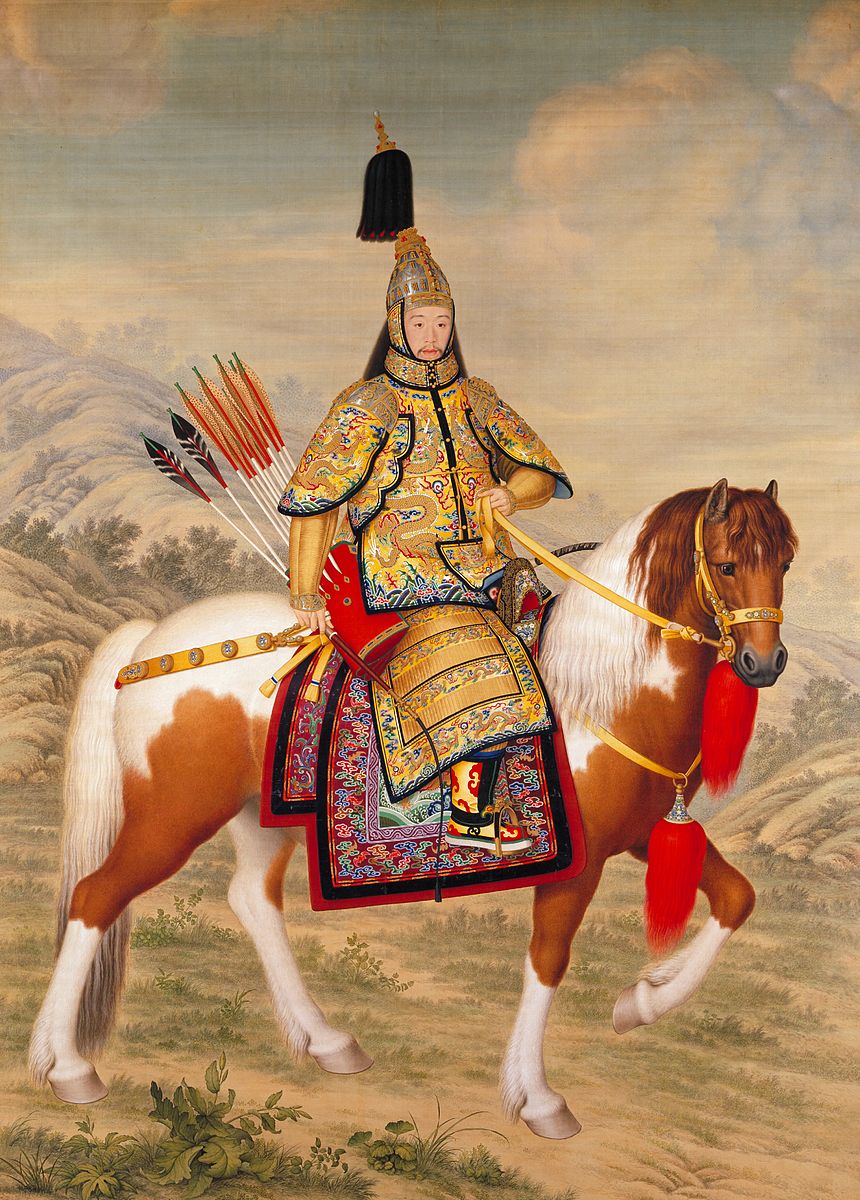
The Qianlong Emperor in Ceremonial Armour on Horseback Giuseppe Castiglione  (1688–1766)

So, the conceit here, then, is that you’re being asked to imagine what it would have been like if Giuseppe had had a friend in the court – another painter – who was also a martial artist, and what would happen if we had recently found a copy of his notes on martial arts. It’s a thought experiment, that the author begs your indulgence in as you read along.

Initially it works, because the historical setting feels authentic, but once we get into the actual meat of the book (Minben’s 64 martial arts essays), we find that Yang Minben writes exactly like a 21st century American who practices Tai Chi would write, rather than like somebody actually living in 1760 in China would! 

Actual martial arts writings from that period in history tend to be functional, pithy and less verbose. Worse, Mingben’s text often uses modern conventions, for example, (p63), 

Dive into a swift flowing river and swim against the current. Keep swimming, but gradually change the direction – 0 to 45 degrees, to 90 to 135, then to 180 – finally swimming directly with the current.

Would a Chinese person writing in 1760 have described this using degrees?

And things get very odd when, on p97, Minben writes, “between 1775 and 1779, Qing troops stabalized the northern and western boundary of Xingjang province, harshly squelching the rebellion in the area occupied by the Mongolic Zunghar tribe.” 

How is Minben writing about events that happened in 1779 when the current date is supposed to be 1760? 

That’s not to say there aren’t interesting things to learn here. I enjoyed the discussion of the Neo-Confucian scholar Zhu Xi and the concept of Li, the calligraphy analogies and the references to Lao Tze and Chuang Tzu. But if the author wants us to enter into his historical conceit, then I think it helps if the writing is consistent with the time period. I would have also liked to have heard more accounts of what Beijing was like in 1760. That would have helped build the illusion – city life, how business was done, what the pervading political climate was like, what the fashions were, what the gossip was – what was happening in Royal Court?

You could argue that since all of this is imaginary anyway, perhaps we do not need to make a big deal out of it? DeMarco’s writings are a collection of modern philosophical musings designed to be easily read and understood by the modern Tai Chi crowd and that draw in frequent references to the Daodejing and analogies with calligraphy and painting. I quite enjoyed them, but if you are looking for something that reads like the real classic writings on martial arts, you’ll be disappointed. However, if you’re after something a little easier to read and that inspires you to practice Tai Chi more, then you’ll find it here. 

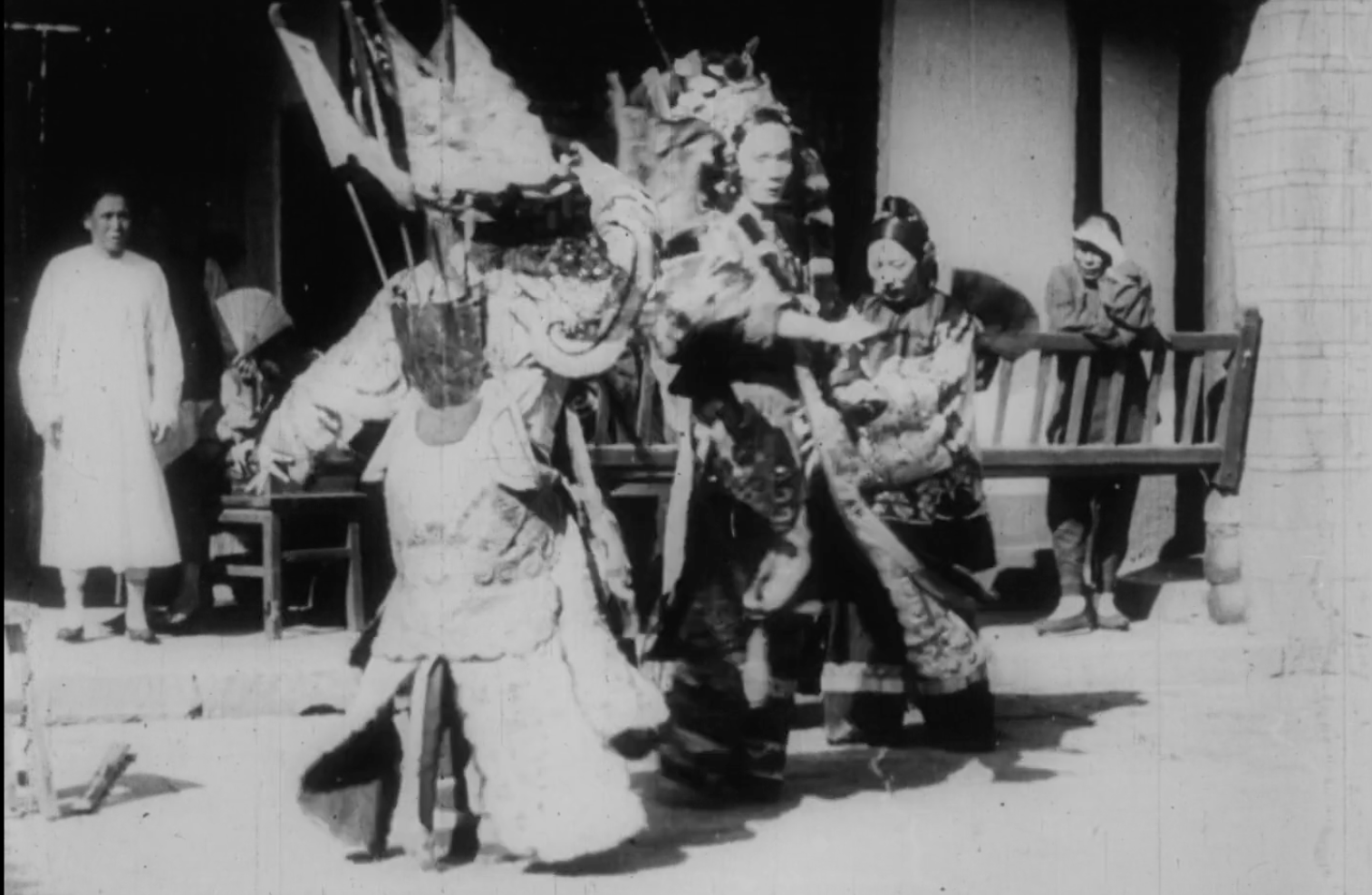
Dragon dance and street theatre – rare video of old China 1901-1904

Thanks to Jarek Szymanski for posting about this clip.

“Unique documentary footage taken between 1901 and 1904 in Yunnan in southwestern China by Auguste François (1857-1935) french consul stationed there. Street performers, barbers, funerals, official visits, leopard catching a pigeon and monkey wearing opera outfit doing somersaults, opium smoker, it’s all there – and more. Absolutely stunning over fifty minutes of footage from China that none of us has ever seen. Somewhere there were probably also martial artists, hiding in plain sight;)”

https://www.cinematheque.fr/henri/film/129752-images-de-chine-auguste-francois-1901-1904/

Of particular note for martial arts fans are the Dragon Dance scene at 32 minutes and the street theatre dancing at 46m which looks an aweful lot like Baguazhang….

The new American Boxer Rebellion of 2021

Jack Slack was the first person to draw my attention to the parallel between rioters storming government buildings that happened in China’s Boxer Rebellion around 1900, and the storming of the Capitol Building by Trump Supporters in 2021. Both involve a kind of “spirit possession”.

Of course, America, along with many European nations, was involved in the Boxer Rebellion:

“In 1898 the Yellow River burst its banks and destroyed the harvest in much of Northern China, but this misfortune was followed by an agonizing drought which dried out the land and hardened the dirt. As young men went hungry and without work, some Chinese noted the connection between the anger of nature and the construction of train tracks, telegraph lines and churches since the arrival of foreigners in the Qing Empire. Anti-foreign sentiment brought together groups of peasants practicing martial artists and calling themselves the Righteous Society of the Harmonious Fists—though the West came to know them as “The Boxers”. The Boxers attacked and murdered missionaries across the Empire and in the summer of 1900, Tianjin and Beijing were plunged into chaos as the Boxers received the blessing of Empress Dowager Cixi and the Imperial army. 400 foreigners and 3000 Chinese Christians endured a two month siege in Beijing’s legation quarter—a stone’s throw from the Imperial Palace but completely helpless. The Boxer Rebellion is a story about agriculture and diplomacy, magic and court intrigue, and it stands as both the last great event of the Victorian Era and the beginning of the end for the Qing Dynasty. ” – Jack Slack

Of course, I’d contest that the events that lead to the end of the Qing Dynasty had started much earlier, back in 1860s. It was these conflicts with foreign powers and internal rebellions which lead directly to the creation of Tai Chi Chuan, as we discussed on our History of Tai Chi podcast series. Yes, I’m sorry, the myth of a Taoist inventing Taijiquan after a dream about a snake and a crane, is just a fairytale. The real reason is much more pragmatic.

Jack has done an excellent podcast episode on the Boxer Rebellion, which he’s just released to the public, instead of being behind his Patreon paywall. If you want to find out more, have a listen:

Did Taijiquan’s Yang Luchan and Baguazhang’s Dong Haichuan ever meet?

Image source: https://gameofthrones.fandom.com/

Game of Thrones’ fictional Grey Worm is probably the most famous Eunuch in modern literature, but while Grey Worm lead an army of disciplined, ferocious fighters called The Unsullied, the role of castrated men throughout history has been somewhat less fighting-orientated, especially in royal courts, where they have traditionally held positions of servitude mixed with privilege and power, especially in China.

The Empress Dowager Cixi was often photographed being carried in state on a palanquin by palace eunuchs, in the late 19th and early 20th century. 

As we discovered in part 1 of the Myth of Tai Chi podcast, Yongnian, the home province of Yang Luchan, was famous for providing the highest quality eunuchs to the Ching royal court, and connections made with eunuchs from ‘back home’ could have provided Yang Luchan with a route into Beijing and his role of martial arts instructor in the Royal Court. Nepotism was, after all, what greased the wheels of government in a Confucian court.

To find out more about the complicated world of the Royal Court and the role that eunuchs played we can look to books on the subject. In this short review of Melissa Dale’s book Inside the World of the Eunuch and Jia Yinghua’s The Last Eunuch of China, Jeremiah Jenne takes us into the world of old China:

“History has been cruel to China’s eunuchs. Chinese literature is filled with stories of avaricious and ambitious eunuchs exploiting their position for personal gain and power to the detriment of the social and political order. Society treated eunuchs with a mix of fascination and revulsion. They were a source of anxiety for the court and its officials. They were third-sex creatures marked by their relative lack of facial hair and perceived physical deformities (early castration often resulted in eunuchs being taller, with longer hands and limbs). In the foreign gaze, eunuchs became an analog for a decrepit China, feminine symbols of a decaying imperial system – a view perpetuated by 20th-century Chinese reformers and revolutionaries. Today, when thought of at all, it is as stock villains or comic foils in palace costume dramas.”

Jeremiah Jenne

After the initial gruesome operation, and assuming he survived, a eunuch’s life was hardly his own any more once he was serving in the palace.

“Once inside the palace, a new eunuch was isolated from his old life and introduced to a whole new reality. Both books describe the parallel world of palace eunuchs, a highly regimented and hierarchal society that still had spaces for deviant behavior, petty jealousies, and even violence. Eunuchs were expected to show complete devotion to their duties, and to their masters and mistresses. At the same time, they also formed friendships as well as master/disciple bonds with older and more experienced palace hands. While the rules governing eunuchs were numerous and punishments harsh, eunuchs still created actual spaces in the palace for their own activities. There were barbershops, noodle stands, gambling parlors, opium dens, and various other places where court eunuchs could blow off steam with multiple cups of wine and the sympathetic ear of their fellow attendants.”

Jeremiah Jenne

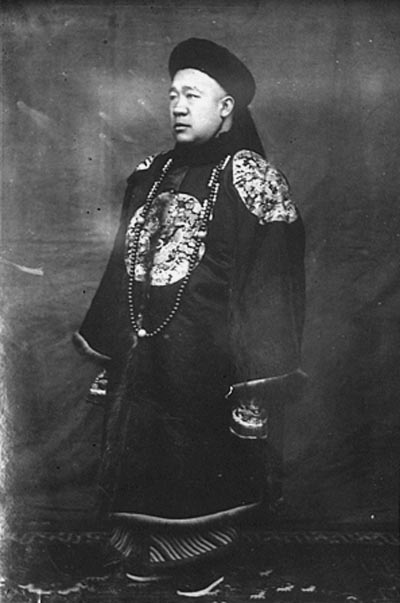
But the lives of eunuchs did not just impact Taijiquan, Dong Haichuan, (whose birth dates are give as either 1797 or 1813 – 25 October 1882), the founder of Baguazhang was a palace eunuch. According to tradition, around 1864 Dong arrived in Beijing and was hired as a eunuch at the residence of the Prince Su. (Whose name was Shanqi, a prince of the Aisin-Gioro clan, the ruling clan of the Qing Dynasty), as well as a minister in the late Qing. He was from the Bordered White Banner and the 10th generation Prince Su, the first Qing hereditary prince position.

Later Prince Su gave Dong the job of tax collector. 

10th generation Prince Su.

It’s possible that Yang Luchan and Dong Haichuan’s tenures in the royal court overlapped. Did they meet and have an exchange of martial techniques as legend and martial arts movies often suggest? It’s possible (Yang Luchan died in 1872), but we just don’t know.

It’s interesting to note that Taijiquan and Baguazhang both share that connection to the Ching royal court around the same time, and are both considered part of the ‘internal’ family of martial arts.