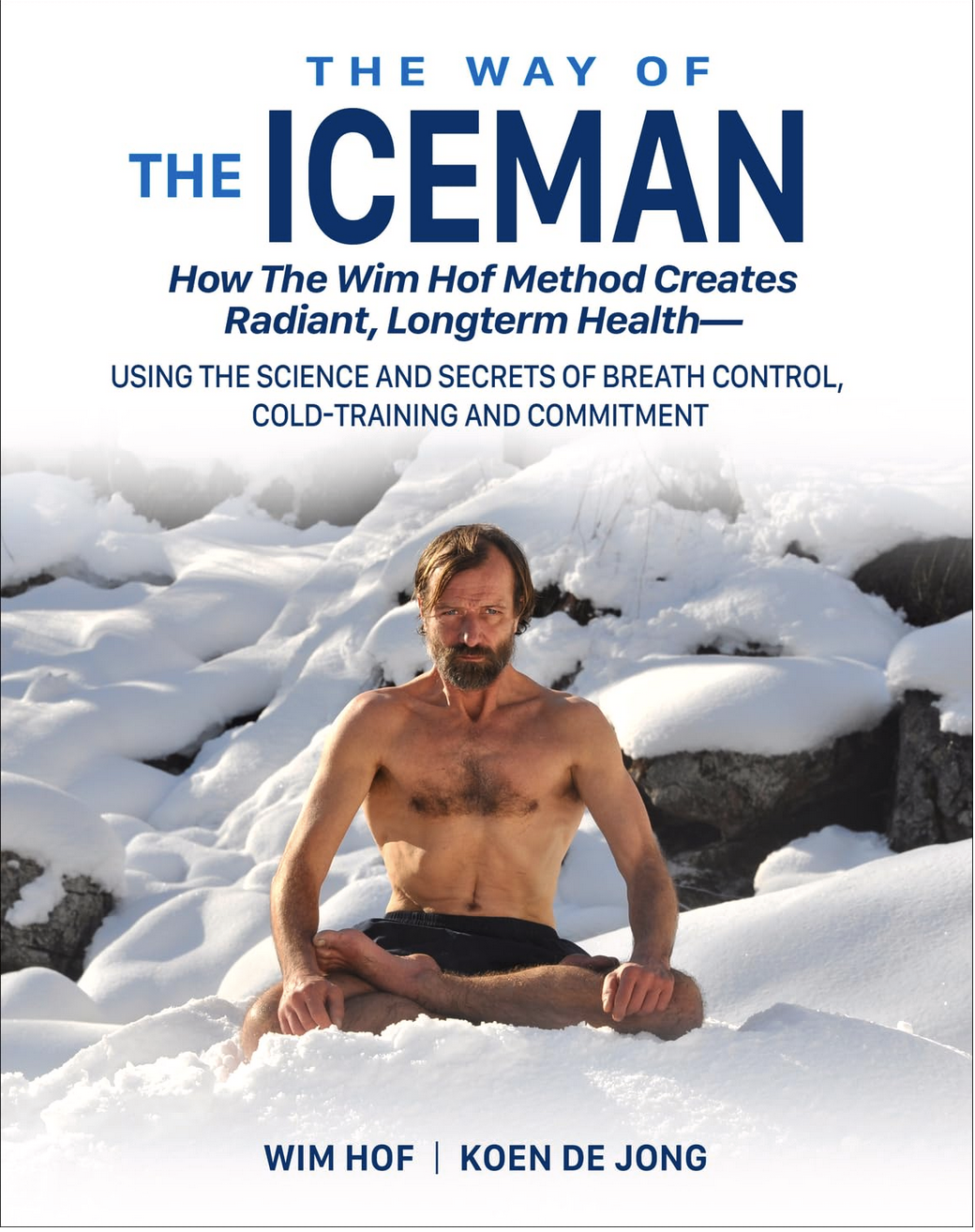
I’ve never been interested in Hoff’s breathing methods myself, I felt they weren’t going down the same track as the Qigong and Chinese Martial Arts I practiced, so I never tried them. But really, I’m just not a fan of: 1) cold and 2) holding my breath, so it never appealed to me.
And it turns out it’s a really dangerous thing to do in water. People have died doing it.
Carney’s description reads:
“He was once the most popular breathwork instructor in the world. He galvanized the ice bathing movement. But all good things come to an end. And Wim Hof’s end has been a long time coming.
If you’ve been doing Tai Chi, meditation or yoga for any length of time you’ll have heard the old adage to ‘put your tongue behind the two front teeth‘. The explanation given for this is usually that it “connects the two meridians that go up the back and down the front of the body called the Ren and Du meridians, creating the micro-cosmic orbit”.
Micro cosmic orbit connected… man. Photo by Elina Fairytale on Pexels.com
Personally, I have my doubts about the whole idea of ‘energy’ or Qi ‘flowing’ around the body. I often think it’s really an ancient aberration of the simple idea of forces moving inside the body. In Chinese martial arts there’s a phrase you often hear – rise, drill, overturn, fall, which matches this circuit in the body with a martial technique. The best example of which is Pi Quan from Xing Yi, during which forces in the body (jin) rise up and then come crashing down into a strike.
Strength and balance
However, it’s not just Chinese medicine that recommends this tongue position. I’ve recently discovered that there are a lot of Western sources advocating the same tongue position. For example, Colgate toothpaste has an article about correct tongue position on its website that recommends the exact same thing – the tongue resting on the upper palette behind the two front teeth. The article links to a study in Radiology and Oncology called “Three-dimensional Ultrasound Evaluation of Tongue Posture and Its Impact on Articulation Disorders in Preschool Children with Anterior Open Bite“, which notes that “children with poor tongue posture were reported to have a higher incidence of anterior open bite, a type of malocclusion where the front teeth don’t touch when the mouth is shut. This may be because the tongue puts pressure on the teeth which can shift their position over time.” (Colgate).
In this article from Healthline, Dr. Ron Baise, dentist of 92 Dental in London explains “Your tongue should be touching the roof of your mouth when resting… It should not be touching the bottom of your mouth. The front tip of your tongue should be about half an inch higher than your front teeth.“
While dentists may be aware of the benefits of good tongue position for your teeth and preventing problems with your speech, or mouth breathing from occurring, some exercise enthusiasts are going further and claiming that proper tongue position actually increases your strength and balance, something that is undoubtedly important for martial arts, like Xing Yi.
Pi Quan is said to be like the swinging of an axe. (Photo by Ivan Samkov on Pexels.com)
Now, I’m as aware as the next Tai Chi blogger that cherry picking studies that confirm your beliefs (and presumably ignoring everything that doesn’t) is a bit of a red flag. However, the idea that your tongue position effects strength and balance makes more sense to me than imaginary energy channels (Du/Ren) that may, or may not, exist in real life.
Apparently, good tongue placement can give you superpowers!
I remain slightly skeptical about the whole issue, however, my tongue does naturally rest behind my two front teeth on the upper pallet of my mouth… I can feel it there now as I write this. Was it always there? Or have I turned this into my natural position thanks to starting Tai Chi in my 20s?… I don’t know. All I can say is that it feels comfortable, and if my Ren and Du channels are connecting because of it, and my strength and vision is better because of it then…. so much the better.
“Stop doing the wrong thing and the right thing does itself.”
– F. Mathias Alexander.
Breathing has become a hot topic these days. There’s Wimm Hoff with his patented breathing methods for overcoming extreme cold all over TV and YouTube, breathing classes have sprung up in every town where you can go to where you spend an hour focusing on your breath (just type in the town you live in an ‘breathing classes’ into Google and I bet you find something), and of course, there still are all sorts breathing methods you can find out there in yoga, tai chi and qigong classes.
Often in Tai Chi we’re told that we should be performing abdominal breathing, or ‘Taoist breathing‘ – so, as you breathe-in the abdomen should expand and as you breathe out, the abdomen should contract*. We equate this abdominal breathing with deep breathing – almost as if the more we can ‘fill’ our abdomen with air, the deeper and better the breathing will be – and think that it therefore must be healthy. (* there is also reverse breathing, but that’s another topic).
Just breathe! (Photo by Spencer Selover on Pexels.com)
How to breathe
I recently started reading the excellent book ‘How to breathe’ by Richard Bennan, which has made me reconsider the way I’ve been approaching breathing in Tai Chi.
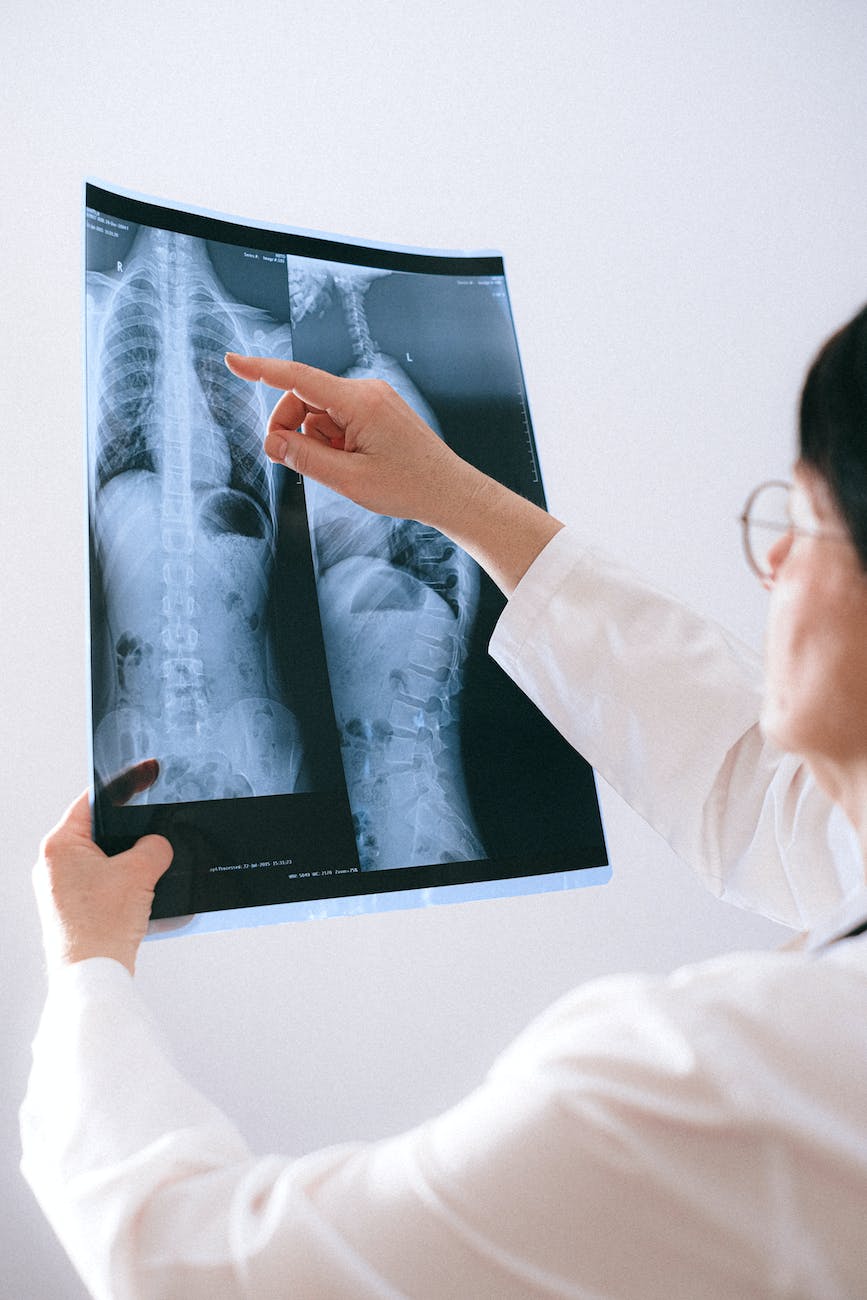
Firstly, let’s start with the basics. It’s worth remembering where your lungs are. They are behind the ribs and reach up higher than the collar bones on each side. Look at the picture below and you’ll be surprised by how far up the lungs go. So, when you expand your belly on an in-breath the air isn’t going down into your belly – it all stays in your upper torso. Of course, that might already be obvious to you, but you’d be surprised how many people think their belly is filling with air when they breathe in! It’s not.
When you practice ‘belly breathing’ what you should be doing is expanding the whole torso on an in-breath, and it’s this expansion of the lungsand the dropping of the diaphragm that pushes the abdomen down and outwards (on all sides, not just the front). If you start to try to use your abdomen muscles to lead the process, or force-ably expand or contract the belly as you breathe in and out then you are just adding tension to the whole process, which is the exact opposite of what you want. There should be as little tension as possible for efficient breathing. Trust the process – it will work on its own.
So, with me now, try an in-breath and focus on the lungs themselves filling up and expanding and this wave of expansion being the motivating force for expanding the belly. It doesn’t really happen in a step by step way either – everything expands at once. So, don’t try to fill one section of the torso, then another, that is also just adding tension. Equally, don’t try and keep the ribs still. They are designed to expand and contract with the lungs. If you try and keep them still, then, you guessed it… You’re just adding more tension.
Once you can visualise where your lungs are, (and how far up they go above the collar bones), then just focus on letting them expand freely, and stop interfering with the breathing process. Less is often more.
You might also like to think about the posture requirements of Tai Chi and what effect these might be having on your breathing. We often hear words like “round the shoulders”, “lift the back” and “hollow the chest” in Tai Chi. Think for a minute about what effect those directions, if followed literally, might be having on your breathing. Do you think they are beneficial or harmful? It’s something to consider anyway.
Breathing should feel amazing. It should feel smooth, natural and healing. And it will, if you stop interfering with it.
* I think reverse breathing is a deliberate hack to the body’s natural way of breathing, but I don’t think people should be attempting it before they’ve got better at breathing in a natural way first. If you are already breathing in an unnatural way, and then you try and add on something else, well, it doesn’t take a genius to realise that you’re headed for long term problems.
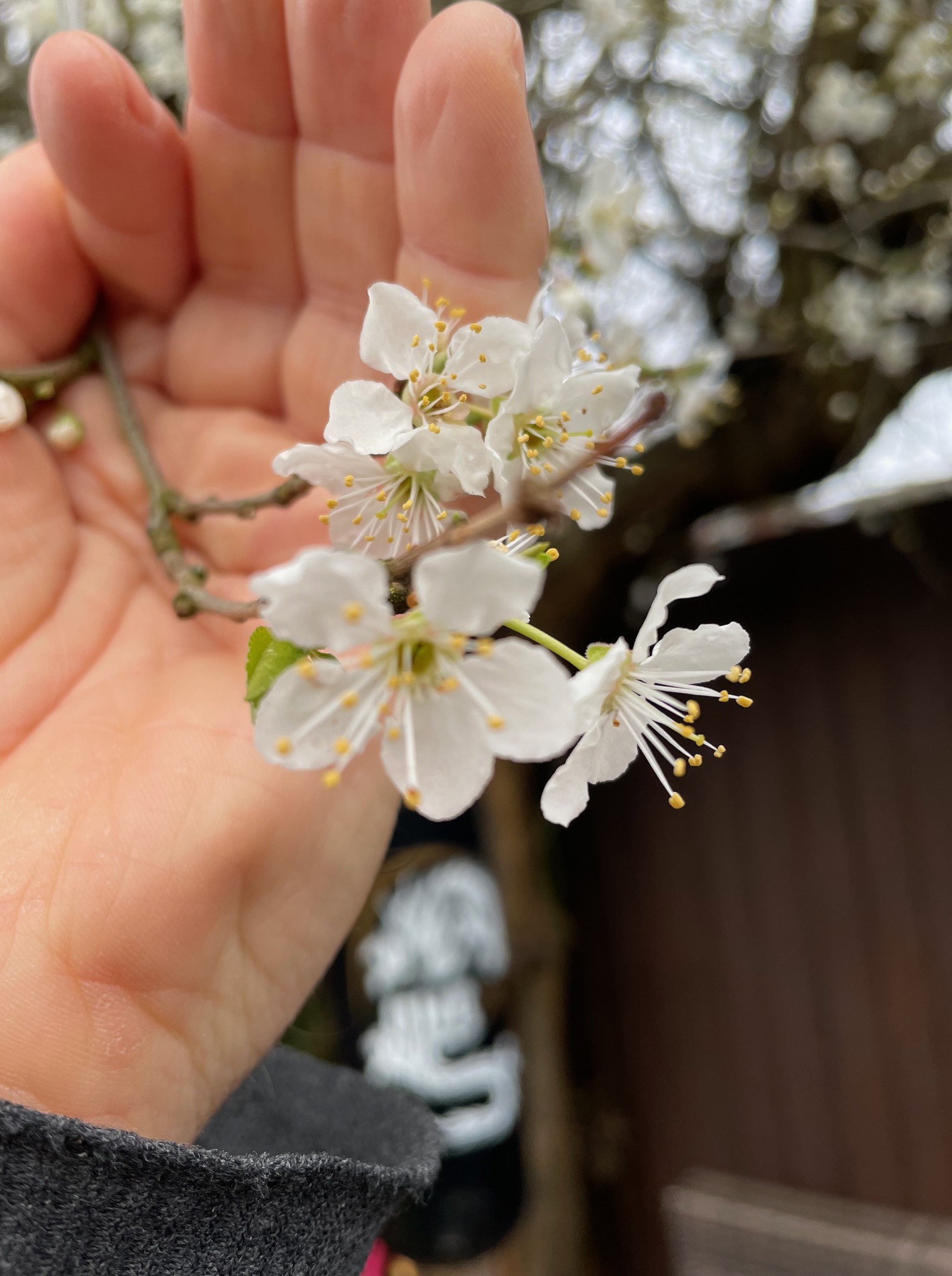
The plum tree in my garden is blossoming, and that can mean only one thing: Spring is here!
Without getting too poetic about it, the potential energy trapped within the tree over Winter is releasing and opening out to the world. So, in keeping with the cycle of the seasons, let’s return our Tai Chi practice to a similar aspect – opening and closing.
All Chinese martial arts contain movements that open and close the body, but I’d go as far as to say that a repeated pattern of opening and closing your body in movement is the fundamental action of Tai Chi Chuan. It’s perhaps the one thing that makes Tai Chi Chuan (Taijiquan) different to other Chinese martial arts.
Then there are also Chinese martial arts that use ‘open’ postures a lot, and produce power from the big turning actions of the waist and shoulders – Choy Li Fut is a good example of this.
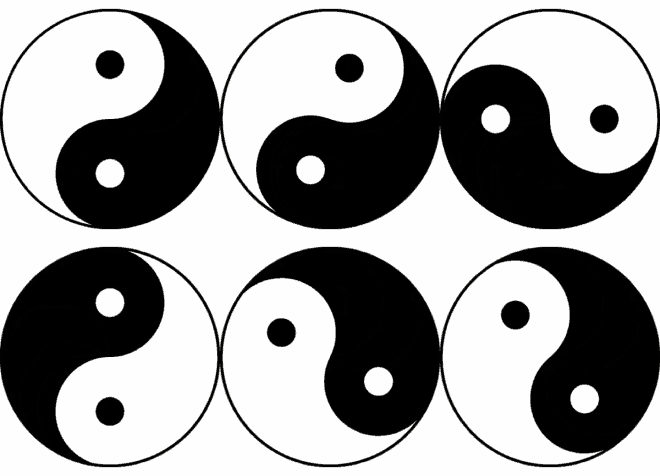
Of course, both these arts make use of both opening and closing movements in application, but what makes Taijiquan different is that it seems to have a rule that the body must constantly cycle through a series of opening and closing postures. You can see this when you look at Tai Chi forms – it shouldn’t matter which style you’re looking at, the opening and closing movements should follow each other in a cycle, very much like the Yin Yang symbol. If you imagine the Yin Yang symbol turning in a clockwise direction then the white fish becomes the black fish, which becomes the white fish, and on and on.
Silk Reeling exercises are a great way to focus on understanding open and close movements, as you just keep repeating the same pattern over and over, so your brain doesn’t get occupied thinking about the movement you are doing next (as it would in a Tai Chi form) and you can focus on the opening and closing actions.
So, what are the opening and closing actions? Well, I went over it in a video series a while ago. You can watch it here:
But it takes a while to watch all that series, so long story short, here’s a written explanation: an opening movement generally stretches out the front of the body (the Yin side – the soft parts, like the inside of the arms, and thigh, calves, and belly) and a closing movement generally stretches out the back of the body (the Yang side – the harder parts, like back of the arms, back and outside of the thighs and shins).
You can see these actions everywhere in nature: Cats tend to stretch along the front and back (yin and yang) of the body when stretching. (And it’s the same with the Yoga “Cat stretch” posture). But you see them in humans too – when you do one of those involuntary yawning/stretching movements in the morning, it tends to be opening the chest (yin stretch), occasionally followed up by a Yang side stretch.
It’s been noted that animals running are opening and closing the Yin and Yang sides of their bodies in sequence. So, this opening and closing action is fundamental to human and animal movement and the more we can utilise it, the more we are returning to our own natural systems of movement. Now, I don’t want to get sidetracked into a debate on what exactly “natural” movement is, but simply put, this opening and closing movement done in the human body feels good, it seems to put you in a good mood and you feel like your body and mind are returning to the way they are supposed to work. It requires less effort to perform tasks using it because it’s very efficient and it feels natural. If you watch skilled workmen and women then you’ll notice that they tend to gravitate towards easy body movements that have this natural opening and closing quality. Many of the people in ancient China who practised kung fu systems would have been agricultural village works who were familiar with natural movement patterns through necessity.
4 Directions Breathing exercise
Silk reeling exercises belong to the Chen style of Taijiquan, and while I (a Yang stylist) have no problem borrowing what works from other styles, a lot of Tai Chi practitioners might not want to do something from another style. However, almost all Qi Gong/Tao Yin type breathing exercises follow the same idea of opening along the Yin side of the body and closing along the Yang side that you find in Silk Reeling exercises.
You probably have some sort of exercise already that’s in your system to try this with, but let’s try one simple exercise to get our heads around the idea of open and close.
Stand in a Horse stance,
Breathe in as you bring your hands up facing you and then move them around a large imaginary ball that’s in front of your chest, so that your hands are facing away from you.
Push the imaginary ball forward away from you as you breathe out.
Turn the hands over and bring them back in towards you as you breathe in, going around the outside of the ball.
Push to the sides as you breathe out.
Bring the hands back in, circling the ball, getting underneath it as you breathe in.
Push upwards as you breathe out.
Bring the hands back in, circling the ball, getting on top of it as you breathe in.
Push downwards as you breathe out.
Bring the hands back in, going around the ball as you breathe in.
Let the palms face down and hands return to your sides as you breathe out.
Adding the opening and closing:
As you bring your arms up and towards you and go around a big ball that’s the opening movement. You can feel the slight stretch opening around the chest area, and you use that slight tension to help push your hands forward. As you do you’ll feel a slight stretch developing along your back. That’s the closing movement. You then use that slight tension to help bring your arms back. This is opening. Then as the arms push to the side, this is closing, and so on.
You often hear Tai Chi teachers say things like “don’t use muscle”. Normally this drives me mad, as you can’t physically make a movement without using muscles! However, what they’re really talking about is using that slight stretch you can feel to power the movement instead of just moving as you normally would, which results in making it “too physical” for Tai Chi. Finding the right words here is a delicate balance, but what we’re looking for is more of a whole body movement.
Final words
It helps to work on this in a stationary exercise, as described, but when you try your Tai Chi form, try and focus on keeping that feeling of opening and closing going throughout the whole form. The opening and closing movements are already there in the form, it’s up to you to reveal them. It’s a way of approaching the form from the inside, rather than the outside. So, if you’ve been struggling to get a movement to feel right in your form, it could be that the method described here will solve the problem for you. For it to work you have to be “sung” (relaxed) and focused on what you’re doing and the feelings inside the body. If your mind wanders off then inevitably so will your form. This is the start of what we call in the Tai Chi Classics “internal and external combine”.
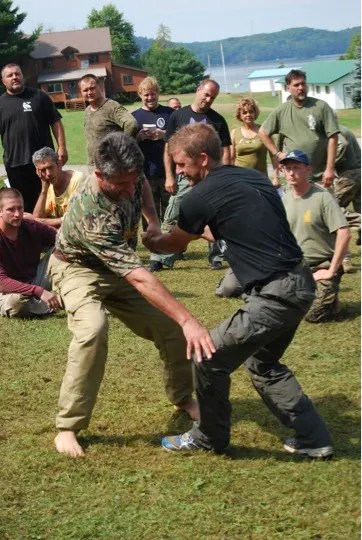
I had a great visit to The System Academy in Wiltshire last week where I enjoyed a bit of 1-1 Systema coaching from my old friend and owner of the Academy, Matt Hill. I also recorded a podcast episode with him for The Tai Chi Notebook Podcast, which will be coming out in November. Matt trained Aikido in Japan and served as a Captain in the British army, as well as working in crisis management before he became a full time Systema instructor, so he’s got a lot of experience of different types of martial arts and working in pressure scenarios. Because Matt and I live quite close to each other I had the opportunity to get a bit of hands-on work in before we sat down to record the episode. It was great to experience some Systema myself this time, and I particularly enjoyed the striking aspects, which is something I’ve put on the back burner a bit as I’ve got more into grappling over the last few years.
One of those eternal questions that pop up on discussion boards a lot is, ‘how close is Systema to Tai Chi?’, and this was one of the things I’ve been mulling over since I had the lesson. Both these arts stress what Systema calls the Four Pillars – breath, posture, relaxation and movement – but on a basic level I think one of the immediate differences between Tai Chi and Systema is that Systema seems to only exist in relation to something you are doing, whereas Tai Chi has this weighty set of philosophical principles that exist independently to the art, like Taoist philosophy and yin and yang, as well as concepts from the Tai Chi Classics regarding posture, movement and strategy. Tai Chi can certainly be talked about in terms of these abstract concepts and ideas, but in contrast, Systema needs to be shown. When you’re not doing Systema, then where does it go? It’s a bit like your lap – when you sit down you can point to your lap, but when you stand up, it vanishes!
Systema seems intrinsically tied to what you are doing, not what you are thinking. Of course, you can argue that even when you’re doing nothing and not moving, say, just sitting there, you are still doing something, so perhaps Systema is always there: You still have a posture, and you are always breathing, and that means some movement is happening in the body and you can still relax, which is a kind of a movement in itself. But there doesn’t seem to be an underlying theory, comparable to something like Tai Chi’s theory of yin and yang, that underpins it all.
Another interesting difference is that when Systema teachers talk about embodying the 4 pillars – they really mean it! They’re not just paying lip service to the ideas – they are living them. Even outside of the martial art practice, Systema seems to have the potential to pervade everything you do. In Systema you tend to lead movement with your breath, you breathe the tension out of your body as you work and you try not to muscle anything. And that can be applied to anything, not just fighting.
Of course, you could say the same thing is true of Tai Chi, but there’s so much other ‘stuff’ to worry about in Tai Chi – like a form,(and getting the form just right), dantien, and the 6 harmonies or the 8 co-ordinations, etc, etc.. I think inevitably, with so much on your plate, some things slip. But with only 4 principles to keep in mind, you can spend a bit more time really digging into them.
And then there’s the amount of physical discomfort you experience. Tai Chi can be really hard on the legs for sure, but push ups, leg raises, sit ups and squats are the meat and potatoes of Systema, none of which you’ll find in a bog-standard Tai Chi class. Not to mention learning to give and receive strikes. Even more martially inclined Tai Chi classes don’t tend to work on actively standing there and learning how to receive strikes.
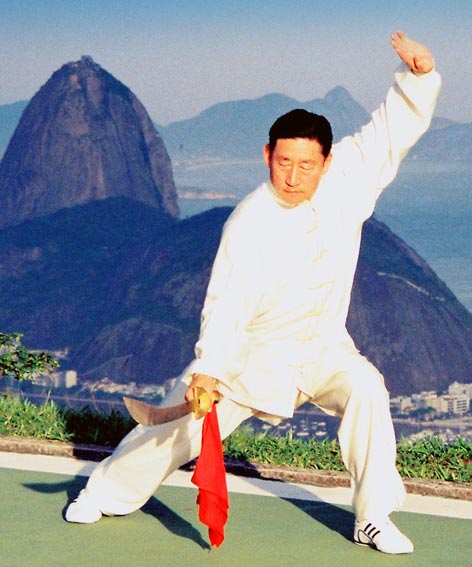
Chen Xiaowang, Tai Chi broadsword
Adopting any sort of ‘martial arts pose’ is frowned on in Systema. Again, you can argue that there are no fixed shapes in Tai Chi either, but Tai Chi does put a lot of emphasis on structure – keeping a connection to the ground through a relaxed frame, and there are ‘kung fu’ style postures. Systema seems to prefer you trust in your relaxation and let gravity do its work. For a Tai Chi person, it’s quite freeing and fun not to have any fixed shapes you’re expected to adopt. The emphasis in Systema seems to be on not trapping yourself into patterns of tension that you first have to exit before you can move freely. Fighting somebody else is hard enough already – you don’t want to have to fight seven battles within yourself just to move freely before you even begin!
So yes, Systema is different to Tai Chi. But I think the two work really well together. The Tai Chi practitioner can take from Systema the idea of not being trapped in ‘postures’ – fixed shapes (Ward off, Diagonal Flying, etc) and the value of removing as much tension from your body as you can while still working on moving with an opponent. Also, breathing tends to get only a cursory mention in Tai Chi, but focusing more and more on keeping your breathing smooth and continuous, and noting how that relates to tension in the body, is a great addition to any Tai Chi form, and I think that has to help make your Tai Chi better, by any objective measurement.
Let me just pop up in your feed to recommend you give this video by Paul Bowman a watch – it’s about 20 minutes long, then questions after, but the main part of it is a nice little summary of what happened with things like Tai Chi, Qigong and Yoga over the lockdown period in the pandemic and how the marketing of these things subtly changed. I keep getting adverts for the same sort of Qigong classes in my social media feeds too, so it’s interesting to speculate on why this is happening. Worth a watch!
Rushing is probably the cause of most of our problems. That time you didn’t notice the uneven paving stone and tripped? You were probably rushing. That time you shouted at the kids because they couldn’t get their shoes on fast enough while leaving the house? You were rushing. That time you accidentally emailed a picture of yourself drunk to everybody in the company? You were definitely rushing then.
In nature, wild animals can move a lot faster than we do, but do they ever look like they’re rushing? A rabbit sprinting for its life to avoid a fox still moves with poise, dignity and grace. Compare that to the embarrassment of the average human running for a bus, an act in which the stakes are considerably lower! Even a cat, an animal known for incredible bursts of speeds pauses for a second before it makes that leap onto a table, so it can be aware of the entirety of the situation.
But how can we learn to stop rushing all the time and regain this poise which animals seem to naturally have? One answer is Tai Chi.
If you’ve been doing Tai Chi for a while, a good number of years, then you’ll know the form inside out. It’s no longer a fresh, new and exciting thing. In fact, your mind is probably bored with it. Here we go again, this same old moves. Sigh. Stand for a moment before you do the form and you’ll notice feelings of impatience start to creep in. Part of you will want to start rushing, to get it over with as quickly as possible
This is where your slowness training is useful. Do the form slowly, at an even pace and just keep doing it. Resist the call the start speeding up and rushing sections. Treat all parts with equal importance. Even the linking moves between the classic postures. Notice your breathing. Keep your awareness on what you’re doing. Don’t let the mind wander off – keep it in the body and keep bringing it back. If you do notice that it’s wandered off completely then stop and start the form again, no matter how far you’ve got. Slowly, day after day you build a kind of mental strength, and if you’re lucky you’ll find it seeps over into the rest of your life, and you’ll be less prone to rushing than you were before.
Stop rushing and you no longer slip up,
Stay in the moment and strains are no longer felt,
When strains and no longer felt, stresses start to disappear,
Why do we exercise? It may be that we have been told we must by a doctor because we are facing some sort of health crisis, for which the most obvious solution is to take up more regular exercise. Usually these problems are related to being overweight and the multitude of health problem this can exacerbate, or indeed cause. But sometimes it can be something more subtle, like just not feeling comfortable in our body. We know when our body feels weak, soft, stiff or unused and needs exercise. The sense that we need to move, to stretch or to run is always there within us, if we choose to listen to that inner voice.
The Stoics were very big on the idea of accepting “voluntary hardships” as a kind of “shortcut to virtue”. Like the Cynics before them, or the holy men of India at the time of the Buddha, they would often become beggars, or live like poor people for extended periods of time to refocus on what was important in life, or to simply stop themselves from getting too soft. In life we generally try and avoid pain and discomfort in all areas, and this can lead us into tremendous difficulties in the long run. By seeking to avoid pain we let small problems fester until they become big problems.
“although most people don’t like pain and discomfort, we generally accept that learning to endure it within reason can potentially toughen us up. That’s what most physical exercise is about, to some extent. It improves our fitness but also teaches us to endure pain and fatigue.”
Donald Robertston
Which brings me on to Tai Chi. Generally motivating yourself to get out of bed, or off the couch, to practice Tai Chi involves the same mental toughening up process that is involved in motivating yourself to do any other form of exercise. There’s no difference there, but the difference is in the type of exercise.
Tai Chi is a slow burn. It requires a different type of resilience. You need to develop the resilience to work slowly and patiently at something when your mind is telling you that you’re bored now and you should really be doing something much more exciting or intense.
To some extent you can turn your mind off during sets of star jumps, squats and push ups and just blast through them, maybe while listening to pumping music to help keep you going. In contrast, the first thing you are asked to do in Tai Chi is to stand still and connect with your breath before you even lift a finger. Then you are expected to keep your mind on the job throughout.
But if you try it, you’ll find that this “getting in touch with yourself” first before exercising can lead to a different kind of experience. It’s the gateway to marvels. Maybe you won’t burn as many calories as you do down the gym with your mind on autopilot, but your body will feel better for it, reconnecting with the living spirit of nature that flows through you, and (if Obi-Wan Kenobi is to be believed) all things.
It starts with the breath. Become aware of the breath. Don’t interfere with it, just watch it rise and fall. Once you do that you’ll find that facing minor adversity doesn’t feel like such a big problem anymore, and you can just do it.
Have you noticed that some people always seem a little bit out of breath? Especially when they talk. I think it’s a problem of posture. Not a huge posture discrepancy, like bending over or tilting to the side, perhaps not even anything visible, but just a slight incline here or slump there that has become ingrained, causing the body to work harder than it needs to draw in oxygen.
The abdominal muscles relax while your diaphragm contracts downward, pushing all your guts out of the way.
Your intercostal muscles contract to expand your rib cage, lowering the air pressure in your lungs and creating a vacuum in the chest cavity.
Air flows through your nose and mouth in response to the vacuum.
The intercostal muscles and diaphragm relax while the abdominal muscles contract, pushing air out of the lungs.
Breathing is an automatic process that should be happening effortlessly, yet we mess about with it far too much.
So what does this have to do with Tai Chi you might be asking? Well the posture requirements needed to achieve the optimum style of breathing are provided by correct application of Tai Chi principles. I find standing upright with the head ‘as if suspended from above’, as it says in the Tai Chi classics and a relaxed upper body is the key. When we slump in even a minor way we impinge the correct functioning of the breathing process.
One of the best ways to train this is in Zhan Zhuang, “stake standing” postures, because it takes the complexity of movement out of the equation. With regular practice your general sense of being upright tends to improve.
One of the best free sources of information on Zhan Zhuang is the Channel 4 TV series Stand Still, Be Fit! that breaks it down into easy 10 minute lessons.
Notice that there’s no specific advice on breathing, but a lot of attention is paid on alignment and posture. The idea is that with correct posture, the breathing becomes natural again and follows what the Taoists called ‘the way’.
“Clear as a glass of water. Do you have the patience to wait
till your mud settles and the water is clear?
Can you remain unmoving
till the right action arises by itself? The Master doesn’t seek fulfillment.
Not seeking, not expecting,
she is present, and can welcome all things.”
In the internal arts, Zhan Zhuang is one of the practices that gives you the most immediate benefits. It’s a practice that (initially) involves nothing more than standing and relaxing, yet this simple practice can produce a feeling of deep calm in the body and mind, and even give you the feeling of having more energy throughout the day.
How is this achieved? I’d warrant that it’s something to do with the effect of the calming action on your nervous system, plus standing for prolonged periods with your arms held away from the body is actually pretty physically challenging, so there are a lot of the benefits you experience from cardio-vascular exercise, but without you getting out of breath.
At more advanced levels of pratice, Zhan Zhuang a great way to practice Jin in different directions.
I came across a very good article recently written by Tony Dove full of good tips for starting a standing practice. Here it is.
Some good quotes:
“Use the breath as your focal point. Whenever your mind begins to wander, gently ask yourself, “Am I breathing? How am I breathing?” Bring your attention back to your breathing. Physiological awareness brings self-awareness. The mind becomes silently attentive to the subtleties of what is happening in the here and now, rather than thinking about the past, the future, or abstractions disconnected with the present.”
and
“Discomfort reveals places of dysfunction and should be welcomed as an opportunity for improvement.”
and
“Build gradually to a minimum of twenty minutes daily Standing, and a maximum of forty minutes. This is a small investment of time considering that you will probably have more energy during the day and need less sleep at night.”
Master Lam Kam Chuen’s TV series of how to begin your own standing practice is on YouTube, and a great way to get started:





 The Tai Chi Notebook