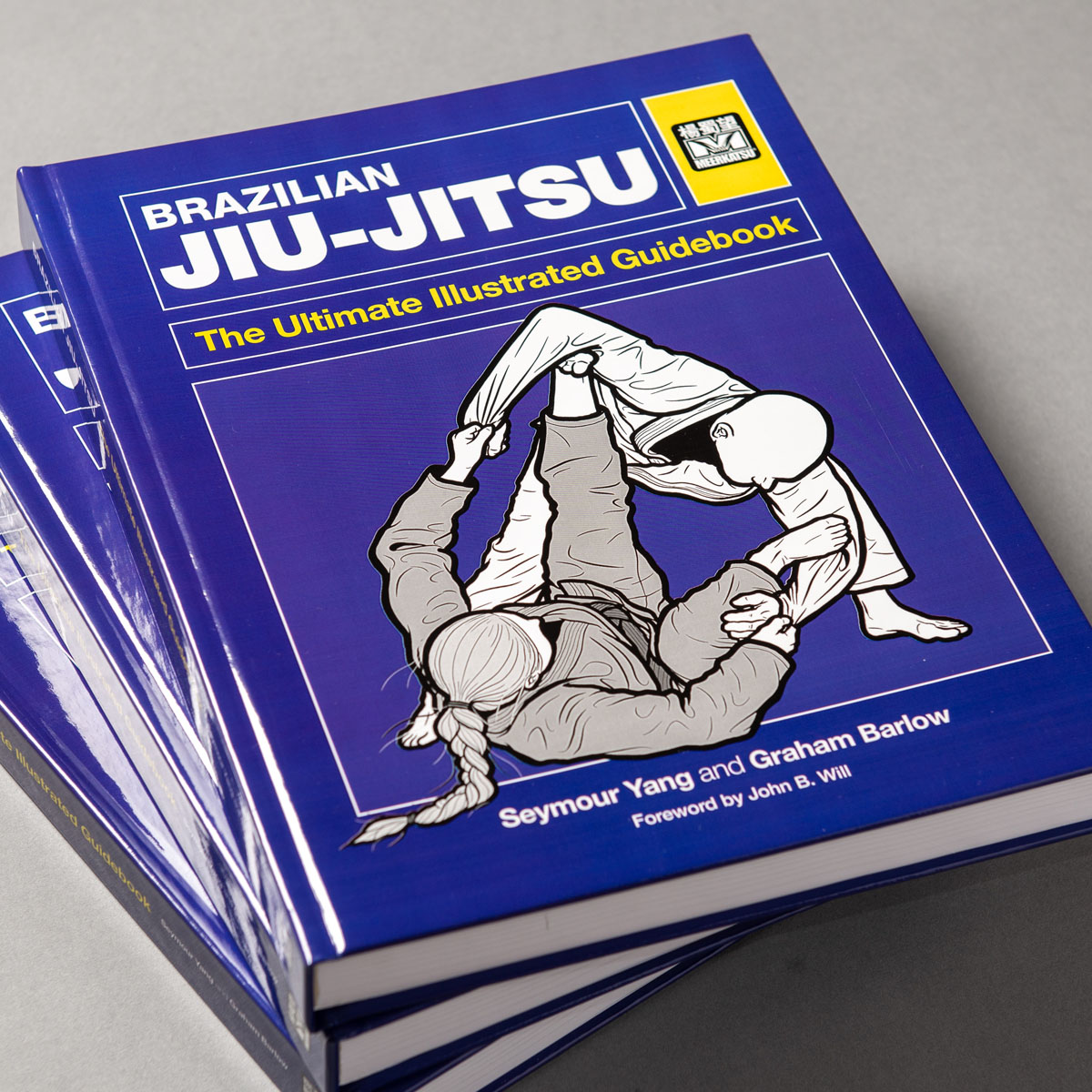
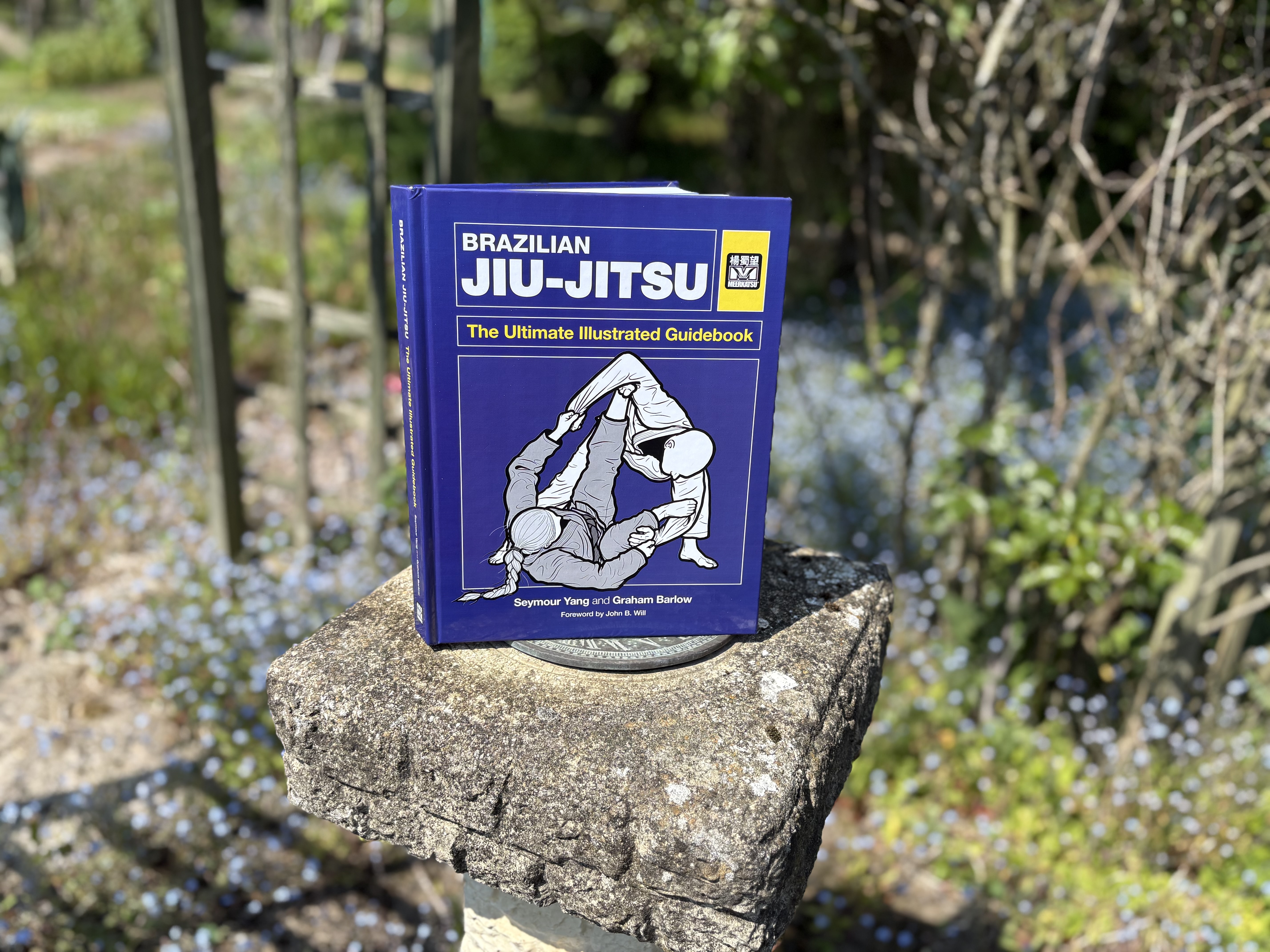
Good news, the softback edition of my co-authored book with Seymour Yang, Brazilian Jiu-Jitsu: The Ultimate Illustrated Guidebook will be available to buy from Meerkatsu.com in a couple of weeks!
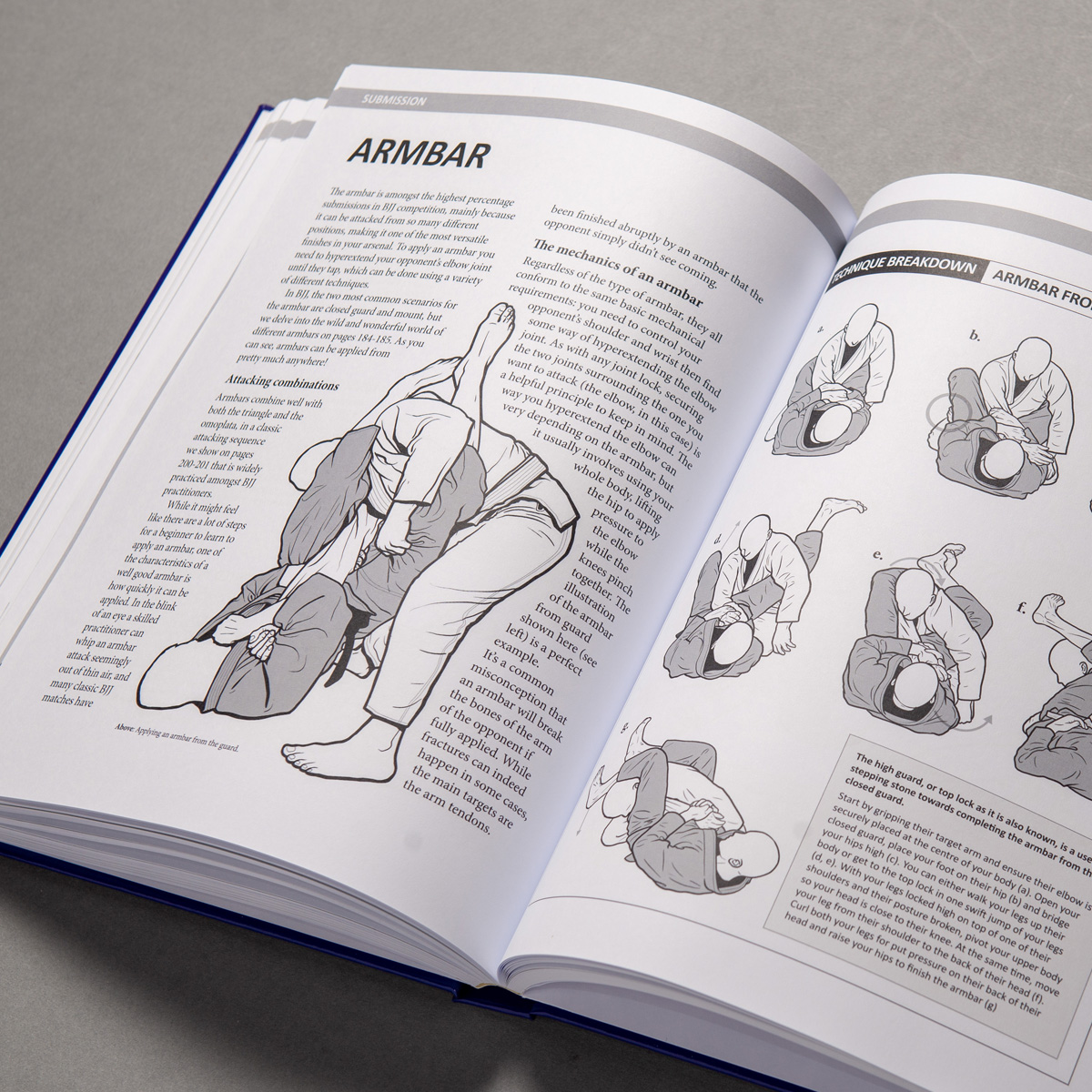
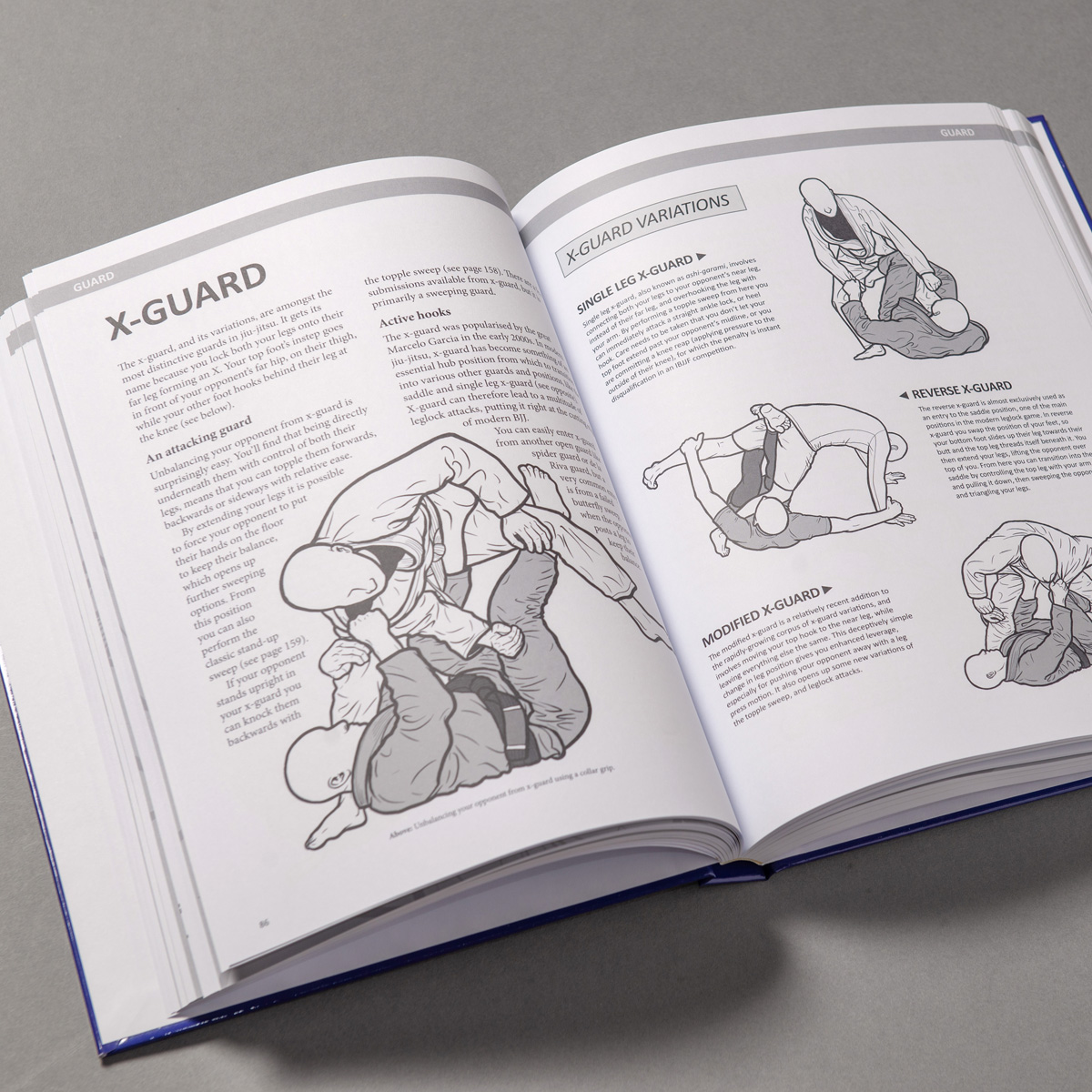
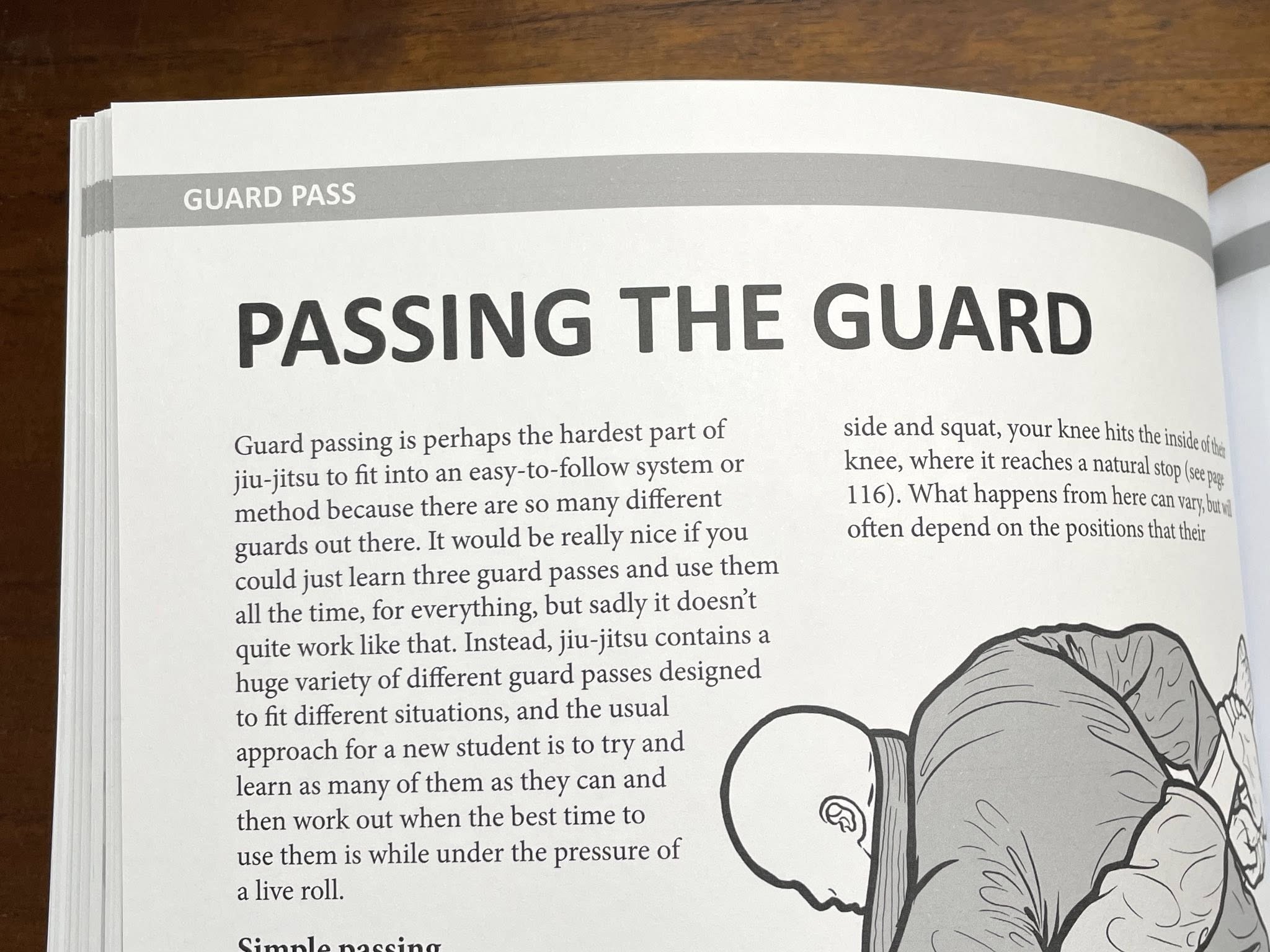
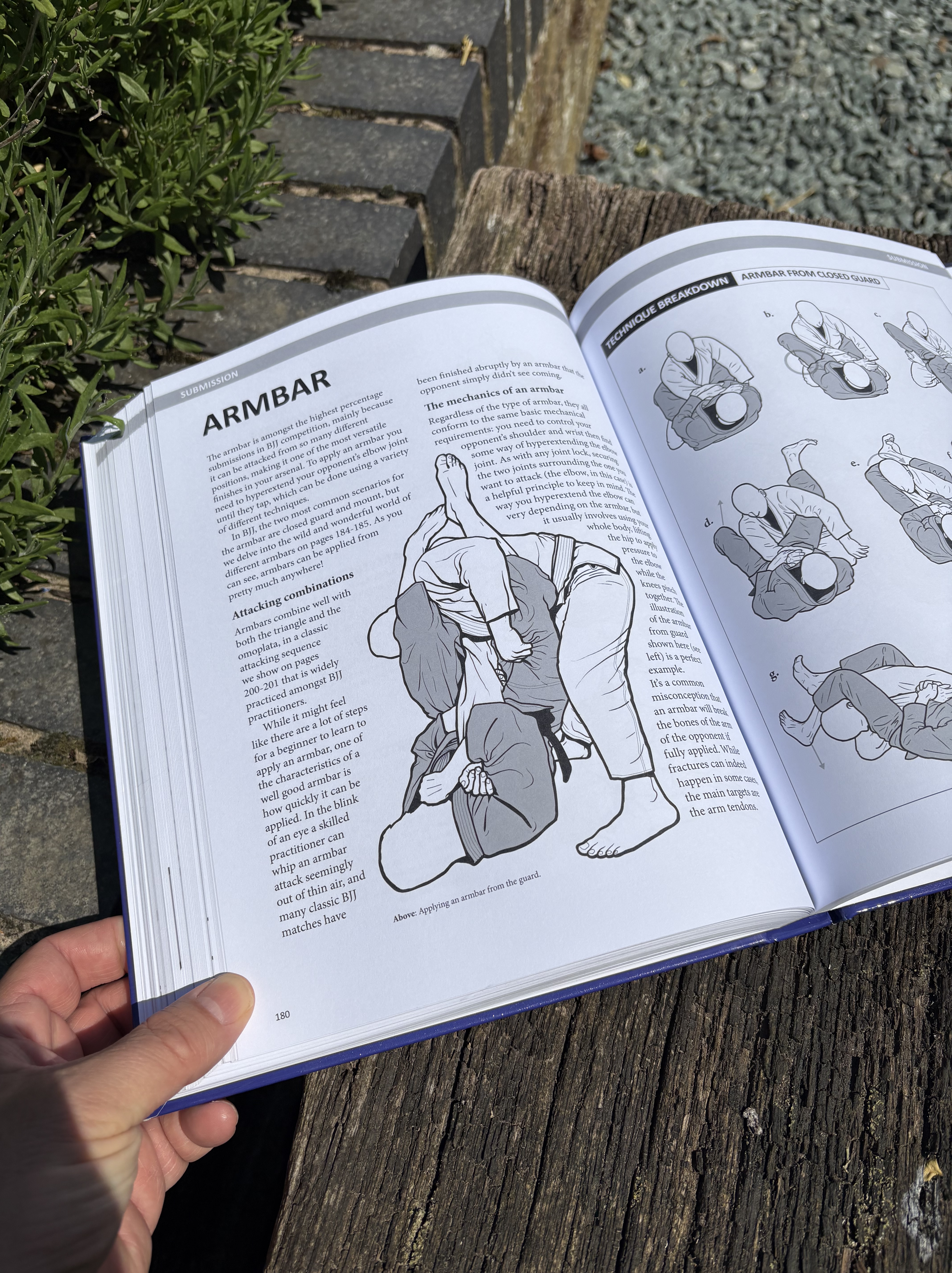
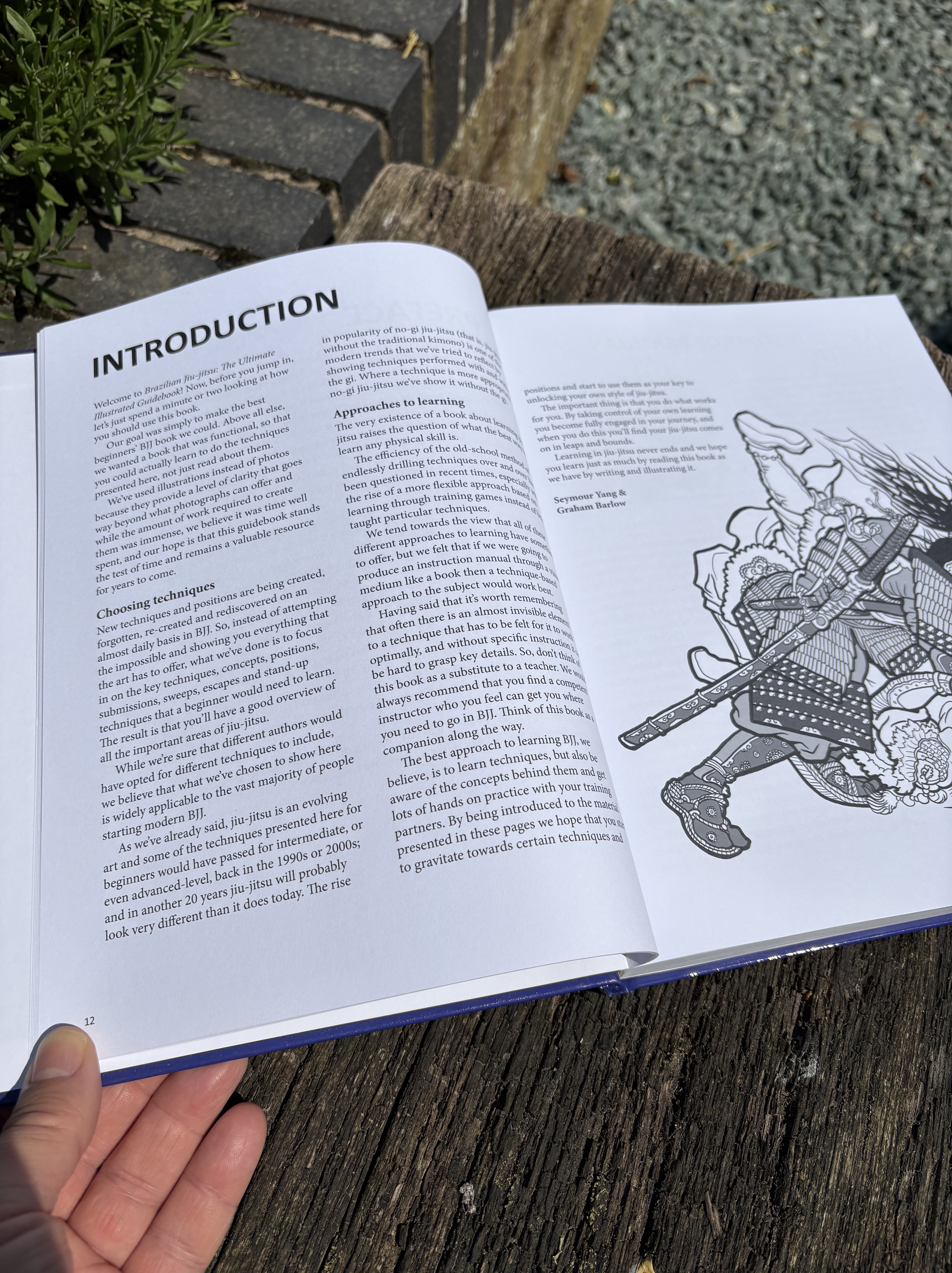
With over 260 pages and 970 hand-draw illustrations this is the perfect book for somebody wanting to start BJJ, or just for the martial artists who wants to enjoy a beautifully illustrated book that focuses heavily on technique, but also provides you with concepts, history, strategy advice and more!
The softback will be £10 cheaper than the previous hardback edition, but still feels luxurious thanks to its high-quality printing.
My new book Brazilian Jiu-Jitsu, the Ultimate Illustrated Guide, co-authored with Seymour Yang is now available to order from Meerkatsu.com!
This is a self-published limited-edition print run. It’s a gorgeously-printed hardback edition. At over 260 pages, with 970+ beautiful illustrations this is the ultimate coffee table BJJ book, but it doesn’t just look good, it’s designed to teach you the techniques of BJJ.
We’ve got all our favourite BJJ moves from basic movements, standing techniques, sweeps, guard, guard passing, submissions and escapes. There’s also a section on the history of BJJ and lots of advice on training, strategy, concepts and principles of the art.
Shipping shouldn’t be too expensive either. Remember, this is a limited edition run and when they’re gone, they’re gone! Get yours today at Meerkatsu.com
My co-author, Seymour Yang, and I have written a brand new BJJ book: Brazilian Jiu-Jitsu, The Ultimate Illustrated Guidebook, which will go on sale very soon.
If you want to see a free preview chapter, sign up to the Meerkatsu newsletter by visiting the website (Meerkatsu.com) and filling in the details in the pop up box.
The next newsletter will be released tomorrow (Wednesday 21st May).
A: Not confirmed yet but we will try to make it as affordable as possible for a premium independently published hardback book.
Q: How long will the pre-order last?
A: The pre-order window will last two weeks, then we send to printers to make the book (about two weeks), then we ship it out to you.
Q: What if I miss the pre-order?
A: We will print a few more books as spares and have them in stock but once they sell out, that’s it, they’re gone.
Q: Do you ship international?
A: Yes we do, see the drop-down list of destination countries in checkout.
Q: Shipping is gonna kill me, right?
A: See the shipping fee at checkout, it should cost no more than when ordering a kimono (it is calculated by weight).
Q: Will the book be available on Amazon?
A: Not in hardback form. This format will be exclusive to my store and when it sells out it sells out. But we may launch a softback version at some point later on. And this may or may not go on Amazon. We will see.
Q: Will you do an e-book version?
A: Maybe, we’ve not decided yet. We want this to be a tangible physical beautiful object you hold in your hands and cherish for years.
As some of you will be aware I’ve been working on a book about Brazilian Jiu-Jitsu for the last year, and well, that book – Brazilian Jiu-jitsu: The Ultimate Illustrated Guidebook – is finally finished, and will be available for pre-order very soon.
It’s a collaborative project with renowned illustrator and author Seymour Yang who goes by the brand name Meerkatsu, and is famous for his BJJ-themed illustrations, which are used in all sorts of BJJ clothing products like rash guards and gis.
The book is a hefty hardback one-stop resource for everything a beginner, and even a more experienced person, needs to know about Brazilian jiu-jitsu. It contains over 260 pages containing over 970 hand-drawn illustrations that show each technique in detail. It covers all our favorite standup techniques, positions, different guards, guard passing, sweeps, submissions and escapes.
Get your free chapter!
Head over to meerkatsu.com, enter your email address into the popup box to sign up for the Meerkatsu newsletter and you’ll receive details on how to get your FREE chapter very soon.
So pleased to get my signed copy of Perseverance (US and UK Amazon links) from Stephan Kesting in the post today. I worked on an early draft of the book with Stephan.
I wasn’t expecting a thank you in the acknowledgment section but it was nice to see my name mentioned! It was a pleasure to help Stephan – I’ll go a long way to help a fellow member of the jiu-jitsu community who isn’t part of the awful Joe Rogan-inspired multiverse of antivax alt-right madness that afflicts so many in our sport.
The book is a great read about how to keep going when the going gets tough, and it was an incredible feat to take a solo 1,000 mile voyage through the Canadian North. I’m sure I’d have been dead by day three, even if I died without “silly errors, cliche, and repetitions”, I would still be dead.
An impressive adventure, my friend – both the book and the trip! If you like wilderness survival epics then get yourself a copy now.
When Josh Robenblatt got to the age of 32 and realised he wanted to fight in an MMA match, he had to confront a lot of physical problems as well as inner demons before he set foot inside the cage. While the physicality of fighting is explored, this book is mostly about Josh’s internal struggles as a lifelong pacifist coming to terms with the casual approach to violence that MMA engenders. For many people Josh’s exact internal struggles wouldn’t exist (especially his frequent reference to his Jewish ancestry), but in a general sense they do exist in some form in all of us, and that’s what makes this book fascinating for anybody who trains in a martial art. It’s also a rare insight into the realities of training for an MMA fight – how much training is actually required, dealing with injuries, how it affects your relationships with friends and family and what the brutal realities of weight cutting are all about.
Josh writes well, particularly when it comes to articulating his inner thoughts on the subject of dealing with actual violence, either as a participant or an observer, and the transformative, almost transcendent, power that coming to terms with it often provides. I found he had managed to put into words something I’d felt before in my own life, but never stopped long enough to really think about and verbalise. As such ‘Why We Fight’ kept my attention constantly until the end, and you do become drawn into his underdog story and intrigued to find out what happens when he finally gets into that MMA match. I won’t spoil it here.
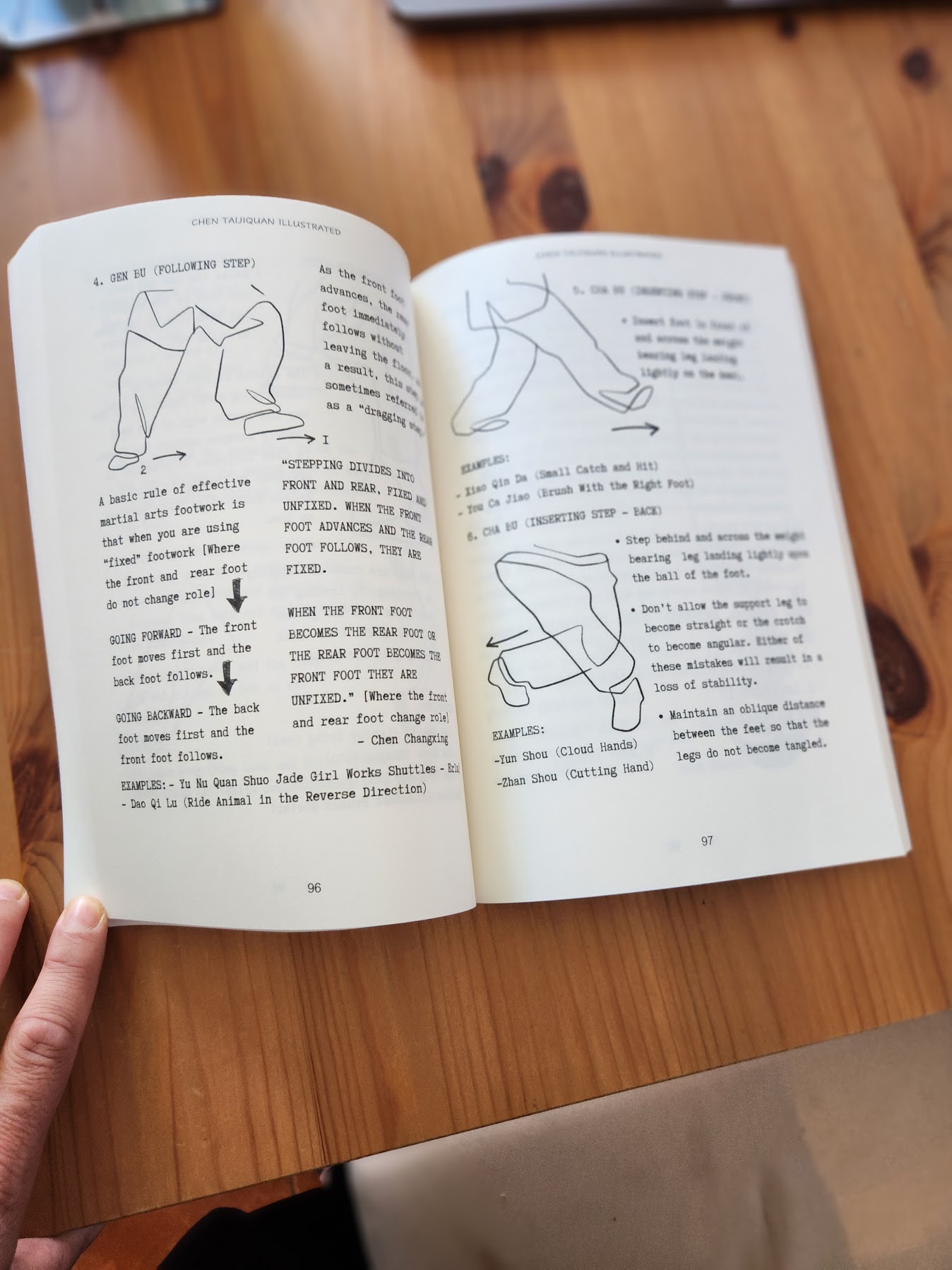
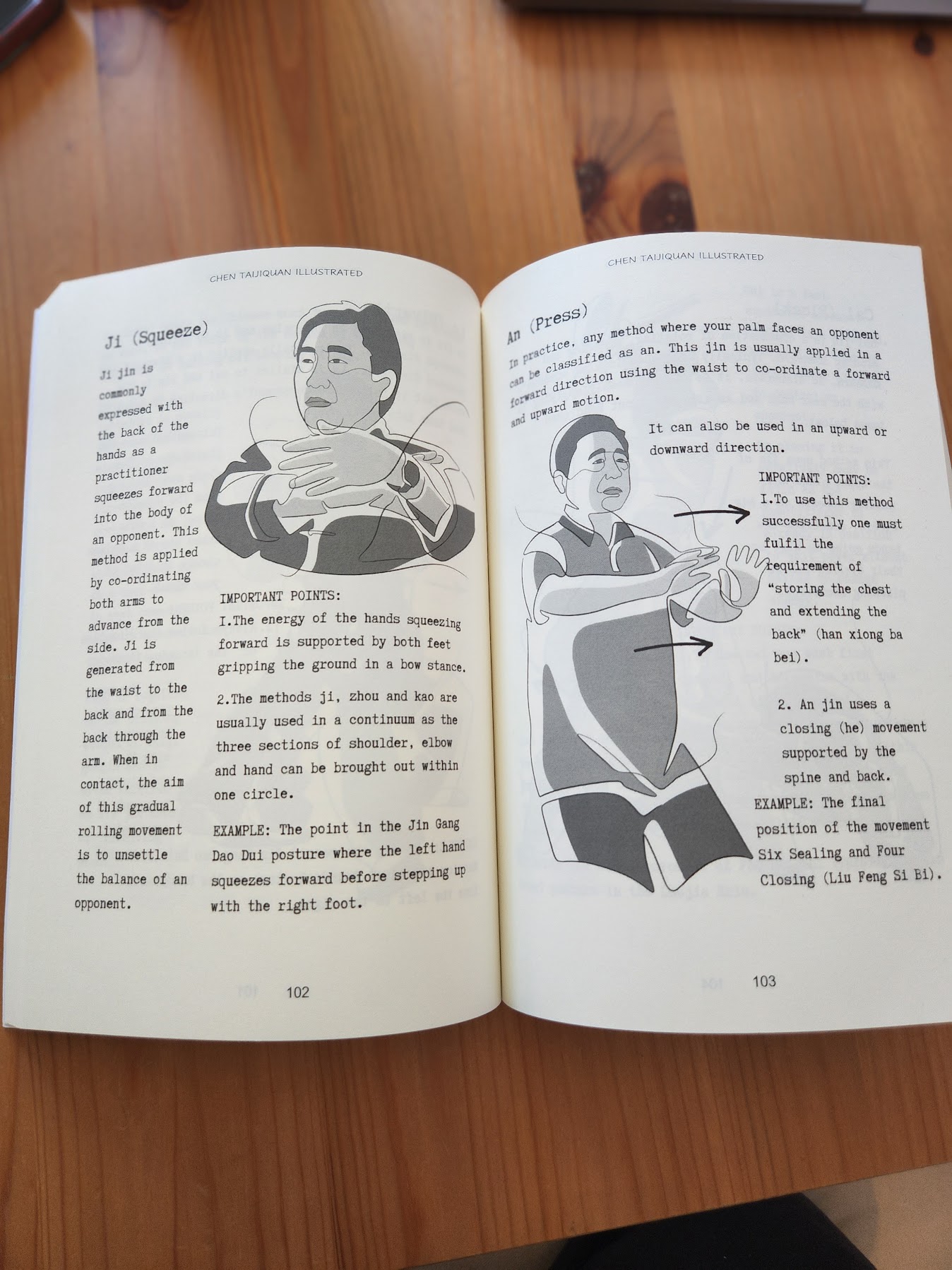
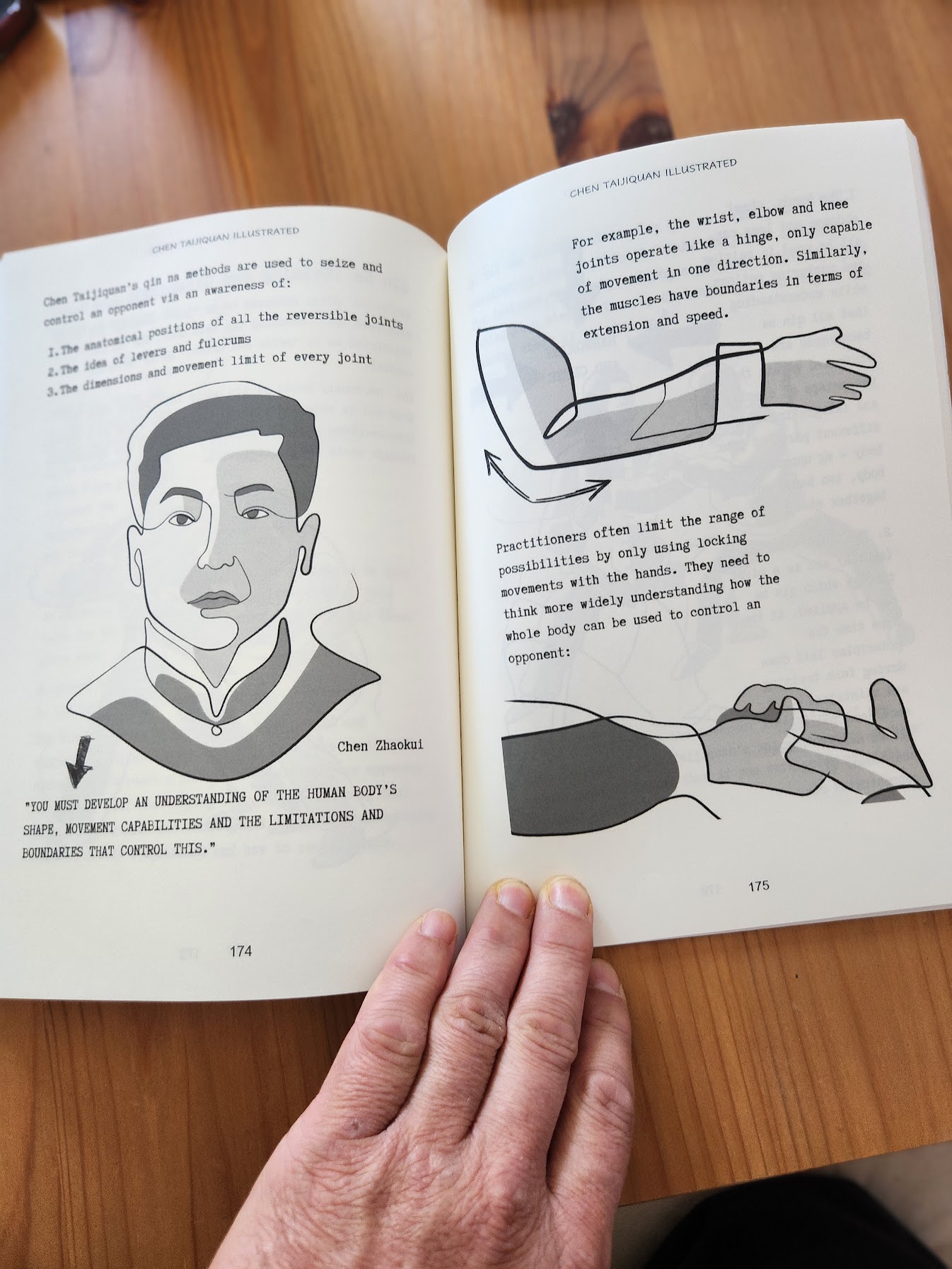
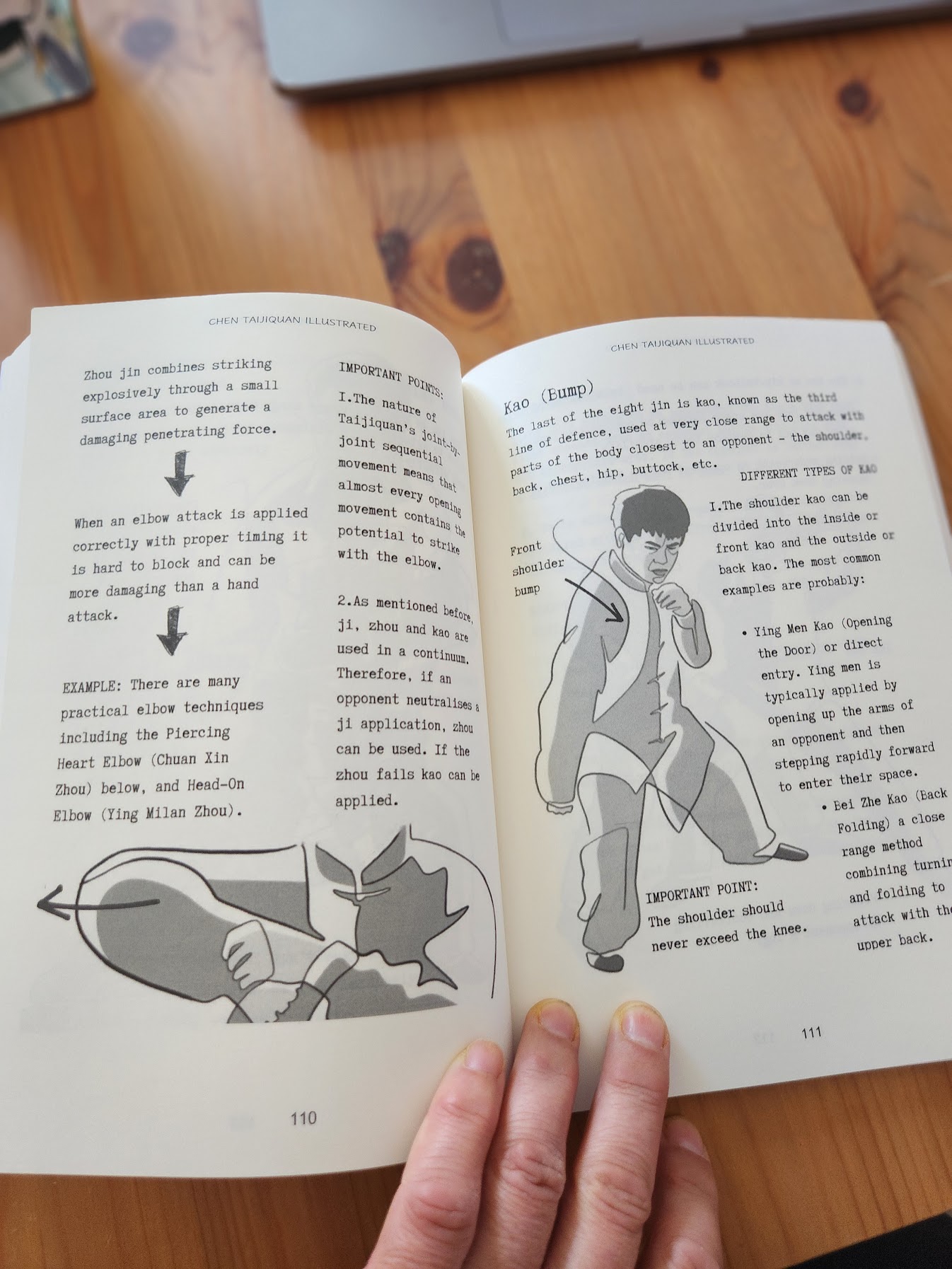
Chen Taijiquan Illustrated is an exploration of pretty much everything that makes up Chen Taijiquan, from principles, and body methods to practical usage and philosophy. But the most notable thing about this Taijiquan book, and the place where we should probably start, are the illustrations, because they are what really separates this book from others of its ilk.
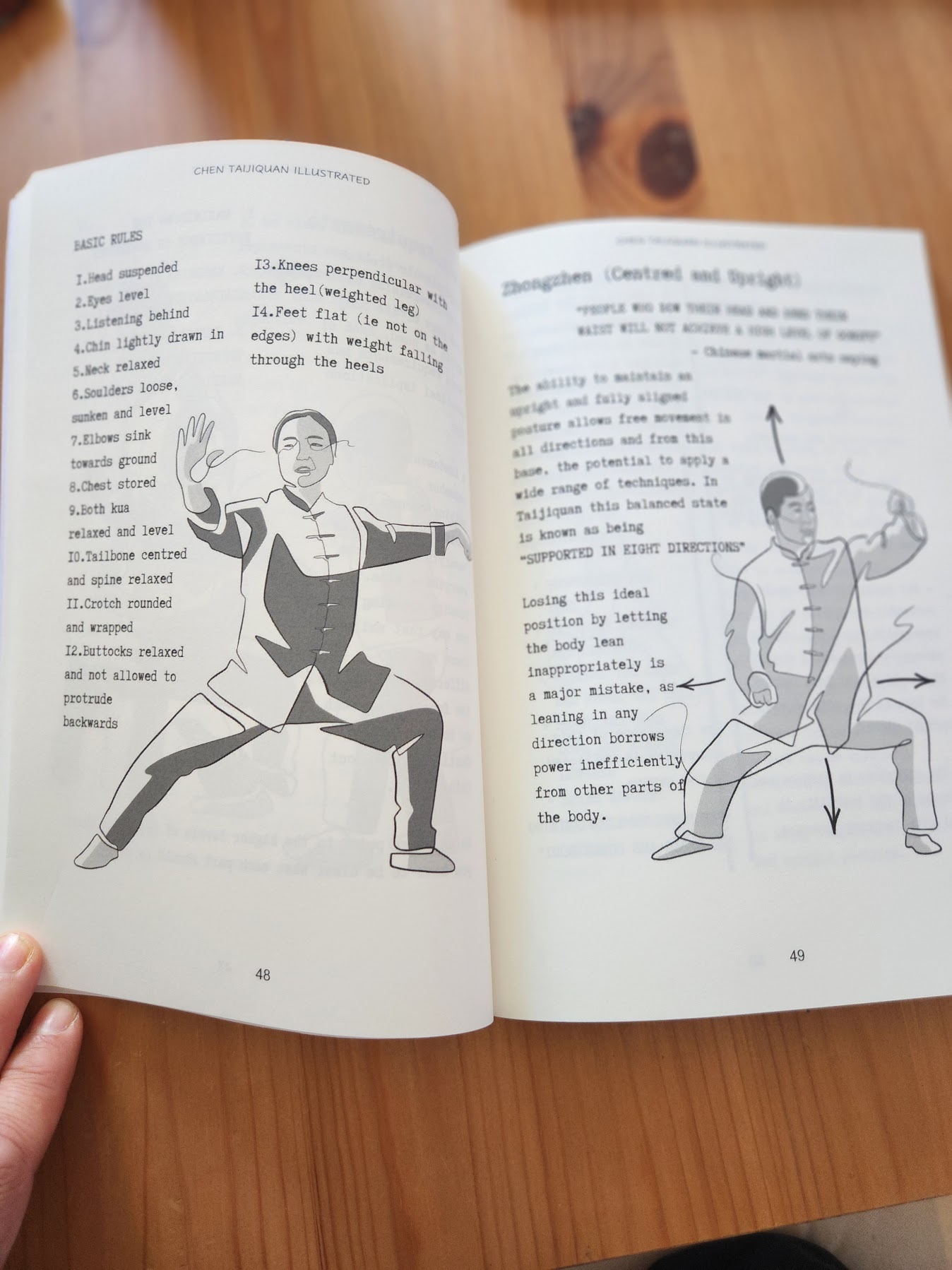
Almost every page here (and there are over 200) has some sort of detailed drawing on it that adds context to the text surrounding it. In fact, the whole book takes the form of a visual notebook, as if you are discovering a secret copy of the best-looking training notes you’ve ever seen. Surrounding the drawings are quotes from the most iconic practitioners in the Chen lineage, past and present, as well as explanations of principles, concepts and requirements of Taijiquan. Take a look and you’ll get the idea:
As you can see, the drawings are mainly done in a stylised cartoon way, which is actually very effective, and it’s pretty clear that these are photographs that have been traced over digitally, to produce the illustration, rather than drawn from scratch. The overall effect is really nice, and refreshingly modern and accessible.
Because a Taiji master’s posture takes years to develop and is a reflection of their skill, you can learn quite a lot from just looking at it. So, having a drawing based on a real photo gives you the best of both worlds – you get to see the genuine skill of the practitioner on show mixed with the accessibility and visual appeal of an illustration.
In fact, in a lot of cases you can guess the famous master that the drawing is based on. For example, the book cover shows, I believe, a digital tracing of a photo of Chen Xiaoxing, brother of Chen Xiaowang.
It should be pointed out that not all the illustrations in the book are done to the same high standard, but there are only a few where the quality dips significantly.
Chen Taijiquan Illustrated is split into three sections – Section 1, Body Rules (Shape and energy), Section 2, Practical use/Application and Section 3, Philosophical Roots. Section 3 on philosophy is tiny compared to the massive section two, which consists of a catalogue of pretty much all the practical methods found in Taijiquan – peng, lu, ji, an, listening, sticking, neutralising, push hands, hand methods, leg methods, stepping, chin na, etc. Pretty much everything to do with the Chen style is here!
The initial section on body requirements is very good, and something you can keep coming back to and the book goes into much more detail than you’d expect to find in a basic beginner’s book, which makes me happy. The explanations of the concepts and techniques in the second section can sometimes err towards being more of a catalogue of techniques than an in-depth ‘how to’ of each one, but there is always going to be a limit on how much can be achieved in print, and the illustration of various masters doing the method being discussed speaks volumes in itself, and adds a lot of depth. It’s also nice to see the martial methods of Taijiquan being discussed in detail, something that is also rare to find in a Taijiquan book.
Let’s talk for a moment about what the book doesn‘t include. For a start, there is no attempt to teach a form in this book, which is probably a good thing, as Chen style in particular would be hard to teach in a printed book due to its intricate nature and complex, spiraling movements. Also, there is no history section – personally I’m glad about that, as it’s a massive subject and would require too much space to do it justice, and frankly, it’s been done to death elsewhere, and matters not a jot to your actual practice of the art. If you want to discover the key to “internal movement” then you’ll find good pointers here, but if you really want to delve deeply into subjects like peng, groundpath and internal body mechanics then I’d say you should check out Ken Gullette’s book on the subject. Finally, there’s no mention of weapons here, which are obviously a huge part of the Chen art. The emphasis here is on body methods and bare hand methods only.
Taijiquan is a practical, doing art, not the sort of practice that benefits from too much intellectualism, and the visual nature of the book is great at reminding you of that fact, grounding the concepts and principles in practical reality.
Overall, I think this has to be one of my favourite books on Taijiquan ever produced. This is really one of the most comprehensive collection of training notes you’ll ever come across. And because everything is fitted around pictures, there are no long, boring, passages of text, meaning you can dip in and out at any point. In fact, just picking it up, flicking to a random page and starting to read for a few minutes can easily give you inspiration for your practice that day.
Highly recommended, and while obviously best suited to Chen style practitioners (there’s a lot of discussion of silk reeling), I think a Taijiquan practitioner of any style would get a lot out of it. I certainly did.
Thanks to Ken Gullette at Internal Fighting Arts I just caught wind of this new book that’s just come out called Chen Taijiquan Illustrated. I had a quick look on Amazon using the “Look Inside” feature and the illustrations look fantastic. It looks like it’s designed to be halfway between an instruction manual and a comic. It’s a very cool style that’s quite unlike any Tai Chi book I’ve seen before.
Chen Taijiquan Illustrated – available now!
I think that often Tai Chi books, with pages after pages of printed text, can be a bit off putting for people who are learning an art that is all about feel, movement and “doing it”, not “reading about it”. And when they do have photographs in them they are often black and white and a bit dull and lifeless. So, for the visual learners out there, I think the colourful and imaginative approach found in Chen Taijiquan Illustrated will work very well.
Here’s an example:
An extract from Chen Taijiquan Illustrated by David Gaffney and Davidine Siaw-Voon Sim
Here’s another thing: Looking at the contents page, this is the first Tai Chi book I’ve seen that mentions the concept of Man, which translates as Slowness, apart from the book written by my Tai Chi teacher. Man is a concept my teacher talks about a lot, and it’s nice to see it mentioned in another Tai Chi book – I was starting to think that it was a concept that was unknown to the rest of the Tai Chi world!
Tai Chi Chuan a comprehensive training manual by Raymond Rand
Obviously everybody and their dog knows that Tai Chi is done slowly, but Man is more of a mental quality than a reference to the speed of the form. It can be thought of as “not rushing”. The speed you are moving at is irrelevant to the concept of Man, but if you want to acquire the ability of Man then the best way is by slowing the form down and focusing on keeping your mind on what you are doing. Whenever you find your mind wandering off you just stop the form (no matter how far through it you are) and start again. After a few weeks or months you’ll find you are much better at staying focused on your form than you were before. By adopting the qualities of “not rushing” you open up the headspace required to be aware of other things going on, things that you would simply miss otherwise. I’ve written about not rushing before.
At £16 Chen Taijiquan Illustrated is not particularly expensive for a colour book either. And I’d love it if there was a book on Brazilian Jiutjisu that was written and illustrated in the same manner because I think it would also benefit from this approach. Incidentally, there was a good book written about Brazilian Jiujitsu recently, that has colour photos (and very nice ones too) that I still dip into now and again called Nonstop Jiujitsu, by Stephan Kesting and Brandon Mullins. I reviewed it on my blog recently, so check out my review.
Nonstop Jiujitsu by Brandon Mullins and Stephan Kesting
I’ve ordered my copy of Chen Taijiquan Illustrated so will review it at some point in the future.
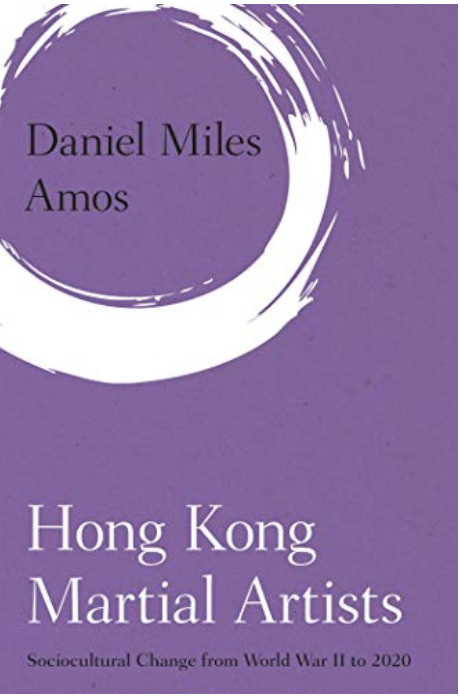
There’s a great book review by Ben Judkins over on Kung Fu Tea of Daniel Miles Amos’ 2021 book Hong Kong Martial Artists: Sociocultural Change from World War II to 2020.
The book sounds excellent and offers first hand experience of the changes in the Hong Kong martial arts scene has gone through over an extended period of years, and as such really pins down the economic and social challenges that traditional Chinese martial arts face in the modern world.
I really liked the opening of the review, because it somehow sums up the message of the whole book in one easy to follow exchange:
“Some years ago, one of my younger brothers married into a Hakka family after moving to Hong Kong to teach. My sister-in-law finds my interest in the Chinese martial arts fascinating and even admirable. And she insists that her children should have an opportunity to practice martial arts as well. Yet she did not enroll them in a local Wing Chun class, despite the media buzz around the art. Nor did she seek out one of the traditional Hakka styles from her family’s home village. Like so many other parents, she placed them in one of the city’s many thriving Tae Kwon Do schools.
I asked her about this once while we were discussing martial arts films and her answer was both blunt and revealing. “Why would I turn my kids over to some sketchy alcoholic! Besides, after ten years in Tae Kwon Do you get a black belt and something to put on your resume when applying for University. What did they give you after 10 years of Wing Chun?”
Baguazhang has always been the most curious of the three big internal arts, but while its origins are shrouded in mystery, it’s applications non-trivial and its purpose often obscure, it’s actual practice has always been something that is accessible to anybody who can put one foot in front of the other and walk in a circle.
And getting you to put one foot in front of the other is exactly how Kent Howard’s Introduction to Baguazhang starts off. Without being too specific of any particular style of Baguazhang, Howard’s book lays out the basic content found in most styles of Baguazhang, like the first two palm changes, teacups exercise, circle walking techniques and mother palms, and mixes in some advice on fluid movement, combat applications, standing practice and how to generate power from the root.
In terms of practical advice, Howard covers how to step in a basic circle, and the different ways to changing direction – L steps, T steps and V steps – in a lot of detail. But when it comes to the more complicated things like palm changes you are given pictures to follow rather than detailed step-by-step instruction.
In that respect, the book is exactly what it says it is – an introduction. The “Advanced practices” promised on the cover are certainly included, but not in a “how to do them” sort of way.
Regardless, it’s nice to see such a professional quality book produced on Baguazhang. The production quality is really high – with nice printing and a nice, readable font. The pictures are only black and white, but big and clear enough to see what’s intended, and time has been spent making sure it’s all been properly edited and proofed.
At various points Howard hands over to other authors – Wang Shu Jin’s “The Eight Character Secrets of Baguazhang” from his Bagua Swimming Body Palms book is here, for example, and some commentary from Darius Elder from the same book is reprinted, too.
I found it a bit of a shame he hands over the reins, as the book starts to feel like a collection of other people’s stuff towards the end, and Howard’s own voice, so much in force at the start, is witty, off beat and funny. I’d have liked it more if he’d continued in the same vein throughout.
Minor gripes aside, Howard’s Introduction to Baguazhang is a valuable addition to the literature available on this spinning, circular art that captivates so many people. If you’re looking to take your first steps into Baguazhang then it’s an excellent guide. You’ll certainly be able to learn how to walk a circle, perform the tea cups exercise and have a go at the palm changes. There’s also plenty of advice here that will guide you in the years ahead when you’re much further advanced in your practice.







 The Tai Chi Notebook