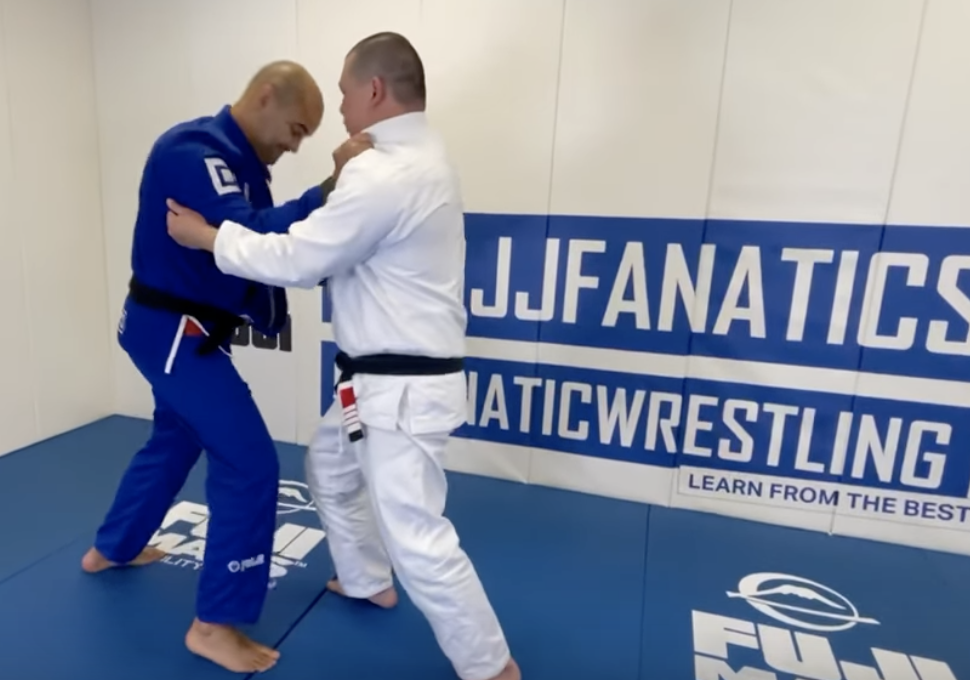
The best swordsman in the world…

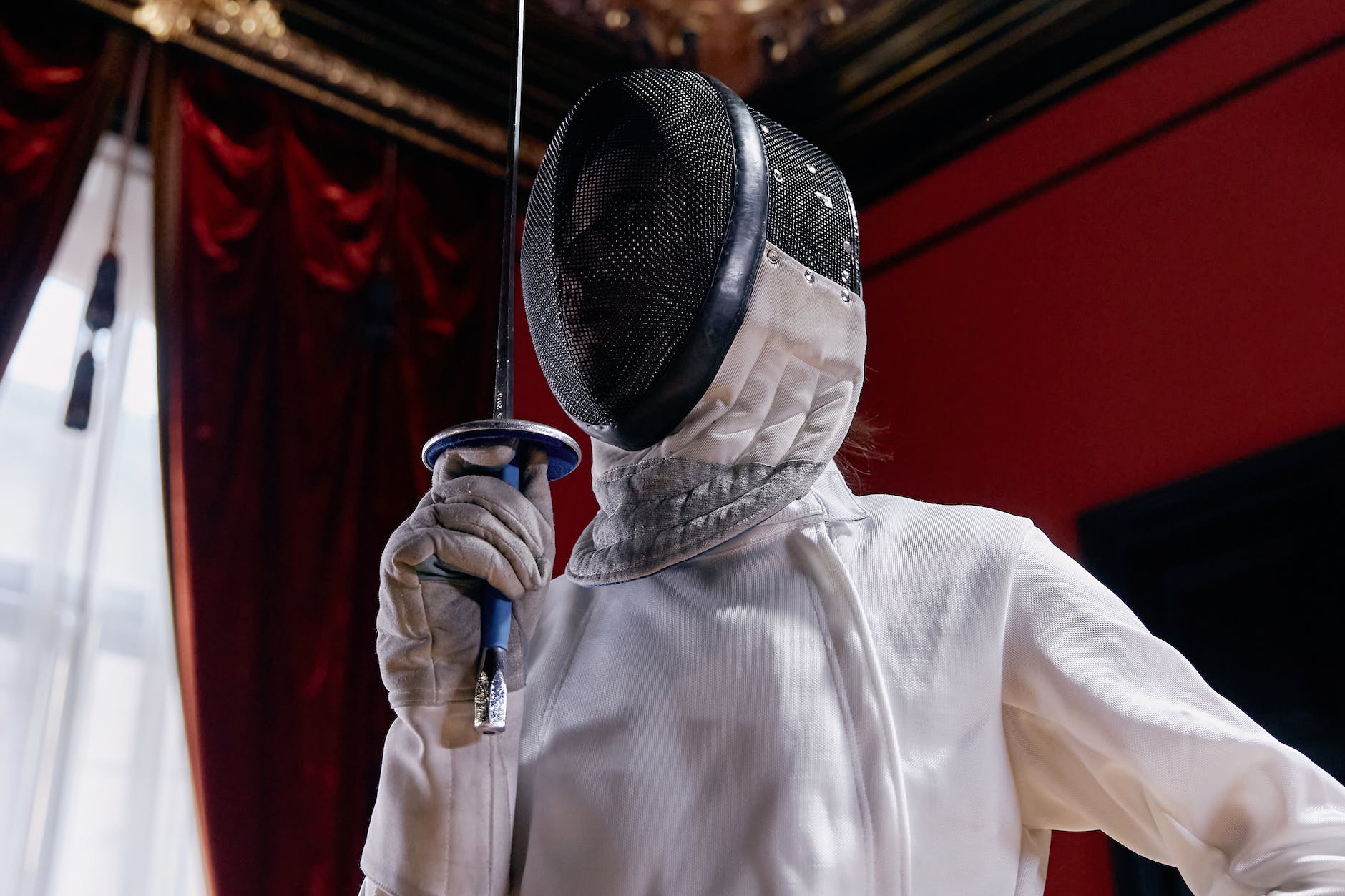
Photo by cottonbro studio on Pexels.com

You might have heard this quote before:

“The best swordsman does not fear the second best. He fears the worst since there’s no telling what that idiot is going to do.”

Many attribute the quote to Mark Twain, but it was actually a summation of something Twain wrote in “A Connecticut Yankee in King Arthur’s Court”, 1889, which was:

“But don’t you know, there are some things that can beat smartness and foresight? Awkwardness and stupidity can. The best swordsman in the world doesn’t need to fear the second best swordsman in the world; no, the person for him to be afraid of is some ignorant antagonist who has never had a sword in his hand before; he doesn’t do the thing he ought to do, and so the expert isn’t prepared for him; he does the thing he ought not to do: and often it catches the expert out and ends him on the spot.”

I think about that quote a lot, mainly because I spend a lot of my time sparring with people in jiujitsu who range vastly in skill level. And the reason I think about that quote a lot is because it’s true.

When I’m rolling with a higher belt in jiujitsu, my best jiujitsu comes out – I can pull off things – clever, complicated things – I can’t do with beginners because the more experienced person is reacting correctly for a jiujitsu person. However, when you roll with a beginner even they have no idea what they are going to do next, so you are constantly stuck in this awkward stop/start phrasing of movement where you have to be constantly on guard for the unexpected because the risk of injury is real. But rolling with beginners also reaffirms another maxim for me – often you don’t need complicated jiujitsu, you just need to do the simple thing well.

Why I’m a martial arts snob

So, apparently I’m a snob when it comes to martial arts! I must be because on two separate occasions now women have accused me of being one (interesting that it’s women both times!)

A recent exchange went something like this…

Me: Are you going to the seminar with master x this week?
Her: Yes, you?
Me: Yes, but if he teaches a basic hip throw I’m walking out. 🙂
Her: You’re such a marital arts snob! 🙂

As you can see, there were smilies involved, so I don’t think it was meant seriously, but there’s always a grain of truth at the bottom of most jokes.

Photo by Anete Lusina

This got me thinking. I think I am a bit of a snob when it comes to technique in jiujitsu. The popular wisdom goes that after black belt you start to really appreciate the basic techniques and find hidden value in them. Sure, I can see that. It’s true, you do revisit seemingly basic techniques and find things you’ve missed or deeper levels to the technique. But sometimes basic techniques are just… basic. And a bit boring. Show me something new and cutting edge, especially if I’m paying for a seminar!

When it comes to Chinese martial arts (CMA), I’m a snob in a different sort of way. Watching other people do CMA I don’t always express an opinion, but internally I’m very judgy. I find it hard to praise people for a mediocre performance, or even ignore all the bad bits like some people seem to be able to. But equally, when I do see something I like, I’m pretty free with my praise about it.

When watching forms done on video I always try to factor in that “everything looks 20% worse on video compared to real life”, and judge accordingly. But even so, what some people in marital arts deem worthy of sharing with the pubic makes me question their sanity. A lot of it is just embarrassing, but there is something else to look out for…

As I discuss with Jess O’Brien in an upcoming podcast, it can be hard to know what is correct in Chinese marital arts. Quite often, even within the same style, two teachers will have radically different interpretation of the same principles, and they can often both be right at the same time – i.e. they can both make it work. It’s not until you get hands on with a person that you can tell if what they’re doing works, or not. So, it’s usually a good idea to gets hands on with somebody before you criticise them too much.

With that said, I think you do need to be pretty discerning with what you’re accepting as “good” in Chinese martial arts. CMA has always been infiltrated by people who were, shall we say, not very good, but pretended to be so, especially to naive Westerners who can’t tell the difference. Then there are the teachers who hold things back and don’t teach all their skills. There are plenty of ways to waste years in CMA not really learning anything of value.

But what is being a snob? Isn’t it just having high standards? The Cambridge dictionary defines a snob as: “a person who respects and likes only people who are of a high social class, and/or a person who has extremely high standards who is not satisfied by the things that ordinary people like”

OK, ignore the first bit about social class, since that’s got nothing to do with it, but look at the second part. “Not satisfied by the things that ordinary people like”. Hell yeah! I can identify with that.

When it comes to martial arts I think that a snob is a pretty good thing to be. When there are 7 year old kids going around with black belts in Karate or Taekwondo, I’m quite happy to hold myself to higher standards. Most ‘self defence’ videos you find on YouTube are laughably bad. And a lot of Tai Chi videos appear to be cult-like and weird.

If this is what ordinary people think martial arts are, then yes, I’m a snob.

Imposter syndrome and martial arts

I’ve been delving into the depths of imposter syndrome and how it relates to martial arts recently. It started when we had Dr Marc Reid of the Reid Indeed podcast and author of “You are not a fraud” on our Heretics podcast last week.

It was a great interview – one of the best episodes we’ve done, I thought. I’d never really thought much about Imposter Syndrome before, but once we had Marc booked as a guest I realised it was a great opportunity to discuss how it relates to martial arts, and that it was actually something that has been on my mind for quite a while.

I think every martial artist must deal with imposter syndrome to some extent. But, as I learned in the podcast, having a little bit of imposter syndrome can actually be a good thing for your development, as it allows you room to grow and stops you thinking you know everything.

The question, “am I really good at this?” Is one that I think plagues all long-term martial artists… after they get good enough at their art that it becomes a question worth asking, of course.

One thing that’s quite common to see, especially in Chinese marital arts, (where entering competition or testing against resistance is often frowned upon, as it prevents “lethal” techniques being used) is the ‘master’ demonstrating only on his own students who are literally throwing themselves on to the ground for him, at the lightest of touches. I mean, we’ve all seen Aikido demonstrations, right? I often wonder what’s going through the mind of the ‘master’ in those situations, because they must know they’re a fraud, yet they carry on as if they are unbeatable. But I guess that so long as they never out themselves in a situation where they will encounter any real resistance they will be! In a way, it’s almost like the performance of a magic show, and the students are subtly required to play along by the group dynamic by the magician performing his tricks.

Sadly, we’ve all seen the videos of what happens when these ‘masters’ try their tricks on tough people from outside their group who are not going to play along. Of course, not all Chinese marital artists (or Aikido schools) are like this. I need to say that now because otherwise you just get tarred with the “hater” brush.

One of the things that attracted me to BJJ initially was the live sparring. You get to ‘test’ your ability every class, since half the class is usually live sparring. You can see exactly how good you are compared to other people. I love that real, live, feedback – I guess you could call it direct contact with nature because you are experiencing what happens against a live person who is not just going to play along in the same way that somebody who thought they were good at running could try a long distance, or a weight lifter can try lifting a heavy weight.

BJJ sparring has a limited rule set, yes, there’s no punching or kicking, for example, but within the confines of that ruleset you can really go 100% and see what happens. As a tool to keep your ego in check, I think it’s invaluable. (Not that you want to be going 100% every roll, of course).

But even within BJJ there are opportunities for the imposter syndrome to sneak in in other, more subtle, ways. There are belts that get awarded as you progress, and to this day it’s rare for me to find somebody who has just been promoted who thinks they are worthy of the belt they’ve just been given – everybody feels a little bit like a fraud, even with all the live sparring going on, or even entering competitions and testing yourself against people of the same belt rank and age from other schools. Competing is time consuming and expensive and not everybody competes and you can start to worry that you are only good within the confines of your own school.

Bruce Lee had a lot to say about belts “Belts are only good for holding up your pants” was, I think, one of his. I remember that and “boards don’t hit back” being another classic Lee quote from Enter the Dragon. But it’s an interesting perspective – all this worrying about belts and being an imposter is completely in your own head – in realty, belts don’t matter, all that matters is what you can do.

That’s one of the reasons I make an effort to get out and train with other BJJ people whenever the opportunity arises, like at the recent 40+ Grappling event I went to. I get to mix with a range of belt levels, all from different schools.

Getting out there and mixing it up can certainly do wonders for quashing any imposter syndrome that might be building up in your head. Even if you don’t necessarily ‘win’ all the time, I find it really rare that any BJJ practitioner isn’t up to the level their belt suggests. BJJ belts tend to only get awarded when an instructor thinks you’re ready for it. Trust your instructor. They’re usually right.

There are also plenty of complete frauds in martial arts who are clearly running some sort of con. Fake black belts in BJJ tend to get found out pretty quickly, but the marital arts is a very unregulated profession and anybody can set up shop at any time, claiming whatever qualifications they like. If any serious martial arts practitioner compares themselves to these genuine imposters it’s pretty easy to realise that you’re not the imposter you might think you are.

The opposite of the impostor syndrome of course is the over confidence of the person who is slightly, or perhaps very, deluded about their own abilities. I’m sure we all know people who talk a good game (especially on the Internet), but if you ever see them move or demonstrate something they can’t hide their actual true ability, or lack of it.

So, maybe feeling like a bit of an imposter sometimes is actually good for you, and stops your ego taking control and turning you into one of these untouchable master types. I notice all the time when I’m teaching that people will try very hard to put you on a pedestal. To be honest it happened much more often when I was teaching Tai Chi compared to teaching BJJ, but it still happens. I’m very aware of people’s attempts to turn me, the teacher, or me the higher belt into some sort of idol and I try and stop it happening before it starts. A good start is to reject people calling you special Chinese titles like Sifu or Laoshi, (I’m not Chinese) in Tai Chi and in BJJ it’s a custom to call your teacher a Professor (Portuguese for “coach”), but I try and discourage that where I can. I’m happy with just my name. That’s my personal choice, and not a judgement on other people who may have very good reasons for using those titles. They can do what they want.

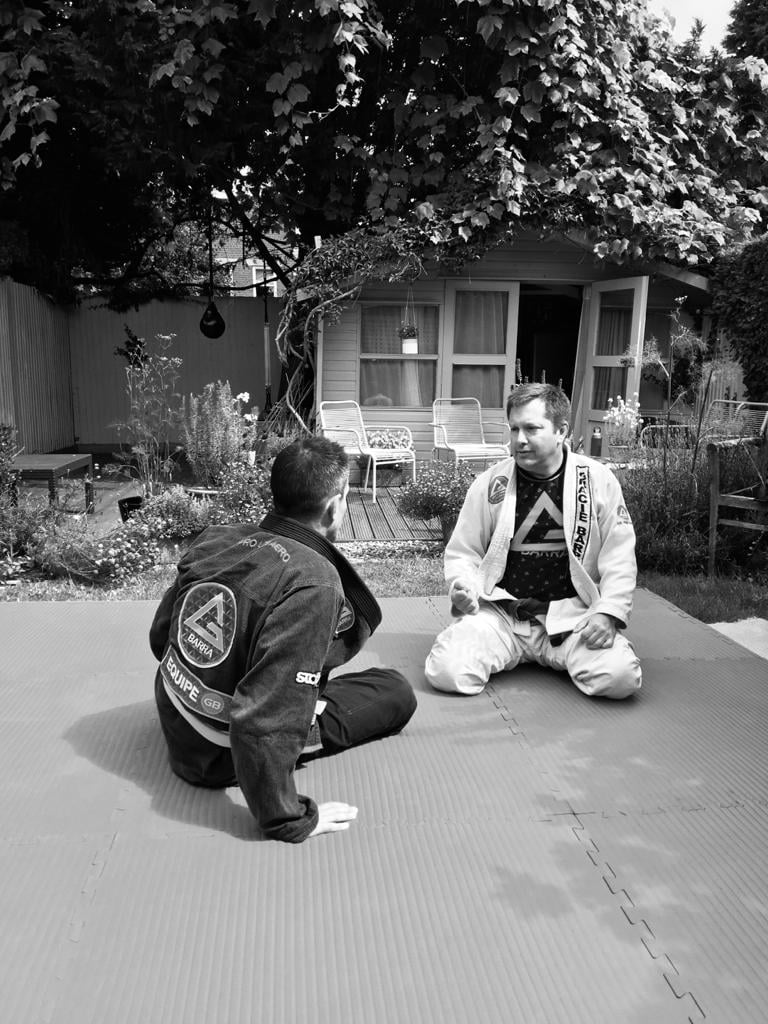
I had a great time teaching at the 40+ BJJ Open Mat, South West and Wales, September 2023

I felt very honoured to be asked to teach the technique section at the 2nd South West and Wales 40+ BJJ Open Mat this weekend at Bristol Dojo. It’s a group set up by a couple of older BJJ players who just want to organise some get-togethers for people to train BJJ in an open mat-type format. So, you can chat, pick each other’s brains, learn some technique or just roll. It’s up to you. There were 4 black belts on the mat and a whole raft of purple and browns, so there was no shortage of experience in the room.

I didn’t start BJJ until later in life and have always felt it’s a great sport/martial arts for older people despite its reputation as being all about younger, stronger, athletic guys who want to smash it in competitions or get into MMA. To me BJJ was just a natural progression from the arts I already practiced, like Tai Chi, into something that was similar, relied on technique not brute strength, and didn’t have the lack of martially-inclined training partners that Tai Chi suffers from.

Tending towards the ‘soft’ style of marital art, BJJ is also something you can do as you get older. Sure, you can’t keep up with the young guys, and your body racks up the damage, but with enough technique under your belt you can stay martially active and still enjoy really competitive rolls as you age.

I taught some back takes from the guard pull. All donations went to the Dementia UK charity. Thanks to Rob, @b_team_bjj for organising everything, it was a great day.

And thanks to Eira Culverwell @beyond_the_mats_ for the amazing Kinetic Massage I received – I felt like a new man again in just 10 minutes! Great for grapplers.

Choke theory

N.B. This does NOT look like a very well applied choke at all, but it’s the only free photo I could find!
(Photo by Kampus Production on Pexels.com)

Disclaimer: Please only take medical advice from a qualified doctor. I am not a qualified doctor!

One of the things I find quite astonishing amongst ‘martial artists’ is the generally low level of understanding of the theory of choking people.

Choking is the process of stopping or reducing blood flow to the brain until the person loses consciousness (cerebral hypoxia). It usually requires a bit of squeezing force, but can be effortless and painless if applied with high levels of accuracy, and the person will just go to sleep. It’s one of the most powerful techniques in the self defence arsenal, since chokes generally work on everyone. It doesn’t’ matter if you’re big, small, strong, super strong or even Herculean, everybody goes to sleep. In Judo and BJJ done in a Gi, chokes are often done with a collar and are commonly taught.

Chokes have nothing to do with airflow. Again, I just did a quick google search and the amount of seemingly legitimate websites talking about ‘restricting airflow’ and ‘windpipe’ is insane. There is a lot of bad information out there. Chokes are about restricting the blood flow in the two jugular veins and cartoid arteries on either side of the windpipe. For a detailed analysis of what happens, check here. Being aware of exactly where you should be applying pressure when choking somebody will increase the effectiveness of your chokes massively.

Rendering somebody unconscious by stopping their airflow is also possible, and called smothering in BJJ. Smothering is usually a pretty nasty, violent thing to have done to you. Look up the Mothers Milk submission if you are curious! And a choke that involves crushing/compressing your windpipe to make it happen could also have dire consequences. Similarly, pressure on the chest can also stop you breathing and lead to unconsciousness. That’s particularly unpleasant, too.

But a good old fashioned blood choke is the safest method of rendering somebody who is aggressive instantly harmless. Quite often when they wake up the fight has gone out of them.

Chokes can be trained and practiced safely but become incredibly dangerous in the hands of the inexperienced, as we have tragically seen in many police killings of people already restrained, so only practice them under expert guidance. And if the person has gone unconscious – LET GO! Very often it is hard to tell, so check on them, get verbal feedback, don’t just keep squeezing!

In training, the idea is that before you go unconscious you can feel the effects (a build up of pressure in the head, the world going black around the edges, etc) and tap before it happens, so that the person lets go.

If you are training with somebody that didn’t tap in time and went unconscious then don’t do the commonly seen thing of raising their legs to ‘get the blood flow back to the brain’ – you’re much better off putting them in the recovery position and waiting for them to wake up, which should happen fairly quickly. If they don’t seem ok in anyway, especially if their speech is slurred, call an ambulance.

Nothing in martial arts is ever risk free and there is some evidence of poorly applied chokes, or people struggling too hard to get out of them, causing damage to blood vessels, leading to blood clots, leading to (in rare cases) risk of stroke.

My advice is always tap early and tap often, especially if you feel like you’re going to sleep.

Understanding choke theory is important for all martial artists. If you feel like you need a primer on choke theory, then I’d recommend this new video by Chris Paines. See below.

The power of connection, with Henry Akins

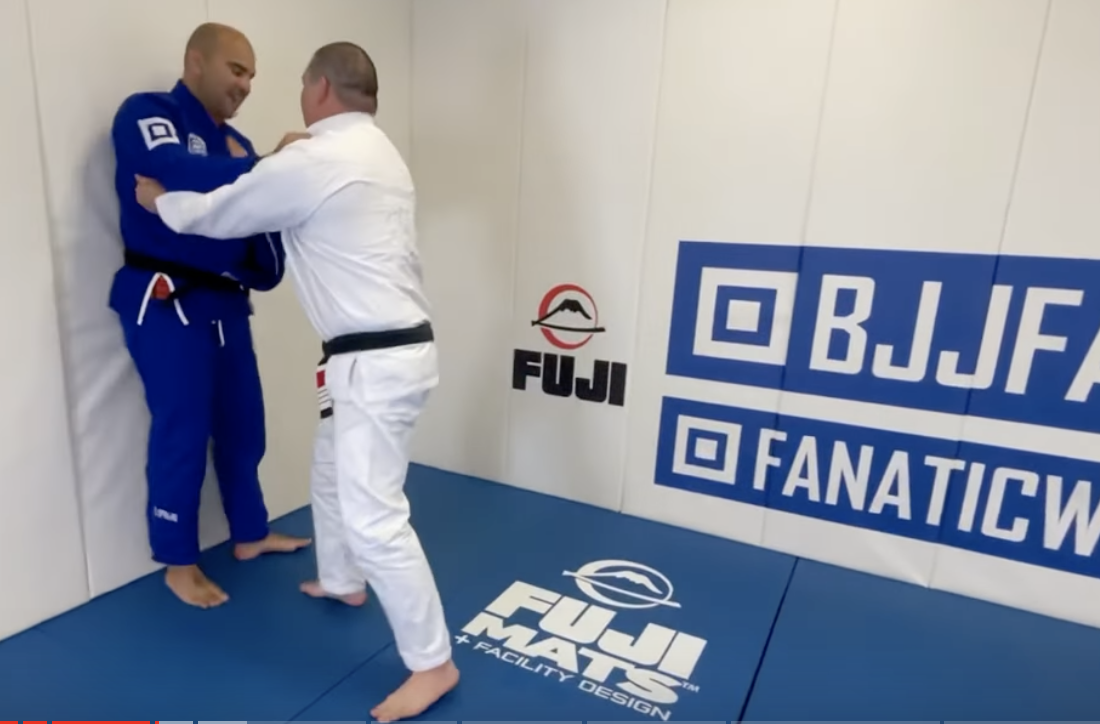
I like it when you can find those rare moments where martial arts seem to cross boundaries and blend into each other. I came across this video recently of Henry Akins explaining the concept of connection in BJJ, as taught to him by Rickson Gracie, and it doesn’t half remind me of Tai Chi…

There’s a lot of talking at the start, but he gets down to action at around the 4 minute mark and starts demonstrating rooting – something that you’ll find being practiced in most Tai Chi classes. These are what you’d see described as ‘simple jin skills’ or ‘jin tricks’ by a lot of Tai Chi experts. And they are what you are supposed to be doing in Tai Chi all the time, when you practice the form and when you do push hands. They’re the root (ha!) of classic phrases from the Tai Chi classics like, “4oz defeats a thousand pounds”.

In fact, a lot of people seem to think that these jin skills alone qualify something as being internal, which is why you see the descriptor, “internal”, being added to the name of a lot of martial arts, like ‘internal Wing Chun’ or ‘internal Karate’.

My take would be that, sure, these are an essential part of the internal package, but they’re not the whole enchilada. For instance, Henry is not doing anything particular with his dantien, and indeed, you don’t need to do anything in particular with your dantien to do these things. But these are still the first few steps to being an internal art.

As you know if you’ve read my blog for a while, I’m a BJJ practitioner myself, so it’s great to see somebody like Henry applying these principles to BJJ. I see it as a path to a version of the art that you can still do as you get older. I don’t think you’re going to be winning any competitions if you dedicate yourself to practicing these jin skills (the power and aggression of youth is pretty darn overwhelming to fight against in competition, particularly if it’s being done by dedicated athletes who train to a level the average guy with a job and two kids can only dream of). All I’m after is something that gives me the edge in friendly, hobbyist rolling and enables me to stay in the game and on the mat for as long as possible. “Do not go gentle into that good night”, as Dylan Thomas put it.


Push it, push it real good

In particular, Henry deals with one of the favourite subjects of Tai Chi – pushing. Henry pushes Bernardo, using power from his legs, not his arms – this is Tai Chi 101 – and then shows how to receive a push by aligning his body so that the push goes into the ground. He, (dare I say it?) tucks his butt, so that the force goes down his legs to the ground, rather than knocking him backwards. This is what you need to be working on in push hands when people push you. N.B. Tucking your butt does not mean adopting a forced and unnatural posture, it just means flattening the lower back and aligning the lower part of your spine with the upper, so that your bum doesn’t stick out.

What I like about this clip is that Henry, coming from a non-Chinese marital art, doesn’t use words like Jin and Qi – he just talks about alignment, relaxing and using the legs and ‘using the ground for support’. It seems much less mystical than the way it is typically presented in Tai Chi, and it goes to show that you can explain a lot of Tai Chi things without having to use words that are nebulous or hard to grasp for the Western mind.

But it’s really the concept of connection that Henry is teaching. As he says, a lot of the time in grappling what you want to do is connect to your opponent to use your techniques, and then learn how to disconnect from them when they try their techniques on you. He sees connection working in three main ways – and this is where I think Tai Chi teachers can benefit from his teaching –

  • Connecting within yourself,
  • Connecting to the opponent
  • Connecting to the ground.

That’s not a bad way to look at grappling at all, and I think it is a good way to help people understand that, when doing push hands, you can’t apply no force at all to the other person in a sort of noodle arms-display of rooting into the ground, because then you have no connection to them. If you move, they don’t move. Instead, you need to apply enough force at all times so that you are connected to their body and through listening (ting) you can feel when it’s time to break this connection too. Think of it a bit like an insect using the surface tension of the water to stay afloat.

Great work Henry, I would buy your instructional on Connection, if only it wasn’t almost $300. 🙂 But thanks for sharing that video above for free. I’ll have to wait for it to come into the ‘daily deal’ section of Fanatics, where they reduce the price. Osss!

If you haven’t already, check out my post on Jin Tricks and Mike Sigman explaining Jin. Both worth a watch.

If you haven’t checked us out on Facebook then please do, and why not give our Instagram page a look too, and our YouTube channel?

Yes, Shifu!

When I started in Tai Chi I was taught that “Sifu” was a rank you were awarded only after years of dedicated practice when a certain level of mastery had been obtained in your martial art. Then one of my students took a trip to Hong Kong and it turned out that everybody was called Sifu! Your taxi driver, your chef in a restaurant, a car mechanic, etc. it just meant somebody who was skilled at something.

Sifu is Cantonese, Shifu (simplified Chinese: 师傅 or 师父; traditional Chinese: 師傅 or 師父; pinyin: shīfù) is Mandarin.

The character 師/师 means “skilled person” or “teacher,” while 傅 means “tutor” and 父 means “father.”

From Wikipedia:

So, it wasn’t wrong to call your martial arts teacher your Sifu, but it wasn’t a rank that could be awarded. Something had got lost in translation.

Photo by Artem Podrez on Pexels.com

In Brazilian JiuJItsu (BJJ) we don’t have Sifus or Shifus, but we do have Professors. That sounds even grander than Shifu, yet how many people know that Professor is just the Portuguese word for teacher? It’s like saying “coach”, but in a culture like ours that has real Professors (i.e. people working in academia) it gets a sort of elevated status. (Actually, professor is a slippery term in the West as well, because in North America it can mean anybody who is a researcher or teacher in a university, whereas in Europe it is generally used to indicate distinction in a field.)

Professor is, unlike Sifu a rank that can be awarded mainly because BJJ has a belt culture. (I’m sure that if Chinese marital art had a belt/rank culture then Sifu /Shifu would inevitably become the black belt rank.)

But BJJ has its own weird cultural oddities. Certain BJJ teams and academies have rules that every black belt must be addressed formally as Professor by lower ranked students at all times. How seriously these rules are taken tends to be up to the academy owner though.

I’m a professor myself, but I never insist somebody call me professor. That would be nuts. I just let them call me whatever they’re comfortable with, but I don’t object to it if they do call me professor. There are some black belts who make a big fuss if you call them professor, going as far as making fun of the person who said it or going on a mad rant. I think that’s just rude. It’s just as bad as being one of the people who insist on being called professor!

I prefer a middle way. Some people like the whole rank and respect thing, I get that, and they’re just trying to be respectful by calling me Professor, so I appreciate their effort. I just don’t make a thing out of it.

I’ve always believed that trying to control what other people do or say too much never turns out well in the long run. The same can be applied to martial technique. Whenever I try and force something to happen in a sparring situation, it rarely turns out well, even if I’m really good at it! And this is where my personal philosophy in BJJ aligns perfectly with Tai Chi. I find it much better to ‘go with what the guy is giving you’ rather than to try and impose your will on them. If he’s giving you his leg then stop trying to go for his arm and take his goddamn leg and do something with that instead!

It’s amazing how simple this strategy sounds, but how hard it is to apply against somebody really trying to get you, with real resistance. It’s so tempting to try and ‘just do your thing’ and impose your will on the opponent. Yes, sure, this can work, and you see it work all the time in competition. The problem is it requires serious amounts of athleticism and effort to achieve. It’s a high risk, yet high reward strategy. And one of the risks is that you might get injured because you’re usually going to have to use some force against force. I’m too old for that type of game, and I’d also like to say, too wise, but that sounds a bit pompous, especially when I’m the same guy who just this morning tried to feed that cat my (human) breakfast cereal by mistake.

When you catch yourself doing that, it’s hard to think of yourself as a Sifu, Shifu or a Professor. You’re just a guy who wasn’t paying attention to what he was doing, and who now owns a cat with a newfound taste for Chocolate Chip Mini Weetabix.

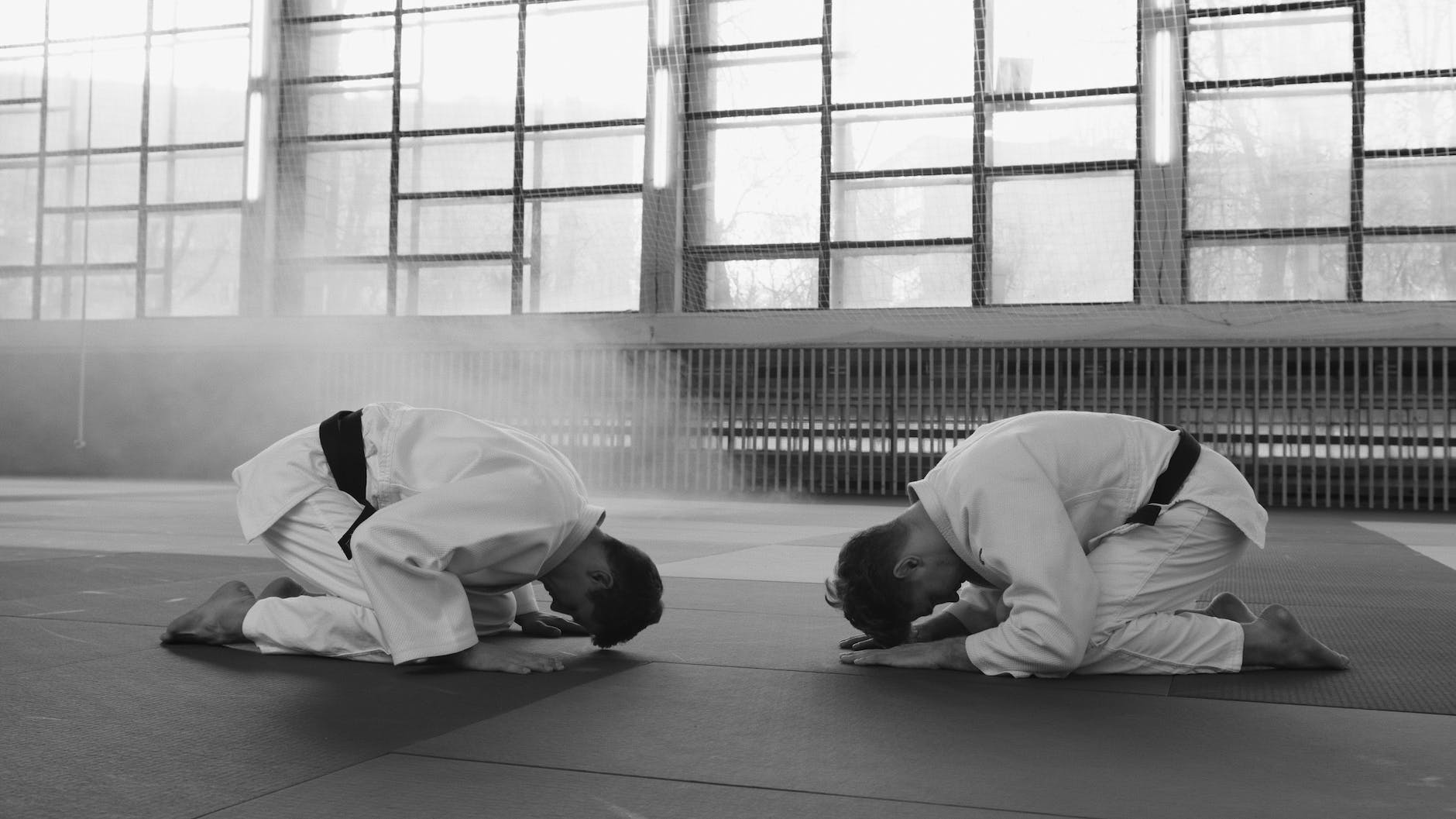
Now bow to your Sensei!

Photo by Kelvin Valerio on Pexels.com

Which is a better compliment to Taijiquan – Judo or BJJ?

Occasionally, I get questions and this one was a good one, so I thought I’d post my answer here. The question was: Is Judo or BJJ a better compliment to Taijiquan?

Photo by Kampus Production on Pexels.com

“It’s an interesting question! BJJ has less rules about what you aren’t allowed to do, and is therefore closer to self defence, but it depends on the school you go to – Judo is pretty much the same everywhere you go. I’d say both are good. My personal preference is for BJJ because it isn’t as hard on the body and I prefer ground work to throws. If you’re more interested in throws then do Judo.

If you want something that is Chinese, then Shuai Jiao would be a good compliment to Taijiquan, however, it’s hard to find outside of China. There are some online courses available.

But I think my real answer is that it’s not the art that matters, it’s the teacher. Find a teacher you like who is skillful at something, and learn whatever they have to teach you is my advice. I think in the long run that matters more than what art you choose.”

Tai Chi Notebook Podcast Episode 21: Will Wain Williams on Taiji Mantis, BJJ and travel in Asia

My guest for this episode is Will Wain Williams. Will has a background in Taiji Mantis Kung Fu, which he trained in China, where he also lived for 13 years. He’s traveled around Asia documenting ancient Kung Fu systems for his YouTube Channel Monkey Steals Peach ( https://www.youtube.com/@MonkeyStealsPeach ).

I talk to Will’s about his travels documenting kung fu styles, as well as his upcoming trip to Taiwan and how he’s recently started Brazilian Jiujitsu.

Get the podcast here: https://spotifyanchor-web.app.link/e/c0goI7CP2wb

Thanks for your support!

The REAL origins of Brazilian Jiujitsu revealed!

The following is said to be a video of Mitsuyo Maeda (1878-1941), the man who famously brought Jiujitsu to Brazil from Japan and (allegedly, since there is some debate about whether he was taught directly, or by a student) taught Carlos Gracie of the Gracie family, who went on to popularise Jiujitsu in the country, creating the Brazilian variation of the art, which hit the big time after UFC 1 in the USA in the 1990s, and is now practiced the world over.

I’d recommend watching it at half speed -( go to Settings/ playback speed/ 0.5 ) – since like many films of the era (circa 1908), it’s sped up.


N.B. The original YouTube video has been removed, but I found the same footage on Instagram here:

What do you think? My first reaction is that this is clearly the Pro Wrestling of the time. You can see that the performance is done purely as a kind of entertainment, not as a real fight at all. Those are real jiujitsu moves being demonstrated (sacrifice throw, hip throw, etc) but it’s also scripted like a very Chaplinesque slapstick comedy involving members of the crowd getting up on stage to join in.

As I mentioned recently, I’ve started taking my son to watch local Pro Wrestling events because he really enjoys them, and it’s given me a greater respect for Pro Wrestling and the skills of the performers.

Mitsuyo Maeda was known to have performed challenge matches as a way of earning a living, but I’ve always thought that his stage name, “Count Koma”, sounded more like a sideshow wrestling name than anything else. And here’s proof that he was earning his living as an entertainer. That’s not to say that he couldn’t have also engaged in serious challenge matches, but I can’t see how those were putting food on his table.

First though, we have to be confident that this is Mitsuyo Maeda. It certainly looks a bit like him. But can we be sure?

Maeda c. 1910

The find is credited to an Instagram account called origensdojiujitsu the text next to the video is in Portuguese, and the Google translation reads:

“In the 20th century it was common for Jiu-jitsu performances in Theaters and Circuses throughout the West, many Japanese emigrants, as a way of surviving, entered the World of Show and transformed their Martial knowledge into pure entertainment.

Due to the numerous presentations in theaters and circuses, the Soft Art gained notoriety in the West, it was common for the fighter to perform and even throw challenges to the spectators of the Audience, a common practice used by Conde Koma and his compatriots.

In silent cinema, some presentations in short films served as a trailer between one film session and another, in Brazil and in the world, both the armed forces and the shows contributed to the popularization of art.

In Brazil, the first exponents traveled both in the military environment and in circus shows such as Geo Omori, Conde Koma, and Satake, among others.”

origensdojiujitsu

So, this recording could have been a trailer shown between silent films. it certainly sounds credible, and if legitimate, it’s a fascinating look back at the origins of Brazilian Jiujitsu, and perhaps a refreshing break from the tough guy image that it later became associated with.