I’ve been playing about with this guard pass for the last couple of weeks, and it has changed my jiujitsu – it could change yours too.
One of the things I like about Brazilian Jiujitsu is the individuality of it – you’re encouraged to find your own signature moves and perfect them. What works for one person, won’t necessarily work for another. Marcelo Garcia has his X Guard system, the Miyao brothers have the Berimbolo and Bernardo Faria has his over/under guard pass. And I’ve just discovered it…
Read the rest of this post at my new blog… BJJ Notebook
My friend Cavan Scott writes Dr Who comics for a living. Great to see that his latest Doctor Who: Supremacy of the Cyberman has a nice bit of Tai Chi on the cover!
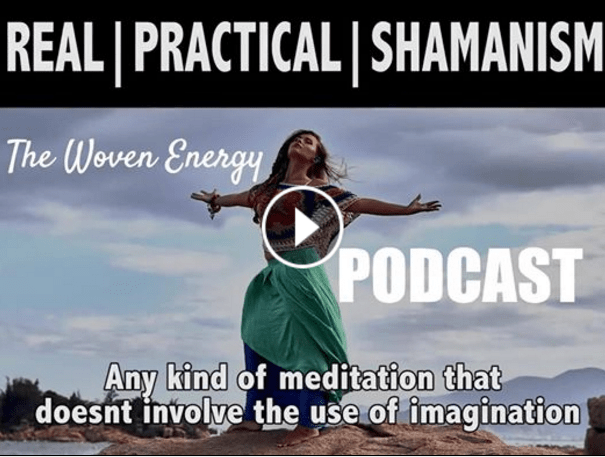
My old XingYi teacher has finally made a podcast, and it’s all about Shamanism.
My old XingYi teacher, Damon Smith, is notoriously reclusive, doesn’t use the public parts of the Internet much and seems to live in hiding, in fact, I still feel weird seeing his name written down on a web page, knowing how much he’d hate it! I’m also pretty sure there was a time when mentioning his name online booked you in for a swift Beng Chuan to the guts in the next class! But it looks like somebody has done the impossible and dragged him out of his cave to talk about his favourite subject – Shamanism.
Back when I was training with him on a weekly basis we used to get into these sorts of discussions all the time, and he used Shamanism constantly in his teaching in reference to XingYi. In fact, I don’t think the two could be separated in the way he taught it.
There was much about it that I could understand and find immediately useful, but much that I couldn’t and seemed beyond my ken. Well, it looks like I may get a second chance thanks to another of his students, Josef Sykora, who has somehow cajoled Damon into spilling the beans on a new Podcast series called Woven Energy.
Joe describes Damon and his teaching as follows:
So who is Damon? Well, he has studied shamanism academically as well as practicing it for over 30 years.
He has an extremely pragmatic view of shamanism and animism so if you’re looking for your normal “simply bang a drum… dance around a bit… have a chat with an animal… imagine going down a hole and now i’m happy” kind of stuff that means nothing, then turn around now… this podcast ain’t for you.
If you accept shamanism as a discipline. A lifelong journey full of ups and downs and a tremendous amount of confusion and hard work, then great… because once pandora’s box is opened, there is no shutting it. You are now at the mercy of the divine.
You can find out a lot more about Damon by simply listening to the podcast. He has some fantastic stories and knowledge to share.
Here’s a few things you can look forward to in future episodes
A deep and thorough look at Shamanism from the inside out
A clear starting point for beginning Shamanic technique
The tools, mindset and knowledge you need to apply Shamanism to all areas of your life
To get episode 1 you need to jump through a couple of sign-up hoops (well, nobody ever said Shamanism was easy, did they), but after providing your email address you will be given access to episode 1 here.
Now it’s time to see how deep the rabbit hole goes…
Loosen up your spine and hips with this movement flow that takes less than 10 minutes
Been feeling a bit still in my hips lately, so I’m giving this simple movement flow a go for 10 minutes each morning. Try it yourself and let’s see what difference it makes.
Welcome to a new, occasional, series looking at the basics of BJJ. This is BJJ 101.
Now that I’ve got to brown belt in BJJ I find myself wanting to refocus on the basics and get them really tight. By basics, I mean the fundamental moves that you use most of the time, rather than the spectacular spinning back takes or flying triangles that get all the attention. I mean the boring stuff. The bread and butter of BJJ, if you will.
Read the rest of this post at my new blog… BJJ Notebook
I keep hearing this idea from martial arts instructors of fighting somebody by “not using force”. Sadly that’s impossible, but that doesn’t seem to stop people saying it.
Every martial art seems to come with a bit of nonsense as part of the furniture. One of these that’s attached itself to Tai Chi is that you must learn to fight without using force. However, and to a man (because they are usually men) the people who say this seldom go beyond pushing the opponent away as the final solution to dealing with an attacker.
I think this misconception arrises because, with a little skill, you can get somebody off balance and push them quite a distance away, so long when they are unsteady, using minimal force.
But guess what – if you push somebody away… they come back! (Unless you push them off a cliff of course, but then, there’s never a cliff around when you need one, is there?) A determined attacker is not going to be impressed by how effortlessly you pushed him away. He’s going to come back and probably be even angrier than before!
I’d suggest the best thing to do with somebody you are trying to incapacitate is drop them at your feet, where you can control and restrain them until help arrives. Maybe the best thing to do is run away. But before you have that as your go-to option, consider the situation where you are with a family member and you are both under attack – what are you going to do, run away and leave them? Or maybe there are multiple attackers, in which case getting tied up with one of them on the ground is not a good idea.
Either way, the idea that you shouldn’t use force crumbles in the face of reality.
So where does this idea come from in Tai Chi? (I should note, I’ve heard the idea expressed in Aikido as well). When you’re doing Tai Chi push hands you also get a lot of comments like “too much force!”, “don’t use strength!”, which is all well and good (what they really mean is ‘don’t use brute strength’), but I think it tends to get translated into “never, ever, use force!”
Do no harm
There’s another variation on the theme which involves the notion that you should be able to subdue somebody without hurting them. Again, I’d say this was impossible. The closest I’ve seen to this idea is the sort of skill you get from BJJ where you can take a person down and mount them (sit on them) so that they can’t get up without having to punch them. You can then wait for help to arrive. Alternatively you can put them to sleep with a choke. But while they may not be getting injured, I don’t think the attacker would call it a pleasant experience!
I’m reminded of this video of BJJ noteable Ryan Hall, where he subdued an aggressive male who was trying to start a fight without throwing a single punch:
He might not have injured the guy, but he ended up putting him to sleep so he was not a threat to anybody.
Let’s look at how moving in a circular way can produce effortless power.
If you rotate a circle then different parts on the circumference will move in different directions relative to each other. This is crucial to the art of Tai Chi Chuan. Let me explain.
This video of rollback from Yang style is very nicely done. Although I don’t speak Chinese, so I have no idea what he’s saying, the application is nicely shown and very clear.
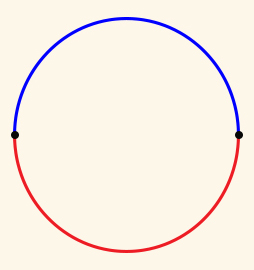
Let’s take a circle.
Notice that the two points in black on the outside that are directly opposite each other.
If you rotate the circle clockwise, or anti clockwise, then the two points will rotate relative to each other. And from the perspective of the centre of the circle, they will be moving in opposite directions.
Now, if you imagine the circle is the view of a Tai Chi practitioner in the video of rollback, but viewed from above, you can see that if they rotate around their centre then the parts of the body on the opposite sides of their circle will be moving in opposite directions.
Now, unless they are spinning constantly, they won’t keep this up for long in the same direction, but it will be happening continually throughout a Tai Chi form, just in different directions and with different parts of the body.
So, while his left hand is rotating backwards to the left, clockwise direction, his right shoulder is moving equally forward to the right, still clockwise. They are the points on opposite sides of the circle. Obviously he then hits the limit of his rotational possibilities (without stepping) and stops.
Obviously Tai Chi is more of a sphere than a flat 2D circle, but hopefully the point stands and shows how circular movement around the centre point can produce power from the whole body.
Scott Park Phillips’s book on Martial arts is now available in paperback/Kindle. (I’m getting the Kindle version, being a cheapskate and all). I haven’t read it yet, but I’ve seen a condensed presentation Scott did based not the material and I therefore expect it to be well written, disruptive, controversial, and at the very least offer some mind-bending new perspectives on what martial arts really are (or rather, were). I also think he’s tapped into something very important with his premise that seems to be on the nail.
The premise is simply that martial arts, theatre and religion were once a single subject.
Fascinating stuff!
Click the “look inside” link on Amazon to read more.




 The Tai Chi Notebook