We’ve just had the Olympics of grappling, ADCC 2022 and as always, there were some great matches. Unsurprisingly, Gordon Ryan dominated the 96kg+ division. He just walked through every high level opponent they threw at him, even finishing Andre Galvao in the Superfight and making it look easy in the process.
Here’s his quickest (11 second!) victory on his way to the final!
Despite Ryan’s absolutely horrible social media personality, it was refreshing to see how calm and respectful he was to his opponents on the mat. Even when Galvao resorted to dirtier tactics, like slapping him, Ryan didn’t get angry. He just laughed.
For me the Kade Ruotolo was a standout this year – he submitted all his opponents on his way to the 77kg crown. That’s a 100% submission rate on his first attempt. And he’s only 19, making him the youngest ever champion, and he’s 100% natural (i.e. no juice). I really enjoyed his match with Lachlan Giles especially because it was a perfect match up of guard player vs guard passer. The finish picked up some criticism because it looked like Kade was kicking Lachlan in the face to secure the armlock, but meh, Lachlan didn’t seem too upset about it, so it can’t have been that bad. See what you think:
Shout out to Ffion Davies who becomes the UK’s first ADCC champion. A great results for the UK and for Wales.
ADCC runs trials all over the world for people to qualify and is open to everybody who does any form off grappling, but once again no Tai Chi players made the finals…
Let’s be honest though, the only people who made it to the finals were Brazilian Jiujitsu guys and girls, because the rule set is designed to favour them. Nobody stands you up if you end up on the ground and almost all submissions are legal. Obviously, despite Push Hands being a form of grappling there is no Tai Chi on the ground, and leg locks aren’t part of the art.
Once again, I think it’s worth noting that if you want to be a well rounded martial artist, you really need to address the ground aspect otherwise there will always be a massive hole in your game.
Recently I’ve been training a lot of a short drill-like form that Phil Duffy taught me years ago. It’s a little sequence that contains about 8 or 9 basic Choy Li Fut techniques (depending on how you count them) and runs in a loop so you can just keep doing it over and over. If you wanted a good introduction to Choy Li Fut, that’s it. There’s pretty much everything you need in there to get proficient at something that at least resembles Choy Li Fut. There are no complicated animal methods or anything too fancy, just practical blocks, deflections and strikes done in a CLF style and using the basic Choy Li Fut stances.
And then I started wondering about what it would be like if a person only ever practiced that little form, but drilled it intensely every day over and over and also spared the techniques for a year. I wonder how good you could get if you just did that? I think you’d actually get pretty good! You’d need other conditioning drills, of course, and stretches, but you’d definitely have the essence of something.
And that got me thinking about the whole concept of simplicity in martial arts. Quite often we make martial arts overly complicated, especially in Chinese internal styles. There are basics to master first – fundamental principles of body movement, posture and breathing, that all need to be coordinated together with the internal elements like mental intent, jin and calm focus, etc. Then there are long forms to master, and then other forms on top of that. And that’s not even touching on the techniques you need to master. And push hands and weapons forms. It just goes on and on. It’s like Tim Cartmell said in our recent podcast conversation (and I’m paraphrasing him here) “in some of these styles you do so much body work that you forget the other guy is actually going to throw a punch!”
The heavy sparring emphasis I’ve experienced in BJJ has taught me that martial techniques can’t be too complicated if they’re going to stand a chance of working when the rubber hits the road. A six move combo to sweep somebody, pass their guard and choke then out is pretty unlikely to work in sparring just the way you drilled it in practice because no plan survives contact with the enemy. What works in real life are techniques and strategies that hit that sweet spot somewhere between the level of “too dumb” and “too complicated”. Those sorts of techniques, drilled to become second nature, have a real chance of working when you need them to. That’s the simplicity you want to aspire to in martial arts, and to me that’s the real power of martial arts like Choy Li Fut – they have enough subtly to make them interesting, but not enough to make them too complicated and impractical.
When I get time over the weekend I’m going to film my little mini Choy Li Fut routine and put it in the Patron’s area, so you can check it out there.
Have you ever been in a situation where you suddenly felt a subtle change in your body? Maybe your body is feeling a bit weaker, sluggish, or even a tad stiffer than usual? Maybe you’ve put on a bit of weight, and your body decided to send you a little message. It is interesting how you always have the sense that you need to move, as if your body is trying to tell you something.
Your mind is a powerful instrument. It knows exactly when you need a push and how much push you should be giving your body. One great way to harness your mind’s capability is to channel it through Tai Chi. Tai Chi requires a type of resilience that no other exercise can provide – it requires you to develop the resilience to work slowly and methodically even when your mind is telling you that it would rather do something much more intense. During high-intensity workouts, you can easily tune out and smash your way through them as you blast out tunes to keep you going. Tai Chi requires that you stop and reconnect with your breath before you go through your routine. You are then expected to keep your mind present and engaged throughout. The mental fortitude you develop while doing Tai Chi – which even the British Heart Foundation points out is required for a healthy lifestyle – will better serve you as you face more daunting tasks, like losing weight.
Here are a few beginner-friendly routines to get you started in Tai Chi, if you haven’t started already:
Exercise #1: Tai Chi Walking
As you go through this routine, concentrate on shifting your weight smoothly and without wobbling. Pay particular attention whilst you’re shifting forward onto the turned-out foot as you are twisting your torso. Complete beginners will often find this challenging, so don’t feel frustrated if you have a hard time. Your body will get used to this movement the more often you practice. To make sure you are getting the most out of the workout, try to keep your centre of gravity levelled. Be aware of how much you bend your legs and keep your body from moving up and down as you shift weight.
Exercise #2: Wild Horse Parting Mane
The key to this Tai Chi exercise is to try to combine the weight transfer, torso twisting, and arm separation and perform them in a flowing motion. Be mindful that your legs should be driving the pelvis forward. Feel your spine being in charge of rotating your shoulders as your shoulders propel your arms.
Exercise #3: Cloud Hands
As much as you are able to, draw circles with your arms in a smooth, continuous motion and keep your speed uniform all throughout the routine. With constant practice, you will begin to notice the overhand arm pulling while the underhand arm pushes/stabs. This movement activates the posterior chain on one side of the body while simultaneously engaging the anterior chain on the other.
Committing to a regular exercise routine, like Tai Chi, helps bring you closer to your ideal weight. Moreso, small lifestyle changes like being aware of what you put in your body will also help you tremendously. WeightWatchers notes that the best weight loss programmes work optimally when their main goal is to help you find movement you enjoy. This way, your decision to move becomes a healthy habit that sticks.
If you are still not convinced of the weight loss potential you can get from Tai Chi, you might be surprised to find out that the calm, rhythmic flow of Tai Chi works equally as well as cardiovascular exercise and strength training. The results from Tai Chi are comparable to the mentioned exercises in terms of reducing waist size and cholesterol improvement. A trial published by the Annals of Internal Medicine showed that three 1-hour weekly sessions of this low-impact practice helped the participants lower their level of triglyceride (a type of fat found in the blood). This eventually led to greater drops in body weight.
When it all boils down to it, the best way for you to lose weight is to find an activity that you enjoy, and that makes you feel good. If you are looking for a workout that would help you strengthen your mind as you strengthen your body (and lose weight in the process), give Tai Chi a try.
I’ve been involved in a lot of discussions recently (and for years!) about what in Chinese martial art is fantasy and what is real. Realness, keeping it real, being truthful, whatever you want to call it, it is seen as a big deal. The question of the essential realness of a technique, a style or a whole person’s lineage, cuts to the heart of the matter, always.
Discussions of these types have flourished along with the growth of online video and the means to talk about these videos online. These discussions usually go along the line of:
1) A famous practitioner puts up a clip of himself (it’s usually always a male) demonstrating something visually impressive on a student. The purpose of the clip is self promotion for fame or seminars or online teaching material. Maybe they show a student go flying through the air from the lightest of touches, or they resist a strong push without any visible effort – you know the sort of thing.
2) Somebody comments and goes – “that’s bullshit!”
3) All hell breaks loose in the comments section between rival sections.
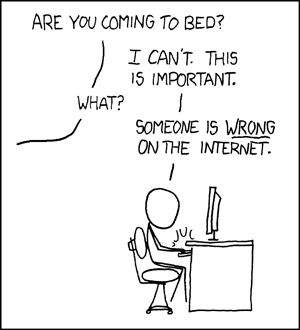
I can understand the strong urge to want to point these things out. I get involved in these things too. Sometimes I see something that is such obvious nonsense I can’t help but point it out. It’s like this old XKCD cartoon that is funny because it’s true:
The argument is logical: There are so many good things in Chinese martial arts and the fantasy stuff is damaging to that. And it’s therefore up to us to call out the fantasy, not accept it. If we don’t then we just invite ridicule, especially from other martial artists.
However, even when that attitude is adopted I see people tend to be more interested in calling out the fantasy stuff that other people do, or that is in other styles, not their own! And never in anything they do themselves or their teachers do. We all have our own blind spots and biases.
But I’ve been thinking differently about this issue recently…
When you look into the close connection between martial arts and street theatre, or opera troops and (as technology progressed) Kung Fu movies, it’s impossible not to conclude that showbiz (for want of a better word) has always been connected in some way with Chinese martial arts from the very beginning.
That doesn’t mean that Chinese martial arts masters of old weren’t bad ass. They were bad ass! But they also knew how to perform Lion Dance, or put on a show at New Years, or impress a prospective student with a. few tricks if they had to. These things were so interconnected in Chinese culture that it seems impossible to separate them (although successive Chinese governments gave it a good go throughout the 20th century).
Showbiz has always been there in Chinese martial art. It’s what makes amazing movie fight scenes like this one from The Grand Master possible:
Beauty, artistry, story telling. It’s all there. It’s using “real” techniques from martial arts and presenting them in a hyper-real, perfected, way.
Of course, the problem comes when people get conned into believing that the hyper-real is the real and that can take people to some very weird places, involving cult-like practices, exploitation and usually a lot of money being handed over. That’s where the problems start for me.
There are no easy answers, but I think that viewing some of these things that are not quite real as merely a part of the showbiz side to Chinese martial art, is perhaps an easier way to deal with it.
For instance, what is going on in this clip with Chen ManChing bouncing people around?
I can imagine a lot of Chen style Tai Chi people getting upset about that, as the sort of nonsense that doesn’t tend to happen in their style… and yet, what’s going on in this clip:
Is it as bad? Is it worse, even?
I don’t know.
It might just be easier to look at both these clips say,
“It’s just showbiz”, and shrug your shoulders and laugh.
Opening and closing are in every movement of Tai Chi. But what does it mean to close?
To me the closing movements in the form feel like a squeeze. Closing in Tai Chi doesn’t mean shutting off. I think of the movement of Taijiquan as being like a garden hose that’s always on – the water (or if you want to get all mystical about it, the qi) is flowing regardless, and all you are doing with the closing movements is compressing the mouth of the hose a little, or putting your thumb over the lip, to increase the pressure, so the velocity of the water increases.
Quite often the closing part of the movement is when you form the end of a posture – the finish position of Single Whip, the end of Ward off, for example. When the body closes it’s like the pressure increases and the velocity of the water becomes higher, then as you open again the mouth of the hose opens allowing more water comes out but at a lower velocity. That’s opening and closing.
I will understand if you don’t have time for this or are unable to give a meaningful answer. I bumped into your website about a year ago, and since your writing seems to make sense to me, I thought I’ll ask.
I’d been exposed to Tai Chi some years back, and have continued trying to learn a bit more about it on and off since then, but given I’m an inlander in Australia I don’t have any practitioners nearby (nearest is ~over 300 mi away) it’s proving to be a slow process of breaking down videos and trying to assess myself against these.
Which is sort of the ignorant leading the ignorant. I’m making progress, but it’s slow.
I’ve spent a bit of time this weekend watching one of the classes that happens “close” to me, and looking at patterns that are the same but different, so that was my first in person exposure to differences between schools.
Given the distances involved in this, and my general reluctance to travel that much, I’m wondering about how well the online courses work? But that also leads onto a more basic question, of how do you pick a teacher in the first place? (I have worked out that at least one of the groups near to me attach to the “lineage” responsible for “Tim” being in a cult so I’m counting that one out.)
Is it just a case of pick one and go until it stops making sense?
Thank you for your time, and the blog posts.
Regards, Henry.”
Hi Henry,
Firstly, greetings to a reader from down under! What an amazing thing it is that I can write these blog posts here in the UK and on the other side of the world somebody is reading them. That really does make me think my time isn’t entirely being wasted.
Now, to the question of “how do I choose a Tai Chi teacher?” That is indeed a weighty one. A teacher/student relationship can be a big influence on your life, mainly because you will spend a lot of time practicing with them and people tend to rub off on you, so you should be careful of who you spend your time with. I also don’t want to advise you wrongly, and be responsible for you wasting years on the wrong track, or equally missing out on some great possibilities because the teacher didn’t quite live up to some standard I’ve set. People are human, fallible and weak, and they all make mistakes. Even mighty Tai Chi masters.
Members of a group that we might initially write off as a cult, could still be worth checking out. Just keep your wits about you. At the end of the day there are very few individuals who are good enough at Tai Chi to actually teach it, and your chances of finding one of those, especially one who isn’t charging an arm and a leg, is minimal, so we have to work with what is.
I think what we’d all like is to stumble across our very own Mr Miyagi, in a situation where we somehow befriend the keeper of an ancient family martial style who is happy to divulge his secrets to us if we do a bit of fence painting for him. If you manage to stumble across your very own Mr Miyagi then consider yourself to be incredibly lucky, because it’s not very likely to happen. However, we have the Internet these days, and while Mr Miyagis may be in short supply, there are an increasing number of Daniel-sans out there who may, or may not, be able to band together and form a practice group around a similar set of goals or perhaps an online teacher. You see, as well as a teacher to tell you what to train, you are mainly going to need a group of training partners of the same level to practice this stuff with when the teacher isn’t around. The majority of that work will look ugly, be full of mistakes and be unpaid, but it’s essential. That’s what nobody tells you.
Anyway, my top tips when meeting a new teacher are to trust your gut, ask questions and try and get hands on. Ask politely to try and feel what they’re doing. If they won’t let you or start making excuses, there’s your red flag. How do the other students act? Do they behave in an overly obedient way that makes you question what’s being presented? And what about their history? They should be able to answer basic questions about who they learned from and where they trained.
Of course, on the other side of the coin, it’s quite possible that you have entirely unrealistic expectations about what a Tai Chi teacher should be. Just remember: There’s no point checking everybody in the room if you don’t check yourself. Are you sure you’re not letting a good learning situation go by just because the teacher in question only has 3 of the 5 specialist Tai Chi skills you are looking for? A rule of thumb I used to use was “can this guy do something I can’t do and do it well enough that I want to learn it?” If they could then that was a good reason to learn from them. You can learn something from pretty much anybody.
And be clear with yourself what you actually want to learn. Some teachers are better at the fighty stuff than others, but if you don’t want the fighty stuff, then you can save a lot of time by not training it.
But what if the worse should happen and you get taught “wrong”? Well, that’s always a risk, but is it as bad as you think? It could be that you need to be taught wrong a few times, just so you can appreciate what’s right. Think of it as the price of an education.
The big thing I’ve learned over the years is that in the end it matters more how we treat each other, than what special knowledge somebody has access to. At one period in my life I trained with a Tai Chi teacher who was very good at what he did, but was also a complete asshole. I could tell he was an asshole, and the frequent bust ups he had with long term students were a constant reminder, but I wanted to get what he had, so I put up with him. I turned a blind eye to his various escapades into what would be called “bullshido” these days. But in the end I just couldn’t take it anymore and I left. It turned out to be the best thing I could have done. It was like a weight had been lifted, and I realised it was that weight that had been holding me back the whole time, I just couldn’t see it.
Anyway, I hope that helps.
Here are some typical Australians, about to be murdered by sharks. Photo by Belle Co on Pexels.com
I was reading through my latest purchase, Chen Style Illustrated, again recently and I got to something that piqued my interest – it’s the section where they are describing the 8 energies and we get to Press (Ji)
“When in contact the aim of this gradual rolling move is is to unsettle the balance of he opponent.”
It’s not a bad description at all, but I don’t resonate with the word “gradual” there. The most common application you tend to see for Press is of a kind of “bump” that puts the person off balance, but my experience of Ji has been that there’s nothing particularly gradual about it. That bump can be applied in a hard sharp way. Jin done in a forward direction (which is Press) can often be quite jolting and it hurts inside.
The 8 energies are:
掤 peng, 捋 lu, 挤 ji, 按 an, 採 cai, 挒 lie, 肘 zhou, 靠 kao
Google translates 挤 as “press” or “crowd in”. (I’m not sure that another translation you often see of “squeeze” is helpful. I’ve read people writing about squeezing the hands together – that’s not it at all. ) From that you get the sense of a situation where you are already in contact with the person and, perceiving a point of weakness in their defence you press them further on the point. It reminds me a lot of the strategy of Horse in Xing Yi, which is to attack a point of defence that is already defended but has a weakness you can exploit.
Cheng Man Ching doing Press
In the Tai Chi form Ji is usually done with the back of the hand in the typical Grasp Bird’s Tail sequence (presumably because it the easiest way to capitalise on a good position you’ve already achieved), but there’s nothing about the energy you’re using that means it has to be done with the back of the hand. It can be done with a fist or palm too.
And this is where the Tai Chi waters get a bit murky. There is the martial technique Press, which is to do with pressing further forward into an opponent you are already contacted with, and then there is the abstract concept of “jin in a forward direction”. Anytime you express jin (strength derived from the ground through a relaxed body) in a forward direction you could be said to be doing 挤, but when you put it into a Tai Chi context it takes on this quality of crowding in and pressing that attack.
My guest in this episode will need no introduction to anybody who trains in the Chinese styles of Xing Yi and Baguazhang, especially in the United States. Tim Cartmell is a lifelong martial artist who spent many years living in Asia learning the internal arts, before heading back to the US where he took up BJJ, becoming a black belt. Tim is now the head jiujitsu coach at Ace Jiujitsu Academy in Fountain Valley, California where he teaches classes and trains professional MMA fighters. https://www.acejiujitsu.com/
In this podcast I ask Tim about his training tips, especially for older martial artists, where he thinks martial arts is going in the future and his approach to combining all the arts he knows into a single principle-based, reality-driven approach.
You can find out more about Tim at his website www.shenwu.com and don’t forget to check out the Shen Wu Martial Arts group on Facebook.
I hadn’t talked to Tim before this interview, but many of the people I’ve had as guests on my podcast have rated him highly, and now I know why – for somebody with so much experience of martial arts Tim is a very humble and genuine guy, as I hope you’ll discover over the next hour or so.
You can support The Tai Chi Notebook Podcast by becoming a patron. Head over to www.patreon.com/taichinotebook and become a patron today! You’ll get a version of the podcast you can download, exclusive video clips and articles.
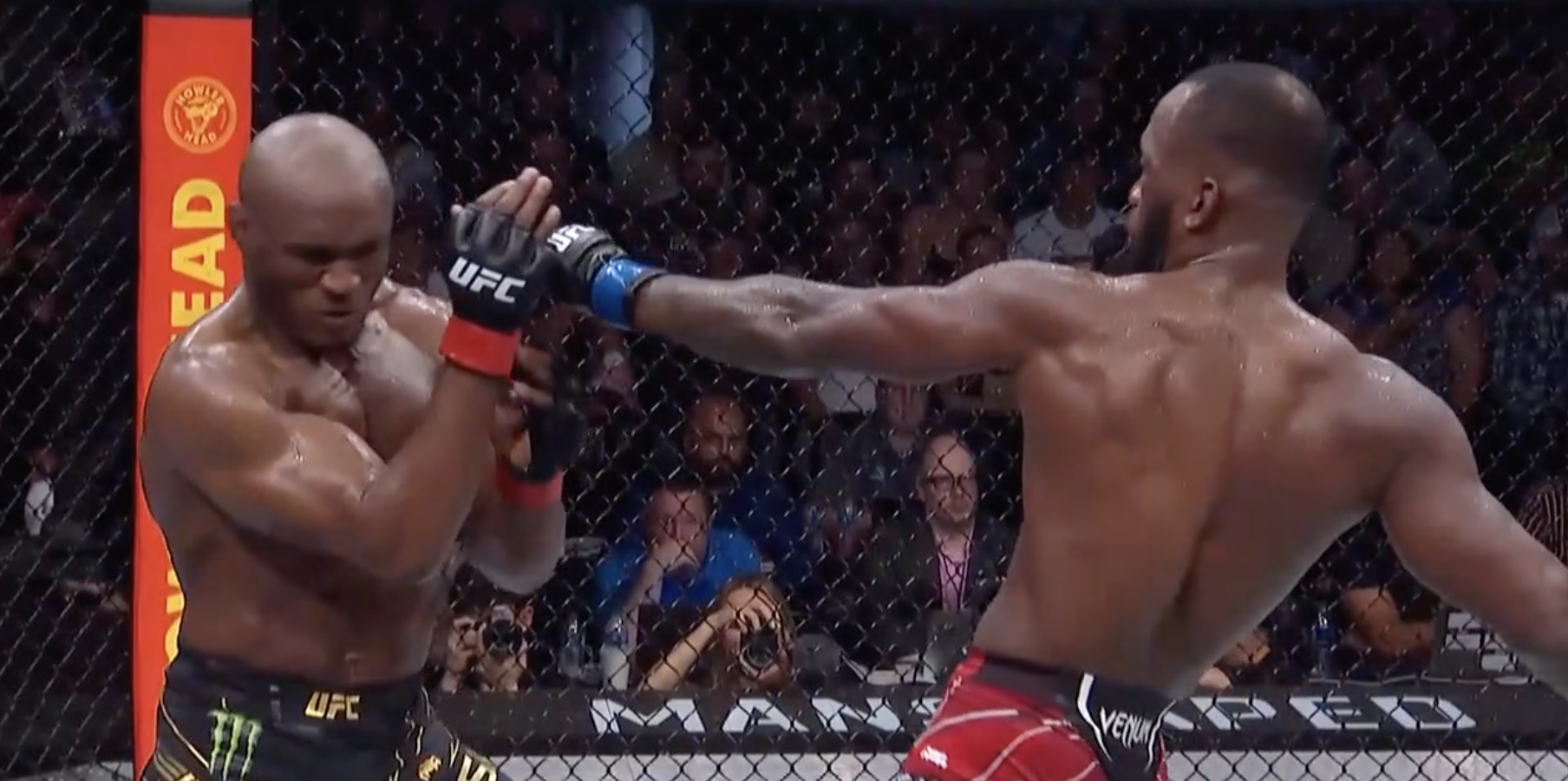
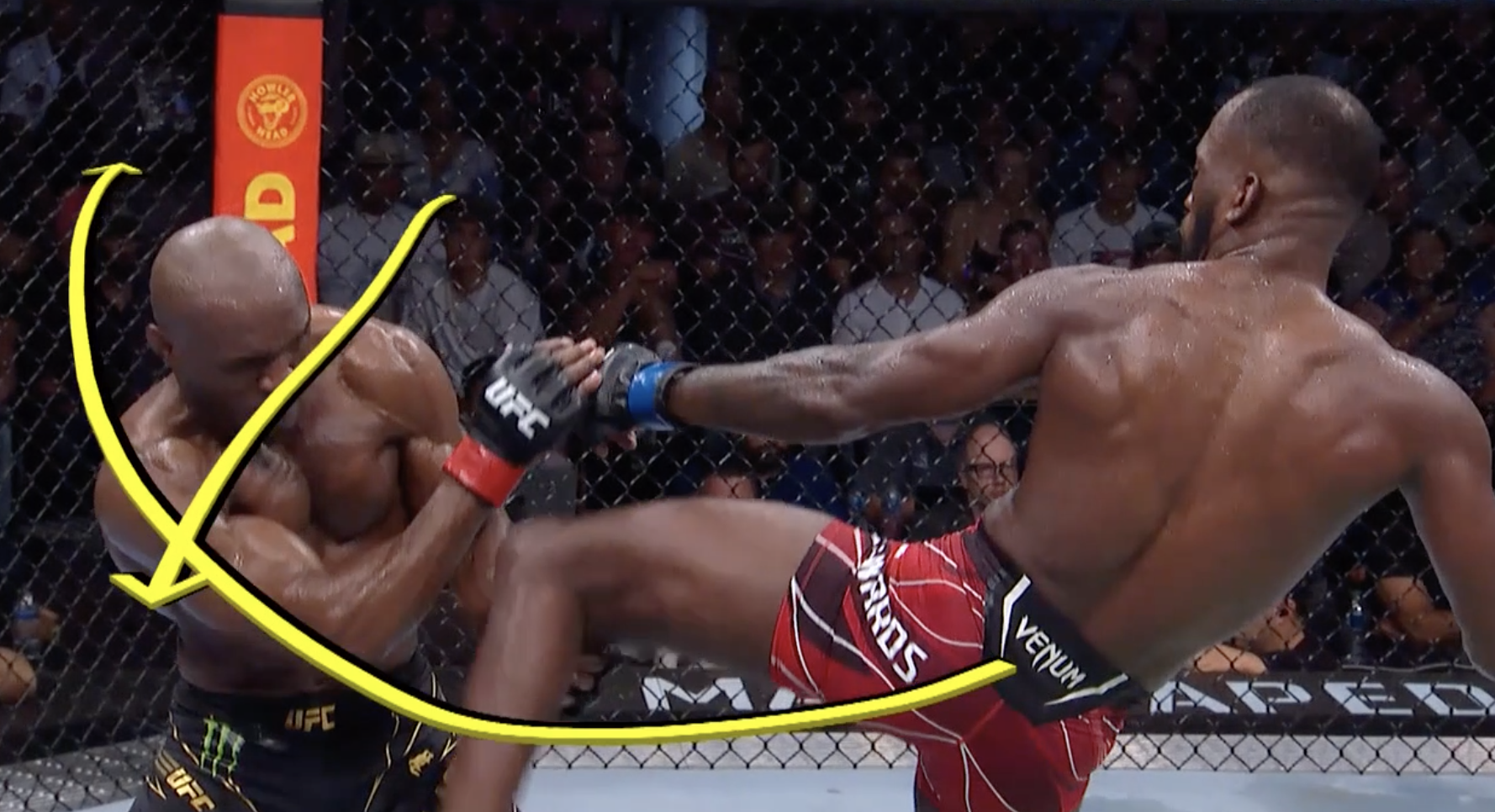
Congratulations to the UK’s Leon Edwards for becoming the new UFC Middleweight Champion of the world with his stunning head kick victory over Kamaru Usman. After a great first round Edwards was clearly losing on points having been dominated by the champion in each round since, but in the fifth and final he pulled off a near perfect head kick as you’re ever going to see, sending Usman crashing to the canvas and making him the new champion.
As the photos show, he set it up with a left that tells Usman to dip his head to the right, but that kick is already coming and it’s all over.
1. Feint the left.2. Usman dips his head.3. Kick connects!
Bagua and Xing Yi are two styles that have historically been trained together. The story you usually read is that martial artists living in Beijing in the 1900s rooming together found the two styles to be complimentary and therefore a long history of cross training naturally arose between them. I think this description of history is true, however, I often wonder if the real story is that earlier in time the two styles sprang from the same source, so this period was more of a reuniting of styles than two separate styles meeting?
Xing Yi Beng Quan
We speculated about the origins of Baguazhang before in the Heretics episode I did with my teacher. That one seemed to upset a lot of people, especially those were emotionally invested in Baguazhang, but hey it’s not called the Heretics Podcast for no reason! You’re going to get an heretical view of things there, and that will always upset people. Perhaps we should have put a big disclaimer on the front! If you’re going to listen to it, we’d suggest emptying your cup first. But anyway…
If we forget historical lineage questions for a moment and just look at the arts as presented today, it’s not hard to see a connection between the two. The stepping is very similar. Xing Yi normally steps in a straight line, but once you look at the turns at the end of each line you start to see what is clearly the same sort of stepping that is used in Baguazhang’s circle walking.
I think this is a very good video by a martial artist called Paul Rogers explaining how Bagua circle walking is basically two steps – an inward turning out step bai bu (inward placing step) and kou bu (hooking step).
Notice that his student is asking him questions about why they circle walk in Baguazhang and he keeps returning to the same answer, which is “you could do it in a straight line”. The problem with doing things on a straight line is that you need a lot of space, doing it in a circle helps you make more efficient use of whatever space you have. So, it’s the steps that are important, not the circle.
Here’s a short article about the two steps and their usage in Baguazhang. Plenty of styles of Baguazhang do have straight line drills too. And when you take the circle walking away, I think the connection between Xing Yi and Baguazhang starts to become clearer, at least to me.
In the Xing Yi lineage I’ve been taught the animal that most looks like Baguazhang is the monkey. These days Xing Yi is know for short little forms (or Lian Huan: “linking sequences” -as we prefer to call them) however I believe this is a result of years and years of politically-directed reformations being applied to the rich and varied martial systems that existed before the Boxer Rebellion. After the Boxer Rebellion and the religious secret societies that fueled it, there was an effort to strip martial arts away from any religious connections. Then came the Kuo Shu movement (we’re simplifying history here, but several authors have written about this – have a look on Amazon, and this video from Will at Monkey Steals Peach will help) and then the Communists arrived with the WuShu movement. The result was that the rich and varied lineages of Xing Yi became standardised, often into short sequences that could be easily taught to large groups. In any case, the idea of set sequences doesn’t have to be the be all and end all of martial arts. Some teacher encourage students to create their own, once they have a good enough understanding off the principles.
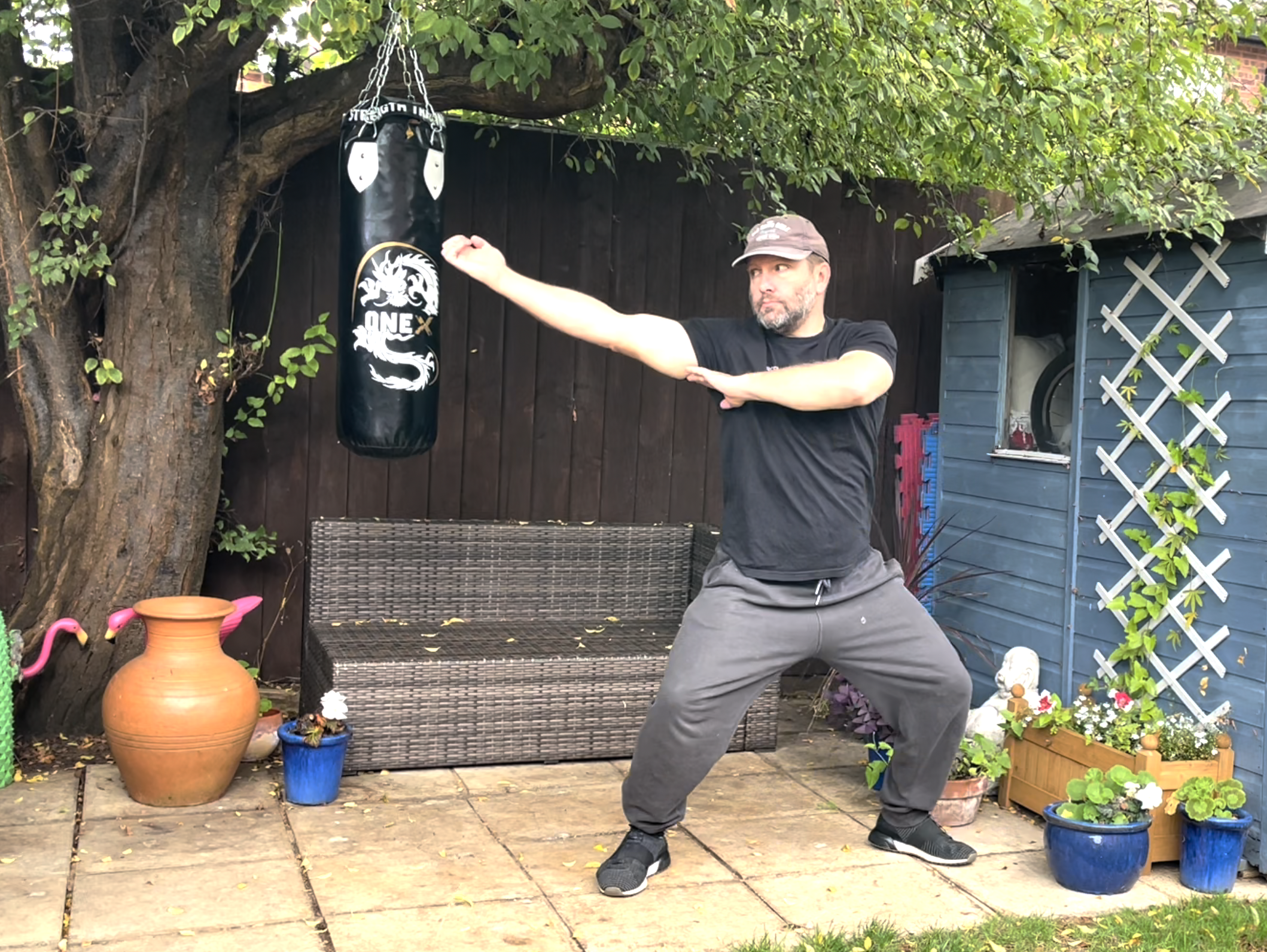
We have an extended linking sequence for Monkey, taught to me by my teacher. Here’s a video of me doing a fragment of it, being a Xing Yi Monkey in a forest grove. My natural home :). I’ll put the full video in my Patron’s area if you want to see more of it.
But look at the steps I’m doing – can you see the bai bu and the kou bu? I think that if I added circle walking into that it would be almost indistinguishable from Baguazhang.
This begs the question, which came first? Xing Yi is historically older than Baguazhang, but I think because of the mixing of the arts, they both influenced each other at this point, and possibly are the same art to begin with!
I like to think of the best answer to the terrible question that plagues martial arts lineages of “which is oldest?” is “right now, we are all historically equidistant to the founder”.





 The Tai Chi Notebook