When I’m teaching my Friday class one of the things I quite often say is “don’t look down” – however, like most of the short, pithy statements you hear delivered by Tai Chi teachers… it’s not really true. Rather, it depends on the context of what you’re doing. Let me explain.
Yes, generally speaking, you want to be looking at the horizon when doing Tai Chi because you want to keep your head and neck aligned with your spine. Specifically with the head and neck we are talking about the posture principle of ‘suspending the head’. However, there are times in Tai Chi, where it is perfectly acceptable to look down – particularly on moves where the direction of the application is down towards to the ground.
The reason I say “don’t look down” a lot when teaching is that people learning a Tai Chi form have a general tendency to look down (me included!). Generally as we age our posture seems to become more slumped forward, perhaps because we sit down a lot in modern life, but also because scanning the horizon for signs of danger has long since stopped being an evolutionary priority. We also use computers, phones and devices all the time, and they lead to a general posture of our heads being tilted forward slightly. This can result in people doing the whole Tai Chi form while never looking up from the ground.
Extending the qi
In Tai Chi you want to have a feeling of a slight stretch all over the exterior of the body at all times – that’s really what following the posture principles of Tai Chi gives you – things like flattening the lower back, rounding the shoulders and suspending the head. This is known as ‘extending the qi’ all over the body. When you stand in a Zhan Zhuang posture you can feel this slight stretch all over the surface of the body that the posture generates – it’s subtle, but that’s what you’re looking for.
Suspending the head is part of that extension of the qi over the head, and you can keep that extended feeling even when you glance down. What you definitely don’t want to do is break the alignment of the spine and neck, which is what typically people do when looking at their phone, or their feet:
If you want a good fix for this then I find regular Zhang Zhuang (“post standing” or “standing like a tree”) practice is a good way to remedy this and retrain your head position on a subconscious level. Master Lam has a 10-day course on the subject.
The problem with looking down is that our head is rather heavy (between 2.3 and 5kg), and when you take your neck out of alignment with your spine your body automatically compensates for the extra weight that is pulling it forward (or you’d fall) and it does that by tensing some of its posture control muscles, particularly in the middle of the body, and that can interfere with the relaxation and freedom of movement we are looking for in Tai Chi. You also aren’t creating an optimal path for sending incoming forces to the ground or for sending jin up to the head. You are also not ‘extending qi’ to the head.
If you’re going to look down then you need to do it while keeping that slight stretch up the back of the neck and over the head.
Ward-off and martial applications
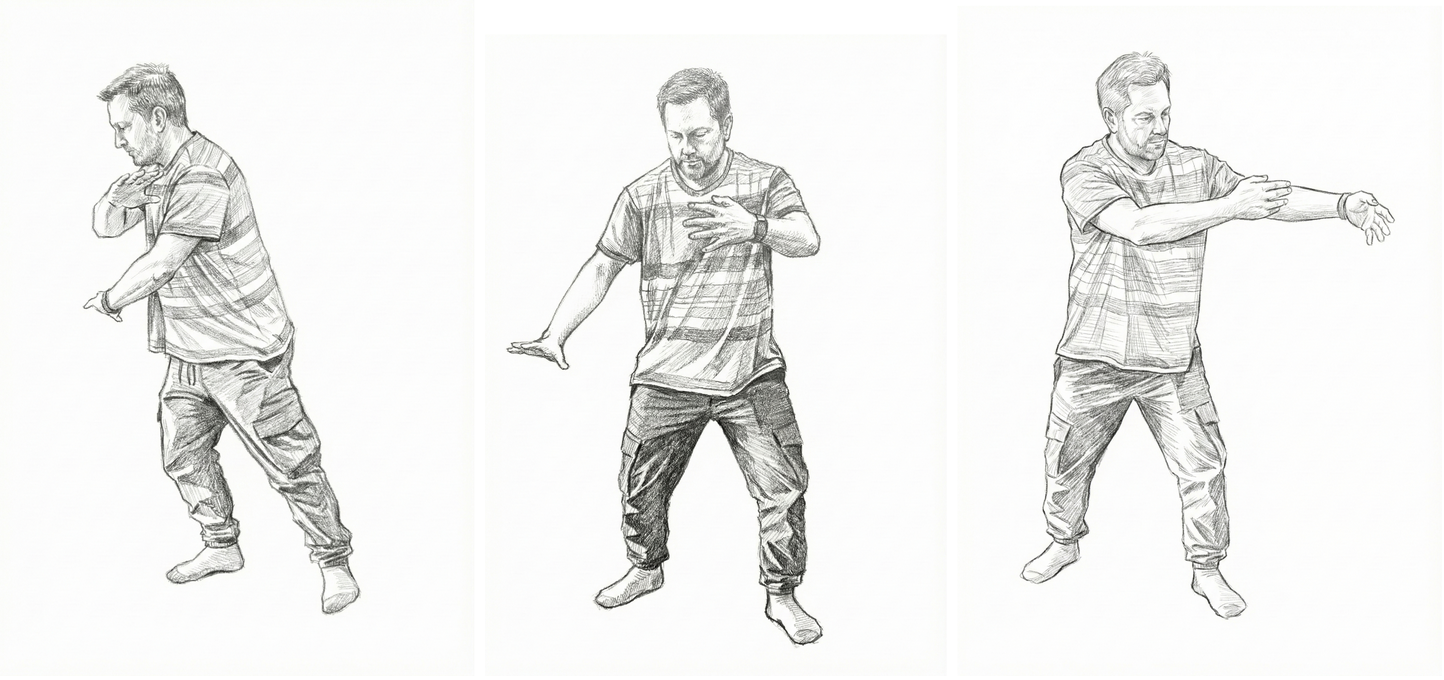
‘Ward off’ is another example of a posture where I do look down, although it’s only briefly. I look down because of the martial application I’m thinking of. My active hand in that posture is first the back hand, which I’m using to send my imaginary opponent to the floor. The front hand can then be used as a deflector, so after I’ve dispatched the first opponent to the floor, I then look up and deflect the second attack, which leads into the ‘roll back’ posture.
Here is the sequence:
In this sequence, the ‘ward off’ is the middle picture, and my focus is on my right hand pushing down from where it was in the previous picture, then in the next picture I refocus on the left hand deflecting, and getting ready to perform a ‘roll back’.
Here’s a much younger and hoplessly naive version of myself showing the marital application at around 19 seconds in this video:
As you can see, where you are looking in the Tai Chi form is dependent on what application you have in mind when doing the movement. So, while there are some useful maxims to remember in Tai Chi, such as ‘don’t look down’, it’s important that you know when it’s acceptable to bend the rules so that your Tai Chi becomes a living practice, with things done for a reason, not just blindly following the rules.
It’s pretty good! I particularity enjoyed the ‘Wu chi’ standing at the start where he emphasises relaxing and releasing tension. Later on he gets into Feng’s HunYuan Qigong, but he’s using it more as a framework to teach his Ancestral Movement concepts. Fascinating stuff.
And why you shouldn’t train with weights when developing your qi
Mike Sigman has sent me an article to publish on this blog. I don’t normally publish other people’s work, or agree to their requests, but I’ll make an exception because it will hopefully generate some discussion. Regardless of how you feel about him, there’s is always a real depth to Mike’s writings and ideas that you can get a lot from, that you don’t really find anywhere else.
The article is primarily about one of the trickiest subjects in Chinese martial arts – qi (or chi).
I have a few thoughts about it:
1) The article starts by trying to “separate the skin-related qi, which includes the subconscious mind’s involvement, from the theoretical qi of traditional Chinese medicine”.
To some, particularly those people who relish Chinese history and the evolution of the concept of qi as it appears in Taoist thought, or medicine, that just won’t be acceptable, but I think this works for me. It moves the discussion into the realm of the physical and practical. It becomes a feeling and a doing thing.
2) It appears to be written partly as a reaction to a recent trend of mixing, or doing, Chinese martial arts conditioning through the medium of kettle bell or weights training. The question is, is that a waste of time if you want to get to the root of the subject, which is what the Chinese martial artists call qi?
Look, I don’t think there’s anything wrong with making yourself physically stronger at all. In fact, it’s obviously advantageous if you’re learning martial arts… But the article states that to master the internal movement, “the body must be completely retrained to learn to move with the qi, jin, and dantian”, and using weights will not help you in that respect. If you have retrained the body, then you could probably add them.
3) As I’ve said, nobody else really talks about this stuff, or if they do it’s watered down with a lot of other guff. If the article is correct on qi then what exactly are all the big names in modern tai chi seminar circuit and online courses out there actually teaching? Because they talk about qi a lot… but they don’t approach it in the same way as this article does, at least as far as I can see.
4) The article describes internal movement, quite simply and quite succinctly: “Ultimately, you develop a form of movement that uses the solidity of the ground as the focus of all forces to and from the body, while the qi covering of the body is manipulated by the lower-body and the middle to bring power to the arms and upper body.”
I find it hard to disagree with that definition, probably because it’s pretty broad. Sure, we can argue over what the “middle” is, or what the “lower-body” means,etc.. but as a succinct definition, it’s not half bad.
Now, let’s move on to how you do it…
The article talks about breathing exercises as a starting point: “Breathing techniques that stretch the surface of the skin and the involuntary muscle layers are the usual start of the progression.”
Now, I have personally trained in some of the methods that Mr Sigman uses (there’s a link to a video at the end of the article), and experienced what he’s talking about, and I’d agree that I can feel what he’s talking about. But I wouldn’t count myself as an expert in it, or knowledgeable about anything to do with it beyond the initial foot in the door stages, however, I have found that alone to be incredibly valuable and shone a light on some of the other things I was already doing. Even getting a foot in the door took a lot of work and a lot of time.
Anyway, I’ll leave you to read the article now and feel free to comment with your thoughts below.
Graham
Practical Development of Qi
And why you shouldn’t train with weights when developing your qi
by Mike Sigman, March 2025
Discussing qi is difficult because the definition of qi has become a bird’s nest of related topics. Let’s try to narrow the discussion and then describe an approach to practical development.
Most of the skills related to qi, in the physical body, have to do with an area near the skin of the body that is referred to as the “protective qi” or “wei qi”. While the protective qi is often referred to as an “energy”, it is actually a physical set of tissues that is controlled via the autonomic nervous system … but when you learn to control it via the subconscious mind, it does indeed feel sort of like an “energy” because it is apart from the topical sensations of the somatic nervous system, and the qi indeed feels odd, like an energy.
So, let’s separate the skin-related qi, which includes the subconscious mind’s involvement, from the theoretical qi of traditional Chinese medicine: that’s where most of the confusion lies. The skin-related qi and the subconscious mind are the artifacts which give us heightened toughness of the skin, odd sensations of qi, added strength by supplemental our muscle-bone strength, and dantian control of the body as whole connected by skin-related qi, among other things. Jin forces, the manipulation of the solidity of the ground and/or downward forces of gravity, are also the product of the skin-related qi: jin is defined as “the physical manifestation of qi” in many Chinese sources.
The qi of traditional medicine theory is/was an effort to explain the workings of strength, including the strength of our involuntary systems. We don’t need to know all the theories about meridians, putative different types of qi, etc., in order to develop the qi. Breathing exercises and focused physical and mental exercises are more important than complex qi-paradigm explanations.
The skin-area wei qi is initially controlled by respiration and “breathing exercises” are our initial approach to control and development of the qi tissues. During inspiration, if we are slightly extended or stretched out, we can feel a slight inward pulling of the tissues of the fingers and hand. Other areas of the body, upon being slightly stretched taut, can also be felt during the inhale, but many tissues in other areas of the body can’t be felt. They must be developed over time by breathing exercises before we can feel them respond to our breathing and before we can develop them further.
Some Chinese texts mention the fact that this superficial qi is something that animals still use (think of a horse quivering its flanks, for example), but which has atrophied in humans over the course of evolution. In order to regain our qi, we must use deliberate exercises of breathing, mental imagery, and posture manipulation.
Training the Qi in General Movement
Jin force-manipulation is a product of the qi tissues applying stressors within the body’s frame. That’s why jin is defined as “the physical manifestation of the qi”, among other things. We use jin unconsciously in our everyday movements, so another common definition of jin is as an “intrinsic strength”. The full-blown traditional movement methodology that permeates the Chinese (and related) martial arts involves both qi and qi’s subset, jin. Qi and jin. Jin forces are the mind-directed forces from the ground and gravity; qi can be thought of, in a simplified sense, as a superficial muscular layer that connects the whole body.
The basic idea of movement with qi and jin is that the power from the ground and lower body is used as the power source for the upper body. The qi and the jin work from the lower body (including the middle/dantian), so what we have with “internal” movement is a system where the arms and hands are controlled and powered by the lower body and the middle.
The general admonition is that muscle and power are used in the lower body, as needed, while the upper body is moved without the use of local muscle. I.e., a person has to learn to control his/her upper body via manipulation of the lower body and the middle. The person who thinks the internal arts would be best supplemented with typical weight workouts at the gym has lost the plot and is giving away a total lack of understanding about how the “internal” martial arts work.
Developing the Qi
Jin skills are actually fairly easy to learn, although it generally takes a few knowledgeable pointers and some personal, hands-on demonstrations to get someone started. There are a number of written attempts at jin explanations on the internet, particularly through the 6H forum.
Qi is difficult to develop because it takes time and the feelings we need to focus our attention are tenuous at first. Breathing techniques that stretch the surface of the skin and the involuntary muscle layers are the usual start of the progression. Many traditional Chinese martial arts talk about “100 Days” of breathing exercises to develop the qi to a usable status.
Movement of the involves directing all forces upward from the solidity of the ground (so you must “sink your qi”) or use the weight of the body as a basis for downward movement.
Ultimately, you develop a form of movement that uses the solidity of the ground as the focus of all forces to and from the body, while the qi covering of the body is manipulated by the lower-body and the middle to bring power to the arms and upper body.
All Asian martial arts that are labelled as “internal” martial arts, formal calligraphy, qigongs, traditional dance, etc., use this combination of qi and jin for movements. Learning the external choreography and appearance of a martial art, a qigong, etc., no matter how much it resembles the movements of an expert, will not be correct until the system of movement is changed over to the qi, jin, and dantian type of movement.
Almost all of the movements we so often see in western semblances of “Tai Chi”, Aikido, Xingyiquan, Baguazhang, etc., are based from normal movement parameters, rather than qi and jin mechanics and it will take effort to re-learn these arts with the correct movement basis. There is an old saying to that effect: “Taijiquan is easy to learn, but difficult to correct”. So, if your goal is to learn Taijiquan, Aikido, or related arts, remember that all the talk about “relaxation”, “don’t use weights”, etc., is because the body must be completely retrained to learn to move with the qi, jin, and dantian.
Here’s a video of Chen Zhaosen, with translation by John Prince, teaching basic movement drills for the Chen-style Taijiquan. Notice his comment about no strength in the upper body, but whatever strength you need in the lower body. https://vimeo.com/141009942
One of the first things I talk about when it comes to alignment is:
Head over shoulders Shoulders over hips Hips over ankles
These three are the basic alignments for standing upright at the beginning of almost all Tai Chi forms and looks something like this (ignore the arm positions):
If one of these things is out of alignment then you are leaning forward or backwards, or your posture is out of whack.
It’s easy enough to keep these three alignments in a standing stance, but things can get more complicated in movement, and when you introduce forward and back-weighted stances. At that point I try and keep the following two alignments:
Head over shoulders Shoulders over hips
The ankles can now be in different places, as reacquired by the stance.
It depends on the style of Tai Chi you do, but if you do a style that advocates a forward lean then you need to make sure that there’s a straight-ish line between your back foot and your head. If you do a style that doesn’t advocate a lean, then your back knee must be bent and you want to keep your body upright with your shoulders vertically over the top of your hips.
But the real answer is that no one style of Tai Chi only does things one way. Most styles contain some moves that lean and some that don’t. Wu style, for example:
If you compare late Yang Cheng Fu to early Chen Man Ching postures, you can see that they are very similar, and are both trying to keep the head over the shoulders, over the hips:
While doing the tai chi form, take a moment to think: ‘where is my head in relation to my hips?’ You don’t want to be sticking your bottom out and destroying your alignment, which often happens in transition movements between postures:
A picture paints a thousand words, especially in Tai Chi. I recently found an incredible source of Tai Chi images drawn (I think) by Anthony of Brisbane Tai Chi.
Just scroll down the main page and look at the images – they’re great! Full of tips on alignment and posture for Tai Chi and Zhan Zhuang (standing practice).
One of Anthony’s best images for thinking about how alignment relates to the tai chi form is this one:
Anthony/Brisbane Tai Chi
I think that image very clearly shows head over shoulder over hip over ankle, and how easy it is to mess that alignment up once you start moving in Tai Chi. You basically want to keep the blocks aligned over each other.
Why?
As it says in the picture, if you align yourself correctly with gravity then your legs become the primary weight holders in the body. That means you can be more relaxed (Sung) in the upper body, so that you can use it to transfer force, instead of tensing up to hold weight that is misaligned. Plus, it just feels better.
My guest for the latest episode of The Tai Chi Notebook Podcast is Tina Faulkner Elders, chief instructor of the RuYi School of Taijiquan and Qigong in Aberdeenshire. We talk about Tina’s training in qigong, first with her father, then in Beijing, China, and then on Wudang mountain itself, the legendary home of Taoism.
Paying attention to your inner thighs can bring better structure and a feeling of power to your tai chi form
If you’ve read my last post about keeping the knees bent during tai chi practice, and most importantly can do your whole tai chi form without violating this principle, then the kwa (inner thigh) is a good thing to focus on next.
Quite often in Zhan Zhuang chi kungstanding practice we use the imagery of balloons supporting various parts of the body. You can imagine balloons supporting your arms, under your armpits and that you’re sitting on an imaginary beach ball. Balloons are soft but strong when pressured, so they’re a good image to help with the idea of staying relaxed and that feeling of springy peng (‘bounce’) energy that needs to be in the body during tai chi.
We don’t tend to use the supportive balloons imagery when explaining tai chi because it’s a moving practice, so the imaginary balloons would inevitably float off at some point! But you can still use the imagery in a couple of places – imaging balloons under the armpits and one held between your thighs that is gently pressing the knees outwards is a good place to start.
The kwa needs to be kept open at all times in tai chi practice.
One of the things beginners often fail at in Tai Chi is sufficiently rounding the kwa. By kwa I mean the area of the inner thigh and groin. I’ve been told that this area is more correctly called the dang in Chinese, but kwa/dang/whatever, I mean the arch formed by the inside of the thighs and containing the pelvic floor. As I’ve discussed before, beginners tend to want to straighten their legs, rising everything up in their stance, which has the effect of collapsing this kwa area, so that it effectively closes as the thighs move together.
In tai chi we always want to maintain the feeling that we’re holding a small balloon between the thighs so that this area is always rounded. Of course, there is opening and closing going on in tai chi all the time. As you progress through a move, one side of the kwa is opening and the other is closing, but regardless of any opening and closing movement that is going on, you need to keep a general feeling of openness in the whole area throughout the form. Even in postures where the feet are together. If you stand with your legs together, then that is considered a closed kwa, but in tai chi that area always has the feeling of being open – even when the legs are together.
You might find that last statement confusing, but it’s helpful to remember that in tai chi we are not performing an exact science, but we are dealing with feelings. The feeling of being open is what I’m talking about.
The last thing to mention is the why. Why do you need to do this? That’s where you need a teacher to give a demonstration of the application of tai chi against a simple push. With the kwa rounded you create a good base from which you can receive and launch attacks. When pushed, you can use that base the rounded kwa gives you to receive and then bounce away an attacker. If your kwa collapses when your upper body is pressured then you can’t do this without using a lot of effort and strength in the upper body. In tai chi this is wrong. Using your legs is always a better way.
Thank you for supporting The Tai Chi Notebook. If you are reading this on a website that isn’t thetaichinotebook.com, then it’s highly likely it’s been stolen. Please let me know so I can issue their webhost a DMCA takedown notice for copyright breach. Thanks.And if you have the great idea of starting a tai chi website by stealing other people’s work to fill it with content for clicks then take a good hard look at yourself, and do better.
Today’s blog is about a weird quirk of the Xing Yi world. There’s a surprisingly large amount of online debate in Xing Yi circles about where the elbow should be when performing Xing Yi. I mean, a surprisingly large amount of debate. Especially for a matter that might, forgive me for saying this, be seen as trivial by people actively engaged in combat sports that actually spar with resistance.
Obviously, if you have some sort of two person free practice in your Xing Yi system that you actually engage in regularly, I’m not talking to you. I think the real reason why all these debates happen is simple – too much forms and not enough fighting.
But, ok, there are other reasons. For example, details do matter in internal arts. Quite often we’re being asked to look in detail at our movements and micro movements to get the most perfectly coordinated and natural human movement possible. But without keeping one foot on the ground, (and grounded in the reality that sparring provides), the theoretical arguments start taking over and the art disappears up its own bum. A martial art that is predominantly forms-first is always going to be theoretical at best. To take the well worn analogy – you don’t learn to swim by practicing on dry land.
The problem stems from the fact that there’s a line in the Xing Yi classics that translates as:
“The hands do not leave the heart and the elbows do not leave the ribs”.
But it’s how literally you take these words seems to be the crux of the matter. Now, I’ve seen videos of respected Xing Yi masters quoting this passage while demonstrating and their elbows are clearly leaving the ribs, if not in the horizontal axis, at least in the vertical axis.
The reasoning behind keeping the elbows tight is sound – in boxing, kickboxing and MMA it’s generally considered best practice to keep your shoulders high and elbows tucked in close to the body to help protect the ribs. But boxers don’t tend to get hung up on this – as their individual style develops they don’t feel like they have to conform to the same ‘rules’ that the novice has to. They are free to develop their own personal style through experimentation and testing in the ring. I’m sure Prince Naseem was taught the same basics as Mike Tyson, but look how differently their boxing styles turned out in the end.
So, (and I know, dear reader, that you are just dying the hear this), what’s my take on where the elbow should be in Xing Yi?
Well, I’m glad you asked. Rather than getting hung up on words in an old writing (that may or may not be old at all) I prefer to get hung up on history. I mean, you have to get hung up on something, right?
Xing Yi is generally considered to be descended from military spear fighting. If you hold a heavy spear it becomes readily apparent that your best chance of wielding it with power is to keep it in front of the body, not out to the sides. It’s the same when you hold any heavy object – you are stronger when your arms are in front of you holding it than when they are at your side holding it. This is the truth I feel these words are aiming towards, and generally the postures and techniques of Xing Yi all comply with this idea of keeping the elbows in and the arms in front of the body, not to the sides. There are exceptions though. For example, Xing Yi Bear has a much rounder posture, with gaps under the elbows, more like the Yi Quan standing postures.
Some postures in our Xing Yi dragon and chicken links are for hitting with the elbows and we hold them out to the side when doing so, but in these cases you are normally (but not always) standing side-on to the opponent, so the elbow tip is pointing at the opponent, so in that sense it is not ‘out to the side’.
A good example is this famous Liang Yi Zhuang posture from Baji, which is similar to the chicken posture I was talking about. (Baji is another Northern Chinese martial arts, that is a bit similar to Xing Yi).
I mean, we could decide that viewed from the opponent’s position the elbow is in line with the body, therefore it is not leaving the ribs, but the hands are not in front of the heart. No way. Are we therefore going to decide that this posture, taken out of context on its own, is wrong because it doesn’t correspond literally to some ancient writing that may, or may not, have been referring to a specific context?
Here’s another theory: I think what the whole thing is quite possibly about how soldiers work in formation on a battlefield. If Xing Yi does have military roots then a line of soldiers on a battlefield would all be orientated towards the enemy, standing side by side in a line. That’s another good reason to stick the elbows to the ribs. Any bladed weapons going towards your sides would definitely not be welcomed by your brothers in arms.
Ultimately, I don’t expect this post to have really made a difference to the debate. I feel like this one is just going to run and run forever. So long as there are mainly theoretical practitioners of the art there will be always be many theoretical debates about how what somebody is doing is right or wrong in relation to some ancient writing.
I just think people’s efforts would be better put to trying moves out on other people and getting feedback that way. As one of my teachers used to say often:
“There is no such thing as correct technique, there is only appropriate technique.”
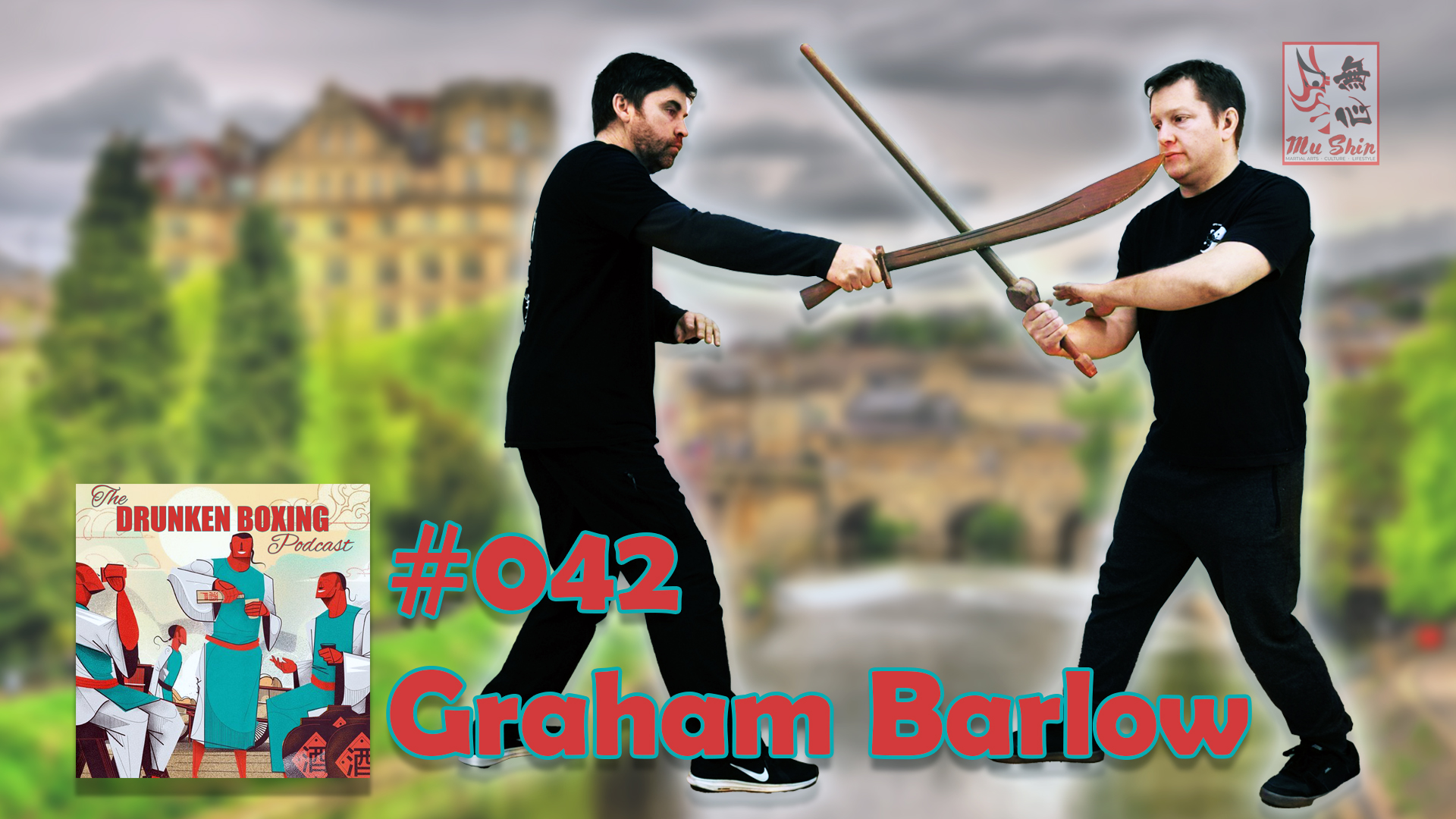
I appeared on the Drunken Boxing podcast run by my friend Byron Jacobs yesterday where we dived into the story behind all the martial arts I practice, who my teachers are and how I discovered them.
I’m usually the one interviewing other people on my podcast (I interviewed Byron back in episode 2) so this was a bit different. To be honest it feels a bit cringe listening to yourself talk about yourself, but hopefully there’s some interesting stories here to entertain people.
Drunken Boxing #042 Graham Barlow
Here’s a few links to some of the many and varied things I talk about:
Master Lam and Sifu Raymond Rand on the cover of Fighters magazine 1983:
Sifu Raymond Rand, Tai Chi Chuan applications 2022:
Stand Still Be Fit, Day 1: Master Lam Kam Chuen’s original Channel 4 TV series.
Graham in a BJJ sub-only competition 2013, blue belt
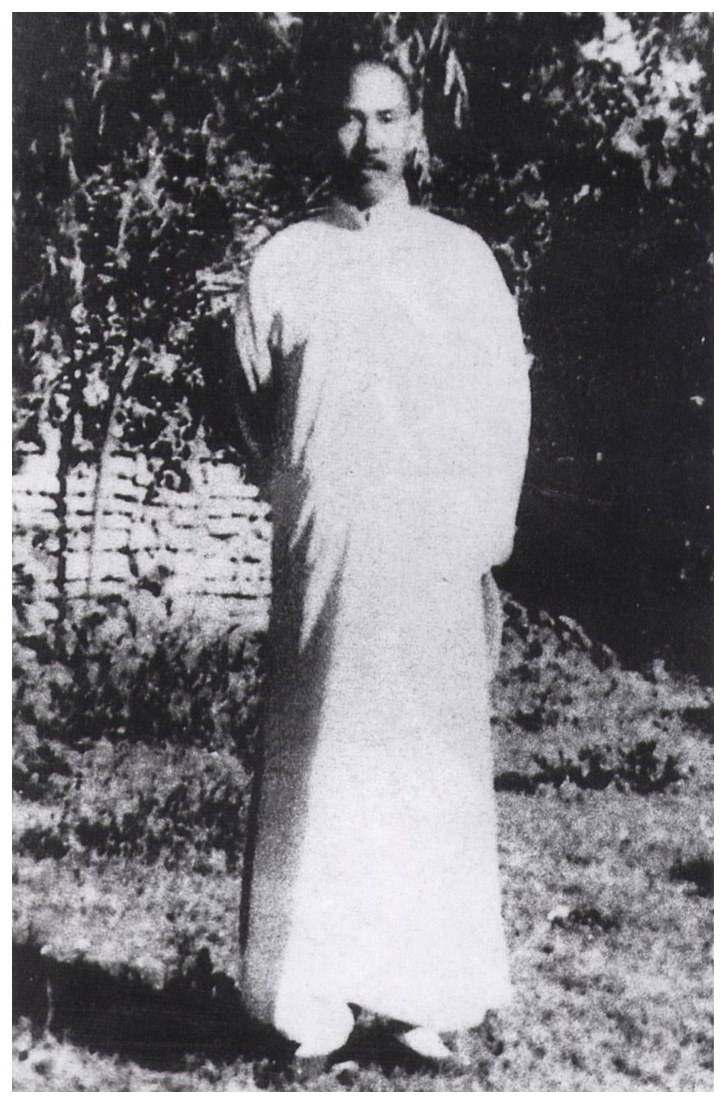
Somebody posted a quote by (founder of Yi Quan) Wang Xiang Zhai from his 1940s interview containing his thoughts on Tai Chi. It is pretty clear, unambiguous and to the point. Have a read:
Wang Xiang Zhai on Taijiquan (from an early 1940’s interview):As masters of the original Taijiquan, I should recommend the Yang brothers Shouhou and Chengfu. They are my friends, and I know that their Taiji has some knowledge of mechanics. But out of one hundred students, not even one gains its essence…and even then, it is still one-sided, because the skills of intuitive perception died out a long time ago. Originally, Taiji consisted of three fists, Wang Zongyue changed it into thirteen postures, and it was later embellished into as much as one hundred and fifty postures. This is the cause of the distortion.Sticking to mechanical movements, seeking beautiful postures and mistaking it for the glory of martial arts…that is terrible. Such a person cannot comprehend boxing for life. If a man of insight sees such a performance, he will feel sick for ten days.As a means of health preservation, Taijiquan restrains the spirit, and brings discomfort to its practitioner. For combat, it harms the practitioner’s limbs and trunk, and causes a useful body to become a mechanical and stiff thing…it’s nothing more than a waste of time.As for the training method—a punch with the fist here, a slap with the palm there, a kick to the left, and another one to the right—it is pitiful and laughable.As for dealing with an enemy in a fight: please do not even consider it. So ruined is this boxing that it has become useless. There are many more things, but I feel embarrassed to say them.
He doesn’t think much of Tai Chi, but there are some things to consider.
Wang was building a brand – Yi Quan – in a commercial setting. Setting out how you are different to/better than your competition is the first stage of building a brand.
2. This “three old fists” idea of history I don’t put much stock in. I think it’s a reference to the three old fists of Xin Yi (info on Jarek’s website), which he is therefore assuming as the origin of Tai Chi Chuan, but there’s not much of a link there that I can see. Or if there is, it’s very tenuous.
3. I think he’s criticising the Tai Chi training method, more than the art. He seems to hold the Yang brothers in high regard, but it’s their students and training methods he thinks are flawed. Wang was never a fan of forms training.
4. I think we need to consider what was happening in China in 1940. China has never (and still doesn’t) had a free press. If this was published it would conform to the political direction of the day.
From Wikipedia:
“In 1940, the Japanese set up the collaborationistWang Jingwei regime, with its capital in Nanking, which proclaimed itself the legitimate “Republic of China” in opposition to Chiang Kai-shek’s government, although its claims were significantly hampered due to its being a puppet state controlling limited amounts of territory.
The United Front between the Kuomintang and the CCP had salutary effects for the beleaguered CCP, despite Japan’s steady territorial gains in northern China, the coastal regions and the rich Yangtze River Valley in central China. After 1940, conflicts between the Kuomintang and Communists became more frequent in the areas not under Japanese control. The Communists expanded their influence wherever opportunities presented themselves through mass organizations, administrative reforms and the land- and tax-reform measures favoring the peasants and, the spread of their organizational network, while the Kuomintang attempted to neutralize the spread of Communist influence. Meanwhile, northern China was infiltrated politically by Japanese politicians in Manchukuo using facilities such as the Wei Huang Gong.”
So while all this conflict with Japan is going on I think the general trend is towards westernising and modernising China, leaving behind the older traditions that had held China back. This interview – looking towards newer scientific methods of martial arts – is in keeping with that trend. Japan was also very into adopting western military methods and building an empire, like the British had.
5. Both Yang Shao-Hou and Yang Cheng-Fu died in 1936, yet Wang is talking about them as if they are still alive in the 1940s, so something doesn’t add up. This interview is either doctored, or was done a long time before it was published in the 1940s.
6. You can get a better idea of his larger themes by reading the whole interview.
Byron Jacobs is a teacher of Xing Yi and Bagua based in Beijing, China. He’s a student of the famous Shifu Di Guoyong and is heavily involved in the martial arts scene in Beijing. As well as training traditional martial arts he’s also a BJJ practitioner and competitor.
In this wide ranging discussion we talk about training Xing Yi, Bagua and Tai Chi and whether Wu Shu will ever get into the Olympics. We also find out what it was like to train martial arts in Beijing during the Corona virus pandemic, and what the Chinese BJJ and MMA scene is like.







 The Tai Chi Notebook