Doing both BJJ and Tai Chi I love seeing moves from one art crop up in the other. Imagine my surprise when I happened across this BJJ seminar clip where the coach seems to be cycling unawares through a variety of Tai Chi moves.
At one point he says that one of the moves looks like “some karate bullshit that looks silly but works”, which is funny because you could describe Tai Chi like that as well 🙂
If you do Tai Chi or Bagua or pretty much any long fist style Chinese martial art, or probably Aikido, you’ll recognise these moves. I’ll give them Tai Chi names:
Breakdown
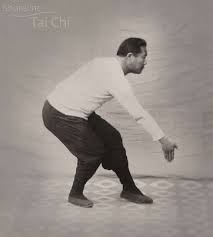
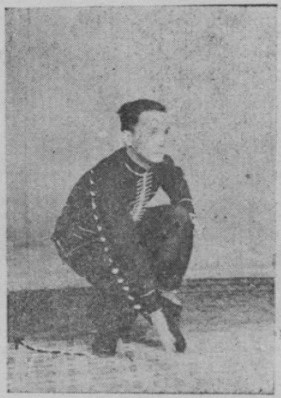
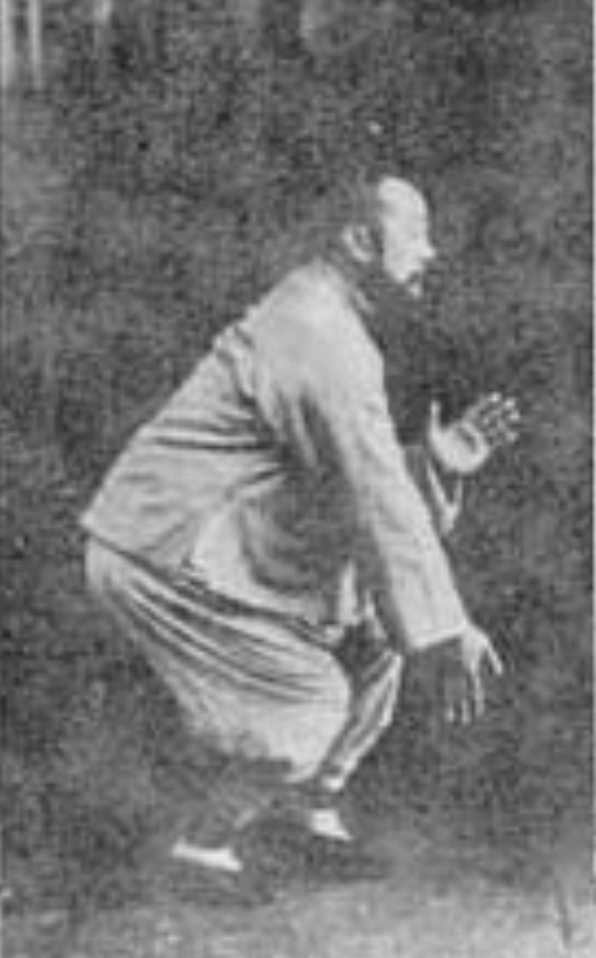
It starts with a grip break, that is similar to Hidden Hand Punch from Chen style (0.00- 4.00) The first technique from here is like Needle at Sea Bottom (4.17- 6.15) The second is like Diagonal Flying (6.15 – 9.20)
After that it becomes more traditional wrestling/judo takedowns, but it was nice to see some Tai Chi appearing fora minute there.
While the rest of the video is much more of the usual jiu-jitsu fair, the initial positions have a strong similarity to Tai Chi moves, and could definitely help Tai Chi practitioners become more aware to the martial potential of Needle at Sea Bottom and Diagonal Flying.
The latest episode of my Tai Chi Notebook podcast is slightly different to a regular episode. There isn’t a guest, but that doesn’t mean I’m entirely alone…
This episode is brought to you using the power of artificial intelligence. I fed a recent blog post about the Five Points of Control into Google’s NotebookLM, an AI that produces a podcast based on your article, just to see what would happen and the result was so good that I decided to put it out as a real episode!
I came across an interesting video by Ed Hines of i-Bagua.com recently that discussed some general principles of throws and takedowns. There is some good information here, especially about dead angles, and base. Have a watch:
Of course, in my ear I can hear my BJJ friend saying it’s all nonsense, “why not just do wrestling?”, or “he’s doing zero hand fighting!”. My friend tends to think that everything you can know, or ever want to know, about throwing and standup grappling is already inside wrestling.
He probably has a point, and a lot of the clever ‘internal’ things that Tai Chi teachers demonstrate are really just found in wrestling basics, or are obvious if you do wrestling. But here’s the thing – not everybody wants to do wrestling or even can do wrestling! It’s time-intensive hard, physical work, from which you will probably get injured, and, frankly, it’s for young people, not anybody over the age of 30. Not to mention that you’ll also need to invest in a good quality BJJ mat for grappling training.
If you’re going to approach takedowns without having the time or energy required to learn wrestling, then you’re going to need a softer approach. Oh, hello internal arts.
How to defend everything
I wonder if you’ve ever seen the video “how to defend everything” by Chris Paines on YouTube? (It won’t embed, so I’ve had to link it). It’s about BJJ, not internal arts, and focused ground work, not standing, but those principles he’s expounding, I feel, are universal to all grappling, and they’ve really changed my approach to takedowns. It’s also very simple. Simple is good – simple is practical.
At 50 minutes it’s quite a long video, and some of the important points don’t happen until near the end, so I’ll give you a quick summary: In a nutshell, there are 5 parts of the human body that you need to access in at least one place to achieve a throw or takedown.
Part 1. Back of the head, Parts 2-3. Armpits and Parts 4-5. Back of the knees.
(back of knee area extends down to ankle, armpit area extends down to hip).
When I do takedowns I just keep looking to insert a part of my body (arm/hand/foot/head/whatever) into one of those places. I just keep spamming it as an attack. If you keep doing that then eventually you manage to ‘own’ one of those places and a takedown will sort of present itself, especially if you get more than one.
You can analyse any throw on YouTube and you’ll find that the person who did the throw got some part of their body into at least one of those places to make it happen. Now, that might mean that the model being used is too general (i.e. it covers a lot of the body!), however, I think it’s still a useful model if you want to work on defence (which people rarely do!)
If you’re doing some grappling and you get taken down, then replay what happened in your mind – you will have let your opponent into one of the 5 spaces for too long. Long enough for them to get a takedown on you. The answer to preventing the takedown then becomes about reclaiming control over those 5 points of your body, rather than trying to do some sort of pre-scripted counter to the throw.
N.B. You can look at standing on the foot as a possible exception to these rules, however… that doesn’t tend to work in a pure grappling environment, unless you also get one of the other 5 as well. Standing on a foot and striking somebody however is a different beast – it’s much more effective. It’s the same with standing wrist locks… they can work, but 9 times out of 10 they won’t – i.e. they are very low percentage, and almost certainly don’t work against experienced people. Your time is better spent trying to get one of the 5 control points. (Apologies to Aikido 🙂 )
N.B. 2 – But what about the gi or wrestling jacket? Well, think of it this way, a collar grip is simply a very effective lever to the under armpit area, so when you grip the collar, you are effectively cheating because it’s giving you easy access to their armpit area. It’s why, when we go for chokes we grip deep on the collar, under the ear, but when we go for throws we tend to grip much lower down, so that the lever to the armpit is stronger.
When Josh Robenblatt got to the age of 32 and realised he wanted to fight in an MMA match, he had to confront a lot of physical problems as well as inner demons before he set foot inside the cage. While the physicality of fighting is explored, this book is mostly about Josh’s internal struggles as a lifelong pacifist coming to terms with the casual approach to violence that MMA engenders. For many people Josh’s exact internal struggles wouldn’t exist (especially his frequent reference to his Jewish ancestry), but in a general sense they do exist in some form in all of us, and that’s what makes this book fascinating for anybody who trains in a martial art. It’s also a rare insight into the realities of training for an MMA fight – how much training is actually required, dealing with injuries, how it affects your relationships with friends and family and what the brutal realities of weight cutting are all about.
Josh writes well, particularly when it comes to articulating his inner thoughts on the subject of dealing with actual violence, either as a participant or an observer, and the transformative, almost transcendent, power that coming to terms with it often provides. I found he had managed to put into words something I’d felt before in my own life, but never stopped long enough to really think about and verbalise. As such ‘Why We Fight’ kept my attention constantly until the end, and you do become drawn into his underdog story and intrigued to find out what happens when he finally gets into that MMA match. I won’t spoil it here.
I’m always fascinated by British martial arts, because, well, it’s where I’m from. Some of them have survived in small communities – mainly wrestling – and a lot more of it has been recreated from old manuals, which is mainly the weapons systems, which HEMA has promoted.
The most famous one is Catch Wrestling, which thanks to the famous Billy Robinson has an actual unbroken lineage from today that reaches back into the past. Billy Robinson trained in the famous Snake Pit in Wigan under Billy Riley. You can see them at the Snake Pit in this famous documentary:
I’d recommend giving the latest episode of the Strenuous Life Podcast featuring Oz Austwick of English martial arts a listen. It’s about the subject of British martial arts, and what we have left. Here are the show notes:
“In episode 395 of The Strenuous Life Podcast I talk to Oz Austwick, who has extensively studied armed and unarmed combat systems in England and Europe. Today we focus on the historical wrestling systems of England…
Cornish, Lancashire, Devonshire, Cumberland and Westmoreland wrestling and catchwrestling
The influence of Japanese Judo and Jiu-Jitsu on English Wrestling
The great Billy Robinson and his influence on Kazushi Sakuraba
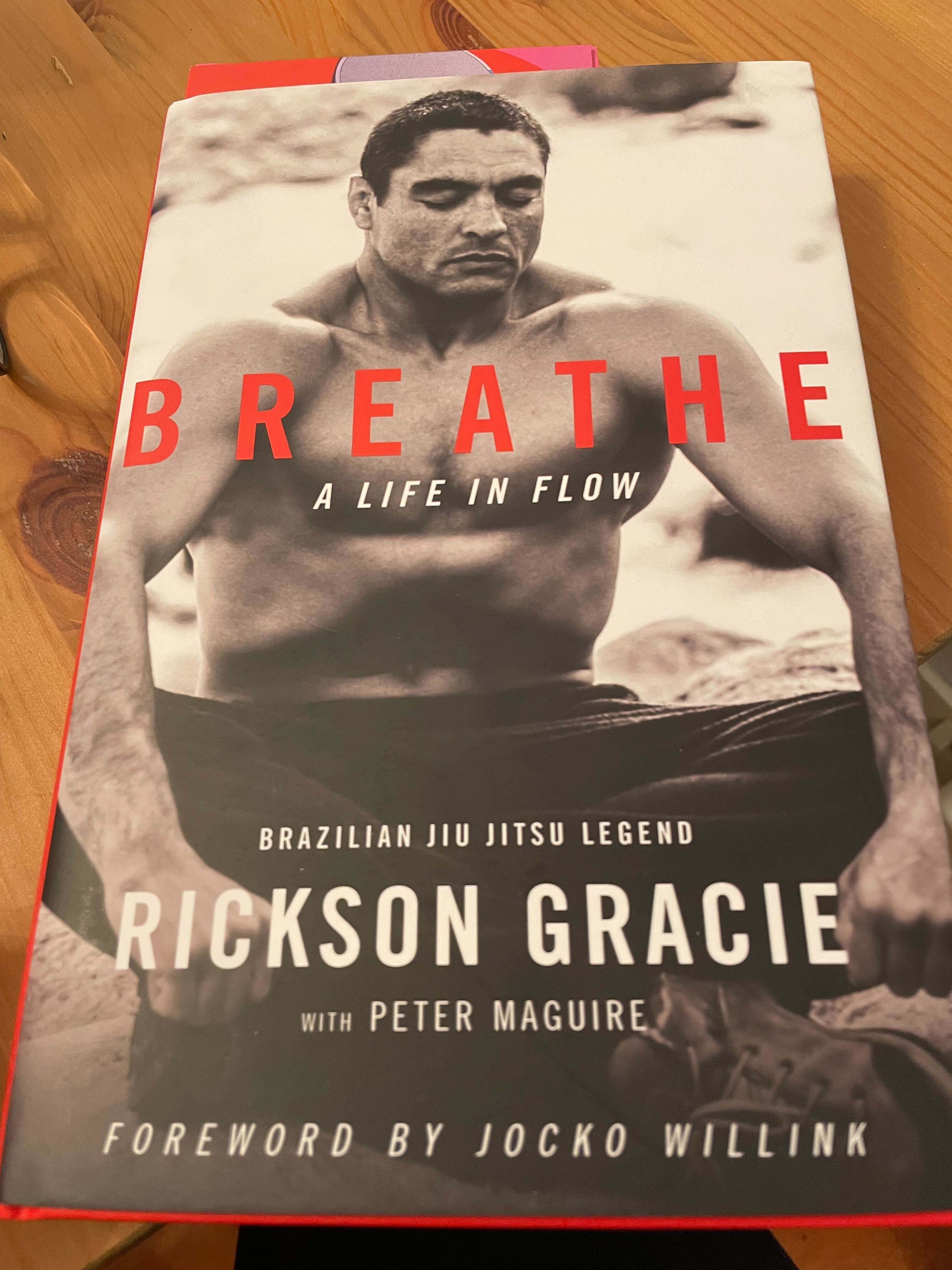
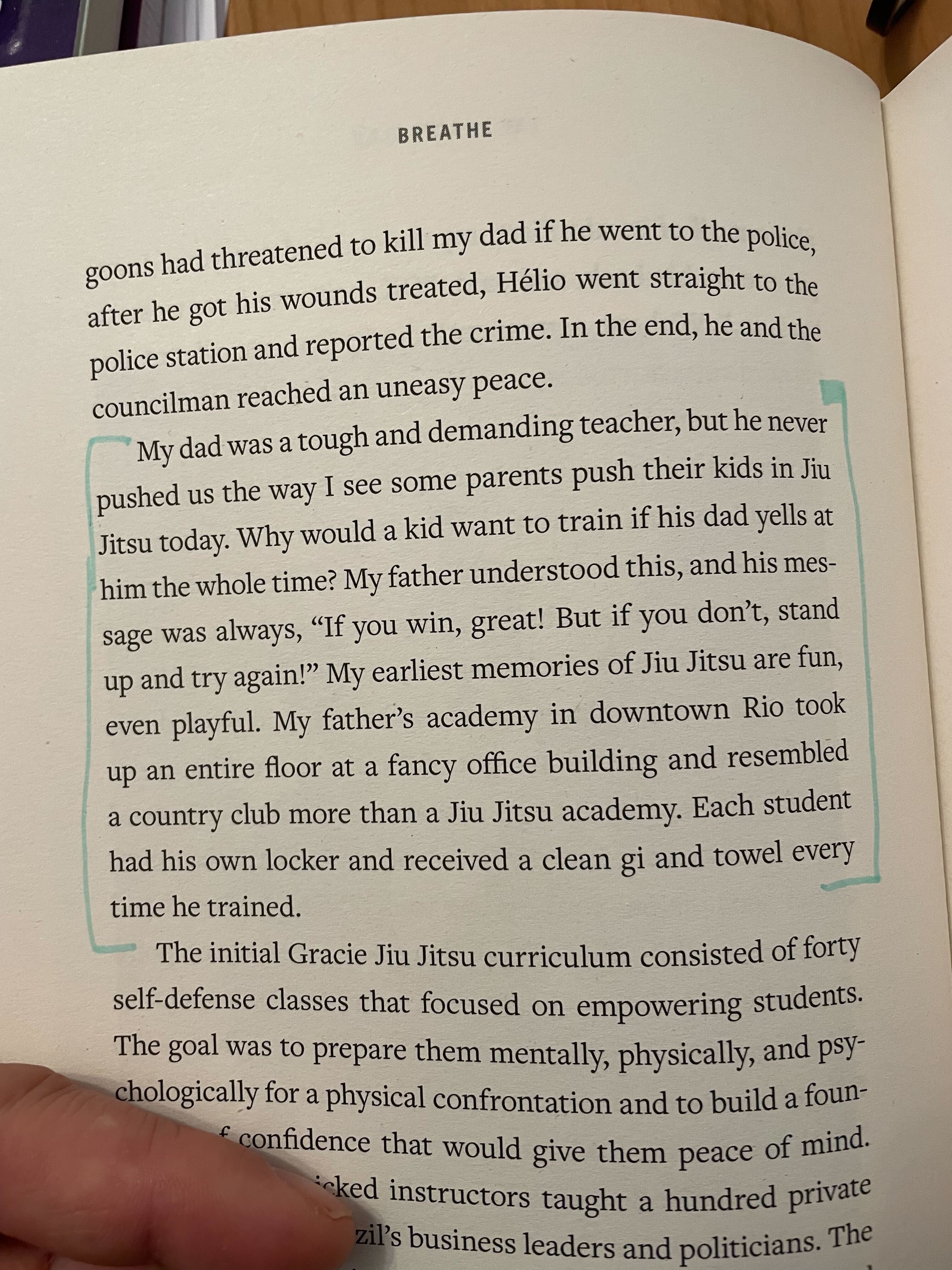
I’ve been finally getting around to reading Breathe by Rickson Gracie, which I got for Christmas last year, just before Christmas, this year 🙂 I found this paragraph near the start that resonated with me.
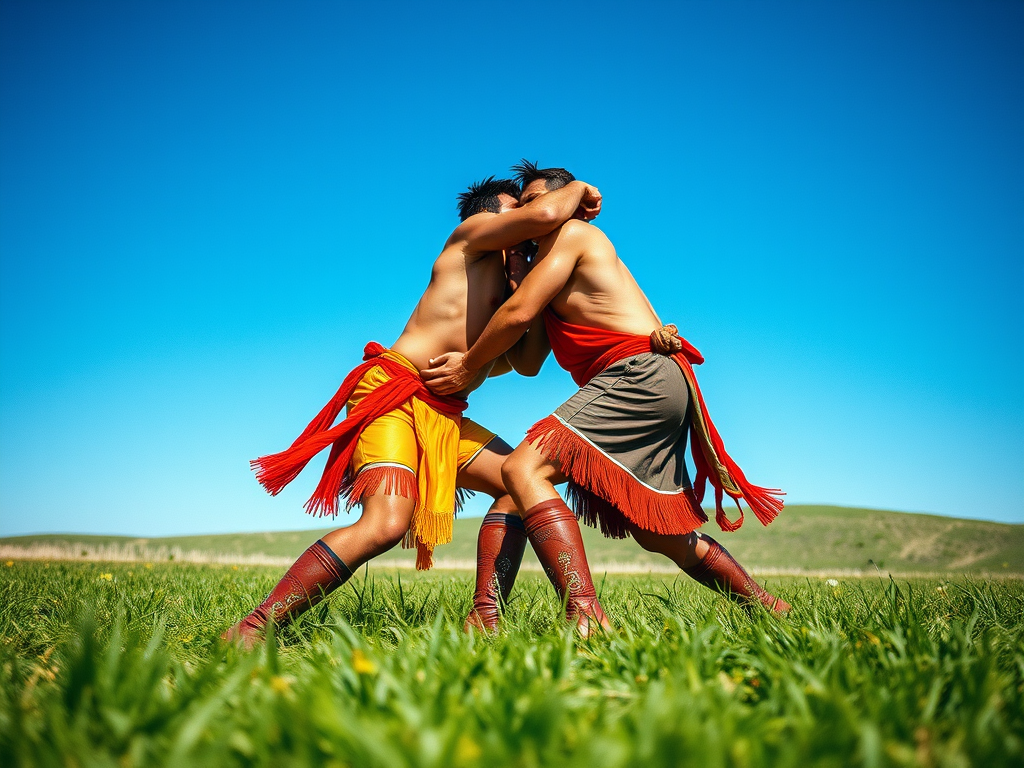
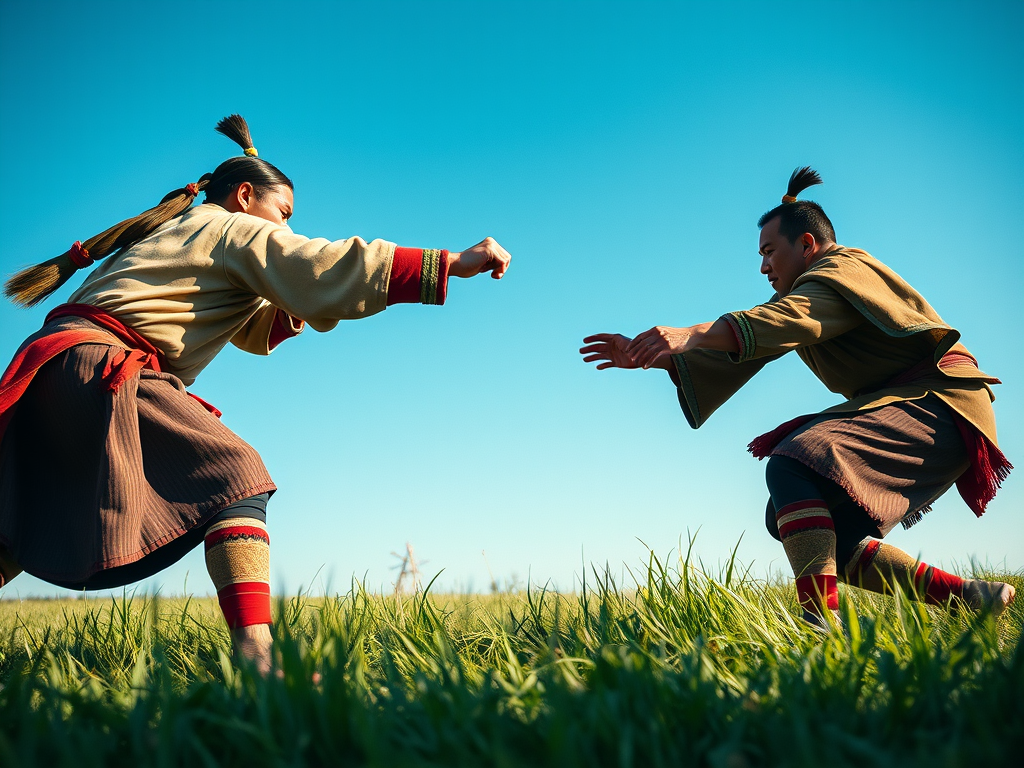
Over on the Heretics podcast Damon frequently talks about one of his great loves, Mongolian wrestling, and how they create the same relaxed, nurturing training environment, especially for children who start learning through games and just messing around, rather than structured lessons. The child’s natural sense of curiosity and playfulness is encouraged, not shut down, which seems to be the rule in many other ‘martial’ training systems.
The results of this type of training, is that Sumo at the highest levels is dominated by Mongolian-born Sumo wrestlers. The Japanese approach to Sumo training couldn’t be more different to the Mongolian wrestling approach, it is competitive, austere and harsh. The anecdotal evidence is that a more relaxed approach is actually better.
I’m not an expert of Sumo, or even follow it, so I don’t know, but I believe the best Sumo wrestler of all time is generally believed to be Hakuho Sho. Sho was born Mönkhbatyn Davaajargal in Mongolia. If you watch a few of his matches you can see that’s he’s a master of slipping and evading:
Salvatore Pace, or Salvo for short is a 3rd degree black belt in Brazilian Jiujitsu and owner of Gracie Barra Bath, the Head Quarters of Gracie Barra in the South West of the UK, Gracie Barra West Wilts and co-owner of Gracie Barra Gillingham. He is a two time NAGA European Champion and Grappler’s Quest champion. Salvo grew up in Sicily and had a passion for martial arts as a young boy, practicing everything he could get his hands on, from boxing and Kung Fu to wrestling, and then MMA in the emerging combat sports scene in the UK, but it was his first encounter with Brazilian Jiujitsu and his main teacher Professor Carlos Lemos Jnr, that changed his life forever and put him on a plane to Brazil and then the USA, where he trained with some of the biggest names in the sport.
Returning to the UK Salvo had a dream of teaching jiujitsu for a living and set up Gracie Barra Bath in 2007, back when most people hadn’t even heard of Brazilian jiujitsu. And that’s where our paths crossed, I first met Salvo way back in 2011 and I’ve been with him ever since, getting all my belts from white to black from his hands and it’s been a pleasure to watch his students and academy grow and develop and expand to new locations around the South West.
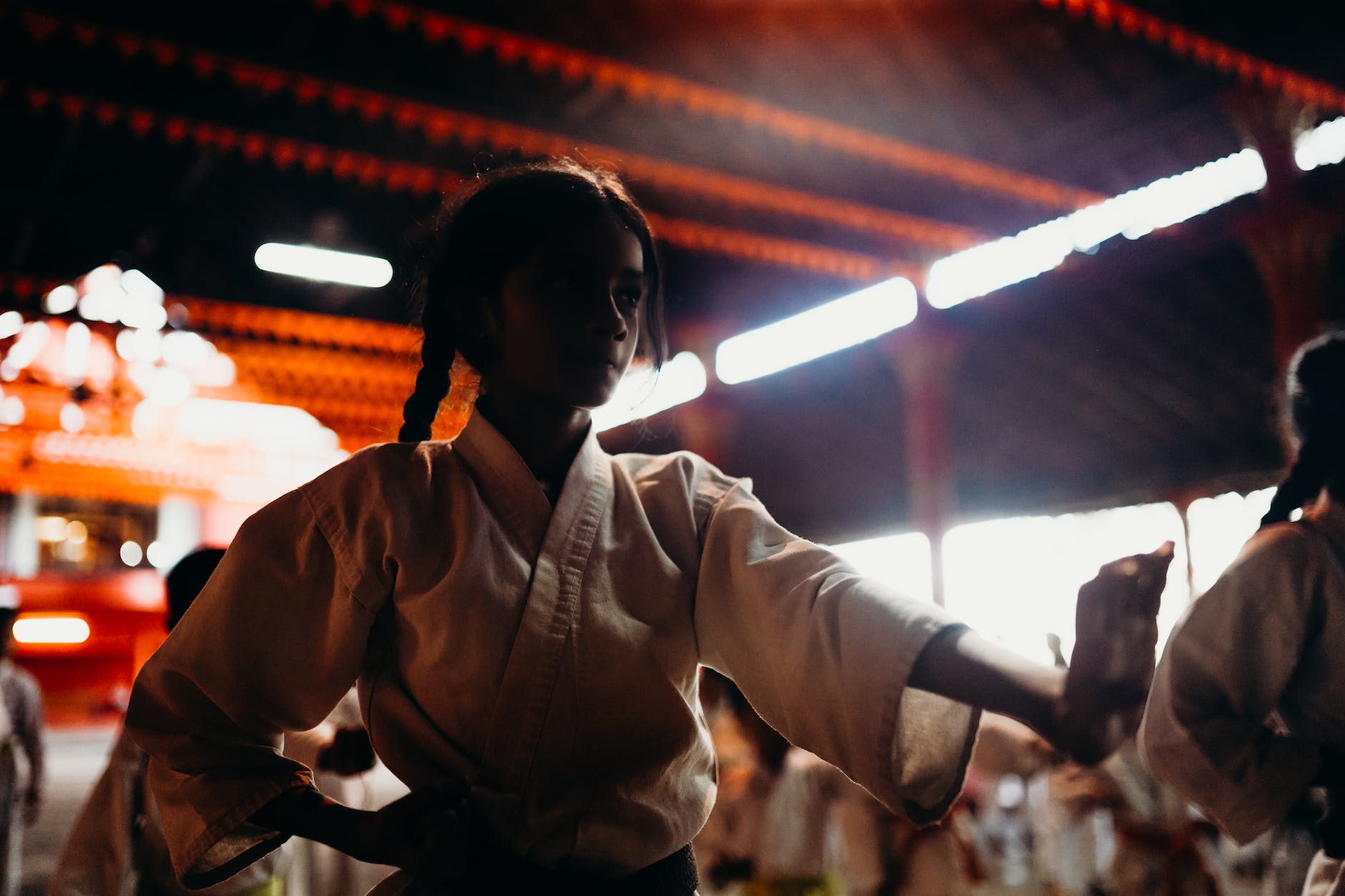
Everybody was kung fu fighting! Photo by cottonbro on Pexels.com
It’s time to say something slightly controversial, and I apologise in advance for the click-baity feel of the headline, but there’s no way to sum up a nuanced argument like this in less than 10 words. The thing is that there’s a real fascination these days with delving into Karate kata or Kung Fu forms and discovering the ‘real’ applications, hidden in plain sight, which are, always, wrestling moves, which were hidden away in the murky depths of time for vague and unspecified reasons.
This marital arts version of a conspiracy theory is a really popular idea at the moment, because, frankly, the wresting interpretations work a lot better than most of the applications of striking you see in these arts. However, that doesn’t mean its true!
Here’s a current example:
No, no, Kung Fu is NOT 90% wrestling. It’s just not!
Now look, I’m not saying that there are no throwing or takedown applications to Karate and Kung Fu moves – of course there are! But just because you can re-engineer some wrestling applications out of what are obviously supposed to be strikes, does not mean that those are the ‘original’ or ‘real’ applications. They are certainly an interpretation, but to claim some sort of historical precedent is going too far for me.
I would call my view somewhat heretical to modern orthodoxy based on the amount of comments I see under videos of people revealing the ‘real’ application of Kung Fu or Karate moves. It’s almost 100% positive, along the lines of “finally this move makes sense!”. I refer you to my previous point – just because these moves work better than the wacky traditional blocking and striking application usually taught does not mean these are the original applications. It’s a logical fallacy. A better question would be to ask, “why did they simplify or dumb these forms down so much that they’re unusable?” But I guess that’s a different topic…
Another reason why this wrestling-first approach is so popular is that learning real grappling or wrestling is just too much like hard work for some people. You’re going to need a working pair of knees and a body that’s probably 20-30 years younger than the one you’ve got, especially if you’re starting grappling from scratch. For the ageing martial artist the idea that they can just keep doing the katas or forms that they already know and now they are somehow also doing grappling is very tempting. As somebody on the wrong side of 50 I can see the attraction of this idea myself! But like all shortcuts, it cuts out the years of experience and hard work you’re going to need to put in if you want something you can use.
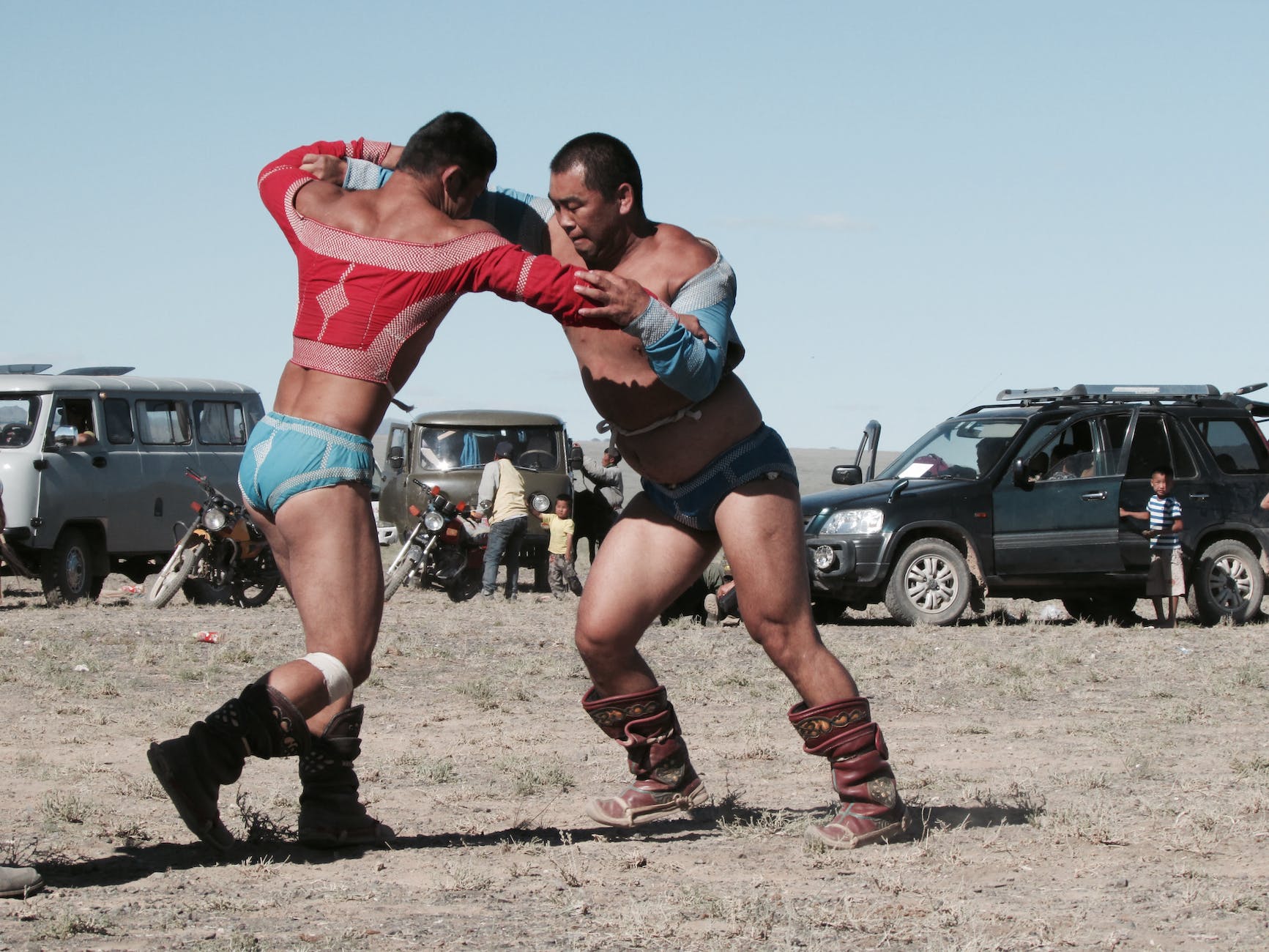
Wresting is, of course, older than martial arts, like Karate or Wing Chun, by thousands of years. This is not disputed. It seems that wherever men or women gathered, in any country, and conflicts needed to be resolved, wrestling naturally appeared as a way for this to happen, or as a way to keep people entertained, build a community connection, or in good physical shape for battle. It was a multi-purposed activity. For example, there has been Mongolian Wrestling for pretty much as long as there have been Mongolians. And it’s a tradition that has survived.
Modern Mongolian wrestlers. Photo by Agostino Toselli on Pexels.com
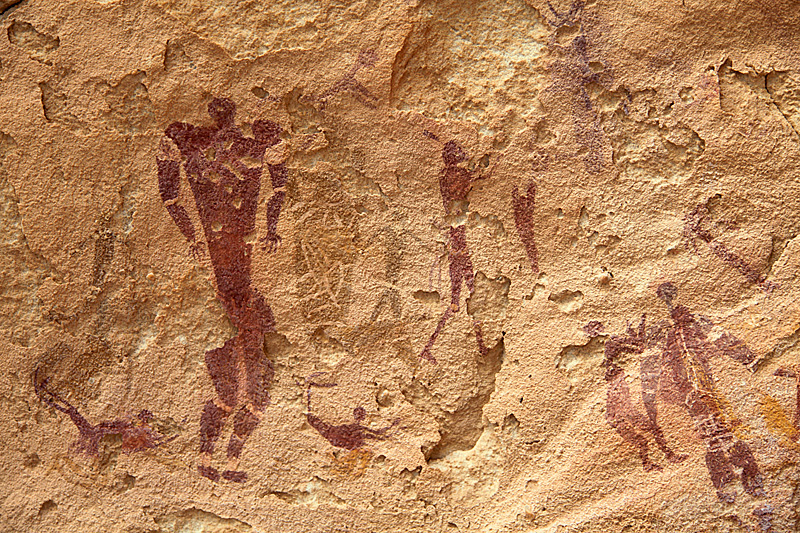
Cave paintings have been found in the Lascaux caves in France that have been suggested to depict sprinting and wrestling in the Upper Paleolithic time period, which is around 15,300 years ago.
Cave man wrestling?
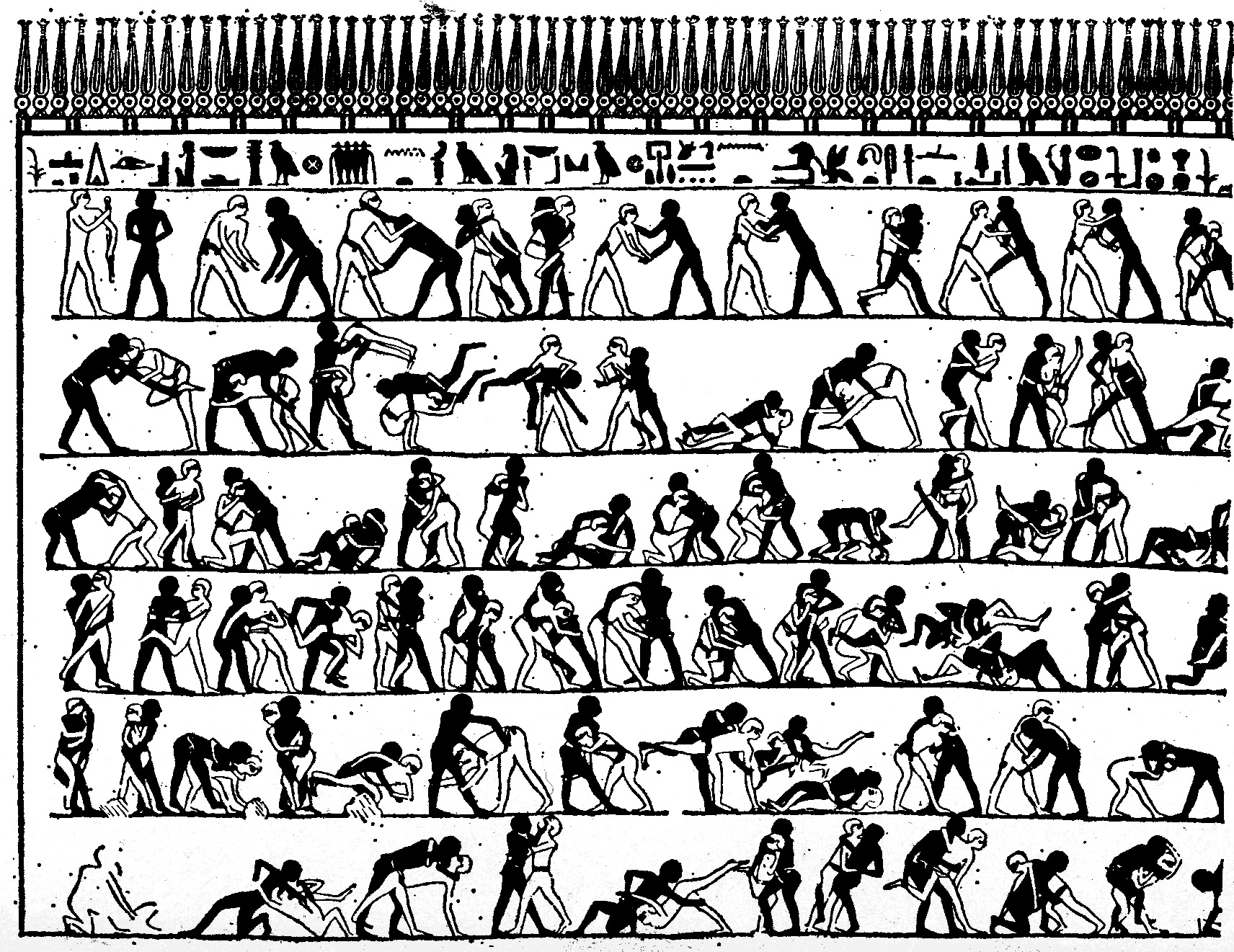
This Egyptian burial chamber mural from Khnumhotep and Niankhkhnum’s tomb dates to aroudn 2400 BC.
Wrestle like an Ancient Egyptian.
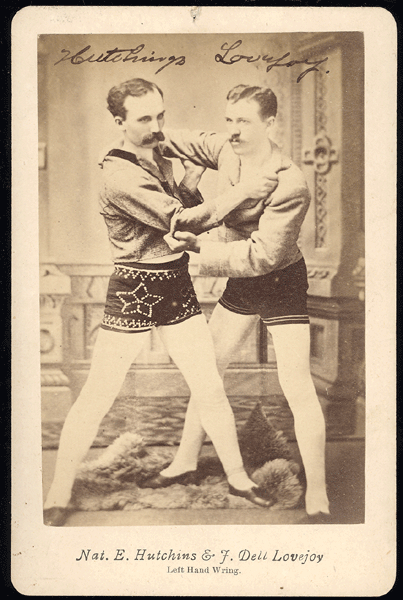
Almost every traditional culture has, or had, some form of indigenous wrestling. Many cultures that have evolved into living in villages, then towns, then cities have managed to maintain their wrestling traditions, even to the modern day. But most we have lost. For example, Collar and Elbow Wrestling was hugely popular in Ireland in the 19th century and spread to America where it again proved hugely popular with thousands of people coming to watch matches (even President Abraham Lincoln was a practitioner!)
Collar and elbow from the 1880s.
But huge changes in where people lived and worked lead to its demise until it vanished completely even in its native country. It seems that whenever a country experiences its industrial revolution, requiring massive shifts in population distribution, the folk traditions tend to die off, and wrestling is a folk tradition.
But that does not mean it is the original of Karate and Kung Fu.
I appreciate that you might not agree with me, so let me give you an example.
This video is comparing a karate technique to a Shuai jiao wrestling throw:
Yes, the movements have a physical similarity, but you are never – never! – going to learn how to do that throw by doing that kata. I mean, you could make that work so long as you only wrestle fellow karate practitioners and never ever get in a match with somebody who actually does wrestling. Then you’ll be fine. 🙂 Was this the original application of this kata? Who knows? But to assume ‘yes, it must be wrestling’ is such an illogical leap that to me it’s going too far. If you want to learn wresting, then just train wrestling. It’s that simple.
Here’s the Karate Nerd with a similar take on Karate Kata. Now, I quite like the Karate Nerd, so this is not an attack on him, but rather just an example of the current trend in marital arts regarding wresting applications and where it’s going.
Anyway, I feel like I’ve made my point and I’m just repeating myself now, so I’ll leave it there. But let me just recap one last time. Yes, there are some wrestling application in Karate and Kung Fu, yes you can re-engineer pretty much any movement to make it into a wrestling move, and no that does not mean that “it’s all wrestling“.
You know those wooden toys that have cutouts of shapes and a hammer for the kids to bang the right shape into the right hole? Square, circle, star, that sort of thing.
Martial arts techniques are a lot like that. You can have the best technique in the world, but if you’re doing it at the wrong time it’s like trying to hammer the wrong shape into the wrong hole. It ‘ain’t going to work not matter how hard you try…
Throws are a really good example of this. Throws work best when you try and throw the person in the direction they are already going. For example, if a person is basing backwards (moving their weight to their heels and sinking down) then it’s going to be really tough to throw them forward with say, a hip throw. Of course, if you’re a lot heavier and bigger than your opponent then it becomes possible, but we want good technique here. Good technique would be to take them backwards with some sort of inside trip.
Video: A simple wrestling chain that exemplifies the principle.
In internal martial arts we call that ability to sense where the other person’s weight and direction is going ‘sensitivity’. A lot of times people in wrestling and throwing arts don’t train sensitivity as a separate quality, you just kind of pick it up as you go through drills or live sparring against real resisting people. In martial arts like Tai Chi you can spend a lot of time specifically training sensitivity where it’s called ting jin – to listen. I’m pretty sure I used to think that the more intellectual Tai Chi approach was superior, but now I’m not so sure. If you naturally acquire sensitivity over long periods of time through resistant sparring then you kind of own it in an authentic way. It’s yours. You worked for it and its real. I’m not saying you can’t get that through the push hands approach, but the problem with shortcuts is that they’re exactly that – a shortcut. Something is always missing. You need to put in the hard physical miles in if you want to get something tangible in marital arts. I’m not sure there are really shortcut to some of these things.
My martial arts mentor Damon Smith, who I do the Heretics podcast with, often says there is no such thing as good technique, there is only appropriate technique. He’s talking about banging the right shape into the right hole at the right time.
Our new podcast is out! I talk warriorship with the esteemed Matthew Kreuger of the Walking with the Tengu podcast, as part of the #warriorshipconversing project started by Kung Fu Conversations podcast. We also talk about Shuai Jiao, Iaido, BJJ and professional wrestling. You’ll find us on iTunes and Spotify. Search for The Tai Chi Notebook podcast. Enjoy!


 The Tai Chi Notebook