The connections between Tai Chi and Taoism are at once obvious (the Tai Chi symbol is used extensively in Taoism) and also sketchy at best (there is no historical lineage connection).
You see a lot of Taoist priests (or at least Chinese people wearing Taoist priest robes) on Wudang mountain, which has traditionally been associated with Taoism, teaching people Tai Chi, Xing Yi and Bagua (the internal arts) in the lineage of Chang San Feng, the mythical Taoist who is traditionally associated with the origins of Tai Chi Chuan, but whose historical existence seems difficult to prove.
However, how long these modern days Taoists have been there teaching people martial arts I’m not sure. The fact that their ‘ancient’ martial arts look remarkably similar to the modern “wu shu” versions created in Beijing makes them seem highly suspect to me…
But while a direct connection between Taoism and Tai Chi may be difficult to prove, they clearly employ the similar ideas. Take for instance the idea of Wu Wei – the ever elusive “doing without doing” of Taoism.
If you take a look at the Tai Chi Classics you see that while they don’t mention the phrase “Wu Wei” itself the strategy of the art described fits it like a glove. Take the following quotes from the Treatise on Tai Chi Chuan:
It is not excessive or deficient;
it follows a bending, adheres to an extension.
When the opponent is hard and I am soft,
it is called tsou [yielding].
When I follow the opponent and he becomes backed up,
it is called nian [sticking].
If the opponent’s movement is quick,
then quickly respond;
if his movement is slow,
then follow slowly.
It seems Taoism is having something of a resurgence, as this article reveals, as a philosophy for dealing with the anxiety-inducing modern world. Even the rock star intellectual de jour, Jordan Peterson, is getting in on the act.
From Alan Watts back in the ’60s to Jordan Peterson in the modern age, the Western intellectual has had a recurring fascination with Taoist thought. Particularly with the concepts of Wu Wei and the Tao Te Ching. In fact, the book that first got me interested in Tai Chi years ago was The Tao of Pooh by Benjamin Hoff.
I think all this interest in Taoism again is generally a good thing. Let’s see where it leads.
There are things you can only work on in your Tai Chi training if you already have a certain amount of practice under your belt. Take for example the concept of continuous movement.
The original Classics say Tai Chi Chuan is “like a great river rolling on unceasingly.”
Sure, that’s easy to say, but is it easy to do?
The way Tai Chi Chuan is taught you inevitably learn the form as a series of individual movements linked together, with inevitable stops and starts. Then, after you get better at them, you can start to practice the form as one continuous flowing motion, the same way a piece of Chinese calligraphy is meant to be one continuous brush stroke (disclaimer: I known nothing about calligraphy, I’m just assuming this to be true).
In Tai Chi, the practice of learning to move so that everything is connected together smoothly at a constant rate, without speeding up or slowing down, is a skill in itself. If you can do it you still aren’t “doing Tai Chi” yet, not by a long shot, but you are learning one of the important pieces to the puzzle. Without having done enough form practice to not have to worry about what comes next, or about forgetting where you are, this skill simply cannot be developed.
Tai Chi forms are usually pretty long, so memorising an entire form, and then being able to perform it at a constant rate, without breaks or imperfections to that movement, is a significant undertaking. Add to that the fact that a lot of the body skills you need for Tai Chi are better worked on as repeated individual exercises (silk reeling exercises for example), and you find the idea of practicing a long, often difficult, form is slowly falling out of favour.
I see this a lot. The modern idea (which I think has a lot to do with influence from the ever-growing field of sports science) is that you really don’t need to practice a form at all. In fact, your time would be better spent on individual conditioning exercises.
So why do we have a Tai Chi form in the first place? That’s a good question to ask.
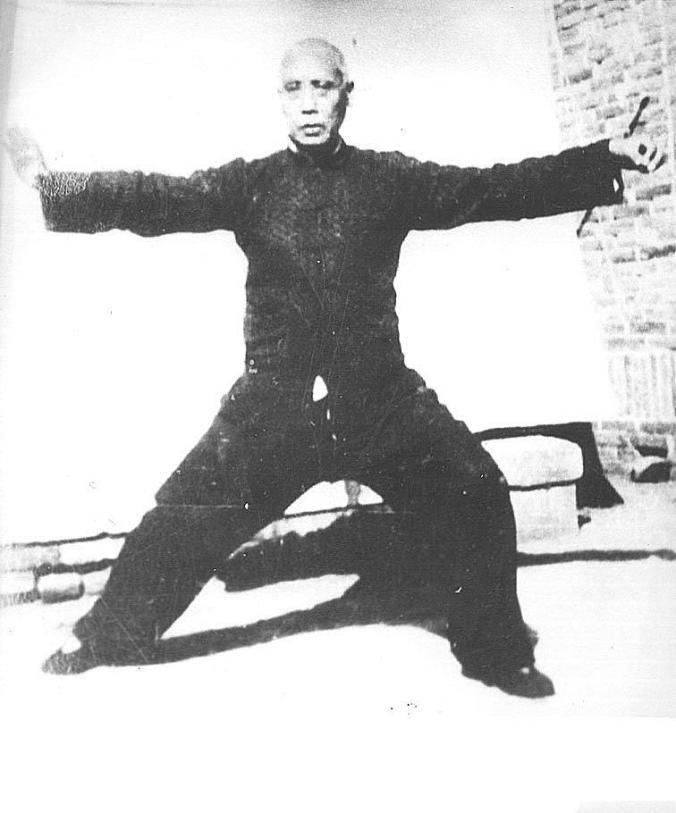
Chen Fa-Ke performing his Tai Chi form.
Why do we have a form?
The first thing to notice about the Tai Chi form is that it is designed to be performed. It has a start, a middle, and an end. This has led some people to think that its origins might lie in other performance arts, like ancient Chinese religious rituals, which were used for all sorts of reasons (banishing spirits, pacifying the ancestors, blessing the crops, etc) since these were often done as a type of performance at annual festivals, and also contained movements that were martial in nature, often done by priests carrying swords. In ancient times when war was fought using steel weapons these rituals would be performed before battles, to summon the spirits of ancient warriors to help assure a victory.
One of the leaders in this particular field of inquiry is Scott Phillips, who has written extensively about these performance aspects of Tai Chi and speculated about its origins in his book Possible Origins. Of course, others reject his theories entirely, I think mainly because none of the famous Tai Chi families, like the Chens or Yangs, share the same ideas on the origins of Tai Chi, and also because I just don’t think that people who are practicing Tai Chi as a martial art like the idea that its origins might lie in something that doesn’t feel very pugilistic in nature. Or maybe they just have an irrational fear of dance 🙂
Perhaps, the reason why we had a form in the first place, doesn’t really matter. The thing is, it’s here now, and it is still thought of as the defining thing that makes Tai Chi, Tai Chi. Just ask the average person “what is Tai Chi?” and they instantly think of “that thing that Chinese people do in the parks” while moving their hands in a mystical way.
As anyone who has learned a Tai Chi form knows, it’s as much a test of memory and determination as anything physical. So why is the form so long? I can only assume that the effort you have to expel to learn the form is part of the training. Also, as we’ve mentioned already, once the movements are under your belt you get the chance to practice something else with them and develop skills that can’t be practiced without them.
The reason why the art has the name “Tai Chi Chuan” is because it is a physical embodiment of the Yin/Yang symbol – as you go through the form your body goes from open to close to open to close and so on – from yang to yin, to yang to yin, and on and on. Rather than just going through the same movement sequence to practice this, knowing a form gives you the chance of practicing all sorts of variations on this open and close sequence. Perhaps, before you can really understand something, you have to know it inside and out and with all sorts of variations.
One thing I notice is that the majority of “martial artists” seem to have an irrational fear of the dance or entertainment roots of their arts. While we all like to believe that Kung fu originated in the Shaolin temple under the austere eye and strict tutelage of a high-ranking Zen monk, I think we all know that most of these stories are bunk now.
In fact, it seems that most Kung Fu masters were earning a living as street performers. It’s not as glamourous, is it? If you search back in the lineage of Wing Chun, for example, you soon end up at an Opera company – these were traveling entertainers. In Europe we’d call them a circus. A lot of other Kung Fu styles can trace their origins back to particular rituals and festivals where a martial group put on a demonstration. You still see these sorts of things today with Lion dances at festivals. They are always run by a Kung Fu school.
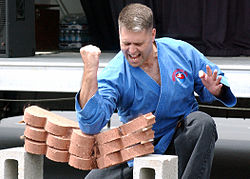
And even today, what do most martial arts groups do to attract new students? They put on a stunning demonstration, usually involving breaking something, again another form of entertainment. The martial arts lend themselves to ‘putting on a show’ so very, very easily.
And don’t forget, these days the most popular martial arts is MMA, which is, after all, a sport done for entertaining large crowds in an arena, in a way that’s very similar to the Roman Gladiator experience.
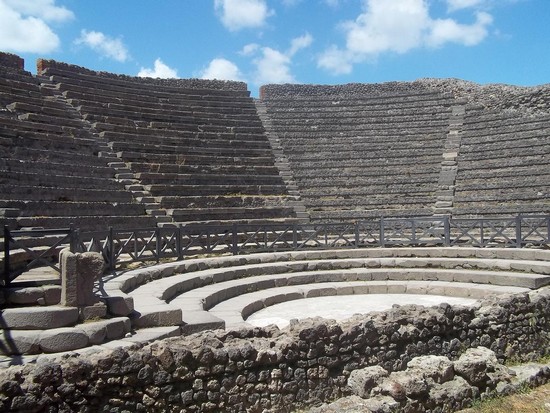
How different is this really to the Roman amphitheater?
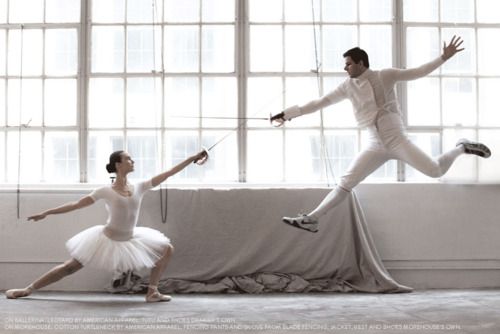
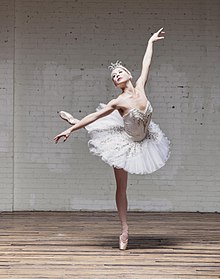
But let’s turn it around and look at Europe’s past, not its present. I’m thinking about that killer martial art known as Ballet 🙂
Our aristocracy’s preferred movement art form came out of its martial art of choice – fencing. The aristocracy was obsessed with fencing, especially to settle disputes. (Is it any wonder our leaders lead us into World War I when this was their preferred method of conflict resolution for centuries?)
But anyway, Ballet, with it’s turned out legs, has clear origins in fencing. As this video shows you:
The connection between movement arts like dance and martial arts is deep, and shouldn’t be dismissed because dance is seen as a more feminine expression these days. In 14th century France, Ballet was a very manly occupation.
Remember, Bruce Lee was a dance champion in Hong Kong 🙂 And don’t forget David Branch, a middleweight and light heavyweight champion of the world, swore by ballet classes.
“The first day I went, it was harder than any workout I’ve ever done,” Branch told wsof.com. “I feel it in my balance. I feel it in my overall physical strength. I feel it everywhere. Just in my posture and I feel like when I get into scrambles in a fight or anything fighting wise that involves entanglement and striking, I feel so strong. It’s natural strength, you know?”
Great video by Chen Zhaosen on putting the internal into your Taijiquan practice so that it becomes Taijiquan not Taiji Gymnastics. Of course, it should already have been there, but we all know that already, right? 🙂 The secrets are all here, hidden in plain sight. Chen Zhaosen on breathing:
The Bruce Lee documentary “I am Bruce Lee” featuring such luminaries as Jon Jones (now disgraced for failing a drug test, but still one of the finest fighters the UFC has ever seem) and my own erstwhile Kung Fu student and author of Mythologies, Paul Bowman.
So, the NHS came to my rescue and after the previous two cancellations and phoned me up a couple of days ago to offer me the operation the next day on short notice. I went for it and this time it actually happened!
I went in at 11 and it was still touch and go until 3.00pm when I got the call to put the gown on (this is the one true sign that your operation is definitely going to go ahead). Surgery (orbital floor repair) all seemed to go really well and they sound very pleased with the result. My eye is a swollen bloody mess at the moment but it already feels more like a normal eye compared to the soggy, sad thing it was turning into, with much freer range of movement of the eyeball. Plus, I’m now bionic 🙂
A couple of comedy moments – they forgot to draw an arrow on my head this time, which made for a funny conversation in pre-surgery and working out that the chirpy porter (they are always chirpy) who took me down knew similar jiujitsu people. Some more comedy escapades with getting a check X-Ray the next day, which ended up with me being literally taken around the houses from one building to another across a street (in a wheelchair), swapping wheelchairs with another team and then finding out the X-Ray machine was broken, so having to go all the way back and find another one.
So, lots of fun and games, but the upshot is, I was broken and the NHS fixed me and I’m very grateful. Now I just need to rest and recover. Thank you for listening, and hopefully, this is the last of my hospital updates and we can all get back to talking about martial arts.
I contacted a nurse who works at the BRI, but will remain anonymous, and got them to read it. They were just as nice as all the staff I’ve talked to before, and very sorry about my situation. It was interesting that the thing that really got them about my post was how a patient has to put their life on hold before going in, and the stress and frustration it causes when the operation is cancelled through no fault of their own. I guess when you see 10, 20, 50 people a day you just don’t have time to consider their lives outside of the immediate medical problem.
They did say one thing that was interesting – “we’re always open to ways to doing things differently”. That got me thinking about ways they could do things differently.
Ok, here’s one very simple thing:
How about you pre-warn the patient that their operation *might* be cancelled. Or, even that there’s a high probability that it *will* be cancelled?
That way we can plan better, and we won’t feel as crushed as we do when the rug is once again pulled from under our feet. I naively had no idea it was even a possibility when I rocked up for my first cancelled surgery.
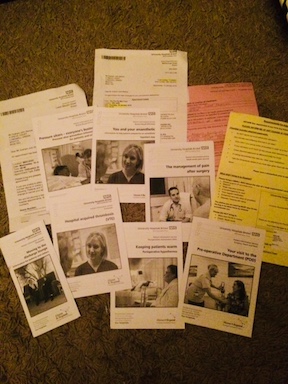
Take a look at this photo – it’s all the info I’ve been sent about my operation.
Here are the headings on the pamphlets: Requirements for admission, Moving to the discharge lounge, Hospital acquired thrombosis, Pressure ulcers – everyone’s business, Your visit to the Pre-operative Department (POD), Keeping patients warm, The management of pain after surgery, Keeping an eye on your alcohol use, You and your anaesthetic.
It’s all about what *you* need to do to make this happen.
Not once, in any of the literature is there a single mention that your operation might be cancelled.
Not once in my surgical consultations was it ever mentioned to me that the operation being cancelled was even a possibility.
Being given hope, only that have it taken away, is a kind of psychological torture, and it needs to be recognised more openly by the NHS.
Just before Christmas, I accidentally clashed heads with somebody while doing sports so hard that I broke the orbital bone underneath my right eye. This is called a “blowout fracture”. He effectively headbutted my eye. Yes, it hurt. A lot. And bled from my nose. I didn’t know anything was broken at the time, I just thought I’d had a bad knock. But more worrying was the instant double vision, which seemed to return back to normal(ish) very quickly. Even though it was getting better I still had it, so I phoned 111 the next day. Head injury with double vision? “Stay there, we’re sending a paramedic over”.
They took me to A&E since my symptoms were an indicator of bleeding on the brain, which is obviously a serious business. The doctor gave me an X-Ray, looked in my eyes and said I was fine. Go home. I had a bit of a black eye, but it didn’t look particularly bad. After Christmas I got a call from the hospital saying they were going over the X-Rays and found something they missed. Could I come in for a CT scan straight away? This sounded serious so I did. The CT scan indicated a fracture under the eye. I was referred to the Maxillo Fascial Unit at the Bristol Eye Hospital. After waiting a bit I went for my appointment with a surgeon who started talking about volumes of liquid in a glass and how mine was now a bigger glass, but the only words I was really taking in were “over time your eye will recede into your head”. So there’s nothing you can do?, I managed to blurt out at one point. “Oh yes, there’s surgery to correct it. We’ll put a metal plate in your head”.
Faced with that or my *eye receding into my head* I went with the latter option. I did the pre-op visit the same day and after a few days, I received an appointment at the BRI to have the operation done in a couple of weeks. That seemed a reasonable time to me as it was classed as a non-emergency but “needed doing”.
Here’s what happens when you are admitted. First, you have to rearrange your life around the fact that you have to stay in hospital overnight. So you’ve moved things around at work, cancelled things you were going to do, booked time off and generally written off the week for getting over the general anesthetic and pain. You can’t eat or drink anything 7 hours before the op, which is inconvenient. Then you need to get to hospital at 7.15am. The BRI is right in the centre of Bristol so you get dropped off by a helpful friend (thank you, Jonathan).
So you do all that. From 6.30am onwards you and your little group of today’s patents gather in the waiting room, with a sense of too early morning doom hanging over you all. You’re all going through your own different personal hells as you wait. Then you are called in.
A nurse calls you to a room, does some blood pressure checks and makes sure you haven’t got MRSA or any other major health problems. Once that’s done the anesthetist rolls in. They are full of optimism and joy. They talk you through the anesthetic procedure and how it’s all good to go from their end and there won’t be any problems. Now your spirits are lifted and you’re feeling positive everything is going ahead. Then the surgeon comes in and tells you there’s a 50% chance it won’t happen because there’s no bed for you currently. And since you were last here (yes, this is your *second* attempt at an operation after the first was cancelled because there wasn’t an anesthetist available), “50% of all patients have been sent home without their operation”, so your chances really aren’t good. But wait until the 11 o’clock bed meeting and hopefully one will free up, but it doesn’t usually because you are a lower priority to people having a genuine medical emergency, and your procedure “doesn’t need to be done today”.
But after waiting 2 hours there’s some good news! There’s a bed! After another wait, you see the surgeon again and he looks positively relieved “Good news!”, he says, but there are people due to be operated on before you so it won’t be until after 3.30. That’s ok, I’ve got a book and a comfy seat. I can wait.
To be fair, the constant state of anxiety about whether it will or won’t happen does take your mind off the fact that a surgeon is going to open up your face with a sharp knife and mess around with your eyeball before putting a metal plate underneath it and screwing it in.
You relax and settle down to read. 2 hours later a very nice woman you haven’t seen before turns up and tells you that she’s very sorry but your operation is canceled because they’ve “run out of time”. That’s it. Go home, wait for another appointment in the post. “But this is the second time this has happened!”, you say. “I know, sorry…”, she says. Apparently, the woman due to go before me has only just gone in and hers is a long operation, meaning they won’t be finished before 5.
At this point you say FML and look into private health care, wishing you’d done that a month ago. At least they wiped the arrow they’d drawn on my head off this time before they sent me home, unlike last time.
I’m lucky that my job comes with private health care (BUPA). I’ve never used it. My NHS surgeon was at great pains to say that if I went private then he couldn’t recommend one hospital over another, but I got some options out of him. I eventually wrestled a ‘consultation authorisation number’ out of BUPA’s corporate team (There’s a £100 excess I need to pay, or something) over the phone and contact a private hospital. They gave me a consultation date of the next day at 9.30am in the morning. “We have our own car park, which you can use”. (Words you will never hear in the NHS.)
I still don’t know if my insurance covers me for the op – I have to get a procedure code at the consultation, then phone up and find out if I’m covered for that procedure, or something. I still might not actually be covered. I’ve yet to find out.
I’ve used NHS local doctors and dentists all my life. I hadn’t felt the need to go through the hassle of enacting private health insurance because everything seemed to be going smoothly on the NHS. Until it wasn’t. Twice, now. And with no guarantee it will be any different the third time.
I love the idea of the NHS. I’ve been paying for it all my working life. I tried to use it, but it’s broken. All the doctors and nurses I met were lovely, but if the system is broken how does that help?
If there’s a motto then just don’t get any sort of non-emergency injury in Britain in 2018. Or be rich. I guess that’s the message.
Oh and if you live in Britain, then please vote anything other than Conservative at the next election. That would help, thanks.
The question above is my one-line distillation of the abstract provided by Douglas Farrier for his article called “Captivation, false connection and secret societies in Singapore“, which appears in the journal Martial Arts Studies. You can download the PDF of the article from that link.
The simple question, “are forms any use for fighting?” is one that will plague Chinese Martial Arts until the end of time. In true academic style, this article “adds to the conversation”, plus it’s got some great stories in there of traditional Choy Lee Fut training. In fact, the one time I met D. Farrier he was telling the exact story that is in this article. I asked him at the time what “the face” was. He gave me a serious look and said “I’ll have to show you later”. Our group split in different directions and he didn’t in the end. After reading the article I’m kind of glad about that…
(Don’t be put off that it’s in an academic journal as it’s not written in academic language, and is quite readable 🙂 )
Thanks to Stephan Kesting for providing these videos comparing techniques that are common in Brazilian Jiujitsu with how they’re done in traditional Jiujitsu. It’s a fascinating glimpse into the past – when you had to worry about more “battlefield” things like hidden weapons, other attackers, armour, escape routes, who needs assistance, etc.







 The Tai Chi Notebook