In part 4, the latest episode of our look at the creation of Tai Chi Chuan, we can see how the actions of the British and French acting aggressively in China forced the hand of the powerful new dowager empress, Cixi to make some changes in the Royal Court.
Empress Dowager Cixi, portrait 1905.
People like the Wu brothers and Yang LuChan were suddenly out on their ear and had to make a living in a strange new world that suddenly valued entrepreneurship over nepotism. When your family business is teaching martial arts and you’ve got a family to feed, then it’s time to open your own public martial arts school.
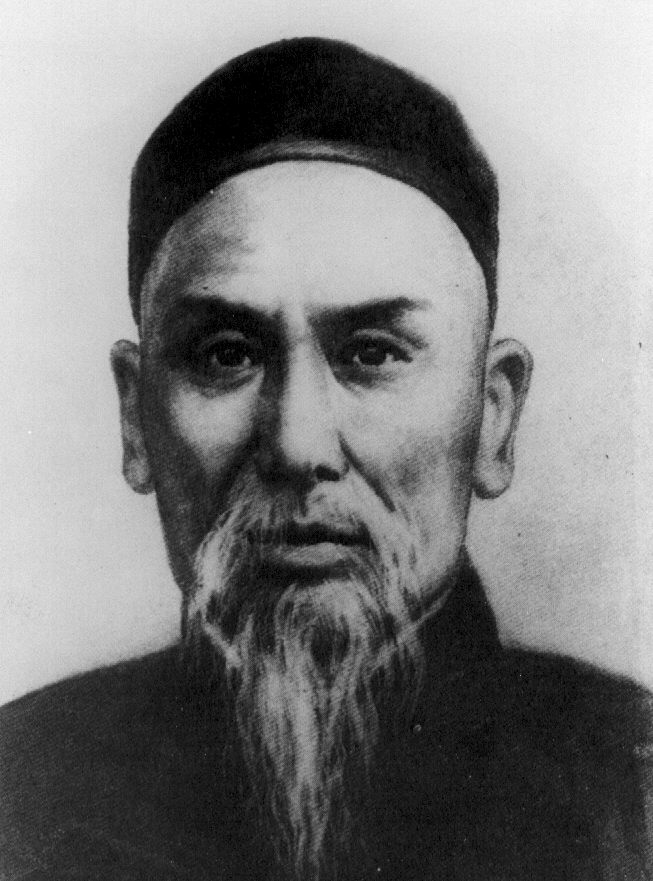
Wu Yuxiang
Here, in the 1860s, we start to see the birth of martial art styles in Beijing that can compete against each other for paying students. At this time Yang LuChan’s two sons were finally old enough to teach martial arts full time.
Game of Thrones’ fictional Grey Worm is probably the most famous Eunuch in modern literature, but while Grey Worm lead an army of disciplined, ferocious fighters called The Unsullied, the role of castrated men throughout history has been somewhat less fighting-orientated, especially in royal courts, where they have traditionally held positions of servitude mixed with privilege and power, especially in China.
The Empress Dowager Cixi was often photographed being carried in state on a palanquin by palace eunuchs, in the late 19th and early 20th century.
As we discovered in part 1 of the Myth of Tai Chi podcast, Yongnian, the home province of Yang Luchan, was famous for providing the highest quality eunuchs to the Ching royal court, and connections made with eunuchs from ‘back home’ could have provided Yang Luchan with a route into Beijing and his role of martial arts instructor in the Royal Court. Nepotism was, after all, what greased the wheels of government in a Confucian court.
To find out more about the complicated world of the Royal Court and the role that eunuchs played we can look to books on the subject. In this short review of Melissa Dale’s book Inside the World of the Eunuch and Jia Yinghua’s The Last Eunuch of China, Jeremiah Jenne takes us into the world of old China:
“History has been cruel to China’s eunuchs. Chinese literature is filled with stories of avaricious and ambitious eunuchs exploiting their position for personal gain and power to the detriment of the social and political order. Society treated eunuchs with a mix of fascination and revulsion. They were a source of anxiety for the court and its officials. They were third-sex creatures marked by their relative lack of facial hair and perceived physical deformities (early castration often resulted in eunuchs being taller, with longer hands and limbs). In the foreign gaze, eunuchs became an analog for a decrepit China, feminine symbols of a decaying imperial system – a view perpetuated by 20th-century Chinese reformers and revolutionaries. Today, when thought of at all, it is as stock villains or comic foils in palace costume dramas.”
After the initial gruesome operation, and assuming he survived, a eunuch’s life was hardly his own any more once he was serving in the palace.
“Once inside the palace, a new eunuch was isolated from his old life and introduced to a whole new reality. Both books describe the parallel world of palace eunuchs, a highly regimented and hierarchal society that still had spaces for deviant behavior, petty jealousies, and even violence. Eunuchs were expected to show complete devotion to their duties, and to their masters and mistresses. At the same time, they also formed friendships as well as master/disciple bonds with older and more experienced palace hands. While the rules governing eunuchs were numerous and punishments harsh, eunuchs still created actual spaces in the palace for their own activities. There were barbershops, noodle stands, gambling parlors, opium dens, and various other places where court eunuchs could blow off steam with multiple cups of wine and the sympathetic ear of their fellow attendants.”
But the lives of eunuchs did not just impact Taijiquan, Dong Haichuan, (whose birth dates are give as either 1797 or 1813 – 25 October 1882), the founder of Baguazhang was a palace eunuch. According to tradition, around 1864 Dong arrived in Beijing and was hired as a eunuch at the residence of the Prince Su. (Whose name was Shanqi, a prince of the Aisin-Gioro clan, the ruling clan of the Qing Dynasty), as well as a minister in the late Qing. He was from the Bordered White Banner and the 10th generation Prince Su, the first Qing hereditary prince position.
Later Prince Su gave Dong the job of tax collector.
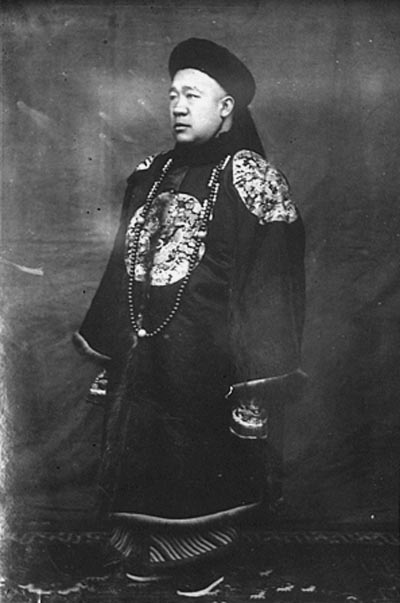
10th generation Prince Su.
It’s possible that Yang Luchan and Dong Haichuan’s tenures in the royal court overlapped. Did they meet and have an exchange of martial techniques as legend and martial arts movies often suggest? It’s possible (Yang Luchan died in 1872), but we just don’t know.
It’s interesting to note that Taijiquan and Baguazhang both share that connection to the Ching royal court around the same time, and are both considered part of the ‘internal’ family of martial arts.
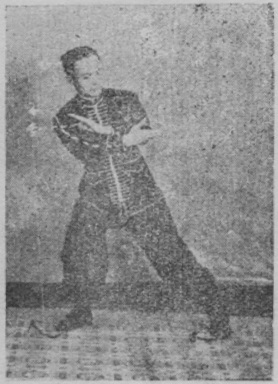
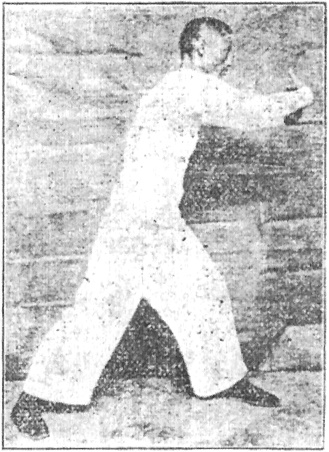
Long Zixiang performing the “press” movement of Tai Chi Chuan (1952, Brennan Translation).
People always want their favourite martial art to be really old, as if that somehow makes it more effective. In reality, age has no bearing on effectiveness and it’s the practitioner that is effective anyway, not the art.
In short, it doesn’t matter what martial art you practice, it matters what you can do with it.
Looking for scraps of evidence to somehow prove your art is older than it is, is a pedantic and pointless route to go down.
I’ve still seen no credible evidence that Tai Chi existed before 1850 beyond legends and myths. However there were plenty of Republican era Tai Chi manuals published in China by the Kuomintang, and almost all of them include some sort of dubious history section that traces Tai Chi back over a thousand years. Don’t latch onto these things – they are a product of their time, a time when the martial arts was being politicised to strengthen the nation in the face of foreign aggression and burn out the memory of previous humiliation by European powers who had advanced all the way to Beijing and captured the city during the second Opium war, forcing humiliating concessions from the Ching.
Thanks to the Brennan Translation website, you can read a lot of these Republican era manuals for free, and look at the photos, which are a fascinating insight into martial artists of the time and what they looked like.
Gu Ruzhang, “King of iron palm” and author of Taiji Boxing.
Myths and legends
For example, the famous Gu Ruzhang, the “King of Iron Palm”, wrote a 1936 “Taiji Boxing” manual which contains one of these history sections.
He writes: “China’s boxing arts have many names, but amount to no more than the internal skill and the external skill. The ancestor of the external is Shaolin. Its movements are all magnificently expressed. Since its principles have been spelled out by many previous generations, they do not need to be repeated here. The ancestor of the internal is Wudang. Its strength is stored within, such as in Taiji Boxing. Its power not being outwardly displayed, it instead has a pure naturalness. Like an unending circle, its movements are lively. And so it is deemed internal and is different from Shaolin. Taiji Boxing’s origin can be separated into five versions:”
The idea of Taiji Boxing being different to Shaolin is the thing he’s highlighting here – he’s trying to create something in contrast to Buddhist outside influence. Something Chinese that can bind the nation together in the face of foreign aggression (British and French before and Japan had just invaded). So, he’s saying that anything from this “internal school” is “Taiji Boxing’s origin”, without an actual lineage connection, this is a bit dubious at best, but let’s go with the flow.
Gu Ruzhang performing the Press movement from Tai Chi Boxing. 1936 Brennan Translation.
One “Chinese” lineage he then mentions is Chan Seng Feng on mount Wudang (which has no validity, and is just myths and legends):
He writes: “What Zhang Sanfeng taught was of the Wudang branch (because he was living in the Wudang mountains), and it was known as the “internal school” of boxing. This version had the highest number of movements yet. Again the name was changed, now to Taiji Boxing, and it went down two paths:
Again, Wudang = Taiji Boxing!
Another 2 lineages of Taiji Boxing he lists starting in the Tang dynasty (the Tang Dynasty was 618AD-907AD, which is over a thousand years ago!), he also lists 1 southern and 2 northern lineages for Taiji Boxing that go through Chen village (our podcast has discussed this and found it unlikely, but not impossible).
It appears that Taiji Boxing is springing up everywhere in China from multiple sources!
He concludes with: “These are just the people we know about, to give a general idea. To cover every person who has received it and make a clear survey of the prominent practitioners of each generation, that will have to wait for a future edition. More will be added later so that future students can know about the source of their art.”
This statement seems to be that he’s admitting he doesn’t really know. It’s just a collection of things he’s been told. None of which there is credible evidence for beyond what he’s been told. Sure there could be a document somewhere proving “Yu family taught something called Innate Nature Boxing” in the Tang dynasty, but how does that related to Taiji Boxing?
There’s no connection beyond the idea that anything Wudang-like must be the origins for Taiji Boxing because,….. it just is, ok?
Obviously, nothing comes from nothing – whatever Yang Luchan created post 1850 in Beijing was from what he learned previously. You could use the same logic to argue for a lineage all the way back to the pre-human monkey in 2001 banging bones together in front of a black monolith. Or you could go back to the start of the universe. It’s an interesting philosophical question, but for sanity’s sake I think you have to start somewhere with a style that has a name and a collection of training methods called “Tai Chi Chuan”. Otherwise, all martial arts are infinity years old.
But to get back to my point. It’s not the age of the art that matters, it’s what you can do with it that does. These old boxing manuals are a real treasure, but I look at them for their practical advice, their description of forms and strategies and applications, not their accounts of history from an age where saying the wrong thing could get you beheaded. Unfortunately for the writers of many of these manuals, the Communists took over in 1949 and they were forced to flee to Taiwan and Hong Kong. A lot of them didn’t make it.
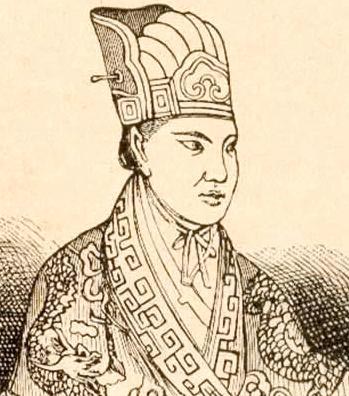
This is Hong Xiuquan, the extremist Christian who orchestrated the biggest and most bloody civil war in history, the Taiping rebellion. It happened around the same time as the American civil war, and shared a lot of similarities.
Hong Xiuquan
The Taiping’s had some previously unimaginable beliefs in China, like equality for men and women (women fought in their army, which reached a million people) and no private ownership of land.
From the Encyclopaedia Britannica:
Taiping Christianity placed little emphasis on New Testament ideas of kindness, forgiveness, and redemption. Rather, it emphasized the wrathful Old Testament God who demanded worship and obedience. Prostitution, foot-binding, and slavery were prohibited, as well as opium smoking, adultery, gambling, and use of tobacco and alcohol. Organization of the army was elaborate, with strict rules governing soldiers in camp and on the march. For those who followed these rules, an ultimate reward was promised. Zeng Guofan was astonished when, after the capture of Nanjing, almost 100,000 of the Taiping followers preferred death to capture.
Under the Taipings, the Chinese language was simplified, and equality between men and women was decreed. All property was to be held in common, and equal distribution of the land according to a primitive form of communism was planned. Some Western-educated Taiping leaders even proposed the development of industry and the building of a Taiping democracy. The Qing dynasty was so weakened by the rebellion that it never again was able to establish an effective hold over the country. Both the Chinese communists and the Chinese Nationalists trace their origin to the Taipings.
We believe these historical events contributed directly to the creation of Taijiquan. Without the Ching court being rocked to its core respected Confucian court officials like Wu Yuxiang and his brother would not have even interacted with a low-level martial artist like Yang Luchan. But the Taiping rebellion was not the only crises happening in China at the same time. A dynasty can survive one crisis, but several at once? No chance. The Yangtze river flooded leading to a catastrophic famine and loss of life and the British and the French started the second Opium war. There was also the Nian rebellion in the North.
The Taiping’s were eventually defeated with help from the Mongols and British. (The British wanted to sell opium, to sustain their empire and the Taiping’s were against that). If the rebellion had suceeded, just imagine the different China that would have emerged.
We cover all this in the 3rd part of your history of Taijiquan, and the crucial moment when the Wus first meet the Chens:
Ok, here it is, part 2 of our history of Tai Chi Chuan. In this episode we examine the context in which the relationship between Yang Luchan, Wu Chengqing and Wu Yuxiang developed during the years of the Taiping Rebellion and the new regime of Emperor Xianfeng.
Looking back over the last few blog posts I’ve written it occurs to me that a reader might think that I don’t actually like Tai Chi Chuan. I do. I practice it pretty much every day. There’s something in it that is just very good for you. Before practice I feel a bit unfocussed, and uncoordinated. After practice I feel like I’m back “in the zone”, and that’s a rare thing for any practice to deliver as consistently as Tai Chi does. And it always does.
If I contrast that with Jiujitsu (something I also love, or at least used to before this lockdown started), after that I’m an exhausted, sweaty mess in need of water and recovery. Jiujitsu is a lot of fun, but it breaks you down. In contrast, Tai Chi builds you up. You need both together. I’ve always practiced my Tai Chi with other more physical arts anyway. More dynamic things, like Choy Lee Fut or Xing Yi are great compliments to the relaxed, slow Tai Chi movements.
One of the reasons I criticise Tai Chi a lot is that it does have the most abysmally low standards amongst its practitioners of any martial art you’ll ever see. In fact, it’s a martial art that most people don’t actually practice as a martial art!
Regular readers to the blog, or regular listeners to the Heretics Podcast, will know that we recently started a series on “The Myth of Tai Chi“. Again, it sounds like it’s a bit of a negative attack on Tai Chi, but anybody with even a cursory understanding of Tai Chi history will realise that a lot of it is vague, unknown and contradictory, especially for a period of time (1850s onwards) in which other martial arts (like Xing Yi) have no confusion over their history and lineage.
Episode 1 of the podcast takes into account all the other things that were happening in China in 1850, and there was a lot! It was a period of turmoil that was about to become even worse with the most bloody civil war in world history – the Taiping Rebellion – which left an estimate 20 million dead. (If you’d like to know more about this and the various martial arts that were created around the same time period, like Wing Chun and Choy Li Fut, then I’d recommend Benjamin Judkin’s excellent book Creation of Wing Chun, The: A Social History of the Southern Chinese Martial Arts – it’s by far the best Chinese martial arts history book I’ve read).
The best Chinese martial arts history book you’ll ever read!
Now the scene is set, episode 2 (coming soon) will offer more definite conclusions on the origins of Tai Chi Chuan, but there’s still so much left to talk about that this will soon become a mult-part story. You might want to empty your cup before you listen though: Damon’s conclusions on what Tai Chi really is are not particularly favourable for any group trying to claim ownership of the Tai Chi brand – the Chens, the Yangs, the Wus the Taoists or anybody else. You’ll have to wait until episode 2 is released in the next few days to find out what the big reveal is!
But until then, just a little reminder that I do actually like Tai Chi Chuan (honest!), despite appearances. And regardless of its origins what matters is its actual practice. Learning about history won’t make you any more or less skilful, only practice will do that.
The 98th Regiment of Foot at the attack on Chin-Kiang-Foo (Zhenjiang), 21 July 1842, effecting the defeat of the Manchu government. Watercolour by military illustrator Richard Simkin (1840–1926).
The history of Tai Chi Chuan (Taijiquan), rather than its actual practice, is one of the most controversial subjects to do with the art. Various different groups have tried to claim Tai Chi as their own, and considering the amount of money involved in the art it’s very hard to know who to trust in this matter.
In this podcast we’ve tried to look objectively at the facts, and the result is that it doesn’t look good for anybody, especially the British 🙂
The history of Tai Chi Chuan is a subject I’ve wanted to tackle on our podcast for a while, but now (thanks to one of our patreons, Gabriel) it’s finally a reality.
In this episode we begin a new series of episodes on this subject by setting the scene and historical background to the mythmaking around the origins of Tai Chi that occurred starting from the middle of the Nineteenth Century in response to social turmoil and unrest exemplified by the Taiping Rebellion and Opium Wars.
Here’s an interesting post, complete with pictures, by David Ross of NY Sanda about the Lei Tai tournaments in China in the 1920s. These were supposedly the first organised national martial arts championships. They would have been part of the GuoShu movement of the Republic as they set about using martial arts to strengthen the nation.
The following are some quotes said about the tournament, from his post. I’m just providing them here without commentary. I leave it up to the reader to draw their own conclusions.
Some quotes said about the tournament:
– 这次比赛没有看到高深的内功,没有发人于丈外的场面 You don’t see high level internal power, and Faijin that send people flying 10 feet away in this tournament.
– 太极打法毫无建树,四量难拨千斤 The Taiji principle didn’t work well. 4 oz could not defeat 1000 lb.
– 也就是说号称以巧取胜的中国功夫 实际上也是在跟人拚勇力比高大 The taller, heavier, stronger guys won in that tournament.
– 要学打擂台的拳术 After this tournament, people wanted to learn the style that can be used on the Leitai.
This podcast interview of Mark Chen by Ken Gullette is a real gem. If you haven’t listened to it before I’d really recommend it. It starts with a basic run-through of who taught who and in what order, and who all these people are, but then gets really interesting about halfway through when it talks of some of the more heretical things, like what happened during the utter insanity and madness of the Cultural Revolution in the 1960s. A period which is ignored by almost all Chinese martial artists. It’s just something that is not talked about these days – almost a non-subject, and those non-subjects always fascinate me.
There is also a section on the famous “Peng Lu Ji An” list used to describe the “powers” of Taijiquan, and the characters used. There are also some good thoughts about Taijiquan training and what Taijiquan is really all about. Overall this is an excellent podcast and shouldn’t be missed by anybody.
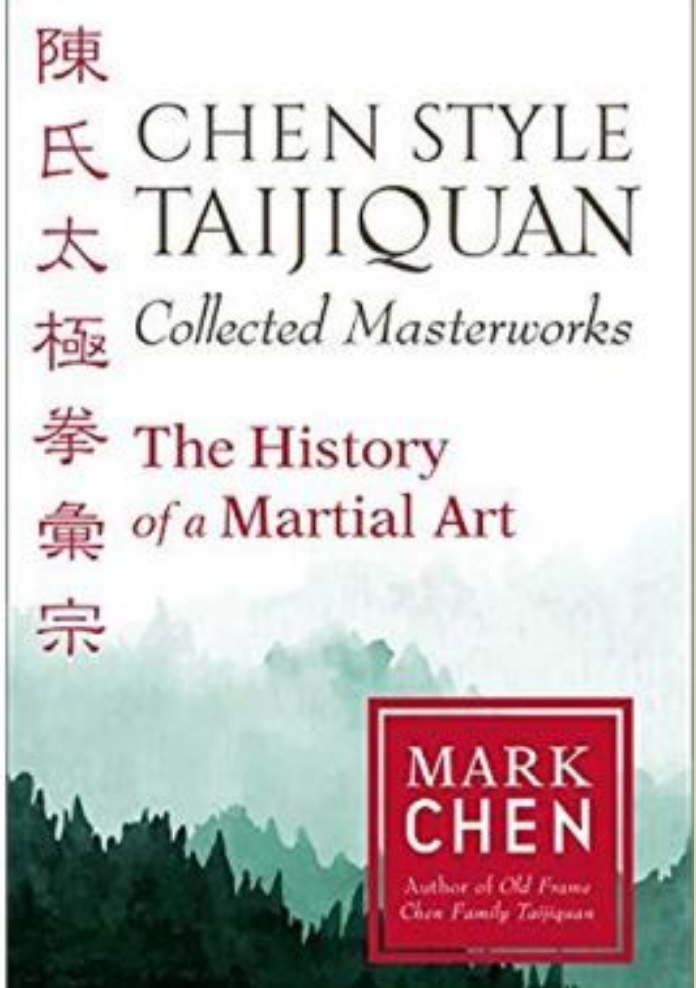
Mark’s book is a translation of most of the book by Chen Zhaopi’s book, published in 1935 and is available on Amazon in print and digital formats.
I’d like to point you to an excellent article by Sascha Matuszak on the Ming Dynasty General Qi Jiguang. In his 1560 book Jixiao Xinshu (“New treatise on disciplined service”), which contains a chapter called “Quanjing Jieyao Pian” (“Chapter on the fist cannon and the essentials of nimbleness”). This chapter is famous because it contains the first written reference to Kung Fu written by a military person.
“There is a lot of speculation as to why Qi Jiguang included martial arts in his military treatise, but it is most likely that several trends converged to make including martial training a sensible thing to do. A few of them would be the rise of taijiquan during the late Ming Dynasty, the superior close combat skills of Japanese pirates, an incredible lack of disciplined, trained Chinese troops, and Qi Jiguang’s own experience training martial arts and developing farmers into soldiers.” – Sascha Matuszak
While I love the article, I’m puzzled by the inclusion of the rise of Taijiquan as a reasoning device for the inclusion of the chapter on kung fu, since 1560 was three hundred years before anybody had even heard of Taijiquan. The great populariser of Taijiquan, Yang LuChan died in 1872.
Interestingly, the chapter written by General Qi does contain references to some things that crop up in Taijiquan centuries later… Does this sound familiar to Yang stylists?
“The Golden Rooster: stand on one leg and cock the head askew.”
“Golden Rooster stands on one leg” is a well known Taijiquan posture.
“The Ambush Crouch posture: it is like using the hunting bow to lie in wait for a tiger;”
I’m thinking of the posture known as “Bend the bow to shoot the tiger”, also found in Yang style Taijiquan.
“Change to a lower position and momentarily take the single whip stance”.
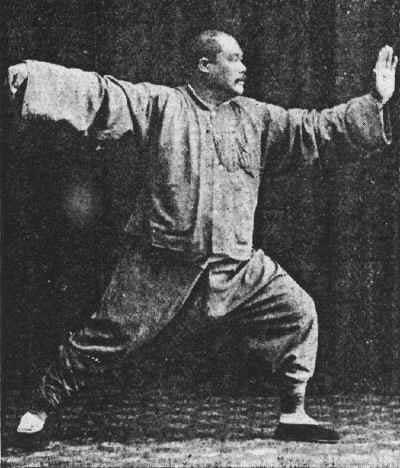
Yang Cheng Fu showing Yang style Taijiquan “Single whip”.
While Qi seems to have a love/hate relationship with Kung Fu, it’s interesting to note that Qi incorporated “Chinese individuals capable of acrobatic performance including boxing instructors and Buddhist monks” into his army to meet the challenge of fighting Japanese pirates, who were much better versed in close-quarter combat skills than uniformed Chinese soldiers.
In chapter 14, he makes criticisms of the existing martial arts of the time as being too specialised, and that by combining them you can cover all bases better. My feeling is that although he does say he engaged in training at Liu Caotang’s Striking Fists school, he’s a military man, an outsider looking at civilian arts he isn’t involved with personally or practices, so you get an interesting perspective.
He’s continually judging what is credible and what is not – something that continues to this day on martial arts forums on the Internet!







 The Tai Chi Notebook
