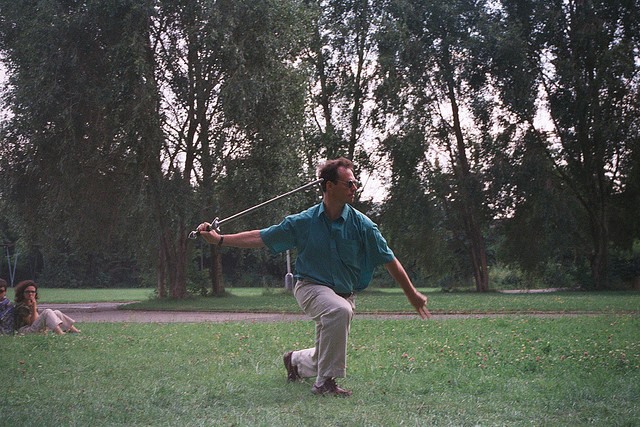
Sadly, yesterday the Tai Chi community lost Dan Docherty, who for a time was without a doubt the biggest name in Tai Chi in the UK. He represented a dynamic, full-contact style of Tai Chi that he learned during his time as a police man in Hong Kong from Grandmaster Chen Tin Hung and his 24 Nei Kung exercises, which he taught alongside his Tai Chi Chuan.
Dan was diagnosed with Parkinson’s Disease at age 56. He recently celebrated 50 years in martial arts this September and you can hear the story of his life, and diagnosis, told by the man himself here.
My condolences to family, friends and students. May he rest in peace
I’d just like to draw your attention to this excellent article by SSD about Stanley Henning’s often-quoted article ‘Ignorance, Legend and Taijiquan’ on the origins of the term Taijiquan. Henning’s article is often used to discredit the idea of Taoist origins of Taijiquan. However, it’s not without its problems, as Adrian Chan-Wyles (ShiDaDao) writes:
“The tone and design of this work is generally dismissive and denigrating toward the subject of Chinese traditional culture, and represents, in my opinion, a continuation of the imperialist Eurocentric attitude that is essentially ‘materialistic’ in nature, and implicitly ‘intolerant’ to any other world-view. Astonishingly, this attitude that misrepresents Chinese culture is prevalent (even dominant) amongst Western martial arts media, and is found within martial arts online discussion forums, etc. One or two Taijiquan magazines in the West even partake in this attitude that demeans the Chinese cultural basis of the martial art they practice and support. Working from Chinese language source texts – which I do – I can say without a doubt that Henning’s viewpoints are not acknowledged as legitimate, and are ignored in China. The idea that certain lineal descendants of the Wu family of Taijiquan claim to have written the Yang family Taijiquan Classic texts appears to be only a Western trend – as this idea is not accepted within China. Indeed, such a claim is viewed as the Wu family trying to raise their lineage of Taijiquan above that of the Yang, but again, such a phenomenon could only happen in the West, outside of the cultural controls of Chinese culture. What is important is that the traditional Chinese cultural heritage is acknowledged and treated with respect. SDD)
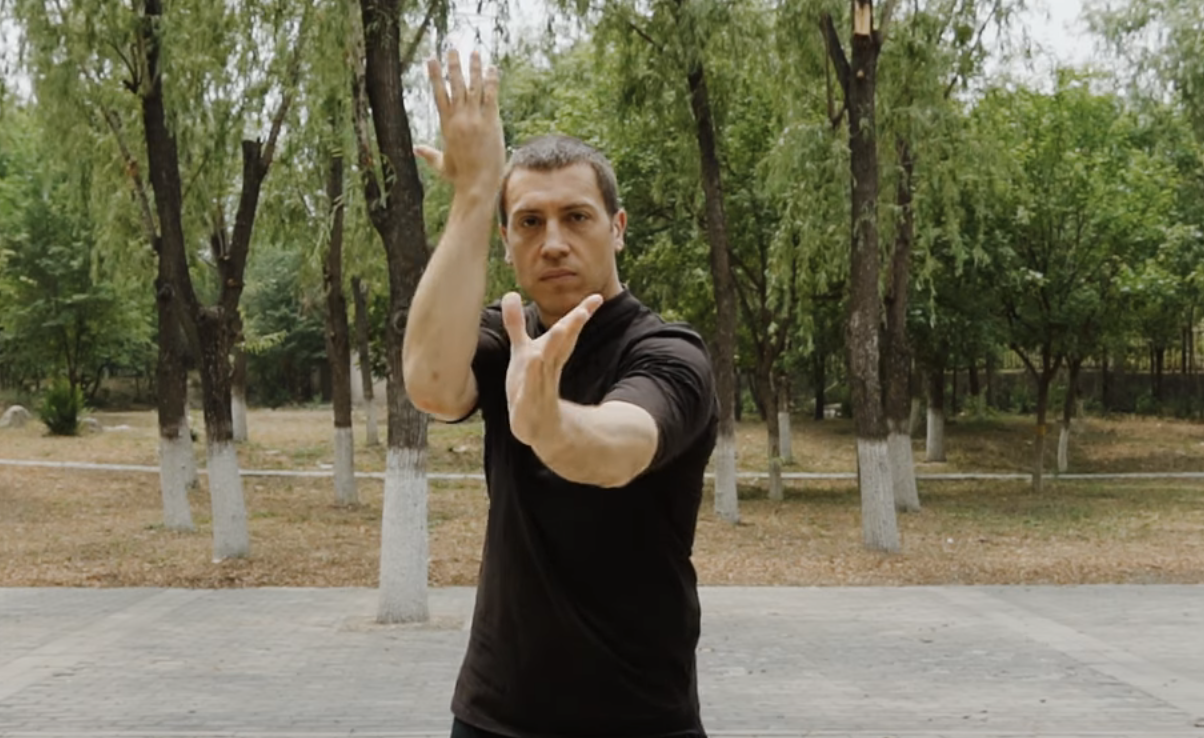
Byron Jacobs is a teacher of Xing Yi and Bagua based in Beijing, China. He’s a student of the famous Shifu Di Guoyong and is heavily involved in the martial arts scene in Beijing. As well as training traditional martial arts he’s also a BJJ practitioner and competitor.
In this wide ranging discussion we talk about training Xing Yi, Bagua and Tai Chi and whether Wu Shu will ever get into the Olympics. We also find out what it was like to train martial arts in Beijing during the Corona virus pandemic, and what the Chinese BJJ and MMA scene is like.
An interesting video has surfaced that links the guard postures used in Shuai Jiao (Chinese Wrestling) with postures in various Chinese martial arts. The premise of the video is that Shuai Jiao is the root of all the Chinese martial styles. The text accompanying the video says:
“Guards in traditional Chinese wrestling are meant to favor certain fighting techniques and strategies. Since Shuai Jiao is very ancient and there are precise references in these guards to the styles that exist today, traditional wrestling is at the roots of Chinese styles. My Master Yuan Zumou has clearly stated this for over thirty years. In Shuai Jiao these attitudes are not aesthetic, but are used in real combat. I have put the captions of the styles I know or of those that maestro Li Baoru (Beijing, late 80s) mentions in the video.”
It’s an interesting theory, but unfortunately I can’t agree with such a blanket statement as “traditional wrestling is at the roots of Chinese styles“. Was it a strong influence on all Chinese styles? Yes, of course. But calling it the root of all styles is a bit strong for me. Some styles developed entirely from military practices, and a lot of styles have no wrestling component at all, or have their roots in weapons usage.
I can certainly see postures in the video that resemble Tai Chi – particularly the “White Stork Cools Wings” posture and another guard that looks a little like the “Wave Hands Like Clouds”. But we only have two arms and two legs – inevitably there are going to be similarities between postures found in different martial arts. That alone doesn’t confirm a genuine historial link. Influences betweewn marital arts can flow in both directions, too. So it’s quite possible that wrestling has been influenced by local village styles. And even things that are not necessarily combat arts, like xìqǔ, can have an influence on them.
I’d also have to take issue with the statement that “In Shuai Jiao these attitudes are not aesthetic, but are used in real combat.” Let’s not even get into the idea of what “real combat” is (Shuai Jiao matches have rules, after all) but it’s a simple fact that Shuai Jiao was enjoyed in the royal court in the Ching Dynasty (and probably all the dynasties before it) as a kind of entertainment for the nobles. The same thing happened in the Japanese royal court with Sumo, just as medieval kings in Europe enjoyed watching martial games like jousting and fencing. And obviously wrestling is still enjoyed as a kind of popular entertainment in America and Mexico today.
But let’s turn our attention to the contend of the video. A lot of the guards being demonstrated look quite showy to me – as if they were designed to impress an audience, particularly the Wave Hands Like Clouds style guard, where the practitioner seems to deliberately trip over his own legs.
But I don’t think that’s a bad thing. Ever since modern Wu Shu put the emphasis on gymnastic ability over practicality, people have been searching for this false dichotomy between performance and practicality in historical martial arts, too. It’s almost like a real martial art isn’t allowed to have any ‘fun’ aspects to it. In reality, and with several historical examples, a martial art can be both a serious, practical tool for combat, and something that can be performed for social, entertainment and cultural reasons all at the same time.
Choy Li Fut schools often perform lion dance, and that doesn’t mean their kung fu won’t work in a fight. Similarly, I would contend that Shuai Jiao can be used as a form of entertainment and a practical method of self defence. Just like almost all Chinese martial arts can.
True or not, he makes a good case for the move not being the backfist or punch it is usually shown as, and being a throw instead. In a way, there’s no right answer – the move is whatever you use it for.
But it made me think a lot about how Kung Fu postures are repurposed and reused through the years.
If we go back to one of the earliest written descriptions of Kung Fu by General Qi Jinguang in his “Boxing Classic” of 1560 we can see that all he’s showing are a series of still postures with written verse about the move in question.
You can see that the first posture shown, “Lazily pulling back the robe” shares some similarties with the posture discussed above.
Lazily pulling back the robe, Qi Jinguang, 1560
A Confucian cuture of respect for tradition and elders would naturally lead to respect for older kung fu postures, and you can see how they would get reused and repurposed to fit new needs over the generations.
I bet the current Yang style Single Whip posture is not chosen because it’s the optimal way of pushing forward with a single palm. Instead, it’s more likely a posture that has been passed down from older generations. Maybe it’s original meaning (if it had one) has been lost, over the years. Maybe it was once a Suai Jiao throw? Maybe it was once a posture from Chinese theatre or religious ritual? Who knows.
The important thing is, as always, what can you do with it now?
This is a fascinating talk between Drs Jared Miracle and Paul Bowman on martial arts. There’s a little section from 31.20 onwards where they get into the miasma that surrounds martial arts and how it can be manipulated for nation building and national identity. the example given is Tae Kwan Do and its need to be ancient. But they go on to talk about how, on a personal level, we often have an idea about what we are doing when we do martial arts that doesn’t necessarily match what we are actually doing or getting out of the martial art we practice.
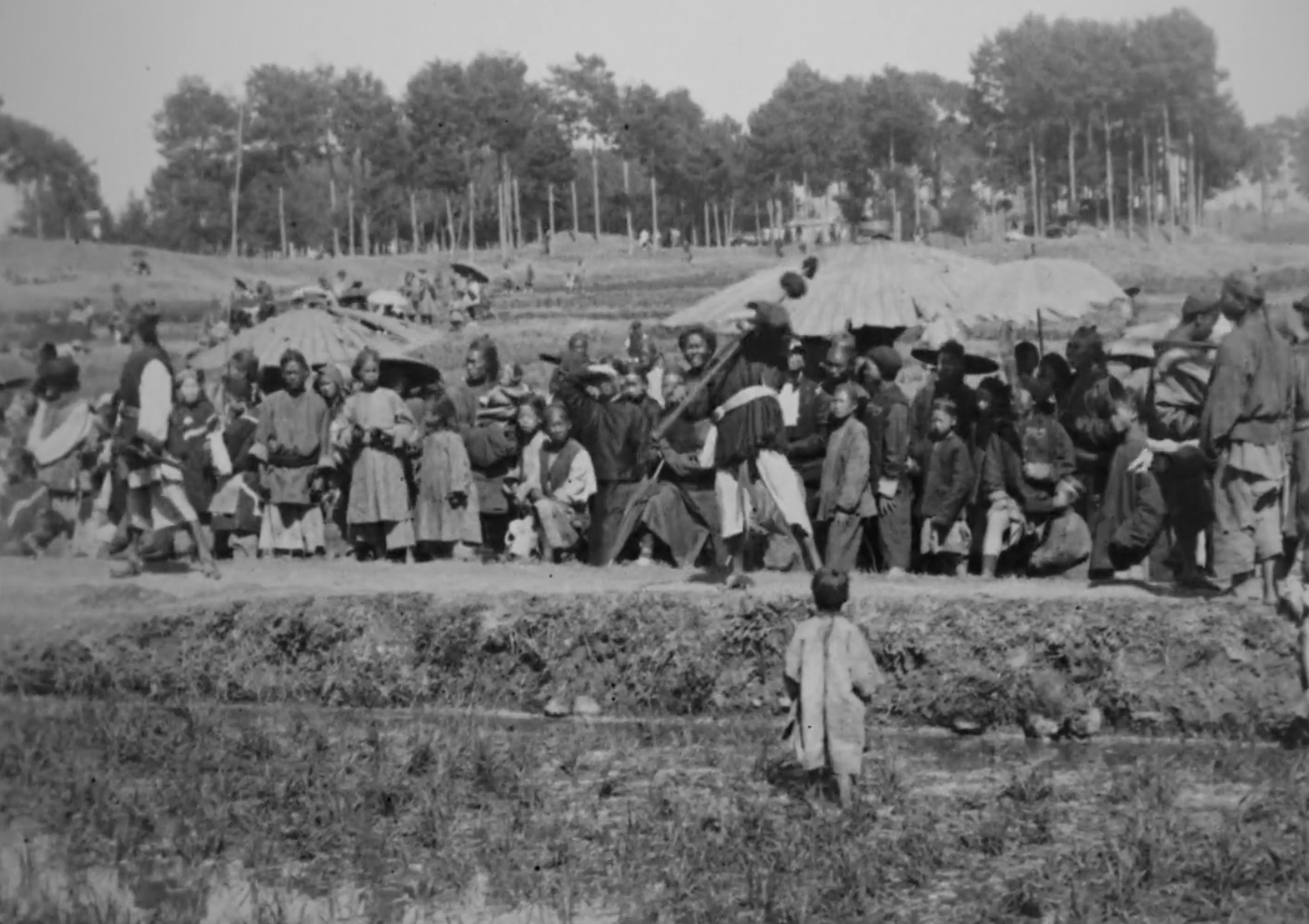
Qing Dynasty martial artists performing in a procession (between 1901-1904)
I’m still fascinated by that film I posted a little while ago of China from 1901-1904. It’s as close as we’ll get to seeing the people who were around at the time that the popular martial arts of Northern China – Taijiquan, Baguazhang and Xingyiquan were being formalised into the structures and routines we still know and recognise today.
It gives a small insight into what the martial arts of the time were like, we have an idea of what they practiced, but we don’t always know where they practiced them, and to some extent really why they practiced them. There’s a particular sequence starting at 17.10 in the film where we see a procession of sorts going along a riverbank and then entering a village or town. There are martial arts performers doing twirls and spins of their weapons as they go. The setting is informal, music is being played (we see the musicians) and it has something of an air of the Saint’s Day religious processions you still see going on between villages in rural European nations, or the May Day “Hobby Hoss” procession that can still found in Cornwall in the United Kingdom.
But back to China. The martial artists involved seem embedded into the culture of the place and time as much as the musicians or flag holders.
“There was a well established pattern of village festival culture in Northern China. The ritual was called a sai and it was based on a three-part structure: inviting, welcoming and seeing off the gods. Ritual could last anywhere from three days to a month. Wherever you happened to be, these rituals were happening nearby every two weeks. A smaller sai might have only 50 people officiating and a thousand participants, while a large one might involve hundreds of ritual experts and 100,000 participants. A large ritual could invoke as many as 500 gods, their statues escorted out of temples in massive processions with armed escorts of martial performers that snaked between villages for miles.”
“According to David Johnson, ritual festivals were so common and so old and so large that they were overwhelmingly the most important influence shaping the symbolic universe of the common people. Regionally they happen about every two weeks and could involve over a hundred villages, with processions that strung out for miles attracting thousands of spectators. “It is quite impossible to understand what villagers… in North China thought and felt about the world of politics, about Chinese history and traditions, about the world of gods and demons, or about any of the grand matters of life and death, without a close familiarity with sai [and similar rituals]. Ref: David Johnson 1997, “Temple Festivals in Southeastern Shanxi”, Overmyer 2009,8.”
From Tai Chi, Baguazhang and the Golden Elixir: Internal martial arts before the Boxer Rebellion by Scott Phillips, p173.
Qing Dynasty martial artists performing in a procession (between 1901-1904)
I don’t think we can assume, from one film. that all Chinese martial art of the period was like this, but it’s fascinating to see a glimpse of how well it was integrated with everything else.
Everywhere in China the martial arts either present themselves in the guise of simple exercises or are shrouded in arcane religious mysteries. Western enthusiasts often feel impelled to strip away these religious trappings and construct a version of the martial arts that is neither simple gymnastics nor religion, but emphasizes true hand-to-hand combat skills. The question remains, is this an authentic understanding of the martial arts?
Charles Holcombe, Theater of combat: A critical look at the Chinese martial arts
This presentation looks at how martial arts arrived in the UK and when the concept of being a martial artist first entered into the popular consciousness. Along the way he covers Bartistu, the Avengers, James Bond, Bruce Lee, Kung Fu the TV series, Ninjas, the Wu-Tang Clan and the UFC.
It’s easy to laugh at the QAnon followers who stormed the capitol in the belief that Donald Trump would pardon them of their crimes and there was a secret revolution about to happen, but there are plenty of equally delusional beliefs in martial arts.
I found an article on the Martial History Team blog recently that quotes from a longer article by Paul Bowman about why martial arts history seems to matter so much to some people.
There are plenty of gems here, but I like this quote:
“Unsurprisingly, in much scholarship on Asian martial arts, the matter of history remains freighted and weighted down by the same popular myths; so much so that even much that passes for scholarship seems to refuse to face up to the evidence that suggests that, quite frequently, martial arts that present themselves as ancient are hardly even old.[11]
So many massive social mutations occurred through the nineteenth and twentieth centuries that most ‘traditional’ martial arts effectively have at best little more than a century of continuous history to them, rather than the vast eons of allochronic time that so many seem to want them to have spanned.[12]
I emphasize the word ‘want’, here. This is because wanting appears to be a key issue to consider when approaching questions of martial arts history and culture. For instance, it seems that the perpetuation of fantasy histories and the fetishistic fabrication of lineages in ‘traditional’ martial arts evidently have everything to do with wanting.
Practitioners want taiji to be ancient. Many want there to have been a Southern Shaolin Temple which was burned down, scattering the few surviving kung fu monks to the different corners of China.[13] We want Okinawan farmers to have fought samurai with rice flails. We want Yim Wing Chun to have been a real proto-feminist warrior.[14] We want the skill that wielded the weapon that killed Magellan to remain alive today.[15] And we want ancient warrior armies to have flown at each other through the air, kicking each other off horses with flying sidekicks and jumping spinning back kicks.
Just because you want something, it doesn’t make it true.
Jack Slack was the first person to draw my attention to the parallel between rioters storming government buildings that happened in China’s Boxer Rebellion around 1900, and the storming of the Capitol Building by Trump Supporters in 2021. Both involve a kind of “spirit possession”.
Of course, America, along with many European nations, was involved in the Boxer Rebellion:
“In 1898 the Yellow River burst its banks and destroyed the harvest in much of Northern China, but this misfortune was followed by an agonizing drought which dried out the land and hardened the dirt. As young men went hungry and without work, some Chinese noted the connection between the anger of nature and the construction of train tracks, telegraph lines and churches since the arrival of foreigners in the Qing Empire. Anti-foreign sentiment brought together groups of peasants practicing martial artists and calling themselves the Righteous Society of the Harmonious Fists—though the West came to know them as “The Boxers”. The Boxers attacked and murdered missionaries across the Empire and in the summer of 1900, Tianjin and Beijing were plunged into chaos as the Boxers received the blessing of Empress Dowager Cixi and the Imperial army. 400 foreigners and 3000 Chinese Christians endured a two month siege in Beijing’s legation quarter—a stone’s throw from the Imperial Palace but completely helpless. The Boxer Rebellion is a story about agriculture and diplomacy, magic and court intrigue, and it stands as both the last great event of the Victorian Era and the beginning of the end for the Qing Dynasty. ” – Jack Slack
Of course, I’d contest that the events that lead to the end of the Qing Dynasty had started much earlier, back in 1860s. It was these conflicts with foreign powers and internal rebellions which lead directly to the creation of Tai Chi Chuan, as we discussed on our History of Tai Chi podcast series. Yes, I’m sorry, the myth of a Taoist inventing Taijiquan after a dream about a snake and a crane, is just a fairytale. The real reason is much more pragmatic.
Jack has done an excellent podcast episode on the Boxer Rebellion, which he’s just released to the public, instead of being behind his Patreon paywall. If you want to find out more, have a listen: