Are set forms the death of creativity?

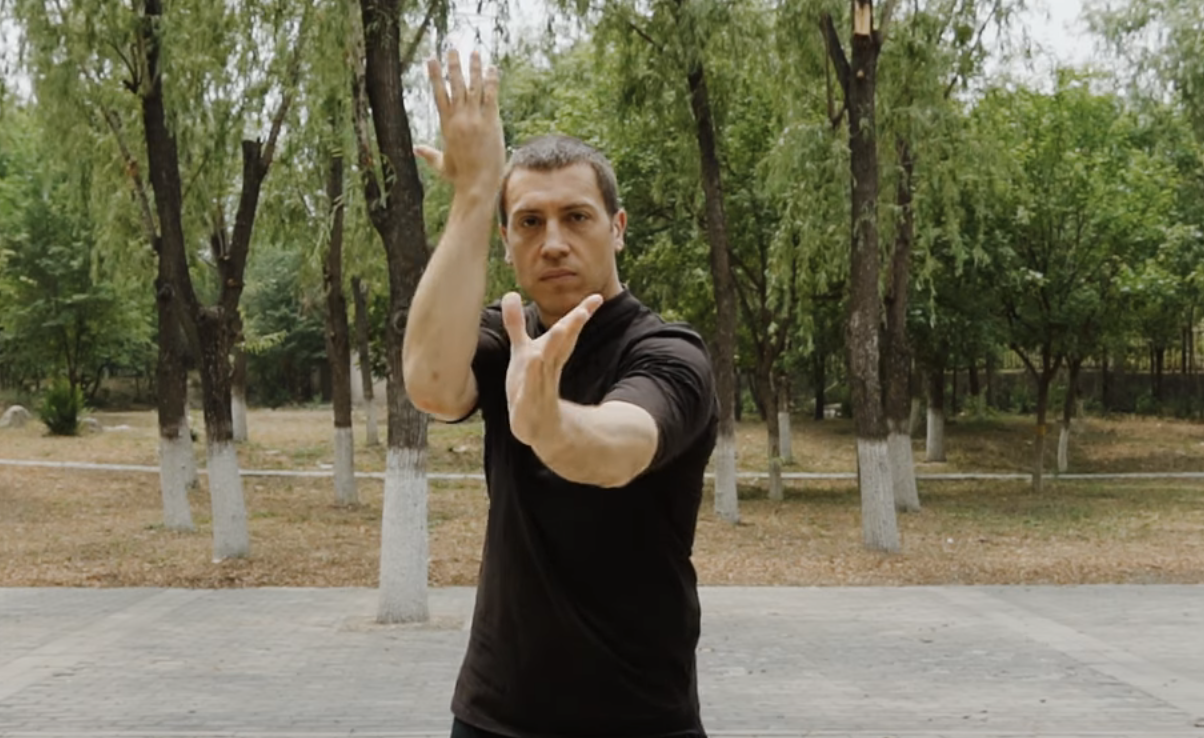
Xing Yi Eagle link

Tai Chi is just one of a number of Chinese martial arts that have extended forms practice as a key component of their training methods. An incredible amount of time in Tai Chi is dedicated to performing the form in just the right way. Of course, there are lots of martial arts that don’t have forms, but they tend to be more sportive and wrestling based, although striking arts like boxing don’t have set forms either. Exactly why so many Chinese martial arts have forms at all is another question – one that relates back to their cultural origin and use in entertainment and religious festivals, and has relatively little to do with martial efficiency. It’s a contentious point, so for now let’s just accept that most Chinese martial arts today do have forms, and if you’re going to practice a Chinese martial art in 2022, then you’ll be practicing forms too.

In my training I’ve been exposed to various Chinese martial arts, and they all had a number of “set in stone” forms to train, until that is, I was introduced to Xing Yi. Or rather, I should say, to my Xing Yi teacher. His method of teaching Xing Yi was entirely different to most modern teachers – he really didn’t like the idea of set forms. Beyond the 5 Element form (the basics of Xing Yi) he didn’t really believe that any form should be ‘set in stone’. In fact, he wouldn’t even let you call them “forms”. You had to metaphorically put a pound in the swear jar every time you said the word “form”. He preferred the term “linking sequence” (lian huan, in Chinese) because it implied that the postures were linked together and could just as easily be linked together in an entirely different way. This is not entirely true, either. Sometimes he would teach you a particular sequence that was the way one of his teachers did it, and we’d call it the “master xyz linking sequence”, on the basis that you had to start somewhere, but if you ever quizzed him too deeply about a particular movement sequence then the answers would soon start to turn into the “well you could do it this way, or you could do it this way…” territory. He really didn’t want to be pinned down into a specific way of doing anything.

Xing Yi Bear link

I think the reason he was like this is that he didn’t want to kill the natural creativity in his students, and he wanted to keep the practice vital and alive. It should be obvious that your goal in martial arts is to be a formless fighter – even a small amount of light sparring will reveal the universal truth to you that if you try and adopt fixed methods to a live situation, the results are never good. To deal with any kind of live situation you need to be able to respond and adapt freely to whatever is happening. I think he saw the popular “fixed forms” training method as being part of the reason that some Chinese martial arts were less than successful when applied for real. It was also the way he’d been taught Xing Yi, and he wanted to teach in the manner in which he’d been taught. Of course, this makes it a lot harder to teach – having a few set forms makes teaching much easier, and also transfers to large groups well. Being spontaneous requires much closer attention from a teacher and is almost impossible to expand to teaching larger groups of people. The best class size is always 1-1, and commercially that’s a hard thing to pull off. Luckily money was never part of the equation when we trained! I can’t say his method was universally successful in creating good students either – it’s definitely not. I’ve seen students of his who ended up being pretty delusional about their own abilities from following this method. It requires time (years) of prolonged contact so that you can absorb a martial art this way. If you get separated from the teacher too much then you can easily go off on the wrong track. It’s a bit like throwing mud at a wall – sometimes it sticks, sometimes it doesn’t. And sometimes the mud decides it’s somebody who has nothing left to learn from other people, and develops delusions of grandeur while trying to maintain the illusion of being humble. But, c’est la vie.

Anyway, I’ve peppered some video of me throughout this post so you can see some examples of what I mean by linking sequences – these are little Xing Yi linking sequences I’ve create to fit the space I’m working in. I like this sort of practice where you create new links each time you practice. You can combine different animals and elements in an almost endless number of variations. You can even do the movements from one animal but in the style – the xing – of another. Each day you train is different and depends on how you feel and the environment you’re training in. In fact, letting your environment (preferably, nature) into your practice is part of the training.

Xing Yi Tiger link

Now contrast that to typical Tai Chi training – you practice the same form in the same way, every day, for the rest of your life. Sounds a bit dull, doesn’t it?

Well, perhaps not. While the sequence in a Tai Chi form never varies, you can introduce a tremendous amount of variation within that fixed frame. This was how my Tai Chi teacher taught me, years before I started Xing Yi. After you’d learned the form you’d do the form in different ways, depending on what you were working on. The size of the postures could vary, the height of the postures could vary, the speed could vary from very fast to very slow, or you could focus on the breathing, on separating empty and solid. Again, the list was almost endless. It worked better if you stuck to one particular ‘thing’ for a good few months though, before you moved on to the next. Again, close contact with a teacher is required, over years. 

Once the Communist ideology took over in China it infiltrated everything, including martial arts, and it’s influence is still there today. The Communist ideal is that everything looks the same, and is done in the same way. The individual identity is subsumed by the group identity. You can see this influence in the martial arts of the period and its effects echoing into modern times. Row upon row of silk pyjama-wearing Tai Chi people practicing exactly the same form in perfect unison. If you want to get good at martial arts, that’s the thing you want to avoid. And if you’re thinking right now that your practice doesn’t involve enough spontaneity or creativity, then perhaps some of the ideas contained in this post can help.

Xing Yi Chicken link

Thoughts on Tai Chi Push Hands

Photo by mana5280 on Unsplash

Range

People tend to do push hands at the wrong range. I think the combat benefits of training push hands disappear almost entirely when you are too far out.

I notice when I train it with people they keep wanting to edge back. You need to be a range that feels uncomfortably close, until it feels comfortable.

If you look at MMA (sorry to use that as an example, if it rubs you the wrong way, but it provides brilliant examples and feedback of the dynamics of two people in a violent encounter) one of the big, high-percentage, often fight-ending, techniques is the counter left (or right) hook; the check hook. This happens after the fighter throws a jab – you move back (or slip) and throw your hook over the top – that’s the range push hands is working in, and a good practical example of what skill at that range can do.

If you watch this video of Cheng Man Ching pushing hands you can see he tries to stay in close all the time – in fact, when he’s launching people he kind of ‘cheats’ and takes an extra half step in so he’s right inside their base, which enables him to show off a bit more on the distance he can push them – this is only possible because they are keeping their ‘front door’ open with a wide stance. The way I was taught is that your toes match the opponent’s heels, fist width apart to allow for ‘shin biting’. (Lots of people do this distance correctly, but go shoulder width apart – leaving the groin too open and letting people step in to launch them. It’s just a bad habit to get into).

Don’t mistake push hands for sparring

Chinese martial art people in general I think spend too long in these double or single ‘arm contacted’ type positions – in more martial sparring sessions these moments happen in split seconds. People don’t stay here. If you end up putting your arms out looking for that position you get punched on the nose. I think doing too much of it breeds bad habits. You’re doing that ‘safe’ training to learn skills that are hard to acquire, which then get used in freer environments, rather than try to mimic the ‘safe’ environment in freer training.

Staying in this range all the time with another person doing ‘soft’ stuff like push hands seems to lead to teachers who start showing off and generating cult-like guru behaviour. It’s a trap you can fall into if you’re not careful. If your students start treating you like a holy saint, then that’s a red flag!

I’m really not a fan of the kind of following that builds around some of the big names in Tai Chi, like this guy, Adam Mizner. He plays the guru card well, and I’ve seen lots of videos where his students really overreact to him in a way that makes me think they all fell down a rabbit hole years ago. However, the guy clearly has some good skills at push hands, as you can see in this video. This video I think is one of the least worst of his I’ve seen (in terms of over reaction from his students) – yet the group still all stop what they are doing to ‘watch the master’ and play his guru game:

Fighting

It’s always worth repeating, even though its kind of obvious, – you don’t need push hands to fight. Combat sports turn out accomplished fighters quickly without these methods.

You can practice all the applications in a Tai Chi form in push hands – it’s one step up from doing them as stand alone techniques because it requires more timing, flow and ‘listening’, but this is still not ‘fighting’.

Jin

One of the reasons for push hands is to learn to use Jin not Li. For a short answer of what that means, I mean using the ground strength in your movement (jin), not local strength (li). It’s easy to fool yourself that you’re ‘doing it’ when you perform a Tai Chi form, because there’s nobody else there. Can you ‘do it’ when somebody is providing some light resistance? Or trying to ‘do it’ back to you? Push hands enables you to find out. I wish people would view push hands more as a tool for learning that, not as a competitive sport of limited wrestling. It’s like people have been given a knife, but they insist on using it like a spoon.

And the use of Jin in directions also requires a strategy to use them, which can also be practiced in the laboratory of push hands. Listen, stick, yield, neautralise and attack.

In push hands you ‘listen’ to the push from the opponent (with your body), you stick to their limbs (so you can feel and listen) then you yield to their pressure, which leads to neutralising their attack, so that you can attack yourself.

In sparring you use the same idea, but you cannot rely on being stuck to their arm. However, you need to keep the same process going that you’ve learned in push hands, just sometimes there will be no contact – you can still neautralise, and yield, through subtle changes in body posture and position, thanks to your use of sensitivity. Once you take ‘push hands’ into a more real sparring environment, I think you’re in the same territory where Xing Yi spends most of its time training. In Xing Yi it’s just the same idea, even if it looks different – you do not attack blindly at the opponent – that won’t lead to success against somebody good, bigger or stronger. In Xing Yi we have this phrase “don’t attack when you see an opening, attack when you see the heng” – I would interpret that as you only attack once the opponent’s attack has been neautralised (heng being the point of neautralisation); depending on your level of timing, this can be before the attack has even been launched. Good opponents will leave fake ‘openings’ for you to attack. Therefore you don’t attack based on what your eyes alone see – you attack based on feeling for that moment of neautralisation. Different training methods – same results.


The Tai Chi Notebook podcast Ep 6: Internal Body Mechanics with Ken Gullette

In this episode Tai Chi Notebook podcast my guest is Ken Gullette, a native of Illinois, USA, where he trains in all three of the main internal arts – Tai Chi, Bagua and Xing Yi. Ken also runs a website called internalfightingarts.com where he trains students from around the world in the three internal arts using a combination of recorded and live classes.

Ken is quite famous for his focus on body mechanics, internal power and getting to the root of these arts in a non-mystical and no-nonsense way. In fact, he’s written an excellent book that’s available on Amazon – it’s called ‘Internal body mechanics for Tai Chi, Bagua and Xing Yi’, and I’d recommend you get a copy.

In this episode we discuss the internal body mechanics of Tai Chi, training with disciples in the Chen family linage and there’s also a few stories of the times Ken has had to use his arts in real situations.

Visit Ken’s website at: www.internalfightingarts.com
Facebook page: www.facebook.com/internalfightingarts
Blog: www.internalfightingartsblog.com

Podcast Episode 2: Byron Jacobs on Beijing martial arts

Episode 2 of the Tai Chi Notebook podcast is out!

Byron Jacobs is a teacher of Xing Yi and Bagua based in Beijing, China. He’s a student of the famous Shifu Di Guoyong and is heavily involved in the martial arts scene in Beijing. As well as training traditional martial arts he’s also a BJJ practitioner and competitor.

If you’d like to be taught by Byron in the arts of Xing Yi and Bagua, then he has an online learning platform available .

In this wide ranging discussion we talk about training Xing Yi, Bagua and Tai Chi and whether Wu Shu will ever get into the Olympics. We also find out what it was like to train martial arts in Beijing during the Corona virus pandemic, and what the Chinese BJJ and MMA scene is like.

Show notes
—————

(9.45)
Byron’s Hua Jin Online learning platform
https://www.patreon.com/mushinmartialculture

(15.22)
Byron’s Mu Shin Martial Culture YouTube channel
https://www.youtube.com/channel/UCg_V6eznSvYOFz2naGlgRpg

(47.05)
DQ’d for Kicking TOO HARD? – Doctor Reacts to Olympic Karate Controversy and Knockout Science
https://www.youtube.com/watch?v=6QFxxM3QOws

(1.05.30)
Speed passing by Rafa Mendes
https://www.youtube.com/watch?v=Qu_9Lcdrh_w

(1.18.11)
Ku Yu Chang (Guruzhang’s) Yang style Taijiquan:
A STUDY OF TAIJI BOXING by Long Zixiang
https://brennantranslation.wordpress.com/2018/03/30/the-taiji-manual-of-long-zixiang/

(1.23.00)
Stand Still Be Fit by Master Lam Kam Chuen
https://www.youtube.com/user/StandStillBeFit

You can find it on all the usual places you find podcasts – search for The Tai Chi Notebook on Apple podcasts, Spotify, etc.. or here’s a link:

Spotify
Apple
Web

Is Chinese wrestling the root of all Chinese martial arts?

An interesting video has surfaced that links the guard postures used in Shuai Jiao (Chinese Wrestling) with postures in various Chinese martial arts. The premise of the video is that Shuai Jiao is the root of all the Chinese martial styles. The text accompanying the video says:

“Guards in traditional Chinese wrestling are meant to favor certain fighting techniques and strategies. Since Shuai Jiao is very ancient and there are precise references in these guards to the styles that exist today, traditional wrestling is at the roots of Chinese styles. My Master Yuan Zumou has clearly stated this for over thirty years. In Shuai Jiao these attitudes are not aesthetic, but are used in real combat. I have put the captions of the styles I know or of those that maestro Li Baoru (Beijing, late 80s) mentions in the video.”

It’s an interesting theory, but unfortunately I can’t agree with such a blanket statement as “traditional wrestling is at the roots of Chinese styles“. Was it a strong influence on all Chinese styles? Yes, of course. But calling it the root of all styles is a bit strong for me. Some styles developed entirely from military practices, and a lot of styles have no wrestling component at all, or have their roots in weapons usage.

I can certainly see postures in the video that resemble Tai Chi – particularly the “White Stork Cools Wings” posture and another guard that looks a little like the “Wave Hands Like Clouds”. But we only have two arms and two legs – inevitably there are going to be similarities between postures found in different martial arts. That alone doesn’t confirm a genuine historial link. Influences betweewn marital arts can flow in both directions, too. So it’s quite possible that wrestling has been influenced by local village styles. And even things that are not necessarily combat arts, like xìqǔ, can have an influence on them.

I’d also have to take issue with the statement that “In Shuai Jiao these attitudes are not aesthetic, but are used in real combat.” Let’s not even get into the idea of what “real combat” is (Shuai Jiao matches have rules, after all) but it’s a simple fact that Shuai Jiao was enjoyed in the royal court in the Ching Dynasty (and probably all the dynasties before it) as a kind of entertainment for the nobles. The same thing happened in the Japanese royal court with Sumo, just as medieval kings in Europe enjoyed watching martial games like jousting and fencing. And obviously wrestling is still enjoyed as a kind of popular entertainment in America and Mexico today.

But let’s turn our attention to the contend of the video. A lot of the guards being demonstrated look quite showy to me – as if they were designed to impress an audience, particularly the Wave Hands Like Clouds style guard, where the practitioner seems to deliberately trip over his own legs.

But I don’t think that’s a bad thing. Ever since modern Wu Shu put the emphasis on gymnastic ability over practicality, people have been searching for this false dichotomy between performance and practicality in historical martial arts, too. It’s almost like a real martial art isn’t allowed to have any ‘fun’ aspects to it. In reality, and with several historical examples, a martial art can be both a serious, practical tool for combat, and something that can be performed for social, entertainment and cultural reasons all at the same time.

Choy Li Fut schools often perform lion dance, and that doesn’t mean their kung fu won’t work in a fight. Similarly, I would contend that Shuai Jiao can be used as a form of entertainment and a practical method of self defence. Just like almost all Chinese martial arts can.

Tai Chi is still too deadly for the cage

I’m going to have a bit of a rant today, so bear with me.

I read this quote today:

“Why should everything always be measured by competition MMA standards? Rules and protections so people won’t get hurt, judges, mats, doctors standing beside the ring, and months for the people to prepare before a fight… So those are the standards of “high level fighting”?

That quote sums up what’s wrong with the attitude of a lot of people in the Tai Chi world. Now, don’t get me wrong. I tend to agree with his idea that not everything should be judged by MMA standards. There are lots of reasons to do a martial art, and it doesn’t all have to be about competing in a ring, but then he immediately loses the plot by claiming that MMA is safe, tame or sanitised, compared to the real martial art that he practices. This idea that his art is too deadly for the ring is as old as the hills. People have been using it as an excuse ever since the UFC was created. And we particulary hear it from internal martial artists – usually Tai Chi people. And despite it being obvious nonsense, it never seems to go away.

People who talk like this simply don’t know what they’re talking about, so I really should just ignore him and go and do something more interesting instead, but just for my own sanity, let me flesh out why he’s wrong.

MMA at all levels, but particularly the professional level, is ridiculously dangerous. People die, and they’re doing it for your entertainment and crappy wages. I like to watch MMA as a form of entertainment as much as anybody else who practices martial arts as a hobby, especially if I know who the fighters are and have been following them for a while. There are moments of brilliance that get pulled off in the cage, and they’re astonishing to see. To see one person successfully implement a fighting strategy against another and for it to work is as much a triumph of brain as it is of brawn. As with all sports, there are rare moments of pure drama that happen in the cage that cannot be replicated even in the highest levels of theatre.

If you’re a jiujitsu fan then there’s the added bonus of seeing your favourite grapplers transition to MMA to see if they can work their wizardry in the cage with the threat of punches added. Ryan “The wizard” Hall is one of my favourite fighters for this very reason:

But there’s also a lot about the sport I don’t like – I hate the way fighters keep hitting their opponent’s head after they have gone unconscious. I hate how much punishment the referees sometimes let the fighters take before waving the bout off. The weight cutting is ridiculous and dangerous. I don’t like watching violence for the sake of violence. But most of all I don’t like the fact that these people are putting their health and, let’s be honest, their lives, on the line for not a lot of money when compared to other sports that have similar viewing numbers, but don’t have anywhere near the same risk. No professional MMA fighter is getting out of the game unscathed. The effects of repeated blows to the head in competition or training often only reveal themselves as life-changing brain damage years after the fighter has hung up his or her gloves.

And that’s not to mention all the potentially life-changing injuries you can suffer inside the cage in the few short minutes of a fight. Chris Wideman suffered an horrendous injury to his shin just a couple of weeks ago:

Jack Slack gave a glorious rant (from 38.22 minutes in his episode 28 podcast) about the crazy situation of being an MMA fan and knowing the fighters are doing themselves serious damage for your entertainment. I agree with everything he said.

But it is what it is and we are where we are.

It’s not like a lot of other combat sports are much safer. Just a week ago a Sumo wrestler slipped and fell face down. He never got up again. There were no doctors present at the match and nobody checked on him for about 5 minutes as he lay there. You can watch it on Youtube if you’re feeling brave. His medical care, or lack of it, was an absolute disgrace and clearly the safety procedures (which seem hamstrung by tradition in this case) need urgently reviewing. Again, Sumo wrestlers are generally compensated appallingly for the amount they give to the sport, and then discarded after their career is over.

While football stars, golf pros, runners and basketball players can command huge salaries, professional fighters (with the exception of boxers) are just not getting the recognition they deserve.

So the last thing I want to read about is some Tai Chi expert telling me he thinks that MMA is too soft and safe compared to the “deadly” art he practices. If he’s even raised a sweat in training in the last 10 years, I’d be surprised.

As I’ve heard many people say over the years, MMA is the closest you can get to a no rules fight while still having some rules, so as a testing ground it’s immensely valuable for research. Let’s not pretend it’s not, or that practising a martial art without any resistance fighting will somehow make you a better fighter.

The repurposing of Kung Fu postures

I really liked this video by The Wandering Warrior on Instagram:

True or not, he makes a good case for the move not being the backfist or punch it is usually shown as, and being a throw instead. In a way, there’s no right answer – the move is whatever you use it for.

But it made me think a lot about how Kung Fu postures are repurposed and reused through the years.

If we go back to one of the earliest written descriptions of Kung Fu by General Qi Jinguang in his “Boxing Classic” of 1560 we can see that all he’s showing are a series of still postures with written verse about the move in question.

You can see that the first posture shown, “Lazily pulling back the robe” shares some similarties with the posture discussed above.

Lazily pulling back the robe, Qi Jinguang, 1560

A Confucian cuture of respect for tradition and elders would naturally lead to respect for older kung fu postures, and you can see how they would get reused and repurposed to fit new needs over the generations.

I bet the current Yang style Single Whip posture is not chosen because it’s the optimal way of pushing forward with a single palm. Instead, it’s more likely a posture that has been passed down from older generations. Maybe it’s original meaning (if it had one) has been lost, over the years. Maybe it was once a Suai Jiao throw? Maybe it was once a posture from Chinese theatre or religious ritual? Who knows.

The important thing is, as always, what can you do with it now?

How to hit in Xing Yi and Tai Chi

“When the opponent expands, I contract. When he contracts, I expand. And, when there is an opportunity, I do not hit – it hits all by itself.”
Bruce Lee

Practicing both Xing Yi and Tai Chi together helps you gain insights into both arts. Here’s what occured to me this morning: If you were to strip down Tai Chi and Xing Yi forms to their essentials then Tai Chi is a series of deflecting moves interspersed with occasional punches or kicks, and Xing Yi is a series of punches or kicks interspersed with occasional deflecting moves.

That’s a gross simplification, but I think it’s true to some extent. It’s what makes the two arts good companions for each other.

I’ve written before about not putting power in the form, but in a related note I think the idea of not using your arm to punch is another way of looking at it from a more Xing Yi perspective. It’s the same nut, just another way to crack it.

The famous Tai Chi practitioner, Cheng Man Ching, is said to have had a dream in which he had no arms, and it was only after that that he grasped the secret of pushing hands. The secret was that pushing hands had nothing to do with hands at all, and he credited this dream with in his ability to push people.

But I find it a lot easier to understand the ‘not using your hands’ thing when you are constantly pushing and deflecting. It’s a lot harder to do it when you are striking.

Xing Yi is obsessed with striking. Most of the forms are a series of strikes linked together (called “links” – Lian Huan). I’ve come to appreciate however that the key to it is to not use your arm to strike. I mean, yes, your arm is doing the striking, of course, but it’s like it’s not involved in the process. I’m thinking about what Bruce Lee said when he said “it hits all by itself”. But while I believe Lee was talking about a more spiritual process (the top line of the hexagram), I’m thinking about a more mid-line process that’s rooted in the body. The hand moves into the position you want, but what moves it there has nothing to do with the arm at all, it’s all from the body. I find that when Xing Yi becomes “too much in the arm” it ceases to be the art it’s supposed to be. 

Paradoxically by trying to hit hard, you ruin it. You’ve got to ease back a little bit – take your foot slightly off he gas and let the body do the work, almost as if you are a craftsman using a tool skillfully (your body) rather than making a great effort to get things done and just making a mess in the process.

I do not hit, it hits all by itself.

Hong Quan as Tai Chi Ancestor?

Nothing comes from nothing, so for the Yangs and Wu brothers to have concocted Taijiquan (according to the Heretics Hypothesis) it must still have been made from Yang LuChan’s genuine martial skill. The postures of Yang style share a lot in common with various Northern Chinese martial arts. Changquan (long boxing) is often quoted as something Yang LuChan practiced in childhood, but again, this seems to be purely anecdotal. That doesn’t mean it’s not true of course.

A martial art popular in the region Yang came from was Hong Quan. A video surfaced recently that showed some traditional Hong Quan. It’s interesting to watch because I think it’s a good example of the type of martial art that would have been around at the time of Yang LuChan.

The description offered with the video says: “Here is the Xiao Hong Quan of Mogou Village. Mogou is to the east of Dengfeng and has practiced Hong Quan for hundreds of years.”

Hong Quan was very popular during the reign of Emperor Daoguang, which would be the Emperor immediately before Xiangfeng, who was emperor when YLC went to Beijing in the 1850s.

Out of interest, at a cursory glance I can see at least four Tai Chi Chuan techniques I recognise in that Hong Quan form presented – wave hands like clouds, snake creeps down (low single whip), bend bow to shoot tiger, and lotus kick. It’s hard to spot because it’s quite fast. But I’d hazard a guess that you’d probably find those same general techniques in lots of northern martial arts, like Chang Quan, as well.

Tai Chi throws

A new comment on one of my older YouTube videos called simply “Tai Chi Throws”, made me realise that it’s now got 13,000+ views on YouTube. It was nice to watch it back and remember those times 🙂

There are applications for many popular Tai Chi moves here: Single Whip, Diagonal Flying, Needle at Sea Bottom, etc.

Here it is: