The UK is having a bit of a women’s safety moment right now, and since I’m in the UK and it’s a topic that crosses over into subjects I discuss on my blog, I think I should address it. As well as being about self-defence it’s also about how women and female perspectives are often ignored by a male-focused society. It all relates back to comments made by actress Saoirse Ronan on the Graham Norton Show, a clip of which has gone viral.
You can view the clip here:
She’s sitting on the sofa with fellow actors Denzel Washington, Eddie Redmayne and Paul Mescal. They’re having a lighthearted discussion about training martial arts/self defence for movie roles. While the men laugh and joke about something as ludicrous as thinking about a phone as a weapon of self defence, (can you imagine, lol!?) Ronan points out (she has to try twice to be heard) that this is something women have to think about all the time. The resulting awkward silence speaks louder than anything else.
That this one moment seems to have captured something very familiar to a lot of women – it’s captured men’s ignorance of women’s lived experience in terms of feeling unsafe when moving about in the world and having to think about using things like keys or mobile phones as weapons. Things that men generally don’t have to worry about.
I don’t want to jump on any kind of bandwagon and write an article about how to use a mobile phone as a weapon, because a) you can’t learn self defence from articles! And b) that seems like very opportunistic behaviour.
But what I would say to any women reading this, Brazilian Jiu-Jitsu (BJJ) is a great martial art that will benefit you more in the long run way more than a one-off 2-hour seminar on “self defence for women”. If you really want to feel more confident and less unsafe (of course, there is no guaranteed panacea for this, unfortunately) then I’d recommend starting regular BJJ classes at a BJJ Academy you feel comfortable with, and with an instructor you feel comfortable with (please shop around!), rather than going to a one-off seminar that aims to provide you with a quick fix.
And to the men who might need to become more of women’s lived experience (yes, you at the back!) You might like to read this article from the Guardian, detailing six women’s reactions to the clip, that’s worth a read.
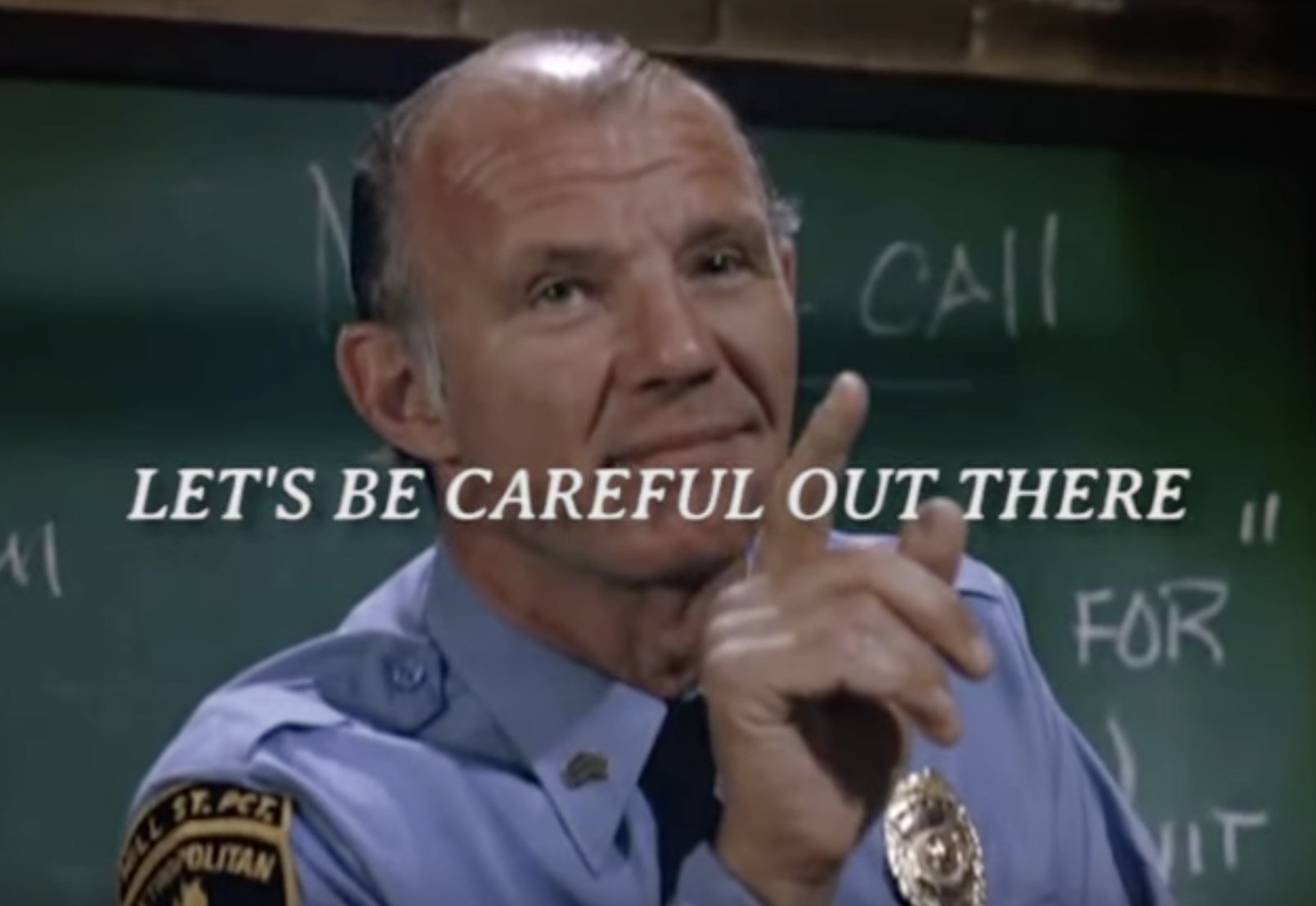
And in the words of the sergeant from Hill Street Blues, “let’s be careful out there”.
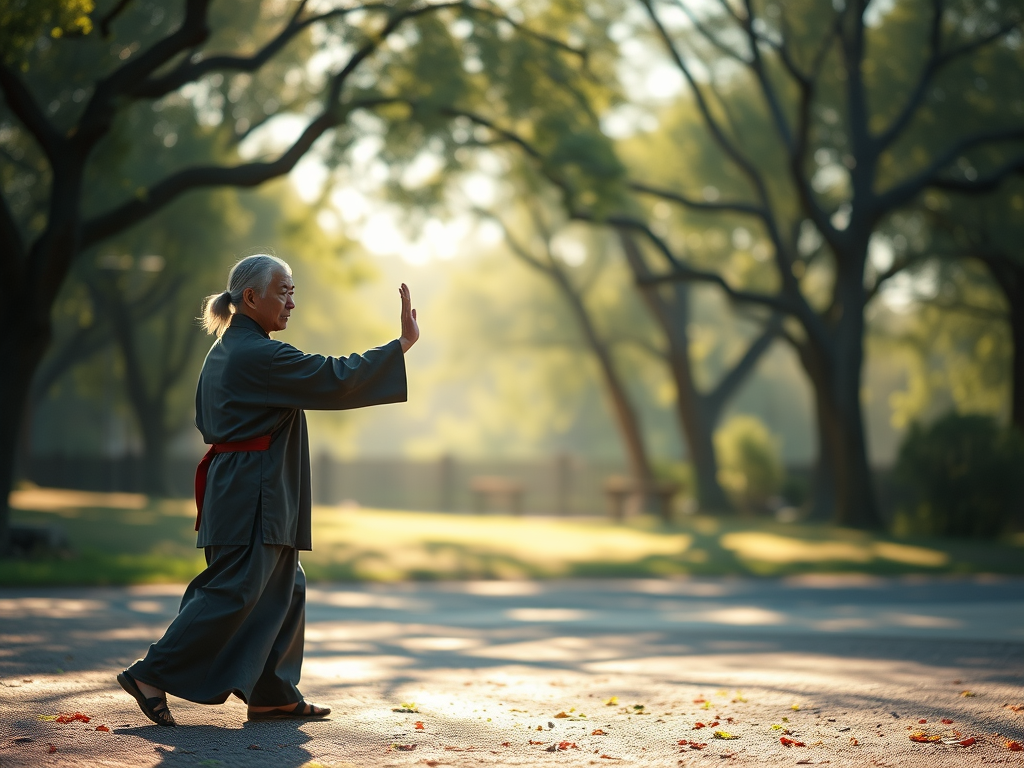
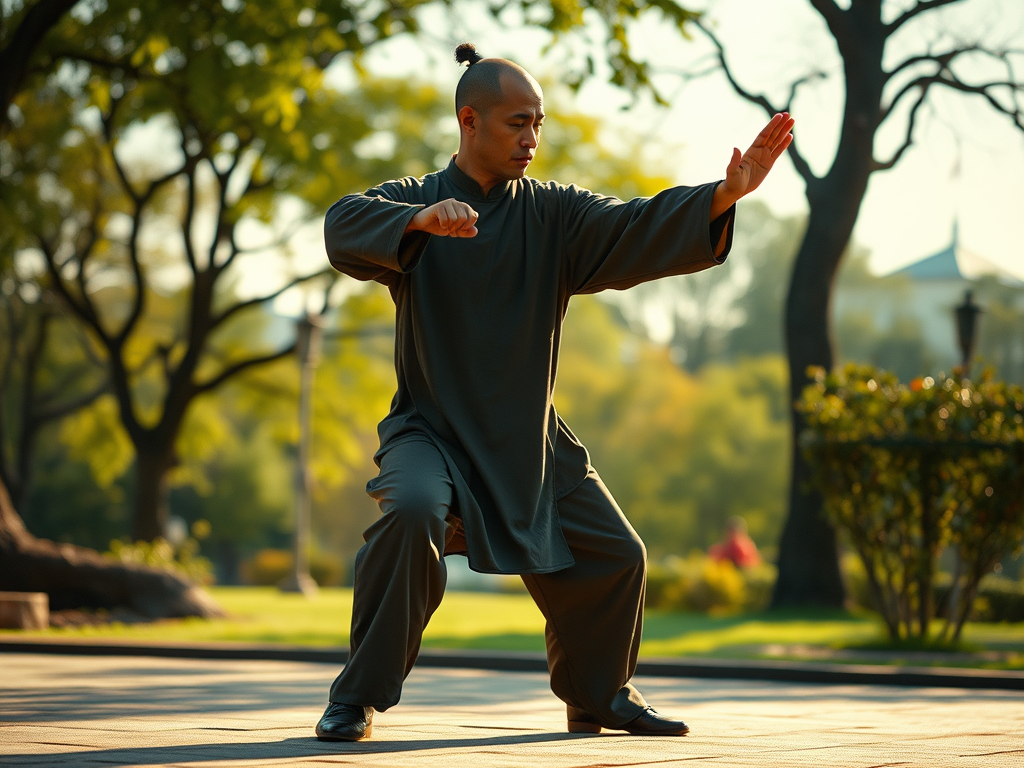
You can think of the Tai Chi form as an exercise in claiming your space. We rarely think of the space we occupy or move around in as part of ourselves, but it is. We often let others take our space, or give it away needlessly. We move out of the way when people walk towards us in the street. Rarely do we stand our ground and own the part of the earth that is directly underneath us.
In tai chi push hands we learn to claim our space, to gently redirect people that want to come into it and also to take away other people’s space if we need to, and not let them get it back. In the tai chi form we learn to round out our movements, so that (as the classics say) there are “no hollows or projections” in tai chi. Your goal is to create a kind of sphere with your body, as if you were inside a giant beach ball. Your hands extend to the limits of the ball, and no further.
Finding your centre
In tai chi there is ‘finding your centre’ within yourself, but there is also ‘finding your centre’ when in contact with another person. When two people are in contact, especially if engaged in some form of conflict, they are rarely both in balance, usually the advantage lies with one person or the other. The one in control is usually the person who has made both people part of their ‘centre’. Viewed from above, they become the centre of the circle, around which the other person is orbiting.
In class today I was working on the ward-off posture. I think by far the best way to think about ward off, as a martial posture, is to think about having just slipped a straight punch over your right shoulder by moving your head and turning your body to your left, you then step diagonally into the space occupied by the other person, right under their armpit using the familiar ‘ward off’ posture to keep them off balance. You need to keep that full, rounded, ‘peng’ aspect to your arms here, and once you have them off balance, you never retreat or give up the ground you’ve taken. If you do then you’re simply giving them their balance back. You need to keep them off balance continually, so that they can’t recover and they end up open to strikes or to being knocked over.
That ability is one reason why, while strikes exist in Tai Chi, they’re not really emphasised in the form. Instead, in the form you’re continually learning how to take ground from the opponent and occupying it while remaining in balance. As a means of self defence, it is highly effective, but not easy to understand without feeling it, which is another reason why so many people are confused about how Tai Chi works as a martial art.
Thank you for supporting The Tai Chi Notebook. If you are reading this on a website that isn’t thetaichinotebook.com, then it’s highly likely it’s been stolen. Please let me know so I can issue their webhost a DMCA takedown notice for copyright breach. Thanks.And if you have the great idea of starting a tai chi website by stealing other people’s work to fill it with content for clicks then take a good hard look at yourself, and do better.
We often label other martial arts groups as a cult, and laugh at their silly behaviour and rituals, but at the same time we are a bit blind to the cult-like aspects to the things we do, because that’s ‘normal’ to us.
I went to a different BJJ school one time and they kept making jokes about my home school being a cult because we have to wear an official gi when training, which is more expensive to buy than a normal gi. There were a few other things mentioned, but that was their main issue. A white belt from another branch of my school had visited previously and he had committed the cardinal sin of facing the corner while tying his belt – that was apparently also a sign of a cult and they recounted the story with much hilarity – “I thought he was having a piss in the corner!”.
However, in that school I observed students doing several things that were equally cult-like, but were apparently completely normal to them:
If you stepped on the mat without bowing, that was 10 burpees.
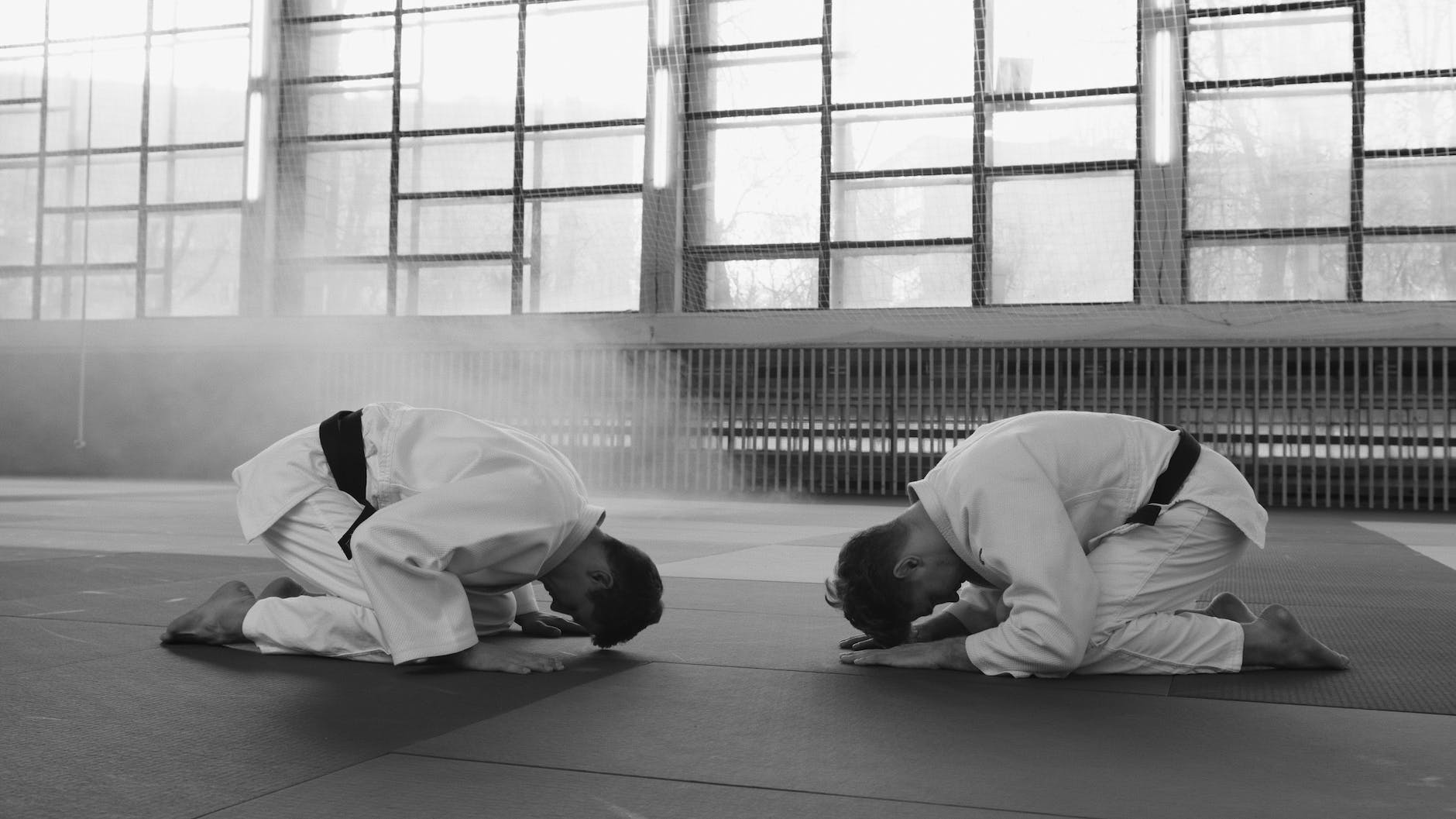
Classes started and ended by lining up and bowing to the teacher.
I (a grown man) had to ask permission from the teacher to have a sip from my water bottle, or if I wanted to leave the mat for any reason. And then ask permission to come back on.
If a black belt asked somebody to roll, they weren’t allowed to say no, even if they had already agreed to roll with another person.
Now we do some of those things in my school too – we line up and bow at the start, for example, and bow onto and off the mat, but some of those things we don’t do. However, they’re all just different versions of showing respect to each other before and during training. We are learning techniques that have the ability to kill and maim, and people could easily get hurt in the training if we weren’t respectful of our partners safety. Building an atmosphere of respect around the training will hopefully instill that in the actual training.
There is something of an uneasy tension in modern martial arts between capitalism and customs. In modern times the people in a martial arts class are usually paying to be there – they are, as modern capitalism likes to call it “paying customers”. The phrase “the customer is always right” has not entirely entered the martial arts vocabulary yet. It still retains these throwbacks to its “traditional” student and master martial arts heritage, for the reasons outlined above.
But let’s not muse on capitalism too much. The point of this post is to draw attention to the blind spots we all have. To return to that BJJ school – the higher belts were technical, but also fighty without being overly aggressive or dangerous, and the instruction was good and clear, the rolls were good too. But I could have done without the undercurrent of tribalism that that had been instilled in the students and was reinforced by the higher belts.
I think it’s worth repeating that all martial arts are cults, and if you think yours isn’t… then isn’t that exactly what a cult member would say? My attitude is to accept the various rules and customs of each particular cult or organisation as the price for them existing. Without any rules anarchy and disorder would break out and there would be no club at all. The Xing Yi classics famously say – “There is only structure, and there is only Chi”. With no structure, the Chi just leaks all over the place, and with too much structure I guess it can’t flow anywhere. A happy medium is what you’re after.
We (human beings) have the same attitude to our own bodies as well – we don’t see our own blind spots. The way we walk feels natural to us, but that might involve pointing the toes outwards at 45 degrees, compromising our lower back, instead of forward, for no good reason except habit. We might have been doing that for 30,40,50 years, and will probably keep doing it until the day we die without question, until somebody comes along and points out our blind spot, at which point it has become our ‘normal’ and it feels weird to walk in any other way.
A little period of self refection on the subconscious and conscious beliefs we hold true, without thinking about them, is always a good thing.
N.B. This does NOT look like a very well applied choke at all, but it’s the only free photo I could find! (Photo by Kampus Production on Pexels.com)
Disclaimer: Please only take medical advice from a qualified doctor. I am not a qualified doctor!
One of the things I find quite astonishing amongst ‘martial artists’ is the generally low level of understanding of the theory of choking people.
Choking is the process of stopping or reducing blood flow to the brain until the person loses consciousness (cerebral hypoxia). It usually requires a bit of squeezing force, but can be effortless and painless if applied with high levels of accuracy, and the person will just go to sleep. It’s one of the most powerful techniques in the self defence arsenal, since chokes generally work on everyone. It doesn’t’ matter if you’re big, small, strong, super strong or even Herculean, everybody goes to sleep. In Judo and BJJ done in a Gi, chokes are often done with a collar and are commonly taught.
Chokes have nothing to do with airflow. Again, I just did a quick google search and the amount of seemingly legitimate websites talking about ‘restricting airflow’ and ‘windpipe’ is insane. There is a lot of bad information out there. Chokes are about restricting the blood flow in the two jugular veins and cartoid arteries on either side of the windpipe. For a detailed analysis of what happens, check here. Being aware of exactly where you should be applying pressure when choking somebody will increase the effectiveness of your chokes massively.
Rendering somebody unconscious by stopping their airflow is also possible, and called smothering in BJJ. Smothering is usually a pretty nasty, violent thing to have done to you. Look up the Mothers Milk submission if you are curious! And a choke that involves crushing/compressing your windpipe to make it happen could also have dire consequences. Similarly, pressure on the chest can also stop you breathing and lead to unconsciousness. That’s particularly unpleasant, too.
But a good old fashioned blood choke is the safest method of rendering somebody who is aggressive instantly harmless. Quite often when they wake up the fight has gone out of them.
Chokes can be trained and practiced safely but become incredibly dangerous in the hands of the inexperienced, as we have tragically seen in many police killings of people already restrained, so only practice them under expert guidance. And if the person has gone unconscious – LET GO! Very often it is hard to tell, so check on them, get verbal feedback, don’t just keep squeezing!
In training, the idea is that before you go unconscious you can feel the effects (a build up of pressure in the head, the world going black around the edges, etc) and tap before it happens, so that the person lets go.
If you are training with somebody that didn’t tap in time and went unconscious then don’t do the commonly seen thing of raising their legs to ‘get the blood flow back to the brain’ – you’re much better off putting them in the recovery position and waiting for them to wake up, which should happen fairly quickly. If they don’t seem ok in anyway, especially if their speech is slurred, call an ambulance.
Nothing in martial arts is ever risk free and there is some evidence of poorly applied chokes, or people struggling too hard to get out of them, causing damage to blood vessels, leading to blood clots, leading to (in rare cases) risk of stroke.
My advice is always tap early and tap often, especially if you feel like you’re going to sleep.
Understanding choke theory is important for all martial artists. If you feel like you need a primer on choke theory, then I’d recommend this new video by Chris Paines. See below.
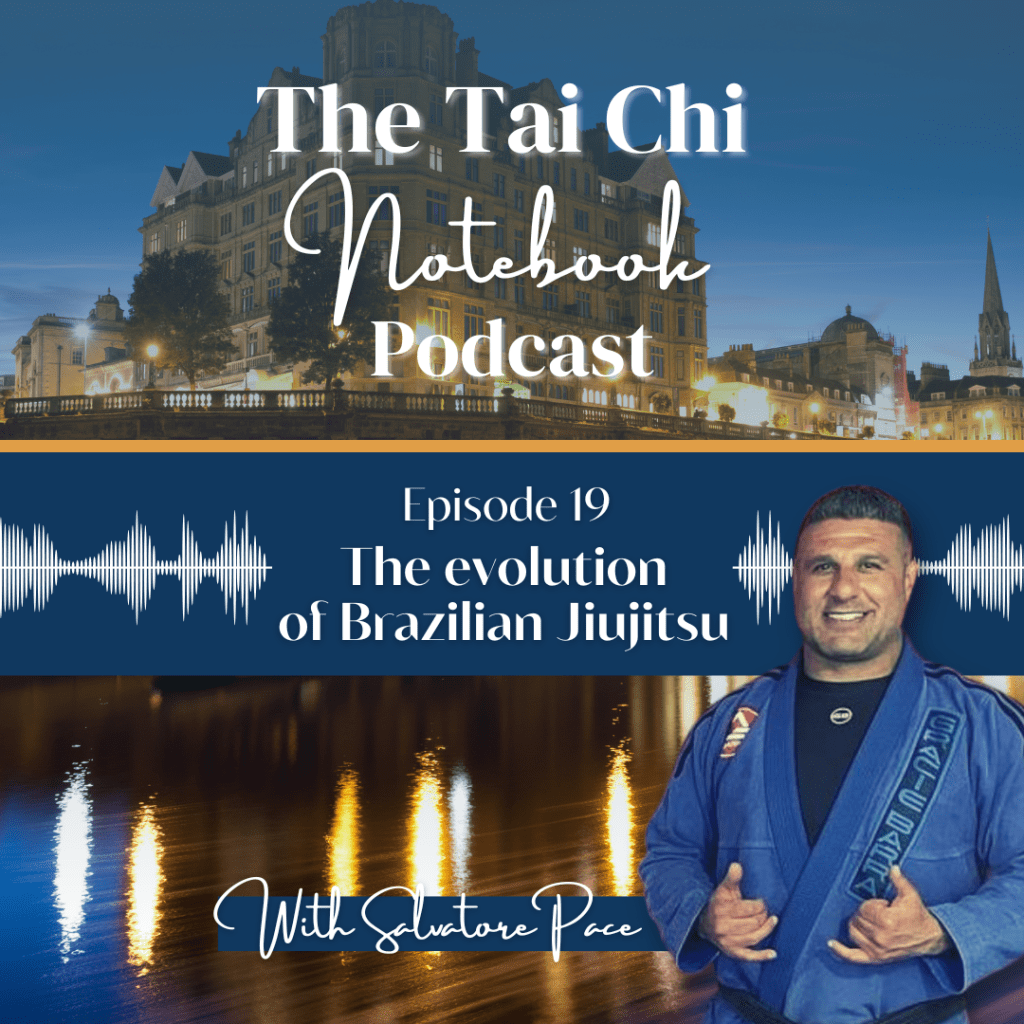
Salvatore Pace, or Salvo for short is a 3rd degree black belt in Brazilian Jiujitsu and owner of Gracie Barra Bath, the Head Quarters of Gracie Barra in the South West of the UK, Gracie Barra West Wilts and co-owner of Gracie Barra Gillingham. He is a two time NAGA European Champion and Grappler’s Quest champion. Salvo grew up in Sicily and had a passion for martial arts as a young boy, practicing everything he could get his hands on, from boxing and Kung Fu to wrestling, and then MMA in the emerging combat sports scene in the UK, but it was his first encounter with Brazilian Jiujitsu and his main teacher Professor Carlos Lemos Jnr, that changed his life forever and put him on a plane to Brazil and then the USA, where he trained with some of the biggest names in the sport.
Returning to the UK Salvo had a dream of teaching jiujitsu for a living and set up Gracie Barra Bath in 2007, back when most people hadn’t even heard of Brazilian jiujitsu. And that’s where our paths crossed, I first met Salvo way back in 2011 and I’ve been with him ever since, getting all my belts from white to black from his hands and it’s been a pleasure to watch his students and academy grow and develop and expand to new locations around the South West.
What is Shamanism? And how does it relate to martial arts? In this episode I catch up with my old, friend and teacher Damon Smith to answer some of these questions.
Damon is an incredibly experienced martial artist with a background in various Japanese and Chinese arts including Karate, Kempo, Xing Yi, Baji and Choy Lee Fut. And those are just a few of the arts he’s pursued to a very high level.
But despite being a great martial artist Damon’s true love has always been Shamanism.
And while he’s no stranger to banging a drum, Damon’s shamanism is not the hippy dippy sort of practice you might associate shamans with, instead it’s a very down to earth and practical art, much like the martial arts he does.
In this episode we talk about the link between martial arts and shamanism, and where the crossovers lie.
I’ve been listening to, and really enjoying, Dan “The Outlaw” Hardy’s recent interview on the Raspberry Ape podcast. With a background in traditional martial arts, Dan was a pro MMA fighter and official UFC commentator.
Warning! It’s long. Over 3 hours, in fact, it’s almost 4 hours long.
The issue of how long a podcast should be is always a contentious one – you hear a lot of people say it should be as long as a commute to work, so 20 minutes to half an hour, but I have no objections to something like this one, which weighs in at over the 3 hour mark. I’m an adult – I can handle the idea of not listening to something all in one go.
Dan has a lot to say about the current state of the UFC, MMA, traditional martial arts, combat sports, capitalism, the old days, growing up and more. It’s quite a run through of various related topics. His thoughts on self defence, violence and the place of MMA in society I thought were particularly interesting.
An interesting video has surfaced that links the guard postures used in Shuai Jiao (Chinese Wrestling) with postures in various Chinese martial arts. The premise of the video is that Shuai Jiao is the root of all the Chinese martial styles. The text accompanying the video says:
“Guards in traditional Chinese wrestling are meant to favor certain fighting techniques and strategies. Since Shuai Jiao is very ancient and there are precise references in these guards to the styles that exist today, traditional wrestling is at the roots of Chinese styles. My Master Yuan Zumou has clearly stated this for over thirty years. In Shuai Jiao these attitudes are not aesthetic, but are used in real combat. I have put the captions of the styles I know or of those that maestro Li Baoru (Beijing, late 80s) mentions in the video.”
It’s an interesting theory, but unfortunately I can’t agree with such a blanket statement as “traditional wrestling is at the roots of Chinese styles“. Was it a strong influence on all Chinese styles? Yes, of course. But calling it the root of all styles is a bit strong for me. Some styles developed entirely from military practices, and a lot of styles have no wrestling component at all, or have their roots in weapons usage.
I can certainly see postures in the video that resemble Tai Chi – particularly the “White Stork Cools Wings” posture and another guard that looks a little like the “Wave Hands Like Clouds”. But we only have two arms and two legs – inevitably there are going to be similarities between postures found in different martial arts. That alone doesn’t confirm a genuine historial link. Influences betweewn marital arts can flow in both directions, too. So it’s quite possible that wrestling has been influenced by local village styles. And even things that are not necessarily combat arts, like xìqǔ, can have an influence on them.
I’d also have to take issue with the statement that “In Shuai Jiao these attitudes are not aesthetic, but are used in real combat.” Let’s not even get into the idea of what “real combat” is (Shuai Jiao matches have rules, after all) but it’s a simple fact that Shuai Jiao was enjoyed in the royal court in the Ching Dynasty (and probably all the dynasties before it) as a kind of entertainment for the nobles. The same thing happened in the Japanese royal court with Sumo, just as medieval kings in Europe enjoyed watching martial games like jousting and fencing. And obviously wrestling is still enjoyed as a kind of popular entertainment in America and Mexico today.
But let’s turn our attention to the contend of the video. A lot of the guards being demonstrated look quite showy to me – as if they were designed to impress an audience, particularly the Wave Hands Like Clouds style guard, where the practitioner seems to deliberately trip over his own legs.
But I don’t think that’s a bad thing. Ever since modern Wu Shu put the emphasis on gymnastic ability over practicality, people have been searching for this false dichotomy between performance and practicality in historical martial arts, too. It’s almost like a real martial art isn’t allowed to have any ‘fun’ aspects to it. In reality, and with several historical examples, a martial art can be both a serious, practical tool for combat, and something that can be performed for social, entertainment and cultural reasons all at the same time.
Choy Li Fut schools often perform lion dance, and that doesn’t mean their kung fu won’t work in a fight. Similarly, I would contend that Shuai Jiao can be used as a form of entertainment and a practical method of self defence. Just like almost all Chinese martial arts can.
With the explosion on the Internet of videos of MMA fighters knocking out traditional martial artists I think that internal martial arts are feeling (rightly) like they’ve become the undeserved butt of a joke, while at the same time the older generation of teachers is passing away without enough new students to carry on their arts to the same standards. The modern generation don’t want to practice as hard and have other things to be interested in.
Noble institutions like Xing Yi, Baguazhang and Taijiquan, which developed a reputation for being effective, fighty, martial arts during the 1920s and 1930s in China are now starting to be thought of as ‘for health’ only, or useless for fighting with, while MMA is seen as the barometer of effectiveness. Or at least that’s the narrative I see being played out. But I’m just not convinced that this narrative is actually true
Firstly, I don’t think these videos of Xu Xiaodong beating up Kung Fu masters are necessarily about saying MMA is better than internal arts – they’re more about one man’s fight against the Chinese system. One man’s “rage against the machine”, which is the government’s control over the martial arts scene in China. It’s a battle for personal freedom that Kung Fu just happens to have got caught up in. The China state Wu Shu machine is relentless in imposing the “official” version of traditional Chinese martial arts on the population, and that often it has little to do with actual fighting (which gets sidelined into Sanda – Chinese Kickboxing – , which is often divorced from traditional Wu Shu). So-called masters were encouraged to start making outrageous claims about their kung fu abilities on Chinese TV in staged demonstrations that were presented as being real. For pointing out the flaws in this heavily state-promoted view of Wu Shu with his fists, Xu Xiaodong is paying a heavy price of social restrictions and persecution. His travel is limited and his freedoms are curtailed.
Over here in the West I often hear serious Kung Fu practitioners worry that if MMA is seen as the be-all and end-all of fighting then traditional styles will eventually fade away, and the evolution of martial arts will go down a sports-based cul-de-sac, in which you “aren’t even allowed to kick somebody in the head when they’re on the ground!”
I see things differently. MMA training is really rough (or at least, it is in most places). In terms of what the vast majority of martial arts practitioners want, it’s a fringe element. Your average office worker has no interest in turning up to work on Monday with a black eye and busted nose. The vast majority of martial arts practitioners are still in traditional arts, which might be more ‘street’ orientated, but tend to be less rough in their practice. They’re filling village halls with karate and tae kwon do classes, or doing judo at university, or BJJ at their local academy and Tai Chi in the park. Or at least they used to be before COVID hit. The percentage of these people that want to push their bodies to the limit and be beaten up on a regular basis is vanishingly small.
MMA is also a form of entertainment designed for television. When the big MMA stars compete at UFC on a Saturday and the crowd goes “Whoo!”, when a spinning head kick finds its target, I bet the numbers at local Tae Kwon Do clubs go up the next week, not down. I see MMA as a great promoter of all martial arts. It’s quite possible Conor McGregor has done more to promote traditional karate than anybody else in history!
I agree there’s a real risk that if MMA is seen as the only arbiter of ‘what works’ in combat then martial arts could evolve down a sports cul-de-sac, but I’d argue that MMA is pretty damn close to ‘real’, and the gains made by seeing what works in the cage compared to what passed as ‘real’ in martial arts before the UFC is like night and day.
People are not so stupid that they can’t understand the difference between a sport with rules and a martial art for self defence. And anyway, sure it’s against the rules to kick an opponent in the head when their knee is touching the ground, but who the hell is getting kicked full power in the head when they’re on the ground in a martial arts class anyway?
What we’re actually seeing is the end of the era of the ‘death touch’ and ‘ling kong jin’ no-touch nonsense that found a fertile environment to grow in a martial arts world that had lost touch with reality. An MMA guy in China beating up fake kung fu masters could just be part of the course correction that is required in the path of martial arts needs to walk right now.
A rare and welcome return to dead tree media for Brazilian Jiu-Jitsu fans everywhere.
Since the advent of DVD, and easily downloadable video tutorials from the likes of Kesting’s own Grapple Arts website and sites like BJJ Fanatics, new books that teach you BJJ techniques in a step-by-step manner have dwindled to the point of non-existence. Back in the day we had masterworks in print, like Jiu-Jitsu University by Saulo Ribeiro and Kevin Howell, and Advanced Brazilian Jiujitsu Techniques by Marcelo Garcia and Marshal D Carper* to guide us. But VHS and then DVD took over, which is why I’m so pleased to see this new release from Brandon Mullins and Stephan Kesting. Nonstop Jiu-Jitsu is the first new book about Brazilian Jiu-Jitsu to buck the trend and feature photos and step-by-step techniques, released in years.
You might be wondering what the point of a printed book teaching you BJJ is in the modern age of YouTube and steaming video, so let me offer you some reasons for its existence:
1) You don’t need a phone, app, computer or VR headset to enjoy a book. You can take it wherever you go and dive into any page anytime, anywhere. Talk about “instant access”!
2) Some people learn better from printed material – reading puts you in a different headspace. There’s also just something nice about a real, physical book that you can hold in your hands.
3) A DVD of this material (“Nonstop Jiu-Jitsu”) already existsfrom Grapple Arts, so this book acts as an additional resource.
4) Goddamn it, I’m just tired of all BJJ instructionals being in video format these days! It’s so nice to go back to something more old school.
So, as you can probably tell, I really wanted to like this book. I work in print magazines as my day job, so I love print with the sort of passion that Gordan Ryan normally reserves for protein shakes. I want to see the printed medium continue for as long as possible. So, as a fan of the original Nonstop Jiu-jitsu video instructional from Grapple Arts, I was beyond excited to hear that a print version was now available. And at 260 pages, with literally hundreds of full colour photos it is clearly a labour of love for the authors Kesting and Mullins. Yet alas, (alas!), it is not without its problems, of which there are many, but more of that later.
First though, who are Kesting and Mullins, and why should you care what they have to say about BJJ? As mentioned, Kesting runs the Grapple Arts business of BJJ instructional videos. I’ve been a fan of his work for a long time, and purchased many of his products. They’re all good, high-quality productions and usually done in conjunction with another teacher, who has a unique or valuable insight into the world of BJJ. Kesting usually takes the role of uke in the videos, while the featured instructor takes you through his techniques, or concepts. The featured instructor here is Brandon “Wolverine” Mullins, a BJJ world champion who is known for his clear instructional style and showing you complete gameplans, rather than isolated techniques, so he will show you a guard sweep, followed by a guard pass and then a submission, rather than techniques that leave you hanging and not knowing quite what comes next. Mullins isn’t one of the really famous BJJ guys out there, but he’s no stranger to competition and is a very competent teacher.
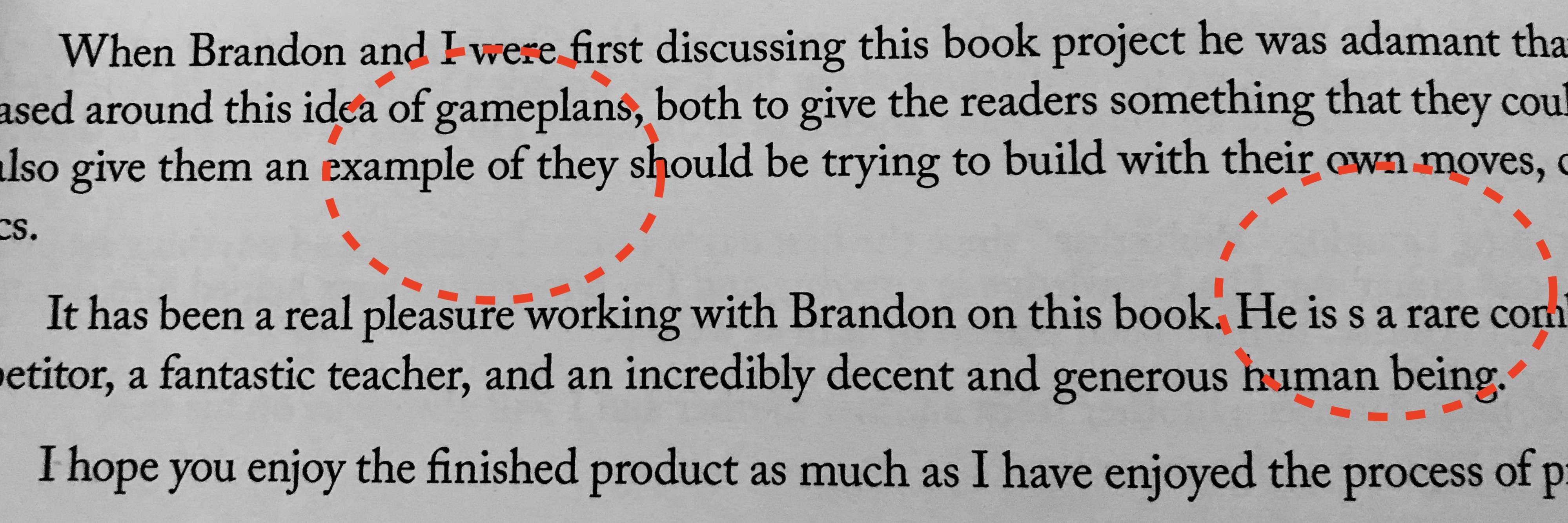
So what’s my beef? Well, the problem is that the book smacks of self publishing. A quick scan of the credits page reveals they didn’t employ an editor or a sub editor, and it really shows. Not only could almost all the text in the book do with a good edit to make it punchier, tighter and more interesting to read, there are a lot of unforgivable grammatical errors that have crept in, mainly in the introduction text admittedly, but that’s the thing you read first, so it creates a very bad first impression. But while things improve in later sections, typos are prevalent throughout the work, and if like me you can’t stand seeing obvious mistakes in a finished book, you’ll be tearing your hair out. I have a lot of sympathy for the authors here – working in print I know how hard it is to spot your own mistakes. You go “word blind” to your own writing. There are probably typos in this review that I’ve missed, but I can easily go back and fix them because it’s a blog post. In contrast, once something has been published in print it can’t be changed without issuing an expensive reprint – it’s really a very unforgiving medium, and not getting another pair of eyes to look at every single page before you send it to the printers is always fatal. Heck, I’d have done it for free myself if only they’d asked me!**
Some examples of typos from the introduction:
Maybe you’re not be the sort of person who cares about dotting the i’s and crossing the t’s. You just want to get to the great content, right? Well, I have some issues there as well.
I can’t fault the quality of the instruction presented. Like I said before, I was a fan of the original video series. But the way it’s presented here could be improved. For a start, the book is an odd shape (21.5cm across and 21.5cm high). There’s a reason why most books generally aren’t square – they’re really awkward to design for and you can see how this has created problems. When they have a full page of text, they’ve used only 1-column, so a line is uncomfortably long. The margin on the outside edge of the page is very tight too, and it all makes reading difficult, as you have to track your eye back a long way to the left to find the start of the next line. A 2-column grid would have made scanning text much easier.
(Very long lines of text to digest here. And a double exclamation mark at the end? What were they thinking”!!”)
The pages of photos have a different problem. Following from one step to the next is difficult, as they often have alternative shots of the same technique on the page. They’ve put numbers on photos so you can see where to move your eye to next, but knowing where to go next is not intuitive. They also expect you to read the explanation in the text box at the top of the page, then move your eye back to the correct picture to see what is meant, then move your eye back to the text box at the top to read the next step, and so on. It’s all a bit awkward.
(The two white lines indicate an alternative view, in case you were wondering.)
All credit to Kesting and Mullins for spending the time to re-shoot every single technique in detail and presenting colour photos of each step (that’s not cheap to do in print). The photos are clear and accurately show the techniques. They avoid the classic mistake of both weaing the same colour gi, but the printing is a bit too dark, meaning there are some shadows and dark patches on Kesting’s blue gi that are hard to make out, as you can see in my photos. (This probably looked fine on screen when they were creating the book, but the printed version can differ).
(That’s a lot of very small photos to try and fit on one page).
The design has competing systems of classification too, which makes it even more confusing. Sometimes a “what not to do” type photo has a red thumbs down icon on it, at other times it is crossed out with a big red “x”. Why not just pick one system and stick with it?
In their enthusiasm the authors have tried to squeeze too much into this book, both in terms of the number of photos on each page, and the amount of material covered. There are 3 big sections – 1. Fundamental movements, 2. Butterfly guard, 3. De La Riva guard – and to fit it all in, something important has been lost, which is context. In the video version of Nonstop Jiu-Jitsu, Mullins explains why he’s doing each technique, usually in response to the opponent defending his previous effort. Here you don’t know when or why you would use the techniques shown. For instance, when you have butterfly guard, what makes you choose either the hook flip to x guard or the hook flip to phantom choke? It’s not entirely clear. A short piece of text explaining the context before diving into the steps would have made all the difference.
To give you an idea of how much content there is here, the table of contents alone runs to 6 pages! Complaining there’s too much value in a book sounds like an odd gripe, but this book could easily have been split into 3 different books, with more room to really let each subject breathe, and it would have been all the better for it.
The first section (which seems unsure if it’s called Fundamental Movements, or Advanced Fundamentals) is based around the fundamental movements of Jiu-Jitsu, like the technical stand up, sit through, hip escape, butt double and rolling forward and backwards, and then shows you how these movements can be applied in techniques. In a section aimed at beginners the applications are actually quite involved and ramp the difficulty level up very quickly – for example, a rolling omoplata from the armbar position in side control, anybody? As a more experienced Jiu-jitsu player I personally loved the high-level technical content here, but a real beginner might be a bit out of their comfort zone. My only criticism is that they show plenty of applications for all the movements except the hip escape (or shrimp) and bridge, which only get one application each – regaining closed guard from half guard for the shrimp and bridging from mount. I would have liked to have seen a shrimping escape from side control here, and another mount escape added for completeness sake.
The second section goes on to cover butterfly guard. Butterfly is a really good guard to use against an opponent who is trying to pass your guard from his knees. The standard butterfly sweep is shown, plus a plethora of options for when they post a hand or leg. Quite naturally this leads into all sorts of x guard material, back takes and shin sweeps. The section starts with Mullins’ trademark aggressive butt double attack from butterfly, which is a very proactive way to get the action going against a stalling opponent, and as such is nicely suited to competition. Because Mullins teaches in a game plan-based system, a lot of this chapter is devoted to guard passing after you’ve swept them from butterfly guard.
The final section covers the De La Riva guard, which shows you what to do against a standing opponent. The majority of the section is on how to attack with the ball and chain sweep, and follow ups depending on how the opponent defends. Again, the jiu-jitsu shown is attacking and aggressively non-stop, in the sense that he links together guard sweeps, passes and submissions.
Throughout all of the book’s sections, Mullins drops in some tips on motivation, competition strategy and his general thoughts on BJJ. It’s welcome advice, but I think it could have done with an editor to make it more concise.
After all this moaning you probably think I’m going to recommend staying well clear of Nonstop Jiu-Jitsu (or is it “Non-stop Jiu-Jitsu“? Even the name of the book is editorially styled in two different ways, one on the cover without a hyphen and another on the footers of each page with a hyphen – argh! Just choose one way and stick with it), because of all the editorial problems, but I’m not. I’m recommending it because this book is actually glorious!
I love seeing BJJ back in print, and despite the issues I’ve mentioned**, it didn’t stop me from loving this book. If you’re looking for some new ideas for a game to play from butterfly or de la Riva, then you’ll find inspiration here that will last a lifetime, and you can easily add to your game. And, godamn it, it’s a real book about BJJ and we should celebrate that fact.
(* If you’re interested, I consider Marcelo Garcia’s book to be the gold standard in terms of these types of instructional BJJ manuals. Its production standards are first rate, from the quality text and explanations to the brilliant photos. Sadly it went out of print a long time ago.)
(** Lads, if you are reading this and want to do an updated version 2 of this book without all the typos, then please do, but please, please hire an editor this time!)






 The Tai Chi Notebook