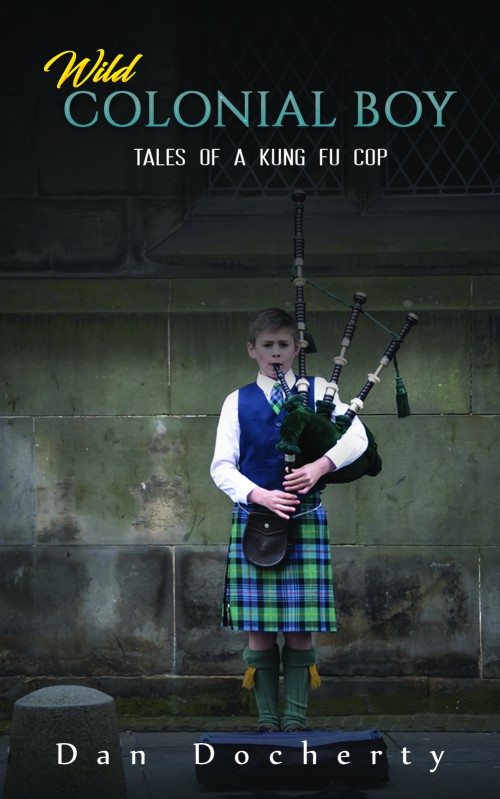
My latest podcast with Alan Wychereley, who was as student of the late UK tai chi legend Dan Docherty inspired my listener/reader Steffan Stringer to track down Dan’s autobiography “Wild Colonial Boy” (I have to admit, I’d heard of this book before, but never read it, and in my mind it was always called “Wild Caledonia Boy”, which, I think, given the Scottish-centric design of the cover would have been a far better title!)
“In 1975, Dan Docherty, a young Scots law graduate and karate black belt, left Glasgow to spend nine years as a Hong Kong police inspector.
As well as serving as a detective and vice squad commander, he also took up Tai Chi and won the 5th Southeast Asian Chinese Full Contact Championships in Malaysia in 1980.
In 1985, he was awarded a postgraduate diploma in Chinese from Ealing College.
He travels extensively teaching Tai Chi and has written four books on the subject.”
When I started Tai Chi in the early 90s everybody had heard of Dan Docherty, and he was something of a big name, not only because of his competition success, but also because of his reputation for unmasking frauds. I remember him gaining a lot of notoriety for pouring a bottle of water over the head of an ethnically Chinese Qigong teacher who was doing seminars on Ling Kong Jin or “Empty force”. Dan’s reasoning was that if he could move people without touching them then he should be able to deflect the bottle without the need for physical contact. It didn’t work. He was also famous for “getting into it” with one of the Yang family representatives in the UK, who ended up leaving the UK after their encounter.
Sadly Dan Docherty died of complications from Parkinson’s disease in 2021. I never met Dan in real life, but his impact on the UK tai chi community continues to be felt long after his death. That’s probably the best legacy a tai chi teacher could hope for.
When Josh Robenblatt got to the age of 32 and realised he wanted to fight in an MMA match, he had to confront a lot of physical problems as well as inner demons before he set foot inside the cage. While the physicality of fighting is explored, this book is mostly about Josh’s internal struggles as a lifelong pacifist coming to terms with the casual approach to violence that MMA engenders. For many people Josh’s exact internal struggles wouldn’t exist (especially his frequent reference to his Jewish ancestry), but in a general sense they do exist in some form in all of us, and that’s what makes this book fascinating for anybody who trains in a martial art. It’s also a rare insight into the realities of training for an MMA fight – how much training is actually required, dealing with injuries, how it affects your relationships with friends and family and what the brutal realities of weight cutting are all about.
Josh writes well, particularly when it comes to articulating his inner thoughts on the subject of dealing with actual violence, either as a participant or an observer, and the transformative, almost transcendent, power that coming to terms with it often provides. I found he had managed to put into words something I’d felt before in my own life, but never stopped long enough to really think about and verbalise. As such ‘Why We Fight’ kept my attention constantly until the end, and you do become drawn into his underdog story and intrigued to find out what happens when he finally gets into that MMA match. I won’t spoil it here.
Xing Yi is one of the oldest Chinese martial arts that is still practised today, and so naturally it has attracted a large variety of writings over the hundreds of years of its existence. These various writings can be found scattered about in different lineages and books, but now Byron Jacobs has collected them together in one weighty tome – Dragon Body, Tiger Spirit – and included not only the original Chinese texts, but also his own English translation and commentary on them.
Originally from South Africa, Byron is a student of Di Guoyong of the Hebei lineage of Xing Yi, and lives and trains in Beijing. At one time he was a member of the technical committee of the International WuShu Federation, so he has been able to meet and talk to practitioners of other martial arts and Xing Yi lineages. He runs the Mushin Martial Culture website that offers online tuition, as well as provides excellent YouTube videos on all aspects of Chinese martial culture, history and practice.
(Full disclaimer for this review: I’ve known Byron for years, and while we’ve never met in person I’d consider him a friend. He’s been a guest on my podcast and I’ve been on his.)
The cover
Being interested in design, I always like to spend a bit of time talking about the cover of a book in my reviews, but in this case it’s not really an indulgence because discussion of the cover is properly warranted. Not only is it well designed but it contains a fully colourised reproduction of the famous black and white photo of Xing Yi masters Guo Yunshen and Che Yizhai, taken when Guo visited Che’s martial arts school. Now, since this is the only picture that can reliably be said to exist of Guo Yunshen, it has always been treasured by practitioners in the Hebei lineage of Xing Yi, of which I would count myself as one. Colourising the famous photo is an audacious and brilliant idea. The colours and shading on the faces in particular all look natural and really bring Xing Yi to life as a living breathing art practised by real people, rather than an ancient art lost to history. Did Guo Yunshen actually wear blue robes? I don’t know, but he looks great in them.
Incidentally, the photo is misleading, because the martial arts display Che and Guo are watching is definitely not Xing Yi. Che and Guo are the seated older gentlemen in the centre, watching two performers of what looks like a more Shaolin-derived art, or even a theatrical performance. The stage they are sitting on, complete with performers doing martial arts, and a painted city background behind them makes the whole thing look very much like a Chinese theatre.
What’s inside
The meat of Dragon Body, Tiger Spirit is the collection of all the classic writings on Xing Yi, including a lot of the stuff that came out during the Republican-era martial arts manual-writing craze, as well as older material. Everything is provided in original Chinese characters first, then as a translation into English and finally there is a commentary by Byron which explains what the classic is about. For me the most important classics in the Xing Yi corpus are Yue Fei’s 10 Thesis, since these are amongst the earliest writings on Xing Yi, and a lot of the other writings are based on these, but rest assured they’re included here. In fact, there’s everything you could want, including the Five Elements Poems, Cao Jiwu’s Key extracts of the 10 methods, the 12 animals poems and more. There’s also a section called “Nei Gong Four Classics”, which is a supplementary text included from the Song style lineage of Xing Yi. The classics are bookended with two different sections – the book starts with a short article about the history of Xing Yiquan, written by Jarek Szymanski, which aims to dispel some of the myths that have built up around the art, and ends with some well-researched biographies of famous Xing Yi masters written by Byron. As a practitioner of Xing Yi you’ll find these biographies useful because the names of old masters often crop up in Xing Yi discussion.
I can’t speak for the quality or accuracy of the translations themselves since I’m not a Chinese writer or speaker, however my impression through comparing Byron’s translation here to others is that Byron has used his martial arts knowledge, and specific Xing Yi knowledge to present what he thinks the real message that the classics are trying to be convey is, rather than go for a literal translation each time. This is the best way to approach martial arts texts, as often a literal translation will sound nonsensical, and just make an English speaker scratch his or her head.
Having the actual text of the classics all gathered together in one place is an invaluable resource for any Xingyi Quan practitioner. That alone makes the book worth getting, but what really tips the balance is Byron’s commentary. He’s always clear, down-to-earth and practical. He does his best to interpret old texts that can often be esoteric and difficult to understand into something that makes sense to practitioners living in this day and age. Apparently, this book took him 10 years to complete, and you can see why. He must have spent a long time agonising over his translations and commentary before committing to a final version – nothing here seems rushed, hurried or half-baked. Everything has been carefully considered.
The casual reader, or beginner in Xing Yiquan, needs to be aware that this is not a “how to” manual – a lot of the Xing Yi classic are about things like endlessly dividing the body into sections and saying how one part works with another, which is not much use to you if you just want to learn how to do a Bengquan. They are full of things like “the eyes connect to the liver, the nose connects to the lungs” – i.e. things that aren’t that much use for practical application. There is a lot of this stuff to wade through if you are going to read the book from start to finish in full. However, having said that, Byron’s commentary on the 5 Element poems (the section of the book that deals with the Xing Yi 5 Element Fists – Pi, Beng, Zuan, Pao and Heng) is so detailed and practical that it does almost function as a bit of a How To. If you are in the process of learning Xing Yi you’ll find this section invaluable. You’ll learn where to put your elbow, fist, feet and how to move your body. And there’s a picture of Byron performing each fist, too.
I did find myself having small differences of opinion with Byron’s commentary on occasion, but it’s always over very small details or emphasis, and it feels like nit-picking to list them all, but I think it highlights an important point, which is that translation relies on interpretation and because we come from different lineages of Xing Yi I think it’s only to be expected that we’d have slightly different ways of looking at the odd thing. And you too, dear reader, will probably have small differences too, if you are already a Xing Yi practitioner. If there weren’t small differences between lineages, then there wouldn’t be different styles of Xing Yi in the first place.
My favourite part
For me the best part of this book is the 12 animals section. I’ve always found the 12 animals to be the most fun part of Xing Yi, and if you’re a fellow 12 animals fanatic like me then you’ll love this section. It’s also the largest section of the book, and is illustrated with pictures of the animals being described. For each animal there is a poem written by Byron’s own teacher Di Guoyong, followed by a discourse on the animal written by Xue Dian, taken from his 1929 Republican-era manual “Discourse on Xing Yi Quan” (which was written at a time when it had become popular to include aspects of Chinese philosophy and medicine in martial arts writings). Byron translates both and provides his own commentary. There’s such limited writing about Xing Yi animals available that it’s fantastic to hit such a rich vein of Xing Yi animal discussion. My experience has been that every lineage of Xing Yi has slightly different ideas about what a few of the 12 animals are, particularly “Tai” (which gets called everything from hawk to ostrich and phoenix) and “Water lizard” which gets called a turtle, an insect or a crocodile by some. The view presented here is Di Guoyong and Xue Dian’s (amongst many others), that Tai is a small hawk and Water lizard is a mythical creature being one of the 9 sons of the dragon that had a turtle’s shell.
It’s the spirits of these animals that infuse all Xing Yi practice – even if you’re doing the 5 elements or SanTi, you are still admonished to observe ‘bear shoulders’, ‘tiger head embrace’, ‘dragon body’, ‘eagle claw’, and ‘chicken leg.’ So, it’s great to see such a large section of the book, which gets its name from the dragon and the tiger, devoted to them. Di Guoyong’s poems and Byron’s commentary here are especially valuable, particularly in regard to the intent and particular features of each animal.
Should you buy?
As always with Chinese martial arts classics, these are not writings you read through once and put on the shelf, having absorbed all their insights. Instead, you need to return to them again and again over the course of your life and dip in and out. You’ll find this reinvigorates your Xing Yi practice and each time you re-read the same section you’ll discover new insights. Picking the book up and turning to any page, it’s not hard to find something to be inspired by and to get you motivated to go outside and practice.
If you are a Xing Yi practitioner then having everything here in a single book will prove invaluable to you and Byron Jacobs has done every practitioner a great service by completing his magnum opus. Even if you are a Tai Chi practitioner, I’d still say you should get this book, as many of the ideas contained in all internal arts found their first flourshings of life in Xing Yi and the Xing Yi classics. Highly recommended.
Martial Art Essays from Beijing, 1760, presents 64 essays written by Yang Mingbin, a painter in the Royal court of the Ching dynasty. Or does it? As well as being a painter, Yang was also a martial artist and the papers are his thoughts on his martial practice, except that Yang Mingbin never actually existed, and the work is entirely a fictional piece of writing by the modern author, Michael A. DeMarco. DeMarco is a Tai Chi practitioner who used to publish the peer-reviewed quarterly Journal of Asian Martial Arts.
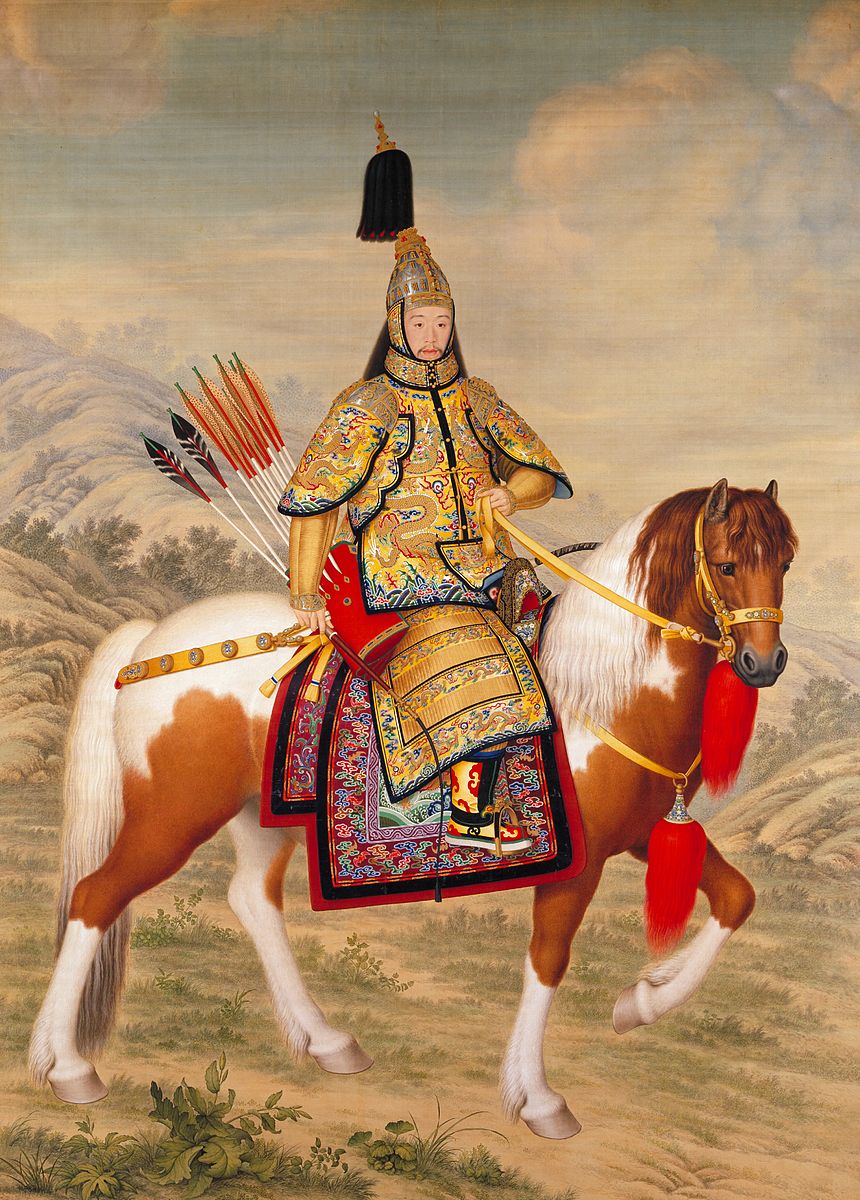
Yang Mingbin’s place in history is well researched, and surrounded by genuine historical figures such as Giuseppe Castiglione (1688-1766), a real Jesuit priest who was a painter in the Royal court in Beijing, and was responsible for influencing the Chinese style of painting of the era with western Renaissance ideas. You’ve likely seen some of his paintings before, such as the famous one of the Emperor Qianlong in ceremonial armour.
The Qianlong Emperor in Ceremonial Armour on HorsebackGiuseppe Castiglione (1688–1766)
So, the conceit here, then, is that you’re being asked to imagine what it would have been like if Giuseppe had had a friend in the court – another painter – who was also a martial artist, and what would happen if we had recently found a copy of his notes on martial arts. It’s a thought experiment, that the author begs your indulgence in as you read along.
Initially it works, because the historical setting feels authentic, but once we get into the actual meat of the book (Minben’s 64 martial arts essays), we find that Yang Minben writes exactly like a 21st century American who practices Tai Chi would write, rather than like somebody actually living in 1760 in China would!
Actual martial arts writings from that period in history tend to be functional, pithy and less verbose. Worse, Mingben’s text often uses modern conventions, for example, (p63),
“Dive into a swift flowing river and swim against the current. Keep swimming, but gradually change the direction – 0 to 45 degrees, to 90 to 135, then to 180 – finally swimming directly with the current.”
Would a Chinese person writing in 1760 have described this using degrees?
And things get very odd when, on p97, Minben writes, “between 1775 and 1779, Qing troops stabalized the northern and western boundary of Xingjang province, harshly squelching the rebellion in the area occupied by the Mongolic Zunghar tribe.”
How is Minben writing about events that happened in 1779 when the current date is supposed to be 1760?
That’s not to say there aren’t interesting things to learn here. I enjoyed the discussion of the Neo-Confucian scholar Zhu Xi and the concept of Li, the calligraphy analogies and the references to Lao Tze and Chuang Tzu. But if the author wants us to enter into his historical conceit, then I think it helps if the writing is consistent with the time period. I would have also liked to have heard more accounts of what Beijing was like in 1760. That would have helped build the illusion – city life, how business was done, what the pervading political climate was like, what the fashions were, what the gossip was – what was happening in Royal Court?
You could argue that since all of this is imaginary anyway, perhaps we do not need to make a big deal out of it? DeMarco’s writings are a collection of modern philosophical musings designed to be easily read and understood by the modern Tai Chi crowd and that draw in frequent references to the Daodejing and analogies with calligraphy and painting. I quite enjoyed them, but if you are looking for something that reads like the real classic writings on martial arts, you’ll be disappointed. However, if you’re after something a little easier to read and that inspires you to practice Tai Chi more, then you’ll find it here.
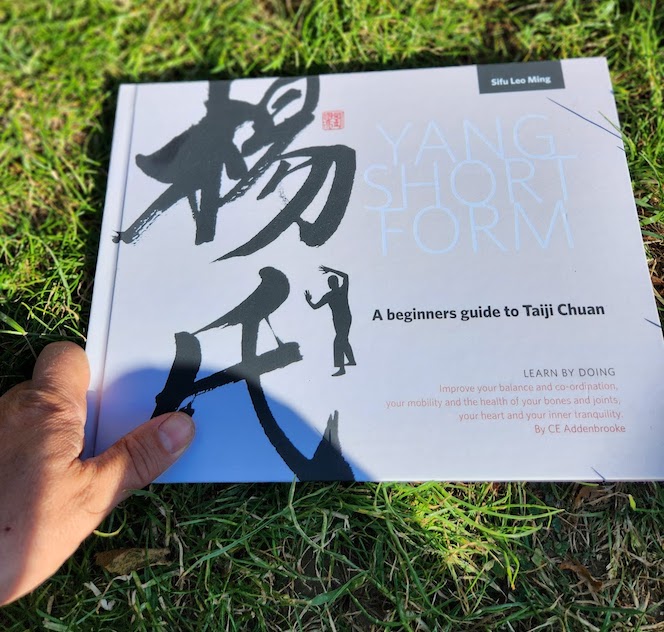
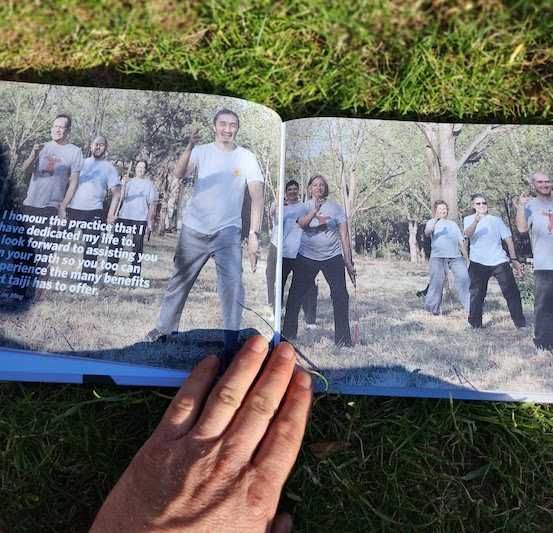
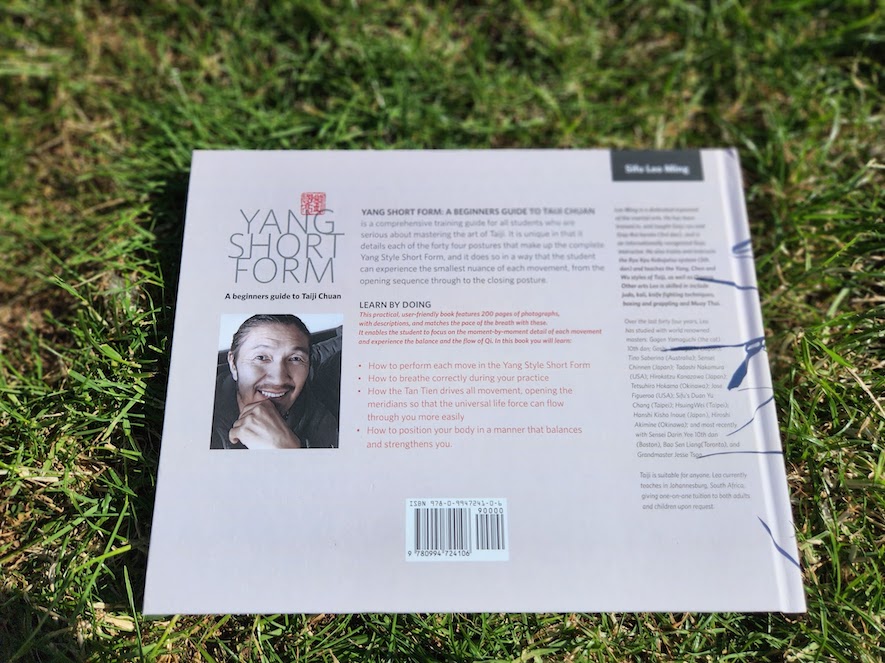
Yang Short Form: A beginners guide to Taiji Chuan, is a beautifully made, hardback coffee-table Tai Chi book, containing a brief section on history and principles of the art, over 200 colour photos mainly for showing you the form, a few verses from the Tao Te Ching to act as inspirational quotes and more.
There’s no denying that at an RRP of £49, it’s expensive. For people wondering why this book costs that much on Amazon (although you could pick it up for 18% less at time of writing), the high production values and hard cover explain the price. Printing in colour is expensive these days.
Sifu Leo Ming is the teacher who appears in the photos, and his student Caroline Addenbrooke is the author.
The main point of the book is to teach you the Cheng Man Ching short form, and if you view the book through the lens of ‘Can I learn a Tai Chi from this book?‘, it succeeds, I just have a few issues with some of the information presented here.
Consider the title
My problems start with the title, “Yang Short Form:A beginners guide to Taiji Chuan“. The Tai Chi form presented in this book is the Cheng Man Ching short form, which is certainly a Yang short form, but it’s a bit of a stretch to call it theYang short form. People generally call it the Cheng Man Ching Short Form or the Chen Man Ching 37 form, which would have been a more accurate name, since Cheng’s form varies quite significantly from the official Yang form that belongs to the actual Yang family.
Secondly, the use of “Taiji Chuan” awkwardly mixes two different romanisation styles together in a way I’ve never seen done before, making it something of an outlier in the Tai Chi world. Tai Chi is usually either written Taijiquan/Tàijíquán (pinyin) or Tai Chi Chuan/Tai chi ch’üan (Wade-Giles), or shortened to simply “Tai Chi“. I find the decision making process of mixing the two systems together used here to come up with “Taiji Chuan” a bit baffling. Why do that?
Similarly, inside the book there’s a mix of different romanisation styles. Shaolin appears as “Shao-lin”, while changquan appears as “Changquan”, (so they’re happy to use pinyin there…) Dantien appears as “Tan Tien”. But Qi is “Qi”, not “Chi”, and Xingyi is “hsing-i”! I can’t work out the logic. In a way, so long as the system used is internally consistent it doesn’t matter, but it is a bit frustrating.
Finally, “beginners guide” is used in the title without an apostrophe! Well, that is just… wrong.
But, let’s move on from the title of the book and look at what we’ve got here.
All the history all at once
The history section starts with a pretty safe phrase, “The history of Taiji Chuan is unknown”, and if it had stopped there I think I would have been happy, but it then goes on to tell a version of Tai Chi history anyway that includes every folk tale in the Tai Chi master’s repertoire! It talks about the classic Chan Sanfeng origin story, but also has the Chen village origin story straight afterwards before giving a brief rundown of the current styles of Tai Chi, before then pivoting back further into time and linking Tai Chi to the Shaolin Temple because that’s where “qigong theory” started… If you know anything about the history of Tai Chi you’ll know that these kind of myths are probably just that, myths, but they help the marketing of the art.
There are other problems with the accuracy of information, too – there’s a picture of a statue of Chang Sanfeng in the history section which is captioned “A statue in Chenjiagou depicting the legendary Chang San-Feng”. I thought that didn’t sound right. A quick 5 minutes on Google confirmed that his statue is of Chang, but it’s found (not surprisingly) in the Wudang mountains, not Chen village, as stated. Unless I’m wrong and there are two identical statues, but I don’t think so. The most famous statues in Chen village are the statues of Chen Chanxing and Yang Luchan.
The rundown of the different styles of Tai Chi in existence today is accurate, but if you want a proper investigation of the history of Tai Chi, I’d suggest looking elsewhere.
The section on principles of Tai Chi is also very brief. It’s all the usual advice you find in Tai Chi books about relaxing, centering, evenness and slowness, etc. There’s nothing wrong here, but it’s very surface level.
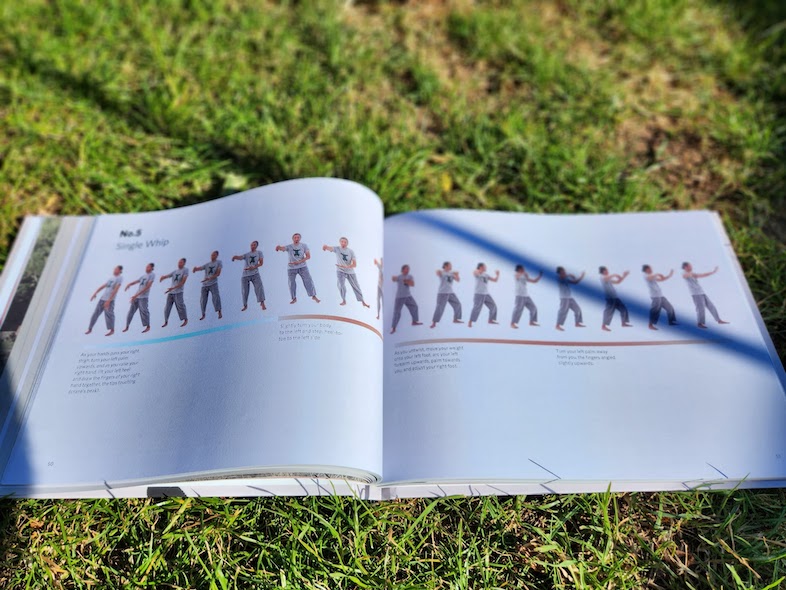
Teaching forms is where Yang Short Form gets it right. The book uses the method of breaking down each move into tiny fragments and showing them next to each other, conveying the sense of movement through the form nicely. As such you can definitely use the book as an aid to memory of this form, or even teach yourself the form from it. Take a look at this example of Single Whip:
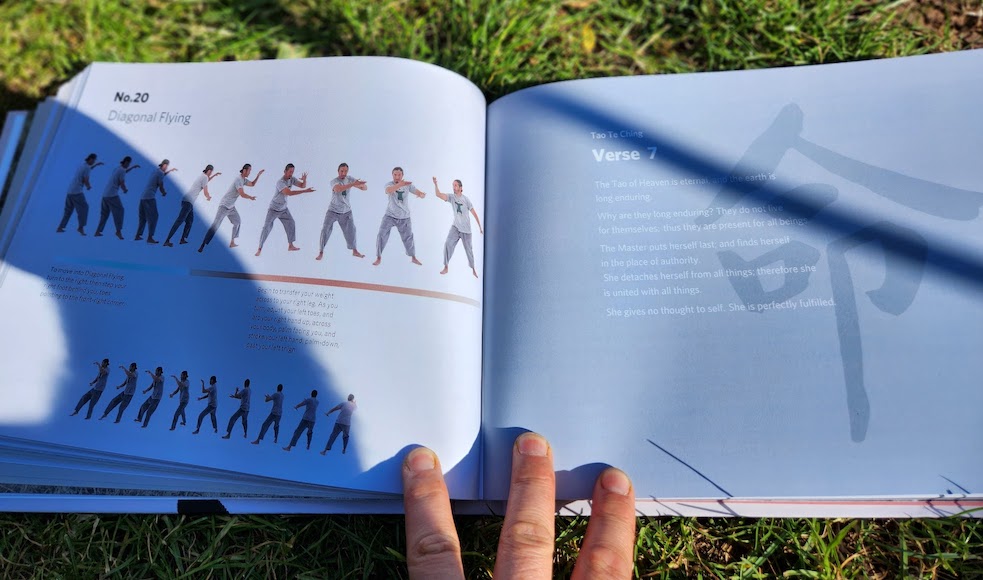
Diagonal Flying:
Of course, Tai Chi purists will say that the choreography of the form is not the important part, and that the body method is vastly more important, however, for better or for worse, the vast majority of Tai Chi practitioners in the world are not looking for a book on that. They are simply trying to learn some movements as a form of exercise for health, and this book will serve them very well.
I don’t do the Cheng Man Ching short form myself, but I have learned it in the past, and as I was looking through the movements it struck me that there were one or two idiosyncrasies presented by Sifu Leo that I hadn’t seen before. I noticed three things in particular:
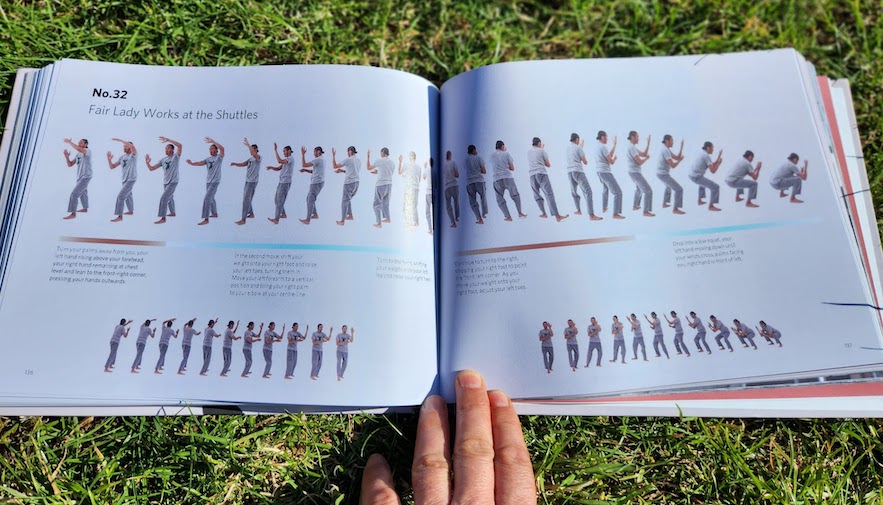
1) A low squat Sifu Leo does as a transition between each ‘Fair Lady Works at the Shuttles’ move:
2) A front kick/leg raise, he puts into Repulse Monkey.
3) In Golden Pheasant Stands on one leg – he again squats all the way down to the floor between the knee raises.
This struck me as peculiar, so I checked the form against a video of Chen Man Ching, mapping the movements in his video to the ones in the book, and while the forms match (all the movements are here and none have been added), the above curiosities are not performed by Professor Chen Man Ching.
Also, there are 43 moves in the form shown here, and Chen Man Ching’s form was said to be 37, but I suppose it depends how you count the moves.
I don’t think these three variations to the Cheng Man Ching form matter that much, but I think it’s safe to say that they are not standard, so I should point them out. It’s also important to note that there are no marital applications or discussion of push hands in the book at all.
Overall, if you practice the Cheng Man Ching short form for health and you want a visual reference to remind you of the moves then this book will fit the bill – it’s beautifully designed and the form is clearly presented. If you’re looking for a scholarly discussion of the history of Tai Chi, or an in-depth dive into the body mechanics, then other books are available.
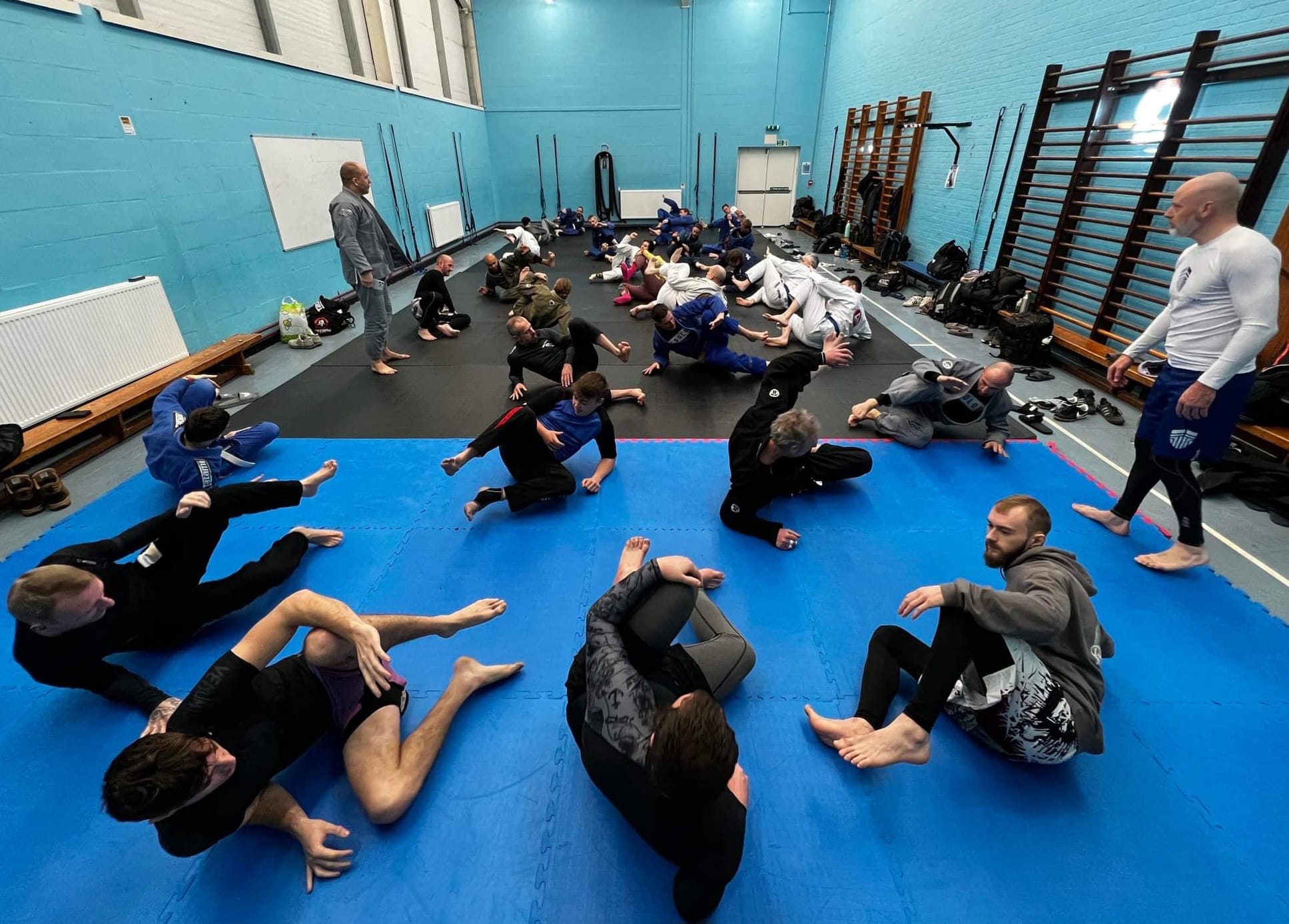
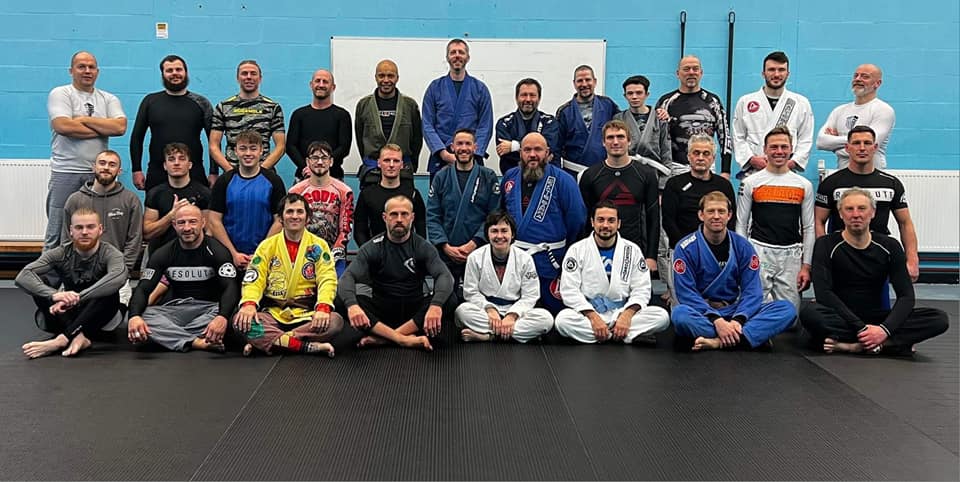
This is the second Priit Mihkelson seminar I’ve attended, the first being on back defence up at Chris Paines’ gym in Stafford. This latest one was on guard playing at Blue Dog Jiujitsu in Yeovil a really nice gym in deepest darkest Somerset. Like last time, this was a massive 8-hour seminar split over 2 days. Priit explained that this is how he likes to present his work, so that there’s plenty of time to drill and practice to really let the lessons sink in. It’s a very different approach to pretty much every other BJJ seminar teacher out there, most of whom like to get their message across in a single 2 or 3 hour block. I only attended the first day this time because I have other commitments in my life, and frankly, 2 days feels like too much! But, that made me the exception here – pretty much everybody else in the room was going to go back for day 2. So, I guess most people are more obsessed with Jiujitsu than me, or they probably just lived a lot closer!
Priit has all sorts of heretical views on the problems with the way BJJ is generally taught, and can talk about any of these aspects at length. In fact, I interviewed him on my podcast last year and you can get a flavour of his views on BJJ there:
Interestingly, the Sideways Open Guard seminar started in exactly the same way as last time – an initial intro by Priit to his approach to BJJ, then a demonstration of a particular posture, an explanation of key details and then he asked you to practice it solo for a little 2 minute burst, then you regroup and he goes further into the details, and we repeat.
The details are deceptively simple:
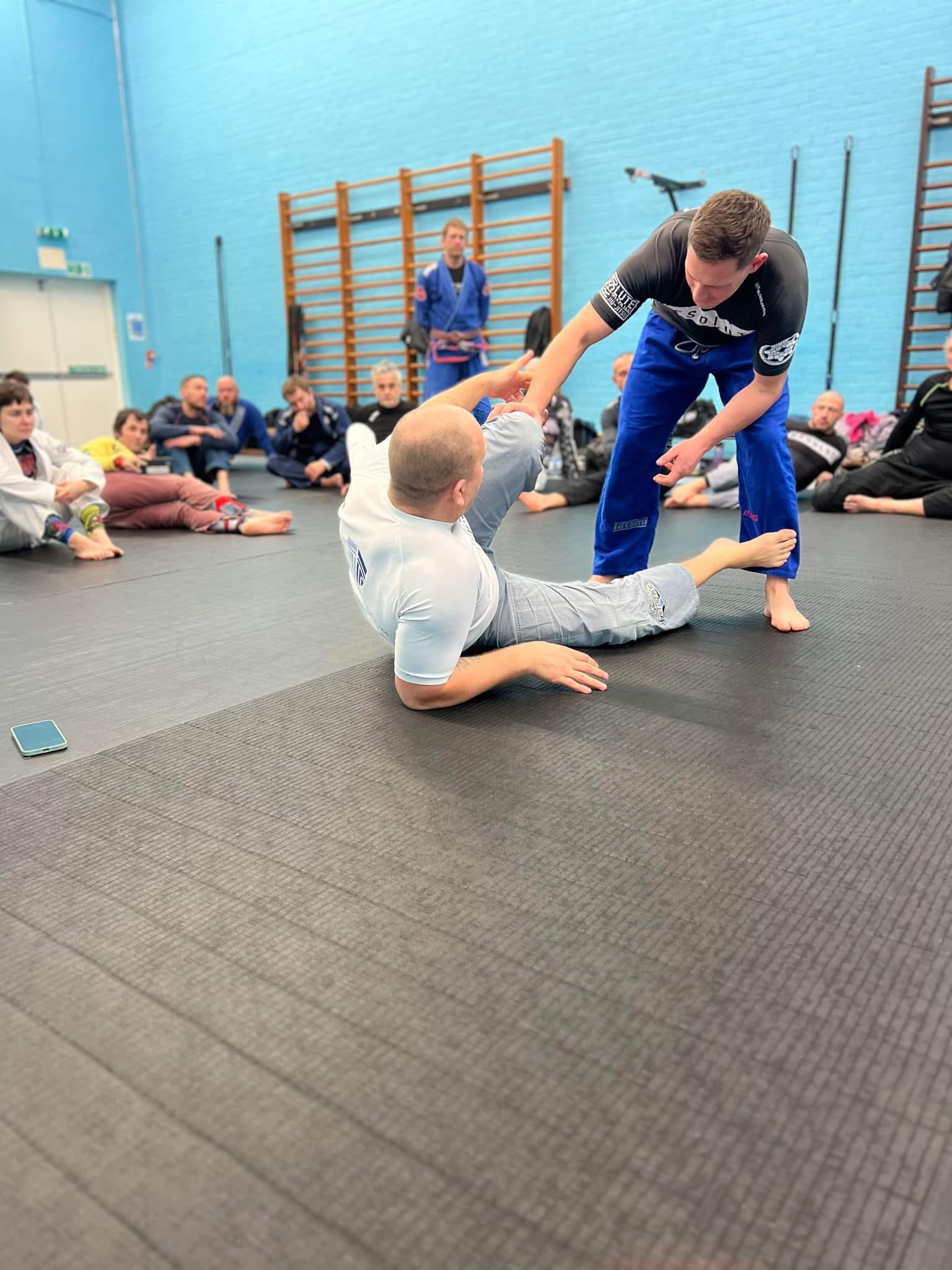
Sideways open guard is like an extension of Priit’s “Grilled Chicken” guard – the original Grilled Chicken was a supine guard – lying on your back in a position that resembles a rotisserie chicken. Sideways Open Guard is (surprise, surprise) lying on your side. The important details are:
1) Up on your elbow – not flat on your shoulder, or propped up on your hand. 2) The top leg is key – the angle (45 degrees) has to be just right and the toes must point upwards, so there’s a slight twisting in the calf/shin. We did a lot of experimenting with this angle and why it’s important. 3) The bottom leg is your jab in boxing – so you can move it where you need to. 4) Constant forward pressure – you should be always moving forward in this guard, pressuring the passer. 5) Keep the opponent in the right segment.
Sideways Open Guard. Photo: Roger Karel – Blue Dog Jiu-Jjitsu (c) 2023
But ‘simple to explain’ doesn’t necessarily mean easy. As the seminar progressed it gradually became a 2-person drilling position with an attacker and a defender, building up through various repetitious drills of “adaptive resistance” to get closer and closer to what most people would call “specific sparring”. It became very apparent along the way that there were plenty of mistakes you can make while trying to hold even a simple set of postural principles when under pressure, and Priit’s repetitious drills were designed to expose them.
We’d do something, get feedback from our partner, then do it again, in short 2 minute bursts, with new aspects being added in occasionally by Priit – defence to a leg drag, defence to a toreando, defence to an over/under pass, etc… Priit’s approach to teaching is very different to most BJJ coaches. He does walk around offering advice, but really he wants you to be given the information, then work it out in practice on the mat with as little help from him as possible. The aim is that your drilling partner gives you feedback on where things are going wrong, so you can correct them. You drill, have a chat about it (get feedback), then drill again. I was luckily enough to get paired up with a good partner (shout out to Mark!) who was skillful, thoughtful and intelligent.
Maybe it was just me, but I found the teaching method a little confusing and difficult at times – sometimes we were allowed to talk, sometimes not, and sometimes we could pass guard, sometimes not. I found it frustrating not quite knowing what the rules were at all times. Also the expectation to give feedback on positions that I wasn’t completely familiar with myself was pretty difficult. How do I give good feedback on what my partner is doing “wrong” on something I’ve only just started learning myself, especially while engaging in a ‘live’ type of practice? I find that when doing Jiujitsu my brain is either in “flowing” mode when sparring, which doesn’t involve much thought, or in “thinking” mode which is usually when I’m sitting back and analysing a situation. Having to do both at once I found hard. Sure, I can figure it out over time, but short 2 minute bursts don’t give me enough time to get my brain into that sort of gear. I felt like we’d often just be getting into something interesting and then get called back.
Priit is all about going into microscopic detail on the fine points that make something work. And most importantly, why those details matter. Because they do – the exact angle of a foot can make the difference between a leg that feels impossible to move, like trying to push on a massive tree trunk, to something that would get knocked over by a light breeze. In a way, this reminded me of the focus on posture you find in martial arts like Tai Chi, rather than Jiujitsu, and I suppose that means it’s also open to the same criticisms that Tai Chi gets – that under pressure these small details are too fiddly to be practical. But then, Priit could demonstrate exactly what he was teaching under pressure, so theoretically it should be possible for others to do it too!
Sideways Open Guard is an interesting position because it looks like a very open position where a pass should be pretty easy to do, but it’s not. Priit asked the room to suggest passes to defend against and demonstrated how he could shut down almost any attack. I suggested a simple step over pass, which Priit then demonstrated the defence to effortlessly on me. I really appreciate teachers who take questions from the room like this and let you try things out on them without any ego.
Priit presents himself as a scientist of jiujitsu. His aim is to teach only the optimal posture for each position, which he has worked out through testing, rather than his personal style. His scientific approach can appear a little harsh in teaching style at times, and he sometimes doesn’t seem to have much patience for people who keep getting it wrong or who he perceives as training in the wrong way. He wants you to slow down, really focus on the details and get them right, not blast through the drills without thinking. This hopefully makes you become fully aware of your own blind spots, which is obviously quite difficult, because they are… your blind spots.
With the Sideways Open Guard, a lot of the time the answer to people getting too close was to grab a leg and wrestle up, and Priit constantly used analogies with boxing and wrestling throughout the seminar, comparing the jiujitsu guard to the boxing guard, for instance. This connecting of jiujitsu back to the universal principles of other combat sports, and away from the “if he does this, you counter with this” approach of many other marital arts, is really a great insight and truly valuable to the BJJ community.
After initially gaining popularity for his approach to turtle and other defensive postures, it’s great to see that Priit is still innovating in the world of jiujitsu. I’m a big fan of his work, and it feels like he’s still working on his masterpiece. A Priit seminar is a rare chance to see the master at work, so I’d recommend them to anybody. He has an online site too, Defensive BJJ, so you can follow his work even if you can’t make it to a seminar. His free BJJ Globetrotters videos on YouTube are another great source.
Overall, this was another great seminar. I caught up with some Bristol friends (shout out to Artemis BJJ ) and I’ve learned some fascinating details that are going to change my game for sure. I already played a lot of sideways open guard, but now I know the flaws I had in my posture, I’ve got plenty to work on. So, I’m sad to miss Day 2 and whatever insights Priit was going to share there (I think Z Guard, and even inverting were on the table), but in the spirit of Defensive BJJ, I’m not afraid to have a go at working it out for myself.
Baguazhang has always been the most curious of the three big internal arts, but while its origins are shrouded in mystery, it’s applications non-trivial and its purpose often obscure, it’s actual practice has always been something that is accessible to anybody who can put one foot in front of the other and walk in a circle.
And getting you to put one foot in front of the other is exactly how Kent Howard’s Introduction to Baguazhang starts off. Without being too specific of any particular style, Howard’s book lays out the basic content found in most lineages of Baguazhang, like the first two palm changes, teacups exercise, circle walking techniques and mother palms, and mixes in some advice on fluid movement, combat applications, standing practice and how to generate power from the root.
In terms of practical advice, Howard covers how to step in a basic circle, and the different ways to changing direction – L steps, T steps and V steps – in a lot of detail. But when it comes to the more complicated things like palm changes you are given pictures to follow rather than detailed step-by-step instruction.
In that respect, the book is exactly what it says it is – an introduction. The “Advanced practices” promised on the cover are certainly included, but not in a “how to do them” sort of way.
Regardless, it’s nice to see such a professional quality book produced on Baguazhang. The production quality is really high – with nice printing and a nice, readable font. The pictures are only black and white, but big and clear enough to see what’s intended, and time has been spent making sure it’s all been properly edited and proofed.
At various points Howard hands over to other authors – Wang Shu Jin’s “The Eight Character Secrets of Baguazhang” from his Bagua Swimming Body Palms book is here, for example, and some commentary from Darius Elder from the same book is reprinted, too.
I found it a bit of a shame he hands over the reins, as the book starts to feel like a collection of other people’s stuff towards the end, and Howard’s own voice, so much in force at the start, is witty, off beat and funny. I’d have liked it more if he’d continued in the same vein throughout.
Minor gripes aside, Howard’s Introduction to Baguazhang is a valuable addition to the literature available on this spinning, circular art that captivates so many people. If you’re looking to take your first steps into Baguazhang then it’s an excellent guide. You’ll certainly be able to learn how to walk a circle, perform the tea cups exercise and have a go at the palm changes. There’s also plenty of advice here that will guide you in the years ahead when you’re much further advanced in your practice.
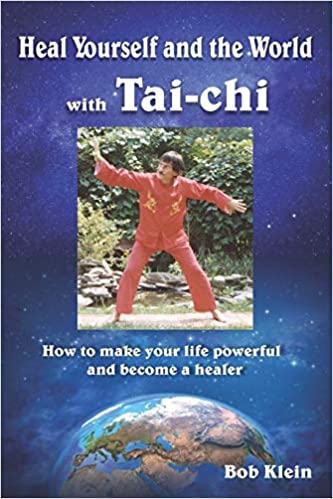
Bob Klein first studied Tai Chi Chuan fifty years ago with Grandmaster William C. C. Chen, and also owned an animal importing business, which gave him a ready supply of exotic animals to test his martial skills against. In a method that sounds similar to the legendary founding tales of many Chinese martial arts, Bob observed the wild animals, and learned their fighting ticks. Bob describes the process as learning the “pattern of attention” of each species, which he then tried to adopt in himself in sparring and Chi Kung, creating his own system, Zookinesis, along the way.
“The imported animals were often not in a good mood as they emerged from their shipping containers and I was attacked frequently.”, explains Bob. “Many of the animals were stronger and faster than I so I had to use my skill in controlling their attention. There were many close calls and I had many scars”, he observes.
Klein also traveled to the jungles of Central America several times to study animals in the wild. “I would buy a dugout canoe and spend a few months paddling along rivers, meeting the wildlife and people.”
The result of this study is the system of chi kung he calls “Zookinesis” (“animal exercises”) and the fighting system called “Phantom Kung-fu”, which is the result of his Tai Chi Chuan influenced by Zookinesis. Zookinesis seems to evolve into the wider world of healing and being in harmony with nature.
The book, Heal yourself and the world with Tai Chi is as much about Zookinesis as it is about Tai Chi. It’s not a “teach yourself Tai Chi” type of guide, or a deep dive into history. Instead, I’d describe it as a kind of stream of consciousness on the subject of animism, Tai Chi, energy flow and spirituality. There are headings and there are chapters, but I don’t really feel like they matter much. You could dip in at any point and just start reading. Stop, flick on 20 pages and read a bit more. Go back 40 pages. And so on. That’s not to say it’s not a well written book, but a reader looking for a more organised, practical or logical system to unpick will be disappointed.
Here are some examples of paragraph I’ve picked at random to give you an example of the sort of text it contains:
“Small children in our society usually draw people as big heads with tiny arms and legs sticking out of the heads. I wonder if they are just seeing the distribution of attention in a person, and drawing their pictures accurately from that perspective.”
In fact, Klein’s work makes a nice contrast to the often fractious world of online Tai Chi discussion. His musings are marvelously inofensive and do a good job of framing his points of reference. He has no interest in denigrating other styles of Tai Chi or teachers, exposing fake histories or arguing with anybody else about what ‘real’ Tai Chi is.
No egos were harmed in the making of this book. If you’re looking for a philosophical meander through many of spirituality’s greatest hits then you’ve come to the right place. Step inside, pour yourself a cup of green tea and let the zookinesis flow.
A rare and welcome return to dead tree media for Brazilian Jiu-Jitsu fans everywhere.
Since the advent of DVD, and easily downloadable video tutorials from the likes of Kesting’s own Grapple Arts website and sites like BJJ Fanatics, new books that teach you BJJ techniques in a step-by-step manner have dwindled to the point of non-existence. Back in the day we had masterworks in print, like Jiu-Jitsu University by Saulo Ribeiro and Kevin Howell, and Advanced Brazilian Jiujitsu Techniques by Marcelo Garcia and Marshal D Carper* to guide us. But VHS and then DVD took over, which is why I’m so pleased to see this new release from Brandon Mullins and Stephan Kesting. Nonstop Jiu-Jitsu is the first new book about Brazilian Jiu-Jitsu to buck the trend and feature photos and step-by-step techniques, released in years.
You might be wondering what the point of a printed book teaching you BJJ is in the modern age of YouTube and steaming video, so let me offer you some reasons for its existence:
1) You don’t need a phone, app, computer or VR headset to enjoy a book. You can take it wherever you go and dive into any page anytime, anywhere. Talk about “instant access”!
2) Some people learn better from printed material – reading puts you in a different headspace. There’s also just something nice about a real, physical book that you can hold in your hands.
3) A DVD of this material (“Nonstop Jiu-Jitsu”) already existsfrom Grapple Arts, so this book acts as an additional resource.
4) Goddamn it, I’m just tired of all BJJ instructionals being in video format these days! It’s so nice to go back to something more old school.
So, as you can probably tell, I really wanted to like this book. I work in print magazines as my day job, so I love print with the sort of passion that Gordan Ryan normally reserves for protein shakes. I want to see the printed medium continue for as long as possible. So, as a fan of the original Nonstop Jiu-jitsu video instructional from Grapple Arts, I was beyond excited to hear that a print version was now available. And at 260 pages, with literally hundreds of full colour photos it is clearly a labour of love for the authors Kesting and Mullins. Yet alas, (alas!), it is not without its problems, of which there are many, but more of that later.
First though, who are Kesting and Mullins, and why should you care what they have to say about BJJ? As mentioned, Kesting runs the Grapple Arts business of BJJ instructional videos. I’ve been a fan of his work for a long time, and purchased many of his products. They’re all good, high-quality productions and usually done in conjunction with another teacher, who has a unique or valuable insight into the world of BJJ. Kesting usually takes the role of uke in the videos, while the featured instructor takes you through his techniques, or concepts. The featured instructor here is Brandon “Wolverine” Mullins, a BJJ world champion who is known for his clear instructional style and showing you complete gameplans, rather than isolated techniques, so he will show you a guard sweep, followed by a guard pass and then a submission, rather than techniques that leave you hanging and not knowing quite what comes next. Mullins isn’t one of the really famous BJJ guys out there, but he’s no stranger to competition and is a very competent teacher.
So what’s my beef? Well, the problem is that the book smacks of self publishing. A quick scan of the credits page reveals they didn’t employ an editor or a sub editor, and it really shows. Not only could almost all the text in the book do with a good edit to make it punchier, tighter and more interesting to read, there are a lot of unforgivable grammatical errors that have crept in, mainly in the introduction text admittedly, but that’s the thing you read first, so it creates a very bad first impression. But while things improve in later sections, typos are prevalent throughout the work, and if like me you can’t stand seeing obvious mistakes in a finished book, you’ll be tearing your hair out. I have a lot of sympathy for the authors here – working in print I know how hard it is to spot your own mistakes. You go “word blind” to your own writing. There are probably typos in this review that I’ve missed, but I can easily go back and fix them because it’s a blog post. In contrast, once something has been published in print it can’t be changed without issuing an expensive reprint – it’s really a very unforgiving medium, and not getting another pair of eyes to look at every single page before you send it to the printers is always fatal. Heck, I’d have done it for free myself if only they’d asked me!**
Some examples of typos from the introduction:
Maybe you’re not be the sort of person who cares about dotting the i’s and crossing the t’s. You just want to get to the great content, right? Well, I have some issues there as well.
I can’t fault the quality of the instruction presented. Like I said before, I was a fan of the original video series. But the way it’s presented here could be improved. For a start, the book is an odd shape (21.5cm across and 21.5cm high). There’s a reason why most books generally aren’t square – they’re really awkward to design for and you can see how this has created problems. When they have a full page of text, they’ve used only 1-column, so a line is uncomfortably long. The margin on the outside edge of the page is very tight too, and it all makes reading difficult, as you have to track your eye back a long way to the left to find the start of the next line. A 2-column grid would have made scanning text much easier.
(Very long lines of text to digest here. And a double exclamation mark at the end? What were they thinking”!!”)
The pages of photos have a different problem. Following from one step to the next is difficult, as they often have alternative shots of the same technique on the page. They’ve put numbers on photos so you can see where to move your eye to next, but knowing where to go next is not intuitive. They also expect you to read the explanation in the text box at the top of the page, then move your eye back to the correct picture to see what is meant, then move your eye back to the text box at the top to read the next step, and so on. It’s all a bit awkward.
(The two white lines indicate an alternative view, in case you were wondering.)
All credit to Kesting and Mullins for spending the time to re-shoot every single technique in detail and presenting colour photos of each step (that’s not cheap to do in print). The photos are clear and accurately show the techniques. They avoid the classic mistake of both weaing the same colour gi, but the printing is a bit too dark, meaning there are some shadows and dark patches on Kesting’s blue gi that are hard to make out, as you can see in my photos. (This probably looked fine on screen when they were creating the book, but the printed version can differ).
(That’s a lot of very small photos to try and fit on one page).
The design has competing systems of classification too, which makes it even more confusing. Sometimes a “what not to do” type photo has a red thumbs down icon on it, at other times it is crossed out with a big red “x”. Why not just pick one system and stick with it?
In their enthusiasm the authors have tried to squeeze too much into this book, both in terms of the number of photos on each page, and the amount of material covered. There are 3 big sections – 1. Fundamental movements, 2. Butterfly guard, 3. De La Riva guard – and to fit it all in, something important has been lost, which is context. In the video version of Nonstop Jiu-Jitsu, Mullins explains why he’s doing each technique, usually in response to the opponent defending his previous effort. Here you don’t know when or why you would use the techniques shown. For instance, when you have butterfly guard, what makes you choose either the hook flip to x guard or the hook flip to phantom choke? It’s not entirely clear. A short piece of text explaining the context before diving into the steps would have made all the difference.
To give you an idea of how much content there is here, the table of contents alone runs to 6 pages! Complaining there’s too much value in a book sounds like an odd gripe, but this book could easily have been split into 3 different books, with more room to really let each subject breathe, and it would have been all the better for it.
The first section (which seems unsure if it’s called Fundamental Movements, or Advanced Fundamentals) is based around the fundamental movements of Jiu-Jitsu, like the technical stand up, sit through, hip escape, butt double and rolling forward and backwards, and then shows you how these movements can be applied in techniques. In a section aimed at beginners the applications are actually quite involved and ramp the difficulty level up very quickly – for example, a rolling omoplata from the armbar position in side control, anybody? As a more experienced Jiu-jitsu player I personally loved the high-level technical content here, but a real beginner might be a bit out of their comfort zone. My only criticism is that they show plenty of applications for all the movements except the hip escape (or shrimp) and bridge, which only get one application each – regaining closed guard from half guard for the shrimp and bridging from mount. I would have liked to have seen a shrimping escape from side control here, and another mount escape added for completeness sake.
The second section goes on to cover butterfly guard. Butterfly is a really good guard to use against an opponent who is trying to pass your guard from his knees. The standard butterfly sweep is shown, plus a plethora of options for when they post a hand or leg. Quite naturally this leads into all sorts of x guard material, back takes and shin sweeps. The section starts with Mullins’ trademark aggressive butt double attack from butterfly, which is a very proactive way to get the action going against a stalling opponent, and as such is nicely suited to competition. Because Mullins teaches in a game plan-based system, a lot of this chapter is devoted to guard passing after you’ve swept them from butterfly guard.
The final section covers the De La Riva guard, which shows you what to do against a standing opponent. The majority of the section is on how to attack with the ball and chain sweep, and follow ups depending on how the opponent defends. Again, the jiu-jitsu shown is attacking and aggressively non-stop, in the sense that he links together guard sweeps, passes and submissions.
Throughout all of the book’s sections, Mullins drops in some tips on motivation, competition strategy and his general thoughts on BJJ. It’s welcome advice, but I think it could have done with an editor to make it more concise.
After all this moaning you probably think I’m going to recommend staying well clear of Nonstop Jiu-Jitsu (or is it “Non-stop Jiu-Jitsu“? Even the name of the book is editorially styled in two different ways, one on the cover without a hyphen and another on the footers of each page with a hyphen – argh! Just choose one way and stick with it), because of all the editorial problems, but I’m not. I’m recommending it because this book is actually glorious!
I love seeing BJJ back in print, and despite the issues I’ve mentioned**, it didn’t stop me from loving this book. If you’re looking for some new ideas for a game to play from butterfly or de la Riva, then you’ll find inspiration here that will last a lifetime, and you can easily add to your game. And, godamn it, it’s a real book about BJJ and we should celebrate that fact.
(* If you’re interested, I consider Marcelo Garcia’s book to be the gold standard in terms of these types of instructional BJJ manuals. Its production standards are first rate, from the quality text and explanations to the brilliant photos. Sadly it went out of print a long time ago.)
(** Lads, if you are reading this and want to do an updated version 2 of this book without all the typos, then please do, but please, please hire an editor this time!)
I recently reviewed Mark Chen’s book “Chen SyleTaijiquan Collected Masterworks” which is a really good translation of Chen Zhaopi’s 1935 book on Taijiquan with additional translation notes from the author and appendices on Tai Chi matters. It’s a good book and he did a great job. That should be the end of it, but I’ve somehow got dragged into a side issue.
As part of my review I did notice that some included documents, called “Chen Chanxing’s Discussion of Taijiquan’s 10 main points”, that Chen Zhaopi attributes to his ancestor Chen Chanxing, were in fact the 10 Thesis of Yue Fei, but with the name “Taijiquan” unscrupulously inserted into them and Chen Chanxing attributed as author.
These documents are widely known as the “Xing Yi Classics” or “The 10 Thesis of Yue Fei” – and while nobody really thinks, or can prove, that Yue himself wrote them, they’ve always been associated with the martial art of Xing Yi/Xin Yi – there is simply no debate about this. I raised this issue in my review.
Mark has posted a response to this issue in my comments section, which I’ll address in full here:
“Thanks to Taichi Notebook for the review and thanks to Mike for his thoughtful comments. As a point of clarification, please note that I do not make the assertion that the “Ten Main Points” was written by Chen Changxing (though the version in the book was obviously written or adapted by a taijiquan partisan). My introductory remarks for chapter 3 say that it “may” have been written by Changxing, and in the preface I indicate that this attribution is used throughout the book for convenience. I further allege that the document “plausibly dates to Changxing’s lifetime,” and the argument for this is given in appendix C.
OK, he’s factually correct about this, (except for calling Mr Sigman’s comments “thoughtful” 😉 ) but he’s taken a position worthy of a modern politician, I feel. He’s simultaneously leaving enough room to wiggle out of saying Chen Chanxing wrote the 10 Main Points (dropping just one single “may” in the book, before making the assertion several times) while at the same time doubling down on the inference that it is true because the time period fits.
Mark continues:
“Regarding Li Jianqiu’s claim (in his 1919 book) that it was written by Yue Fei: while it is certainly possible that the document was written by someone other than Changxing, it was written by Yue Fei only in the same sense that the “taiji classics” were written by Zhang Sanfeng; that is, it was not written by Yue Fei. First, its idiom clearly belongs to the nineteenth century (a fact that is easily discernible in the original Chinese). Second, it quotes from Ming dynasty sources. For example, the passage beginning, “can go, can accomplish, . . .” on page 31 of my book is lifted directly from Zhuge Liang’s delightful letter to Cao Zhen in chapter 100 of _Romance of the Three Kingdoms_ (as far as I know, the only instance of epistolary homicide in recorded history). Other similar references are noted in the book, and while they could theoretically have been taken from pre-Song historical texts (specifically, the _San Guo zhi_), this is not likely the case. General readers were unaware of the cited events until the publication of _Romance_ during the Ming dynasty, so the references would have been meaningless before that time. As another example, the expression _shen fa_ (“body technique”) is a term of art originating in Qi Jiguang’s “Quan jing”–again from the Ming dynasty and further evidence of a taijiquan connection.
First let’s deal with Mark’s strawman argument of Yue’s authorship. Nobody sensible these days is claiming that this is true, so let’s not get distracted. The way Mark draws a parallel between Chang San Feng and Yue Fei is interesting though.
I’ve heard this comparison between Chang San Feng and Yue Fei before. For sure, Yue Fei didn’t write the Xing Yi classics, but they certainly do embody his philosophy – which we know in detail because he was real. The Tai Chi classics have got nothing to do with Chang San Feng’s philosophy, especially because he never existed, whereas there is incontrovertible evidence that Yue Fei was a real, flesh and blood person.
The point about citations from Ming Dynasty works being supportive of a Tai Chi origin of the Xing Yi classics is very strange – maybe I read it wrong, but the postures mentioned in General Qi’s Ming Dynasty manual are in virtually everything – there are more variations on single whip in Baji than there are in Tai Chi, for example.
Richard Dawkins made the criticism that comparisons between imaginary details of imaginary things seem to be more important in religion than is the actual existence or otherwise of those things. It’s a really good observation, and I think 100% true when people start to defend the religion of Taijiquan.
But the real elephant in the room is the content of the 10 Main Points/10 Thesis. Theses are replete with Xing Yi terminology, but there is very little Tai Chi terminology. Mark himself notices this and remarks upon it in his book! I would offer a simpler explanation: Perhaps the reason why these writings are so untypical of Taijiquan is that… they’re not about Taijiquan?
And then there’s the long history of these writings being associated with Xing Yi both in a literary and oral tradition, which Mark completely ignores.
Here are just 3 examples of quotes from the 10 Thesis from the literary tradition on Xing Yi to establish my case:
“While once at Bai Xiyuan’s home in Beijing, I got to see one of the Yue Fei manuals, not an original copy of course, but a handwritten copy made by someone in a later generation. “
While we don’t see his copy of the manual in his book, it establishes the tradition of this hand copied manual attributed to Yue Fei coming down the generations.
2. Li Jianqiu’s “Xing Yi Manual” (1919)
As mentioned before, this 1919 Xing Yi manual contains all 10 chapters of the 10 Thesis in its entirety. They are at the end of the book:
And inside, in a preference written by Zheng Lianpu it states:
“In the summer of 1915, I returned south, and as I passed my hometown, people praised me as a prominent expert for making a study of the contents of Yue Fei’s boxing manual. Within it are nine chapters of essential principles and one chapter on fighting. Although the content of the writing is not without its flaws, the style of the writing is marvelous, powerful, and smooth, and as suits the work of Yue Fei, the theory is refined and thorough. It is certainly not the case that Yue Fei was unable to communicate. I say that equipped with this old Xingyi manual, you too will obtain such a level of clarity.”
3. Liu Dianchen’s Selected subtleties of Xingyi Boxing Art (1920)
This book from 1920 quotes freely from “The manual”, which is, of course, Yue Fei’s 10 Thesis.
E.g. “The Manual says: “The hand lifts like an arrow and drops like the wind, chasing the wind and pursuing the moon without letting up.” It also says this on the quickness of the hand techniques: “Attack where he is unprepared and appear where he does not expect. Do not fear his vigor and fierceness, for with but a move he is defeated.” “
This is from Thesis 9, the Thesis of Stepping.
Mark continues:
“In view of these and related observations, it is nearly certain that “Ten Main Points” was written in the nineteenth century. If it did not originate in Chen Village, then the arguments in my book’s appendix C indicate that it was adopted there around or before the middle of that century. So we can further assert that if any borrowing occurred, it happened roughly during Changxing’s lifetime.
Finally, it’s worth noting that Mike’s comments are generally correct. As I explain at length in appendix B, many martial-arts things (particularly from the Central Plain) lack a tidy provenance, and “Ten Main Points” may well be an example of a document that was exchanged and adapted by many hands over time.”
Yes, I think that’s exactly what it is!
A version of it has possibly ended up in the Chen village at some point and been adapted. However, I think I’ve shown that the oral and literary provenance unequivocally connects it to the martial art of Xing Yi/Xin Yi explicitly, not Taijiquan. Mike’s argument (as I understand it) is that the 3 internal arts are all the same “stuff”, so what applies to one applies equally to all 3. I’d disagree. I’ve already posted about how this mashing together of history is just intellectually lazy. In reality, most Tai Chi people know very little about Xing Yi but they feel like they are authorities on it because they know the “main thing” in the internal arts, (according to them).
Like I said, Mark’s book is great – you should get it. He’s said his piece about my review, which is fair enough, but personally, I disagree. C’est la vie. I’ve little enthusiasm for getting into a long protracted debate over it with either Mark or Mr Sigman because I don’t know what else there is to say, so hopefully they’ll just let it be.







 The Tai Chi Notebook