When I’m teaching my Friday class one of the things I quite often say is “don’t look down” – however, like most of the short, pithy statements you hear delivered by Tai Chi teachers… it’s not really true. Rather, it depends on the context of what you’re doing. Let me explain.
Yes, generally speaking, you want to be looking at the horizon when doing Tai Chi because you want to keep your head and neck aligned with your spine. Specifically with the head and neck we are talking about the posture principle of ‘suspending the head’. However, there are times in Tai Chi, where it is perfectly acceptable to look down – particularly on moves where the direction of the application is down towards to the ground.
The reason I say “don’t look down” a lot when teaching is that people learning a Tai Chi form have a general tendency to look down (me included!). Generally as we age our posture seems to become more slumped forward, perhaps because we sit down a lot in modern life, but also because scanning the horizon for signs of danger has long since stopped being an evolutionary priority. We also use computers, phones and devices all the time, and they lead to a general posture of our heads being tilted forward slightly. This can result in people doing the whole Tai Chi form while never looking up from the ground.
Extending the qi
In Tai Chi you want to have a feeling of a slight stretch all over the exterior of the body at all times – that’s really what following the posture principles of Tai Chi gives you – things like flattening the lower back, rounding the shoulders and suspending the head. This is known as ‘extending the qi’ all over the body. When you stand in a Zhan Zhuang posture you can feel this slight stretch all over the surface of the body that the posture generates – it’s subtle, but that’s what you’re looking for.
Suspending the head is part of that extension of the qi over the head, and you can keep that extended feeling even when you glance down. What you definitely don’t want to do is break the alignment of the spine and neck, which is what typically people do when looking at their phone, or their feet:
If you want a good fix for this then I find regular Zhang Zhuang (“post standing” or “standing like a tree”) practice is a good way to remedy this and retrain your head position on a subconscious level. Master Lam has a 10-day course on the subject.
The problem with looking down is that our head is rather heavy (between 2.3 and 5kg), and when you take your neck out of alignment with your spine your body automatically compensates for the extra weight that is pulling it forward (or you’d fall) and it does that by tensing some of its posture control muscles, particularly in the middle of the body, and that can interfere with the relaxation and freedom of movement we are looking for in Tai Chi. You also aren’t creating an optimal path for sending incoming forces to the ground or for sending jin up to the head. You are also not ‘extending qi’ to the head.
If you’re going to look down then you need to do it while keeping that slight stretch up the back of the neck and over the head.
Ward-off and martial applications
‘Ward off’ is another example of a posture where I do look down, although it’s only briefly. I look down because of the martial application I’m thinking of. My active hand in that posture is first the back hand, which I’m using to send my imaginary opponent to the floor. The front hand can then be used as a deflector, so after I’ve dispatched the first opponent to the floor, I then look up and deflect the second attack, which leads into the ‘roll back’ posture.
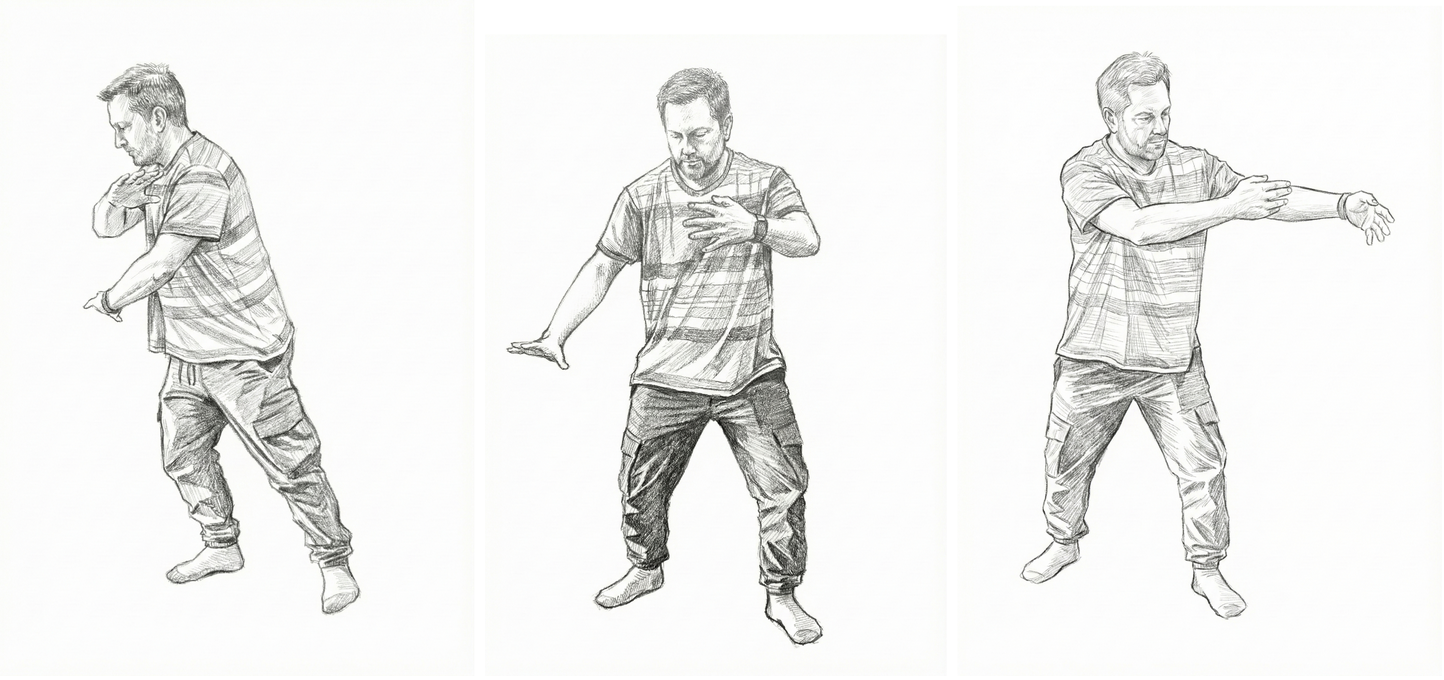
Here is the sequence:
In this sequence, the ‘ward off’ is the middle picture, and my focus is on my right hand pushing down from where it was in the previous picture, then in the next picture I refocus on the left hand deflecting, and getting ready to perform a ‘roll back’.
Here’s a much younger and hoplessly naive version of myself showing the marital application at around 19 seconds in this video:
As you can see, where you are looking in the Tai Chi form is dependent on what application you have in mind when doing the movement. So, while there are some useful maxims to remember in Tai Chi, such as ‘don’t look down’, it’s important that you know when it’s acceptable to bend the rules so that your Tai Chi becomes a living practice, with things done for a reason, not just blindly following the rules.
It’s pretty good! I particularity enjoyed the ‘Wu chi’ standing at the start where he emphasises relaxing and releasing tension. Later on he gets into Feng’s HunYuan Qigong, but he’s using it more as a framework to teach his Ancestral Movement concepts. Fascinating stuff.
And why you shouldn’t train with weights when developing your qi
Mike Sigman has sent me an article to publish on this blog. I don’t normally publish other people’s work, or agree to their requests, but I’ll make an exception because it will hopefully generate some discussion. Regardless of how you feel about him, there’s is always a real depth to Mike’s writings and ideas that you can get a lot from, that you don’t really find anywhere else.
The article is primarily about one of the trickiest subjects in Chinese martial arts – qi (or chi).
I have a few thoughts about it:
1) The article starts by trying to “separate the skin-related qi, which includes the subconscious mind’s involvement, from the theoretical qi of traditional Chinese medicine”.
To some, particularly those people who relish Chinese history and the evolution of the concept of qi as it appears in Taoist thought, or medicine, that just won’t be acceptable, but I think this works for me. It moves the discussion into the realm of the physical and practical. It becomes a feeling and a doing thing.
2) It appears to be written partly as a reaction to a recent trend of mixing, or doing, Chinese martial arts conditioning through the medium of kettle bell or weights training. The question is, is that a waste of time if you want to get to the root of the subject, which is what the Chinese martial artists call qi?
Look, I don’t think there’s anything wrong with making yourself physically stronger at all. In fact, it’s obviously advantageous if you’re learning martial arts… But the article states that to master the internal movement, “the body must be completely retrained to learn to move with the qi, jin, and dantian”, and using weights will not help you in that respect. If you have retrained the body, then you could probably add them.
3) As I’ve said, nobody else really talks about this stuff, or if they do it’s watered down with a lot of other guff. If the article is correct on qi then what exactly are all the big names in modern tai chi seminar circuit and online courses out there actually teaching? Because they talk about qi a lot… but they don’t approach it in the same way as this article does, at least as far as I can see.
4) The article describes internal movement, quite simply and quite succinctly: “Ultimately, you develop a form of movement that uses the solidity of the ground as the focus of all forces to and from the body, while the qi covering of the body is manipulated by the lower-body and the middle to bring power to the arms and upper body.”
I find it hard to disagree with that definition, probably because it’s pretty broad. Sure, we can argue over what the “middle” is, or what the “lower-body” means,etc.. but as a succinct definition, it’s not half bad.
Now, let’s move on to how you do it…
The article talks about breathing exercises as a starting point: “Breathing techniques that stretch the surface of the skin and the involuntary muscle layers are the usual start of the progression.”
Now, I have personally trained in some of the methods that Mr Sigman uses (there’s a link to a video at the end of the article), and experienced what he’s talking about, and I’d agree that I can feel what he’s talking about. But I wouldn’t count myself as an expert in it, or knowledgeable about anything to do with it beyond the initial foot in the door stages, however, I have found that alone to be incredibly valuable and shone a light on some of the other things I was already doing. Even getting a foot in the door took a lot of work and a lot of time.
Anyway, I’ll leave you to read the article now and feel free to comment with your thoughts below.
Graham
Practical Development of Qi
And why you shouldn’t train with weights when developing your qi
by Mike Sigman, March 2025
Discussing qi is difficult because the definition of qi has become a bird’s nest of related topics. Let’s try to narrow the discussion and then describe an approach to practical development.
Most of the skills related to qi, in the physical body, have to do with an area near the skin of the body that is referred to as the “protective qi” or “wei qi”. While the protective qi is often referred to as an “energy”, it is actually a physical set of tissues that is controlled via the autonomic nervous system … but when you learn to control it via the subconscious mind, it does indeed feel sort of like an “energy” because it is apart from the topical sensations of the somatic nervous system, and the qi indeed feels odd, like an energy.
So, let’s separate the skin-related qi, which includes the subconscious mind’s involvement, from the theoretical qi of traditional Chinese medicine: that’s where most of the confusion lies. The skin-related qi and the subconscious mind are the artifacts which give us heightened toughness of the skin, odd sensations of qi, added strength by supplemental our muscle-bone strength, and dantian control of the body as whole connected by skin-related qi, among other things. Jin forces, the manipulation of the solidity of the ground and/or downward forces of gravity, are also the product of the skin-related qi: jin is defined as “the physical manifestation of qi” in many Chinese sources.
The qi of traditional medicine theory is/was an effort to explain the workings of strength, including the strength of our involuntary systems. We don’t need to know all the theories about meridians, putative different types of qi, etc., in order to develop the qi. Breathing exercises and focused physical and mental exercises are more important than complex qi-paradigm explanations.
The skin-area wei qi is initially controlled by respiration and “breathing exercises” are our initial approach to control and development of the qi tissues. During inspiration, if we are slightly extended or stretched out, we can feel a slight inward pulling of the tissues of the fingers and hand. Other areas of the body, upon being slightly stretched taut, can also be felt during the inhale, but many tissues in other areas of the body can’t be felt. They must be developed over time by breathing exercises before we can feel them respond to our breathing and before we can develop them further.
Some Chinese texts mention the fact that this superficial qi is something that animals still use (think of a horse quivering its flanks, for example), but which has atrophied in humans over the course of evolution. In order to regain our qi, we must use deliberate exercises of breathing, mental imagery, and posture manipulation.
Training the Qi in General Movement
Jin force-manipulation is a product of the qi tissues applying stressors within the body’s frame. That’s why jin is defined as “the physical manifestation of the qi”, among other things. We use jin unconsciously in our everyday movements, so another common definition of jin is as an “intrinsic strength”. The full-blown traditional movement methodology that permeates the Chinese (and related) martial arts involves both qi and qi’s subset, jin. Qi and jin. Jin forces are the mind-directed forces from the ground and gravity; qi can be thought of, in a simplified sense, as a superficial muscular layer that connects the whole body.
The basic idea of movement with qi and jin is that the power from the ground and lower body is used as the power source for the upper body. The qi and the jin work from the lower body (including the middle/dantian), so what we have with “internal” movement is a system where the arms and hands are controlled and powered by the lower body and the middle.
The general admonition is that muscle and power are used in the lower body, as needed, while the upper body is moved without the use of local muscle. I.e., a person has to learn to control his/her upper body via manipulation of the lower body and the middle. The person who thinks the internal arts would be best supplemented with typical weight workouts at the gym has lost the plot and is giving away a total lack of understanding about how the “internal” martial arts work.
Developing the Qi
Jin skills are actually fairly easy to learn, although it generally takes a few knowledgeable pointers and some personal, hands-on demonstrations to get someone started. There are a number of written attempts at jin explanations on the internet, particularly through the 6H forum.
Qi is difficult to develop because it takes time and the feelings we need to focus our attention are tenuous at first. Breathing techniques that stretch the surface of the skin and the involuntary muscle layers are the usual start of the progression. Many traditional Chinese martial arts talk about “100 Days” of breathing exercises to develop the qi to a usable status.
Movement of the involves directing all forces upward from the solidity of the ground (so you must “sink your qi”) or use the weight of the body as a basis for downward movement.
Ultimately, you develop a form of movement that uses the solidity of the ground as the focus of all forces to and from the body, while the qi covering of the body is manipulated by the lower-body and the middle to bring power to the arms and upper body.
All Asian martial arts that are labelled as “internal” martial arts, formal calligraphy, qigongs, traditional dance, etc., use this combination of qi and jin for movements. Learning the external choreography and appearance of a martial art, a qigong, etc., no matter how much it resembles the movements of an expert, will not be correct until the system of movement is changed over to the qi, jin, and dantian type of movement.
Almost all of the movements we so often see in western semblances of “Tai Chi”, Aikido, Xingyiquan, Baguazhang, etc., are based from normal movement parameters, rather than qi and jin mechanics and it will take effort to re-learn these arts with the correct movement basis. There is an old saying to that effect: “Taijiquan is easy to learn, but difficult to correct”. So, if your goal is to learn Taijiquan, Aikido, or related arts, remember that all the talk about “relaxation”, “don’t use weights”, etc., is because the body must be completely retrained to learn to move with the qi, jin, and dantian.
Here’s a video of Chen Zhaosen, with translation by John Prince, teaching basic movement drills for the Chen-style Taijiquan. Notice his comment about no strength in the upper body, but whatever strength you need in the lower body. https://vimeo.com/141009942
This video of a lady doing Tai Chi on a balance board popped up in my Instagram feed today and I’ve got to say – not bad at all! Her balance looks fantastic. Obviously, she’s also super flexible ( she looks like she’s adept at modern gymnastic ‘wushu’, not just tai chi, to me), but that has nothing to do with how well she’s balancing.
This balance board device looks like great fun to play with! I’ll have to find one. I like doing things like that that test my balance. My local park has a play area with a strange circular rotating… er… thing?… in it. When my kids were little I used to take them to the park to play on it, and I used to try and do tai chi on it while they jumped on it at the same time:
That thing is very hard to balance on, let alone walk around on while it’s moving. It goes surprisingly fast at times.
I was taught specific body-lightness training as part of my tai chi training, and it really helps with things like this. My teacher’s notes described it as giving you ‘better than normal balance’ and when I read that I thought it was a bit of an exaggeration, but once I got to that part of the training, I realised that this was a perfectly good description of what it gives you. The training involves a chi kung exercise (internal training) as well as doing the form with weights on your ankles (external training) then combing the two. It’s the sort of thing you have to concentrate on to have: Like a switch you can turn it on and off.
Better balance is one of the things I find that people come to tai chi for. The good news is that I think the whole process of learning the form gives you significantly better balance. The specific body-lightness I’m talking about is part of the whole training process and takes time to get to, as well as time to practice before you ‘get it’. Sadly, it’s not something I can just impart to people, because I would if I could. It’s damn useful.
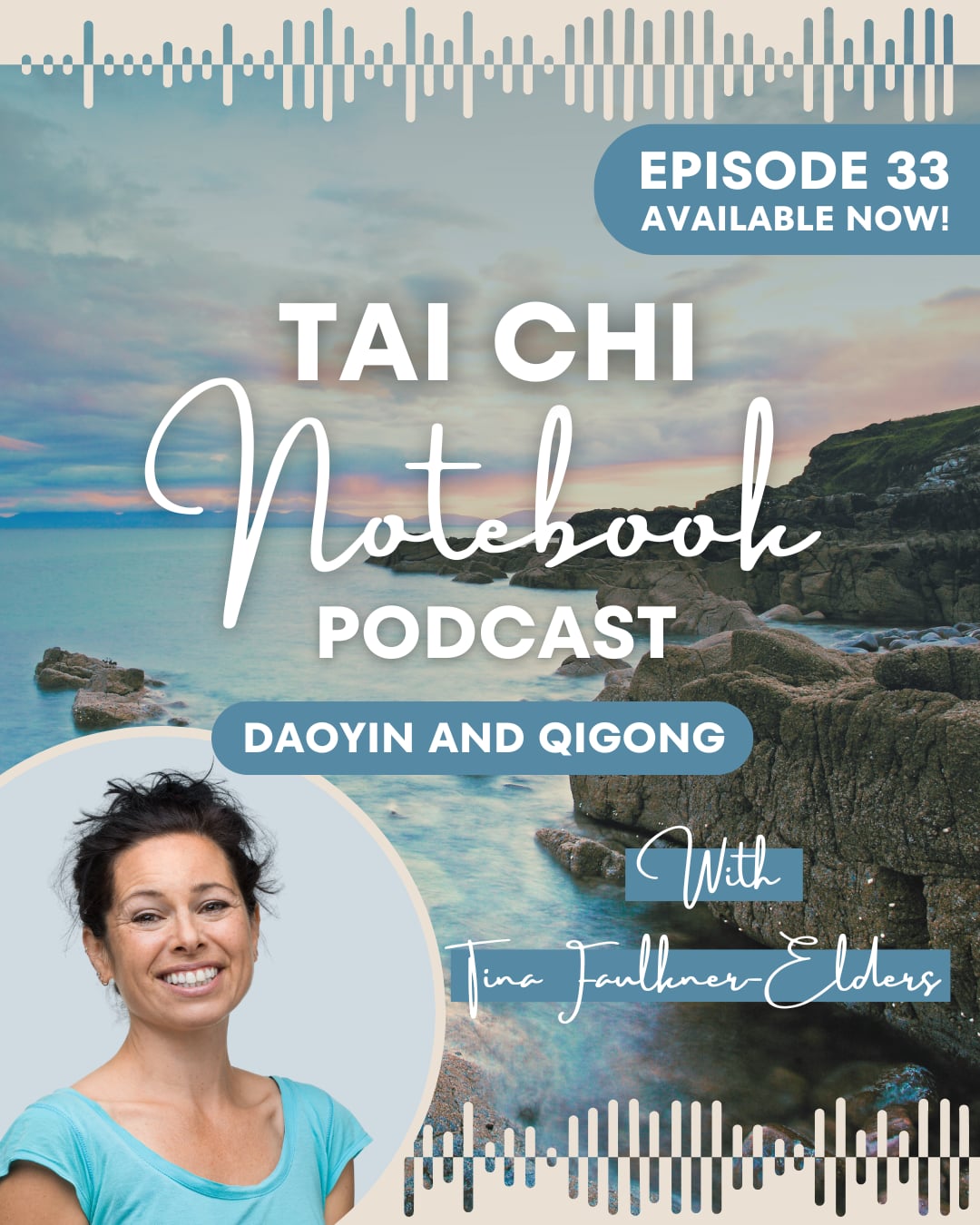
My guest for the latest episode of The Tai Chi Notebook Podcast is Tina Faulkner Elders, chief instructor of the RuYi School of Taijiquan and Qigong in Aberdeenshire. We talk about Tina’s training in qigong, first with her father, then in Beijing, China, and then on Wudang mountain itself, the legendary home of Taoism.
“According to Chinese medicine, all diseases are caused by blocked meridians (energy channels in the body). Hence, disease prevention and healing can be as simple as clearing meridians and expelling toxins and waste in the body.”
The above quote is from the Amazon description of the book PaidaLajin Self-Healing by Hongchi Xiao. If you’re a Tai Chi practitioner, have had acupuncture or are “into” Chinese medicine then you’re probably thinking, hmm that sounds quite reasonable, right? Wrong…
Well, the reason I’m not linking to that book on Amazon (which you can still buy for £5.20, btw) is that Hongchi Xiao, 61, of Cloudbreak, California, is currently on trial for manslaughter by gross negligence at Winchester Crown Court, in the UK.
“Danielle Carr-Gomm, 71, died in October 2016 while taking part in a workshop in Wiltshire which promoted Paida Lajin therapy, which sees patients being slapped or slapping themselves repeatedly.
Prosecutor Duncan Atkinson told Winchester Crown Court Mrs Carr-Gomm had been seen to be “vomiting, tired and weak” and had been “howling in pain”.
Mrs Carr-Gomm had Type 1 diabetes, meaning she had to take insulin every day to keep her blood glucose levels under control.
But Mr Atkinson told the court that she announced on the first day of the workshop that she had stopped taking her insulin, which Mr Xiao “congratulated” her on.
“He did nothing to alert others to the risk. He simply congratulated her and allowed a Type 1 diabetic to commence fasting without insulin,” he added.
There’s a strong crossover between Chinese martial arts and Chinese healing systems. In fact, it’s the link between the two that is often quoted as one of the strengths of the Chinese systems – that the practitioner learns how to heal the body as well as destroy it. And yet, these things keep happening.
One of Cheng Man Ching’s close western students died of a burst appendix that was left untreated because of a distrust of western medicine. I can think of at least one Qigong master who died from a hernia caused by their practice, or the Qigong student who died after not eating for 54 days. I was shocked to learn recently that the Wim Hof Method has a surprisingly high body count.
Let’s see this as a teaching moment. Qigong, massage, Tai Chi, breathing therapy, etc, can all be useful complementary practices to help the healing process, but no matter how wise, guru-like or charismatic your Qigong teacher, Kung Fu master, or alternative-healing therapist appears, you should not hand over your brains at the studio door along with the class fee. Remain skeptical, and trust only qualified medical practitioners if you have serious issues with your health.
I’ve just finished listening to an interesting podcast where Dr. Rangan Chatterjee talks about about how to form daily habits in a way that actually works. The takeaway is that you need to make the habit as easy as possible and also tack it onto something you already do every day if you want it to stick. Dr Chatterjee makes the good point that we don’t have to force ourselves to brush our teeth in the morning and at night – we just do it. We don’t decide, oh, I’m a bit tired tonight or I’ve got a lot of work on, so I’ll just skip it for a couple of days. No, we just do it, and it’s easy.
Doing Tai Chi could be as easy as brushing your teeth. Photo by Andrea Piacquadio on Pexels.com
Forming a regular practice Tai Chi habit however can be hard. It’s very easy to convince yourself to not practice because you’re tired or just not feeling like it.
Tai Chi, Qigong or stretching is also a bit like brushing your teeth, because you don’t get much benefit from not brushing your teeth for a week, and then doing a massive 1 hour deep clean on a Sunday. No, brushing your teeth needs to be done a little every day if it’s going to work, and so does Tai Chi, Qigong and stretching.
Which brings us to the question of how we actually develop a strong practice habit like this for Tai Chi, and that takes me back to Dr. Rangan Chatterjee. Most of us make a pot of coffee, or cup of tea in the morning. It’s a ritual we’re already doing and nobody needs to force us to start doing. (If you don’t do this, I bet there is something similar you do in the morning?) What we need to do is start hacking that existing habit with the new habit we want to instill, in this case Tai Chi, stretching, standing, meditation, or whatever it is.
It’s all about maximising those moments of dead time. Photo by Rachel Claire on Pexels.com
While your coffee is brewing, stop looking at your phone and spend those minutes doing the thing you want to do. One thing I’ve started to do is pour the water on my tea bag, then do a stretching routine while it is brewing. This way I don’t need to rely on motivation to do the routine each morning, because motivation is great when it’s high, but a rubbish thing to rely on when you are feeling tired, rushed or grumpy.
Even a few minutes of whatever it is will make a difference. I already feel like I’m more flexible in my hips because of these few minutes. And doing those few minutes might make me feel like doing more immediately afterwards. Other ideas for things to do while the coffee is brewing would be some single arm silk reeling circles, some standing Qigong, or repeat small sections of the form, like Grasp Birds Tail. The choice is yours. Try it!
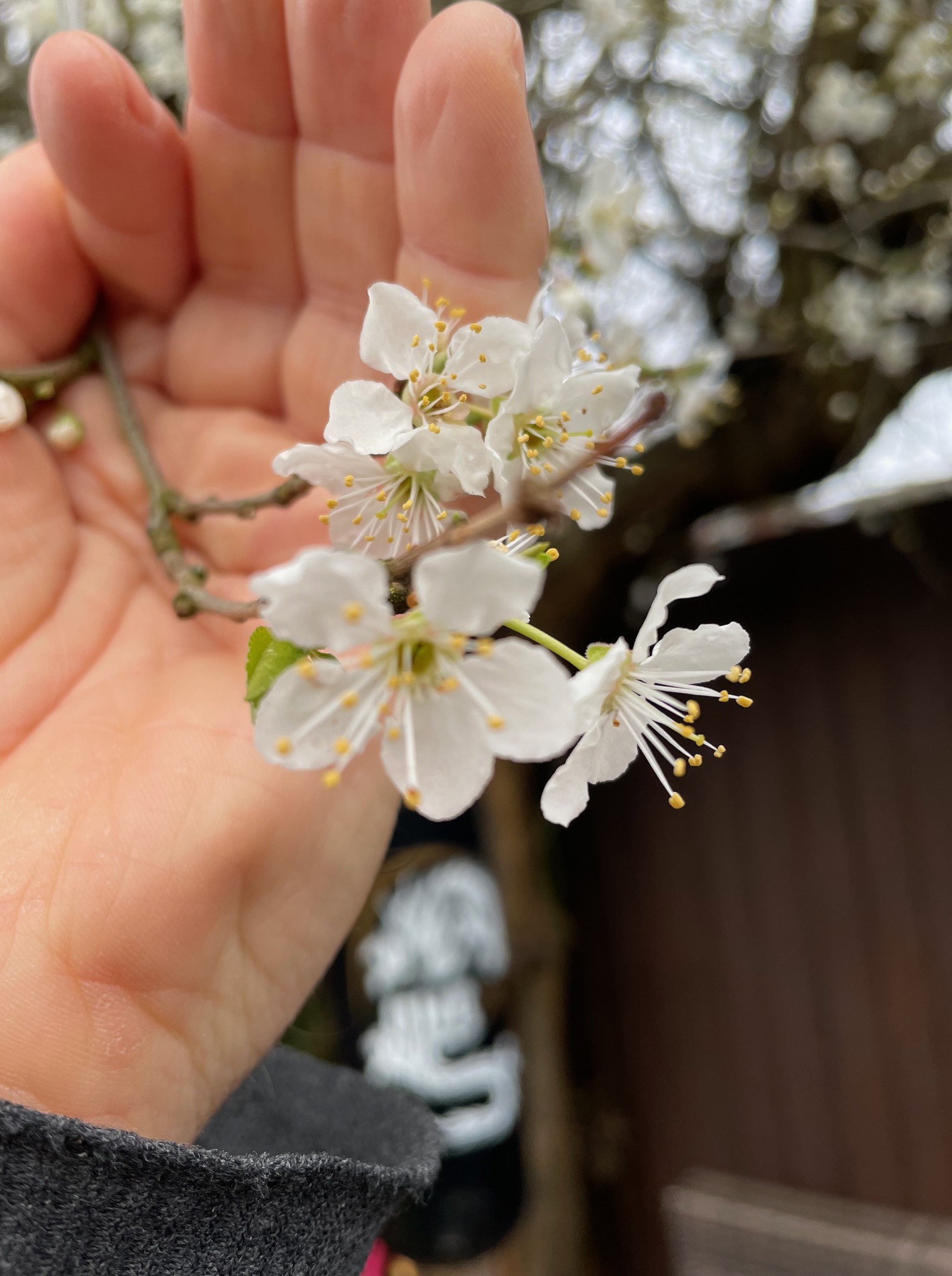
The plum tree in my garden is blossoming, and that can mean only one thing: Spring is here!
Without getting too poetic about it, the potential energy trapped within the tree over Winter is releasing and opening out to the world. So, in keeping with the cycle of the seasons, let’s return our Tai Chi practice to a similar aspect – opening and closing.
All Chinese martial arts contain movements that open and close the body, but I’d go as far as to say that a repeated pattern of opening and closing your body in movement is the fundamental action of Tai Chi Chuan. It’s perhaps the one thing that makes Tai Chi Chuan (Taijiquan) different to other Chinese martial arts.
Then there are also Chinese martial arts that use ‘open’ postures a lot, and produce power from the big turning actions of the waist and shoulders – Choy Li Fut is a good example of this.
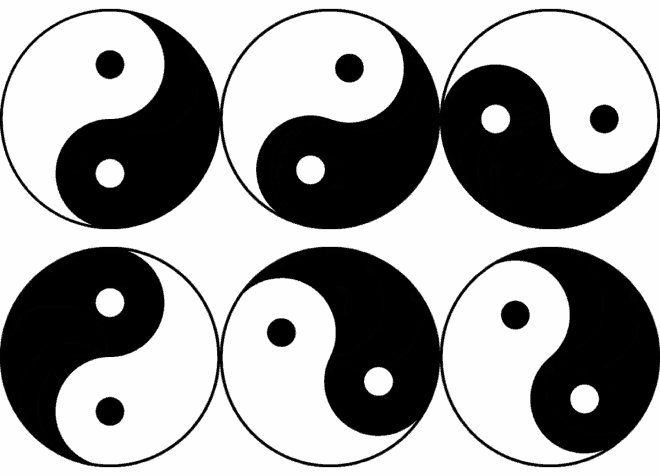
Of course, both these arts make use of both opening and closing movements in application, but what makes Taijiquan different is that it seems to have a rule that the body must constantly cycle through a series of opening and closing postures. You can see this when you look at Tai Chi forms – it shouldn’t matter which style you’re looking at, the opening and closing movements should follow each other in a cycle, very much like the Yin Yang symbol. If you imagine the Yin Yang symbol turning in a clockwise direction then the white fish becomes the black fish, which becomes the white fish, and on and on.
Silk Reeling exercises are a great way to focus on understanding open and close movements, as you just keep repeating the same pattern over and over, so your brain doesn’t get occupied thinking about the movement you are doing next (as it would in a Tai Chi form) and you can focus on the opening and closing actions.
So, what are the opening and closing actions? Well, I went over it in a video series a while ago. You can watch it here:
But it takes a while to watch all that series, so long story short, here’s a written explanation: an opening movement generally stretches out the front of the body (the Yin side – the soft parts, like the inside of the arms, and thigh, calves, and belly) and a closing movement generally stretches out the back of the body (the Yang side – the harder parts, like back of the arms, back and outside of the thighs and shins).
You can see these actions everywhere in nature: Cats tend to stretch along the front and back (yin and yang) of the body when stretching. (And it’s the same with the Yoga “Cat stretch” posture). But you see them in humans too – when you do one of those involuntary yawning/stretching movements in the morning, it tends to be opening the chest (yin stretch), occasionally followed up by a Yang side stretch.
It’s been noted that animals running are opening and closing the Yin and Yang sides of their bodies in sequence. So, this opening and closing action is fundamental to human and animal movement and the more we can utilise it, the more we are returning to our own natural systems of movement. Now, I don’t want to get sidetracked into a debate on what exactly “natural” movement is, but simply put, this opening and closing movement done in the human body feels good, it seems to put you in a good mood and you feel like your body and mind are returning to the way they are supposed to work. It requires less effort to perform tasks using it because it’s very efficient and it feels natural. If you watch skilled workmen and women then you’ll notice that they tend to gravitate towards easy body movements that have this natural opening and closing quality. Many of the people in ancient China who practised kung fu systems would have been agricultural village works who were familiar with natural movement patterns through necessity.
4 Directions Breathing exercise
Silk reeling exercises belong to the Chen style of Taijiquan, and while I (a Yang stylist) have no problem borrowing what works from other styles, a lot of Tai Chi practitioners might not want to do something from another style. However, almost all Qi Gong/Tao Yin type breathing exercises follow the same idea of opening along the Yin side of the body and closing along the Yang side that you find in Silk Reeling exercises.
You probably have some sort of exercise already that’s in your system to try this with, but let’s try one simple exercise to get our heads around the idea of open and close.
Stand in a Horse stance,
Breathe in as you bring your hands up facing you and then move them around a large imaginary ball that’s in front of your chest, so that your hands are facing away from you.
Push the imaginary ball forward away from you as you breathe out.
Turn the hands over and bring them back in towards you as you breathe in, going around the outside of the ball.
Push to the sides as you breathe out.
Bring the hands back in, circling the ball, getting underneath it as you breathe in.
Push upwards as you breathe out.
Bring the hands back in, circling the ball, getting on top of it as you breathe in.
Push downwards as you breathe out.
Bring the hands back in, going around the ball as you breathe in.
Let the palms face down and hands return to your sides as you breathe out.
Adding the opening and closing:
As you bring your arms up and towards you and go around a big ball that’s the opening movement. You can feel the slight stretch opening around the chest area, and you use that slight tension to help push your hands forward. As you do you’ll feel a slight stretch developing along your back. That’s the closing movement. You then use that slight tension to help bring your arms back. This is opening. Then as the arms push to the side, this is closing, and so on.
You often hear Tai Chi teachers say things like “don’t use muscle”. Normally this drives me mad, as you can’t physically make a movement without using muscles! However, what they’re really talking about is using that slight stretch you can feel to power the movement instead of just moving as you normally would, which results in making it “too physical” for Tai Chi. Finding the right words here is a delicate balance, but what we’re looking for is more of a whole body movement.
Final words
It helps to work on this in a stationary exercise, as described, but when you try your Tai Chi form, try and focus on keeping that feeling of opening and closing going throughout the whole form. The opening and closing movements are already there in the form, it’s up to you to reveal them. It’s a way of approaching the form from the inside, rather than the outside. So, if you’ve been struggling to get a movement to feel right in your form, it could be that the method described here will solve the problem for you. For it to work you have to be “sung” (relaxed) and focused on what you’re doing and the feelings inside the body. If your mind wanders off then inevitably so will your form. This is the start of what we call in the Tai Chi Classics “internal and external combine”.
A couple of months ago I put my Sacroiliac joint out doing Jiujitsu. Typical symptoms are pain walking, standing in one spot and generally everything involving being alive. I didn’t know it was out initially so carried on training for a couple of days, but the pain steadily increased until I sought help from a sports therapist who diagnosed me, followed by a painful massage which felt good afterwards, not during!
This video shows where the Sacroiliac joint (SI joint) is located (it’s the meeting of the sacrum and the iliac.) The pelvis is not one bone, it’s three bones and the SI joints are what connects them together. The presenters are a bit crazy, but I kind of like them:
As you can see, there’s not much movement in the joint at all, and when it gets jolted it can move out of alignment and that’s when you get all the problems I had. Naturally, your other muscles and tendons have to compensate for the joint being out, and they object, strongly! In my case my piriformis was particularly unhappy about the situation and wanted to let me know by inflaming. Ouch!
Now the video above shows various ways to pop your SI joint back in the right place, but I did it using the baduanjin exercise I was taught as part of Chinese Qigong, so I thought it was worth talking about here.
After a sports massage to relax the tendons I did the usual Baduajin routine I do regularly as part of my morning routine, and during one particular exercise I felt the SI joint pop back in place straight away.
Baduanjin 八段錦 (translates as ‘8 silk force’ or ‘8 pieces of brocade’) are a set of Chinese exercises that could be up to a thousand years old. Simon Cox has a great history of the baduanjin (including a video of them being done) on his website here.
The version of baduanjin I do is way simpler than Simon’s version from Wudang mountain. Here’s a video of my version done by Sifu Kerr of the Spinning Dragon Tao Youtube channel (whose videos are worth checking out as well):
At 6.48 he does “Stretch and Glare to the Horizon” which is the exercise that immediately popped my SI joint back in. I prefer to do that one with my hands in fists rather than the “sword fingers” Sifu Kerr is using, I don’t think it would make any difference to what’s happening to your SI joint either way.
In the Okanagan Valley Wading video that exercises is called “7. 攒拳怒目增力气 Make a fist and with glaring eyes increase your power and qi,”:
But they do it with the fist vertical and very much as a hard punch. The variation I prefer myself is doing it as a slower stretch and I keep my fists horizontal, and a bit bent downwards, so effectively out of alignment for a punch, but with an increased stretch across the yang channels on the outside of the forearm. With the slower stretch version you can really feel the counter rotation on the spine as one arm is stretching forward, the other is simultaneously stretching backwards and you are doing your best to not let your pelvis move – just keep it facing 100% forward and level in a horse stance… And that’s what did it – pop! I felt my SI pain immediately go and the joint felt normal again. Relief!
Clench the Fists and Glare Fiercely, circled in red, was the exercise that did it for me.
As you can see, there are many variations on the baduanjin, (just look at how many you can find on YouTube!). So, I’d suggest sticking with whatever version your teacher gives you. The important thing is these exercises put my SI joint back in place, and for that I’m very thankful, as is my piriformis, which took a couple of weeks to quieten down, but hasn’t bothered me since.
If you ever put your SI joint out, it’s good to know how to put it back, so try the above. I’d recommend a sports massage as well, to deal with the inflamed tendons caused by it being out of place.
I find I’m getting increasingly fascinated by the concept of ritual, magic, and how it relates to Chinese martial arts. I think I’ve just never been satisfied with the explanation that forms in Chinese martial arts are there for cataloguing techniques. There are many martial arts in the world that do not require forms to catalogue either their techniques or body methods (Shen fa). When something like that so obviously doesn’t add up, I think there has to be something else going on. But what?
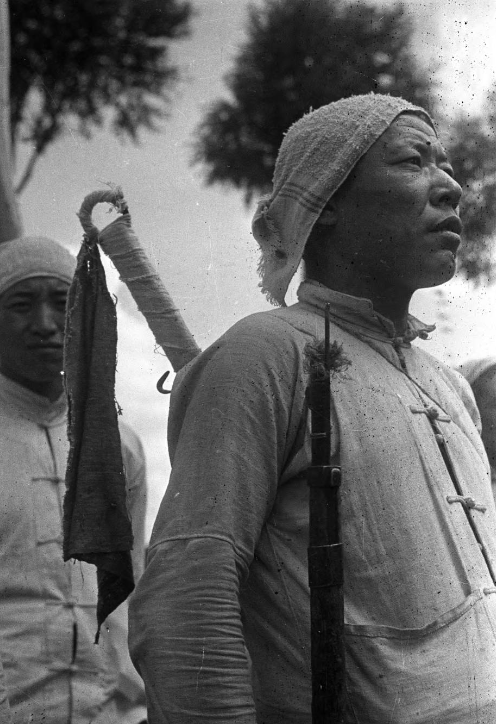
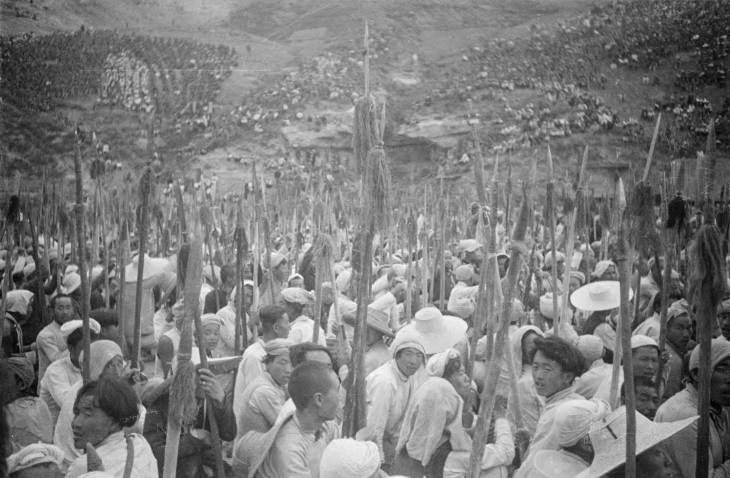
It’s been a long time since I’ve linked to Ben Judkins excellent website Kung Fu Tea, but I’m going to recommend that you give this article a read. It’s about the biggest group of 20th century Chinese ‘martial artists’ that you’ve probably never heard of. They were called The Red Spears. And despite having a membership in the millions (millions!) they tend to get wiped from modern historical accounts of Chinese martial arts. Made up of poor, usually illiterate members, they existed away from the cities and the urban areas, where all the well known marital arts groups like the Jingwu Association and the Koushu Association existed. Urban association tended to write books and leave more newspaper articles as evidence for historians. The Red Spears had the numbers, but they were out in the sticks, and out there, less ‘scientific’, ‘outsider’ and ‘western’ ideas pervaded. There we find war magic, rituals and mystical arts.
Yanan China Peoples’ Militia member.
The Red Spears, as effective grassroots organisers in local areas seemed to perform something of the same function as elements of the historical Yakuza in Japan, stepping in when local authorities overstep their mark and being effective at “getting things done”.
And despite the name Red Spears, let’s not forget that these militia groups, like all militia groups, carried rifles. Performing magic rituals and being in a secret society did not mean they rejected all modern technology.
The article contains a report called “Background and Doings of China’s Red Spears By Norman D. Hanwell (Asia Magazine), The China Weekly Review, August 19, 1939. Page 381” which talks about practices that don’t seem a million miles away from what we would call chi kung these days, if you made it more secular and removed the practices we would call superstitious.
“Through the customs of the Red School probably differ from locality to locality and naturally the secret part of their program is difficult to confirm, since no outsider is permitted to attend, there are descriptions by Chinese in print. In some sectors members of the Red School “got to school” in a temple each evening. Arriving with their red-tasseled spears. Reaching the School Hall they come before the incense altar common to all Chinese Temples, bare their backs and kneel to listen to one their leaders lecture. Following this, each one breaths deeply and beats his breast, ending with the shouting of the slogan “Chi Kung lai yeh!”—a phrase difficult to translate. Perhaps it might be compared to “The gods be with us!” a short incantation from which strength may be obtained. Out of this process some of the Red Spears are convinced of their invincibility in battle and immunity to death therein.
The Type of Training
Certain persons profess to find in this type of training some scientific basis. For example, the regular evening attendance, the listening to lectures and the sitting in meditation are good training, they claim, for the development of the quality of serenity or tranquility. The practice of holding the breath and beating the breast is excellent for developing the lungs. The crying out of the slogans is declared to be good training for breath control. Whether we accept any of these “scientific” values or not, we must admit that there are psychological advantages to be obtained from these practices. The peasant convinces himself of his own ability to undertake certain tasks, and his conviction inevitably increases his effectiveness.
A recently made investigation of the White Spear Society of Anhwei Province, an area now under Japanese occupation, reports that the superstitious “Chu kung lai yeh!” has been replaced by slogans more appropriate to present activities. Among these are “Kill the Eastern Sea Devils”—that is, the Japanese—and “Kill the Traitors”—that is, those Chinese cooperating with the Japanese.”
As you can see, the report talks about breath control, tranquility training, hitting the body to strengthen it and gain invincibility (The shouting of the slogan “Chi Kung Lai yeh!” may have some relevance, but who knows…? That may simply have been the historical equivalent of “Let’s do this!”)
I’m increasingly wondering how much of modern Chinese martial arts is built on all this long forgotten training from a different time and setting. It’s interesting to ponder.
I wrote about cults in marital arts yesterday. I think its pretty clear that The Red Spears would fit the definition of a cult, but by modern standards they are way more extreme than anything the Tai Chi world can conjure up today. Forget expensive training camps. They actually led their members into armed conflicts, battles and more! That’s also an interesting topic to consider.





 The Tai Chi Notebook