When it comes to tai chi, buyer beware

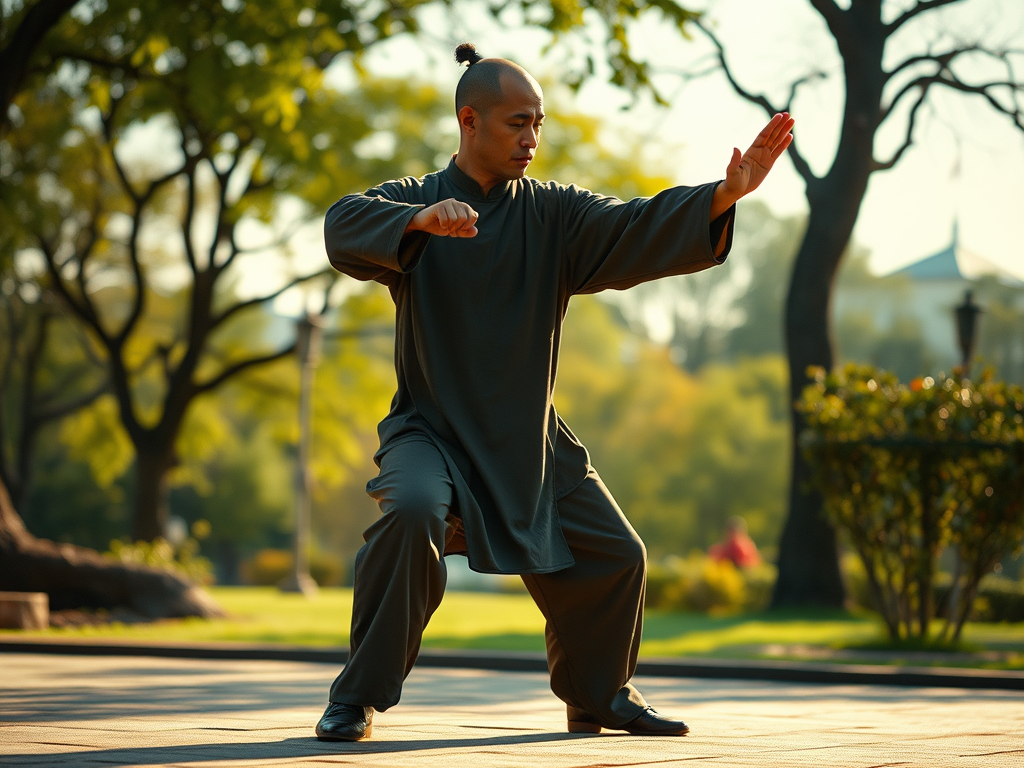
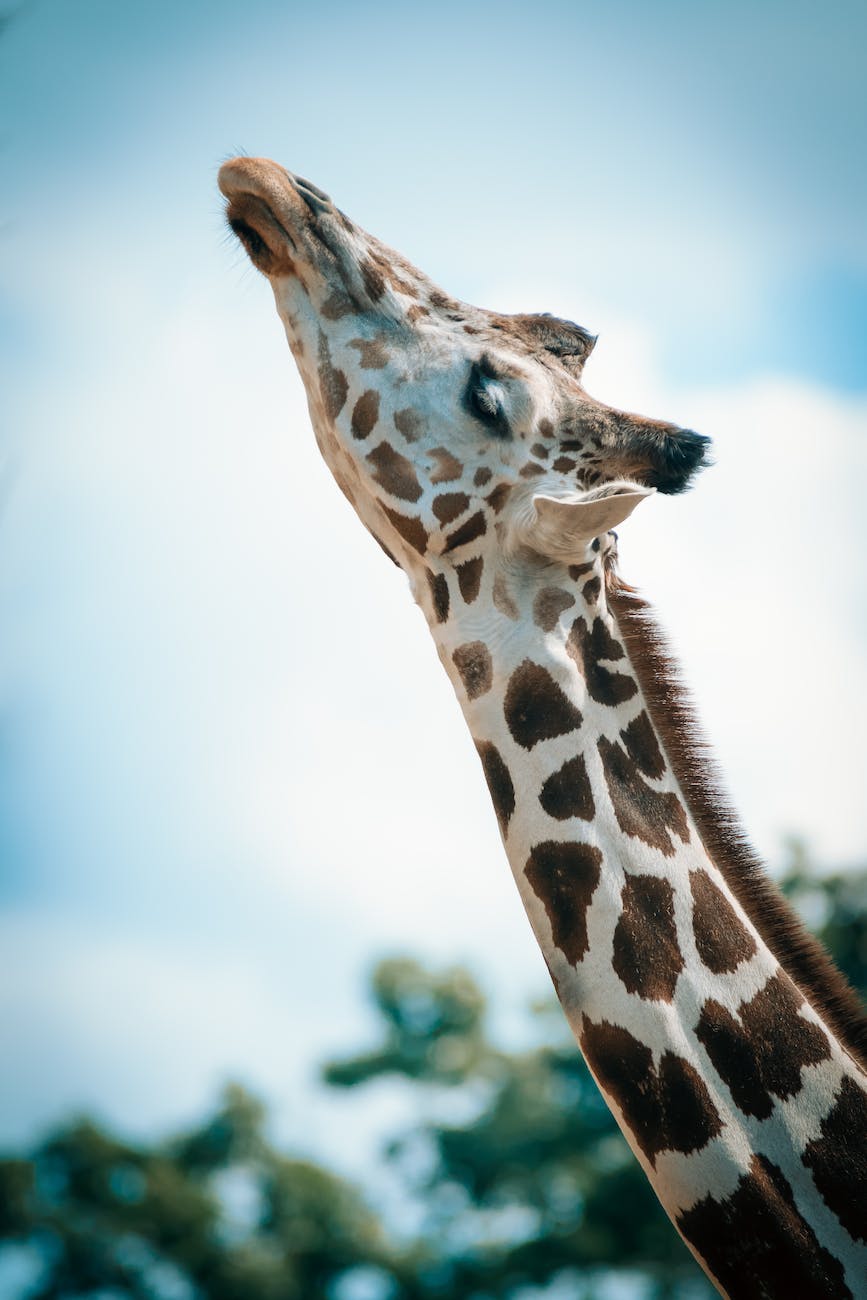
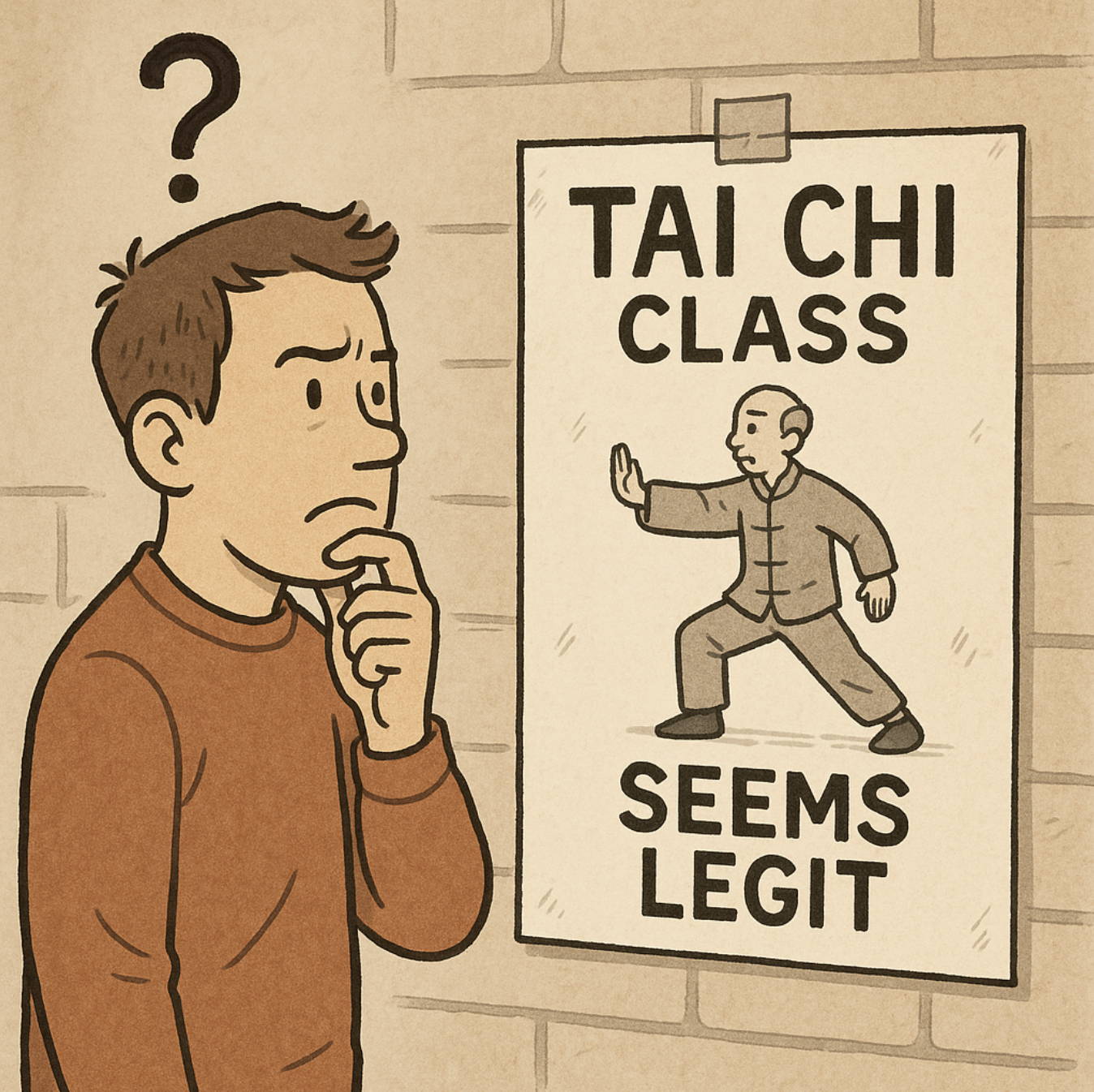
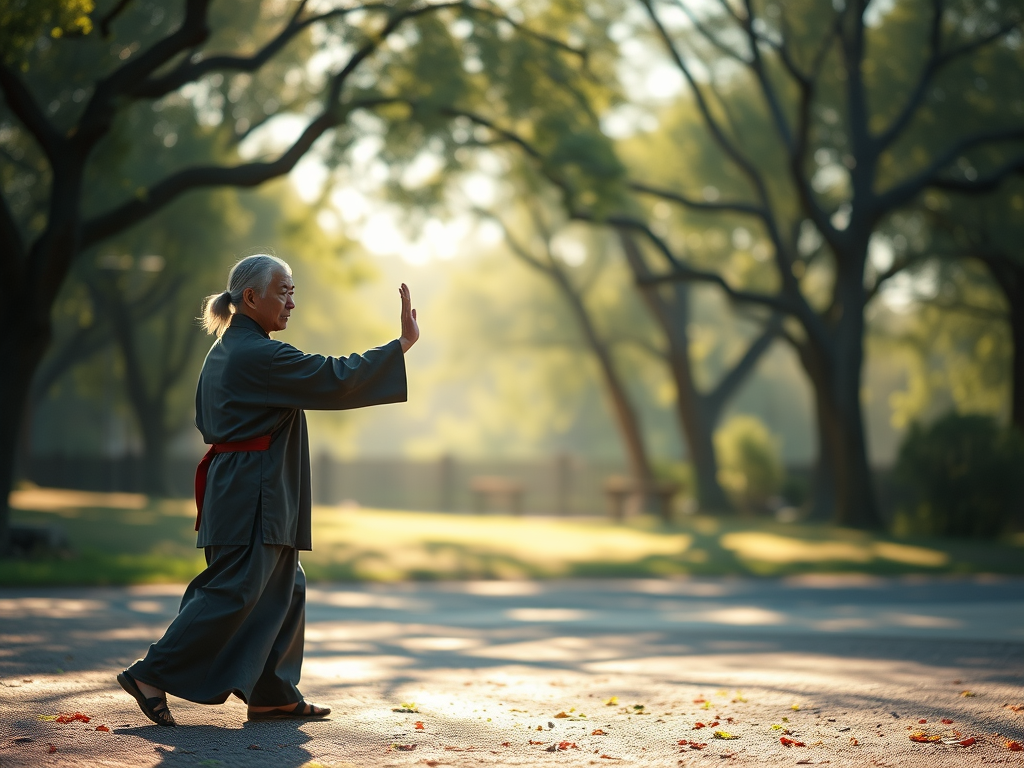
(FYI: Image made with ChatGPT)

I just saw an advert for a week long “Tai Chi for beginners” intensive with the teacher in question demonstrating a tai chi posture with the head thrust forward, so the chin juts out, the hips and pelvis thrust forward so it looks like he’s doing a bad Elvis impression, the arms awkwardly twisted so the shoulders lock up and the souls of the feet rolling to the sides and coming off the floor, so the ankle joint is not stable.

And yes, he was calling himself “Master”.

I think “buyer beware” is good advice in the tai chi market.

One thing I’ve observed in so many tai chi teachers is this desire to be the teacher way before they are ready. People don’t want to be the student – that’s boring! – they want the glory of leading something, of creating something, of being the person at the front of the class sharing their vast wisdom with their adoring students…

Why is this? I think it’s just ego. I’ve definitely felt it’s twinges in me. It’s a subtle trap that you need to avoid. And one I try actively to avoid all the time when I teach.

It is undoubtedly a nice feeling when people ask you for advice, and look up to you. However, I think it’s nearly always a mistake to want to be that person. People are rarely ever ready to teach tai chi when they start. You could say it’s the curse of tai chi in the western world. That’s why we have people called “master somebody” who can’t do basic tai chi postures or understand tai chi movement leading week-long intensives.

But what do we do about this? After all, somebody has to teach something or there would be no tai chi for anyone!

Perhaps some guidelines if you are teaching:

1. Think of yourself as a coach, or a guide, not ‘a teacher ‘master’. After all, people need to do the work themselves, you can’t do it for them.

2. Don’t let people start to treat you like some guru or master – if they do instantly stop that behaviour developing. You’ll be surprised, a lot of people want a guru to take away all their self responsibility.

3. Self reflect. Are you constantly talking about things you can’t actually do? If so, just stop. There’s never any need for that.

4. The most important thing: Be honest. Tell people what you know, how long you’ve been training, where you got it from. Don’t make yourself into something you’re not in other people’s eyes.

5. Finally, you also need a teacher. Find people you can learn from and don’t stop learning.
Tai Chi and the art of occupying the other’s space

You can think of the Tai Chi form as an exercise in claiming your space. We rarely think of the space we occupy or move around in as part of ourselves, but it is. We often let others take our space, or give it away needlessly. We move out of the way when people walk towards us in the street. Rarely do we stand our ground and own the part of the earth that is directly underneath us.

In tai chi push hands we learn to claim our space, to gently redirect people that want to come into it and also to take away other people’s space if we need to, and not let them get it back. In the tai chi form we learn to round out our movements, so that (as the classics say) there are “no hollows or projections” in tai chi. Your goal is to create a kind of sphere with your body, as if you were inside a giant beach ball. Your hands extend to the limits of the ball, and no further.

Finding your centre

In tai chi there is ‘finding your centre’ within yourself, but there is also ‘finding your centre’ when in contact with another person. When two people are in contact, especially if engaged in some form of conflict, they are rarely both in balance, usually the advantage lies with one person or the other. The one in control is usually the person who has made both people part of their ‘centre’. Viewed from above, they become the centre of the circle, around which the other person is orbiting.

In class today I was working on the ward-off posture. I think by far the best way to think about ward off, as a martial posture, is to think about having just slipped a straight punch over your right shoulder by moving your head and turning your body to your left, you then step diagonally into the space occupied by the other person, right under their armpit using the familiar ‘ward off’ posture to keep them off balance. You need to keep that full, rounded, ‘peng’ aspect to your arms here, and once you have them off balance, you never retreat or give up the ground you’ve taken. If you do then you’re simply giving them their balance back. You need to keep them off balance continually, so that they can’t recover and they end up open to strikes or to being knocked over.

That ability is one reason why, while strikes exist in Tai Chi, they’re not really emphasised in the form. Instead, in the form you’re continually learning how to take ground from the opponent and occupying it while remaining in balance. As a means of self defence, it is highly effective, but not easy to understand without feeling it, which is another reason why so many people are confused about how Tai Chi works as a martial art.


You can train Tai Chi with me in Bath/Bristol, and get better at standing on one leg, twice a week.


Listen to a podcast about this blog post.


Thank you for supporting The Tai Chi Notebook. If you are reading this on a website that isn’t thetaichinotebook.com, then it’s highly likely it’s been stolen. Please let me know so I can issue their webhost a DMCA takedown notice for copyright breach. Thanks. And if you have the great idea of starting a tai chi website by stealing other people’s work to fill it with content for clicks then take a good hard look at yourself, and do better.


Tai Chi basics: Rounding the kwa to make your tai chi form better

Paying attention to your inner thighs can bring better structure and a feeling of power to your tai chi form

If you’ve read my last post about keeping the knees bent during tai chi practice, and most importantly can do your whole tai chi form without violating this principle, then the kwa (inner thigh) is a good thing to focus on next.

Quite often in Zhan Zhuang chi kung standing practice we use the imagery of balloons supporting various parts of the body. You can imagine balloons supporting your arms, under your armpits and that you’re sitting on an imaginary beach ball. Balloons are soft but strong when pressured, so they’re a good image to help with the idea of staying relaxed and that feeling of springy peng (‘bounce’) energy that needs to be in the body during tai chi.

We don’t tend to use the supportive balloons imagery when explaining tai chi because it’s a moving practice, so the imaginary balloons would inevitably float off at some point! But you can still use the imagery in a couple of places – imaging balloons under the armpits and one held between your thighs that is gently pressing the knees outwards is a good place to start.

The kwa needs to be kept open at all times in tai chi practice.

One of the things beginners often fail at in Tai Chi is sufficiently rounding the kwa. By kwa I mean the area of the inner thigh and groin. I’ve been told that this area is more correctly called the dang in Chinese, but kwa/dang/whatever, I mean the arch formed by the inside of the thighs and containing the pelvic floor. As I’ve discussed before, beginners tend to want to straighten their legs, rising everything up in their stance, which has the effect of collapsing this kwa area, so that it effectively closes as the thighs move together.

In tai chi we always want to maintain the feeling that we’re holding a small balloon between the thighs so that this area is always rounded. Of course, there is opening and closing going on in tai chi all the time. As you progress through a move, one side of the kwa is opening and the other is closing, but regardless of any opening and closing movement that is going on, you need to keep a general feeling of openness in the whole area throughout the form. Even in postures where the feet are together. If you stand with your legs together, then that is considered a closed kwa, but in tai chi that area always has the feeling of being open – even when the legs are together.

You might find that last statement confusing, but it’s helpful to remember that in tai chi we are not performing an exact science, but we are dealing with feelings. The feeling of being open is what I’m talking about.

The last thing to mention is the why. Why do you need to do this? That’s where you need a teacher to give a demonstration of the application of tai chi against a simple push. With the kwa rounded you create a good base from which you can receive and launch attacks. When pushed, you can use that base the rounded kwa gives you to receive and then bounce away an attacker. If your kwa collapses when your upper body is pressured then you can’t do this without using a lot of effort and strength in the upper body. In tai chi this is wrong. Using your legs is always a better way.


Thank you for supporting The Tai Chi Notebook. If you are reading this on a website that isn’t thetaichinotebook.com, then it’s highly likely it’s been stolen. Please let me know so I can issue their webhost a DMCA takedown notice for copyright breach. Thanks. And if you have the great idea of starting a tai chi website by stealing other people’s work to fill it with content for clicks then take a good hard look at yourself, and do better.

The head over foot guy, and Tai Chi

I’m always on the look out for interesting bio mechanical things and that search recently lead me to a character called David Weck, who is known as the ‘Head over Foot Guy’. Of course, that’s not his only idea about biomechanics- he’s got loads of them – but this video is a good introduction to his Head over Foot idea:

(It’s unfortunate that there’s a picture of the controversial social media influencer Andrew Tate in the header image for that video, because he doesn’t feature in the video. I guess they’re just using him as an example of a good walker, but while he may be a good walker, I don’t like him or his opinions, nor do I think he’s a good example for kids to follow).

The ‘head over foot’ idea can be explained very easily – if you’re going to stand on one leg, then your head has to be directly over your foot if you want your balance to be good. You can try this now, by standing on one leg and playing with where your head balances over your foot. I think he’s right – if you move your head anywhere else but over your foot then your balance starts to go.

Weck then takes this into the idea of walking, so instead of the usual description of walking that you read, which is that it’s a series of controlled falls, if you alternately put your head over your foot as you walk then you end up with a more athletic, balanced and confident walking style with a bit of swagger. You can start off over exaggerating the swagger, then work on reigning it in and making it smaller until it’s hardly noticeable.

I like it – it takes a bit of getting used to, but the alternative of trying to keep your spine neutral and upright (as we are encouraged to do in Tai Chi) ends up with a very forced, stiff, walking pattern. The alternative walking pattern of placing your foot over your head creates a kind of infinity symbol movement around the solar plexus with an alternating pattern of one side of the body shortening and the other side extending.

The idea of being upright is talked about a lot in the Tai Chi classics. For example, the Tai Chi classics say “Stand like a perfectly balanced scale” (from the Treatise) and

“The upright body must be stable and comfortable
to be able to sustain an attack from any of the eight directions.
” (from the ‘mental elucidation of the 13 postures’.)

But that doesn’t mean that you should look like a robot when you do it. Your body is a fluid collection of hard unbending bones connected by soft joints that allow for movement. It is designed to move in spirals, and the ‘head over foot’ idea promotes this spiral movement.

A lot, in fact, almost all, of the time in Tai Chi your weight is either on one foot or the other, or you are actually standing on one leg with the other leg kicking. So, I find that thinking about whether your head is over your foot as you do the Tai Chi form is actually a good idea. If it is then your balance will be better.

Think about the classic Tai Chi walk. We do this exercise called the Hero Stroll, which looks like this:

It’s worth doing this and thinking about the concept of keeping your head over your foot as you do it, then applying that to your Tai Chi form. Hopefully you’ll find your Tai Chi becomes more balanced, especially in the kicking movements. I find that this is where a lot of beginners have problems – they can’t balance on one leg. Well, here’s the solution!

Tongue behind the two front teeth

If you’ve been doing Tai Chi, meditation or yoga for any length of time you’ll have heard the old adage to ‘put your tongue behind the two front teeth‘. The explanation given for this is usually that it “connects the two meridians that go up the back and down the front of the body called the Ren and Du meridians, creating the micro-cosmic orbit”.

Micro cosmic orbit connected… man. Photo by Elina Fairytale on Pexels.com

From a Chinese medicine or Taoist perspective the perceived wisdom seems to be that “circulation of the Qi/Breath in Ren Mo and Du Mo is a bit like an electrical circuit. The two ends of the vessels must be connected for there to be an uninterrupted flow.”

Personally, I have my doubts about the whole idea of ‘energy’ or Qi ‘flowing’ around the body. I often think it’s really an ancient aberration of the simple idea of forces moving inside the body. In Chinese martial arts there’s a phrase you often hear – rise, drill, overturn, fall, which matches this circuit in the body with a martial technique. The best example of which is Pi Quan from Xing Yi, during which forces in the body (jin) rise up and then come crashing down into a strike.

Strength and balance

However, it’s not just Chinese medicine that recommends this tongue position. I’ve recently discovered that there are a lot of Western sources advocating the same tongue position. For example, Colgate toothpaste has an article about correct tongue position on its website that recommends the exact same thing – the tongue resting on the upper palette behind the two front teeth. The article links to a study in Radiology and Oncology called “Three-dimensional Ultrasound Evaluation of Tongue Posture and Its Impact on Articulation Disorders in Preschool Children with Anterior Open Bite“, which notes that “children with poor tongue posture were reported to have a higher incidence of anterior open bite, a type of malocclusion where the front teeth don’t touch when the mouth is shut. This may be because the tongue puts pressure on the teeth which can shift their position over time.” (Colgate).

In this article from Healthline, Dr. Ron Baise, dentist of 92 Dental in London explains “Your tongue should be touching the roof of your mouth when resting… It should not be touching the bottom of your mouth. The front tip of your tongue should be about half an inch higher than your front teeth.

While dentists may be aware of the benefits of good tongue position for your teeth and preventing problems with your speech, or mouth breathing from occurring, some exercise enthusiasts are going further and claiming that proper tongue position actually increases your strength and balance, something that is undoubtedly important for martial arts, like Xing Yi.

Pi Quan is said to be like the swinging of an axe. (Photo by Ivan Samkov on Pexels.com)

Now, I’m as aware as the next Tai Chi blogger that cherry picking studies that confirm your beliefs (and presumably ignoring everything that doesn’t) is a bit of a red flag. However, the idea that your tongue position effects strength and balance makes more sense to me than imaginary energy channels (Du/Ren) that may, or may not, exist in real life.

Apparently, good tongue placement can give you superpowers!

I remain slightly skeptical about the whole issue, however, my tongue does naturally rest behind my two front teeth on the upper pallet of my mouth… I can feel it there now as I write this. Was it always there? Or have I turned this into my natural position thanks to starting Tai Chi in my 20s?… I don’t know. All I can say is that it feels comfortable, and if my Ren and Du channels are connecting because of it, and my strength and vision is better because of it then…. so much the better.

Investing in your neck can be a great way to get better at Tai Chi

Photo by Todd Trapani on Pexels.com

The Tai Chi classics talk a lot about keeping your head “as if suspended from above“, and “Head upright to let the shen [spirit of vitality] rise to the top of the head”, but they don’t mention the neck a lot.

Yang Chengfu gives it a brief mention to the neck in his 10 Important Points, but it’s not the focus of his writing: “Don’t use li, or the neck will be stiff and the chi and blood cannot flow through.”

As such, Tai Chi students don’t spend that long paying attention to their neck. I bet if you just started moving your head in a circle right now you’d hear all sorts of crunching and popping noises, right?

For the past few days I’ve been making an effort to work my neck with mobility exercises every morning, and the results have been quite astounding. Now, when I move my head around in a circle there are way less crunching and popping noises than their used to be. In fact, sometimes there are none at all. Secondly, the space between my neck and shoulders is really opening up. I can feel more room there and as such, my Tai Chi form feels quite different, in a good way. There are all sorts of nerve fibres in the brachial plexus, and having them cramped up all the time is not ideal.

I’ve talked about the importance of how you hold your head in a recent post, but I’m learning that correct head placement on its own can only get you so far – you need to invest in some neck exercises if you want to get the most out of your Tai Chi practice.

There are hundreds of different neck exercises, and I think you’re best off finding the ones that feel good to you, because they’re probably the ones you need. The three I’ve settled on are as follows, and should all be done gently *:

  1. Stir the soup – imagine there is a spoon hanging off your chin and resting in a bowl of soup. Move your chin in a circle one way so that the imaginary spoon stirs the soup, then move the other way.
  2. Diagonal Neck stretch – look forward and down to one side towards your armpit. Hang your same side arm over on the other side of your head to add a bit of weight to the stretch. Don’t pull hard downward, just add the weight of the arm. Do both sides.
  3. Reach both hands behind you against your lower back and pull down on the wrist of one arm with the other hand. Turn your head to one side, looking away from the arm you are stretching. Repeat on the other side.

You can, of course, add in others, like circling the head in the vertical plane. Try some neck exercises every morning and feel the difference it makes to your Tai Chi, and life in general.

  • * N.B. This is not medical advice – please consult a doctor before exercising.

Three more articles of mine you might like:

Key details for a good riding horse stance by connecting the upper and lower

Chen Man Ching once famously said that he only understood Tai Chi after having a dream in which he had no arms.

It’s a good indication of what you’re looking for in Tai Chi  – which is to “do” everything with the actions of the legs and waist, not the arms. The idea of moving the arms without moving the arms is, of course, contradictory, but that’s the challenge you undertake when you practice Tai Chi.

I found that I didn’t “get” this concept of “no arms” until I really relaxed my lower back and learned to sit correctly in the form. The lower back is the bridge between the upper body and the lower body. If that bridge is not open then goods and services cannot flow between the two different countries.

So, how do we do this in the correct way? I think the key is to be found in how you get into a riding horse posture properly. 

We’re all familiar with the wide-legged riding horse posture. When you start a Tai Chi form you are essentially sitting down into a narrower version of it, but it’s the same kind of stance. 

Let’s formalise what I mean by Riding Horse stance a bit more.

1. Toes point forward. 

2. Knees bent, but not further forward than the toes. 

3. Feet two shoulder widths apart. 

As aways we make sure that our upper body is relaxed (not collapsed) and upright. Just take a moment to focus not he AO joint that I mentioned in my last post, to ensure that your head is in the correct position. Your neck should feel long at the back and the chin slightly tucked at the front, crown going in the upward direction.

Now straighten your legs. This brings you out of a riding horse stance and into a leg triangle stance with straight legs.

We’re going to lower back down into a riding horse, but rather than doing what you normally do, I want you to focus on two things.

1. The knees go forward as they bend.

2. The butt does not move backward as it would if you were going to sit in a chair, but instead you open/relax your lower back so that it sinks downward.

There you go. This should feel like a different sort of riding horse stance to what you’ve normally experienced. That elongated and open feeling in the lower back is what you need to maintain during your Tai Chi form. Without that feeling you cannot connect the upper and lower parts of the body.

Play with it, experiment with it a bit, and then when you’re ready, start your Tai Chi form and as the hands come down and you sink, try and achieve the same feeling.

Then try and keep it for the whole form. If you can do that, then you’ll start to notice that Tai Chi is all about the leg movements, not the arm movements. Your arm movements can start to be directed by the leg and waist movements. 

As it says in the classics:

It is “rooted in the feet,

generated from the legs,

controlled by the waist, and

expressed through the fingers. “

The crucial detail of using the kua and hips in Needle at Sea Bottom

There’s a lot of talk in the internal arts about the “kua”, and how using the kua (as opposed to the hip joints) is central to getting the idea of internal movement in Tai Chi.

So, what is the kua?

A definition from Crane Tiger Tai Chi reads:

Kua refers to the area that extends from the inguinal folds (front of the hip where the leg and body meet) to the crest of the pelvis. It includes the hip joints, the iliopsoas, and adductor muscles as well as the sacrum and the perineum.

I’ve written about the kua several times myself, but I think Ken Gullette’s book (my review is here) does a great job of describing it. To me, moving the kua is about opening and closing the body in the space inside the hip joints. Integrating the opening and closing of the kua into your movement facilitates power moving smoothly from the legs and feet up through the body, or receiving force in the opposite direction and directing it down towards the ground.

Moving “inside” the hip joints allows for very detailed movement and enables you to create and remove space when interacting with an opponent, which has martial application.

However, I think that the focus on the kua in internal arts often risks people ignoring the pivotal (ha!) role of the hip joints. I think the hip joints are actually more important to get right – if you focus on the kua but never think about your hip joints it’s a bit like building the walls of your house without a firm foundation.

I’ve been reading a great little book called Lighten Up by Mark Josefsberg, which is a humorous description of the Alexander Technique, and only costs £2.50 for the Kindle edition.

It starts off making the great point about the pivotal (ha!) role the hip joint play in actions like sitting, standing, running, walking, bending, etc.. A good point it makes about your hip joints is that they probably aren’t where you think they are. People tend to think that you put your ‘hands on your hips’ that’s where you bend from, when in fact, your hips attach to your legs via a ball and socket joint that is much lower down.

This has real consequences for Tai Chi postures such as “Needle at Sea Bottom”, where you bend forward. If you bend from too high up then you are compromising your spine, and bending from your hip joints is always a bit lower down than you think it is.

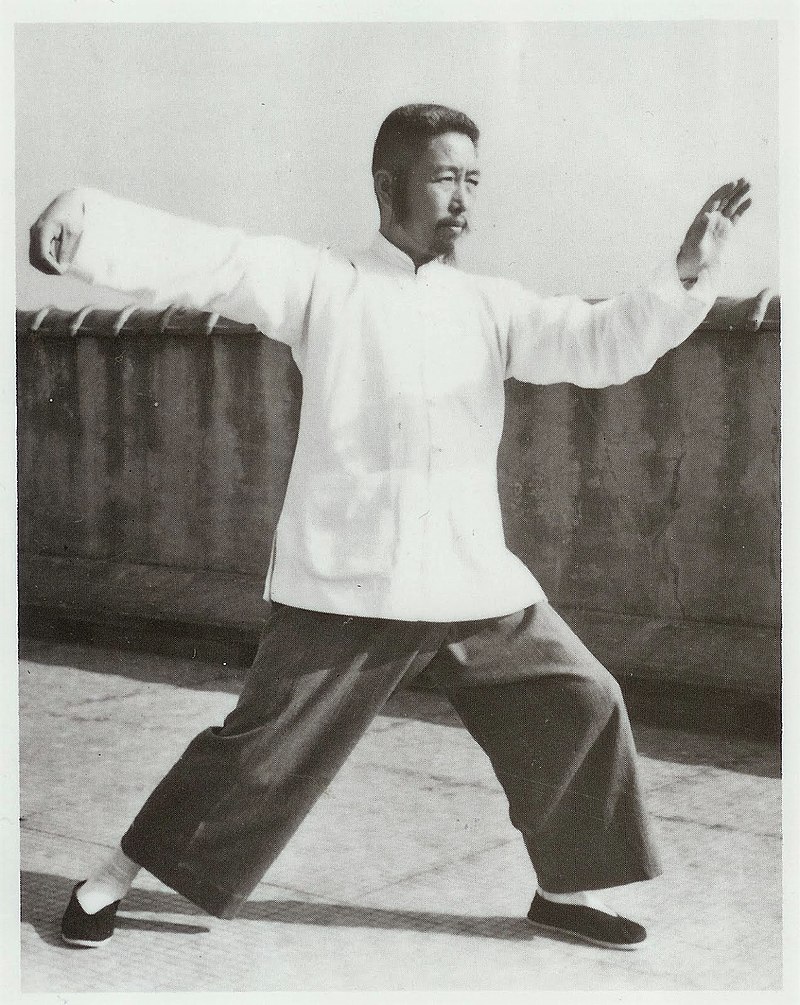
Wu Jianquan, Needle at sea bottom

The way I do Need at Sea Bottom is to try and keep my head going “up” away from the spine and bend from the hip joints (where the legs attach to the body) keeping my spine in a straight line. In theory, at least.

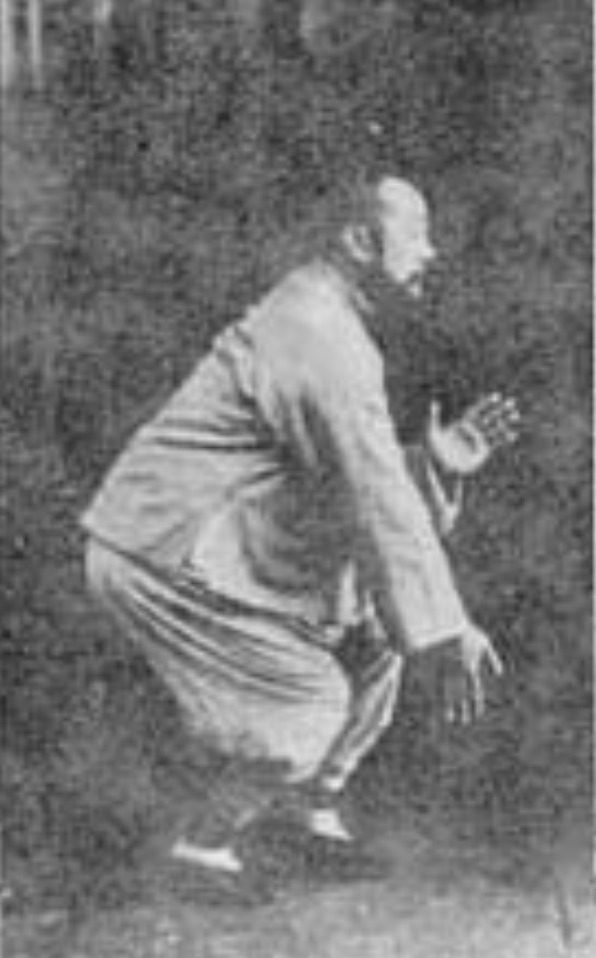
I don’t know who this is, but look at this guy doing it:

To me there are all sorts of problems here – he’s rounding his spine, and the head is kinked at an unnatural angle that isn’t an extension of the spine, in an effort to go too low. I’d rather not go as low as he is, and not compromise my spine like that.

The other point that Mark continually makes in the Lighten Up book I mentioned is to be aware of the AO joint – the atlanto-occipital joint. This is where the head meets the neck, and again, it’s not exactly where you think it will be. Put your fingers in your ears and imagine they are touching. Rotate the head up and down from something on a level with that point – that’s roughly where it is. What you’ll find is that you can look up and down without your fingers moving up or down because you are rotating the head around this point. Now apply that principle to Needle at Sea Bottom and you can see how your head position is meant to be.

Here’s a video of my Sifu Raymond Rand doing the movement correctly, with martial application:

Ep 20: Matt Hill on relaxation, breathing and fire ants!

Matt Hill is the owner of the Systema Academy in Wiltshire, England. Matt has a long history in martial arts, starting with Aikido, training under Morihiro Saito Sensei in Japan in the early 90s. From there he joined the Parachute Regiment leaving as a Captain in 2003. After this he started training in Systema under Vladimir Vasiliev and now teaches Systema, Bushcraft and leads groups trekking through jungles all around the world.

Matt was kind enough to give me a 1-1 in Systema before we recorded this podcast at his academy, where he focused on the four pillars of Systema – breathing, relaxation, posture and movement. We discuss all these things in the podcast as well as the next destination for Matt’s jungle trek.

Links:

Systema Academy:

Podcast:

Listen here.

What’s better in martial arts – Body Methods or Foundational Movements?

I got asked once by a CMA practitioner what the “Shen fa” (body methods) of Brazilian Jiujitsu were and I drew a blank. The only answer I could come up with was “we don’t have any”. What I think we have instead though are foundational movements. Let me explain.

While Chinese martial arts like Tai Chi, Xing Yi and Bagua all have “Shen Fa”, which are “body methods” that need to be internalised before the practitioner can be considered sufficiently proficient in the art, Brazilian Jiujitsu doesn’t have them in the same way. Instead, it has a series of foundational movements that crop up so often in techniques that they are considered the foundations of the art, and are usually done in class as warmups.

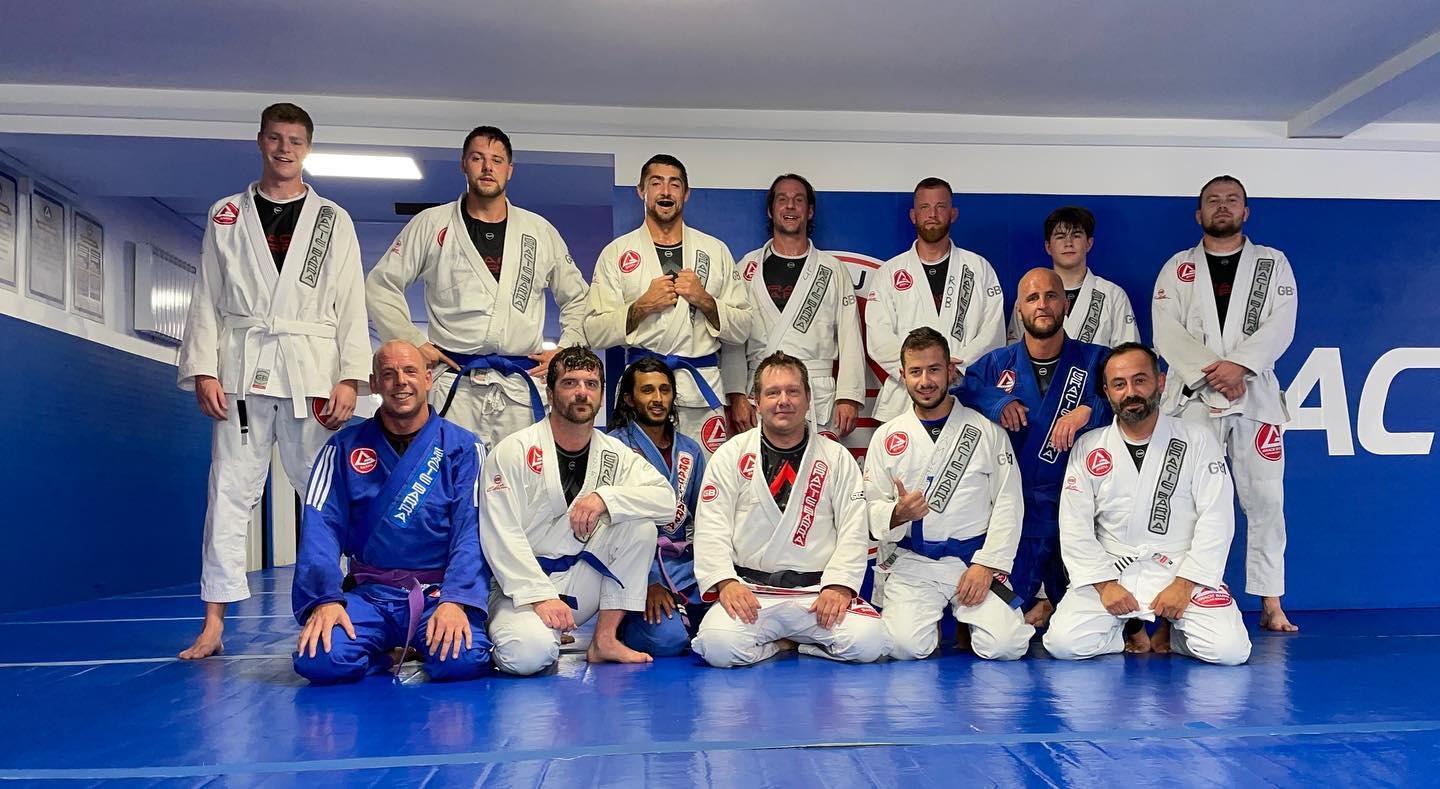
I taught an interesting Jiujitsu class this week. (Well, I thought it was interesting – I think you’d have to ask the students themselves what they thought!) I started with the group practicing the basic Technical Stand Up both forward and reversed (which is doing it backwards, so you go fro standing to sitting down), then with variations like a knee or an elbow on the ground instead of a foot or hand.

Sweaty work – a fun class!

A Technical Stand Up is a way of going from sitting on the ground to standing up that exposes you to the least risk if you’ve got an aggressive person attacking you. It minimises your chances of getting kicked in the head and also affords you the ability to kick back at the attacker’s knee, possibly hyper extending their leg painfully.

How to do a Technical Stand Up

Once everybody in the class could do a Technical Standup well enough we went on to practice applications that utilised it as part of the technique. A good example is a basic X Guard sweep, or a way of returning to base after completing a tripod sweep. (I’ll not explain what those are here, because I don’t want to get lost in the details of these techniques in this post, because that’s not what this is about.)

Foundational movements in Jiujitsu include the aforementioned Technical Stand Up, but also things like a bridging movement, a hip escape (shrimp), a triangle, a forward (and backwards) roll and an inversion. If you can’t perform these basic movements correctly then your chances of doing any technique correctly are going to be severely limited.

In contrast, Chinese martial arts “body methods” include things like dantien rotation, opening and closing the chest and rounding the kua. These body methods are postural observances and ways of moving that need to be kept in place during all movements.

Why one art should have developed body methods, and the other not even have that concept, is worth thinking about, and I think it relates to the role of form in Chinese martial arts. Practicing solo movement in the shape of a form done in isolation from other people allows the possibility of subtle things like body methods to be developed.

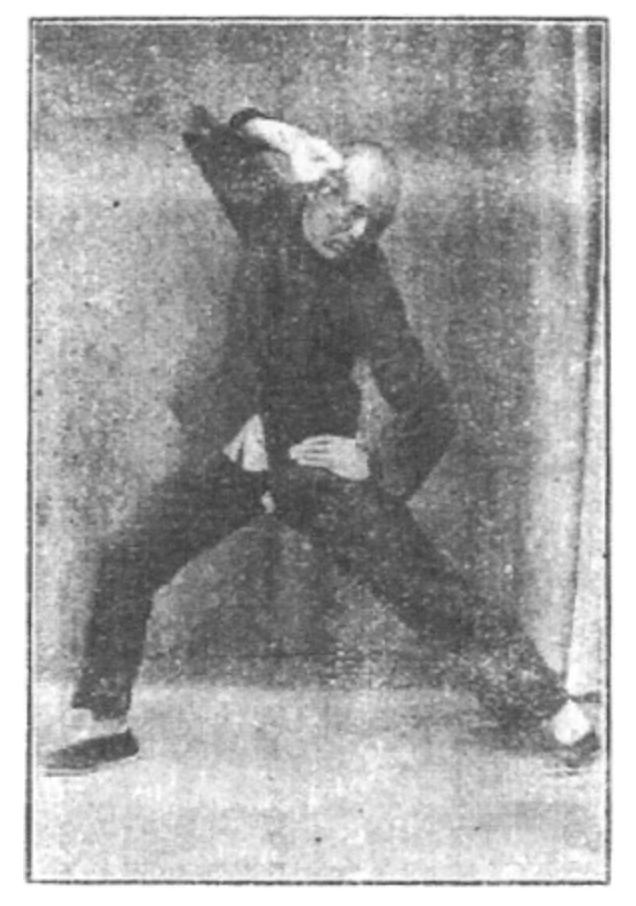
Torso Flung Punch by Chen Zhaopi, 1930,

There are no forms in BJJ. Sure there are solo exercises you can practice to warm up or condition the body, but they don’t have the same function as form (tao lu) does in CMA. BJJ is heavily partner orientated. All the drills and sparring need another person physically there to do it with. To practice BJJ we literally have to get together with other people in nice matted areas and throw down. There is no other way.

These body methods in CMA have resulted from forms, but my suspicion is that this was never planned, rather they have grown out of a situation that happens when you are required to practice forms. Why CMA started practicing forms in the first place is a different question – there are some clues as to why that might be in the video I shared the other day by Simon Cox on the Taoist concept of the Subtle Body.

It’s analogous to the situation in China between Shuai Jiao and Kung Fu (Wu Shu). Shuai Jiao has no extended tao lu (forms), like Kung Fu does, but it has an awful lot of solo conditioning exercises with and without weights and belts. I’m not a Shuai Jiao practitioner, but I think you’d be hard pressed to say that Shuai Jiao has Shen Fa in the same way that the various Kung Fu (Wu Shu) styles do.

Is one approach better than the other? I don’t know. They’re just different and personally I enjoy practicing both.