Thanks to everybody who has listened to The Tai Chi Notebook Podcast over the last couple of years! And, if you were wondering, I’ve got a new episode already recorded and coming out in a week or two…
I had a chat with Alan Wycherley from the In Defence of the Traditional Martial Arts YouTube channel for my podcast and the episode is now live. We talk about how Tai Chi can be used as a realistic self-defence system and Alan’s encounters with traditional martial artists from different kung fu systems.
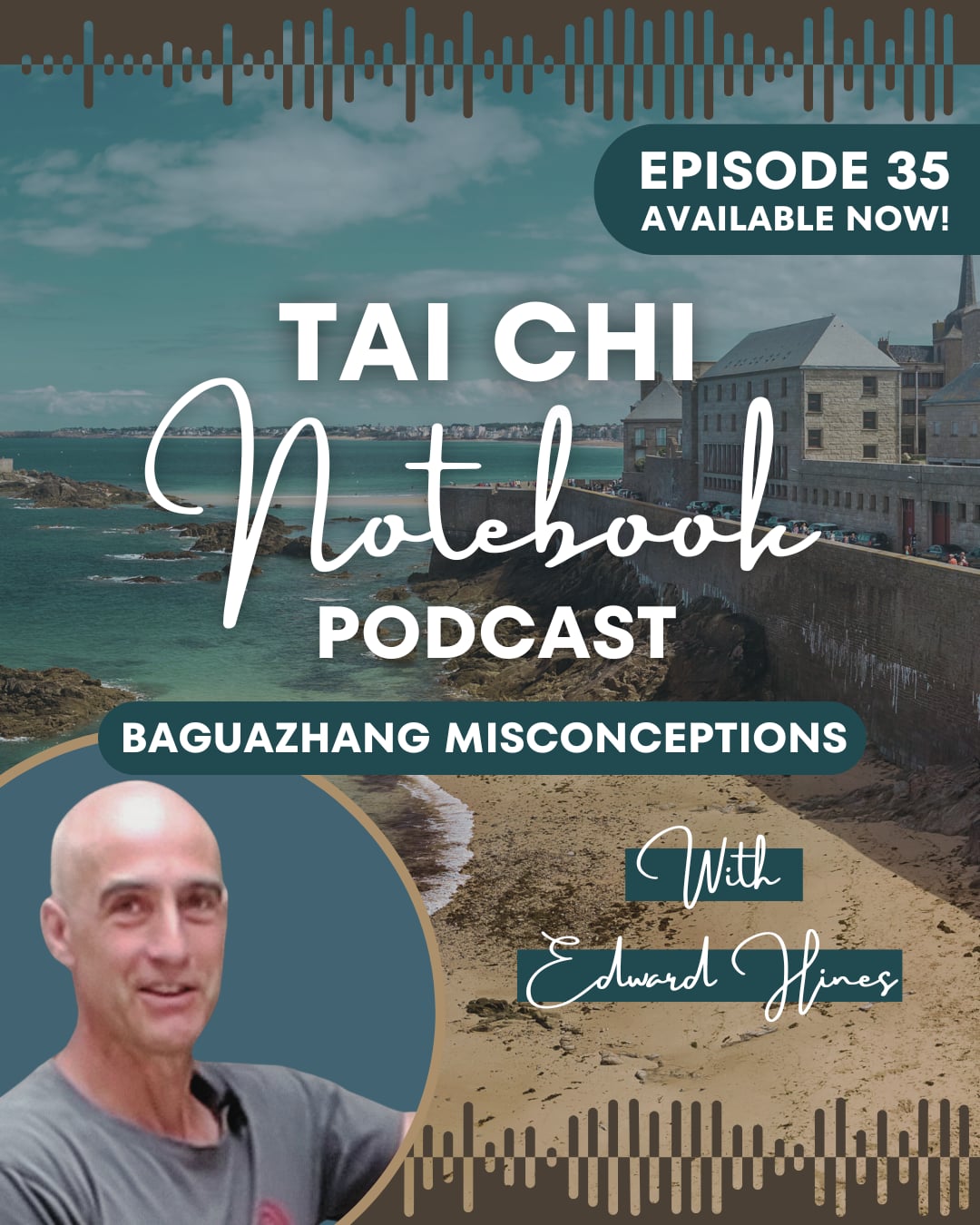
My guest for episode 35 of the Tai Chi Notebook podcast is Edward Hines, a long time Baguazhang student of Lou Dexiu. Ed started training Bagua in Taiwan way back in 1991, and has continued ever since. He now teaches online at I-bagua.com and has books about Baguazhang you can find on Amazon.
To frame our chat we decided to cast around for the most common misconceptions you hear about Baguazhang, and address each of them, one at a time.
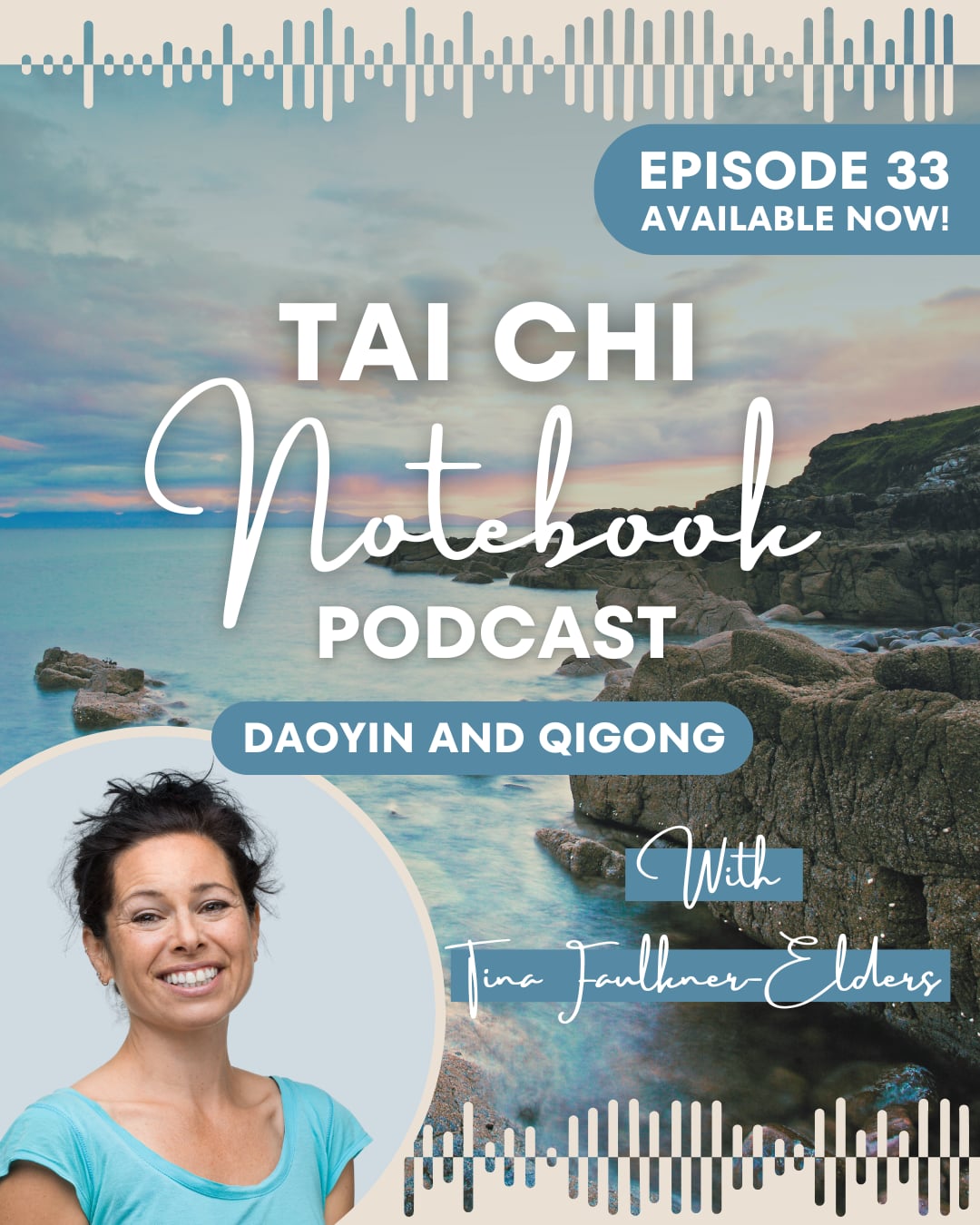
My guest for the latest episode of The Tai Chi Notebook Podcast is Tina Faulkner Elders, chief instructor of the RuYi School of Taijiquan and Qigong in Aberdeenshire. We talk about Tina’s training in qigong, first with her father, then in Beijing, China, and then on Wudang mountain itself, the legendary home of Taoism.
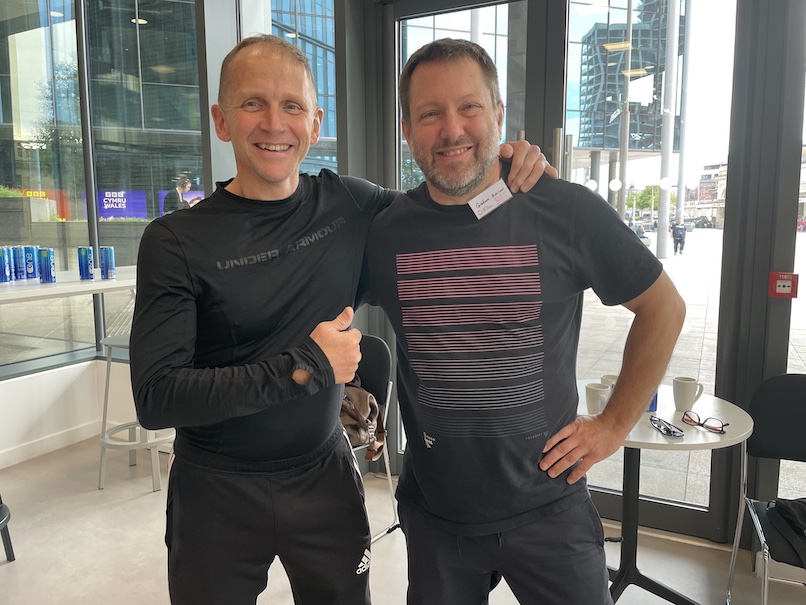
At the recent 2024 Martial Arts Studies conference in Wales I had the good fortune to meet Randy Brown of Mantis Boxing and Brazilian JiuJitsu in Massachusetts, USA. We had a blast at the conference discussing martial history, theory and even demonstrating a few techniques on each other into the small hours in a pub in Cardiff city center! Not only is Randy highly skilled in mantis boxing, but he’s also a black belt in Brazilian Jiujitsu, so we had a lot in common.
When I was exchanging techniques with Randy he noticed that the Choy Li Fut I was showing was identical to moves from a form he knew called gong li quan, which translates as “power-building boxing”. It was a form he had learned that was used as foundational training for various Ching dynasty martial arts, like long fist, eagle claw boxing and praying mantis boxing.
Gōng Lì Quán, or Power Building Boxing, is a unique boxing set from northern China, and is included as a training routine amongst a variety of boxing styles in the north to include: long fist, eagle claw boxing, and praying mantis boxing. This form likely intermixed with the latter two styles when it was included as part of the Jīngwǔ Athletic Association’s fundamental wu shu curriculum. At Jīngwǔ, gōng lì quán was one of the mandatory six empty hand and four weapons sets taught to kung fu practitioners. These ten sets were required as a prerequisite to the study of: xingyiquan, bagua, taijiquan, eagle claw, or mantis boxing; considered by Jīngwǔ founders to be more ‘advanced’ styles.
Our meeting seems to have sparked a desire in Randy to delve further into gong li quan and resurrect this old form he’d forgotten about and try to bring the movement to life with grappling applications. He’s been kind enough to share video of his research.
3 Rings Trap the Moon
This was the original move we discussed in Cardiff, 3 Rings Trap the Moon, which in Choy Li Fut would be a gwa choy (back fist) followed by a sau choy (sweeping fist) followed by a biu choy (an outward forearm strike). Randy shows the original move from gong li quan, then his grappling applications. It’s pretty cool!
Twining Silk Legs
Randy has been updating his blog post with new applications as he goes, so keep checking back. One of his latest is the move Twining Silk Legs:
Twining Silk Legs is two upper cuts followed by two kicks. Again, Randy shows the move and then his grappling interpretation of the applications. What’s really interesting to me is that, once again, there’s a parallel in Choy Li Fut with this move. If you look at the move starting at 1.22 in the following Choy Li Fut video you’ll see what is essentially the same move as Twining Silk Legs – two upwards strikes followed by a kick. (Ok, just the one kick here, not two, but still…)
You could look at this as further proof that gong li quan and Choy Li Fut share a common ancestor back in the mists of time, but since I’d be willing to bet that other Chinese martial arts practitioners would also recognise these moves from their own systems, I’d venture to say that is is further evidence for Randy’s theory that the explosion of different martial styles during the end of the Ching dynasty (which is where we get Choy Li Fut, mantis, Wing Chun and the other well-known styles) was more about branding the martial arts, for commercial reasons, and that they actually shared a common pool of knowledge.
“A question needs to be asked, did ‘Chinese boxing’ of the era, have a similar common pool of knowledge? Qī Jì guāng’s manual would hint at such. Within ‘Chinese Boxing’, attributes, feats, or skills defining one fighter over another became definitive styles of their own right due to events of the time”.
(The Qi Ji Guang he’s referring to is the Ming dynasty general who fought off Japanese pirates and because a hero to the people. He wrote a famous manual which documented the martial arts of the time. The techniques in the manual seem to crop up in all sorts of Ching dynasty martial arts.)
You can learn more about the the tumultuous events of the Ching dynasty and the explosion of martial arts styles that happened during it in Randy’s video of his presentation from the 2019 Martial Arts Studies Conference:
2025 Martial Arts Studies Conference
Today I heard the exciting news that next year’s 2025 Martial Arts Studies Conference will also be held in Cardiff, Wales. This will be the 10th anniversary of the original 2015 conference, which was held on the 10th-12th June in Cardiff, and will be held on exactly the same dates. It’s almost too perfect. See you there?
The Martial Arts Studies Network has also released a new (and free as always) issue 15 – check it out, it’s full of top-quality articles on martial arts. Oh, and don’t forget, I also recorded a podcast with Randy while we were at the conference – here it is:
Here’s my latest podcast! Mantis boxing, BJJ, Self Defence and heresy in martial arts with Randy Brown.
Randy Brown is a Mantis Boxing and BJJ black belt coach teaching in the USA. In this podcast we explore how Randy has reworked his Mantis Boxing to explore the grappling potential hidden in its forms and how they can interact with his Brazilian Jiujitsu. We talk about a range of subjects including self defence vs sport, weapons vs barehand and how to turn dead systems into living arts again.
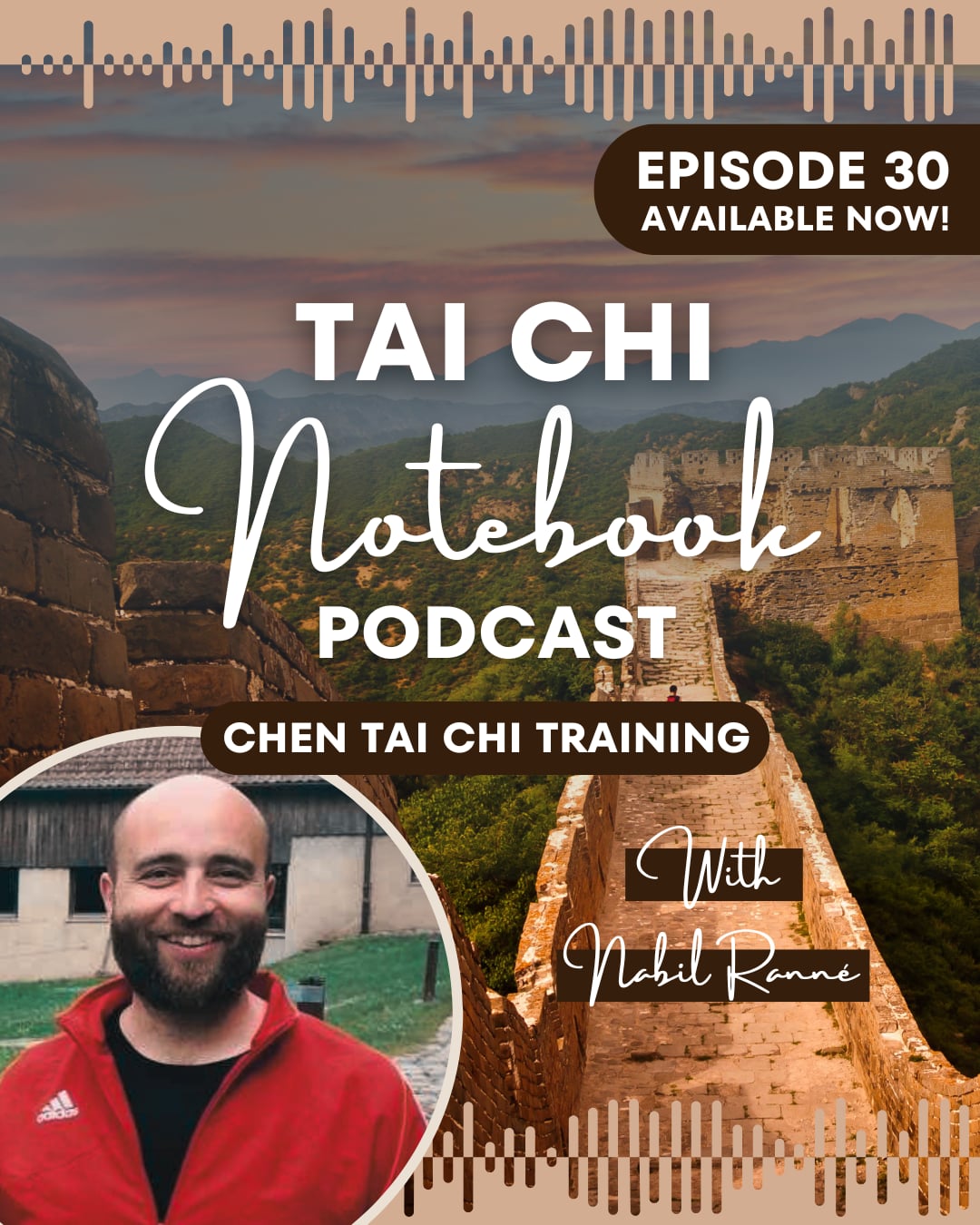
Nabil Ranné is a Chen style teacher living in Berlin who offers classes and online training at CTN Academy Nabil is a student of Chen Yu, who is the only son of Chen ZhaoKui and grandson of the famous Chen Fake. Listen here.
Here’s what we talk about:
Timestamps:
1.00: Nabil’s background in martial arts and what attracted him to Chen style Tai Chi
3.40: What is Jin in Tai Chi?
7.30: What makes Tai Chi different to other marital arts?
11.15: What is the strategy for Tai Chi?
16.00: What is the function of Tai Chi push hands?
17.55: Competition push hands vs Tai Chi push hands
22.20: The Xin Yi podcast and how do you train applications in Tai Chi
We should stop now and again to look back to see how far we’ve come. The Heretics podcast has reached episode 100! It’s a podcast designed to challenge the way you see the world, hence the name. We cover a lot of religious topics, but also a lot of esoteric topics and martial arts. To celebrate episode 100 we’ve done a 2 hour special on Xing Yi. The first hour is a continuation of our History of Xing Yi series, but the second hour is an off the cuff discussion about Xing Yi that you might enjoy more. Expect some heretical ideas and controversy!
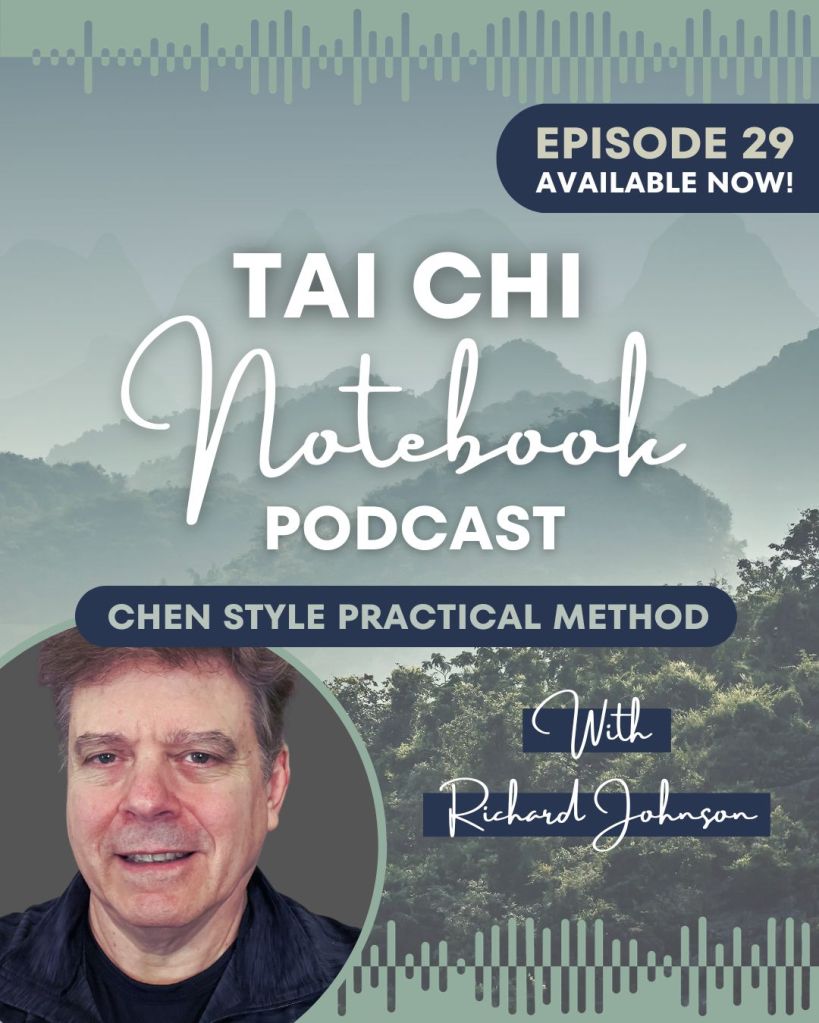
As well as a Tai Chi practitioner and teacher, Richard is a full time movement coach working with athletes, so he brings an appreciation of athletic movement to his views on Tai Chi.
In our discussion Richard delves deeply into the internal workings of the Chen Style Practical Method and we talk a lot some interesting movement principles based around rotation. We also talk about how the Practical Method is different to the Chen Village style of Tai Chi.
My guest for this episode is Jess O’Brien, author of the book Neijiaquan and co host of the Neijiaquan podcast, which he runs with Isaac Kamins.
Since 1999, Jess has studied extensively under BK Frantzis. Over the years, he has also trained with other, preeminent internal martial artists like Luo De Xiu. He has been active in martial arts since his teens.
In this episode we discuss what drew Jess to the internal arts and how he trained with various different teachers before becoming a student of Bruce Kumar Frantzis.




 The Tai Chi Notebook