I was interviewed by the great Lou Temlett for the Jiu-Jitsu Lou Podcast recently.
It’s a bit annoying that there is clearly something wrong with my microphone, but it is what it is. (At least the video version below has subtitles!)
I manged to talk about my BJJ book, what tai chi and Chinese martial arts can bring to Brazilian Jiu-Jitsu training and some thoughts on different ways of learning and training.
Podcast
The first podcast of 2026: Quantum Aikido with Richard Moon

My first podcast of 2026 is out! In this episode Richard Moon, a lifelong martial artist and performer, shares his journey from playing in a jug band and performing with bands like the Grateful Dead to becoming deeply involved in yoga and eventually Aikido, which he encountered by accident and learned as a “way of life more than a way of fighting.”
Richard Moon describes developing a “very freestyle, jazz-oriented approach” to Aikido, which eventually led to corporate coaching with Chris Thorsen and international peace building initiatives with Louise Diamond and a $30 million project in Bosnia funded by Dan Whalen. Richard Moon emphasized the importance of centering, intentional transformation, and harmonizing with the universal movement through practices like the “universal breath” and the “drop back, sink open” technique, concluding with O Sensei’s teaching that “Aikido is the realization of love.”
Richard’s new book Quantum Aikido is out now.
Find out more and get your copy at QuantumAikido.com
Podcast link.
Episode 41: Teaching Tai Chi as a Martial Art with Nick Walser and Ian Kendall
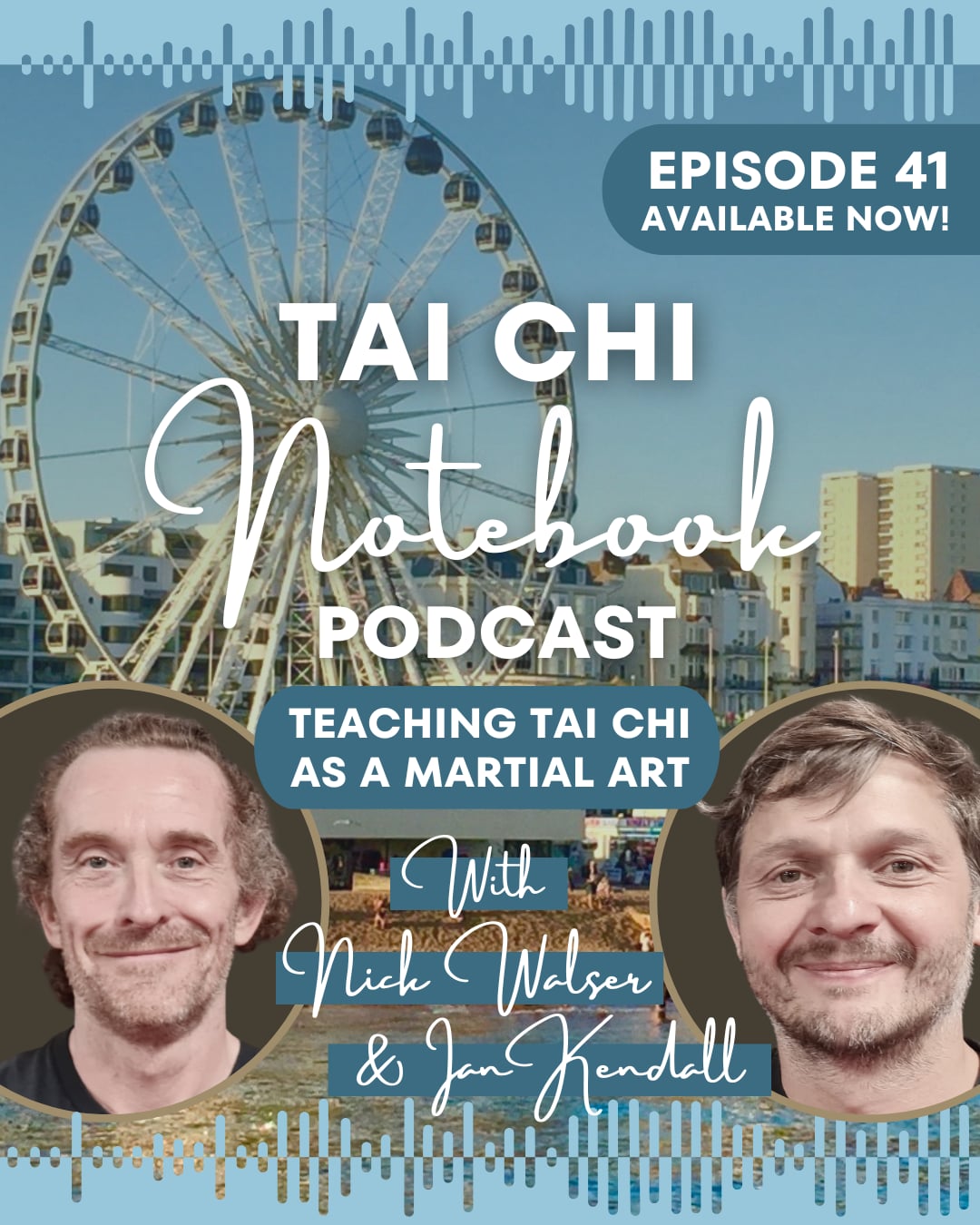
In this episode I talk to two Wudang Tai Chi teachers from Brighton, UK: Nick Walser and Ian Kendall. Both students of the late Dan Docherty, they have continued to practice the tai chi that Dan taught them and developed a new training system called 5 Snake.
5 Snake is a unique and powerful method for finding flow, resilience, and calm through partnered close- quarter practice, and they’re here to tell you all about it.
Find out more at 5 Snake and on Instagram, YouTube and Facebook.
Ep 40: Kempo and Xing Yi Quan with Benjamin Palmer
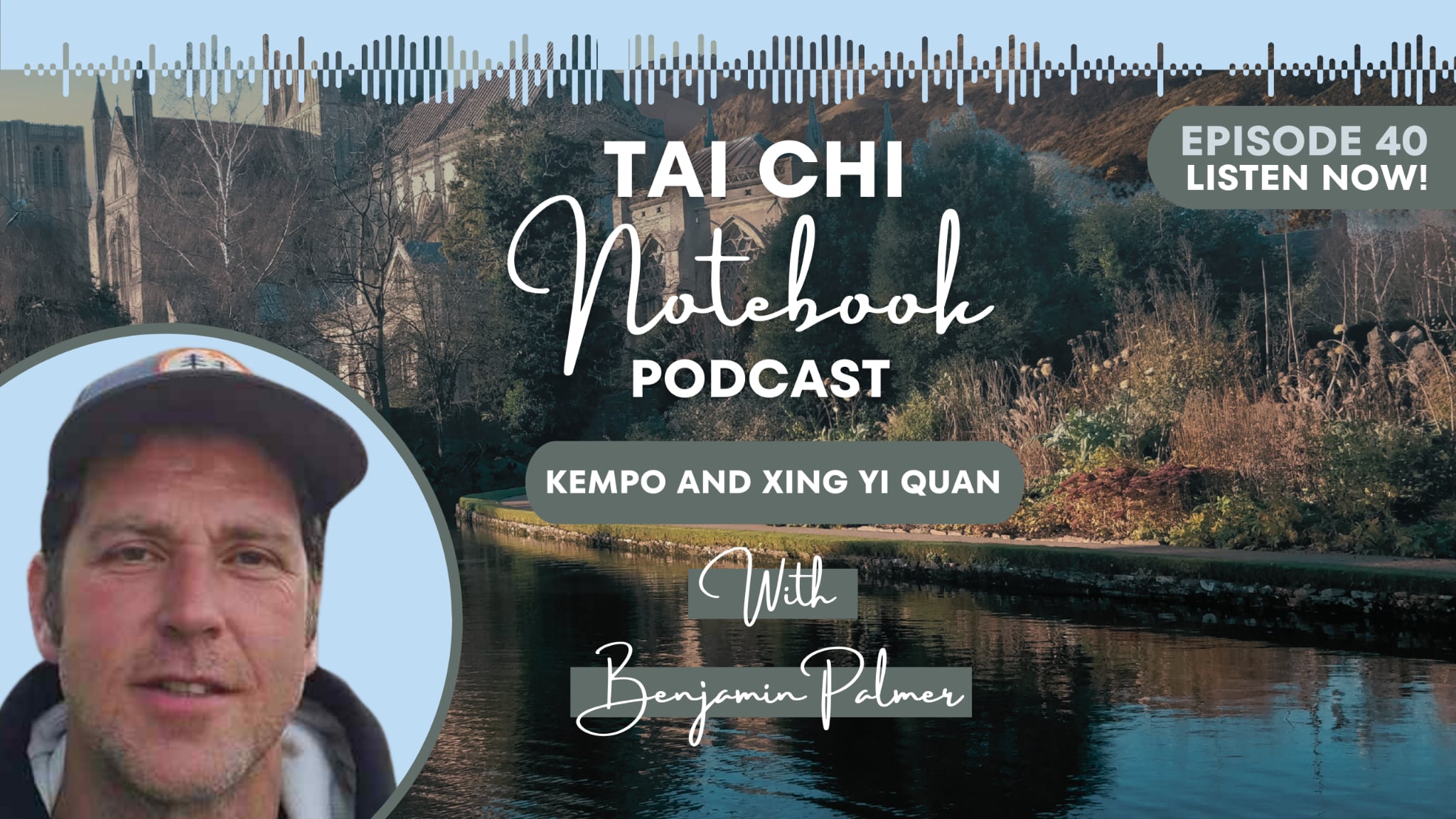
Episode 40 of the Tai Chi Notebook Podcast is out on Spotify, Apple Podcasts and elsewhere.
I’m joined by my friend Benjamin Palmer. Ben has been running a Xing Yi Quan training group in deepest darkest Somerset for a good few years now, but Ben has also been training Mishima Kempo, an eclectic Japanese martial art and is thinking of starting a class in that soon.
We share the same Xing Yi teacher, Damon Smith who has been a previous guest on my show.
I visited Ben’s Xing Yi class a couple of weeks ago to teach his group some grappling and afterwards we sat down for a chat, and a nice cup of tea, so here we are in Ben’s kitchen!
Links:
Mishima Kempo
FoxFist
Xing Yi UK
How we made Brazilian Jiu-Jitsu: The Ultimate Illustrated Guidebook
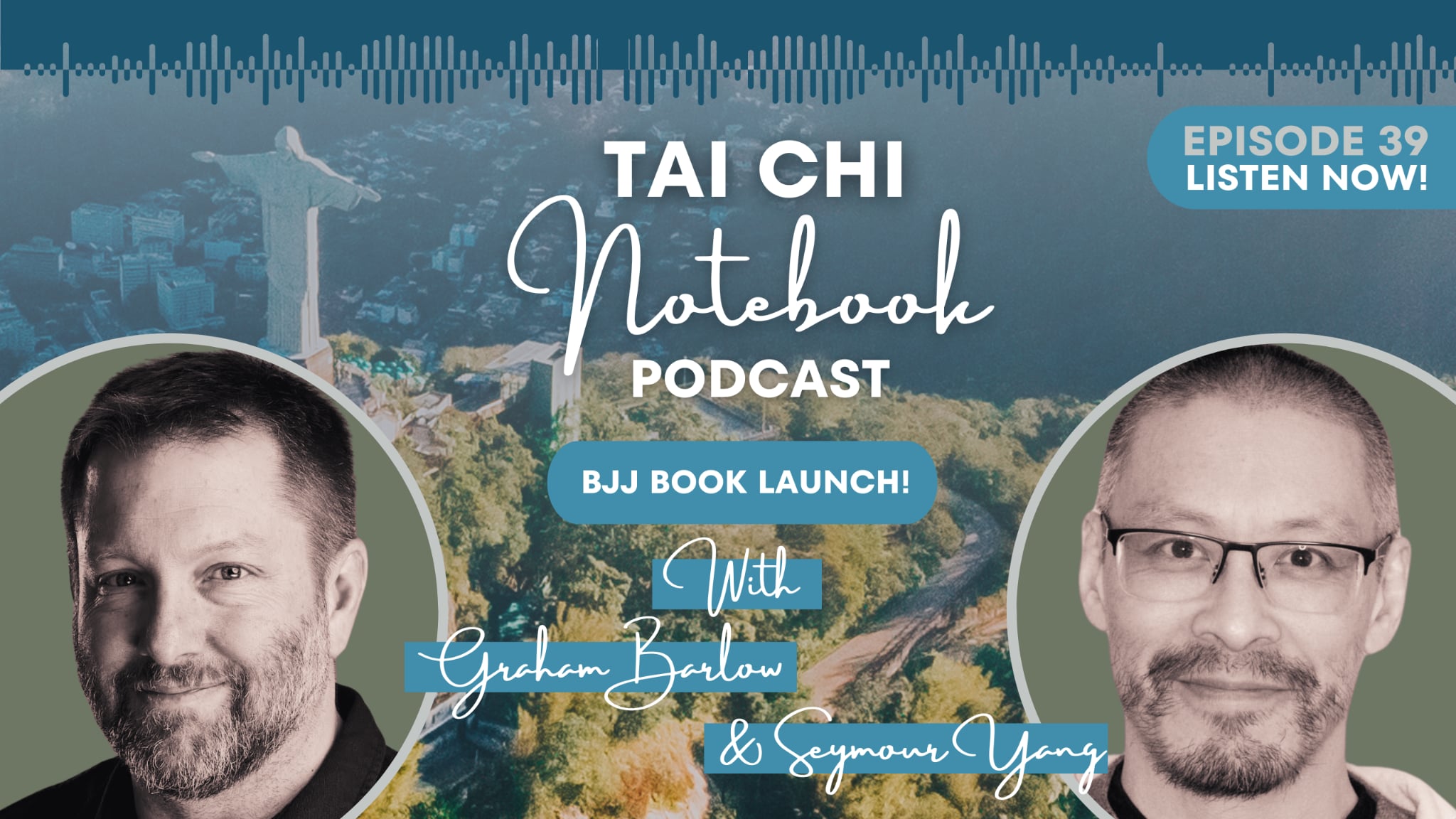
I wanted to share the process and journey of how Seymour Yang and I made our new Brazilian Jiu-Jitsu book.
First of all it’s worth noting we are both black belt instructors with many years of teaching experience. The book is aimed at beginners to developing white and blue belts and covers everything we felt was useful and relevant in today’s Jiu-jitsu club environment.
After much time planning and researching we then set about creating the contents. Every illustration is based on a photograph or video still that we took of our students or training partners. These stills Seymour used as references to hand draw the line art images. I then wrote the text.
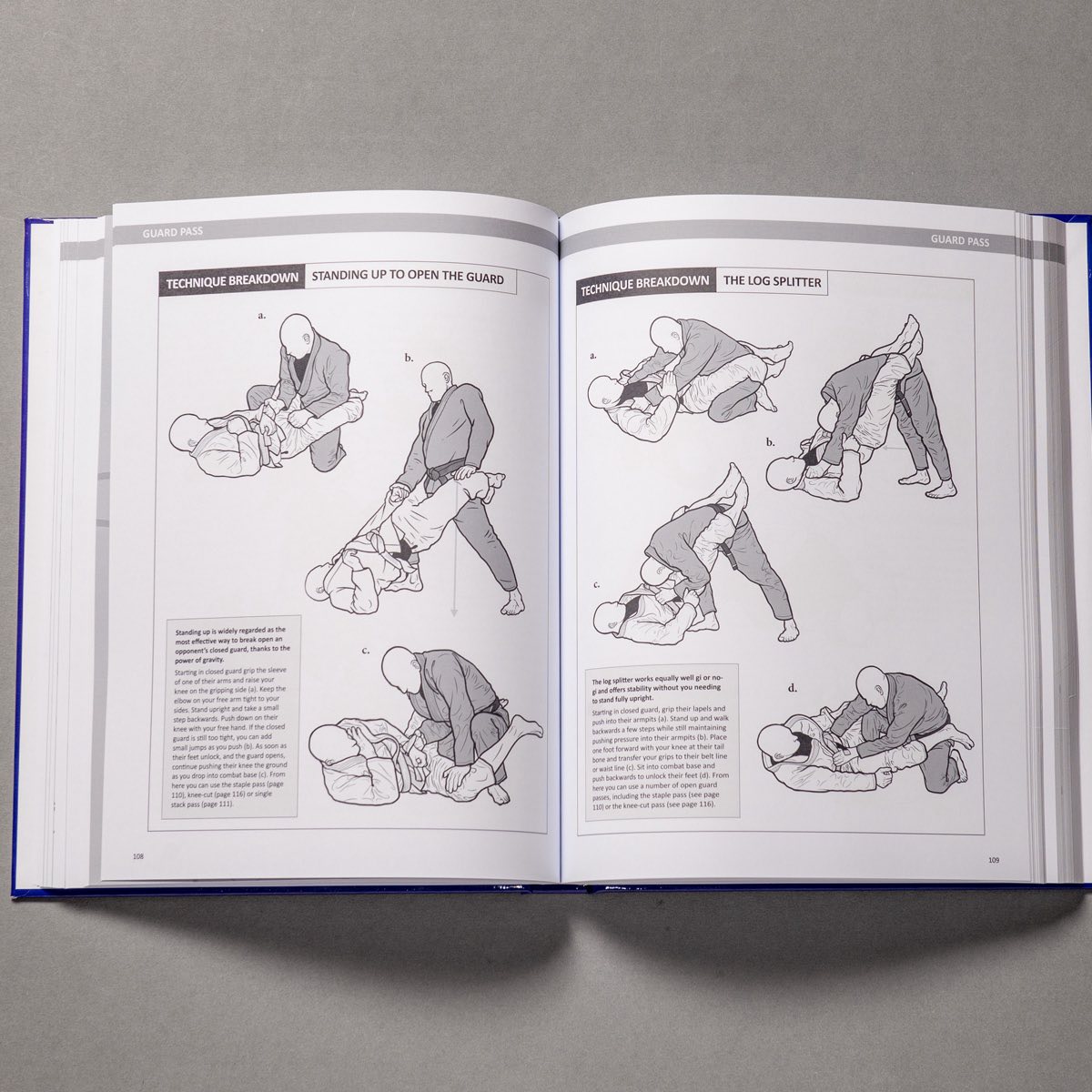
That was just the beginning. The hardest stage was making sure the book was as accurate and tight as possible as a work of reference. For this we spent a long time proofing, editing and redesigning it. We then tested sample after sample from independent book printing companies to find the best one (we did not want to go the Amazon print on demand route)
I’m proud to say the book is finally available for our followers to buy (as a pre-order) and so far it’s proving very popular.
We decided to make it a pre-order as we just didn’t know quite how many to print in advance. A two week window was decided and after the pre-order window closes (June 11) we can then tell the print house how many to make.
If you want to know even more about how we made it then check out this informal 2 hour (2 hour!) video where we chat about making the book (it will be released in a more thoroughly edited audio-only version as an episode of my Tai Chi Notebook podcast shortly):
What is the role of forms, or kata, in martial arts?
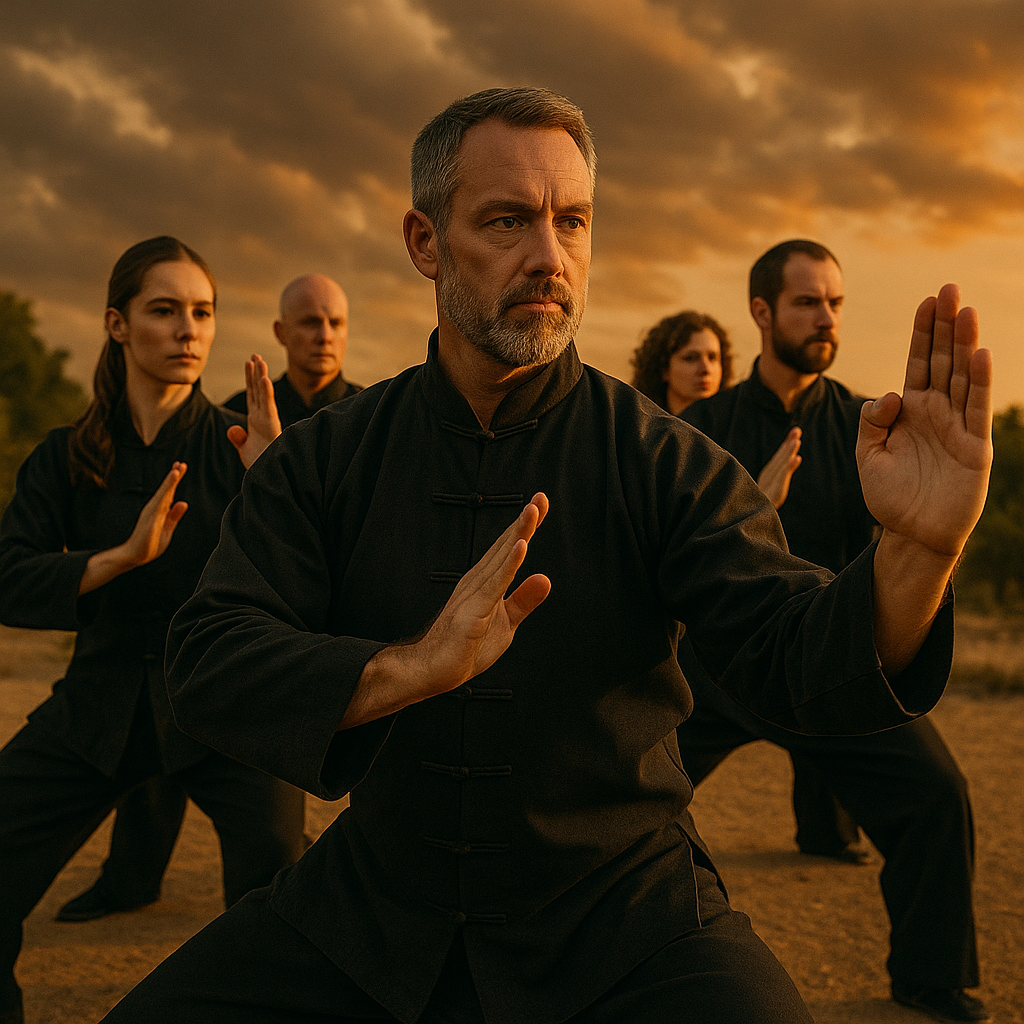
Traditional martial arts, which are perhaps better described as “martial arts that are not sports”, tend to have a lot of forms, or kata. I’m thinking of karate, tai chi, wing chun, choy li fut, etc.
But what exactly is the role of kata, or forms? And has it changed over time?
In this new episode of the Heretics podcast I discuss the role of kata with Damon Smith who has extensive experience in various martial arts over decades.
It certainly became very trendy once MMA became a big deal to describe forms as useless, however, I think they do have uses, even today. As usual Damon has some pretty interesting insights into how forms have changed over time, and he can look back to the way they used to be trained in the 1980s compared to today.
Give it a listen!
New podcast – Ethan Murchie on Living Neijing
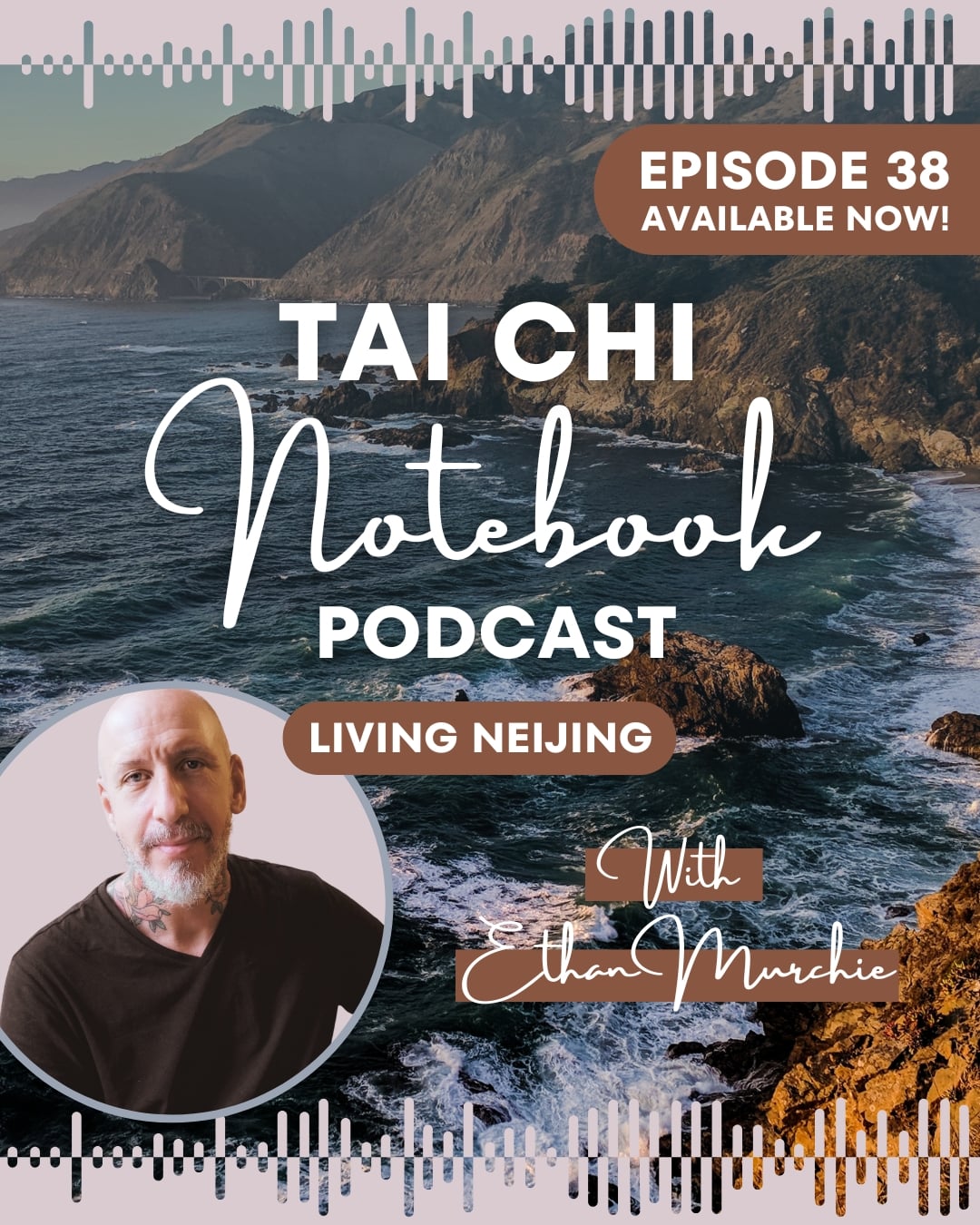
In this podcast I talk to internal martial artist Ethan Murchie about this teacher Vince Black from whom he learned xing yi mixed with elements of Sufism and Shamanism, as well as the North American Tang Shou Tao Association which Vince set up and which is still running today.
We also discuss how traditional arts can survive alongside MMA, the Yellow Emperor’s Classic of Internal medicine (the Huangdi Neijing) which Ethan teaches through his Living Neijing website, the meaning of Chinese terms like qi, peng, lu, ji and an, as well as his tai chi teacher Liang Dehua and the Yang Shouhou lineage of Yang family tai chi.
North American Tang Shou Tao Association
Living Neijing
Liang Dehua
New podcast! The formation of the Ming army
A new episode of our Heretics podcast Xing Yi history series is out. This one tackles the formation of the Ming army. Episode 18 is available now.
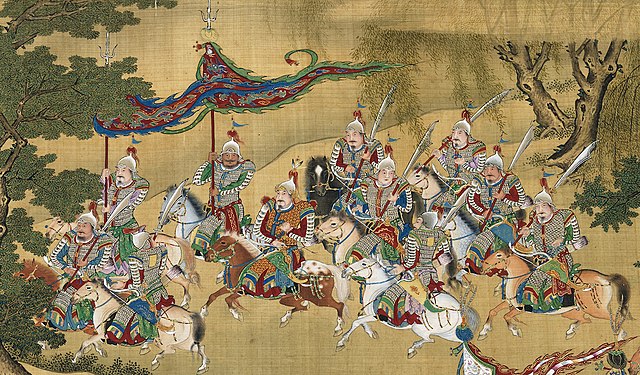
The Heretics by Woven Energy podcast is available on Spotify and Apple Podcasts.
New podcast! Ancestral Movement, with Simon Thakur
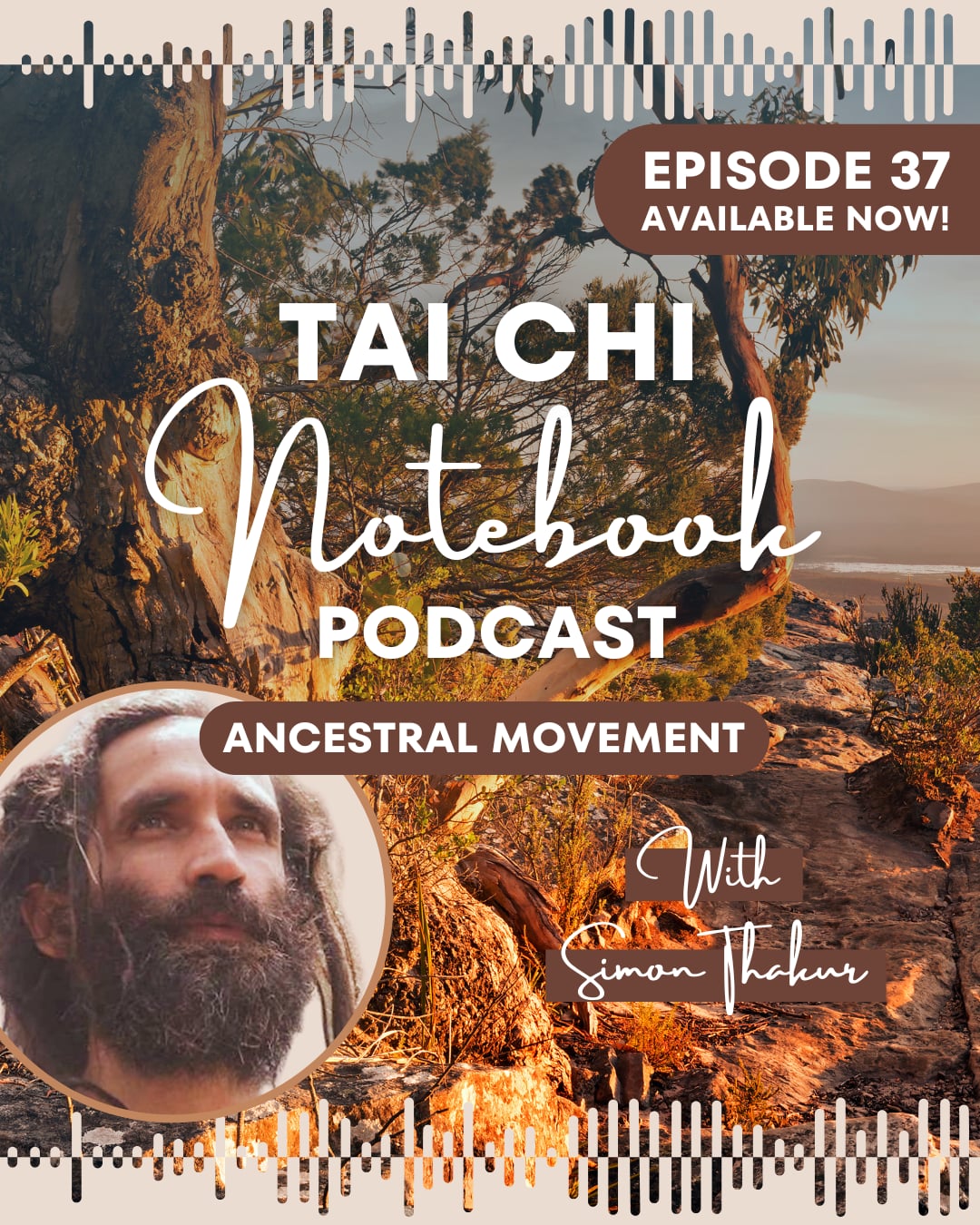
Simon Thakur is the founder of Ancestral Movement, “An ecological approach to movement and mind-body practice, exploring ancient ancestral patterns of movement and awareness built into our bodies, rediscovering the power, grace and ease of natural movement and our bodies’ innate connection to the rest of the living world.”
In this episode we talk about many subjects including Yoga, Chinese Martial Arts, Brazilian Jiu-Jitsu, Tai Chi, Shamanism and more!
Happy Year of the Snake
What to do when your Snake Creeps Down
Hello! Happy Year of the Snake, dear reader. On an occasion such as this is would normally be customary for a tai chi blog like mine to do a little post about the influence of the snake on tai chi, kung fu and Chinese culture in general.
Snake is, after all, one of the five main Shaolin kung fu animals, one of the 12 main xing yi animals and frequently appears as a menu item in Chinese restaurants, er no, sorry, I mean, appeared in Kung Fu Panda!
But, no! I’m not going to do that; partly because it’s such an obvious thing to do that I’ve done it before, and I hate being predictable, or at least repeating being predictable, but also because I’ve just recorded an excellent conversation for my next podcast with Australian national treasure and sometimes-Chinese-martial-arts-practitioner, Simon Thakur of Ancestral movement about finding your inner, ancestral animal, including, of course, the snake, and I just need to find the time to get on with editing it so I can get it out to you lovely people.
I think that what Simon says about our human connection to snake-style movement is probably more valuable than whatever I’ve got to say on the subject of our slithering cousin. So, I’ll leave the snake talk until the podcast comes out!

In the meantime, while you wait for that podcast to properly percolate (all the best things take time) I’ll leave you with a thought. “Tai Chi is more than the techniques, it’s the jins that make it interesting”.
If you listened to my last podcast with the esteemed Alan Wycherley of ‘In Defence of the Traditional Arts’, you might be forgiven for thinking that I’m all about training tai chi techniques. Now, while I’ve no objection to practicing a Repulse Monkey or a Part Wild Horse’s Mane (or two), or even a Snake Creeps Down, I definitely agree with the statement that tai chi is more than the moves. In fact, I think we can probably agree that tai chi applications aren’t that great as martial techniques. There are (shock!) other martial arts that have more effective techniques. Hello, Brazilian Jiu-Jitsu, I’m looking at you. Hello, Choy Li Fut. Hello, Western Boxing. Hello, Muay Thai, stop hiding at the back! Yes, all these martial arts have techniques that I would probably put ahead of anything found in a tai chi form, regardless of style. They’re practical and effective. And yet, I practice tai chi. So, why is that?
What tai chi has, and emphasises over techniques, are the eight energies – the jins: Peng, lu, ji, an, etc.. What you are doing when you practice a tai chi form is emphasising energy changes using these eight over technique. Flowing from one to the other a bit like a river flowing along smoothly. Sometimes there are fast bits, sometimes there are slow bits, sometime the river turns one way or another, but its energy flow keeps going.
When I practice other martial arts, my emphasis is more on technique. When I practice tai chi I can relax and get more inside the movement and concentrate on the energy flow.
And of course, in tai chi push hands you get to interact your energy flow with the energy flow of another person in a live situation, and that’s extremely valuable for developing martial ability. Techniques are another thing.
Now, if the analogy of a river doesn’t work for you then think of something else… perhaps, a snake? Snakes can flow along smoothly, they can change direction sharply and they can be incredibly powerful or incredibly quick, as well as slow and suffocating. They’re a great example of energy changes.
Homework
In preparation for my next podcast allow me to recommend a documentary by professional paleontologist and evolutionary biologist Neil Shubin called Your Inner Fish. (He’s written a book of the same name, if you prefer to read about him). Snakes come out to play in episode two. Here you go:
 The Tai Chi Notebook