Judo is returning to its roots and allowing leg grabs again, but only in specific Japanese tournaments

Getting rid of some of those pesky Olympic rules
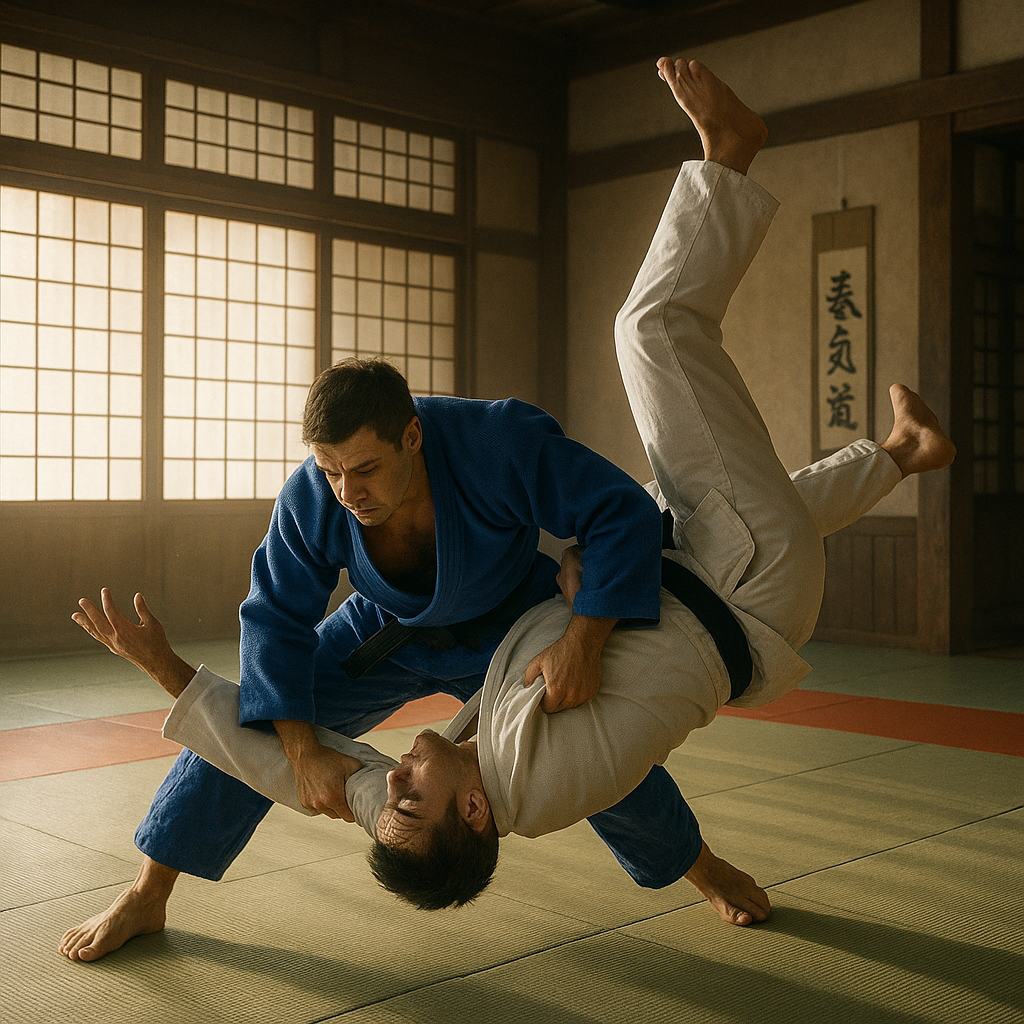

Judo and (Brazilian) Jiu-Jitsu might have exactly the same origins, but they’ve gone down really different paths in their evolution. While Judo has focused more on the sporting elements and becoming an Olympic grappling sport, BJJ has always wanted to keep things closer to its Value Tudo origins, which evolved into modern MMA.

Even today, many BJJ classes have a strong self-defence element, however BJJ is a broad church and some associations and classes are much more orientated towards sport grappling, particularly the no-gi variation.

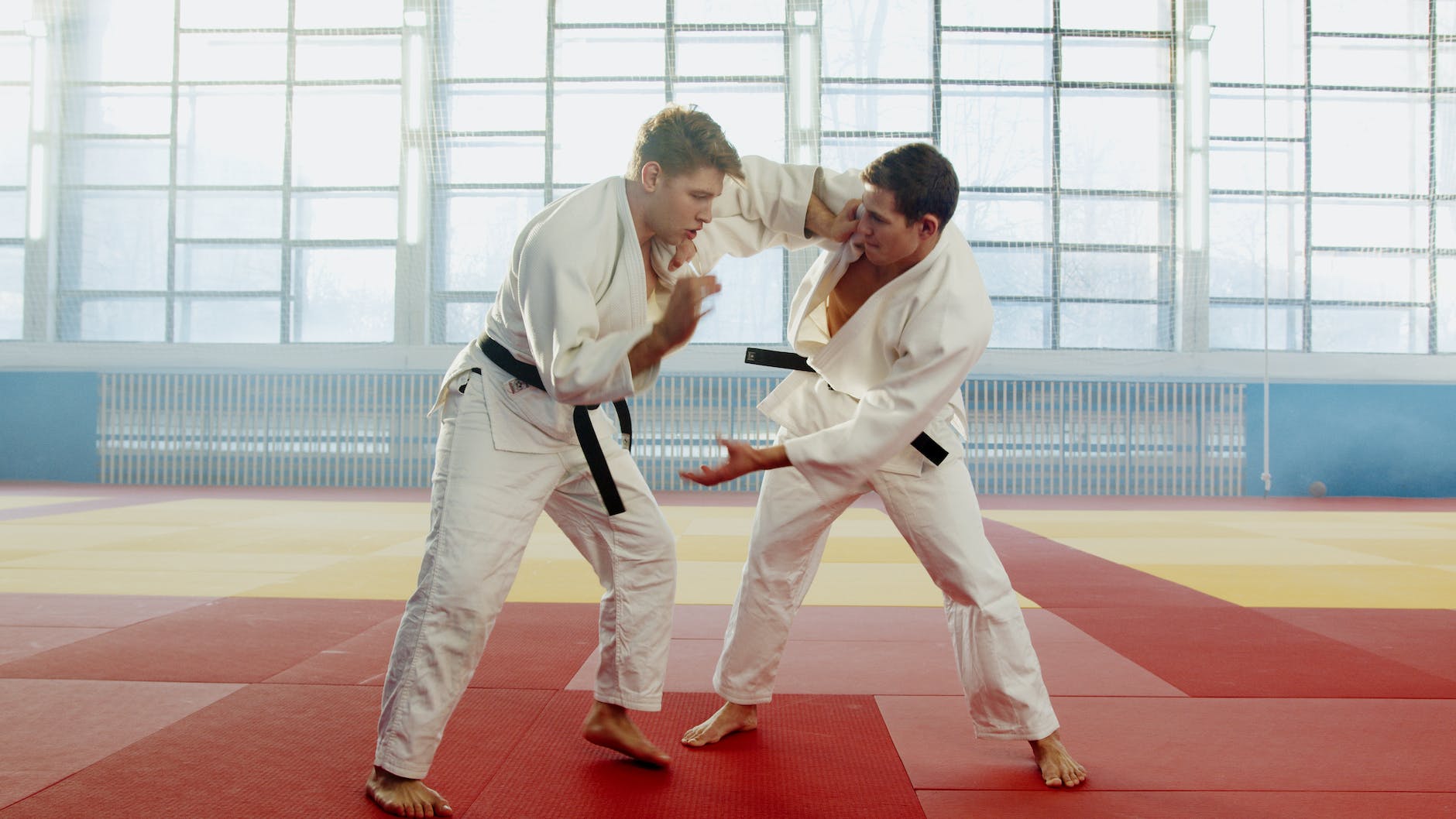
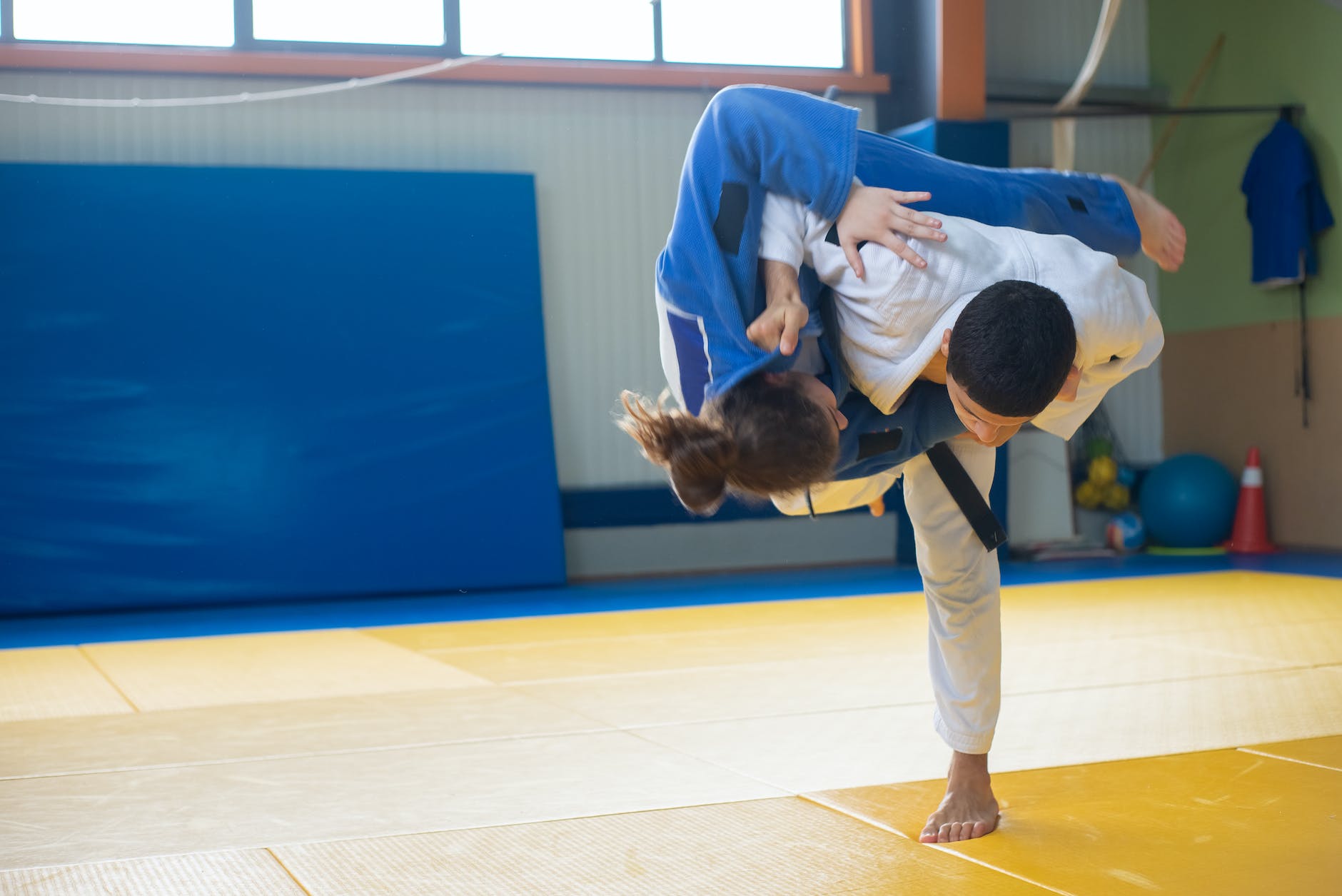
One of the frequent criticisms of modern Olympic-style judo was that it had sacrificed too much realism in pursuit of beautiful big throws in competition. One way it did this was to make any grab of the pants or legs illegal. This seemingly simple rule change had dramatic effects on the sport. Since the legs were no longer a target the stance of judo players became more upright in their stance, leading to more possibilities for big dramatic throws.

Remember, under Judo rules a match can be won with an Ippon, a throw that lands the opponent on his or her back. In BJJ no such rule applies – a spectacular throw simply earns you two points and the match continues.

All Japan tournament rules

I hadn’t noticed before, but there has been a recent rule change in judo, in a particular Japanese tournament called the All Japan Championship, that means you are allowed to grab the legs again, opening up a whole range of possibilities for long-forgotten judo techniques to make a reemergence. 

There are some restrictions though. To grab the pants you have to have a grip on the upper body with one hand, and you cannot grab the legs with two hands. This rules out popular BJJ and wrestling techniques like the single leg or double leg.

This video explains the rules:


Will the new rules get adopted by wider judo federations and ultimately the Olympics? It’s unclear at this stage, and too early to say, but it will mean that going forward, judo could end up looking very different to the way it does now.

Choke theory

N.B. This does NOT look like a very well applied choke at all, but it’s the only free photo I could find!
(Photo by Kampus Production on Pexels.com)

Disclaimer: Please only take medical advice from a qualified doctor. I am not a qualified doctor!

One of the things I find quite astonishing amongst ‘martial artists’ is the generally low level of understanding of the theory of choking people.

Choking is the process of stopping or reducing blood flow to the brain until the person loses consciousness (cerebral hypoxia). It usually requires a bit of squeezing force, but can be effortless and painless if applied with high levels of accuracy, and the person will just go to sleep. It’s one of the most powerful techniques in the self defence arsenal, since chokes generally work on everyone. It doesn’t’ matter if you’re big, small, strong, super strong or even Herculean, everybody goes to sleep. In Judo and BJJ done in a Gi, chokes are often done with a collar and are commonly taught.

Chokes have nothing to do with airflow. Again, I just did a quick google search and the amount of seemingly legitimate websites talking about ‘restricting airflow’ and ‘windpipe’ is insane. There is a lot of bad information out there. Chokes are about restricting the blood flow in the two jugular veins and cartoid arteries on either side of the windpipe. For a detailed analysis of what happens, check here. Being aware of exactly where you should be applying pressure when choking somebody will increase the effectiveness of your chokes massively.

Rendering somebody unconscious by stopping their airflow is also possible, and called smothering in BJJ. Smothering is usually a pretty nasty, violent thing to have done to you. Look up the Mothers Milk submission if you are curious! And a choke that involves crushing/compressing your windpipe to make it happen could also have dire consequences. Similarly, pressure on the chest can also stop you breathing and lead to unconsciousness. That’s particularly unpleasant, too.

But a good old fashioned blood choke is the safest method of rendering somebody who is aggressive instantly harmless. Quite often when they wake up the fight has gone out of them.

Chokes can be trained and practiced safely but become incredibly dangerous in the hands of the inexperienced, as we have tragically seen in many police killings of people already restrained, so only practice them under expert guidance. And if the person has gone unconscious – LET GO! Very often it is hard to tell, so check on them, get verbal feedback, don’t just keep squeezing!

In training, the idea is that before you go unconscious you can feel the effects (a build up of pressure in the head, the world going black around the edges, etc) and tap before it happens, so that the person lets go.

If you are training with somebody that didn’t tap in time and went unconscious then don’t do the commonly seen thing of raising their legs to ‘get the blood flow back to the brain’ – you’re much better off putting them in the recovery position and waiting for them to wake up, which should happen fairly quickly. If they don’t seem ok in anyway, especially if their speech is slurred, call an ambulance.

Nothing in martial arts is ever risk free and there is some evidence of poorly applied chokes, or people struggling too hard to get out of them, causing damage to blood vessels, leading to blood clots, leading to (in rare cases) risk of stroke.

My advice is always tap early and tap often, especially if you feel like you’re going to sleep.

Understanding choke theory is important for all martial artists. If you feel like you need a primer on choke theory, then I’d recommend this new video by Chris Paines. See below.

Which is a better compliment to Taijiquan – Judo or BJJ?

Occasionally, I get questions and this one was a good one, so I thought I’d post my answer here. The question was: Is Judo or BJJ a better compliment to Taijiquan?

Photo by Kampus Production on Pexels.com

“It’s an interesting question! BJJ has less rules about what you aren’t allowed to do, and is therefore closer to self defence, but it depends on the school you go to – Judo is pretty much the same everywhere you go. I’d say both are good. My personal preference is for BJJ because it isn’t as hard on the body and I prefer ground work to throws. If you’re more interested in throws then do Judo.

If you want something that is Chinese, then Shuai Jiao would be a good compliment to Taijiquan, however, it’s hard to find outside of China. There are some online courses available.

But I think my real answer is that it’s not the art that matters, it’s the teacher. Find a teacher you like who is skillful at something, and learn whatever they have to teach you is my advice. I think in the long run that matters more than what art you choose.”

Alan Watts – The Principle of Not Forcing

Alan Watts – what a guy! As the public philosopher entertainer de jour he spearheaded the Eastern spirituality movement of the 60s that took America by storm and forever gave Tai Ch its hippy associations. The lectures on Eastern religions, particularly Zen, he did for a local radio station in California have provided endless motivational video fodder for advertising-packed YouTube videos, and they’re all very good. For example:

He had such a good speaking voice, and could articulate mystical ideas, particularly the idea that existence was simply consciousness playing an eternal game of hide and seek with itself, in ways that Westerners could understand. Of course, the downside of that after you die your words get used to advertise all sorts of things you may or may not have been in favour of. For example, he’s currently doing a voice over for a company selling cruises on UK TV at the moment. I’m not sure what the old guy would have thought of that, but there you go. That’s life! It’s never what you expect it to be.

I’ve heard people say that Alan Watts was a good communicator, but a poor example of the Taoist ideas he espoused. This is mainly because he was an alcoholic who died at the relatively young age of 58 due to related health complications. However, if I look at the 60’s popular philosopher entertainers like Alan Watts and Joseph Campbell, they’re so much more interesting and interested in their ideas than today’s sorry crop of pitiful, grifting, sophists like Joe Rogan, Scott Adams and Jordan Peterson. All of them are usually trying to convince you of some terrible conspiracy theory with one hand while selling you something with the other. At least Alan Watts had enough self respect to be dead before he started trying to sell me cruises!

I saw one of Alan Watts’ videos on YouTube recently, that sparked a few ideas in me. It was to do with the Taoist idea of Wu Wei. It’s called “Alan Watts – The Principle of Not Forcing”

“Not forcing” is Alan’s translation of the Taoist idea of Wu Wei, which is usually translated as “not doing”, or “doing nothing”, however Alan’s translation is much better for martial application. In martial arts, like Tai Chi, it is forcing things that is bad. Alan even mentions Judo in his explanation above. 

In English, the idea of doing nothing sounds too passive. Tai Chi isn’t passive. You can’t do a marital art by doing nothing, so I much prefer the translation of “not forcing”. It’s what we aspire to in Jiujitsu as well as Tai Chi. If you feel like you have to force techniques to work in Jiujitsu then it’s not the right way. It might be required in a time-limited competition, but the Gracie family were always famous for not wanting time limits on their matches, mainly because, with their hyper-efficient style of Jiujitsu, they knew they could survive longer than their opponent, exhausting them in the process. When you are forcing things to work you are burning energy, and wearing yourself out.

I think different styles of Tai Chi might look at this situation differently though. Yang style, and its derivatives tend to effortlessly breeze through the form. The emphasis is on efficient, continuous movement and relaxation. And while it may look effortless, you feel it in the legs, even if you are not visibly out of breath. Chen style seems to want to work a little harder. The stances are lower, there are occasional expressions of speed, power and jumping kicks. But there is still that emphasis on being like a swan moving through the water – graceful up top, but the legs doing all the hard work below the surface.

But regardless of style, all Tai Chi forms follow the same principle: Wu Wei.

Square pegs and round holes in throws

Photo by Artem Podrez on Pexels.com

You know those wooden toys that have cutouts of shapes and a hammer for the kids to bang the right shape into the right hole? Square, circle, star, that sort of thing.

Martial arts techniques are a lot like that. You can have the best technique in the world, but if you’re doing it at the wrong time it’s like trying to hammer the wrong shape into the wrong hole. It ‘ain’t going to work not matter how hard you try…

Throws are a really good example of this. Throws work best when you try and throw the person in the direction they are already going. For example, if a person is basing backwards (moving their weight to their heels and sinking down) then it’s going to be really tough to throw them forward with say, a hip throw. Of course, if you’re a lot heavier and bigger than your opponent then it becomes possible, but we want good technique here. Good technique would be to take them backwards with some sort of inside trip.

Video: A simple wrestling chain that exemplifies the principle.

In internal martial arts we call that ability to sense where the other person’s weight and direction is going ‘sensitivity’. A lot of times people in wrestling and throwing arts don’t train sensitivity as a separate quality, you just kind of pick it up as you go through drills or live sparring against real resisting people. In martial arts like Tai Chi you can spend a lot of time specifically training sensitivity where it’s called ting jin – to listen. I’m pretty sure I used to think that the more intellectual Tai Chi approach was superior, but now I’m not so sure. If you naturally acquire sensitivity over long periods of time through resistant sparring then you kind of own it in an authentic way. It’s yours. You worked for it and its real. I’m not saying you can’t get that through the push hands approach, but the problem with shortcuts is that they’re exactly that – a shortcut. Something is always missing. You need to put in the hard physical miles in if you want to get something tangible in marital arts. I’m not sure there are really shortcut to some of these things.

My martial arts mentor Damon Smith, who I do the Heretics podcast with, often says there is no such thing as good technique, there is only appropriate technique. He’s talking about banging the right shape into the right hole at the right time.

Opinion: Judo is not dumbed-down jujutsu

Photo by Kampus Production on Pexels.com

I really enjoyed watching the judo at this year’s Olympics. I thought the technical level on display was simply electrifying, which is why I find it odd that people sometimes refer to judo as dumbed-down jujutsu.

I’m a practitioner of Brazilian jiujitsu (which could be described as an offshoot of judo), and I’ve only ever dabbled in a few classes on Japanese jujutsu, so I’d hardly call myself an expert on it. However, from my experience, and what I’ve seen I’m going to make a bold and possibly controversial statement: Judo is more sophisticated than Japanese Jujutsu.

The question is what do I mean by ‘sophisticated’. I certainly don’t mean that there are a greater number or variety of techniques. There is certainly more content in the old jujutsu systems than there is in judo.

Kano created Judo by removing a lot of content from the Jujutsu systems he started learning in 1877, and changing the emphasis from performing kata and drilling applications to randori – free practice. There is also a big emphasis on competition in Judo. Strikes and weapon defence were originally part of Judo, but only in pre-arranged kata and are not included in competition and over time they have receded into the background. Most Judo clubs these days don’t even include the original kata or self defence techniques and simply train for competition.

Broadly speaking, the content Kano removed were the things that couldn’t be practiced safely in randori – throws that landed the opponent on their head, for example, or the sort of techniques that were designed for the battlefield and therefore irrelevant to civilian life. The change resulted in judo becoming the prominent style of jujutsu in Japan and internationally. The key to judo’s effectiveness was this switch in emphasis to randori. By trying to get the same moves to work over and over on resisting opponents, the technical level of the practitioner naturally rises. If you’re going to hip throw somebody in a setting where they know you’re going to try to hip throw them, then your setups for the technique have to evolve and get better. You cannot simply step in and expect your hip throw to work. You’re going to have to improve your ability to fake, shift weight, take balance and finish the techniques massively. This process produces a much more sophisticated level of technique.

Judo is therefore not “dumbed-down” jujutsu – it’s highly evolved jujitsu. To my eyes at least.

We talked a lot about Kano and the creation of Judo in our Heretics Podcast on the history of Kempo and Jiujitsu in Japan.

Give it a listen if you haven’t already!

The invention of martial arts

An excellent video by Prof. Paul Bowman to promote his new book, The Invention of Martial Arts: Popular Culture Between Asia and America.

This presentation looks at how martial arts arrived in the UK and when the concept of being a martial artist first entered into the popular consciousness. Along the way he covers Bartistu, the Avengers, James Bond, Bruce Lee, Kung Fu the TV series, Ninjas, the Wu-Tang Clan and the UFC.

The invention of the Samurai

grayscale photo of woman holding katana

Photo by Jermaine Ulinwa on Pexels.com

I wrote a short post for Cook Ding’s Kitchen blog the other day about our Heretics series on the history of Kempo and Jiujitsu.

If you’re interested in the history of Japanese martial arts then I would also recommend this talk by Dr Oleg Benesch on the Martial Studies podcast, which talks about a lot of the same stuff, particularly the interplay of Western and Eastern ideas after 1852, the invention of the ideal of the honorable Samurai warrior and, most importantly, castles!

Judo Jack

The title of this video is “94 Year Old Jack Has Been Practising And Teaching Judo For 67 Years”, which tells you everything you need to know.

Some humans are exceptional.


The delusion of grace under pressure

Surprise! Fighting looks like…. fighting

Photo by Ivan Krivoshein on Unsplash

This blog post grew from a discussion on RSF, a discussion forum on internal marital arts where I’m a pretty active user. Some members were expressing their displeasure at what they saw as low-level skill displayed in the recent 2012 Olympics Judo contest in London.

I was incredulous, since competing on an international stage in a tough sport like Judo requires the athlete to have levels of skill far beyond those of the mere mortal. Yet phrases like “low level” and “muscling” were being thrown about with abandon. The standard thing the detractors of modern Judo say, while explaining how Judo has entered a state of decline from which it can never possibly recover, is that modern athletes are not as good as the old timers. Then they post a black and white video of Mifune (The “God of Judo”) practicing with his students back in the day.

I have one right here:

As you can see, he’s effortlessly controlling his opponent, and demonstrating what is clearly agreed upon as “high level skills”.

Well, for a start, since Kyuzo Mifune was considered the greatest Judo technician to have ever lived, nobody would compare well to him, but that’s beside the point. Their point is that it looks nothing like Olympic Judo, and of course they’re right! Competition Judo will never look like the Mifune demo, because… (drum roll please) it’s a demo!

It’s exactly the same in every martial art – put a Tai Chi fighter in a sparring contest and inevitably people say “that’s not Tai Chi” because it doesn’t look like the super smooth demonstration their instructor does every Friday night at their class, as he effortlessly repels a doddery middle-aged gentleman who is gently pushing on his arm… Quite simply, competition fights do not look like martial arts demos and never will! I am truly perplexed that people can’t understand this… it’s a sort of collective human delusion. And it’s not just martial artists that have this delusion, it’s seeped into the popular consciousness too because of movies like Enter the Dragon, The Matrix, or James Bond. Most people think that if you “know kung fu” you’ll be able to pull some Jackie Chan moves out of your ass in the middle of a real violent encounter. Nothing could be further from the truth.

There are plenty of clips of martial arts masters under real pressure on YouTube, if you look for them. They all have one thing in common – it stops looking like the perfect martial art demo and starts to look scrappy as soon as they have to deal with real resistance, and not a willing student.

Here’s the thing: We’re confusing the training methods with the end result time after time.

Example:

Here’s Kochi Tohei looking graceful, poised and in control while doing a demonstration of Aikido:

Now here he is working against an opponent offering real resistance:

Totally different, right?

This comment on that last video from YouTube is typical of the collective human delusion I am describing:

“if tohei used aikido techniques against this man,which he is not doing until the last bit of the clip,serious injury to uke could have resulted. this was only an exercise in balance.”

It’s time for people to wake up.