I’ve written on here before about Mr Inbetween, the Aussie TV show centered around the character of Ray Shoesmith, a hitman for hire, that forever has a soft spot in my heart for the way it covers societies approach to violence.
Anyway, I though I’d share the article here because I enjoyed writing it. And here’s a little clip on how Ray dealt with a kid who had been bullying his daughter:
Happy Father’s Day, UK! There are three Euros matches on today, including England, so you’re probably not looking for a film to watch tonight, but if you do then I’d recommend The King (2019) on Netfix.
The King trailer.
I loved this film, which I reviewed when it came out. It’s the story of Henry the fifth, not the historically accurate story, the Shakespeare version, but presented as if it was the historical version, which is a bit confusing, but that didn’t bother me. The acting is great (it stars the unfairly good-looking Timothée Chalamet), the story is top notch (er, thanks, Shakespeare) and the battle scenes are really well done.
But it was the solo duels in particular caught my attention for having a realistic quality, which is why I greeted this video breaking down the first longsword duel in the film between Harry ‘Hotspur’ and Hal with interest.
When you’ve been doing Asian martial arts for a while you have to remind yourself that the term “martial arts” also applies to European martial arts too, the sort of thing that HEMA is busy reviving, and Longsword is one of the things they practice. I really like the discussion of longsword technique in the analysis of the video, and the reference to historical fencing manuals (fight books), and how it gives you more insight into what’s going on in the fight.
My one criticism of the breakdown is that it completely ignores the excellent little ankle trip takedown right at the end that gives Hal the win. That deserves more credit! Anyway, here’s the video:
So, it turns out that they’re remaking the classic 1989 film Road House because, well, I guess some Hollywood executive has decided that it will make money. I can’t think of another reason why you’d want to remake one of the best-loved and enduring “fighty” films from the ’80s. The new version starts Jake Gyllenhaal as Dalton, and MMA superstar Conor McGregor as his nemesis, Knox. It’s combining more modern things like MMA into the mix, but it looks like it’s essentially the same plot. Trailer:
The original Road House is probably not classified as a martial arts film, because it mixed so many different film styles together, and didn’t really feature any famous “martial artists” in the cast, but Road House always felt like a classic martial arts film to me, just with more Western style fighting in the fight scenes.
It started Patrick Swayze as the bouncer of the aforementioned Road House, who has to deal with an onslaught of progressively worse ‘bad guys’ who are trying to bust up his bar, until he faces the final bad guy in a fight that remains forever legendary for its brutal throat ripping out scene, at least it’s legendary in my mind. It also had some great Blues music played ‘live‘ in the Road House, by the Jeff Healey Band.
Swayze was most famous for his role as a sexy dancing Butlins-entertainer in another classic ’80s film, Dirty Dancing. Casting him as a tough guy who could convincingly take out bad guys armed with knives and the like with his bare hands was a risky casting move, but he pulls it off with style and grace, perhaps proving once again that dancing is the best base for martial artists to emerge from (Bruce Lee was a Cha Cha dancer).
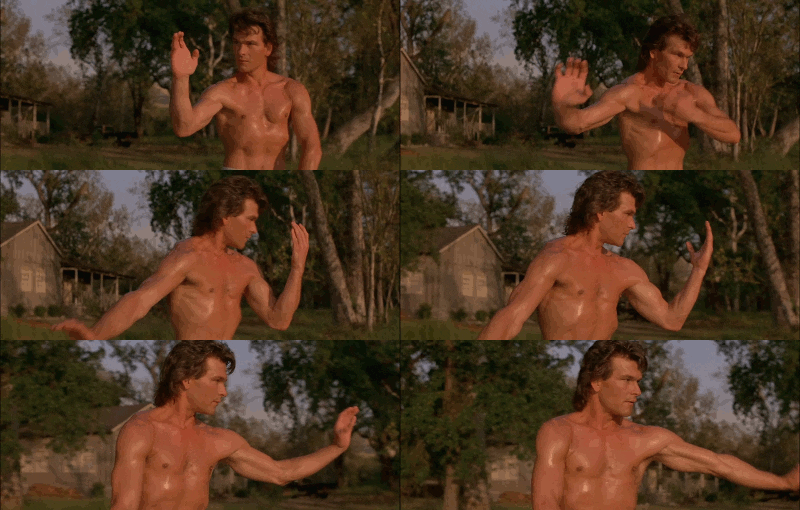
But what I liked most about Road House was the Tai Chi. When Dalton wanted to kick back and get away from the pressures of life he rocked up to the local lake shore and did some Tai Chi, (without his shirt on, obviously*.)
Ok, it wasn’t great, but at least it looked like Tai Chi. The implication was that Dalton was so good at fighting, and secretly enjoyed it so much, that he had to work hard to keep calming himself down otherwise his killing power would bubble up and overwhelm him, taking his humanity with it – kind of like the Hulk. He talks all the way through the film about not liking fighting, and how he does everything to avoid it. Eventually the bad guys push him too far and he unleashes the beast, resulting in the classic throat ripping scene.
I’ve always wondered why Tai Chi never had its Patrick Swayze moment. Wing Chun has been riding on the coat tails of Bruce Lee for half a century now, yet nobody really associates Tai Chi with Patrick Swayze, or this film. Perhaps if he’d gone on to make more Tai Chi or martial arts related films then things would have been different. Instead we got Ghost with Demi Moore and sexy pottery because his most associated activity!
Perhaps I’m being too hasty – when I started a Tai Chi class recently 4 women turned up asking if what they were going to learn was “like Patrick Swayze in Road House”? To be honest, I got the impression that they were more into shirtless Patrick than Tai Chi 🙂
Just remember: “I want you to be a nice…until it’s time to not be nice.”
“*” there was clearly a homoerotic subtext to the original Road House. While Swayze pratices shirtless Tai Chi he is gazed at by multiple men. Check out this exhaustive breakdown of Road House for more on that. Perhaps that’s another reason why Road House didn’t end up being a Tai Chi-promoting juggernaut?
Tim, tell me you’re in a cult without telling me you’re in a cult:
A comment from “Tim”:
“I’m disappointed in your entire take on internal power, as indicated by your dismissive way of talking about those who actually do possess some genuine internal power as using “tricks”. To be blunt, you’re just ignorant–that is, you have no personal experience with real practitioners and assume everyone showing such power must be a charlatan. Yes, there are many fakers out there and also many brainless critics who are not truly skeptical but just reactionary and dismissive. You haven’t seen this film but you lump everyone doing demos of internal power into one category of fakers using cheap tricks. I suggest you seek out one of the genuine Tai Chi practitioners who possess such power and experience it for yourself. Otherwise, you don’t represent Tai Chi Chuan as your little blog suggests. You just stand for the Tai Chi meditation approach and teaching form, which is OK but very limited and in denial of the original purposes and uses of Tai Chi Chuan. It’s not that difficult to find those who are the real deal. Start with the Martial Man series and see some who have taught at their “camps”–Adam Mizner, Liang de Hua and many others who are authentic practitioners of internal power approaches. Those people are themselves the former students of even higher-level masters whose powers are phenomenal. Tai Chi Chuan is a martial art that can be practiced for health and well-being, but it remains an extremely effective and powerful self-defense system that includes the use of various forms of “jin”–an energy converted to force that can be issued against any opponent. Take a breath, lose the cheap tricks of your dismissal, and try to seek out some contact with those who can show you what you’re missing.“
Let’s just go over a few things from this:
Tim (the owner of an anonymous sounding Yahoo email address) has no idea who I am, has never met me, and has certainly not read much of my material beyond my one post about the film “The Power of Chi”, which has got him so upset. That post contained an excellent video by Rob Poyton (who has appeared on my podcast before) showing how those things are done, and that anybody can do them with a bit of training. It’s well worth a watch.
I can do the “internal power” things he’s talking about.
I’ve done the “internal power” things he’s talking about on a stage in front of people.
They are just demonstrations of ways to use power, not divine miracles done by a guy who needs to be paid thousands of dollars while being treated like a master of the universe.
What I object to is the conflation of these things with real fighting skill, not the things themselves.
Tim, you’re in a cult, and you don’t know you’re in a cult. One day you’ll look back and think, wow I was in a cult!
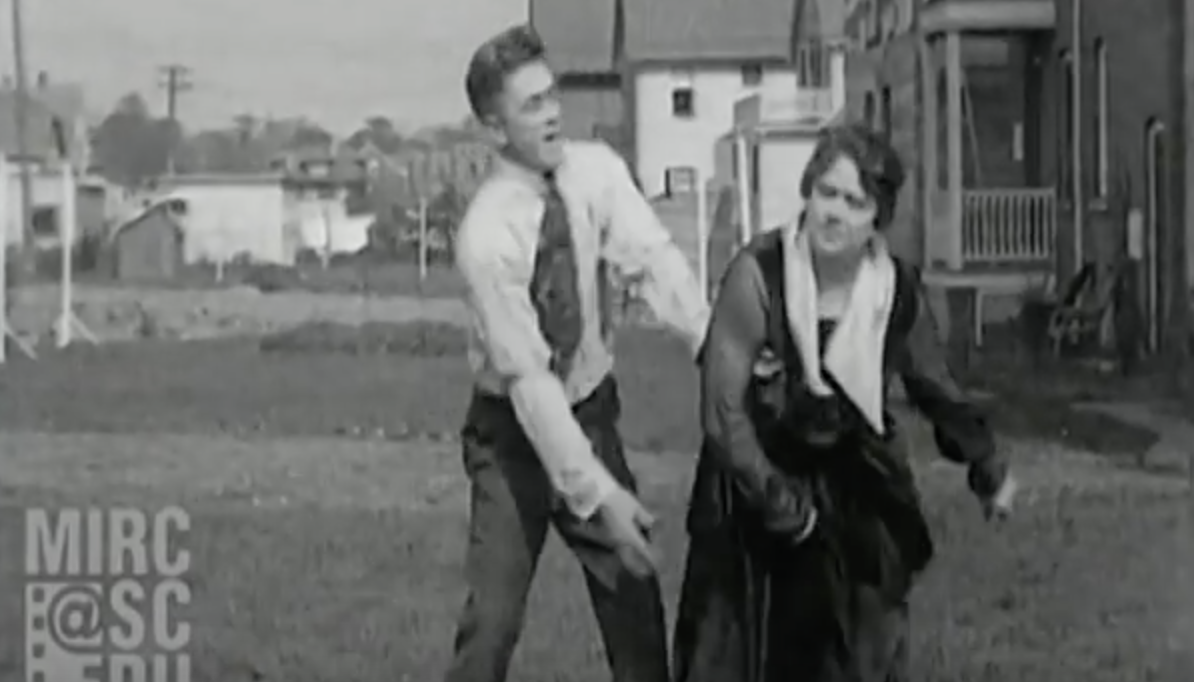
This channel displays films and film segments that were created at the beginning of film making in the 19th Century through to the first half of the 20th century in relation to martial art and exercise.
Here are few examples of the content you’ll find here that caught my eye:
1897 Boxe Francaise (Savate) & Baton Demonstration – Lyon France
Filmed: Spring – June 6th 1897 Location: Lyon-France These films show members of the 99th Infantry Regiment demonstrating Savate & Baton. These demonstrations are not sparring sessions. They are an exchange of techniques for the camera, in the form of a flow drill. In the Savate demonstration you can see that the practitioner on the left is aware of the camera position, and motions the other practitioner back into the frame of the camera. Sparring in this era was conducted on a “touch point system” along the same lines as fencing and points were scored for making contact, and the aim was not to seek a knock out.
“These two films were filmed in July 1896 by Lumiere camera operator Alexandre Promio. The Location was Sydenham Crystal Place Park London. The first film depicts a form of Burmese martial art which includes open hand strikes, kicking and grappling. It is unclear what style is depicted as Burma (Myanmar) has a large variety of styles. (Martial Styles of Myanmar) https://www.youtube.com/watch?v=96IBH… Both practitioners seem to be sparring in a light friendly manner for the camera. The second film presents a solo performance of the ball exercises known in Burma (Mynamar) as Chinlone. Chinlone dates back over 1,500 years, and is heavily influenced by traditional Burmese martial art and dance. It was originally conceived as a form of entertainment for Burmese royalty. It is also played as a team sport and over the centuries, players have developed more than 200 different ways of kicking the ball. Form is all important in Chinlone, there is a correct way to position the hands, arms, torso, and head during the moves. A move is considered to have been done well only if the form is good.”
We stand on the cusp of a major new martial arts movie release – Shang-Chi and the Legend of the 5 Rings. On it’s own this should be something I write about, but it’s also the last film that Jackie Chan’s prodigy, Brad Allen worked on before his untimely death at 48.
Australian choreographer, performer and stunt coordinator, Brad Allen, was the first non-Asian member of Jackie Chan’s stunt team. He was incredibly skilled – here’s a short sample of his wushu and athletic ability:
It’s not clear how Brad Allen died, but 48 is very young. RIP.
I haven’t seen Shang-Chi yet, but by all accounts it’s a Kung Fu film done right, that avoids all the usual stereotypes, and a good chunk of the film’s dialogue is spoken in Mandarin Chinese, which is then translated into English subtitles for audiences.
“As an Asian (Taiwanese) Australian, it is so obvious that the film was written through the lens of those who have a lot of love for Asian culture and have lived through the Asian experience,” wrote kabutocat on Reddit, starting a fascinating discussion about the English-language translations of Mandarin dialogue in the movie. “The Chinese lines are written so well that a lot of the times the English subtitles actually failed to convey the nuances behind each line.”
Shang-Chi’s origins lie in Marvels answer to the Kung Fu boom of the 1970s, with various Kung Fu-powered superheroes emerging, with perhaps Iron Fist being the post famous. The Shang-Chi comic was a product of its time and you can see orientalist tropes in its styling:
Shang-Chi was the first of the Kung Fu superheroes, and was designed to be the most gifted martial artist anyone had ever seen. He was trained in espionage, infiltration, assassination and more. But when he went on his first mission for his father, he broke his conditioning and dedicated himself to destroying his father’s criminal empire.
Here’s a breakdown of the film (warning SPOILERS).
Shang-Chi was the last film Brad Allen worked on, so let’s end with his excellent live performance with Jackie Chan on Saturday Night Live:
R.I.P – Brad Allan
One of the greats in martial arts and the first non-Asian member of the Jackie Chan stunt team.
Click the link above, or you’ll find it on iTunes, Spotify, or wherever you get your podcasts. Search for The Tai Chi Notebook.
Paul Bowman is a professor of cultural studies at Cardiff University. He’s the author of multiple books on martial arts, including several about Bruce Lee, and most recently, “The invention of martial arts: popular culture between Asia and America”, which was published by Oxford University press in 2020.
Paul also helped establish the academic journal Marital Arts Studies, and organised conferences for the Martial Arts Studies Research Network.
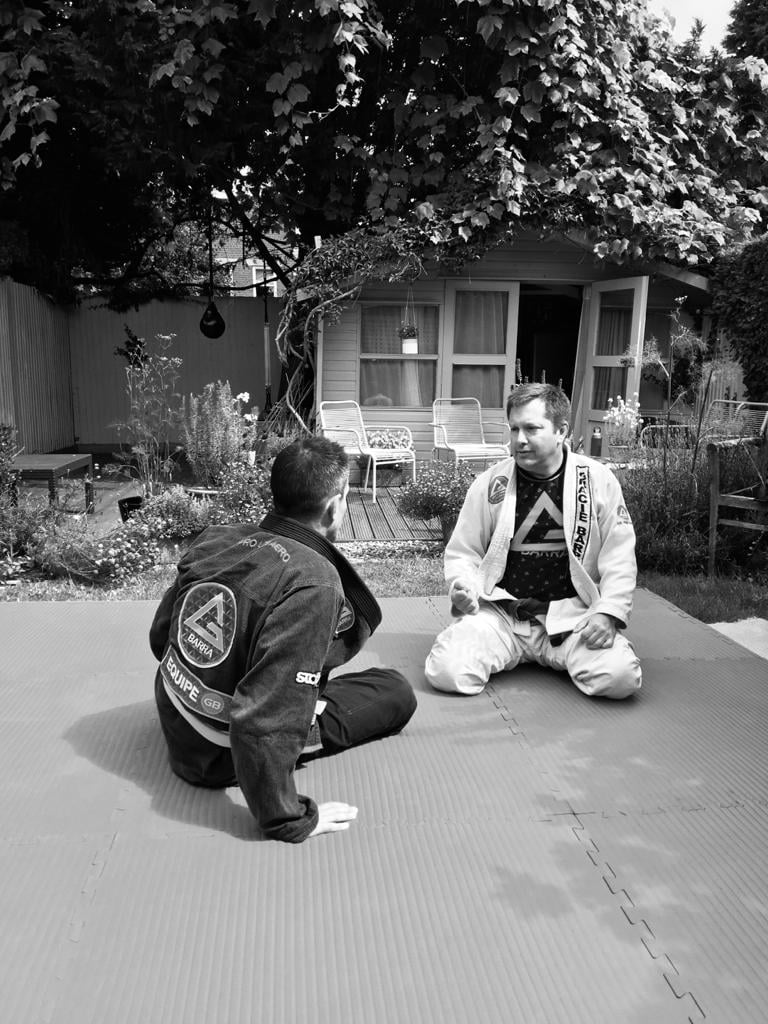
In this chat we reminisce about our times training together, talk about paul’s recent discovery of Brazilian jiujutsu and discuss the emergent field of martial arts studies.
Thanks to Jarek Szymanski for posting about this clip.
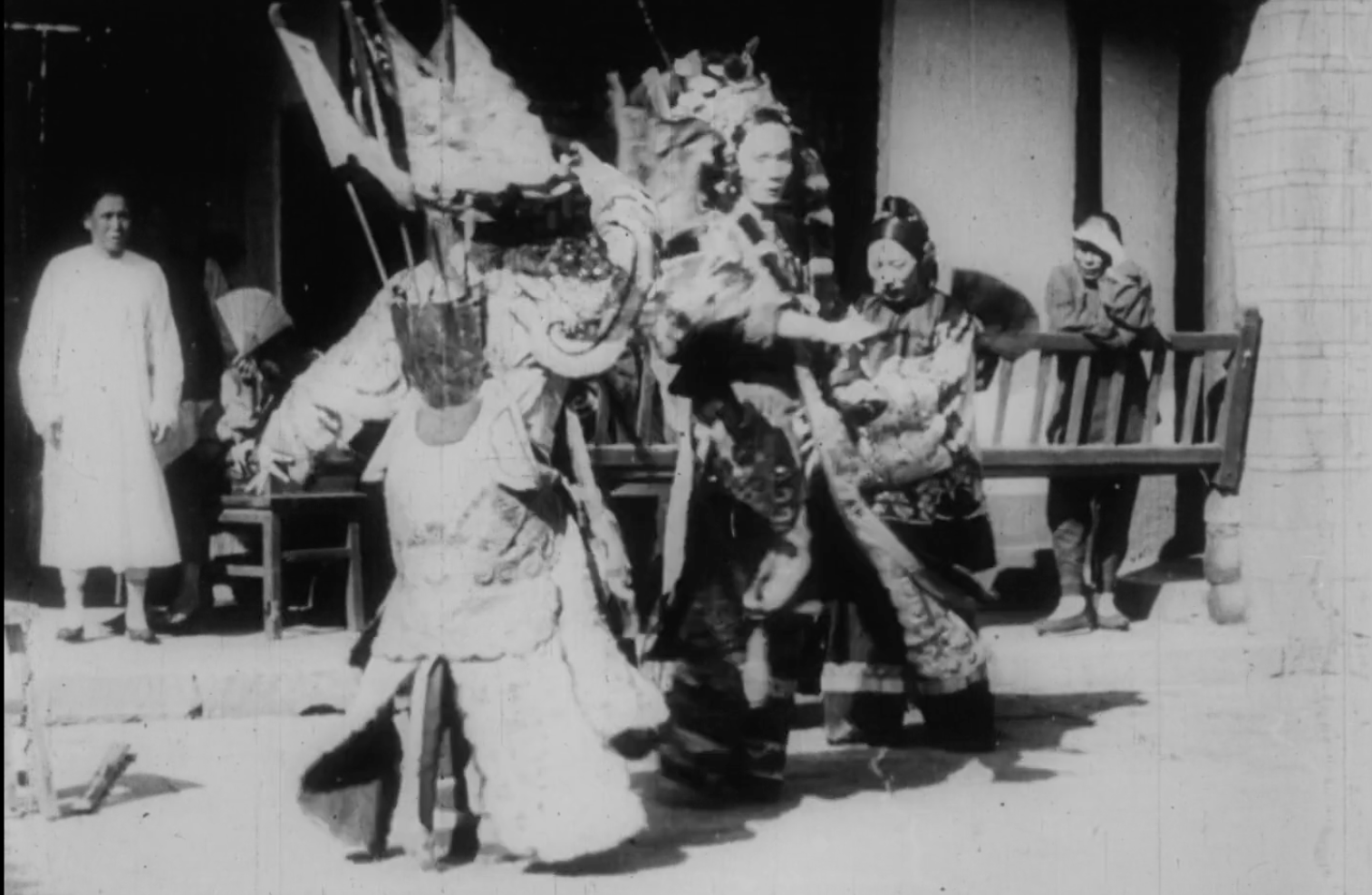
“Unique documentary footage taken between 1901 and 1904 in Yunnan in southwestern China by Auguste François (1857-1935) french consul stationed there. Street performers, barbers, funerals, official visits, leopard catching a pigeon and monkey wearing opera outfit doing somersaults, opium smoker, it’s all there – and more. Absolutely stunning over fifty minutes of footage from China that none of us has ever seen. Somewhere there were probably also martial artists, hiding in plain sight;)”
Of particular note for martial arts fans are the Dragon Dance scene at 32 minutes and the street theatre dancing at 46m which looks an aweful lot like Baguazhang….
This presentation looks at how martial arts arrived in the UK and when the concept of being a martial artist first entered into the popular consciousness. Along the way he covers Bartistu, the Avengers, James Bond, Bruce Lee, Kung Fu the TV series, Ninjas, the Wu-Tang Clan and the UFC.
I was alerted to a great post by Reddit User drkaczuz about the role of stunt men and women compared to the same scenes done by “real” martial artists who are not trained in movie-fu.
I’ll quote it here (I hope he doesn’t mind because it’s really interesting, and he makes some great points):
“Yeah, people very often misunderstand the role of stunt doubles, especially in fight scenes. It’s often not as much about skill, or risk as about production logistics. Even if you have a physically capable actor, with MA experience, you still want to use the stunt doubles, simply to squeeze the most out of pre-production time. You can’t lock the star of the show in a room with the stunt crew for a few weeks to rehearse the scene to perfection, they need to well, act. Learn their lines, prepare for their non-action scens, do marketing stuff, photoshoots, etc. What you CAN do is have the stunt double rehearse the entire choreography for months untill it’s buttery smooth and them tag them in on a moment’s notice.
Another thing with actors that have MA background is how different movie fighting is from real fighting – a lot of time real fighting skills and reflexes actually make on-screen fighting look worse.
I think Donnie Yen vs Mike Tyson is a good example showcasing a lot of issues when working with real athletes – we all know Mike is insanely fast, but in this clip he appears slow and sluggish, and you can’t really see the power behind the blows – further below I’ll try to explain why.
Anderson Silva from the same flick, notice the kicks especially, also look at all Randy Couture scenes from Expendables – they’re a dark, shakycam mess, but a lot of shakycam and bad lighting is damage control to hide hits that didn’t sell well.
I am not saying that having actual martial artists on set is bad – but you have to manage them really well, have an action director that will guide them and communicate their vision clearly. In a lot of cases a director will oh so wrongly assume that if they have the star martial artist on set they can just tell them to do their thing and it’ll come together somehow. Also it’s not that being good at actual fighting is somehow a hinderance – all good stuntpeople will be at least competent in one or more actual combat sport or martial art. It’s just they have a LOT of additional knowledge on top, as well as the ability to turn some instincts on and off.
There’s more to this post, including links to good examples of well done fight choreography.





 The Tai Chi Notebook