As 2020 falls into a slow-motion death spiral, like a bad cinematic supervillain delivering his final monologue before reaching for the detonator, it’s time to reflect back on the highs and lows of the year… and then the really low bits, and then the bits that were lower than those. Yes, 2020 sucked. Martial arts practice with other people became one of those things we all used to do, everybody stayed in their home and talked to each other on Zoom and our physical and metal health suffered. And whatever happens with the new vaccines on the way, the world will never be the same again.
One of the things that kept me going in 2020 were the podcasts. Trapped at home in various flavour of lockdown meant people had more time than ever to record podcasts and we all had more time to listen to them as we waited in the food queues, enjoyed our regulatory 1 hour walk in the fresh air or silently screamed under the blankets.
Here, in no particular order, are some of the shows that deserve my thanks for making 2020 slightly less awful than it could have been.
Martial Arts Studies
It’s like martial arts, but for people who want to think and talk as well as punch people in the head. Crazy, right? The ever-insightful Professor Paul Bowman is your host and he introduces a different guest each episode who has been doing research into an area of the martial arts you probably didn’t even know existed. This is a high-brow listen, so expect to have your horizons expanded and your tolerance for deconstructionism tested. At some point in the year I was on this podcast, so there’s that, too. Martial Arts Studies.
OH GOD, WHAT NOW?
Brexit, brexit, brexit. Not only did we have to suffer the ravages of the COVID 19 pandemic in the UK, but we had to suffer an equally pernicious virus called Brexit simultaneously. A handful of super hard-right millionaires and billionaires had hoodwinked a statistically significant percentage of the population into believing it was in their interests that they should be able to keep on avoiding paying any tax in the UK. It turns out that while they were very good at winning referendums and putting the blame on foreigners for all the aweful things that they had in fact helped create, they were just not that particularly competent at negotiating trade agreements. We narrowly avoided a hard brexit by accident, but are left with a trade agreement that puts us in a far worse position than we have been when we were still a member of the EU and that also removes the right of UK people to live and work in 22 European countries. It’s been an unmitigated disaster, but the sane and rational voices on this podcast have enabled me be clearer about some of the frustrations I have with the government. OH GOD, WHAT NOW?
Fights gone by w/ Jack Slack
While most sports ground to halt in 2020, MMA continued by, well, by not really caring too much about fighter health and safety in much the same way that MMA has always not cared too much about fighter health and safety (hey, they’re all going to end up with brain damage, anyway, right?) To beat COVID restrictions the UFC upped sticks and moved to a “fight island” in Abu Dahbi, where events could be staged with a higher degree of COVID safety and we had some fantastic matches, title defences, knockouts and submissions throughout the year. 2020 fights from Khabib Nurmagomedov, Justin Gaethje and Tony Ferguson, were particularly memorable. Should MMA really have continued in 2020? It’s hard to say, but plenty of fighters contracted COVID 19, and at least 2 now have long-term complications that have delayed their next appearances. Jack Slack has continually been the most insightful commentator on MMA, in fact, without his Fights gone by podcast I wonder if I’d watch anywhere near as much MMA at all. The level of detail he provides on the fight game can really change your appreciation of the job fighters are doing, and improve your own martial arts. What’s more, he’s British. Fights gone by
Robby The Robot’s Waiting: The Sci-Fi Podcast
As well as podcasts and MMA, another thing that has kept me going in 2020 is sci-fi. I’m currently enjoying the latest series of The Expanse on Amazon Prime, for example. As cinema releases have stalled, streaming services have really come into their own, but they have so much content its easy to miss something you would like, which is why I’ve found the Robby The Robot’s Waiting podcast so valuable – it keeps you abreast of what’s happening in the world of sci-fi, what you should be watching now and what’s coming soon. The hosts all have a connection with SFX magazine, and I know quite a few of them personally from the publishing industry. It’s a perfect fix of weekly Sci-Fi goodness.
Special mention:
I’m going to give a special mention to Stephan Kesting for his Strenuous Life podcast. Stephan is a BJJ guy, but also enjoys things like Kayaking around the Candian wilderness on his own. (I think we can all see the attraction of that right now!) And while I don’t like every episode of his show (it depends on the guest very much) Stephan has been a consistent voice of reason in the BJJ community during the global pandemic, which has seen a lot of prominent BJJ personalities slip into the netherworld of conspiracy theories and casual racism. For some reason, BJJ people seem attracted to conspiracy theories, and it’s very frustrating to have to deal with them, along with everything else.
Also check out:
The Drunken Boxing Podcast, Byron Jacobs delivers the low-down on martial arts in China, from inside China itself.
Systema for Life. If you’re into the philosophical side of the martial arts then this is a good listen.
Heretics by Woven Energy – my own podcast! We shine a light on esoteric subjects and their place in history, martial arts and religion.
A rare and welcome return to dead tree media for Brazilian Jiu-Jitsu fans everywhere.
Since the advent of DVD, and easily downloadable video tutorials from the likes of Kesting’s own Grapple Arts website and sites like BJJ Fanatics, new books that teach you BJJ techniques in a step-by-step manner have dwindled to the point of non-existence. Back in the day we had masterworks in print, like Jiu-Jitsu University by Saulo Ribeiro and Kevin Howell, and Advanced Brazilian Jiujitsu Techniques by Marcelo Garcia and Marshal D Carper* to guide us. But VHS and then DVD took over, which is why I’m so pleased to see this new release from Brandon Mullins and Stephan Kesting. Nonstop Jiu-Jitsu is the first new book about Brazilian Jiu-Jitsu to buck the trend and feature photos and step-by-step techniques, released in years.
You might be wondering what the point of a printed book teaching you BJJ is in the modern age of YouTube and steaming video, so let me offer you some reasons for its existence:
1) You don’t need a phone, app, computer or VR headset to enjoy a book. You can take it wherever you go and dive into any page anytime, anywhere. Talk about “instant access”!
2) Some people learn better from printed material – reading puts you in a different headspace. There’s also just something nice about a real, physical book that you can hold in your hands.
3) A DVD of this material (“Nonstop Jiu-Jitsu”) already existsfrom Grapple Arts, so this book acts as an additional resource.
4) Goddamn it, I’m just tired of all BJJ instructionals being in video format these days! It’s so nice to go back to something more old school.
So, as you can probably tell, I really wanted to like this book. I work in print magazines as my day job, so I love print with the sort of passion that Gordan Ryan normally reserves for protein shakes. I want to see the printed medium continue for as long as possible. So, as a fan of the original Nonstop Jiu-jitsu video instructional from Grapple Arts, I was beyond excited to hear that a print version was now available. And at 260 pages, with literally hundreds of full colour photos it is clearly a labour of love for the authors Kesting and Mullins. Yet alas, (alas!), it is not without its problems, of which there are many, but more of that later.
First though, who are Kesting and Mullins, and why should you care what they have to say about BJJ? As mentioned, Kesting runs the Grapple Arts business of BJJ instructional videos. I’ve been a fan of his work for a long time, and purchased many of his products. They’re all good, high-quality productions and usually done in conjunction with another teacher, who has a unique or valuable insight into the world of BJJ. Kesting usually takes the role of uke in the videos, while the featured instructor takes you through his techniques, or concepts. The featured instructor here is Brandon “Wolverine” Mullins, a BJJ world champion who is known for his clear instructional style and showing you complete gameplans, rather than isolated techniques, so he will show you a guard sweep, followed by a guard pass and then a submission, rather than techniques that leave you hanging and not knowing quite what comes next. Mullins isn’t one of the really famous BJJ guys out there, but he’s no stranger to competition and is a very competent teacher.
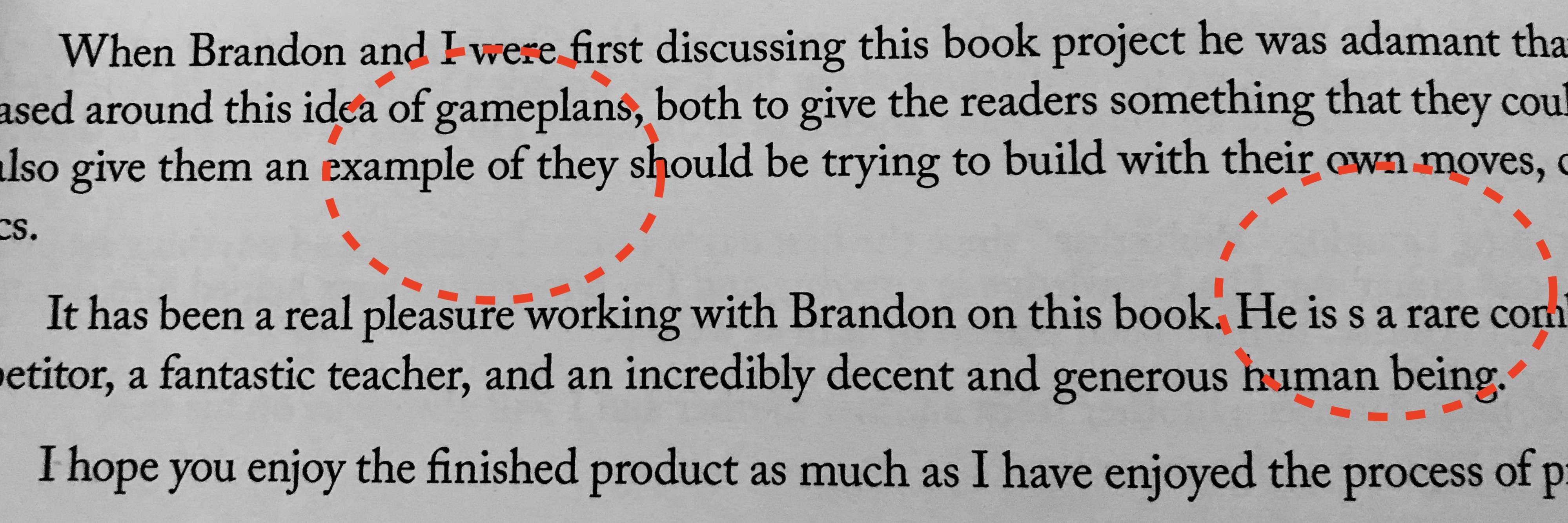
So what’s my beef? Well, the problem is that the book smacks of self publishing. A quick scan of the credits page reveals they didn’t employ an editor or a sub editor, and it really shows. Not only could almost all the text in the book do with a good edit to make it punchier, tighter and more interesting to read, there are a lot of unforgivable grammatical errors that have crept in, mainly in the introduction text admittedly, but that’s the thing you read first, so it creates a very bad first impression. But while things improve in later sections, typos are prevalent throughout the work, and if like me you can’t stand seeing obvious mistakes in a finished book, you’ll be tearing your hair out. I have a lot of sympathy for the authors here – working in print I know how hard it is to spot your own mistakes. You go “word blind” to your own writing. There are probably typos in this review that I’ve missed, but I can easily go back and fix them because it’s a blog post. In contrast, once something has been published in print it can’t be changed without issuing an expensive reprint – it’s really a very unforgiving medium, and not getting another pair of eyes to look at every single page before you send it to the printers is always fatal. Heck, I’d have done it for free myself if only they’d asked me!**
Some examples of typos from the introduction:
Maybe you’re not be the sort of person who cares about dotting the i’s and crossing the t’s. You just want to get to the great content, right? Well, I have some issues there as well.
I can’t fault the quality of the instruction presented. Like I said before, I was a fan of the original video series. But the way it’s presented here could be improved. For a start, the book is an odd shape (21.5cm across and 21.5cm high). There’s a reason why most books generally aren’t square – they’re really awkward to design for and you can see how this has created problems. When they have a full page of text, they’ve used only 1-column, so a line is uncomfortably long. The margin on the outside edge of the page is very tight too, and it all makes reading difficult, as you have to track your eye back a long way to the left to find the start of the next line. A 2-column grid would have made scanning text much easier.
(Very long lines of text to digest here. And a double exclamation mark at the end? What were they thinking”!!”)
The pages of photos have a different problem. Following from one step to the next is difficult, as they often have alternative shots of the same technique on the page. They’ve put numbers on photos so you can see where to move your eye to next, but knowing where to go next is not intuitive. They also expect you to read the explanation in the text box at the top of the page, then move your eye back to the correct picture to see what is meant, then move your eye back to the text box at the top to read the next step, and so on. It’s all a bit awkward.
(The two white lines indicate an alternative view, in case you were wondering.)
All credit to Kesting and Mullins for spending the time to re-shoot every single technique in detail and presenting colour photos of each step (that’s not cheap to do in print). The photos are clear and accurately show the techniques. They avoid the classic mistake of both weaing the same colour gi, but the printing is a bit too dark, meaning there are some shadows and dark patches on Kesting’s blue gi that are hard to make out, as you can see in my photos. (This probably looked fine on screen when they were creating the book, but the printed version can differ).
(That’s a lot of very small photos to try and fit on one page).
The design has competing systems of classification too, which makes it even more confusing. Sometimes a “what not to do” type photo has a red thumbs down icon on it, at other times it is crossed out with a big red “x”. Why not just pick one system and stick with it?
In their enthusiasm the authors have tried to squeeze too much into this book, both in terms of the number of photos on each page, and the amount of material covered. There are 3 big sections – 1. Fundamental movements, 2. Butterfly guard, 3. De La Riva guard – and to fit it all in, something important has been lost, which is context. In the video version of Nonstop Jiu-Jitsu, Mullins explains why he’s doing each technique, usually in response to the opponent defending his previous effort. Here you don’t know when or why you would use the techniques shown. For instance, when you have butterfly guard, what makes you choose either the hook flip to x guard or the hook flip to phantom choke? It’s not entirely clear. A short piece of text explaining the context before diving into the steps would have made all the difference.
To give you an idea of how much content there is here, the table of contents alone runs to 6 pages! Complaining there’s too much value in a book sounds like an odd gripe, but this book could easily have been split into 3 different books, with more room to really let each subject breathe, and it would have been all the better for it.
The first section (which seems unsure if it’s called Fundamental Movements, or Advanced Fundamentals) is based around the fundamental movements of Jiu-Jitsu, like the technical stand up, sit through, hip escape, butt double and rolling forward and backwards, and then shows you how these movements can be applied in techniques. In a section aimed at beginners the applications are actually quite involved and ramp the difficulty level up very quickly – for example, a rolling omoplata from the armbar position in side control, anybody? As a more experienced Jiu-jitsu player I personally loved the high-level technical content here, but a real beginner might be a bit out of their comfort zone. My only criticism is that they show plenty of applications for all the movements except the hip escape (or shrimp) and bridge, which only get one application each – regaining closed guard from half guard for the shrimp and bridging from mount. I would have liked to have seen a shrimping escape from side control here, and another mount escape added for completeness sake.
The second section goes on to cover butterfly guard. Butterfly is a really good guard to use against an opponent who is trying to pass your guard from his knees. The standard butterfly sweep is shown, plus a plethora of options for when they post a hand or leg. Quite naturally this leads into all sorts of x guard material, back takes and shin sweeps. The section starts with Mullins’ trademark aggressive butt double attack from butterfly, which is a very proactive way to get the action going against a stalling opponent, and as such is nicely suited to competition. Because Mullins teaches in a game plan-based system, a lot of this chapter is devoted to guard passing after you’ve swept them from butterfly guard.
The final section covers the De La Riva guard, which shows you what to do against a standing opponent. The majority of the section is on how to attack with the ball and chain sweep, and follow ups depending on how the opponent defends. Again, the jiu-jitsu shown is attacking and aggressively non-stop, in the sense that he links together guard sweeps, passes and submissions.
Throughout all of the book’s sections, Mullins drops in some tips on motivation, competition strategy and his general thoughts on BJJ. It’s welcome advice, but I think it could have done with an editor to make it more concise.
After all this moaning you probably think I’m going to recommend staying well clear of Nonstop Jiu-Jitsu (or is it “Non-stop Jiu-Jitsu“? Even the name of the book is editorially styled in two different ways, one on the cover without a hyphen and another on the footers of each page with a hyphen – argh! Just choose one way and stick with it), because of all the editorial problems, but I’m not. I’m recommending it because this book is actually glorious!
I love seeing BJJ back in print, and despite the issues I’ve mentioned**, it didn’t stop me from loving this book. If you’re looking for some new ideas for a game to play from butterfly or de la Riva, then you’ll find inspiration here that will last a lifetime, and you can easily add to your game. And, godamn it, it’s a real book about BJJ and we should celebrate that fact.
(* If you’re interested, I consider Marcelo Garcia’s book to be the gold standard in terms of these types of instructional BJJ manuals. Its production standards are first rate, from the quality text and explanations to the brilliant photos. Sadly it went out of print a long time ago.)
(** Lads, if you are reading this and want to do an updated version 2 of this book without all the typos, then please do, but please, please hire an editor this time!)
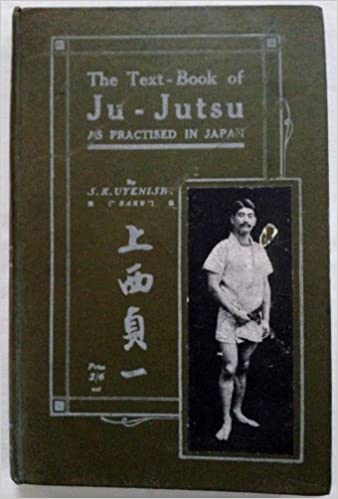
As you’ll know from listening to our “History of Kempo and Jiujitsu” podcast episdoes, Japan was opened up to the West in 1852, but it would take a while yet for Japanese martial arts to reach British soil. As revealed in the article “The Golden Square Dojo and its place in British Jujitsu history“ by David Brough, in issue 10 of Martial Arts Studies, the Bartitsu School of Arms and Physical Culture of Edward William Barton-Wright was the first martial arts club to introduce Jujutsu to the U.K in London (along with other things, like Savate), but it quickly seeded ground to more traditional Jujitsu dojos in Britain. Jujutsu was originally taught in the Golden Square Dojo in Piccadilly Circus, which opened in 1903, and was run the teacher Sadakazu Uyenishi.
Sadakazu Uyenishi, 1905 text book on Jujiusu.
Here’s a short film about him – the forgotten grappler:
A reanimated film of photos of Sadakazu performing jujutsu techniques from his “Textbook of Ju-jutsu” in 1905 exists on YouTube:
What I find interesting is how much of jujutsu practice was about performance in the early 20th centuary – (perhaps this is a role that is filled by BJJ sport competitions and Judo in the Olympics today). Early Jujutsu teachers from Japan toured the UK trying to create a name for themselves, putting on shows in dance halls, taking on local wrestlers in prize fights and performing feats of strength. It was very much like a circus attraction. In Brazil this exact approach lead to the creation of Brazilian Jiujitsu, but in the UK, its indigenous wrestling (things like Catch, Devonshire wrestling and Cornish wrestling) and jujitsu seemed to stay in their own lanes, and a hybrid creation never really saw the light of day.
By 1930s the Golden Square Dojo had been demolished and Judo had taken over from Jujitsu as the dominant version of the art in the UK, although various Jujitsu societies connected to the Golden Square continued to this day.
Bartitsu is best remembered today because of Sherlock Holmes being a practitioner, and is seen as the fusion of Victorian gentleman attire (including the walking stick or umbrella) and Japanese Jiujitsu, but also included other martial arts, including French Savate.
Bartitsu died out, although a modern revival appears to be well underway. Judo remained the dominant strand of Jujutsu practice in the UK for many decades, although it mainly seems to be practiced by children, while Jujutsu, in its Brazilian variant (BJJ) seems to have taken over as the dominant practice amongst adults today. (N.B. I don’t have figures to support that assertion, but that’s my strong impression).
Professor Brough was also interviewed about this article on the Martial Arts Studies podcast, which contained another interesting fact that I didn’t know – there are records of the use of the walking stick in Britain as a self defence style going back to 1830, pre Bartitsu. Professor Brough will be producing more research on that in the future. Sounds dapper!
And let’s not forget, the image of the Victorian gentleman with his walking stick/umbrella fighting off attackers saw something of a revival in the 1960s thanks to The Avengers. Ka-pow!
Bruce Lee and the Kung Fu craze took over the nation’s interest in martial arts in the 70s, but in modern times things have swung back to jiujitsu again, thanks to the popularity of MMA, from the 90s onwards.
Even martial arts movies seem to have swung back to jujutsu, with things like the John Wick series, Jason Bourne and just about every fight scene in any movie being required to contain at least one armbar on the ground in it. I think Sadakazu Uyenishi would look at martial arts today and be pleased with what happened and the influence his Jujustu had.
This is a video created by the Gracie Academy, it’s pretty long, but it’s got the essentials of BJJ for self defence in there, and why not learn it? What have you got to lose?
“But all fights start on the feet!” Well, as the video of a real attack in the clip shows – you can be attacked at any time, anywhere and potentially by anyone. You could already be sitting on public transport. You could be attacked from behind and end up on the floor. If you don’t know how to get up from there then you’ve got a problem.
The COVID 19 pandemic has had a devastating effect on the world economy, and it’s been equally as bad on martial arts practice. Chinese martial arts have proved more resistant to complete collapse because the majority of the training can be done solo. Taolu or ‘forms’ are prevalent and can all be done outdoors and socially distanced, and on Zoom. Things like BJJ however have really suffered, since it requires close contact. A solo drill version of BJJ is really just an exercise class.
Now there is talk of a vaccine for COVID 19, and maybe before Christmas. The vaccine has the potential to return us to ‘normal’ in the martial arts. At least we’ll be able to train together safely again. You’d think that would be great news for martial artists, but now I’m noticing just how many of my martial arts associates won’t take a vaccine, because they are complete anti-vax nut cases. Sorry! I mean “vaccine hesitant”. Yes, that’s what we have to call them now.
All the conspiracy theories, stuff about Bill Gates wanting to microchip the world, COVID being made up, it all being a plan-demic, etc, it’s all, 100%, posted on my Facebook feed by martial artists, not by the other people I’m friends with.
For example, there’s one kung fu teacher I had from around 30 years ago, who I really respected, who has turned out to be a full on anti-vaxxer. He hasn’t even got his child immunised against measles because “I believe in Chinese medicine”. Well, that’s nice for you (man), but you’re putting weak, old and vulnerable people at risk from a killer disease because you have chosen to ignore science and not to get your child immunised against a potentially fatal disease. Your child might be healthy and fine, but they can pass it on to somebody who is recovering from cancer treatment and has a weakened immune system. But you don’t really give a crap about that do you? You’re too busy jabbing yourself with acupuncture needles and drinking herbs to care.
Next time you break a limb, just put some crystals on it. Job done. Photo by Alina Vilchenko on Pexels.com
As you can tell, it makes me angry. So, apologies, but I’m going to go on a bit of a rant.
There’s a reason nobody has polio anymore. We had a vaccine, and enough people took it that we achieved a herd immunity. The less people that take a vaccine the less effective it is overall, which is why measles is making a comeback in parts of the UK and the US.
“But we don’t know the long term effects!”
Hey, guess what, nobody knew the long term effects of any vaccine. It’s not like these new vaccines haven’t been tested – that’s all they’ve been doing to them. Testing them over and over to make sure they’re safe. History has told us that bad side effects happen within 2 weeks of taking a new vaccine, or generally not at all. Nothing is 100% risk free, and nobody is saying it is, but it’s all about balancing the risks.
Perhaps it’s social media, and the sorts of idiots who post links and make youtube videos packed full of conspiracy theories that are to blame. But it’s the people who think watching them counts as “research” that are the problem. And why do so many marital arts people specifically succumb to this? That, I don’t know. They seem particularly vulnerable to strange beliefs. It probably explains why martial arts cults exist and why kung fu masters in China keep getting beaten up by a middle aged MMA guy.
And before you hit the reply button with “Yeah, but what about..” Just don’t. It’s your very whataboutism that is part of the problem. You spread confusion about vaccines every time you post these things – you’re part of the problem. Please stop it!
If you throw your opponent to the ground in almost all of the old, traditional folk wrestling styles then you win. That’s it. Game over. To modern day martial artists that seems very odd, as we’re now all used to seeing MMA and BJJ fights on the ground, sometimes lasting minutes. But in olden times, if your shoulders touched the ground or you were pinned (or some version thereof), it was all over.
“I talk to Ruadhán MacFadden. He runs a project titled The Hero with a Thousand Holds which looks at the culture and practice of folk wrestling styles around the world. In particular the people and places that the styles have emerged from and not just the techniques which they used. We discuss some of the mythology and culture behind these styles and what the future holds for them. And we get into some of the particulars of Icelandic Glima and Irish Collar and Elbow Wrestling and Scuffling.”
* Ok,I’ll tell you the answer, (or one of the possible answers anyway). Wrestling between males (and sometimes females) was often used as a form of socialisation, and entertainment in tightly knight communities, or as a way of settling disputes without recourse to serious violence. Killing valuable members harmed the community’s chances of long term survival. In any case, there was nothing to be gained for the community from people getting seriously hurt either, so there had to be a simple way of declaring a winner without things escalating to the point that somebody was bludgeoned to death with a rock. Hence, once you landed on the ground, it was over.
I’m thinking again about my theme for the last couple of posts, the subject of myth busting and how it can lead to disillusionment in martial arts.
Essentially the question I grapple with is: How do we make martial arts better without all the bullshit?
One guy who is doing a lot to change things in martial arts – specifically in his area, which is BJJ, but I don’t think it takes much to apply it to a wider context – is Priit Mihkelson. In this lecture he gives one possible version of what this “how to make martial arts better without the bullshit” might look like.
Perhaps the specific things he’s talking about don’t relate to your particular martial art, but it’s the thinking behind it I like. It feels progressive, scientific, hopeful and perhaps a glimpse of a better future for martial arts: training methods based on progressive resistance, feedback and success, rather than failure.
It’s Carlos Gracie’s birthday today, or it would be if he was still alive. Carlos Gracie is the man who is perhaps solely responsible for BJJ existing in the modern world, as a separate entity to Judo, which is something we should all be grateful for. He would have been 118 today. Because of this my Facebook feed is currently flooded with inspirational quotes from Carlos Gracie – particularly “Be so strong that nobody can disturb your peace of mind”.
Carlos Gracie
Unfortunately, like a lot of the stories that have built up around him, and his brother Helio Gracie, the true story is different to the myth. In fact, he stole that quote (and all his other philosophical ramblings) from a short poem called the Optimist Creed written by Christian Larson, an American New Thought leader in 1912. *
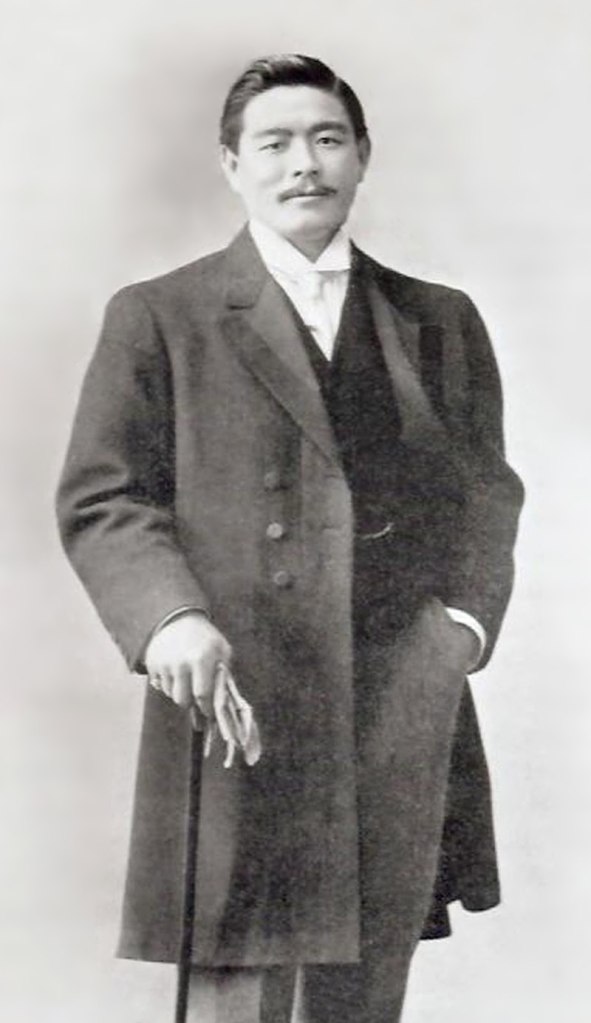
The story we are told by the Gracie family is that Carlos learned from the famous Mitsuyo Maeda – the “Count of Combat” – a famous student of the founder of Judo, Jigoro Kano, who was in Brazil teaching Jiujitsu and engaging in prize fights for money.
Mitsuyo Maeda
In a parallel to the Yang LuChan story, we are also asked to believe that Carlos’ younger brother, Helio, who was too weak and sickly to learn Jiujitsu in classes, managed to learn the whole art by simply watching Carlos train.
In reality, Maeda had come to Brazil to retire, and there’s very little evidence he actually met Carlos at all. Helio Gracie was not weak or sickly – he was an athlete, a champion swimmer. True history is never simple, it’s always complicated and the history of BJJ is no exception. Without Carlos Gracie though, and his resistance to folding his Brazilian branch of Judo into the Japanese version, there would be no BJJ today, but it might be time for a more honest look at his legacy.
You can find out more about the true history of Carlos Gracie in the Sonny Brown Breakdown podcast where BJJ legend Robert Drysdale discusses his new upcoming film Closed Guard, about the history of Brazilian Jiujitsu.
The website for Closed Guard by Robert Drysdale.
The full text of the Optimist Creed is as follows:
The Optimist Creed
Promise Yourself
To be so strong that nothing can disturb your peace of mind.
To talk health, happiness and prosperity to every person you meet.
To make all your friends feel that there is something in them.
To look at the sunny side of everything and make your optimism come true.
To think only of the best, to work only for the best, and to expect only the best.
To be just as enthusiastic about the success of others as you are about your own.
To forget the mistakes of the past and press on to the greater achievements of the future.
To wear a cheerful countenance at all times and give every living creature you meet a smile.
To give so much time to the improvement of yourself that you have no time to criticize others.
To be too large for worry, too noble for anger, too strong for fear, and too happy to permit the presence of trouble.
There’s a great article over on Kung Fu Tea (Chinese Martial Studies) that talks about the long term impacts of the COVID-19 pandemic on martial arts training, but as usual takes in a lot of other stuff.
I really like this quote:
“Setting questions of charlatans, deluded masters and outdated training methods aside, I am going to hypothesize that even in the best-case scenario, there is a pretty simple reason why professional boxer/mma fighters will always beat the traditional martial arts master in those YouTube videos. It comes down to specialization, or simply putting in the hours. All else being, equal the individual who trains all day for one task will be beat the individual who trains for four and then runs an afterschool program to pay the bills. It is a mathematical fact, and the reason why ever-increasing degrees of specialization have become the dominant paradigm for social development in the current era.”
Of course, the question of “deluded masters” is quite a large one. Or maybe it only appears that way because of the media exposure these events create.
But his point is that traditional martial arts have to be all things to all people. MMA, boxing or San Da classes are designed to develop a very specific set of skills, and are full of people who all want to do the same thing. Traditional arts tend to have all sorts of different customers, and provide varied social functions, including kids classes. This obviously has disadvantages for the traditional arts when it comes to competing against practitioners of highly specialist fighting arts
“All else being, equal the individual who trains all day for one task will be beat the individual who trains for four and then runs an afterschool program to pay the bills.”
However, Ben’s argument is that it gives the traditional arts more flexibility, both economic and organisationally, when it comes with dealing with the challenges thrown up by the global pandemic.
Narrow specializations presupposes economies of scale that may be achievable in some-times and places, but not others. In periods of prolonged economic contraction a neighborhood martial arts schools which can do a little bit of everything might have a better chance of surviving than the large BJJ academy focused only on competition, the reality fighting school focused only on paramilitary knife/gun defense ,and the Wushu program with an emphasis on gymnastics.
I was reminded recently of a blog post I wrote for Cook Ding’s Kitchen a few years ago about starting BJJ after years of doing Tai Chi. I just re-read it and decided it was ‘not too bad’, so I’m sharing it again here.
Here’s a quote about my first time sparring in BJJ.
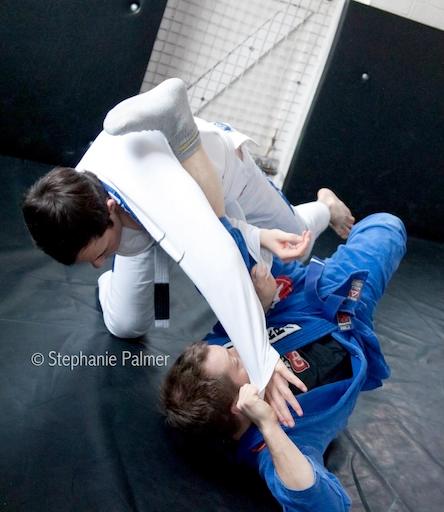
We fist-bumped again and went for round 2. He then proceeded to act out a BJJ clinic on me. He was tapping me out using every sort of conceivable lock or choke hold I could think of at a rate of one tap every 2 minutes. And worse, he wasn’t even trying. I quickly realised he’d let me tap him the first time just to see what I could do. This went on for the full 30 minutes. It wasn’t a matter of being out-muscled – it was clear that he possessed a knowledge that I didn’t. I wanted to lie down, curl up and die after about 10 minutes, but something in me refused to give up and I lasted until the end of the class. The black belt running the class was keeping an eye on me, and expressed some concern about the curious wheezing noises my breathing was making and asked if I’d like to sit out, but my pride wouldn’t let me. I kept going until the end. It took me about 2 days to recover fully. My next class was the same, but this time the blue belt I fought was a smaller female, who repeatedly jumped on my back and tapped me out with chokes until time was up.
That was it, I was hooked.
There was a type of knowledge here I could learn, and it worked in a fight, and it didn’t matter if the other person was stronger than you. There were no forms, deadly techniques or imagining ‘what if’ scenarios. You were hit by reality from the first fist bump.










 The Tai Chi Notebook