My first podcast of 2026 is out! In this episode Richard Moon, a lifelong martial artist and performer, shares his journey from playing in a jug band and performing with bands like the Grateful Dead to becoming deeply involved in yoga and eventually Aikido, which he encountered by accident and learned as a “way of life more than a way of fighting.”
Richard Moon describes developing a “very freestyle, jazz-oriented approach” to Aikido, which eventually led to corporate coaching with Chris Thorsen and international peace building initiatives with Louise Diamond and a $30 million project in Bosnia funded by Dan Whalen. Richard Moon emphasized the importance of centering, intentional transformation, and harmonizing with the universal movement through practices like the “universal breath” and the “drop back, sink open” technique, concluding with O Sensei’s teaching that “Aikido is the realization of love.”
And why you shouldn’t train with weights when developing your qi
Mike Sigman has sent me an article to publish on this blog. I don’t normally publish other people’s work, or agree to their requests, but I’ll make an exception because it will hopefully generate some discussion. Regardless of how you feel about him, there’s is always a real depth to Mike’s writings and ideas that you can get a lot from, that you don’t really find anywhere else.
The article is primarily about one of the trickiest subjects in Chinese martial arts – qi (or chi).
I have a few thoughts about it:
1) The article starts by trying to “separate the skin-related qi, which includes the subconscious mind’s involvement, from the theoretical qi of traditional Chinese medicine”.
To some, particularly those people who relish Chinese history and the evolution of the concept of qi as it appears in Taoist thought, or medicine, that just won’t be acceptable, but I think this works for me. It moves the discussion into the realm of the physical and practical. It becomes a feeling and a doing thing.
2) It appears to be written partly as a reaction to a recent trend of mixing, or doing, Chinese martial arts conditioning through the medium of kettle bell or weights training. The question is, is that a waste of time if you want to get to the root of the subject, which is what the Chinese martial artists call qi?
Look, I don’t think there’s anything wrong with making yourself physically stronger at all. In fact, it’s obviously advantageous if you’re learning martial arts… But the article states that to master the internal movement, “the body must be completely retrained to learn to move with the qi, jin, and dantian”, and using weights will not help you in that respect. If you have retrained the body, then you could probably add them.
3) As I’ve said, nobody else really talks about this stuff, or if they do it’s watered down with a lot of other guff. If the article is correct on qi then what exactly are all the big names in modern tai chi seminar circuit and online courses out there actually teaching? Because they talk about qi a lot… but they don’t approach it in the same way as this article does, at least as far as I can see.
4) The article describes internal movement, quite simply and quite succinctly: “Ultimately, you develop a form of movement that uses the solidity of the ground as the focus of all forces to and from the body, while the qi covering of the body is manipulated by the lower-body and the middle to bring power to the arms and upper body.”
I find it hard to disagree with that definition, probably because it’s pretty broad. Sure, we can argue over what the “middle” is, or what the “lower-body” means,etc.. but as a succinct definition, it’s not half bad.
Now, let’s move on to how you do it…
The article talks about breathing exercises as a starting point: “Breathing techniques that stretch the surface of the skin and the involuntary muscle layers are the usual start of the progression.”
Now, I have personally trained in some of the methods that Mr Sigman uses (there’s a link to a video at the end of the article), and experienced what he’s talking about, and I’d agree that I can feel what he’s talking about. But I wouldn’t count myself as an expert in it, or knowledgeable about anything to do with it beyond the initial foot in the door stages, however, I have found that alone to be incredibly valuable and shone a light on some of the other things I was already doing. Even getting a foot in the door took a lot of work and a lot of time.
Anyway, I’ll leave you to read the article now and feel free to comment with your thoughts below.
Graham
Practical Development of Qi
And why you shouldn’t train with weights when developing your qi
by Mike Sigman, March 2025
Discussing qi is difficult because the definition of qi has become a bird’s nest of related topics. Let’s try to narrow the discussion and then describe an approach to practical development.
Most of the skills related to qi, in the physical body, have to do with an area near the skin of the body that is referred to as the “protective qi” or “wei qi”. While the protective qi is often referred to as an “energy”, it is actually a physical set of tissues that is controlled via the autonomic nervous system … but when you learn to control it via the subconscious mind, it does indeed feel sort of like an “energy” because it is apart from the topical sensations of the somatic nervous system, and the qi indeed feels odd, like an energy.
So, let’s separate the skin-related qi, which includes the subconscious mind’s involvement, from the theoretical qi of traditional Chinese medicine: that’s where most of the confusion lies. The skin-related qi and the subconscious mind are the artifacts which give us heightened toughness of the skin, odd sensations of qi, added strength by supplemental our muscle-bone strength, and dantian control of the body as whole connected by skin-related qi, among other things. Jin forces, the manipulation of the solidity of the ground and/or downward forces of gravity, are also the product of the skin-related qi: jin is defined as “the physical manifestation of qi” in many Chinese sources.
The qi of traditional medicine theory is/was an effort to explain the workings of strength, including the strength of our involuntary systems. We don’t need to know all the theories about meridians, putative different types of qi, etc., in order to develop the qi. Breathing exercises and focused physical and mental exercises are more important than complex qi-paradigm explanations.
The skin-area wei qi is initially controlled by respiration and “breathing exercises” are our initial approach to control and development of the qi tissues. During inspiration, if we are slightly extended or stretched out, we can feel a slight inward pulling of the tissues of the fingers and hand. Other areas of the body, upon being slightly stretched taut, can also be felt during the inhale, but many tissues in other areas of the body can’t be felt. They must be developed over time by breathing exercises before we can feel them respond to our breathing and before we can develop them further.
Some Chinese texts mention the fact that this superficial qi is something that animals still use (think of a horse quivering its flanks, for example), but which has atrophied in humans over the course of evolution. In order to regain our qi, we must use deliberate exercises of breathing, mental imagery, and posture manipulation.
Training the Qi in General Movement
Jin force-manipulation is a product of the qi tissues applying stressors within the body’s frame. That’s why jin is defined as “the physical manifestation of the qi”, among other things. We use jin unconsciously in our everyday movements, so another common definition of jin is as an “intrinsic strength”. The full-blown traditional movement methodology that permeates the Chinese (and related) martial arts involves both qi and qi’s subset, jin. Qi and jin. Jin forces are the mind-directed forces from the ground and gravity; qi can be thought of, in a simplified sense, as a superficial muscular layer that connects the whole body.
The basic idea of movement with qi and jin is that the power from the ground and lower body is used as the power source for the upper body. The qi and the jin work from the lower body (including the middle/dantian), so what we have with “internal” movement is a system where the arms and hands are controlled and powered by the lower body and the middle.
The general admonition is that muscle and power are used in the lower body, as needed, while the upper body is moved without the use of local muscle. I.e., a person has to learn to control his/her upper body via manipulation of the lower body and the middle. The person who thinks the internal arts would be best supplemented with typical weight workouts at the gym has lost the plot and is giving away a total lack of understanding about how the “internal” martial arts work.
Developing the Qi
Jin skills are actually fairly easy to learn, although it generally takes a few knowledgeable pointers and some personal, hands-on demonstrations to get someone started. There are a number of written attempts at jin explanations on the internet, particularly through the 6H forum.
Qi is difficult to develop because it takes time and the feelings we need to focus our attention are tenuous at first. Breathing techniques that stretch the surface of the skin and the involuntary muscle layers are the usual start of the progression. Many traditional Chinese martial arts talk about “100 Days” of breathing exercises to develop the qi to a usable status.
Movement of the involves directing all forces upward from the solidity of the ground (so you must “sink your qi”) or use the weight of the body as a basis for downward movement.
Ultimately, you develop a form of movement that uses the solidity of the ground as the focus of all forces to and from the body, while the qi covering of the body is manipulated by the lower-body and the middle to bring power to the arms and upper body.
All Asian martial arts that are labelled as “internal” martial arts, formal calligraphy, qigongs, traditional dance, etc., use this combination of qi and jin for movements. Learning the external choreography and appearance of a martial art, a qigong, etc., no matter how much it resembles the movements of an expert, will not be correct until the system of movement is changed over to the qi, jin, and dantian type of movement.
Almost all of the movements we so often see in western semblances of “Tai Chi”, Aikido, Xingyiquan, Baguazhang, etc., are based from normal movement parameters, rather than qi and jin mechanics and it will take effort to re-learn these arts with the correct movement basis. There is an old saying to that effect: “Taijiquan is easy to learn, but difficult to correct”. So, if your goal is to learn Taijiquan, Aikido, or related arts, remember that all the talk about “relaxation”, “don’t use weights”, etc., is because the body must be completely retrained to learn to move with the qi, jin, and dantian.
Here’s a video of Chen Zhaosen, with translation by John Prince, teaching basic movement drills for the Chen-style Taijiquan. Notice his comment about no strength in the upper body, but whatever strength you need in the lower body. https://vimeo.com/141009942
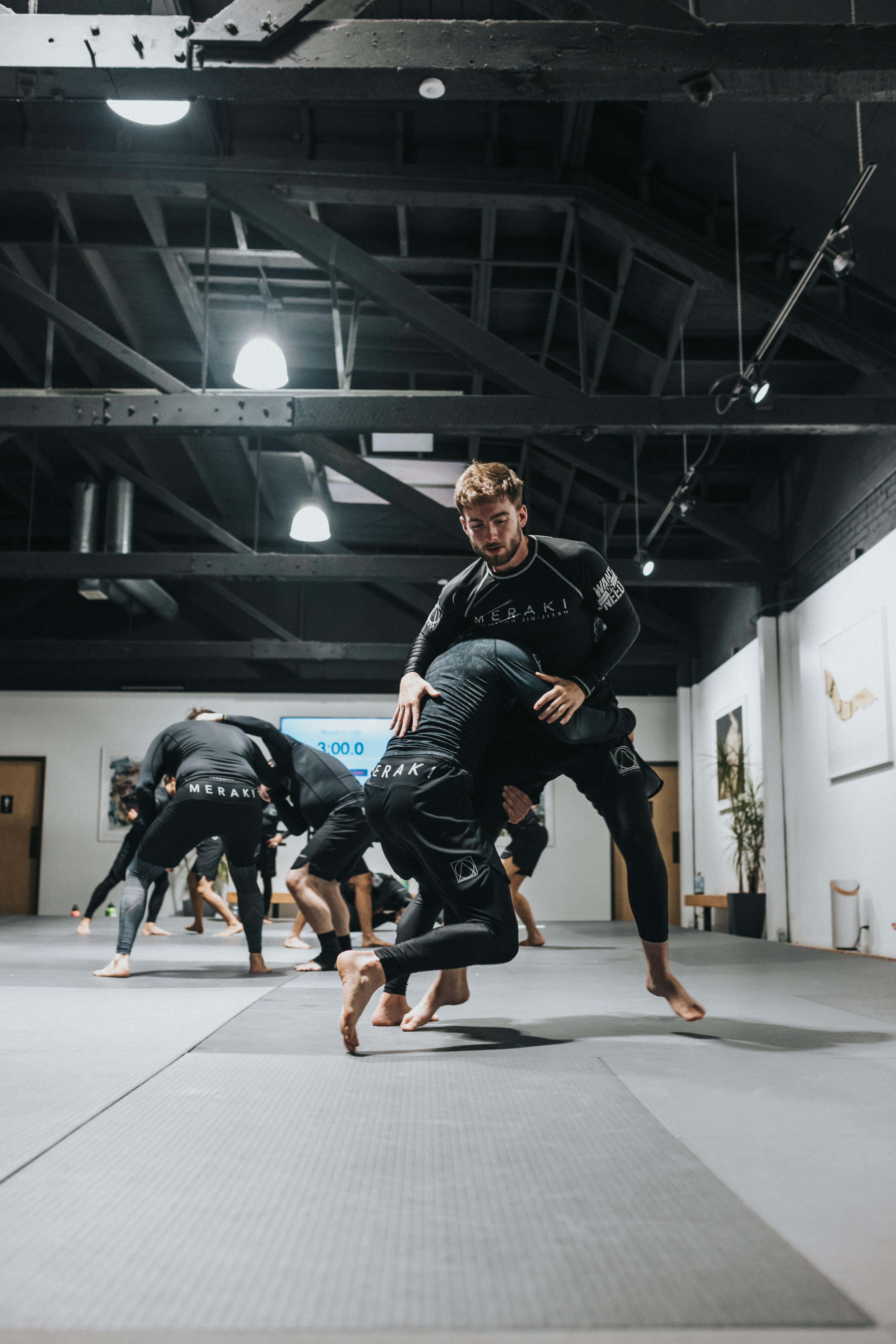
Doing both BJJ and Tai Chi I love seeing moves from one art crop up in the other. Imagine my surprise when I happened across this BJJ seminar clip where the coach seems to be cycling unawares through a variety of Tai Chi moves.
At one point he says that one of the moves looks like “some karate bullshit that looks silly but works”, which is funny because you could describe Tai Chi like that as well 🙂
If you do Tai Chi or Bagua or pretty much any long fist style Chinese martial art, or probably Aikido, you’ll recognise these moves. I’ll give them Tai Chi names:
Breakdown
It starts with a grip break, that is similar to Hidden Hand Punch from Chen style (0.00- 4.00) The first technique from here is like Needle at Sea Bottom (4.17- 6.15) The second is like Diagonal Flying (6.15 – 9.20)
After that it becomes more traditional wrestling/judo takedowns, but it was nice to see some Tai Chi appearing fora minute there.
While the rest of the video is much more of the usual jiu-jitsu fair, the initial positions have a strong similarity to Tai Chi moves, and could definitely help Tai Chi practitioners become more aware to the martial potential of Needle at Sea Bottom and Diagonal Flying.
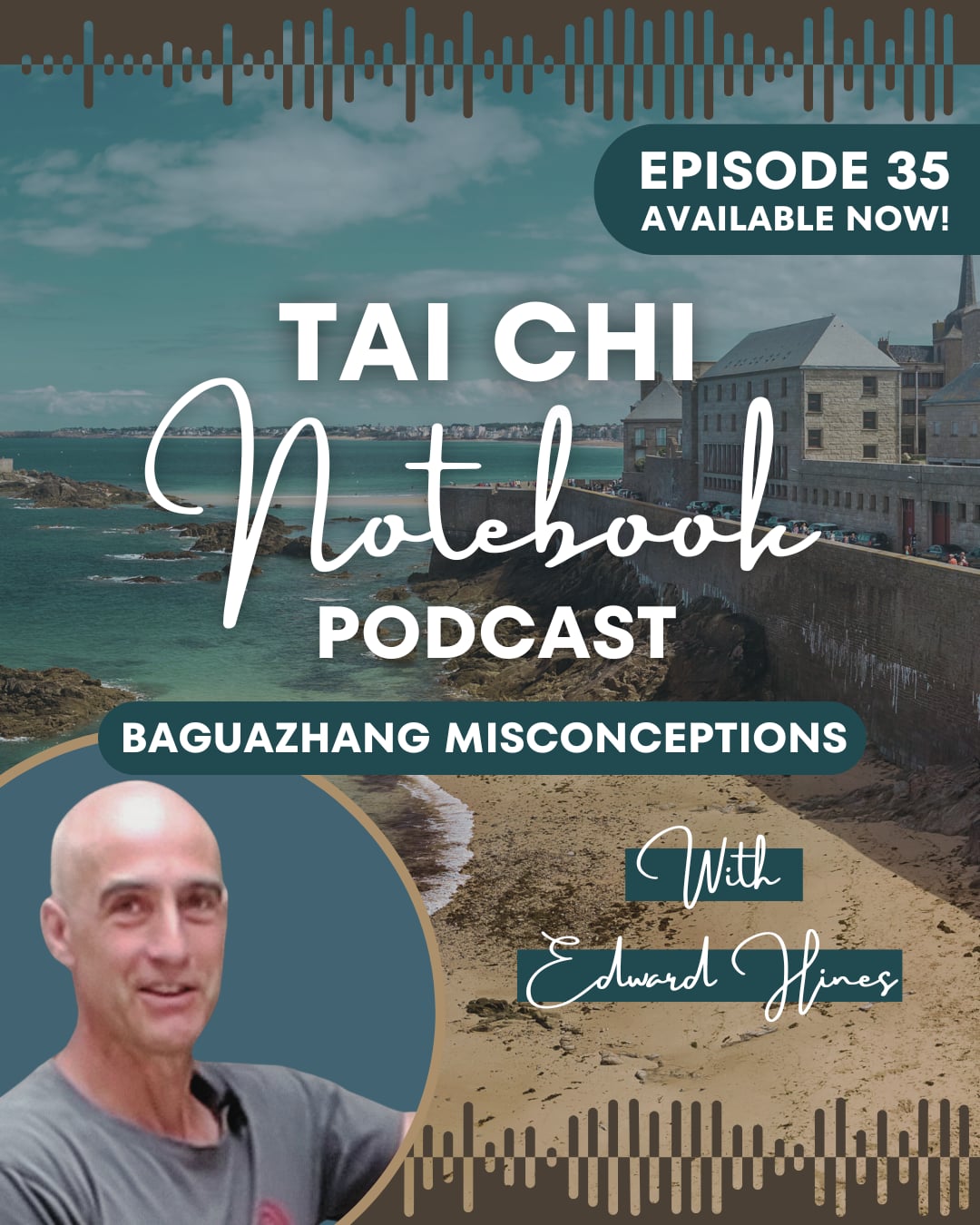
My guest for episode 35 of the Tai Chi Notebook podcast is Edward Hines, a long time Baguazhang student of Lou Dexiu. Ed started training Bagua in Taiwan way back in 1991, and has continued ever since. He now teaches online at I-bagua.com and has books about Baguazhang you can find on Amazon.
To frame our chat we decided to cast around for the most common misconceptions you hear about Baguazhang, and address each of them, one at a time.
I came across an interesting video by Ed Hines of i-Bagua.com recently that discussed some general principles of throws and takedowns. There is some good information here, especially about dead angles, and base. Have a watch:
Of course, in my ear I can hear my BJJ friend saying it’s all nonsense, “why not just do wrestling?”, or “he’s doing zero hand fighting!”. My friend tends to think that everything you can know, or ever want to know, about throwing and standup grappling is already inside wrestling.
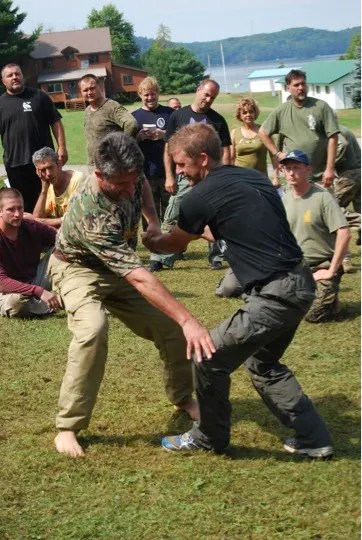
He probably has a point, and a lot of the clever ‘internal’ things that Tai Chi teachers demonstrate are really just found in wrestling basics, or are obvious if you do wrestling. But here’s the thing – not everybody wants to do wrestling or even can do wrestling! It’s time-intensive hard, physical work, from which you will probably get injured, and, frankly, it’s for young people, not anybody over the age of 30. Not to mention that you’ll also need to invest in a good quality BJJ mat for grappling training.
If you’re going to approach takedowns without having the time or energy required to learn wrestling, then you’re going to need a softer approach. Oh, hello internal arts.
How to defend everything
I wonder if you’ve ever seen the video “how to defend everything” by Chris Paines on YouTube? (It won’t embed, so I’ve had to link it). It’s about BJJ, not internal arts, and focused ground work, not standing, but those principles he’s expounding, I feel, are universal to all grappling, and they’ve really changed my approach to takedowns. It’s also very simple. Simple is good – simple is practical.
At 50 minutes it’s quite a long video, and some of the important points don’t happen until near the end, so I’ll give you a quick summary: In a nutshell, there are 5 parts of the human body that you need to access in at least one place to achieve a throw or takedown.
Part 1. Back of the head, Parts 2-3. Armpits and Parts 4-5. Back of the knees.
(back of knee area extends down to ankle, armpit area extends down to hip).
When I do takedowns I just keep looking to insert a part of my body (arm/hand/foot/head/whatever) into one of those places. I just keep spamming it as an attack. If you keep doing that then eventually you manage to ‘own’ one of those places and a takedown will sort of present itself, especially if you get more than one.
You can analyse any throw on YouTube and you’ll find that the person who did the throw got some part of their body into at least one of those places to make it happen. Now, that might mean that the model being used is too general (i.e. it covers a lot of the body!), however, I think it’s still a useful model if you want to work on defence (which people rarely do!)
If you’re doing some grappling and you get taken down, then replay what happened in your mind – you will have let your opponent into one of the 5 spaces for too long. Long enough for them to get a takedown on you. The answer to preventing the takedown then becomes about reclaiming control over those 5 points of your body, rather than trying to do some sort of pre-scripted counter to the throw.
N.B. You can look at standing on the foot as a possible exception to these rules, however… that doesn’t tend to work in a pure grappling environment, unless you also get one of the other 5 as well. Standing on a foot and striking somebody however is a different beast – it’s much more effective. It’s the same with standing wrist locks… they can work, but 9 times out of 10 they won’t – i.e. they are very low percentage, and almost certainly don’t work against experienced people. Your time is better spent trying to get one of the 5 control points. (Apologies to Aikido 🙂 )
N.B. 2 – But what about the gi or wrestling jacket? Well, think of it this way, a collar grip is simply a very effective lever to the under armpit area, so when you grip the collar, you are effectively cheating because it’s giving you easy access to their armpit area. It’s why, when we go for chokes we grip deep on the collar, under the ear, but when we go for throws we tend to grip much lower down, so that the lever to the armpit is stronger.
It was a great interview – one of the best episodes we’ve done, I thought. I’d never really thought much about Imposter Syndrome before, but once we had Marc booked as a guest I realised it was a great opportunity to discuss how it relates to martial arts, and that it was actually something that has been on my mind for quite a while.
I think every martial artist must deal with imposter syndrome to some extent. But, as I learned in the podcast, having a little bit of imposter syndrome can actually be a good thing for your development, as it allows you room to grow and stops you thinking you know everything.
The question, “am I really good at this?” Is one that I think plagues all long-term martial artists… after they get good enough at their art that it becomes a question worth asking, of course.
One thing that’s quite common to see, especially in Chinese marital arts, (where entering competition or testing against resistance is often frowned upon, as it prevents “lethal” techniques being used) is the ‘master’ demonstrating only on his own students who are literally throwing themselves on to the ground for him, at the lightest of touches. I mean, we’ve all seen Aikido demonstrations, right? I often wonder what’s going through the mind of the ‘master’ in those situations, because they must know they’re a fraud, yet they carry on as if they are unbeatable. But I guess that so long as they never out themselves in a situation where they will encounter any real resistance they will be! In a way, it’s almost like the performance of a magic show, and the students are subtly required to play along by the group dynamic by the magician performing his tricks.
Sadly, we’ve all seen the videos of what happens when these ‘masters’ try their tricks on tough people from outside their group who are not going to play along. Of course, not all Chinese marital artists (or Aikido schools) are like this. I need to say that now because otherwise you just get tarred with the “hater” brush.
One of the things that attracted me to BJJ initially was the live sparring. You get to ‘test’ your ability every class, since half the class is usually live sparring. You can see exactly how good you are compared to other people. I love that real, live, feedback – I guess you could call it direct contact with nature because you are experiencing what happens against a live person who is not just going to play along in the same way that somebody who thought they were good at running could try a long distance, or a weight lifter can try lifting a heavy weight.
BJJ sparring has a limited rule set, yes, there’s no punching or kicking, for example, but within the confines of that ruleset you can really go 100% and see what happens. As a tool to keep your ego in check, I think it’s invaluable. (Not that you want to be going 100% every roll, of course).
But even within BJJ there are opportunities for the imposter syndrome to sneak in in other, more subtle, ways. There are belts that get awarded as you progress, and to this day it’s rare for me to find somebody who has just been promoted who thinks they are worthy of the belt they’ve just been given – everybody feels a little bit like a fraud, even with all the live sparring going on, or even entering competitions and testing yourself against people of the same belt rank and age from other schools. Competing is time consuming and expensive and not everybody competes and you can start to worry that you are only good within the confines of your own school.
Bruce Lee had a lot to say about belts “Belts are only good for holding up your pants” was, I think, one of his. I remember that and “boards don’t hit back” being another classic Lee quote from Enter the Dragon. But it’s an interesting perspective – all this worrying about belts and being an imposter is completely in your own head – in realty, belts don’t matter, all that matters is what you can do.
That’s one of the reasons I make an effort to get out and train with other BJJ people whenever the opportunity arises, like at the recent 40+ Grappling event I went to. I get to mix with a range of belt levels, all from different schools.
Getting out there and mixing it up can certainly do wonders for quashing any imposter syndrome that might be building up in your head. Even if you don’t necessarily ‘win’ all the time, I find it really rare that any BJJ practitioner isn’t up to the level their belt suggests. BJJ belts tend to only get awarded when an instructor thinks you’re ready for it. Trust your instructor. They’re usually right.
There are also plenty of complete frauds in martial arts who are clearly running some sort of con. Fake black belts in BJJ tend to get found out pretty quickly, but the marital arts is a very unregulated profession and anybody can set up shop at any time, claiming whatever qualifications they like. If any serious martial arts practitioner compares themselves to these genuine imposters it’s pretty easy to realise that you’re not the imposter you might think you are.
The opposite of the impostor syndrome of course is the over confidence of the person who is slightly, or perhaps very, deluded about their own abilities. I’m sure we all know people who talk a good game (especially on the Internet), but if you ever see them move or demonstrate something they can’t hide their actual true ability, or lack of it.
So, maybe feeling like a bit of an imposter sometimes is actually good for you, and stops your ego taking control and turning you into one of these untouchable master types. I notice all the time when I’m teaching that people will try very hard to put you on a pedestal. To be honest it happened much more often when I was teaching Tai Chi compared to teaching BJJ, but it still happens. I’m very aware of people’s attempts to turn me, the teacher, or me the higher belt into some sort of idol and I try and stop it happening before it starts. A good start is to reject people calling you special Chinese titles like Sifu or Laoshi, (I’m not Chinese) in Tai Chi and in BJJ it’s a custom to call your teacher a Professor (Portuguese for “coach”), but I try and discourage that where I can. I’m happy with just my name. That’s my personal choice, and not a judgement on other people who may have very good reasons for using those titles. They can do what they want.
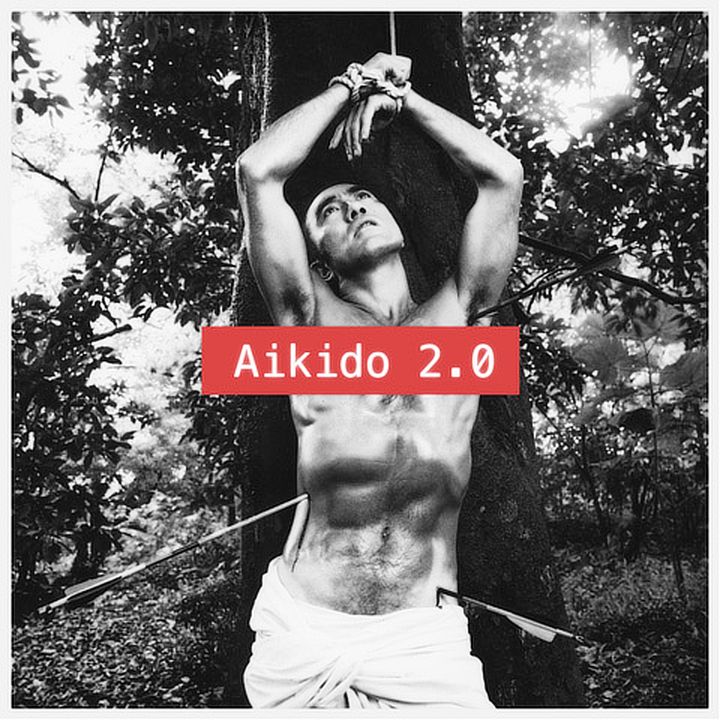
The world is full, or so it seems, of marital artists trying to fix Aikido by making it more practical/better/not as weird. I’m proud to say that my Xing Yi teacher, Damon Smith, (who studied Aikido himself for years) is joining the fray with a new podcast called (wait for it) Fixing Aikido! It’s a podcast where Damon gets together with another friend of ours, Tammo Trantow who is a highly ranked Aikidoka from Austria, and they set about the enormous task of, well, fixing Aikido and creating an Aikido 2.0.
Will it work? Is it a fruitless task? Even if you don’t practice Aikido, or you don’t think it needs “fixing”, it’s quite an entertaining podcast so give it a listen!
Oh, and while you’re here, you can also listen to the now infamous and highly controversial episode of our Heretics podcast that possibly inspired the whole venture. Aikido Heresies
Have you ever wished that running your martial arts academy was more accessible and more efficient? If so, it may be time to look into the latest Martial Arts Management Software.
Managing a Martial Arts School can be overwhelming, but with the right tools, it doesn’t have to be!
Martial Arts Management Software is designed to help make sense of the administrative chaos that comes with running a successful business. Whether you need to keep track of student records, manage bills and invoices, or monitor your academy’s finances, there is sure to be a software system out there that can help.
If you’re wondering whether your school needs this software, here are some signs indicating you should consider using it!
Billing and Collection Issues
One of the most prominent challenges schools face is billing and collecting money from their students. Martial Arts Management Software makes it easy to manage your student accounts, allowing you to keep track of payments, overdue balances, and more.
This can help you stay on top of any collection issues, ensuring that you are getting paid for your services promptly.
Class Scheduling Problems
Managing a martial arts academy can be a complex and time-consuming task, especially when it comes to scheduling classes. However, with the help of advanced software systems, scheduling classes have become much more manageable.
With this software, you can easily create, maintain, and update your class schedule, ensuring that all of your classes are offered on the days and times you need them. This can help ensure that your students always have access to the classes they need so they can go anywhere for their training.
Members Tracking Has Become a Problem
Another common issue facing martial arts academies is keeping track of their members. With so many students coming and going, it can be difficult to keep track of all the different people training at your academy.
Missed Expiring Memberships
One of the biggest challenges when it comes to member tracking is ensuring that you are never missing expiring memberships. Martial arts management software can help to make this process easier, as the software can send automatic reminders to your members about renewing their memberships in a timely manner.
Additionally, with this software, you can set up automatic renewal reminders, which can further help ensure that all of your members are up-to-date on their memberships.
Untracked Achievements, Belts, and Grading
Another issue that can arise when it comes to member tracking is failing to track important milestones, such as belt and grading achievements. Martial arts management software can help with this by providing a convenient platform for recording these milestones.
With the push of a button, you can record your members’ latest achievements, helping you stay on top of their progress. And by automating this process, you can ensure that all of your members’ milestones are tracked and recorded promptly.
Spending Hours On Admin Tasks
If managing financial reports and cash flow takes much more time than teaching Martial Arts, Martial Arts Management Software can help you save time and money. By automating processes such as billing and collecting data and information, you can spend more time on the things that matter most to your business.
Additionally, using martial arts management software often comes along with other benefits, such as improved cash flow and reduced costs. If you want to streamline your academy and make it more efficient, it’s worth considering investing in this type of software.
Messy, Disorganized Paper Filing Systems
The more your martial arts studio grows, the harder it is to keep up with all the paperwork for student registrations, attendance compiled, payment due and instructor qualifications-not to mention classes and business operations that can become confused without proper record keeping.
With Martial Arts Management Software, all of your data and information are stored digitally, making it easy to access and update at any time. This not only helps you to stay organized, but it also helps to keep your data secure, as paper files are often lost or damaged.
Lack Of Financial Reporting Tools
Every martial arts school needs to have efficient financial reporting tools in place, but all too often these can be lacking. This is where martial arts management software can help fill the gap.
A management software system often comes with a wide range of financial reporting tools, helping you stay on top of your business finances and quickly identify any areas that need to be improved.
Inexperienced or Overwhelmed Staff Members
If your academy is experiencing issues with member tracking, financial reporting, or any other aspect of running your academy, it can be difficult to know where to turn.
By using martial arts management software, you can streamline your academy and ensure that all of your members are well taken care of.
Managing School Has Never Been This Easy
If any of these issues sound familiar, then it’s time to consider using Martial Arts Management Software! With the right system in place, you can take control of your business and focus on running a successful academy.
I had a great visit to The System Academy in Wiltshire last week where I enjoyed a bit of 1-1 Systema coaching from my old friend and owner of the Academy, Matt Hill. I also recorded a podcast episode with him for The Tai Chi Notebook Podcast, which will be coming out in November. Matt trained Aikido in Japan and served as a Captain in the British army, as well as working in crisis management before he became a full time Systema instructor, so he’s got a lot of experience of different types of martial arts and working in pressure scenarios. Because Matt and I live quite close to each other I had the opportunity to get a bit of hands-on work in before we sat down to record the episode. It was great to experience some Systema myself this time, and I particularly enjoyed the striking aspects, which is something I’ve put on the back burner a bit as I’ve got more into grappling over the last few years.
One of those eternal questions that pop up on discussion boards a lot is, ‘how close is Systema to Tai Chi?’, and this was one of the things I’ve been mulling over since I had the lesson. Both these arts stress what Systema calls the Four Pillars – breath, posture, relaxation and movement – but on a basic level I think one of the immediate differences between Tai Chi and Systema is that Systema seems to only exist in relation to something you are doing, whereas Tai Chi has this weighty set of philosophical principles that exist independently to the art, like Taoist philosophy and yin and yang, as well as concepts from the Tai Chi Classics regarding posture, movement and strategy. Tai Chi can certainly be talked about in terms of these abstract concepts and ideas, but in contrast, Systema needs to be shown. When you’re not doing Systema, then where does it go? It’s a bit like your lap – when you sit down you can point to your lap, but when you stand up, it vanishes!
Systema seems intrinsically tied to what you are doing, not what you are thinking. Of course, you can argue that even when you’re doing nothing and not moving, say, just sitting there, you are still doing something, so perhaps Systema is always there: You still have a posture, and you are always breathing, and that means some movement is happening in the body and you can still relax, which is a kind of a movement in itself. But there doesn’t seem to be an underlying theory, comparable to something like Tai Chi’s theory of yin and yang, that underpins it all.
Another interesting difference is that when Systema teachers talk about embodying the 4 pillars – they really mean it! They’re not just paying lip service to the ideas – they are living them. Even outside of the martial art practice, Systema seems to have the potential to pervade everything you do. In Systema you tend to lead movement with your breath, you breathe the tension out of your body as you work and you try not to muscle anything. And that can be applied to anything, not just fighting.
Of course, you could say the same thing is true of Tai Chi, but there’s so much other ‘stuff’ to worry about in Tai Chi – like a form,(and getting the form just right), dantien, and the 6 harmonies or the 8 co-ordinations, etc, etc.. I think inevitably, with so much on your plate, some things slip. But with only 4 principles to keep in mind, you can spend a bit more time really digging into them.
And then there’s the amount of physical discomfort you experience. Tai Chi can be really hard on the legs for sure, but push ups, leg raises, sit ups and squats are the meat and potatoes of Systema, none of which you’ll find in a bog-standard Tai Chi class. Not to mention learning to give and receive strikes. Even more martially inclined Tai Chi classes don’t tend to work on actively standing there and learning how to receive strikes.
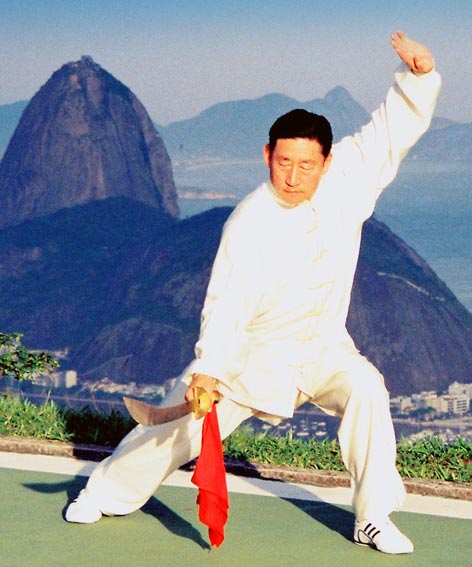
Chen Xiaowang, Tai Chi broadsword
Adopting any sort of ‘martial arts pose’ is frowned on in Systema. Again, you can argue that there are no fixed shapes in Tai Chi either, but Tai Chi does put a lot of emphasis on structure – keeping a connection to the ground through a relaxed frame, and there are ‘kung fu’ style postures. Systema seems to prefer you trust in your relaxation and let gravity do its work. For a Tai Chi person, it’s quite freeing and fun not to have any fixed shapes you’re expected to adopt. The emphasis in Systema seems to be on not trapping yourself into patterns of tension that you first have to exit before you can move freely. Fighting somebody else is hard enough already – you don’t want to have to fight seven battles within yourself just to move freely before you even begin!
So yes, Systema is different to Tai Chi. But I think the two work really well together. The Tai Chi practitioner can take from Systema the idea of not being trapped in ‘postures’ – fixed shapes (Ward off, Diagonal Flying, etc) and the value of removing as much tension from your body as you can while still working on moving with an opponent. Also, breathing tends to get only a cursory mention in Tai Chi, but focusing more and more on keeping your breathing smooth and continuous, and noting how that relates to tension in the body, is a great addition to any Tai Chi form, and I think that has to help make your Tai Chi better, by any objective measurement.
With our Heretics podcast existing as a kind of permanent record online people can discover it at any time. Recently the Aikido Heresies episode we did has kicked off a couple of conversations.
I think they relate directly to the Myth Busting post I did yesterday. That was all about Chinese martial arts, but the same thing applies to Aikido, perhaps on an even bigger scale.
One post from a listener goes as follows:
“So recently I came across some apparently very grim details of Morihei Ueshiba’s life history. Apparently he was in good terms with far-right activists and known war criminals (including the head of Unit 731; if you don’t know what it is, do yourself a favour and DON’T google it), and was a staunch nationalist supporter of the Emperor and the Imperial regime.
I have for long held to the opinion that Ueshiba was perhaps the most complex and misunderstood figures of 20th century martial arts, but now I’ve been really left to grapple with how his legacy and ideology should be correctly dealt with during our era.
Is this more “ugly” side of Ueshiba well understood and interacted with among many Aikidoka, and what has been your solution to it?”
I see a lot of parallels between the myth-busting of martial arts and the things that are happening in modern times now in the US and UK as we unpick the uncomfortable truths of our relationships to slavery.
For example, almost all the big Downton Abby-style manor houses in the UK that have become the property of the National Trust (usually after the 2nd World War) and we all enjoy spending our Sundays visiting and enjoying the splendid gardens and architecture, were all built by fortunes made off the backs of the slave trade. And none of this is taught in our schools.
Statues like the one of the famous slave trader Edward Coulston in Bristol have been pulled down by angry crowds in the wake of the Black Lives Matter protests in the US, which have spread to the UK.
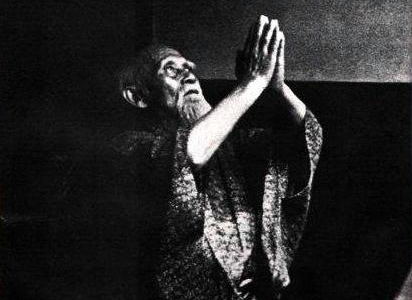
The question is how do we deal with this. Should we stop people bowing to photos of Ueshiba in Aikido dojos, for example?
I don’t know what the answer is. Walking the fine line between personal freedom and making right the sins of the past is a difficult job.
Personally, with Aikido I would look to the Aikido community to address this issue and come to terms with it.
As our friend Tammo notes:
“As a long standing practitioner of Aikido who also runs his own dojo, it was a shocked to hear these things and in the course of a year it completely changed my perspective of Aikido. Meanwhile I have come to terms with that and think I can see and value Aikido for what it is and what it isn’t.
The success of Aikido from roughly the 60s to the early 2000s (I would guess) seems to have been due to the huge efforts of myth-making around Ueshiba, modelling him into a saint-like figure… with a god-like martial ability and some strange esoteric practices which seem all very impressive. It seemed to work. Now I find it more interesting to get my head around general developments in eastern martial arts as a way to understand how different styles and branches are able to develop and become successful and why others don’t.”
In the Aikido episode of our podcast we established Ueshiba’s colonial activities in Manchuria, close ties to the leadership of, for instance 731, and (not war) but colonial crimes against the Ainu. As a member of the Kwantung army he is also associated with all of their atrocities on the continent. On that basis, I think it’s fair to say that Ueshiba was not a nice person.



 The Tai Chi Notebook