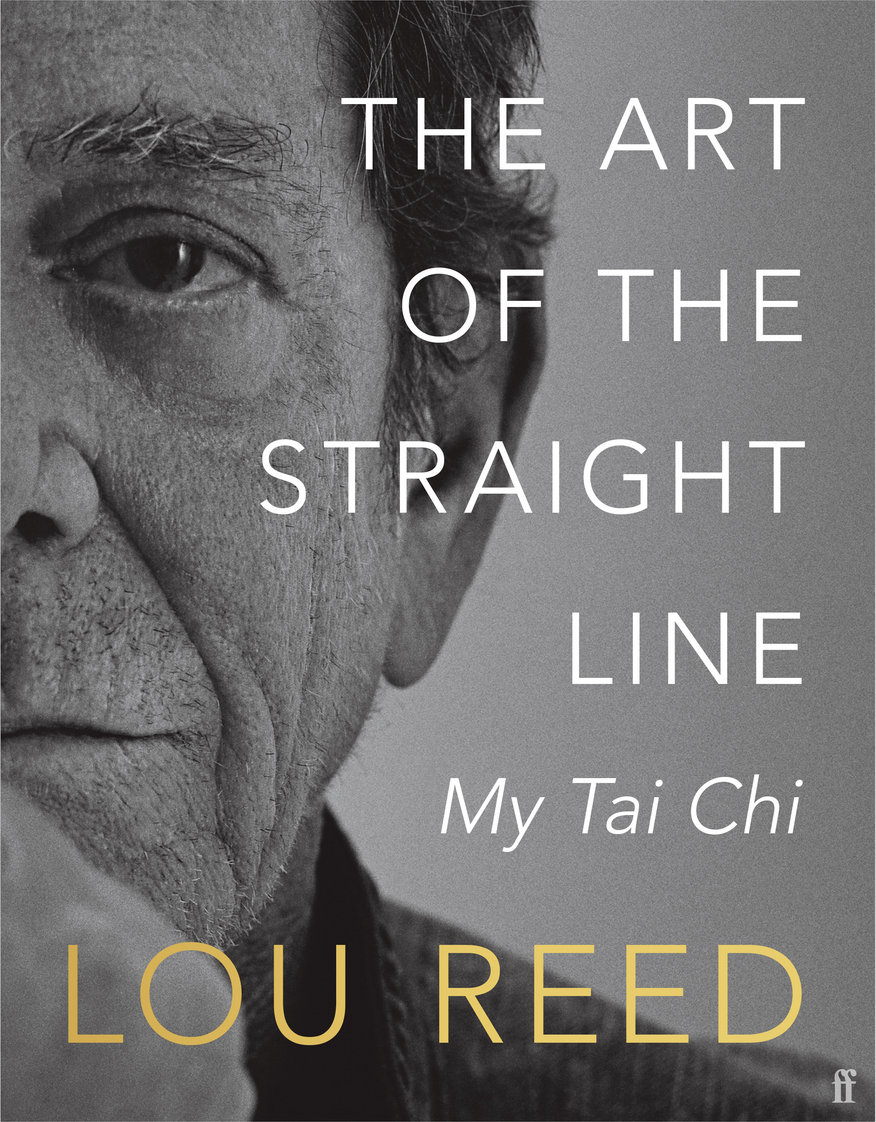
I was asked recently if I’m going to review Lou Reed’s book “The art of the straight line”, which, as you can see below, is his book about Tai Chi, released a few years after his death.
No. I’m not.
Lou was a practitioner of Chen style Tai Chi under Ren Guang-Yi. By all accounts he was quite the enthusiast. I had a quick look at a preview of the book and it looks to me like this isn’t really a complete book that he’s written. Instead, it’s a collection of old letters, scrappy notes and interviews with people who knew him about his love of Tai Chi.
But that wouldn’t be so bad if the writing was good, but it’s not. It’s meandering, scattered and the interviews are full of people talking about other people you’ve never heard of. I very quickly lost interest. It looks like it’s something for the serious Lou Reed fan, rather than the serious Tai Chi enthusiast.
Sorry Lou, but this is not my bag. I’d suggest a walk on the wild side instead.
Have you read it? Am I wrong? Let me know what you think below.
This new article in The Guardian about learning Tai Chi made me smile. “It feels like my brain is solving a Rubik’s Cube”, says the author Jennifer Wong. From my recent experience in teaching Tai Chi to beginners, that sounds about right. After their first class all of them say some variation of “I didn’t know it required so much concentration!”, to me.
The initial stages of learning Tai Chi are hard, but not in the way you’d expect. I’d say, about it’s 90% mental effort. You have to learn to remember moves with the outward appearance of simplicity, which are actually very difficult to remember. Simplicity requires a lot of effort. I often teach people the same sequence of moves over and over, then ask them to do it without me and they are instantly lost. I think this is entirely normal.
One device I’ve adopted that seems to work better than saying things like ‘left hand on top’ is visual imagery. The moves in Tai Chi already have names, like Repulse Monkey and Single Whip, which I think were used for the same kind of aid to memory. Unfortunately, after being transplanted from one culture to another and one time period to another, a lot of them are not effective any more. “Single whip” doesn’t mean much to people living in England in 2024, so I’ve started to adopt my own names to act as visual images. The opening move I call “Fountain”, as it’s like water in a fountain, coming up the middle then down to the sides. After that we “scoop water left” which makes sure that it’s the palm of the hand that is being used to scoop the water, not the back.
Things have not worked out well for the author of the book that got me started with Tai Chi…
The reason I got interested in Tai Chi in the first place was a combination of watching Kung Fu, the classic TV series starting David Carradine, in my early childhood, which primed to be receptive towards “Kung Fu” (whatever I thought that was at the time), and Star Wars with its emphasis on Eastern-influenced spiritual warriors with special powers that could be trained with a rigorous martial arts-like training programme, and then reading The Tao of Pooh by Benjamin Hoff when I was about 20.
This was the version of the book I had, The Tao of Pooh, by Benjamin Hoff.
This simple book combined a nostalgic look back at the Winnie the Pooh books by A.A.Milne from my childhood, which I loved, together with the basics of Eastern philosophy. And somewhere in the pages there was a single mention of a martial art that embodied the best of both, called “T’ai chi ch’uan” (as it was always written back then). That lead me to my first Tai Chi class, and I was hooked from the first minute I tried it. There was no Internet back then – you had to discover martial arts classes by looking at notice boards, that were usually found in health food shops. I remember I got a wobbly 2nd-hand VHS copy of the teachers in my first class doing their form, and I must have worn it out playing it over and over to copy the moves. What we would have given to have had YouTube back then!
The nature of politics and human affairs
Today I wondered what had happened to Benjamin Hoff, and if he was still alive, so I went off to have a look. It turns out he is still alive, but a visit to his website doesn’t reveal the comfortable life of a well respected author, sitting back on his laurels and reaping the benefits that writing one of the most popular books on Pooh and Tao should surely bring you. Instead there’s mention of vicious legal battles with publishers that has lead to a deep depression and a lack of funds. It all sounds rather sad. It’s an unfortunate and desperate station for somebody who has brought so much pleasure to people in the world, not to mention uncharacteristic for somebody who also authored a book about, “how to stay happy and calm under all circumstances”.
In addition to The Tao of Pooh, Hoff also wrote The Té of Piglet, which is also very good, and (I’ve just discovered) he wrote his own Tao Te Ching translation:
“Hoff was awarded the American Book Award in 1988 for The Singing Creek Where the Willows Grow. The Tao of Pooh was an international bestseller and spent 49 weeks on The New York Times’ bestseller list. The Te of Piglet also became an international bestseller and spent 59 weeks on The New York Times’ bestseller list.
In 2006, Hoff published an essay on his website titled “Farewell to Authorship”, in which he denounced the publishing industry and announced his resignation from book-writing.”
If you want a summation of Benjam’s problems with the publishing industry then I’d recommend reading this essay “Farewell to Authorship” – it is very well written. It seems to have been removed from his website, but you can find it on an Internet archive page.
They say that every great career ends in failure but it’s sad to see that the author who inspired me (and presumably many others) all those years ago to start Tai Chi has ended up in this situation, but perhaps all human lives end in some kind of failure. It’s inevitable, it’s just the nature of the Tao. His books, however, remain great.
Nabil Ranné is a Chen style teacher living in Berlin who offers classes and online training at CTN Academy Nabil is a student of Chen Yu, who is the only son of Chen ZhaoKui and grandson of the famous Chen Fake. Listen here.
Here’s what we talk about:
Timestamps:
1.00: Nabil’s background in martial arts and what attracted him to Chen style Tai Chi
3.40: What is Jin in Tai Chi?
7.30: What makes Tai Chi different to other marital arts?
11.15: What is the strategy for Tai Chi?
16.00: What is the function of Tai Chi push hands?
17.55: Competition push hands vs Tai Chi push hands
22.20: The Xin Yi podcast and how do you train applications in Tai Chi
There are lots of tigers in Yang style Tai Chi. There’s ‘Bend Bow to shoot Tiger’, which is a pretty obvious punch, and each section of the forms ends with the classic ‘Carry Tiger to Mountain’. Today we want to look at ‘Retreat to Ride Tiger’.
It looks a lot like ‘White Crane spreads wings’ on the surface, but the hands are at a slightly different angle. Also you are always stepping back when doing this move and the intention of what you’re doing is slightly different to White Crane, too.
One aspect of the move I really like to emphasis is the Kou or ‘Shoulder Stroke’ that it contains. Rather than striking forward with your shoulder you are striking behind you as you step. I happened to be near a hanging heavy bag the other day so took the opportunity to show where the power goes in the move, like this:
Rather than thinking of it as striking with just the shoulder itself, it’s more like the whole of your back is the striking surface. In fact, the literal translation of Kao is not “shoulder stroke” as it’s normally written, it’s “lean”, so that gives some more insight this member of Tai Chi’s 8 energies.
Obviously, ‘Retreat to Ride Tiger’ isn’t just about striking behind you, the hands and legs can be doing applications facing forwards at the same time. Here are some ideas:
When Josh Robenblatt got to the age of 32 and realised he wanted to fight in an MMA match, he had to confront a lot of physical problems as well as inner demons before he set foot inside the cage. While the physicality of fighting is explored, this book is mostly about Josh’s internal struggles as a lifelong pacifist coming to terms with the casual approach to violence that MMA engenders. For many people Josh’s exact internal struggles wouldn’t exist (especially his frequent reference to his Jewish ancestry), but in a general sense they do exist in some form in all of us, and that’s what makes this book fascinating for anybody who trains in a martial art. It’s also a rare insight into the realities of training for an MMA fight – how much training is actually required, dealing with injuries, how it affects your relationships with friends and family and what the brutal realities of weight cutting are all about.
Josh writes well, particularly when it comes to articulating his inner thoughts on the subject of dealing with actual violence, either as a participant or an observer, and the transformative, almost transcendent, power that coming to terms with it often provides. I found he had managed to put into words something I’d felt before in my own life, but never stopped long enough to really think about and verbalise. As such ‘Why We Fight’ kept my attention constantly until the end, and you do become drawn into his underdog story and intrigued to find out what happens when he finally gets into that MMA match. I won’t spoil it here.
This is a nicely made video about Tai Chi Push Hands:
Some quick observations:
1) I quite like the emphasis on feeling where the opponent is during push hands instruction – I think this is bang on.
2) “Sensei Seth” correctly identifies very quickly that push hands competitions are very, very, similar to Sumo. And if you’re good at Sumo then you should be good at this, and indeed, he is.
3) There are some fascinating insight into the teaching process here. Seth seems to do a few things that are “wrong” according to the laws of Tai Chi, but are working (i.e. sticking his butt out and leaning forward), however, he gets corrected by the instructor to stop doing it. I just find that interesting. The “Stop cheating, it makes you win!” mentality is rife all over the Tai Chi world. It’s one of the reasons I avoid push hands with people unless the conditions are right (i.e they are the right sort of person). I much prefer the “Hey, if it works, then it works! It’s up to you to figure out what I’m doing and stop me” mentality of BJJ.
4) In the end, with competitive push hands, the better wrestler always wins the exchange (for example, when they are doing the ‘foot outside the square’ push hands). So, if you want to be good at competitive push hands then why not just learn some wrestling? You can even keep things Chinese by learning Shuai Jiao.
5) I like this coach – he’s clearly skilled, but competitive push hands is the problem here. Even this coach gets super tense when under pressure because of the need to win. I just think that Push Hands is better used as a training exercise for learning TCC skills – when it gets competitive, all the principles go out the window (unless you are very, very, very very good).
This post is going to start somewhere you don’t expect – over 1,000 years ago in Song Dynasty China during which we find the legendary founder of Xing Yi, Yue Fei, a general in the Song Dynasty army, mulling over the advancing (heavily armoured) Jin cavalry, and wondering how his foot soldiers are going to fair against the crushing advance of an army that had destroyed the Liao Dynasty troops, scattering them to the Western regions.
The Jin/Song wars would last a century, starting in 1125, when the Jin attacked the Song after a series of negotiations between the previous allies failed. During this period North and Southern China was effectively separated between Jin and Song, with the Song retreating into the south of China. The Jin advance into southern China in 1130 was stymied by Song generals like Yue Fei and Han Shzhong. Eventually the Song allied with the Mongols in 1233 to defeat the Jin, but the Mongols then went on to defeat their previous allies, the Song, and thus the Yuan Dynasty was born.
But why this history lesson? Well, one weapon that was popular during the Song/Jin wars was the ‘sword breaker’ called a bian, which translates as ‘whip’. But it was a very solid short stick made of iron, not a flexible whip. It was often used on horseback because it was effective against heavily armoured warriors, and the Jin cavalry was very heavily armoured.
The Tai Chi move “Single Whip” (Dan Bian), has the same character for whip as the one used for the ‘sword breaker’. It’s also similar to the characters for ‘shoulder pole’, which I’d previously speculated was a possible origin for the name. But people who are better at Chinese than me have cast doubt on this theory. It seems much more likely that it’s the ‘sword breaker’ weapon that is being referred to, not a shoulder pole.
“Recently I’ve been made aware of some theories about the meaning behind “Single Whip” 單鞭 (dān biān)
Basically the claim is that the posture resembles a farmer carrying something on a pole or yoke and that the name refers to this yoke.
This yoke or shoulder pole is called 扁擔 (biǎndan)
So right away, simply linguistically, this claim is a little bit problematic.
English Character Pinyin Romanization. Single Whip 單 鞭 dān biān Shoulder Pole 扁 擔 biǎndan
We’re dealing with four completely different characters with completely different meanings. The dan in biandan is POLE not single.
To a native Chinese speaker this is like comparing apples to tennis balls. It’s just a ridiculous claim.”
The post goes on to look at the historical record, which is fairly interesting, and makes the case for the bian being the ‘sword breaker’.
Fair enough, the shoulder pole idea was just a theory of mine based on the similar name, and the way it looks. As with all good theories, it can be disproved with evidence. But as I also said in that original post of mine:
“The ‘whip’ could also be used as a weapon in Chinese Marital Arts. Again, it was usually referring to a short stick, not a flexible whip. In the excellent “Chinese Martial Arts Training Manuals” by Brian Kennedy and Elizabeth Guo you’ll find a description of a book called “Tiger Tail Whip” by Jiang Rong Qiao published in 1930. It features a “long routine for the metal tiger tail ‘whip’, which is rigid and actually amounts to a type of cane.””
“Chinese Martial Arts Training Manuals”, by Brian Kennedy and Elizabeth Guo
The ‘sword breaker’ or ‘bar mace’ was certainly more substantial than a cane. As the name implies, it could break swords, but it was also good for attacking heavily armoured soldiers as it could impact the person under the armour. Check out what it could do in this excellent video:
What’s in a name?
But it’s still hard to work out why the Single Whip posture would be named after the ‘sword breaker’ in the first place. I mean, the posture doesn’t resemble the weapon at all… But then I saw something very interesting recently:
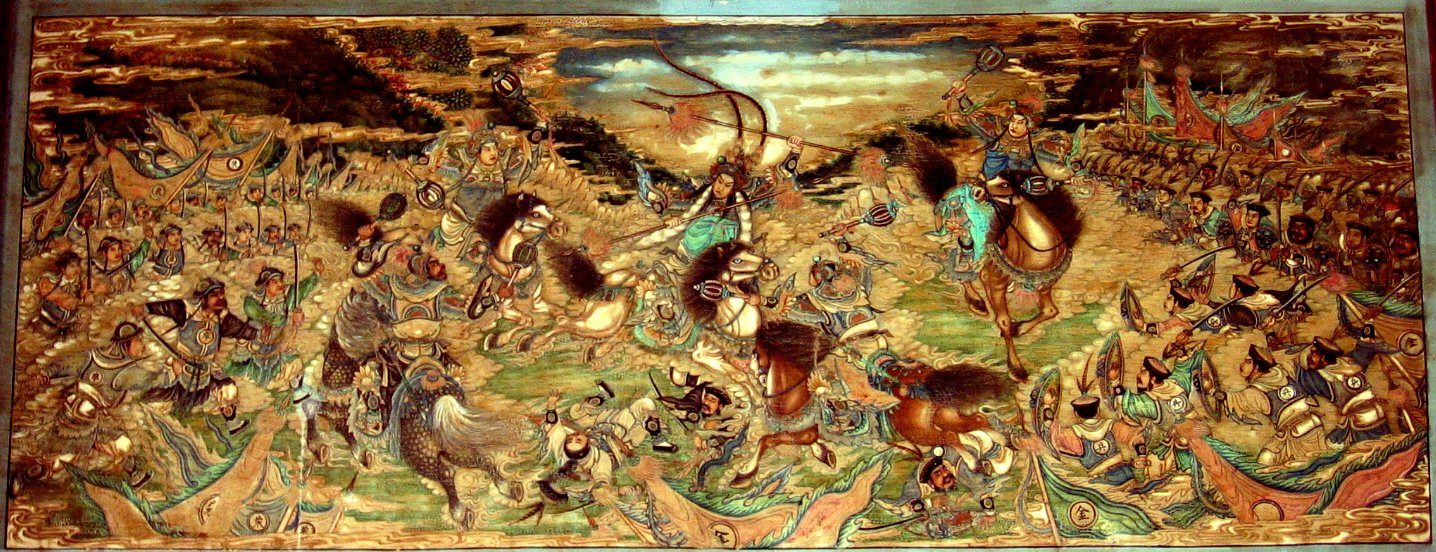
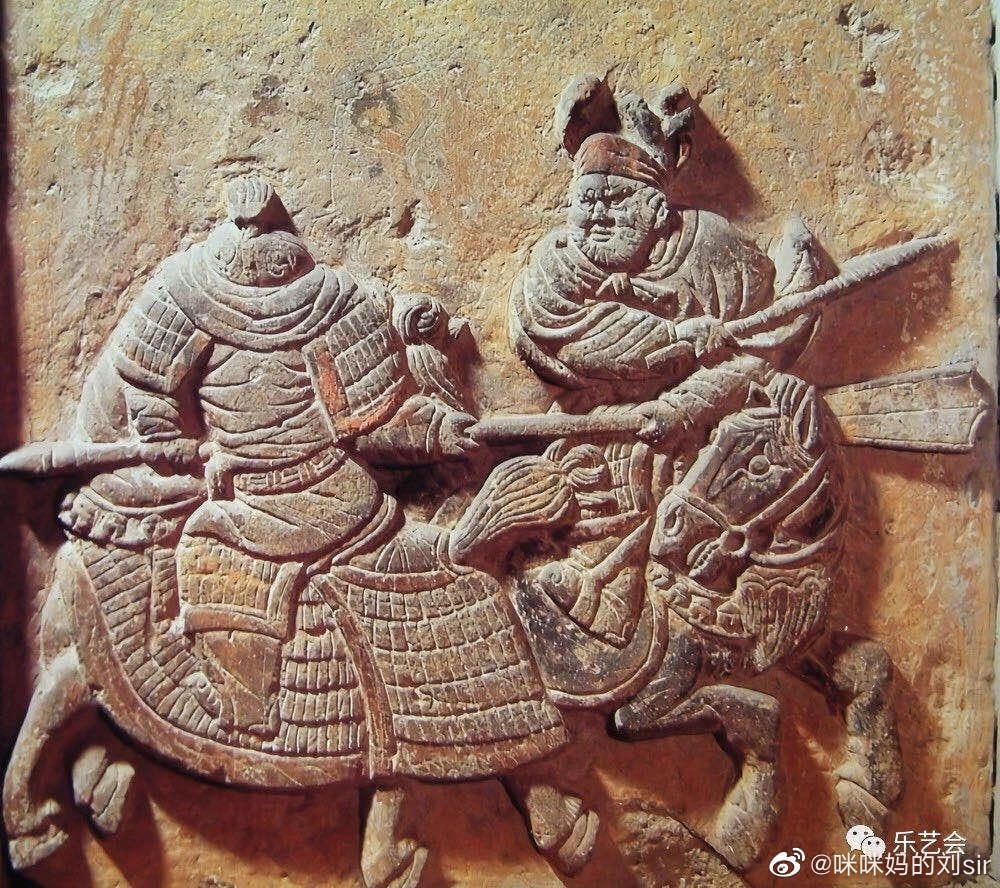
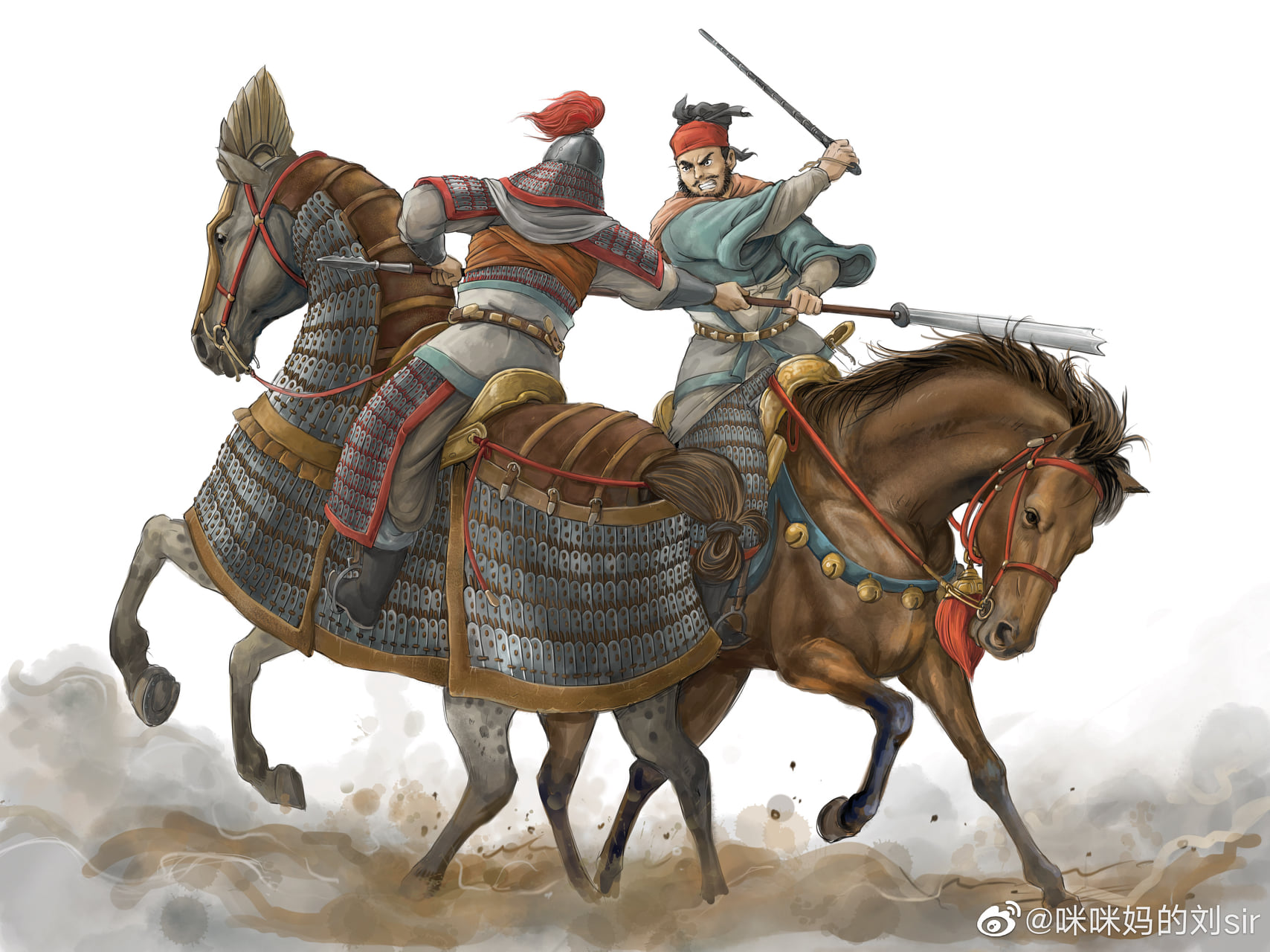
“This brick carving is from a tomb of Jurchen Jin (1125–1234), describing a battle between Song and Jin cavalries. The one who faced to us with a sword breaker 锏 might be Jin cavalry, who snatched the pole weapon (三尖两刃刀, lit. ‘Three points double edged blade’ fig. 3) away from Song cavalry and swung his sword breaker 锏 to attack his head from right to left. Song cavalry’s head and helmet were totally whacked. Well, pole weapon user should always keep distance with enemy and, such blunt weapons like mace, sword breaker etc. are really excellent weapon against heavy armor. Picture 2 was drawn by 咪咪妈的刘sir.”
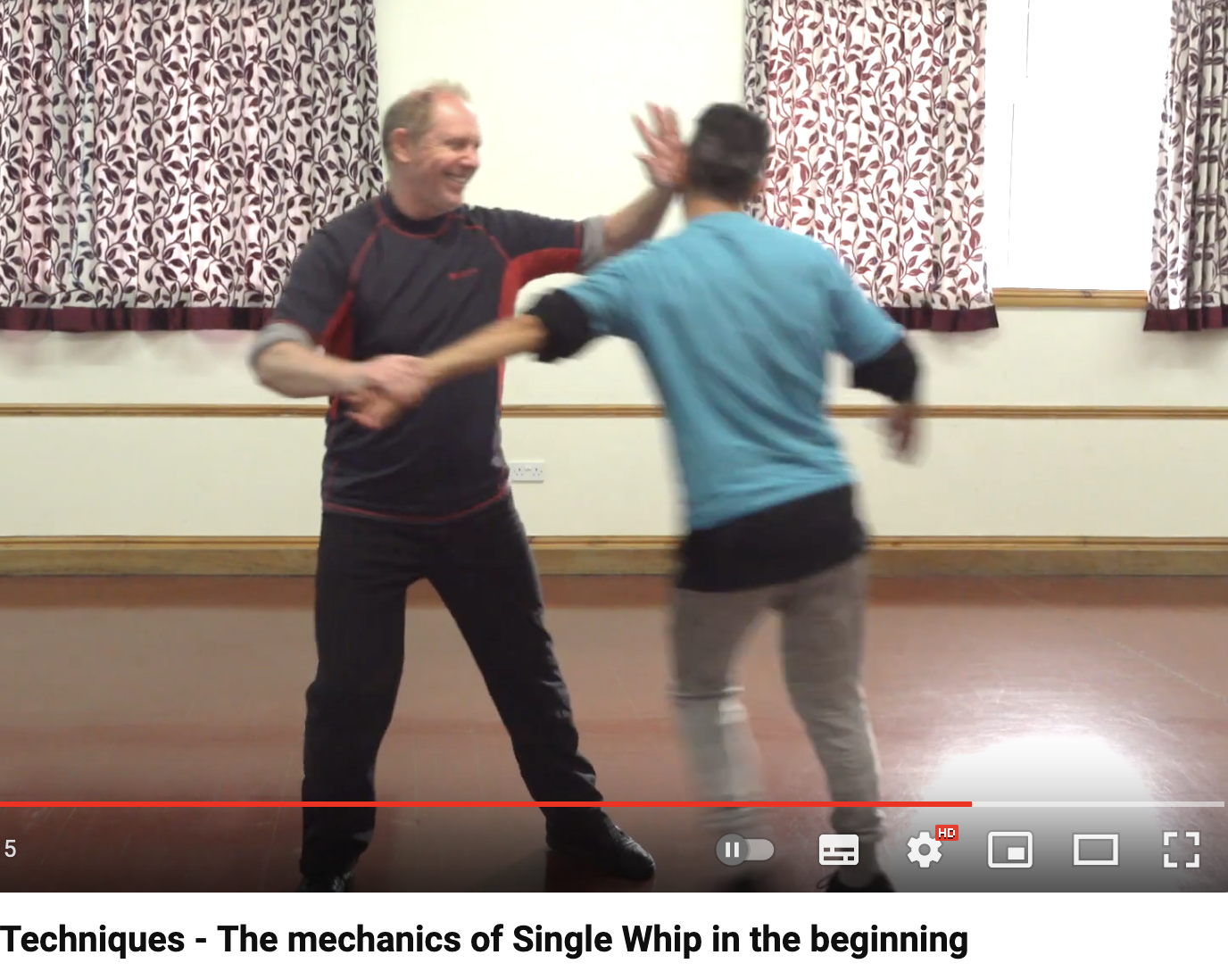
Now, what I notice about this carving, and the painting, is that it isn’t a million miles away from the application of single whip that we practice in our Tai Chi. Check it out:
Maybe that’s where the name “Single Whip” comes from? The application of the move is certainly similar to the way you’d use a ‘sword breaker’ way back in the Jin/Song wars to grab the opponent’s long pole weapon and bash them on the head with your ‘whip’.
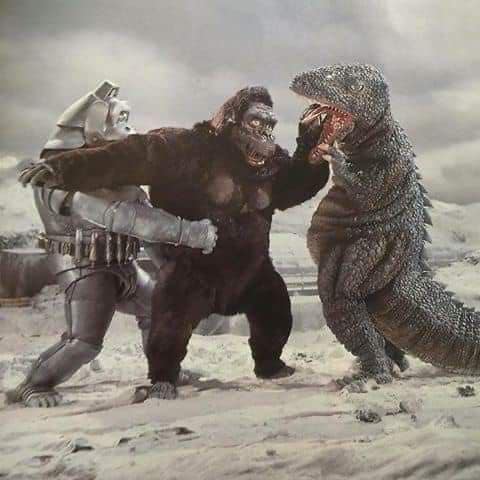
But why “single”? Well, it turns out that the ‘sword breaker’ was often a two handed weapon. You had one in each hand, as this carving of the Jin cavalry shows:
You can also see double maces being used by cavalry in the painting that opens this article.
It’s as good an explanation for “single whip” as I’ve read anywhere else. And at least this reasoning makes some sense. At the end of the day, it’s just another theory, ready for some eager beaver to disprove.
There is a phrase in Tai Chi that the whole body is a fist. I think it actually comes from Chen style, but applies to all styles of Tai Chi. Now, you can interpret that in different ways, but I think all of them are valid.
Firstly, it’s saying that it doesn’t matter what part of the body you hit with, so if you’re using Jin channeled from the ground into the target, the path it takes could go through the shoulder, or elbow, or head, for example, just as easily as it can to the fist. Tai Chi in application tends to be at close range, sometimes body to body, so limiting yourself to boxing range doesn’t make much sense.
Another way to look at it (and I think this is potentially more useful) is to think of the action of opening and closing the body as being similar to opening and closing a fist. While the concept of opening and closing the body is hard to grok, everybody is familiar with the idea of opening and closing the fist. In Tai Chi (and other ‘internal’ arts) that opening and closing is done with the whole body. While some internal arts (particularly Xin Yi) go for a open/close/ followed by a hard stop then repeat type of action, Tai Chi is particular amongst the internals in that is opens and closes in a smooth, continuous motion in a fluid series of motions. There’s never a hard stop in the form. You could say that this is defining feature of Tai Chi.
Practical training
So, let’s get to practical training. The ins and outs of how you open and close the body are to do with the 6 harmonies and silk reeling. I created a short video series years ago now, that looked at this. Watching the video is a lot easier than me trying to explain it all in text.
But here’s a training idea: do your Tai Chi form, and try and feel where the open and close movements are in the form. Even just doing the form with the mental attitude of ‘listening’ for where the body naturally opens and where is naturally closes is a practice in and of itself, that can reap rewards.
Derek frequently refers to this idea of ‘the whole body is a fist’ in the podcast and how that applies to Xin Yi. I think that it’s a good listen for Tai Chi practitioners because the idea of opening and closing the body and the 6 harmonies all come from Xin Yi – one of the oldest documented Chinese martial arts. That’s where Tai Chi gets them from.
Derek also talks a few times about another interesting idea, which is that Chinese martial arts aren’t there to teach you to fight, they’re training systems. He suggests going to learn boxing, MMA, or whatever it is that appeals to you first, to get it out of your system before you approach Chinese martial arts. Now, that’s going to be a controversial idea for a lot of my readers, but it’s also a very interesting idea that I don’t think is without merit. Have a listen and see what you think.
I’m always on the look out for interesting bio mechanical things and that search recently lead me to a character called David Weck, who is known as the ‘Head over Foot Guy’. Of course, that’s not his only idea about biomechanics- he’s got loads of them – but this video is a good introduction to his Head over Foot idea:
(It’s unfortunate that there’s a picture of the controversial social media influencer Andrew Tate in the header image for that video, because he doesn’t feature in the video. I guess they’re just using him as an example of a good walker, but while he may be a good walker, I don’t like him or his opinions, nor do I think he’s a good example for kids to follow).
The ‘head over foot’ idea can be explained very easily – if you’re going to stand on one leg, then your head has to be directly over your foot if you want your balance to be good. You can try this now, by standing on one leg and playing with where your head balances over your foot. I think he’s right – if you move your head anywhere else but over your foot then your balance starts to go.
Weck then takes this into the idea of walking, so instead of the usual description of walking that you read, which is that it’s a series of controlled falls, if you alternately put your head over your foot as you walk then you end up with a more athletic, balanced and confident walking style with a bit of swagger. You can start off over exaggerating the swagger, then work on reigning it in and making it smaller until it’s hardly noticeable.
I like it – it takes a bit of getting used to, but the alternative of trying to keep your spine neutral and upright (as we are encouraged to do in Tai Chi) ends up with a very forced, stiff, walking pattern. The alternative walking pattern of placing your foot over your head creates a kind of infinity symbol movement around the solar plexus with an alternating pattern of one side of the body shortening and the other side extending.
The idea of being upright is talked about a lot in the Tai Chi classics. For example, the Tai Chi classics say “Stand like a perfectly balanced scale” (from the Treatise) and
“The upright body must be stable and comfortable to be able to sustain an attack from any of the eight directions.” (from the ‘mental elucidation of the 13 postures’.)
But that doesn’t mean that you should look like a robot when you do it. Your body is a fluid collection of hard unbending bones connected by soft joints that allow for movement. It is designed to move in spirals, and the ‘head over foot’ idea promotes this spiral movement.
A lot, in fact, almost all, of the time in Tai Chi your weight is either on one foot or the other, or you are actually standing on one leg with the other leg kicking. So, I find that thinking about whether your head is over your foot as you do the Tai Chi form is actually a good idea. If it is then your balance will be better.
Think about the classic Tai Chi walk. We do this exercise called the Hero Stroll, which looks like this:
It’s worth doing this and thinking about the concept of keeping your head over your foot as you do it, then applying that to your Tai Chi form. Hopefully you’ll find your Tai Chi becomes more balanced, especially in the kicking movements. I find that this is where a lot of beginners have problems – they can’t balance on one leg. Well, here’s the solution!






 The Tai Chi Notebook