Winter training

As Winter draws to a close here’s a little clip I recorded as the UK was getting battered by storms – some branches had come down in the garden so I used them as improv training tools! Clip is a mix of Choy Lee Fut, Tai Chi and a splash of XingYi.

Hope you enjoy – let me know in the comments!

Two sides to the movement coin

There are two sides to the movement coin in Chinese Martial Arts – particularly the so-called internal martial arts. A Yin and a Yang, if you like.


Image

On side a) of the movement coin you’ve got a kind of basic postural advice. Directions we’re all familiar with like – ‘suspend the head from above’, ’round the shoulders’, ‘droop the elbows’, etc. The goal of these directions is to achieve a level of relaxation (‘Sung’) through working with the least level of resistance to gravity. If we can align with gravity it becomes our friend, instead of our enemy in movement. We can discover a sense of lightness and ease in our movements.

On the other side b) of the movement coin there are more subtle instructions to do with things like ‘moving from the dantien’, ‘intent’, ‘wrapping and coiling’, ‘silk reeling force’, ‘open and close’, etc… While these terms are generally unknown to people outside of the Chinese Martial Arts, they are usually familiar to people within them, even if we all understand them in slightly different things, and are willing to go to war over the small details!

Obviously (like Yin and Yang) the two sides form a whole, after progressing beyond a basic beginner level most people assume that they’re ok with a) and spend most of their time working out what the heck b) is supposed to be anyway.

I tend to think that there’s more to a) than we tend to think there is. I’d like to suggest that we put the focus on a) as much as on b), since it’s a) that really has the most impact on how we live our day to day life.

Here’s an article that can help. It’s to do with something called The Alexander Technique, but don’t let that put you off. It’s just great advice for how we ‘use the self’ in everyday life, and it relates directly to part a) of the coin I talked about earlier.

Have a read and see what you think.

http://alexanderviolist.wordpress.com/2014/03/20/understanding-the-primary-directions-which-way-is-up/

Gu Ru Zhang’s book – Taiji Boxing

Finally, a translation of the Gu Ruzhang (Ku Yu Chang) Tai Chi book, Taiji Boxing, by Brennan Translation. This is the style (a version of it, in the same lineage) of Tai Chi that I personally practice. The form in the book is the long form that he learned from Yang Jian Hou, and you should recognise the postures from other Yang forms. It’s not just a book on form movements, there’s a lot of theory here, much of it from the Tai Chi classics, so it’s worth a read for practitioners of any style.

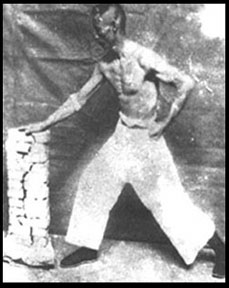
Master Gu Ru Zhang was also known as “King of Iron Palm”, mainly for doing things like this:

guruzhang3B

His approach to martial arts was to take both Internet and External as a whole. He was most known for his Northern Shaolin, but as his Tai Chi book demonstrates, he practiced soft style martial arts as well, including XingYi and Tai Chi. He was an early proponent of the idea of cross training (mixing martial arts). He obviously saw this as beneficial, and trained in many arts, and enjoyed exchanges with different masters.

Find out more about Master Gu.

The big problem with Chinese Marital Arts

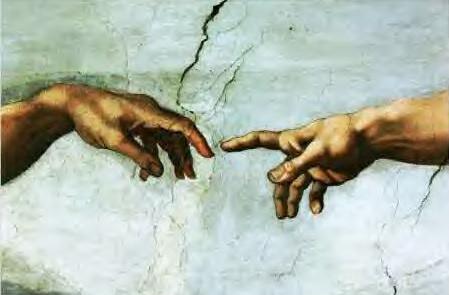
hands-touching

This post is something of a follow up to my previous sot on The Delusion of Grace Under Pressure. I’m aware I’m starting to ‘rag’ on Chinese Martial Arts, and don’t want this blog to turn into a negative blog about CMA, since there is much (beyond fighting and including fighting) to be gained by the study of CMA. But the practices are also hobbled by many cultural and out dated modes of training that badly need to be updated, yet are often not due to respect for the ancients, or more likely, the lack of any real need to update them.

If we were living in a war-torn, post apocalyptic future (actually, something like the war-torn Hebei province of old China, in which many of these Chinese martial arts systems first developed) then there would be no debate about this – methods that ‘worked’ would rise to the top naturally and things with no practical value would be abandoned without a second thought. But we do not live in these times, thank goodness, so we are left in a world where we’re all free to carry on doing what we want with no real repercussions. Following tradition, regardless of its application to today’s realities.

Anyway, I’m waffling. The point of this post is about this obsession the Chinese Martial Arts have with starting all engagements from a crossed hands position. Whether its the sticky hands of Wing Chun, the push hands of Tai Chi or the Rou Shou of Bagua (the list goes on) the majority of ‘sparring’ practice is done from a position where you are already touching your opponent.

You can get very skilled in this middle range, and develop an impressive ability to manipulate an opponent. The mistake is assuming that your ability here reflects your ability to fight. In the fight the reality is that you spend hardly any time at this range – you’re either all out, or all in.

This is a Tai Chi blog, so lets use Tai Chi as an example. In push hands we learn to listen and yield to the opponent’s force through the well known push hands exercise. It’s this aspect which is the key to the application of the art in combat. Beginning students are choppy and rough with their pushing and yielding energy, and easily controlled. They lack the flow, balance and smoothness in deflecting incoming pressure that a more experienced Tai Chi exponent can conjure up with ease, often effortlessly deflecting an attacking push to the side without losing the trademark sickly Tai Chi smile on their face.

Yet there is a world of difference between this more civilised practice and the realities of an opponent who is really trying to take your head off.

I think this is the biggest problem with all the Chinese Martial Arts, and the root of their lack of success in ring sports. So much time is spent with doing stuff from hand and arm contact and neglecting the ranges where most of the time is spent in the fight. In actual fights, or free sparring with resistance, it’s very, very hard to get contact with the forearms or hands when shit is going down. It’s even harder to keep somebody there. Why keep training for this almost impossible situation?

Now, I just know somebody is going to chime in with ‘Of course, we train from not touching too, but contact is the starting point for beginners’ – but really, how come 99% of all videos showing CMA applications start from crossing hands?

Western boxing doesn’t start there with its beginners, and it’s got a pretty damn good reputation for teaching people to fight very well with their hands. In fact, it’s the ultimate art for fisticuffs, because that’s all it specialises in (yes, I know ‘old school’ boxing was more like all out brawling with throws and elbows, etc, but I’m talking about ‘modern’ boxing here).

Seriously, I think most CMA has it backwards – doing stuff from contact should be a considered a high level strategy for the very advanced practitioner, not the starting point for the beginner.

I’m not proposing we abandon CMA in favour of boxing, but at least start to practice applications and sparring from ‘not touching’ as the norm, not the exception.
The (martial) use of Peng Jin in Tai Chi Chuan

Peng Jin gets talked about all the time in relation to Tai Chi, yet you rarely see anything shown or discussed about its usage and relationship to actual fighting. I wanted to make a video that did that, so here it is!

Tai Chi Chuan, after all, is a martial art, and not just a collection of interesting ways of manipulating ‘force’ in the body for purely health purposes. It’s a martial art that uses Sung Jin, or ‘relaxed force’ in preference to hard strength. One of the reasons why it prefers relaxation over hard strength is that it enables the use of Peng Jin. You simply can’t do Peng Jin unless you are sufficiently relaxed. In terms of martial arts it’s a very useful skill that can be used as shown in the video.

There’s much more to Peng Jin than what I’m showing here – but it would require a much longer video to go into all the intricacies. I don’t, for example, talk about how I’m doing what I’m doing, I just show what the effects are.

Another factor to consider is that Peng Jin should also be a quality that’s always present in the Tai Chi practitioner, rather than something you turn on or off for technique purposes. However it’s the subtle, but powerful, effect of the Peng ‘bounce’ on an opponent that I wanted to demonstrate, so that’s what’s shown here.

The classic “Song of the eight postures” describe Peng Jin as:

“What is the
meaning of
Peng energy?

It is like water
supporting a
moving boat.”

Imagine the way a boat bobs on the water, and that will give you a good insight into Peng.

The delusion of grace under pressure

Surprise! Fighting looks like…. fighting

Photo by Ivan Krivoshein on Unsplash

This blog post grew from a discussion on RSF, a discussion forum on internal marital arts where I’m a pretty active user. Some members were expressing their displeasure at what they saw as low-level skill displayed in the recent 2012 Olympics Judo contest in London.

I was incredulous, since competing on an international stage in a tough sport like Judo requires the athlete to have levels of skill far beyond those of the mere mortal. Yet phrases like “low level” and “muscling” were being thrown about with abandon. The standard thing the detractors of modern Judo say, while explaining how Judo has entered a state of decline from which it can never possibly recover, is that modern athletes are not as good as the old timers. Then they post a black and white video of Mifune (The “God of Judo”) practicing with his students back in the day.

I have one right here:

As you can see, he’s effortlessly controlling his opponent, and demonstrating what is clearly agreed upon as “high level skills”.

Well, for a start, since Kyuzo Mifune was considered the greatest Judo technician to have ever lived, nobody would compare well to him, but that’s beside the point. Their point is that it looks nothing like Olympic Judo, and of course they’re right! Competition Judo will never look like the Mifune demo, because… (drum roll please) it’s a demo!

It’s exactly the same in every martial art – put a Tai Chi fighter in a sparring contest and inevitably people say “that’s not Tai Chi” because it doesn’t look like the super smooth demonstration their instructor does every Friday night at their class, as he effortlessly repels a doddery middle-aged gentleman who is gently pushing on his arm… Quite simply, competition fights do not look like martial arts demos and never will! I am truly perplexed that people can’t understand this… it’s a sort of collective human delusion. And it’s not just martial artists that have this delusion, it’s seeped into the popular consciousness too because of movies like Enter the Dragon, The Matrix, or James Bond. Most people think that if you “know kung fu” you’ll be able to pull some Jackie Chan moves out of your ass in the middle of a real violent encounter. Nothing could be further from the truth.

There are plenty of clips of martial arts masters under real pressure on YouTube, if you look for them. They all have one thing in common – it stops looking like the perfect martial art demo and starts to look scrappy as soon as they have to deal with real resistance, and not a willing student.

Here’s the thing: We’re confusing the training methods with the end result time after time.

Example:

Here’s Kochi Tohei looking graceful, poised and in control while doing a demonstration of Aikido:

Now here he is working against an opponent offering real resistance:

Totally different, right?

This comment on that last video from YouTube is typical of the collective human delusion I am describing:

“if tohei used aikido techniques against this man,which he is not doing until the last bit of the clip,serious injury to uke could have resulted. this was only an exercise in balance.”

It’s time for people to wake up.

Walking the circle

Another of the Internal Arts of China is Bagua, the core practice of which is walking a circle with various different palm positions. While I don’t really practice Bagua I do have a great circle walking training tool at my local park. Check it out:

As you can see, it’s important to fit your training into your life, and the local park provides many different training opportunities.

As it says in the Tai Chi Classic,

“In motion the whole body should be light and agile, 
with all parts of the body linked 
as if threaded together.”

Obviously you need to be light and agile to keep your balance while stepping on this childrens’ ride. Lightness and agility are important qualities that need to be trained in Tai Chi, and always practicing on a perfectly flat wooden floor of a dojo, or the flat concrete of a patio won’t help you. I strongly advocate training the form on a variety of surfaces, both even and uneven, sloping, staggered and even moving, as shown here! Also, it never hurts to have a little fun time with your kids 🙂

The problem with push hands

Credit: Image courtesy of http://www.marriedtothesea.com

This blog post is written after reading Scott Phillips’ excellent account of his encounter of pushing hands with another notable Tai Chi blogger… Tabby Cat here.

Interesting post. It reminds me a lot of all the (sometimes depressing) Tai Chi push hands encounters I’ve had with other practitioners. I think the problem is that everybody has a different view of Push hands than everybody else, and these encounters always end up in ‘passive aggressive smiling through gritted teeth’ ideological stand-offs.

My push hands seems to be a lot freer than other people’s. I’m not a fan of this idea that ‘you lose if you move your foot’. As the author says, if your training this as a martial art that’s an absurd conclusion to come to, also moving a foot is yielding, should we not yield now in the art of yielding to force and overcoming it?

But I can also see the value of attribute training.

It comes down to push hands being a useful vehicle for a teacher to use to get across their teaching to a student, but an essentially useless vehicle to test a stranger’s skills out. Sadly it seems to be used for the later all the time!

I don’t know what the solution is. I’m trying to come up with something called GPF Push hands, which is a rule set that will allow for an actual test of skill. (Humorously known as Ground Path Free Push Hands). It’s still a work in progress and the main issue to overcome is ‘what makes this different to wrestling?’

Anyway, you can see a few of my videos of GPF Approved Basic Techniques at:

http://www.YouTube.com/macmus98

Elementary school

A field of silk pyjamas

Here’s an interesting quote I read recently:

“Chinese Martial Arts people are looking for 100% perfection, but staying in elementary school all along.” – John Wang

You might expect me to defend Tai Chi Chuan against such a stinging attack, but I actually think the author has a point, and something needs to be done about it.

In Tai Chi Chuan we have the form, which is typically learnt first, then you move onto push hands, possibly a year after starting your training. At this point your form is by no means “finished” – you’ve just started refining it really. Some styles have neikung exercises to learn and then there’s weapons forms, and possibly more hand forms. It’s a big old chunk of learning just getting to the end of the forms in most styles, and remember, if you want to do things traditionally and learn the proper long form, it can take up to half an hour to perform it once!

To reach any kind of standard in Tai Chi Chuan you really need to practice the form every day. It’s a bit like swimming upstream. If you stop paddling the current just takes you back downstream. It requires an awful lot of time to progress, especially when compared to other martial arts. Worse, you risk never actually moving on to learning how to apply your martial arts because you’ve got so much to do just maintaining a standard in all your forms! It’s very easy to slip into the habit of staying in ‘elmentary school’ all your life.

Compare this to somebody learning MMA, Judo or Jiu Jitsu. There are very few (if any) forms, you start with techniques on a partner straight away from day one.

I think the point is to be honest about what you’re training, the level of intensity you’re working at and have a realistic view of what you’re hoping to achieve from it all. Don’t fall into the trap of thinking that because you can unbalance people in push hands you can ‘fight’. if you want to be able to hold your own in those sorts of environments then you need to be training in a way that most Tai Chi purists would dismiss as ‘low level’ or ‘external’.