Ip Chun is one of the two sons of Yip Man, the famous Wing Chun Grandmaster and teacher of Bruce Lee. The video is exactly what the title says. To still be training like this at 93 is very impressive!
Author: Tai Chi Notebook
The history of Xingyi (a podcast series)
Xing Yi part 1

Tang Dynasty soldiers
We’ve been building up to this episode of the Heretics podcast for a while, but we’ve finally got there. Here it is, the history of the martial art of Xing Yi, right from the very beginnings.
Damon heads back to the Tang Dynasty to dig into the historical conditions that gave rise to the Song Dynasty and influenced the eventual creation of Xingyi, specifically the An Lushan Rebellion (https://en.wikipedia.org/wiki/An_Lushan_Rebellion) and its disastrous consequences (some scholars have estimated that we lost a 6th of the world’s population! Although that figure remains controversial) and the subsequent rise of the Wen and Li traditions in the new Song Dynasty, and how this was going to influence the mother of a certain young commoner who hadn’t even been born yet, but whose name would come to be known throughout all of China – Yue Fei.
This is probably starting a lot further back than most people would imagine a history of Xingyi would begin, but we’re not in a rush – we’re going to do it right, placing everything in its historical context. Lots of detail and lots of depth.
I’ll update this post with each new episode.
Podcast Link:
https://www.spreaker.com/user/9404101/13-xing-yi-part-1
Xing Yi part 2
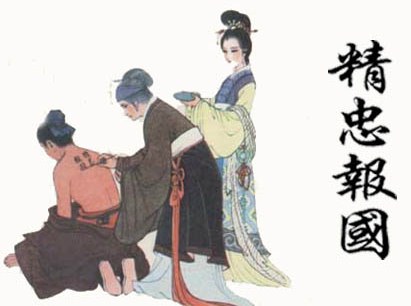
Yue Fei being tattooed.
https://www.spreaker.com/user/9404101/14-xing-yi-part-2
In this episode the look at the early life of Yue Fei, some of the factors that link him to the Li Movement, the meaning of some of the symbolism surrounding him, and the reasons for the transition between the Northern Song and Southern Song Dynasties.
Xing Yi part 3

Emperor Gaozong of the Song Dynasty.
https://www.spreaker.com/user/9404101/15-xing-yi-part-3
In part 3 of our series on Xing Yi, we look at how the Li movement influenced Yue Fei and other Song generals in formulating effective strategies for use against the Jin, and how they managed to challenge the previously unbeatable dominance of the Jin cavalry. We also discuss the rise to power of chancellor Chin Hui in the regime of Emperor Gaozong.
Xing Yi part 4

https://www.spreaker.com/user/9404101/16-xing-yi-part-4
We come at last to the great general Yue Fei’s greatest victories, and ultimate betrayal and death – at the hands of corrupt officials on his own side.
Here’s the picture by Fan Kuan ‘Travelers amongst mountains and streams’ which gets a mention often:

The Rainbow Bridge
Not strictly part of the series, but a whole episode about the industrial revolution of the Song Dynasty using the famous painting “Along the river at the Ching Ming festival” as a window into the past.
We return to China in the Song Dynasty, looking through the eyes of artist Zhang Zeduan at the vibrant economy that developed among the common people while their confucian rulers were distracted by external events, and the nascent Industrial Revolution that it gave rise to, which lasted until the early part of the Ming Dynasty.
https://www.spreaker.com/user/9404101/1 … bow-bridge

The Rainbow Bridge
This link gives you access to the whole scroll to look at as you listen. It’s 17 foot long!
https://en.wikipedia.org/wiki/Along_the … g_Festival
Xingyi Part 5

Zhu Xi
In this episode we examine the work of the Confucian Scholar Zhu Xi, who lived during the time period we have reached in the narrative (during the Song Dynasty). His philosophy did not impact Xing Yi until centuries later, but when it did, the effect was a large one, so this episode sets the scene for other episodes to come.
Zhu Xi was responsible for what we call the “Woo Woo Tai Chi world view”. If you practice Tai Chi, or almost any of the Chinese martial arts that had input from the intellectual class, then you need to know about Zhu Xi, although you might not like what we’ve got to say about him
https://www.spreaker.com/user/9404101/20-xing-yi-part-5
Xing Yi part 6
In this episode examine the life of Yue Fei’s best friend, General Han Shizhong, and the circumstances immediately following the death of Yue Fei. We also take a look at the the life of Han’s heroic wife, Liang Hongyu, and internal politics of the Jin Empire at that time.
Xing Yi part 7
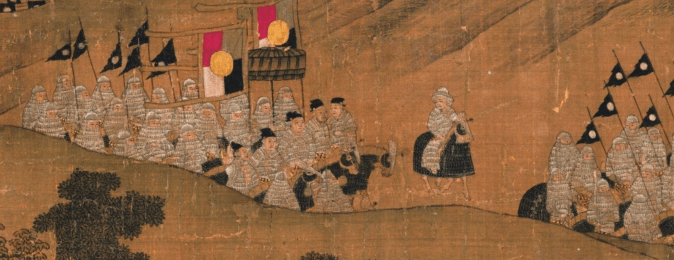
Jurchen Jin Cavalry. Illustrations of Auspicious Omens [Public domain]
Part 7 starts with a rebuke to the criticism “You haven’t even got to talking about Xing Yi yet!” then looks at some animal-based military strategy. These are the same strategies that are used in the Xing Yi animals today.
In particular, we look at Ma Xing – Horse strategy – but also look at Snake (She Xing) and Eagle (Ying Xing).
Listen to “#29 Xing Yi (part 7)” on Spreaker.
Xing Yi Part 8

Photo by Pixabay on Pexels.com
Part 8 looks at Chinese armour in more detail, but also talks about Xing Yi fighting tactics in relation to armour and how the armour influences the way the art works – stepping, continuous movement, minimal movement, twisting the fist in Tzuann, etc…
There are two versions of part 8, the first is for public consumption, available here:
https://www.spreaker.com/user/9404101/30-xing-yi-part-8-short-version
and we got into some controversial topics at the end of the episode, so the full version is reserved for our Heretics/Woven Energy Patrons ($5 and up):
https://www.patreon.com/wovenenergy/posts
Here’s some nice Song Dynasty style armour a google search turned up

Image Credit: Dragons Armory.
From:
http://dragonsarmory.blogspot.com/2017/07/heavy-song-dynasty-armor.html
Like Damon says, you could show that to a ‘normal’ person and tell them it’s Samurai armour and they would probably believe you 🙂
Also, here’s an interesting clip showing how effective Lamellar designed armour was. This design is taken from the much earlier Tang Dynasty armour:
Xing Yi part 9
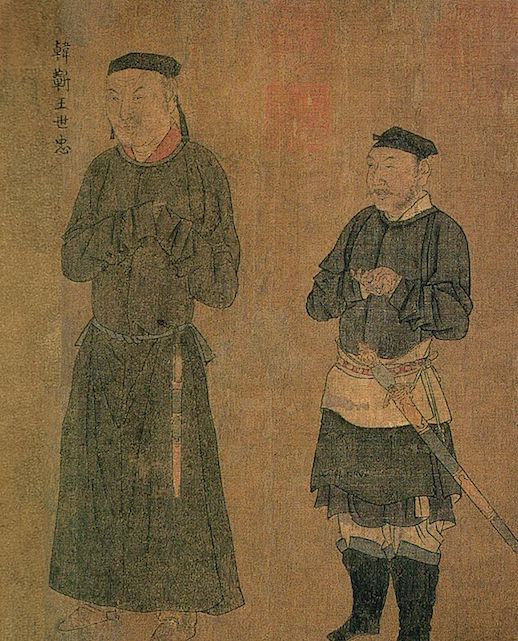
General Zhang Jun (left). From The “Four Generals of Zhongxing” painted by Liu Songnian during the Southern Song Dynasty.
In this episode we discuss the role of General Zhang Jun in the survival of Yue Fei’s tradition, as well as in the survival of members of Yue Fei’s extended family. We also discuss how Zhang Jun managed to protect himself from the purges carried out by Qin Hui.
New Heretics Facebook page
Just a quick heads-up. If you want to be notified when a new episode of the Heretics podcast is out I’ve created a Facebook page that you can follow. I think it will act as the ‘Homepage’ for the podcast until we get a website sorted.
So far we’ve managed a new episode every week since we started. The next one will be on… Xingyi.
Link.
Review: Hidden in Plain Sight, by Ellis Amdur (2nd edition)
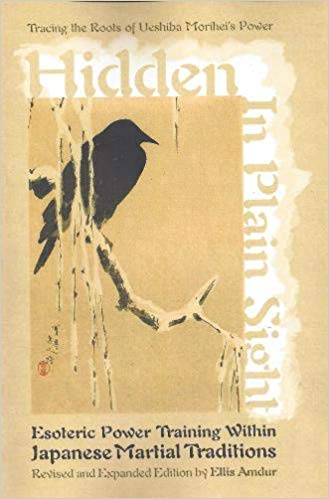
Hidden in Plain Sight by Ellis Amdur is a thorough examination of the subject of internal power exhibited by Morihei Ueshiba, the founder of Aikido, and the historical origins of this type of power in martial arts from China and Japan. Ellis has many years of direct experience in Chinese and Japanese arts and also works (or worked) in a field that requires physical restraint skills to be utilised, so in short, he knows what he’s talking about.
More importantly, he’s a good writer and thorough researcher. The book gets straight down to business, quickly identifying the different types of power that human beings are capable of producing, then how they apply that in martial arts using methods like whipping power or coiling power, then takes a closer look at exactly what ‘internal power’ is and why it’s different, or more refined, compared to other types of human-generated power.
But here I ran into my only real hiccup with the book. Internal arts are full of Chinese words like Jin, Qi, Shen and so forth, none of which are simple concepts that can easily be summed up in one word. In his descriptions of internal power, Ellis translates Jin to mean ‘intent’ (p.54, 56) quite a few times. To my thinking intent is more properly translated as “Yi” in this context, and is indeed a facet of Jin practice, but not a good direct translation of the word “Jin”, which means literally something like ‘refined strength’. Jin is strength produced by the application of Yi, rather than “intent” itself. The process of using intent in the internal martial arts is using the mind to create a path to the ground for jin to follow. A path which may take it from a point of contact with the opponent, for example, straight down to your feet, where it is supported by the ground. It’s a subtle difference, compared to translating Jin as “intent”, and not one which affects the rest of the book, but one which bugs me all the same
Perhaps reflecting the authors experience of having to restrain people in real life, the book is quite down to earth and honest about the realities of looking for this internal strength ability and what it means in practical terms. The main realisation you get is that it’s going to require a serious amount of practice to get basic abilities in internal strength. Time that could be better spent acquiring other skills that would be much more easily applied and learned say from an MMA teacher. I like that Ellis is quite honest about these important points because it’s something that is sometimes lacking in internal strength devotes, especially if they are trying to sell you something! Internal strength is not like a magic pill that once taken will transform you into a martial arts expert. In fact, any skills you develop in this regard still require placing in a martial context to be of any practical use, and that can take as long as developing the skills in the first place. My personal take is similar. I’d say that if your goal is to be an MMA fighter or you just want to learn self-defence skills, then the amount of time you are required to invest in developing ‘internal’ skills makes no sense – financially or otherwise.
There’s an impressive amount of research that has gone into this book, but since there are so many unanswered questions left about where Ueshiba got his abilities, a large amount of speculation from the author is added throughout which supports his general premise, which at times ignores other possibilities.
For example, at one point Ellis speculates on how this esoteric knowledge of internal power got from China to Japan. On page 103, in wondering what the famous figure Chin Gempin (a Chinese martial artist who ended up in Japan, just as the country was closing itself off to outsiders) could possibly have taught to three experienced Japanese martial artists, as the story goes, who went on to form their own now-famous Ryu (the historical ancestor of Judo amongst them) using this information. Ellis reasons “whatever he taught had to have had such an effect on such men that they made a foreigner part of their origin story, and furthermore, allowed them to develop such men as Ukei and Takino. Internal strength training is the only such methodology that I can think of.”
That could well be true, but I can think of something else, as I’m sure you can. (To be fair, in the footnotes Ellis does offers an alternative explanation – being connected to an older Chinese tradition was clearly great marketing, and the whole thing can simply be put down to advertising.)
That’s true, but there is a simpler explanation: submissions. Existing jiujitsu battlefield grappling methods dealt with grounding an armoured opponent, with the goal of finishing them off with a short knife that could easily be worked through the armour at weak points. As such, submission holds weren’t a priority in existing Japanese grappling methods. Equally, Japan’s native Sumo wrestling was more concerned with gaining a victory by rule set (e.g. pushing the opponent out of a ring, for example), rather than by submission. In contrast, the Chinese grappling methods of the time would have been ripe with Chin-Na techniques for breaking limbs or small joints.
(Edit: In this hypothetical situation I’m not trying to imply that submissions skills didn’t exist previously in Japan – they did, of course – rather that it could be that Chin Gempin was teaching some new types, or higher quality, types of joint locks that hadn’t been seen before.)
From Daito Ryu to Aikido
The second half of HIPS is history-heavy and I have to confess to skipping a few pages that turn into lists of who taught who in a particular Ryu. The history of Daito Ryu however, or rather the personal history of Takeda Sokaku, who was most likely the arts’ founder (since its history is undocumented) is quite revealing. Everything that it’s possible to know about Takeda is here. Ellis often steps over the bounds of mere speculation and delivers a psychological evaluation of a traumatised individual who grew up during the Boshin war, witnessing horrors on a daily basis. He transformed himself into a jiujitsu teacher after disappearing for 17 years. What he was doing and what he was learning in those 17 years nobody knows, but since it followed an incident in which he killed several construction workers in a brawl, and was almost killed himself, it’s probably better not to ask.
Finally, the book turns its attention to Ueshiba himself and collects as much information about his training as is humanly possible. It’s all here, including anecdotes from those that trained with him. There’s also a biography of his life, looking at what martial arts he came into contact with and when in great detail.
A final technical point: you won’t really learn how to do internal strength from this book. This is not a book of exercises, it’s a book about the exercises, and their historical context. In short, it’s a sit down read, not a ‘get up and practice’ manual.
If you’re interested in any of these subjects, and particularly if you practice Aikido, then you’ll find Hidden in Plain Sight provides plenty of food for thought. It’s a great resource and deserves a place on your bookshelf.
Chen Ziming’s general comments on Taijiquan
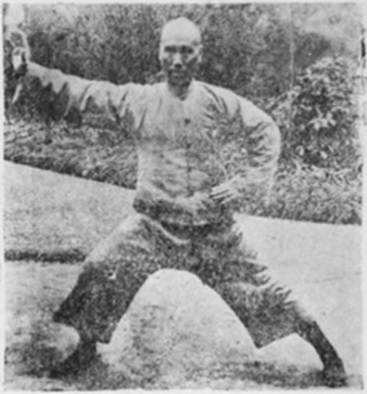
Delving deeper into Chen Ziming’s book.
I posted yesterday about a translation of Chen Ziming’s book “The inherited Chen family Taiji boxing art” that is available on the Brennan translations website. I’ve just started reading it and noticed a couple of interesting things I thought I’d post about.
(It should be noted that I often read critiques of the translations by P. Brennan, saying there is too much of the author’s own interpretation in there, rather than a literal translation, so take that into consideration.)
Firstly, who was Chen Ziming?

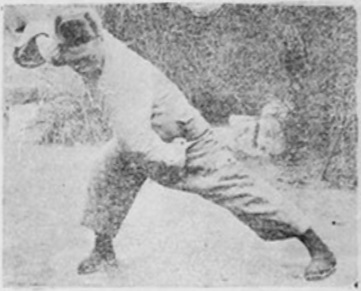
Chen Ziming was the same generation of Chen family boxing as Chen Fake, who moved to Beijing and made Chen style famous in the capital. Chen Ziming really rose to fame as being the student of Chen Xin, who (unusually for the time) was literate and wrote the first book on Chen style Taijiquan Taijiquan Illustrated, which contained several drawings of silk reeling energy which are still used today. The book was published after the death of Chen Xin by the historian Tang Hao and others. Chen Xin died in 1929. Some extracts of Chen Xin’s book are available on Jarek’s China from Inside.
There are various subdivisions of styles within Chen style. There is a big frame, small frame, old frame and new frame. As a student of Chen Xin, Ziming promoted what is known as the “small frame” of Chen Taijiquan. This sub style was born in the Chen village and uses smaller circles as a feature of its practice (it uses the same forms other Chen styles use).


While the small frame is often said to be the more ‘traditional’ method because it stayed in the village longer, all Chen substyles share the same principles, so they’re not really separate styles, just each has a different emphasis, reflecting the person who passed them on.
From Wikipedia:
“The increased interest in Chen-style t’ai chi ch’uan led Tang Hao (唐豪; 1887–1959), one of the first modern Chinese martial art historians, to visit and document the martial lineage in Chen Village in 1930 with Chen Ziming.[10] During the course of his research, he consulted with a manuscript written by 16th generation family member Chen Xin (陳鑫; Ch’en Hsin; 1849–1929) detailing Chen Xin’s understanding of the Chen Village heritage. Chen Xin’s nephew, Chen Chunyuan, together with Chen Panling (president of Henan Province Martial Arts Academy), Han Zibu (president of Henan Archives Bureau), Wang Zemin, Bai Yusheng of Kaiming Publishing House, Guan Baiyi (director of Henan Provincial Museum) and Zhang Jiamou helped publish Chen Xin’s work posthumously. The book entitled Taijiquan Illustrated (太極拳圖說 see classic book) was published in 1933 with the first print run of thousand copies.[11]”
From Wikipedia:
“Chen Xin initially trained with his father but his father ordered him to study literature rather than the martial arts. It was only later that he decided to use his literature skills to describe his understanding of the secrets of Chen style. In Chen Xin’s generation, his older brother, Chen Yao and his cousin, Chen Yanxi(陈延熙, father of Chen Fake) were considered masters of the Chen style. Chen Xin’s legacy is his book and his student, Chen Ziming (陈子明). Chen Ziming, went on to promote Chen style small frame throughout China and wrote books [32] promoting the art. Chen Ziming was in the same generation as Chen Fake.”

At the start of the book Chen lists 9 ‘general comments’ about Taijiquan.
The first 6 are a kind of an orientation to the subject and a guide to what is in the book. From point 7 onwards it gets interesting. He makes some very good observations about Taijiquan that are worth reflecting on.
7. The boxing art called Taiji seeks an appearance of ease. Once you have practiced it to familiarity, you will be able to understand its subtleties and your body’s actions will never depart from the principles. If in the beginning you overanalyze each technique, you will come up with strained interpretations of them and will only get yourself stuck in your ideas, and this will instead hinder your progress. However, if you are able to abide by the principles, then after practicing for a long time you will naturally enter into a transformation of spirit. Therefore the solo set in this book is presented only as postures and movements, giving guidance in skills without lapsing into contrived profundities. As long as you do not forget that this boxing art is called “Taiji”, then through gradual practice the art will come to conform to the taiji concept.
He further elucidates on the idea of “conforming to the Taiji concept” in point 8:
8. Learning Taiji Boxing, regardless of beginner or advanced practitioner, never goes beyond the methods of movement and stillness, opening and closing, rising and lowering, turning side to side. As a beginner, you have to clearly distinguish between these opposites. Then after a prolonged period of training you will achieve such skill that at any time you will be able to alternate between them with your whole body all at once, which is the most delightful aspect of the advanced level.
This reiterates an important point in Taiji practice. Your body needs to be going through a process of going from one ‘extreme’ to another to be practicing Tai Chi. (I put extreme in quotes because there are no physically extreme positions in Tai Chi, unlike Yoga, for instance). You do need to arrive at a closed position, then move to an open position and then close and so on. That action is what makes the Chen boxing art “Taijiquan”. That action can also only really be achieved by doing what Taiji people call “moving from the dantien”.
That’s one of the profundities about Taijiquan. Everything is tightly packed together into the simple concept of “Taiji”. Like Dr Who’s Tardis, it’s bigger on the inside. There’s a lot of stuff in there and you need to unpack it bit by bit to understand the profound simplicity of the whole.
Chen Ziming’s “The inherited Chen family Taiji Boxing art”.

Paul Brennan has added a new selection of translations to the martial arts manuals contained on his website. This one is Chen Ziming’s “The inherited Chen family Taiji boxing art”.
Sample quote:
My colleague Chen Ziming is a native of the Chen Family Village in Henan and an expert of the Taiji boxing art. After many years of painstaking effort, he has written The Inherited Chen Family Taiji Boxing Art. A month ago, he begged me to proofread it and also to produce a preface. I read it carefully over the course of two weeks and could not help but slap the table in amazement. The Taiji boxing art is truly a means of connecting to the Way, which cannot be said about most other boxing arts. But unless you achieve a high level, you will not be capable of discussing its essentials.
This art as it is taught in modern times can be divided into about three styles: [1 – Chen] Chen Style Taiji is in a direct line of descent from the Chen family in Henan. [2 – Hao] Hao Weizhen taught Sun Lutang what is called “Open & Close Taiji”, but Hao Style was obtained from Wu Yuxiang, who had learned Chen Style. [3 – Yang] The Taiji that Yang Luchan studied was likewise taught to him by a member of the Chen family, Chen Changxing, and then Luchan taught it to his own sons, Banhou and Jianhou, and to this day his version is in fashion everywhere. All three of these versions actually originated from Chen Style. They have each evolved and been improved, and so they each have their differences.
Link.
Mongolian Wrestling

A new Heretics podcast episode is up that covers martial arts – specifically Mongolian Wrestling – which I thought you might like.
We cover Mongolian wrestling, culture, writing, language, rivalry with the Chinese, wrestling techniques, Sumo, the three ‘manly’ arts (which are also practiced by women) and female wrestlers.
“Mongolian Wrestling is one of the three warrior arts of the Naadam that originated from Genghis Khan and the Mongol Empire. In this episode we explore the history, techniques and links with Shamanism of this surprisingly extensive and complex art which has produced both Sumo grand champions and Judo gold medalists.”
https://www.spreaker.com/user/9404101/11-mongolian-wrestling
Here are some videos that go with the episode:
Mongolian Wrestling highlights:
Asashoryu, the famous Mongolian Sumo wrestler we mention:
Mongolia’s first gold medal in Judo at the Olympics from Naidangiin Tüvshinbayar, Beijing 2008:
D. Sumiya has won a gold medal in the 2017 World Judo Championships in Budapest, Hungary, becoming the first Mongolian female gold medalist at world judo championships:
Let’s explore the Mongolian national wrestling with Stephen Pera:
Brad Scott: How to street fight with MMA
Nice work from my old rolling partner Brad Scott from the UFC on how to use MMA moves in street fights. He’s started his own YouTube Channel called Fight Perfect TV.
Know your history: The formation of China

My Heretics podcast has done 3 episodes now on the history of ancient China. We’ve started with the Zhou, then into the warring states period that leads up to the formation of the Qin Dynasty. This is where you start to see a physical map of a Dynasty that actually looks like modern China.
Animated map of the warring states period from Wikipedia:
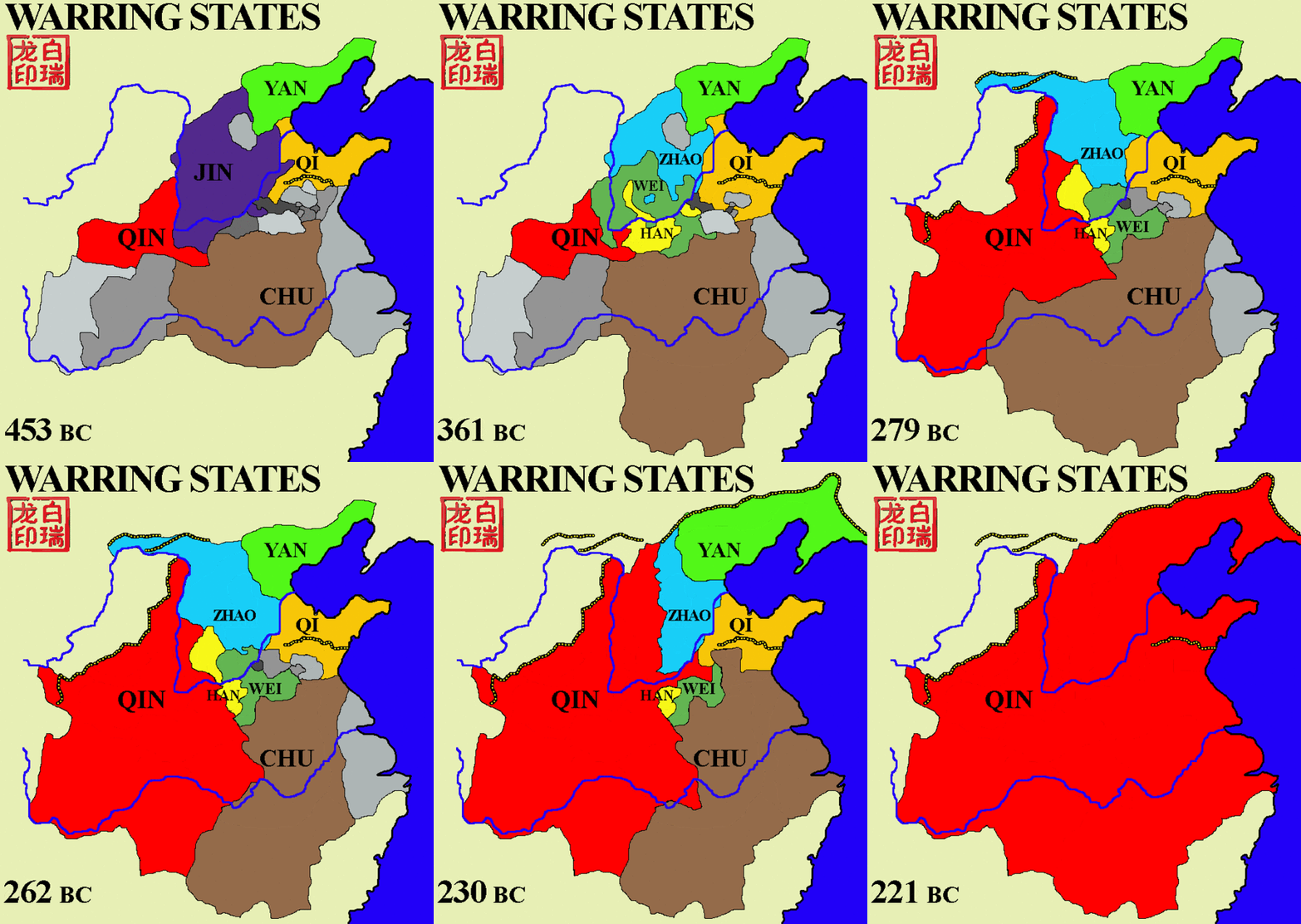
Despite ambitions to reign for a thousand years, the Qin Dynasty ended up being very short, but dramatic and introduced the key rulership idea of Chinese Legalism. The Qin Emperor, Qin Shi Huangdi, was buried in a huge tomb which contained the now-famous Terracotta Warrior pictured above.
Here’s the episode:
While Qin Shi Huangdi created China, he wasn’t liked by the people. The hardline approach of Legalism didn’t have what it took to hold a geographic area of that size together and his dynasty ended pretty quickly after his death. The next dynasty, the Han Dynasty lead China into its golden age, introducing modern economics in the process. One of the reasons for the success of the Han that it changed government style, introducing something called the Han Synthesis, which enabled people to practice different religious or philosophical traditions at the same time.
The Han Dynasty saw several conflicts with the invading Xiongnu from the North, in the area we call Mongolia now.
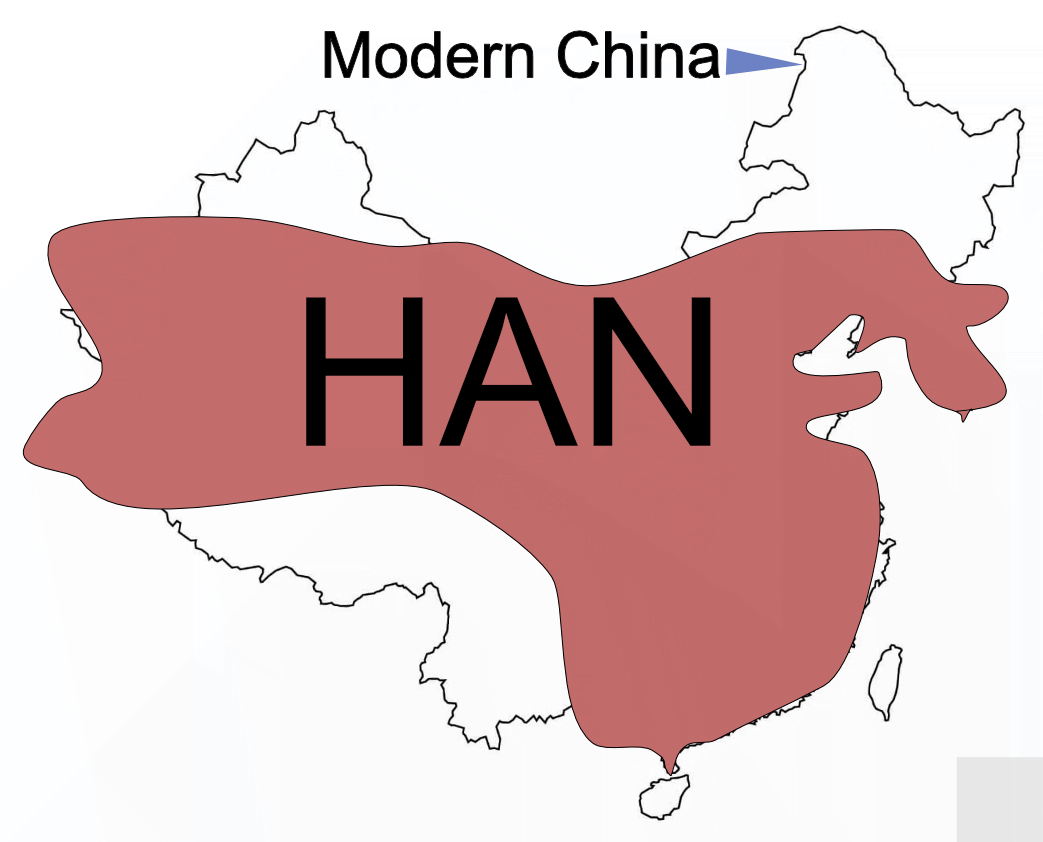
Here are the episodes:
Xu Xiaodong is back in high thrills Bird Box challenge
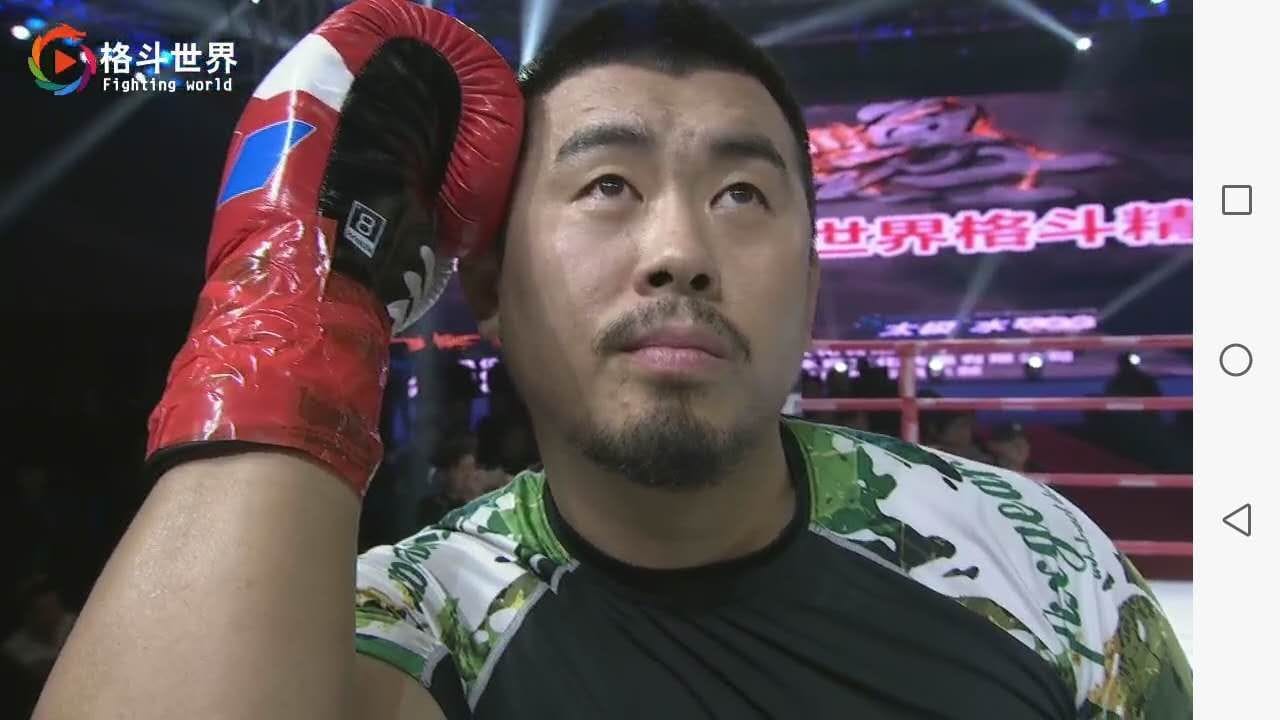
I’ve blogged about Xu Xiaodong before – he’s the infamous MMA coach from China who rose to fame by taking on self-styled ‘masters’ of the traditional martial arts and challenging them to actually fight in a ring. The results are as expected – he wipes the floor with all of them.
Chinese martial arts contains many practitioners who have legitimate fighting skills, but the number of imposters is, sadly, huge, so generally, I’m quite in favour of what he’s doing. It’s surprisingly easy to set yourself up as a master of the traditional arts and start teaching people any old thing without ever having tested your moves in a fighting situation. These people need to be called out and I’m glad he’s doing it, but he gets a lot of criticism for only taking on people who are clearly deluded about their own martial ability, and also because these guys are not really ‘masters’ of anything. The government got involved and at one point and I feared we might never see Xu again, but as the most recent video from China shows, it seems like he’s still going, this time up against a man whose only redeeming feature as a fighter is his ability to take a beating.
It’s not clear what style the man is supposed to be represented, but his actions are clearly being hampered by the bandage they apply to his face in the first round, which results in him pretty much fighting blind for the rest of it. Talk about a Bird Box challenge!
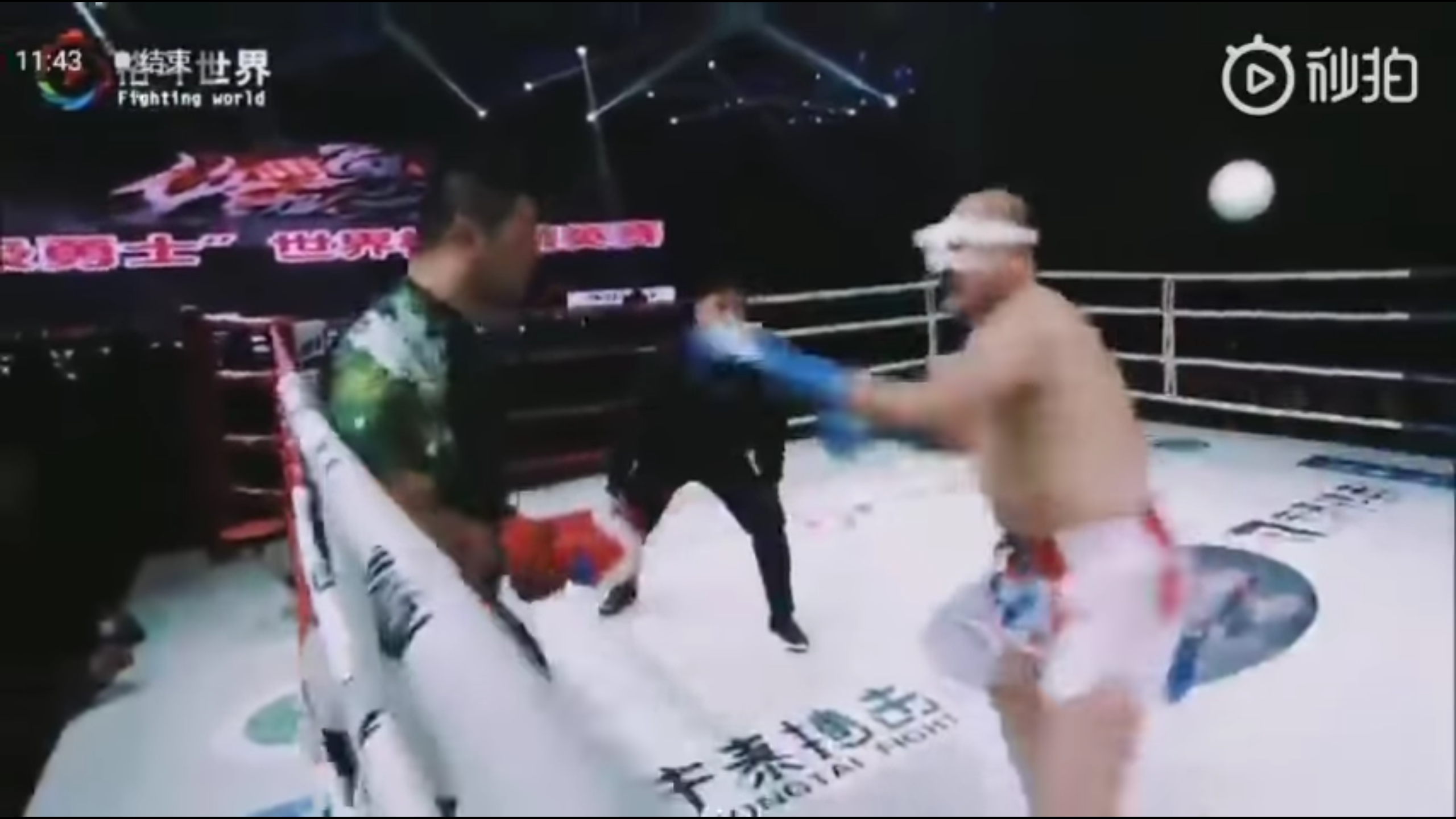
Xu spends most of the match looking board and letting the other guy hit him without it having any effect at all while destroying his opponent’s left leg with low kicks (the guy has some very nasty bruises on his leg visible at the end). Once Xu has had enough of destroying the leg he ends the whole thing with one well-placed knee strike, and that was all she wrote.
And before Xu gets accused of beating up on an older guy, I believe this challenge was instigated by the traditional martial artist. Xu is also not a young guy.

