Forget Taoism, is Tai Chi Chuan really a Neo-Confucianist martial art?

Confucian Scholar Zhu Xi -(1130-1200AD. This man has a lot to answer for 🙂

Our recent Heretics Podcast series on the history of Tai Chi Chuan keeps generating interesting feedback. Here’s a particularly good one I got today:

My compliments to Damon and Graham on their podcast about the origins of Tai Chi Chuan. I particularly liked mapping martial art history to the general history of the period. From a strict reading of the available evidence the podcast cannot be faulted. Where there maybe problems is in the interpretation provided, which it could be argued commits the error of anachronism. Here is a good quote from a Wikipedia article: “In historical writing, the most common type of anachronism is the adoption of the political, social or cultural concerns and assumptions of one era to interpret or evaluate the events and actions of another”. The interpretation basically argues that Tai Chi Chuan was a bonding exercise in the Imperial Court because of the political decline in the Qing state. A lot more evidence is needed to support the claim that Yang Lu Chan, probably an illiterate low-class bonded servant, was used like an external consultant to go into a large organization and help reassert tradition Confucian values. That looks like an interpretation of Chinese History filtered through the prism of 21th century corporate culture.

Well, that’s an interesting idea. I really like well thought out criticism, especially when it’s delivered so succinctly.

Let’s explore a few of these ideas, and see where it takes us.

I see our podcast on the Myth of Tai Chi as “what Damon thinks really happened based on the available evidence”.

So, there will always be a lot of interpretation involved. History is essentially how you join the dots together. I think what Damon is doing is joining the dots together in a new way that makes a lot more sense than the stories we have been given by our teachers (in some senses the last people you should be asking about real history are martial artists), which all have parts that don’t make sense:

1. The original story we were given was about Tai Ch Chuan (Taijiquan) being created by a Taoist immortal called Chan San Feng. He’s a semi-fictional character who appears at various times throughout Chinese history. Most people who don’t believe in spirits of the ancestors walking amongst us (a common belief in China then) now dismiss this story. Li Yiyu even removed it from his hand written copy of the Tai Chi classics as early as the 1880s. I think this is one for the flat-earthers out there 🙂 

2. The next story is that he learned in Chen village where Tai Chi was created by Chen Wanting in the 16th Century. This story was officially adopted by the General Administration of Sport of China who awarded Chen Village, Henan, a commemorative plaque acknowledging its status as ‘the birthplace of taijiquan’, in 2007 (See Fighting Words, Wile, 2017, Martial Arts Studies (4).) however this plaque had to be removed after just two months after a “firestorm” of new claims to the Tai Chi $ appeared, including the newly ‘discovered’ Li family documents.

But apart from that the story is full of holes. i) For a start nobody in Chen village used the name “Taijiquan” until long Yang used it. ii) There is also no actual evidence he was in Chen village at all. iii) Wu Yuxiang and Yang Luchan meet in Beijing for the first time, yet both have separate connections to an obscure village in China? iv) Then there’s the issue of why they taught an outsider like Yang, but only him – they didn’t teach anybody else, ever! v) Then there’s all the extra content (lots of other forms, weapons, etc) not found in Yang style, but found in Chen style, vi) Chen village records crediting their martial art to the earlier Chen Bu, not Chen Wanting, vii) the emphasis on silk reeling found in Chen style
 the list goes on and on. It just doesn’t add up. However, it still needs explaining why the Chen old form and the Yang long form follow the same pattern (see the upcoming part 6 of Heretics podcast series for Damon’s explanation).

3. There are other theories of Tai Chi Chuan being ancient – really ancient, sometimes a thousand, or two thousand years old (that’s the White Cloud Temple claim) – and coming from Wudang mountain, via various unverifiable people, and ending up in the hands of Yang LuChan somehow – but nobody takes these claims seriously.

Of course, Damon isn’t saying that Tai Chi Chuan was created out of thin air, but rather it is the content of Northern Shaolin arts that Yang LuChan (a good martial artist) knew, adapted to fit certain traditional Confucian Court values thanks to Wu Yuxiang, and with a backstory added by Wu to make it appear ancient.

A class-based society

Chinese society was class-based, and teaching martial arts would make Yang LuChan the same class as theatre performers,  i.e. the lowest of all classes. 

The caste system is based on the Four Occupations of Confucianism: https://en.wikipedia.org/wiki/Four_occupations

Theatre performers and martial artists are lower than no.4. They were “mean people”: jiĂ nrĂ©n.

The noun is also used to mean “bitch” or “bastard”. The pronunciation can be found here:  https://en.wiktionary.org/wiki/%E8%B3%A4%E4%BA%BA#Chinese

From the Wikipedia article above: “There were many social groups that were excluded from the four broad categories in the social hierarchy. These included soldiers and guards, religious clergy and diviners, eunuchs and concubines, entertainers and courtiers, domestic servants and slaves, prostitutes, and low class laborers other than farmers and artisans. People who performed such tasks that were considered either worthless or “filthy” were placed in the category of mean people (èł€äșș), not being registered as commoners and having some legal disabilities.[1]”

So, Yang LuChan was a Jianren, yet, there he was inside the Forbidden City, teaching (and mixing with) the most high-level people in the system.

Wu Yuxiang and Yang Luchan

I think this can be verified: The only students we know he had were all in senior positions, like Wu Yuxiang, and Wu Quan Yu, for example. Those are the facts of the matter, and viewed through our eyes that does make him something like an external consultant, but only superficially. Compared to a consultant of today the power dynamic would be very different. I imagine Yang would be doing a lot of bowing and kowtowing to these senior people he’s teaching.

But is that anachronism or just a reading of the facts? The teaching of martial arts as a hobby or binding action for the court, was indeed a unique innovation, but I don’t think somebody of the lowest class being used to entertain the court is that unusual at all – there is plenty of historical precedent: Theatre entertainers, for example, were regularly brought to the Forbidden City to entertain the Confucian court, throughout Chinese history:

From: https://en.wikipedia.org/wiki/Theatre_of_China

“The Ming imperial court also enjoyed opera. However, most Ming emperors liked to keep their music entertainments inside the palace.[24] They performed for the court. ”

Jingxi (Peking Opera) was certainly popular in the Ching court too:

“In music, the most notable development of the dynasty probably was the development of jingxi, or Peking opera, over several decades at the end of the 18th century. The style was an amalgam of several regional music-theatre traditions that employed significantly increased instrumental accompaniment, adding to flute, plucked lute, and clappers, several drums, a double-reed wind instrumentcymbals, and gongs, one of which is designed so as to rise quickly in pitch when struck, giving a “sliding” tonal effect that became a familiar characteristic of the genre. Jingxi—whose roots are actually in many regions but not in Beijing—uses fewer melodies than do other forms but repeats them with different lyrics. It is thought to have gained stature because of patronage by the empress dowager Cixi of the late Qing, but it had long been enormously popular with commoners.” – from https://www.britannica.com/topic/Qing-dynasty

So, I think we can establish Yang in the position we say he is in (the Royal Court). But let’s get to the meat of the matter!

“A lot more evidence is needed to support the claim that Yang Lu Chan, probably an illiterate low-class bonded servant, was used like an external consultant to go into a large organization and help reassert tradition Confucian values.”

I agree, but it’s hard to know what form that evidence could take? The Smith hypothesis is that it was Wu Wuxiang who was performing some sort of re-instigation of Confucian values, and Yang LuChan was just being used as a gun for hire. We know he was there, in the royal court, but the question of what he was doing there is the key issue.

Tai Chi Chuan as Neo-Confucianist martial art

Everybody knows Tai Chi is based on Taoist principles, starting with Yin and Yang. But wouldn’t you expect the martial art Yang and Wu came up with to be more Confucian in flavour than Taoist? Why then was Yang teaching a martial art that people instinctively know is Taoist in philosophy? Tai Chi Chuan (a soft, internal martial art) is, after all, based on those great symbols of Taoism – the Yin Yang symbol, the 5 elements, the 8 Bagua, etc..

So, how do you explain that contradiction? Well, I can add one more piece of evidence. I wouldn’t call it a smoking gun, but it does add to the overall narrative:

If we look at the content of what he was teaching (Tai Chi Chuan) – then you’ll find it kind of is based on traditional Confucian values, rather than anything Taoist. I’ll explain
..

People talk about Tai Chi as being Taoist a lot, but Taoism is this shaggy, messy, nature-loving, outdoorsy, shamanic, magic, smokey, rich, spiritual, earthy thing involving things like spirit possession and exorcism – it’s not very Confucian at all. Or indeed, very like Tai Chi Chuan.

The best description of Taoism I’ve heard was by Bill Porter (Red Pine), who likened Taoism to “house-broken shamanism”.

The philosophy we find in Tai Chi Chuan – yin and yang, 5 elements, 8 powers, etc. uses the symbols of Taoism, but is all very heavy on categorisation – it’s very clean, neat and orderly. In fact, very
 Confucian!

Or, rather, it’s what scholars call “Neo Confucian”. At the time that Buddhism was gaining popularity in China, as a threat to Confucianism, the Confucians needed something to combat it, because they had nothing very “spiritual” in their religion, whilst Buddhism and Taoism were both full of spiritual stuff.

The Confucians plugged the gap with what became known as Neo-Confucianism. Neo-Confucianism adopted the signs and symbols and ideas of these more spiritual religions (yin and yang, Taiji symbols, 5 elements, etc), but it was really just repackaged Confucianism 101. The scholar responsible for all this was Zhu Xi, who lived during the Song Dynasty, from 1130-1200AD. He effectively sanitised all these Taoist ideas and related it all back to the 4 classic texts of Confucianism. His impact in his lifetime was not so great, but to later periods it was absolutely huge – his ideas formed the basis of the Civil and Martial exams that people had to pass to enter government/senior positions, for example.

Zhu Xi

Damon did an excellent episode about Zhu Xi’s impact on Chinese society and martial arts as part of the Heretics Xing Yi series (the same Neo-Confucian philosophy ends up being dumped on Xing Yi during a later period). 

Here it is: https://www.spreaker.com/user/9404101/20-xing-yi-part-5

Give that episode 5 of Xing Yi a listen. To me it makes sense.

I should add some rumour control, since I think that Tai Chi people will generally not like this Neo-Confucian angle:

1. I don’t think saying that the philosophy of Tai Chi is actually Neo-Confucian, rather than Taoist is a diss to the art – an actual Taoist martial art I imagine would not be as practical! It would be messy, unfocussed and a bit wild. A martial arts form repeated over and over in the same sequence each time would probably be a strange concept to a Taoist!

2. I also don’t want to diss the Chen family – their reputation during the Ching Dynasty was of them being practical and expert martial artists who actually used their martial skills to fight bandits and escort caravans. They were the real deal! Their family martial art is older than the appearance of Taijiquan in the 1850s by far – and as any good Confucian knows, older is always better! 🙂

What matters to me about Taijiquan is that it works, not what you call the philosophy behind it.

Why do people think Tai Chi has to be really old?

My recent Heretics Podcasts episodes on the history of Tai Chi Chuan seem to have provoked a lot of debate. People I’ve talked to seem to have this unshakeable belief that Tai Chi is ancient, and it must be ancient to be authentic. It’s simply unacceptable to them that Tai Chi is not as old as they think it is. This myth that old = authentic is pervasive.

I’ve become quite fascinated with the reasons why people think like this. A lot of it goes back to why we, people living in the West, started Asian martial arts in the first place. Quite often we reject our own history and culture, and adopt a fantasy of a Chinese Kung Fu culture that maybe never existed. Were we all just looking for our own Yoda?

In this new interview for the Martial Arts Studies podcast, historian Prof. Peter Lorge talks about this exact issue, and tackles the subject of orientalism, which often provides our first impulse to try a Chinese martial art, head on. It’s well worth a listen.

A short history of Kung Fu challenge matches

This is quite a good video from Sifu David Ross of New York Sanda that talks about the history of challenge matches in the Chinese martial arts, and includes some clips of what has been recorded, plus some great historical photos.

He covers the 1954 Tai Chi vs White Crane challenge match in Macau, the Hong Kong rooftop challenges in the 1950s, and the Kung Fu vs Muay Thai matches that began in the 1920s.

As you’ll see, the fantasy of the “Kung Fu Master” doesn’t always match the reality. The one thing it does show is that it doesn’t matter how good you are at forms, iron body demonstrations, push hands and compliant applications, if you want to be able to use your art, you need to spar against resistance. That’s something to never forget.

Here the 1954 Wu vs Chan full fight:

1950/60s roof top fights in Hong Kong:

Beginning Tai Chi, in the Wu Chi stance

Photo by Aditya Chinchure on Unsplash

Stand in a place high up. Looking out over a valley, or the sea, or if you’re in a tower block then look out over the city. Don’t try to think and analyse what you’re looking at, just be open to it. See the place where the sky and land meet.

Open your body posture, holding the arms as if about to embrace an old friend. Let the breath enter the body and leave without any interference. Let the body breathe itself. Start to notice the breath as it goes deep inside you. Feel for the sound of your heartbeat. Get in touch with the rhythms of your breathing, of your heart beat and keep your internal focus there, while maintaining your external focus wide, on everything around you.

If you notice your mind has become caught in thought, simply return it to the body. Stand for as long as you want. Feel what happens to you as you enter a more natural state. You may start to feel a kind of inner strength.

This is the feeling you want to have in the Wu Chi position before you start the Tai Chi form.

How quickly you can enter that state depends very much on how much you’ve practiced it, what’s going on in your life and the state of your health. It’s much easier to achieve this state of Wu Chi in nature, without man-made things in your field of vision or man-made sounds polluting your ears. But if you’ve got a feel for it, then you can do it anywhere. Your body is after all a part of nature.

Tao Te Ching, chapter 49, translation by Stephen Mitchell

49
The Master has no mind of her own.
She works with the mind of the people. She is good to people who are good.
She is also good to people who aren’t good.
This is true goodness. She trusts people who are trustworthy.
She also trusts people who aren’t trustworthy.
This is true trust. The Master’s mind is like space.
People don’t understand her.
They look to her and wait. She treats them like her own children.

Photo by Fabrizio Conti on Unsplash

The fall and rise of Yang LuChan

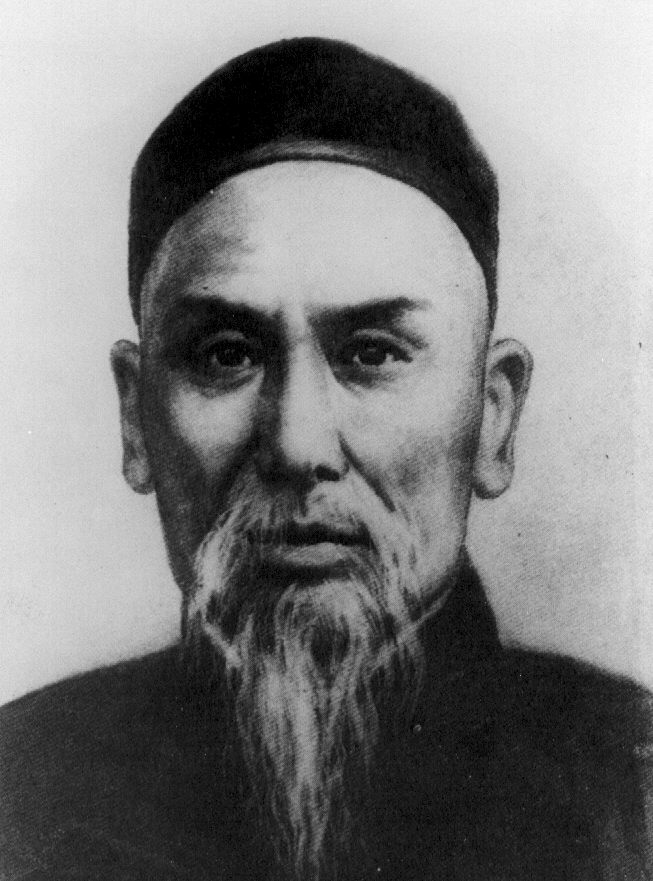
Yang LuChan, portrait.

In part 4, the latest episode of our look at the creation of Tai Chi Chuan, we can see how the actions of the British and French acting aggressively in China forced the hand of the powerful new dowager empress, Cixi to make some changes in the Royal Court.

Empress Dowager Cixi, portrait 1905.

People like the Wu brothers and Yang LuChan were suddenly out on their ear and had to make a living in a strange new world that suddenly valued entrepreneurship over nepotism. When your family business is teaching martial arts and you’ve got a family to feed, then it’s time to open your own public martial arts school.

Wu Yuxiang

Here, in the 1860s, we start to see the birth of martial art styles in Beijing that can compete against each other for paying students. At this time Yang LuChan’s two sons were finally old enough to teach martial arts full time.

https://www.spreaker.com/user/9404101/54-the-tai-chi-myth-part-4-the-fall-and-

Did Taijiquan’s Yang Luchan and Baguazhang’s Dong Haichuan ever meet?

Image source: https://gameofthrones.fandom.com/

Game of Thrones’ fictional Grey Worm is probably the most famous Eunuch in modern literature, but while Grey Worm lead an army of disciplined, ferocious fighters called The Unsullied, the role of castrated men throughout history has been somewhat less fighting-orientated, especially in royal courts, where they have traditionally held positions of servitude mixed with privilege and power, especially in China.

The Empress Dowager Cixi was often photographed being carried in state on a palanquin by palace eunuchs, in the late 19th and early 20th century. 

As we discovered in part 1 of the Myth of Tai Chi podcast, Yongnian, the home province of Yang Luchan, was famous for providing the highest quality eunuchs to the Ching royal court, and connections made with eunuchs from ‘back home’ could have provided Yang Luchan with a route into Beijing and his role of martial arts instructor in the Royal Court. Nepotism was, after all, what greased the wheels of government in a Confucian court.

To find out more about the complicated world of the Royal Court and the role that eunuchs played we can look to books on the subject. In this short review of Melissa Dale’s book Inside the World of the Eunuch and Jia Yinghua’s The Last Eunuch of China, Jeremiah Jenne takes us into the world of old China:

“History has been cruel to China’s eunuchs. Chinese literature is filled with stories of avaricious and ambitious eunuchs exploiting their position for personal gain and power to the detriment of the social and political order. Society treated eunuchs with a mix of fascination and revulsion. They were a source of anxiety for the court and its officials. They were third-sex creatures marked by their relative lack of facial hair and perceived physical deformities (early castration often resulted in eunuchs being taller, with longer hands and limbs). In the foreign gaze, eunuchs became an analog for a decrepit China, feminine symbols of a decaying imperial system – a view perpetuated by 20th-century Chinese reformers and revolutionaries. Today, when thought of at all, it is as stock villains or comic foils in palace costume dramas.”

Jeremiah Jenne

After the initial gruesome operation, and assuming he survived, a eunuch’s life was hardly his own any more once he was serving in the palace.

“Once inside the palace, a new eunuch was isolated from his old life and introduced to a whole new reality. Both books describe the parallel world of palace eunuchs, a highly regimented and hierarchal society that still had spaces for deviant behavior, petty jealousies, and even violence. Eunuchs were expected to show complete devotion to their duties, and to their masters and mistresses. At the same time, they also formed friendships as well as master/disciple bonds with older and more experienced palace hands. While the rules governing eunuchs were numerous and punishments harsh, eunuchs still created actual spaces in the palace for their own activities. There were barbershops, noodle stands, gambling parlors, opium dens, and various other places where court eunuchs could blow off steam with multiple cups of wine and the sympathetic ear of their fellow attendants.”

Jeremiah Jenne

But the lives of eunuchs did not just impact Taijiquan, Dong Haichuan, (whose birth dates are give as either 1797 or 1813 – 25 October 1882), the founder of Baguazhang was a palace eunuch. According to tradition, around 1864 Dong arrived in Beijing and was hired as a eunuch at the residence of the Prince Su. (Whose name was Shanqi, a prince of the Aisin-Gioro clan, the ruling clan of the Qing Dynasty), as well as a minister in the late Qing. He was from the Bordered White Banner and the 10th generation Prince Su, the first Qing hereditary prince position.

Later Prince Su gave Dong the job of tax collector. 

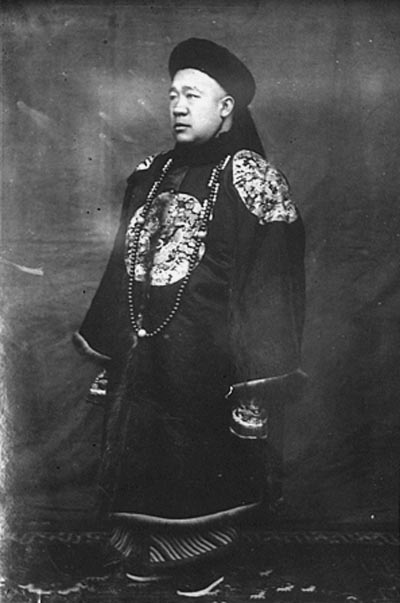
10th generation Prince Su.

It’s possible that Yang Luchan and Dong Haichuan’s tenures in the royal court overlapped. Did they meet and have an exchange of martial techniques as legend and martial arts movies often suggest? It’s possible (Yang Luchan died in 1872), but we just don’t know.

It’s interesting to note that Taijiquan and Baguazhang both share that connection to the Ching royal court around the same time, and are both considered part of the ‘internal’ family of martial arts.

The age of a martial art has no bearing on its effectiveness

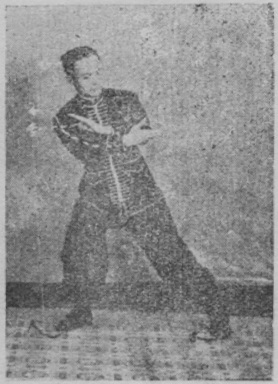
Long Zixiang performing the “press” movement of Tai Chi Chuan (1952, Brennan Translation).

People always want their favourite martial art to be really old, as if that somehow makes it more effective. In reality, age has no bearing on effectiveness and it’s the practitioner that is effective anyway, not the art.

In short, it doesn’t matter what martial art you practice, it matters what you can do with it.

Looking for scraps of evidence to somehow prove your art is older than it is, is a pedantic and pointless route to go down.

I’ve still seen no credible evidence that Tai Chi existed before 1850 beyond legends and myths. However there were plenty of Republican era Tai Chi manuals published in China by the Kuomintang, and almost all of them include some sort of dubious history section that traces Tai Chi back over a thousand years. Don’t latch onto these things – they are a product of their time, a time when the martial arts was being politicised to strengthen the nation in the face of foreign aggression and burn out the memory of previous humiliation by European powers who had advanced all the way to Beijing and captured the city during the second Opium war, forcing humiliating concessions from the Ching.

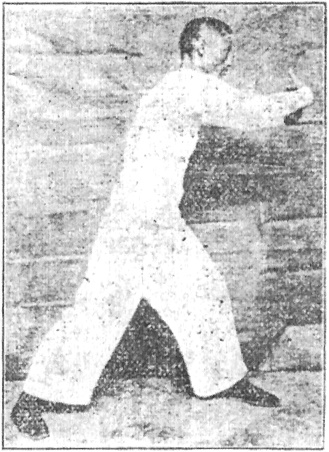
Thanks to the Brennan Translation website, you can read a lot of these Republican era manuals for free, and look at the photos, which are a fascinating insight into martial artists of the time and what they looked like.

Gu Ruzhang, “King of iron palm” and author of Taiji Boxing.

Myths and legends

For example, the famous Gu Ruzhang, the “King of Iron Palm”, wrote a 1936 “Taiji Boxing” manual which contains one of these history sections.

He writes: “China’s boxing arts have many names, but amount to no more than the internal skill and the external skill. The ancestor of the external is Shaolin. Its movements are all magnificently expressed. Since its principles have been spelled out by many previous generations, they do not need to be repeated here. The ancestor of the internal is Wudang. Its strength is stored within, such as in Taiji Boxing. Its power not being outwardly displayed, it instead has a pure naturalness. Like an unending circle, its movements are lively. And so it is deemed internal and is different from Shaolin.
    Taiji Boxing’s origin can be separated into five versions:”

The idea of Taiji Boxing being different to Shaolin is the thing he’s highlighting here – he’s trying to create something in contrast to Buddhist outside influence. Something Chinese that can bind the nation together in the face of foreign aggression (British and French before and Japan had just invaded). So, he’s saying that anything from this “internal school” is  “Taiji Boxing’s origin”, without an actual lineage connection, this is a bit dubious at best, but let’s go with the flow.

Gu Ruzhang performing the Press movement from Tai Chi Boxing. 1936 Brennan Translation.

One “Chinese” lineage he then mentions is Chan Seng Feng on mount Wudang  (which has no validity, and is just myths and legends):

He writes: “What Zhang Sanfeng taught was of the Wudang branch (because he was living in the Wudang mountains), and it was known as the “internal school” of boxing. This version had the highest number of movements yet. Again the name was changed, now to Taiji Boxing, and it went down two paths:

Again, Wudang = Taiji Boxing!

Another 2 lineages of Taiji Boxing he lists starting in the Tang dynasty (the Tang Dynasty was 618AD-907AD, which is over a thousand years ago!), he also lists 1 southern and 2 northern lineages for Taiji Boxing that go through Chen village (our podcast has discussed this and found it unlikely, but not impossible).

It appears that Taiji Boxing is springing up everywhere in China from multiple sources!

He concludes with: “These are just the people we know about, to give a general idea. To cover every person who has received it and make a clear survey of the prominent practitioners of each generation, that will have to wait for a future edition. More will be added later so that future students can know about the source of their art.”

This statement seems to be that he’s admitting he doesn’t really know. It’s just a collection of things he’s been told. None of which there is credible evidence for beyond what he’s been told. Sure there could be a document somewhere proving “Yu family taught something called Innate Nature Boxing” in the Tang dynasty, but how does that related to Taiji Boxing?

There’s no connection beyond the idea that anything Wudang-like must be the origins for Taiji Boxing because,….. it just is, ok? :wink: 

Obviously, nothing comes from nothing – whatever Yang Luchan created post 1850 in Beijing was from what he learned previously. You could use the same logic to argue for a lineage all the way back to the pre-human monkey in 2001 banging bones together in front of a black monolith. Or you could go back to the start of the universe. It’s an interesting philosophical question, but for sanity’s sake I think you have to start somewhere with a style that has a name and a collection of training methods called “Tai Chi Chuan”. Otherwise, all martial arts are infinity years old.

But to get back to my point. It’s not the age of the art that matters, it’s what you can do with it that does. These old boxing manuals are a real treasure, but I look at them for their practical advice, their description of forms and strategies and applications, not their accounts of history from an age where saying the wrong thing could get you beheaded. Unfortunately for the writers of many of these manuals, the Communists took over in 1949 and they were forced to flee to Taiwan and Hong Kong. A lot of them didn’t make it.

The multitude of meanings in Chinese Martial Arts

“You can’t tell a martial artists he’s a dancer without getting a bloody nose.” – G.Barlow, 2020

Bruce Lee, Cha Cha dancer.

I haven’t posted much recently, but the recent deep dive my podcast has taken into the history of a particular Chinese martial art (Taijiquan) seems to have coincided with a number of contentious discussion I’ve had elsewhere on the history of Chinese martial arts that have been taking up my time. Let me redress that imbalance now.

Experience has taught me that if you tell a group of Chinese martial artists that Chinese martial arts used to be so intertwined with Chinese theatre and religion that the two were indistinguishable you invariably annoy them. You will be laughed at and shunned. There are howls of outrage.

No! Chinese martial arts are based purely on effectiveness for fighting! Are you crazy?!?!

But at the same time the very same people will put on demonstration of martial arts (sometimes in the street, but sometimes in an actual theatre!) and perform things like Dragon Dance, without giving it a second thought, or thinking it in any way detracts from their pursuit of serious martial skills, or their wish to be see as serious pugilists.

I’ve spent a lot of time wondering why this is. I think it’s hard for people living in the modern age to get their heads around what it would have been like to have lived at the time these arts they practice were created. Yet, it’s important to note that the people who created the Chinese martial arts we’re all familiar with now – things like Choy Li Fut, Wing Chun, Bak Mei, etc, lived in a time when ghosts, demons and ancestors walked amongst us. A time when rituals were used to appease their spirits and gain spiritual merit for the community, and martial arts played a huge part in that.

The performance of a martial arts form was itself the enactment of a ritual for self consecration. The Chinese Government always used ritual to organise the state. The Chinese state was a religious state (See China: A Religious State, Hong Kong University Press).

As the 20th century began in China, the shame felt over the Boxer Rebellion and defeat by European powers, gave way to the realisation that modern ways would need to be adopted to avoid the humiliating defeats that had gone before. This lead to an almost endless series of wars, revolts, reforms and tragedies that resulted in societal change right down to the core, and the martial arts being stripped of much of their social, spiritual and religious function to become simply pugilistic calisthenics. Considering the horrors China endured, we should be glad they survived at all. 

Two great Chinese martial artists I have a lot of time for are Tim Cartmell and Byron Jacobs. Here they have a robust and fantastic discussion about what they’ve trained in and their thoughts on making Chinese martial arts practical again by using modern sparring methods (amongst other things). 

The conversation is really down to earth and useful. It’s clear that they consider the Chinese martial arts to be about fighting first and foremost. Can you imagine throwing in concepts of theatre and spiritual rituals into this conversation? You’d be laughed straight out the door! (If Youtube has doors, that is). 

I think that’s why it’s very hard to talk to martial artists about things like ritual, theatre and how these were entwined with Chinese martial arts almost 200 years ago. They are clearly not today, to the same extent, and yet the connection still persists in China (somehow!).

As Jo Riley relates:

‘In 1991 I filmed a wǔshĂč club training in the village temple in Zhong Suo village in Guizhou under their master Lu Huamei, who was also the head of the village theatre company. Lu teaches tang quan style, which is in the middle level range of skills, and over three hundred villagers train regularly with him (nowadays girls included). Six small boys also take part in the training, the youngest of whom is ten years old, and the skills they learn from Lu are also observed from standing on the stage with the village theatre company when they perform. As in many villages, the village temple, martial arts training and performance indivisibly form the cradle of acting in and spectating theatre’ (1997:17).

Riley, J. Chinese Theatre and the Actor in Performance. Cambridge: Cambridge, 1997.

Some people are engaging in this conversation though, and I wanted to bring them to your attention. Daniel Mroz has just given a lecture at the most recent Martial Arts Studies Conference, (which was a virtual event, due to the Covid 19 Pandemic).

His lecture “The Meaning of Taolu in Chinese Martial Arts” is now online:

Or you can read it here:

Here’s a great quote regarding Choy Li Fut:

Historically, the Choy Li Fut exponents playing tĂ olĂč enacted a magical, religious role for their community. The play of tĂ olĂč in a seasonal calendar of popular rituals demonstrated the adepts’ martial prowess while earning spiritual merit for the entire community. By practicing and demonstrating the arduous and humbling physical training Choy Li Fut requires, these performers consecrated and re-consecrated themselves over and over to what Daniel Amos refers to as a religion of the body (1997: 31-61). This self-consecration made them spiritually inviolable and venerable in the eyes of their community. Their demonstration of skill acquired through perseverance, or gƍngfĆ« (㊟〫), was a meritorious act performed on behalf of the collective.
This self-consecration was also tacitly expressed in theatre. Theatre permeated public and private life in 19thcentury China. While professional actors belonged to a marginalized underclass, people loved the entertainment they provided and hired them not just to perform but also to teach and coach. For professional, amateur and private groups, the learning, rehearsing and presentation of theatre was beloved, constant and intense. While non-actors would never play professionally, virtually everyone was involved in performing at some level. Chinese theatre, or xĂŹqǔ (æˆČæ›Č) and Chinese martial arts employ many virtually identical training methods.

Here’s a great presentation by David Palmer and Martin Tse on the connection between social practices, ritual, and martial arts:

Personally I would like to embrace both these world views – the practical and the spiritual (for want of a better word).  I don’t think they need to be mutually exclusive at all. I am interested fully in the practical application of Chinese martial arts, but I’m also happy for its long and complicated history to enhance what I do. I don’t see it as a distraction or an irrelevance. I am so grateful these arts have survived during some of the worst atrocities in human history and made it through to the modern age, and I think viewing them in their original context empowers today’s modern practitioner. 

Human beings are capable of entertaining many different perspectives on something simultaneously, even if they are sometimes contradictory. In the words of Bob Dylan on the opening track of his excellent new album, 

“I’m a man of contradictions, 

I’m a man of many moods, 

I contain multitudes”.