Karate is something I’ve never done before, so it was a surprise to find myself doing some in the form of learning the Anan kata at a recent Foxfist event. The Anan kata is a nice little Karate form. In fact, there’s enough in there for it to be the only form you ever needed to learn for a small, self-contained, but effective, martial system. There are deflections, strikes, stand-up grappling and kicks.
The similarities between Okinawan systems and Southern Chinese martial arts systems are quite obvious in this kata, I think. But see what you think. Here is Anan being performed by somebody who, unlike me, knows what they’re doing with it.
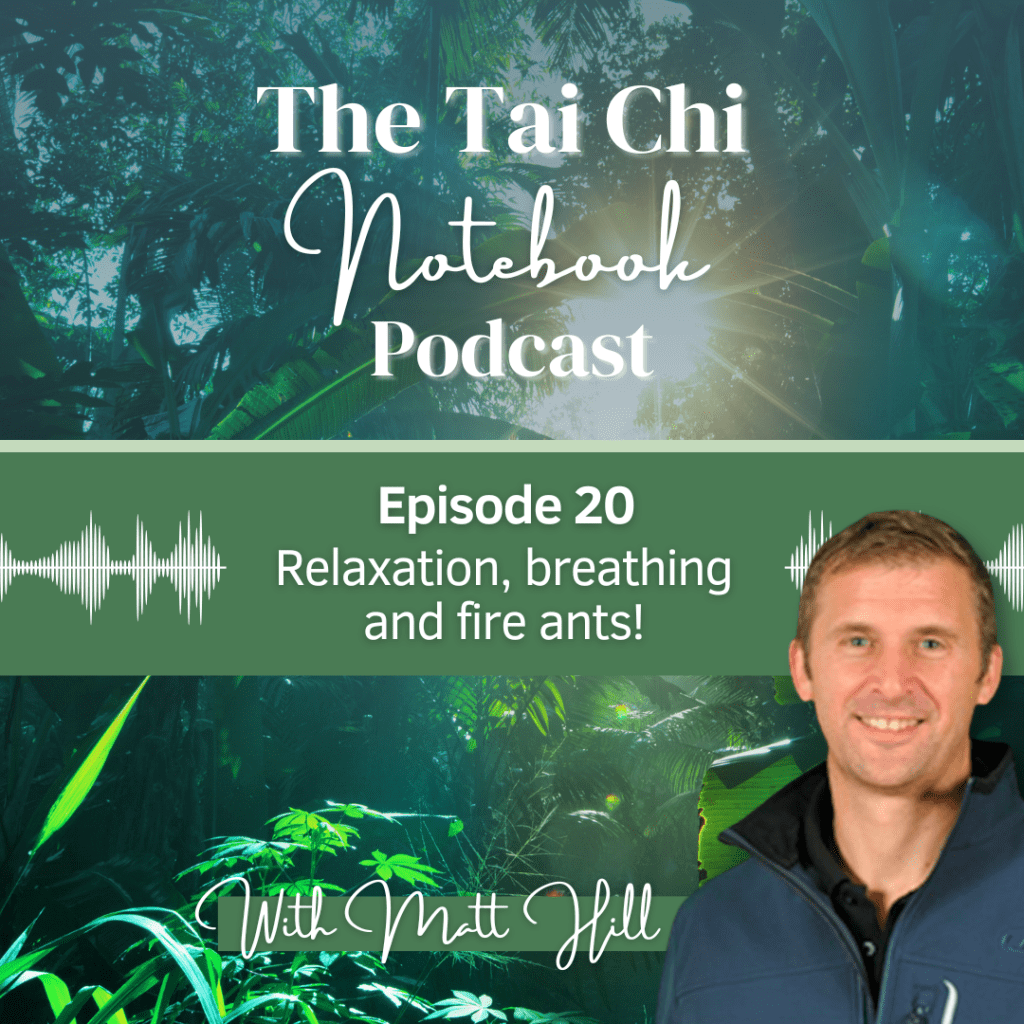
Matt Hill is the owner of the Systema Academy in Wiltshire, England. Matt has a long history in martial arts, starting with Aikido, training under Morihiro Saito Sensei in Japan in the early 90s. From there he joined the Parachute Regiment leaving as a Captain in 2003. After this he started training in Systema under Vladimir Vasiliev and now teaches Systema, Bushcraft and leads groups trekking through jungles all around the world.
Matt was kind enough to give me a 1-1 in Systema before we recorded this podcast at his academy, where he focused on the four pillars of Systema – breathing, relaxation, posture and movement. We discuss all these things in the podcast as well as the next destination for Matt’s jungle trek.
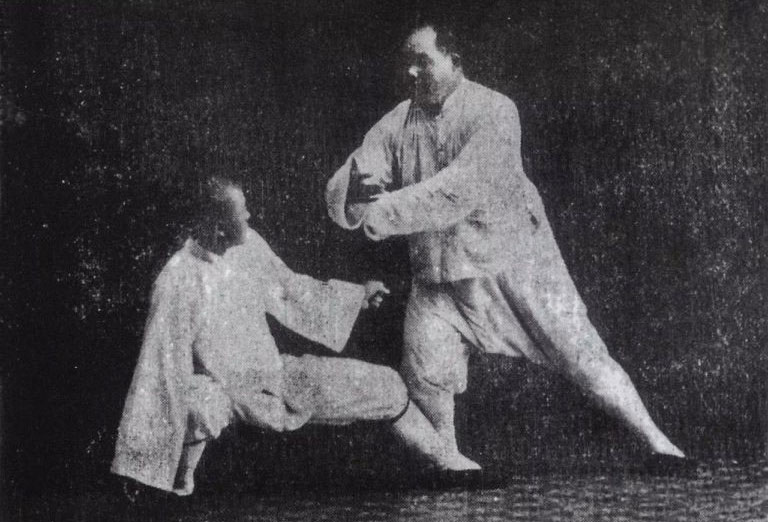
Yang Cheng-Fu showing Tai Chi applications from his book.
In the comments section Richard asked a good question in response to my last post. I wrote a brief reply in the comments, but I thought I’d flesh it out a bit as a blog post, because it’s an interesting topic.
The question is, ‘what’s the point of Tai Chi applications?’ Actually, to be fair, he was talking specifically about the one application video in my last post, not about Tai Chi in general. But personally I think you can extrapolate the question to include the wider Tai Chi universe, and that would be where I’d look for my answer.
There are plenty of videos of respected masters of various styles of Tai Chi running though the applications of their form movements and producing a series of very questionable applications that would require a perfect storm of events to happen for them to work. I don’t want to post them here because I think it would distract from the point I’m making, but look up ‘Name of famous master’ and ‘applications’ on YouTube and you’ll find them.
I really like the phrase “a perfect storm” to describe Tai Chi applications because as far as I can see, most (if not all) Tai Chi applications one would require a ‘perfect storm’ of attacker, positioning and timing for the application work. Therefore the one application video I posted previously is not particularly different to any other Tai Chi application video, at least to me.
That might not be a popular opinion, but I think it’s true.
Contrast this with a martial art like Choy Li Fut. I’ll choose CLF because it’s a kind of a typical Chinese Kung Fu style. It’s has some key techniques like Sao Choy – sweeping fist and Charp Choy – leopard fist and Pao Choy, a kind of big uppercut, Gwa Choy, a backlist, for example.
Here’s 10 of the ‘basic’ techniques that you find in CLF:
I wonder – does the man in the mirror ever punch him back?
If you watch a Choy Li Fut form then you’ll see these 10 techniques crop up again and again, but each form enables you to practice them in different combinations:
A great title for a video “Killer Choy Li Fut form!” It’s actually a great performance, especially with the drumming in the background.
Or check out the famous first form of Wing Chun – Siu Lim Tao, it’s a series of techniques performed very, very accurately so you can refine and practice them:
Now when you do those techniques in a form, you are performing a technique that would work exactly as shown. The only thing you need for success is to actually contact with an opponent and do the move correctly at the right time.
Tai Chi as a marital art just doesn’t work in the same way. We don’t have a toolbag of techniques designed to be pull out and used ‘as is’. Ward off is not a fundamental technique of Tai Chi – instead Peng, the ‘energy’ you use in performing ward-off, is the important thing. And I think this leads to a lot of confusion about what Tai Chi forms are.
So, if we don’t have techniques that exist in the same way as other marital arts, how are you supposed to fight with Tai Chi?
Tai Chi is a set of principles and a strategy that together make it a martial art. In a nutshell the strategy part can be summed up with the 5 keywords of push hands – listen, stick, yield, neutralise and attack. The principles cover how the body is used, resulting natural power derived from relaxation, ground force and a series of openings and closings expressed in the 8 energies. When the principles of Tai Chi are properly internalised you become something like a sphere, which can redirect force applied to you with ease and respond as appropriate. All these things are elucidated in the Tai Chi Classics.
Now that short description probably leaves a lot out, of what Tai Chi is, but at least it’s a starting point.
If that’s your goal, then putting emphasis on individual techniques doesn’t make much sense. Everything you do now exists in relation to an opponent, rather than existing on its own terms. The Tai Chi form then becomes a series of examples of how you might respond to specific attacks. In essence, it is a series of perfect storms, one after the other, put in a sequence that is long enough that you start to internalise the principles of movement and energy use. And obviously the strategy part requires a partner, hence why push hands exists.
I think that’s also the reason why Tai Chi forms are so long and slow, btw, so you internalise things.
As a final note, I’d say the jury is still out as to whether the Tai Chi way is the best approach to teaching people to fight. It’s interesting to note that a lot of martial arts innovators tend towards this same nebulous ‘technique-free’ style of training the further they get into their research into martial arts. Bruce Lee for example, was moving towards freedom and the technique of no technique in his later years – see his 1971 manifesto ‘Liberate yourself from Classical Karate’ for example. Then there’s Wang Xiang Zhai who created Yi Quan by removing fixed forms and routines from Xing Yi Quan and mixing it with whatever else he had studied. See his criticisms of other Kung Fu styles in his 1940 interview, for example.
In contrast a lot of the martial arts that have actually proven effective in modern combat events have turned out to be very, very technique based. Brazilian Jiujitsu, for example, is taught through very specific techniques. So is MMA. Karate, for all of Bruce Lee’s criticisms often does very well in competition against other more esoteric styles because it contains some no nonsense techniques.
Another factor to think of is that while Tai Chi may have those lofty goals of producing a formless fighter in its classical writing, it often isn’t taught like that in reality. One of the martial arts that Wang Xiang Zhai is criticising as having lost its way and become a parody of itself in that 1940 essay linked to above, is, in fact, Tai Chi Chuan!
So, as ever with marital arts, I think the answer is: it’s complicated.
Most people who do Tai Chi are familiar with the idea of Ward Off as being a block/deflection of an incoming strike, but there’s also a takedown application inherent in the movement.
As luck would have it there is a new series of videos being posted online of my Tai Chi teacher, Sifu Rand, showing various Tai Chi applications. Here’s a video of him demonstrating the takedown contained in Ward Off.
Check out the YouTube channel Spinning Dragon Tao as it looks like there will be more applications posted there soon.
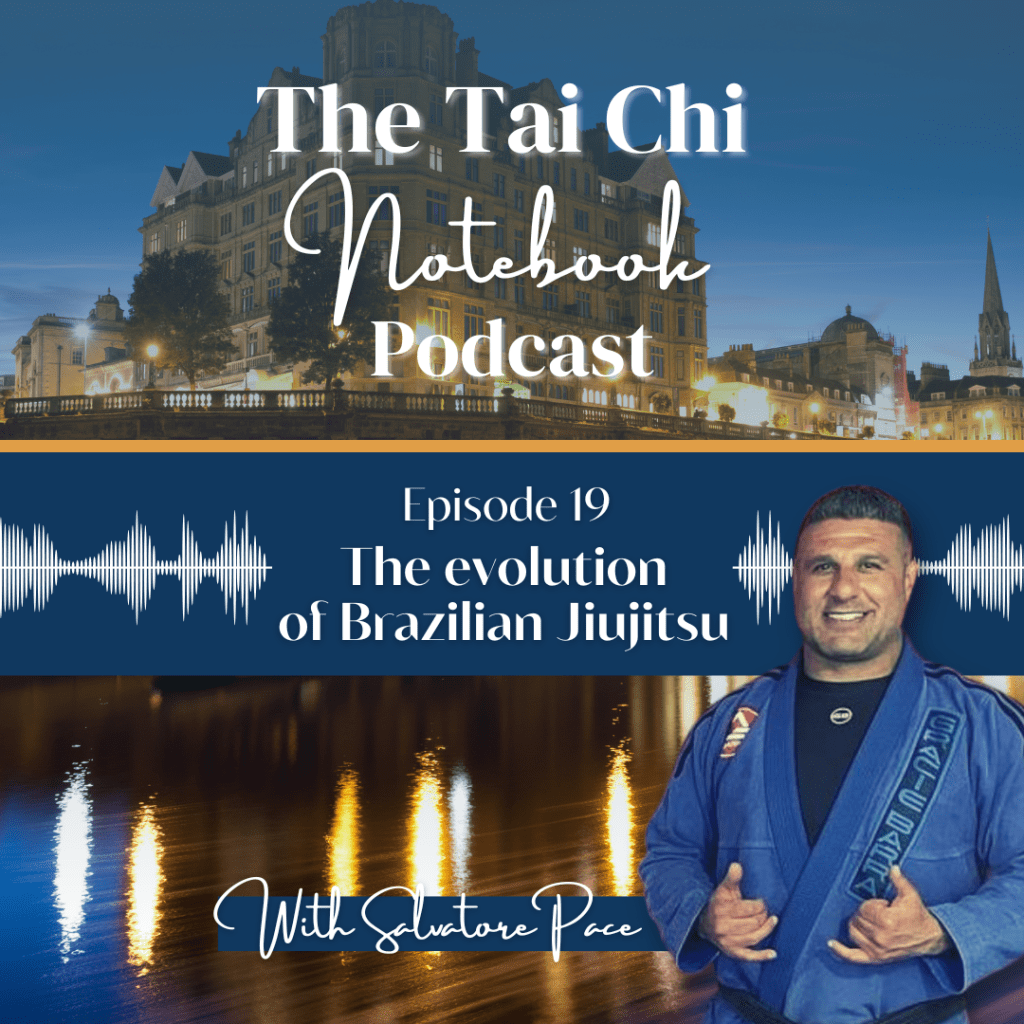
Salvatore Pace, or Salvo for short is a 3rd degree black belt in Brazilian Jiujitsu and owner of Gracie Barra Bath, the Head Quarters of Gracie Barra in the South West of the UK, Gracie Barra West Wilts and co-owner of Gracie Barra Gillingham. He is a two time NAGA European Champion and Grappler’s Quest champion. Salvo grew up in Sicily and had a passion for martial arts as a young boy, practicing everything he could get his hands on, from boxing and Kung Fu to wrestling, and then MMA in the emerging combat sports scene in the UK, but it was his first encounter with Brazilian Jiujitsu and his main teacher Professor Carlos Lemos Jnr, that changed his life forever and put him on a plane to Brazil and then the USA, where he trained with some of the biggest names in the sport.
Returning to the UK Salvo had a dream of teaching jiujitsu for a living and set up Gracie Barra Bath in 2007, back when most people hadn’t even heard of Brazilian jiujitsu. And that’s where our paths crossed, I first met Salvo way back in 2011 and I’ve been with him ever since, getting all my belts from white to black from his hands and it’s been a pleasure to watch his students and academy grow and develop and expand to new locations around the South West.
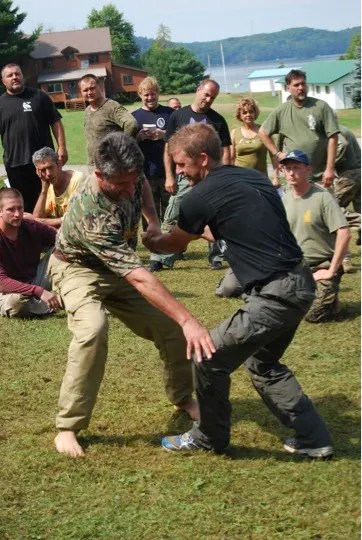
I had a great visit to The System Academy in Wiltshire last week where I enjoyed a bit of 1-1 Systema coaching from my old friend and owner of the Academy, Matt Hill. I also recorded a podcast episode with him for The Tai Chi Notebook Podcast, which will be coming out in November. Matt trained Aikido in Japan and served as a Captain in the British army, as well as working in crisis management before he became a full time Systema instructor, so he’s got a lot of experience of different types of martial arts and working in pressure scenarios. Because Matt and I live quite close to each other I had the opportunity to get a bit of hands-on work in before we sat down to record the episode. It was great to experience some Systema myself this time, and I particularly enjoyed the striking aspects, which is something I’ve put on the back burner a bit as I’ve got more into grappling over the last few years.
One of those eternal questions that pop up on discussion boards a lot is, ‘how close is Systema to Tai Chi?’, and this was one of the things I’ve been mulling over since I had the lesson. Both these arts stress what Systema calls the Four Pillars – breath, posture, relaxation and movement – but on a basic level I think one of the immediate differences between Tai Chi and Systema is that Systema seems to only exist in relation to something you are doing, whereas Tai Chi has this weighty set of philosophical principles that exist independently to the art, like Taoist philosophy and yin and yang, as well as concepts from the Tai Chi Classics regarding posture, movement and strategy. Tai Chi can certainly be talked about in terms of these abstract concepts and ideas, but in contrast, Systema needs to be shown. When you’re not doing Systema, then where does it go? It’s a bit like your lap – when you sit down you can point to your lap, but when you stand up, it vanishes!
Systema seems intrinsically tied to what you are doing, not what you are thinking. Of course, you can argue that even when you’re doing nothing and not moving, say, just sitting there, you are still doing something, so perhaps Systema is always there: You still have a posture, and you are always breathing, and that means some movement is happening in the body and you can still relax, which is a kind of a movement in itself. But there doesn’t seem to be an underlying theory, comparable to something like Tai Chi’s theory of yin and yang, that underpins it all.
Another interesting difference is that when Systema teachers talk about embodying the 4 pillars – they really mean it! They’re not just paying lip service to the ideas – they are living them. Even outside of the martial art practice, Systema seems to have the potential to pervade everything you do. In Systema you tend to lead movement with your breath, you breathe the tension out of your body as you work and you try not to muscle anything. And that can be applied to anything, not just fighting.
Of course, you could say the same thing is true of Tai Chi, but there’s so much other ‘stuff’ to worry about in Tai Chi – like a form,(and getting the form just right), dantien, and the 6 harmonies or the 8 co-ordinations, etc, etc.. I think inevitably, with so much on your plate, some things slip. But with only 4 principles to keep in mind, you can spend a bit more time really digging into them.
And then there’s the amount of physical discomfort you experience. Tai Chi can be really hard on the legs for sure, but push ups, leg raises, sit ups and squats are the meat and potatoes of Systema, none of which you’ll find in a bog-standard Tai Chi class. Not to mention learning to give and receive strikes. Even more martially inclined Tai Chi classes don’t tend to work on actively standing there and learning how to receive strikes.
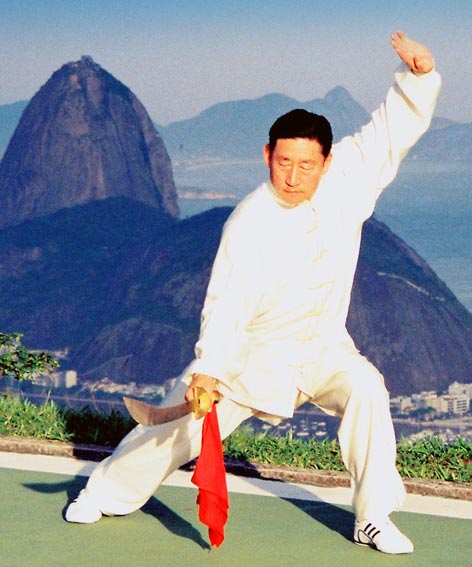
Chen Xiaowang, Tai Chi broadsword
Adopting any sort of ‘martial arts pose’ is frowned on in Systema. Again, you can argue that there are no fixed shapes in Tai Chi either, but Tai Chi does put a lot of emphasis on structure – keeping a connection to the ground through a relaxed frame, and there are ‘kung fu’ style postures. Systema seems to prefer you trust in your relaxation and let gravity do its work. For a Tai Chi person, it’s quite freeing and fun not to have any fixed shapes you’re expected to adopt. The emphasis in Systema seems to be on not trapping yourself into patterns of tension that you first have to exit before you can move freely. Fighting somebody else is hard enough already – you don’t want to have to fight seven battles within yourself just to move freely before you even begin!
So yes, Systema is different to Tai Chi. But I think the two work really well together. The Tai Chi practitioner can take from Systema the idea of not being trapped in ‘postures’ – fixed shapes (Ward off, Diagonal Flying, etc) and the value of removing as much tension from your body as you can while still working on moving with an opponent. Also, breathing tends to get only a cursory mention in Tai Chi, but focusing more and more on keeping your breathing smooth and continuous, and noting how that relates to tension in the body, is a great addition to any Tai Chi form, and I think that has to help make your Tai Chi better, by any objective measurement.
Let me just pop up in your feed to recommend you give this video by Paul Bowman a watch – it’s about 20 minutes long, then questions after, but the main part of it is a nice little summary of what happened with things like Tai Chi, Qigong and Yoga over the lockdown period in the pandemic and how the marketing of these things subtly changed. I keep getting adverts for the same sort of Qigong classes in my social media feeds too, so it’s interesting to speculate on why this is happening. Worth a watch!
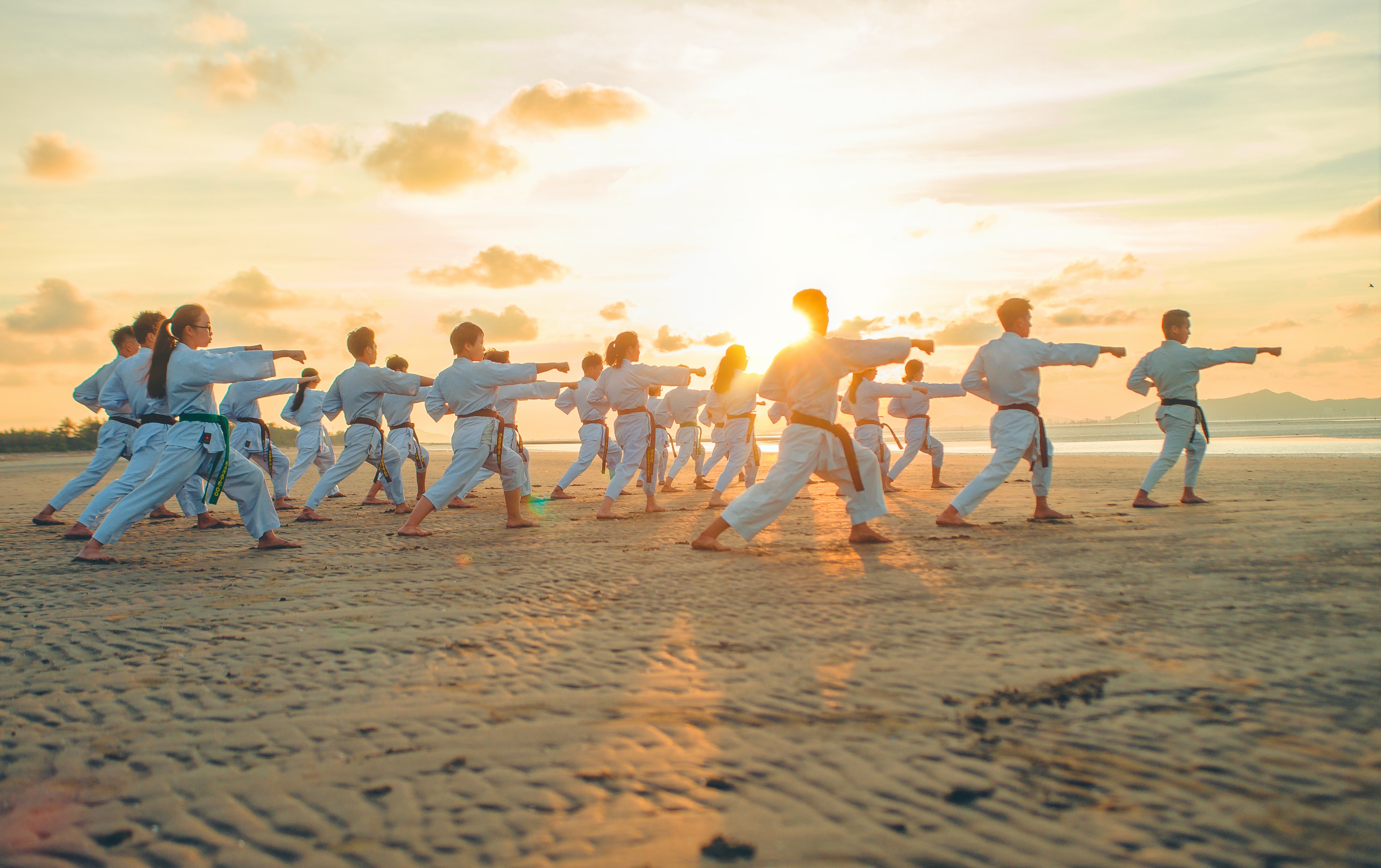
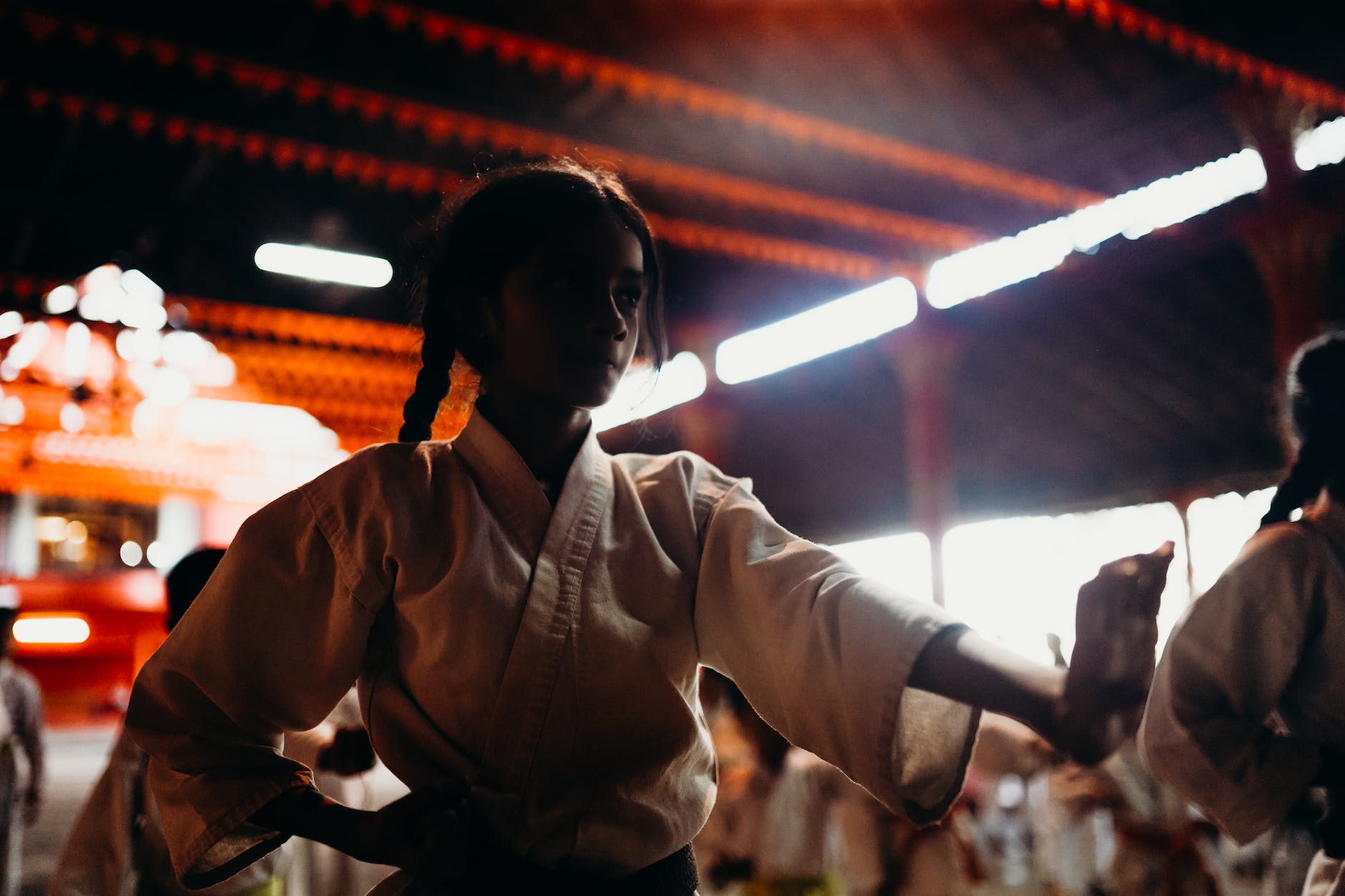
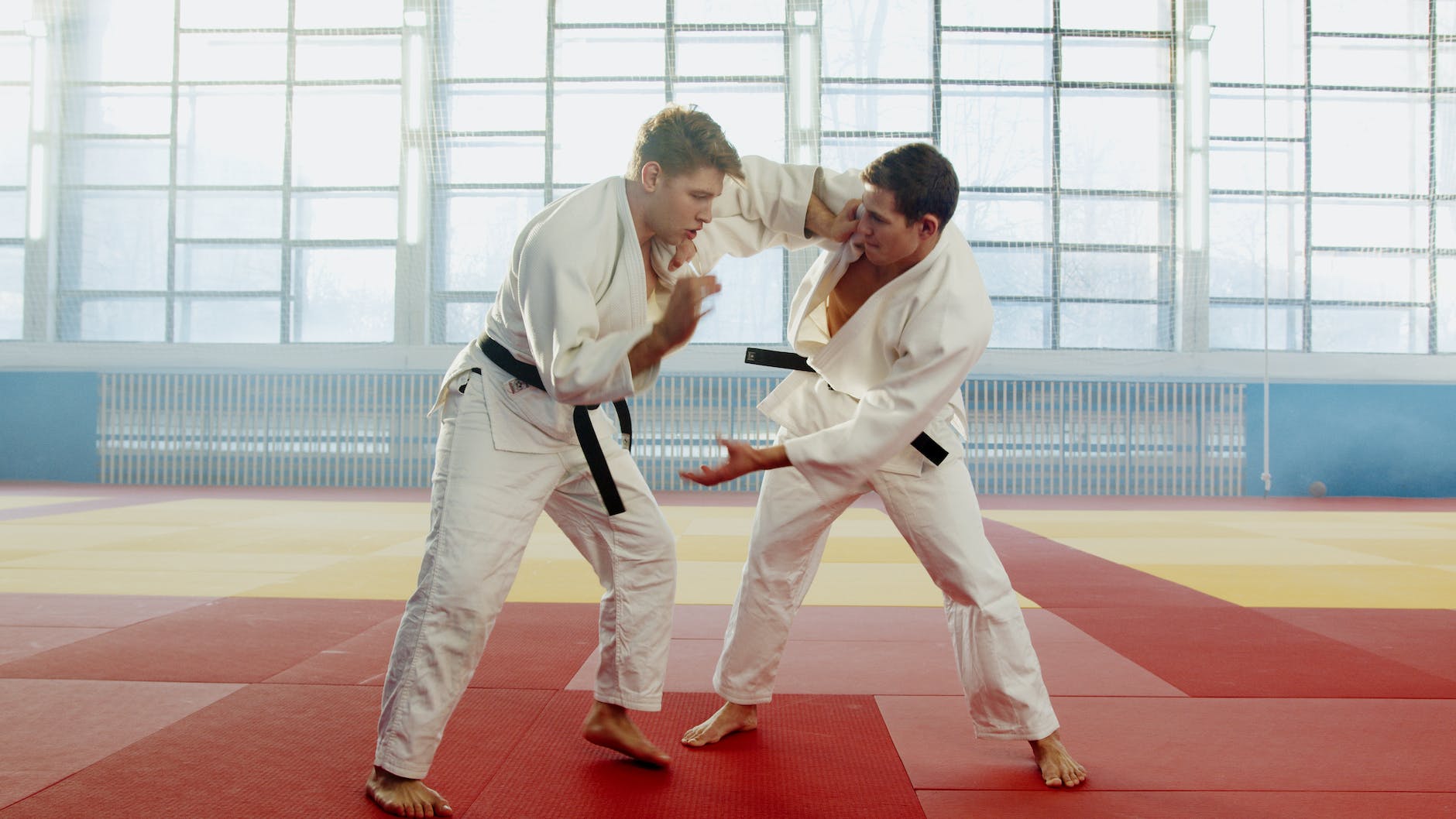
Everybody was kung fu fighting! Photo by cottonbro on Pexels.com
It’s time to say something slightly controversial, and I apologise in advance for the click-baity feel of the headline, but there’s no way to sum up a nuanced argument like this in less than 10 words. The thing is that there’s a real fascination these days with delving into Karate kata or Kung Fu forms and discovering the ‘real’ applications, hidden in plain sight, which are, always, wrestling moves, which were hidden away in the murky depths of time for vague and unspecified reasons.
This marital arts version of a conspiracy theory is a really popular idea at the moment, because, frankly, the wresting interpretations work a lot better than most of the applications of striking you see in these arts. However, that doesn’t mean its true!
Here’s a current example:
No, no, Kung Fu is NOT 90% wrestling. It’s just not!
Now look, I’m not saying that there are no throwing or takedown applications to Karate and Kung Fu moves – of course there are! But just because you can re-engineer some wrestling applications out of what are obviously supposed to be strikes, does not mean that those are the ‘original’ or ‘real’ applications. They are certainly an interpretation, but to claim some sort of historical precedent is going too far for me.
I would call my view somewhat heretical to modern orthodoxy based on the amount of comments I see under videos of people revealing the ‘real’ application of Kung Fu or Karate moves. It’s almost 100% positive, along the lines of “finally this move makes sense!”. I refer you to my previous point – just because these moves work better than the wacky traditional blocking and striking application usually taught does not mean these are the original applications. It’s a logical fallacy. A better question would be to ask, “why did they simplify or dumb these forms down so much that they’re unusable?” But I guess that’s a different topic…
Another reason why this wrestling-first approach is so popular is that learning real grappling or wrestling is just too much like hard work for some people. You’re going to need a working pair of knees and a body that’s probably 20-30 years younger than the one you’ve got, especially if you’re starting grappling from scratch. For the ageing martial artist the idea that they can just keep doing the katas or forms that they already know and now they are somehow also doing grappling is very tempting. As somebody on the wrong side of 50 I can see the attraction of this idea myself! But like all shortcuts, it cuts out the years of experience and hard work you’re going to need to put in if you want something you can use.
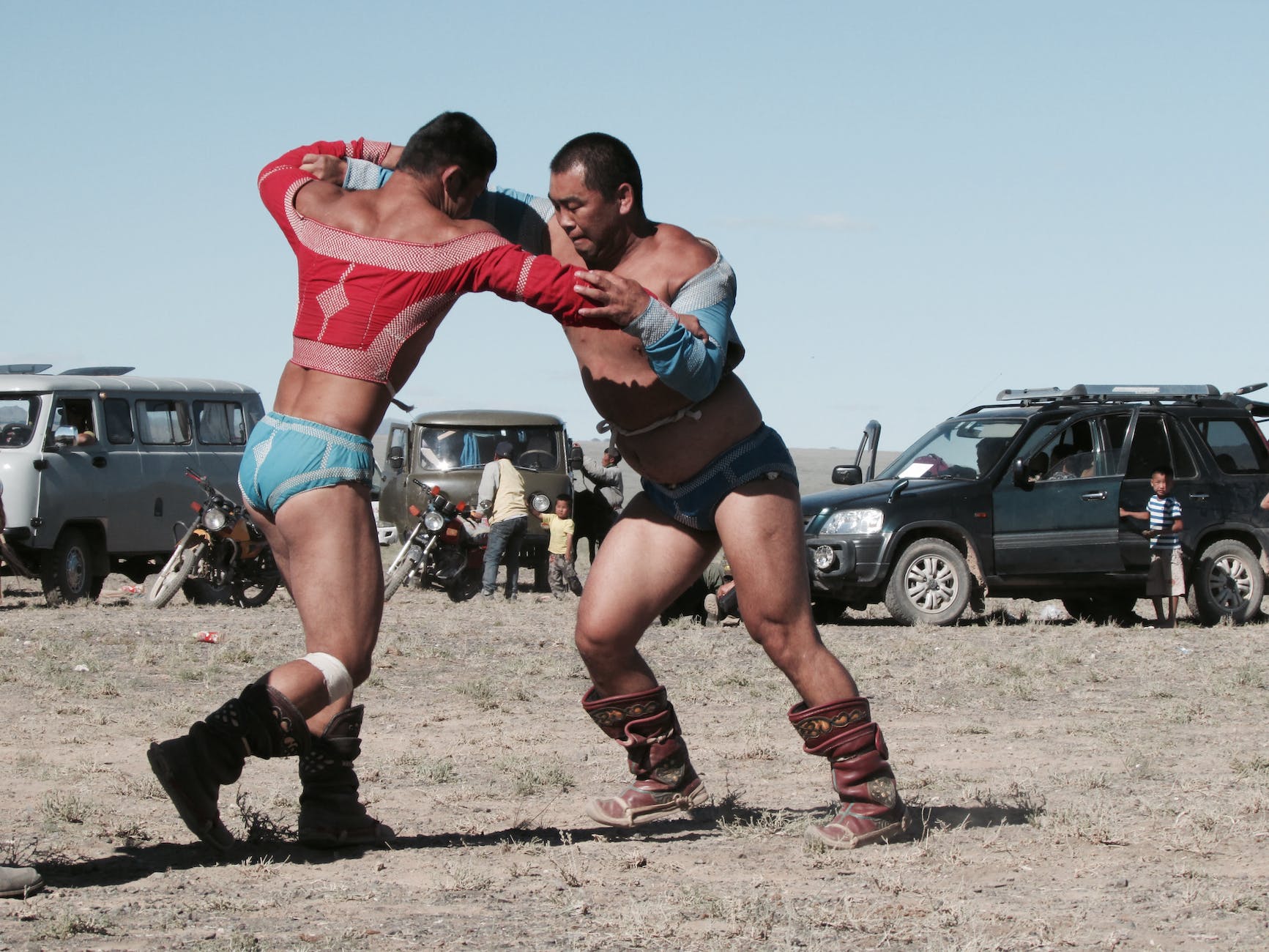
Wresting is, of course, older than martial arts, like Karate or Wing Chun, by thousands of years. This is not disputed. It seems that wherever men or women gathered, in any country, and conflicts needed to be resolved, wrestling naturally appeared as a way for this to happen, or as a way to keep people entertained, build a community connection, or in good physical shape for battle. It was a multi-purposed activity. For example, there has been Mongolian Wrestling for pretty much as long as there have been Mongolians. And it’s a tradition that has survived.
Modern Mongolian wrestlers. Photo by Agostino Toselli on Pexels.com
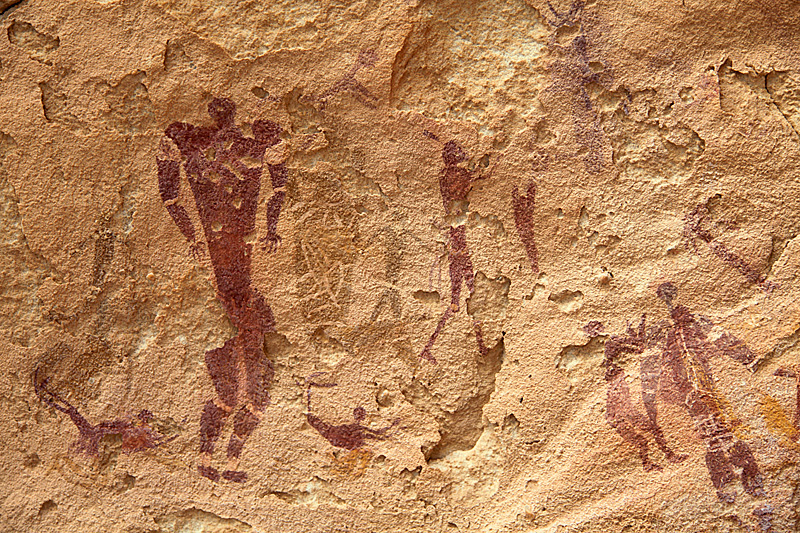
Cave paintings have been found in the Lascaux caves in France that have been suggested to depict sprinting and wrestling in the Upper Paleolithic time period, which is around 15,300 years ago.
Cave man wrestling?
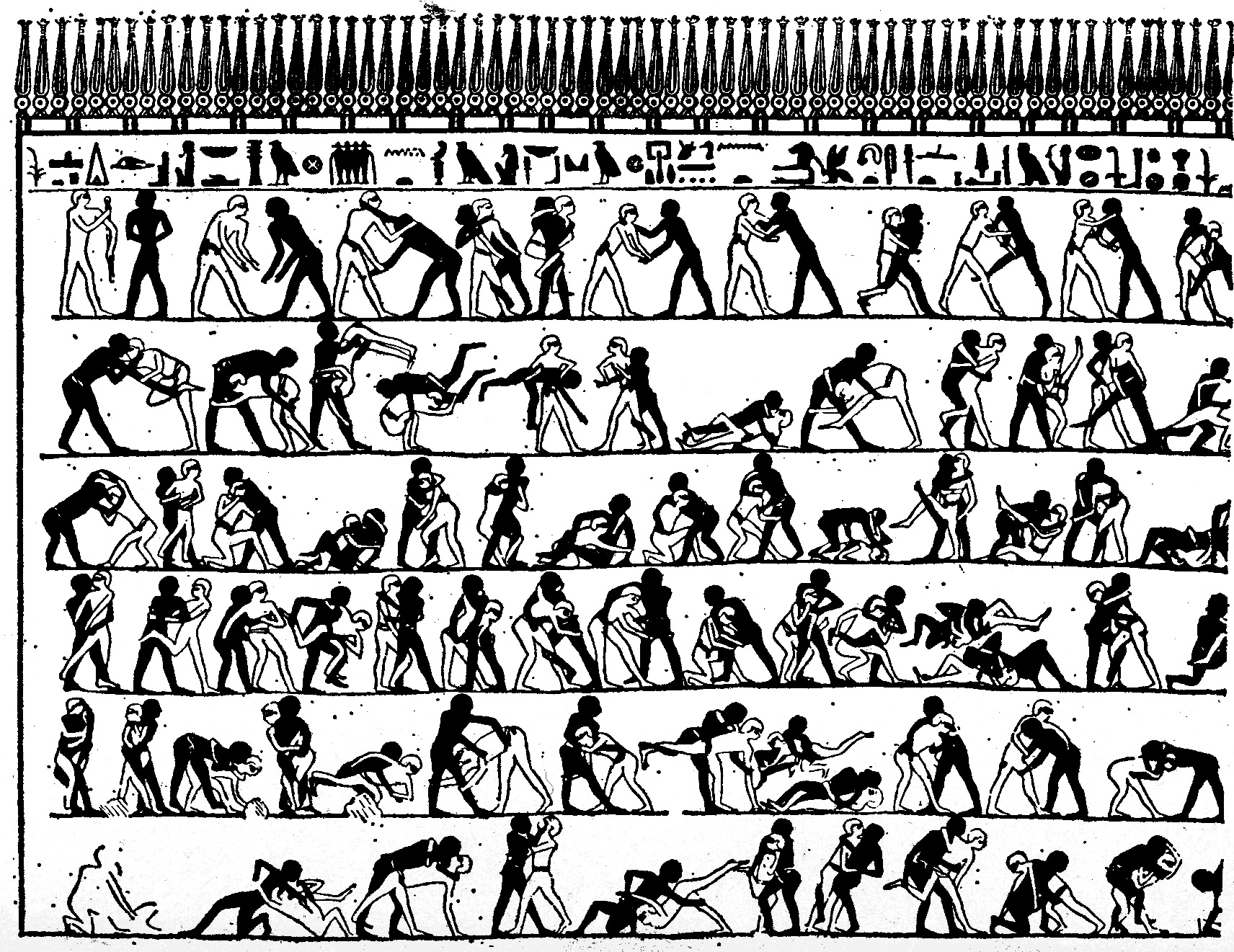
This Egyptian burial chamber mural from Khnumhotep and Niankhkhnum’s tomb dates to aroudn 2400 BC.
Wrestle like an Ancient Egyptian.
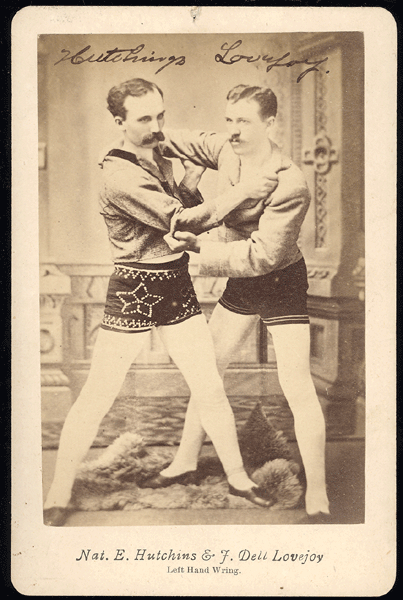
Almost every traditional culture has, or had, some form of indigenous wrestling. Many cultures that have evolved into living in villages, then towns, then cities have managed to maintain their wrestling traditions, even to the modern day. But most we have lost. For example, Collar and Elbow Wrestling was hugely popular in Ireland in the 19th century and spread to America where it again proved hugely popular with thousands of people coming to watch matches (even President Abraham Lincoln was a practitioner!)
Collar and elbow from the 1880s.
But huge changes in where people lived and worked lead to its demise until it vanished completely even in its native country. It seems that whenever a country experiences its industrial revolution, requiring massive shifts in population distribution, the folk traditions tend to die off, and wrestling is a folk tradition.
But that does not mean it is the original of Karate and Kung Fu.
I appreciate that you might not agree with me, so let me give you an example.
This video is comparing a karate technique to a Shuai jiao wrestling throw:
Yes, the movements have a physical similarity, but you are never – never! – going to learn how to do that throw by doing that kata. I mean, you could make that work so long as you only wrestle fellow karate practitioners and never ever get in a match with somebody who actually does wrestling. Then you’ll be fine. 🙂 Was this the original application of this kata? Who knows? But to assume ‘yes, it must be wrestling’ is such an illogical leap that to me it’s going too far. If you want to learn wresting, then just train wrestling. It’s that simple.
Here’s the Karate Nerd with a similar take on Karate Kata. Now, I quite like the Karate Nerd, so this is not an attack on him, but rather just an example of the current trend in marital arts regarding wresting applications and where it’s going.
Anyway, I feel like I’ve made my point and I’m just repeating myself now, so I’ll leave it there. But let me just recap one last time. Yes, there are some wrestling application in Karate and Kung Fu, yes you can re-engineer pretty much any movement to make it into a wrestling move, and no that does not mean that “it’s all wrestling“.
You know those wooden toys that have cutouts of shapes and a hammer for the kids to bang the right shape into the right hole? Square, circle, star, that sort of thing.
Martial arts techniques are a lot like that. You can have the best technique in the world, but if you’re doing it at the wrong time it’s like trying to hammer the wrong shape into the wrong hole. It ‘ain’t going to work not matter how hard you try…
Throws are a really good example of this. Throws work best when you try and throw the person in the direction they are already going. For example, if a person is basing backwards (moving their weight to their heels and sinking down) then it’s going to be really tough to throw them forward with say, a hip throw. Of course, if you’re a lot heavier and bigger than your opponent then it becomes possible, but we want good technique here. Good technique would be to take them backwards with some sort of inside trip.
Video: A simple wrestling chain that exemplifies the principle.
In internal martial arts we call that ability to sense where the other person’s weight and direction is going ‘sensitivity’. A lot of times people in wrestling and throwing arts don’t train sensitivity as a separate quality, you just kind of pick it up as you go through drills or live sparring against real resisting people. In martial arts like Tai Chi you can spend a lot of time specifically training sensitivity where it’s called ting jin – to listen. I’m pretty sure I used to think that the more intellectual Tai Chi approach was superior, but now I’m not so sure. If you naturally acquire sensitivity over long periods of time through resistant sparring then you kind of own it in an authentic way. It’s yours. You worked for it and its real. I’m not saying you can’t get that through the push hands approach, but the problem with shortcuts is that they’re exactly that – a shortcut. Something is always missing. You need to put in the hard physical miles in if you want to get something tangible in marital arts. I’m not sure there are really shortcut to some of these things.
My martial arts mentor Damon Smith, who I do the Heretics podcast with, often says there is no such thing as good technique, there is only appropriate technique. He’s talking about banging the right shape into the right hole at the right time.
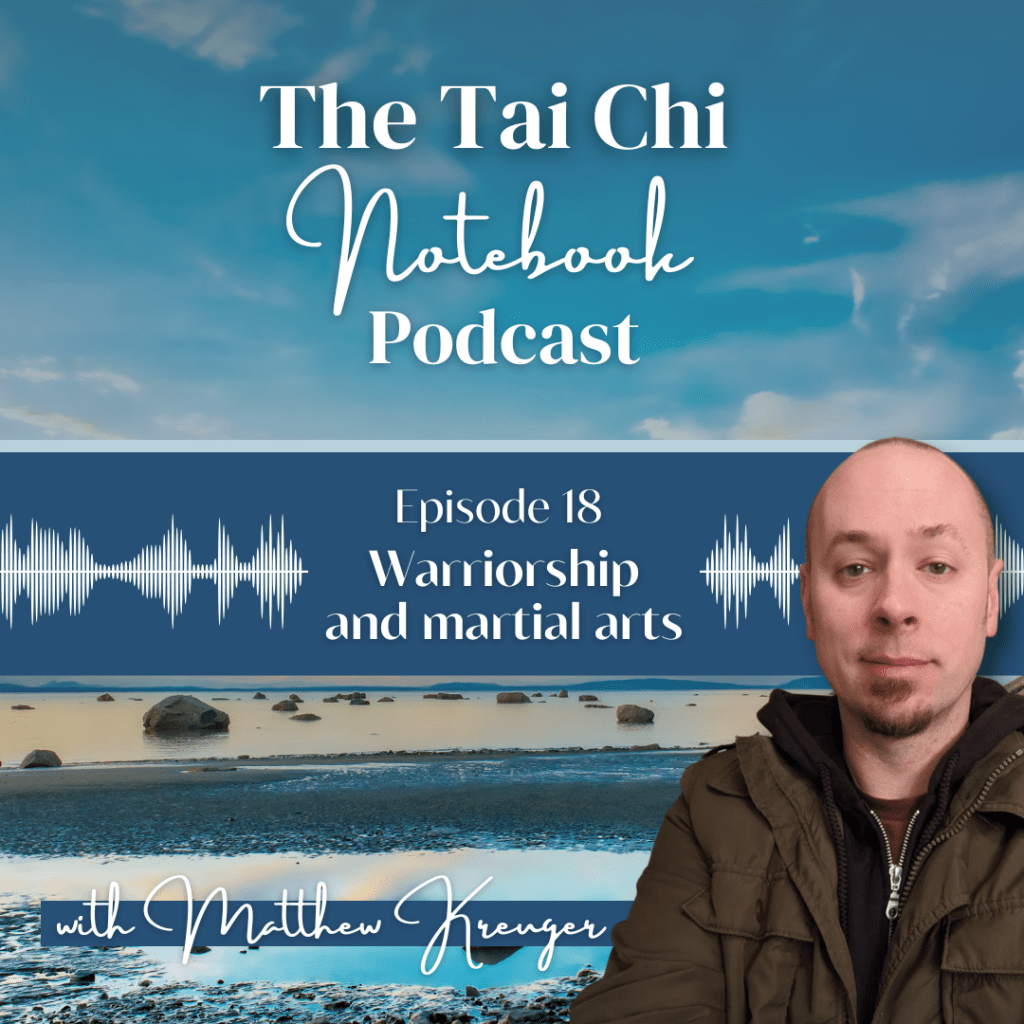
Our new podcast is out! I talk warriorship with the esteemed Matthew Kreuger of the Walking with the Tengu podcast, as part of the #warriorshipconversing project started by Kung Fu Conversations podcast. We also talk about Shuai Jiao, Iaido, BJJ and professional wrestling. You’ll find us on iTunes and Spotify. Search for The Tai Chi Notebook podcast. Enjoy!

 The Tai Chi Notebook