I had an interesting comment on my last post that made me think about the whole idea of making up your own forms (or Tao Lu) – in Tai Chi, Xing Yi, or whatever.
I’ve tried to do this over the course of several years and I’ve come to a few conclusions about it, which I’ll elaborate on here. Firstly, it’s hard. Making up new forms is not as easy as you think. But secondly, it depends what martial art you are making up a form in.
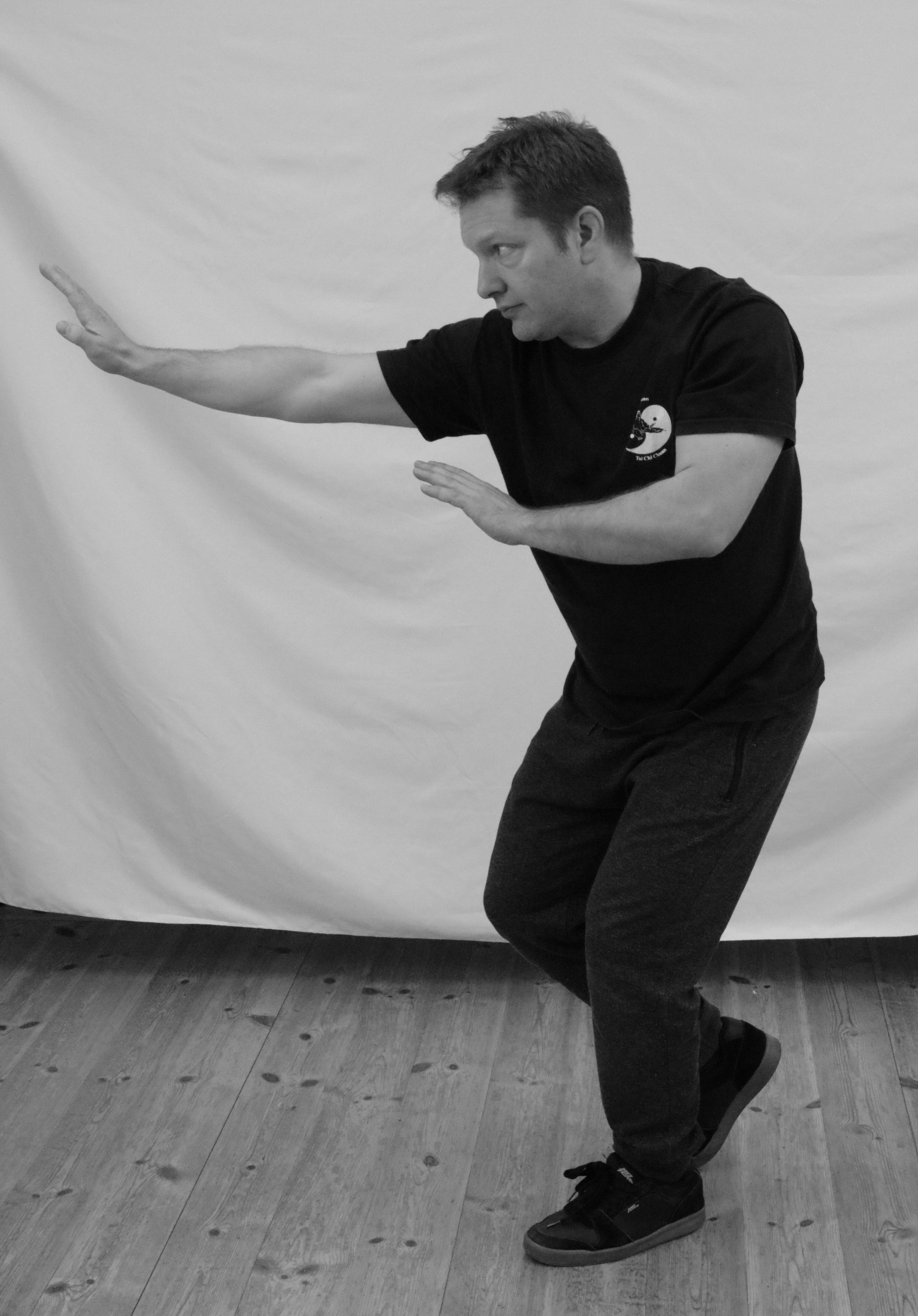
Author, performing Xini Yi Chicken (Ji) posture
If your martial art has forms that are constructed like lego bricks that can be slotted together in any order and still seem to work then it’s pretty simple to concoct a new form. Xing Yi is a good example of a martial art that has this quality. I was always told never to call Xing Yi tao lu by the English name “forms” because the correct term was lian huan which means “linking sequence” for this very reason.
The idea, (in our Xing Yi at any rate), is that all the links you learn are just examples, and you need to be constantly moving towards being able to spontaneously vary them as required, and then ultimately spontaneously create them. This idea has become heretical in the modern Xing Yi world to a large extent because modern Xing Yi has lost a lot of this spontaneous feel it used to (I admit that’s a subjective point) have, and things have become set in stone – forms that were once supposed to be fluid and flexible have become fixed and rigid. Forms of famous masters from the past now tend to be fixed forever. When words like “orthodox” start appearing to describe something you know it’s already dead, or on the way to dying.
But of course, anybody can make up a form, but is it any good? That’s a different matter. And it usually depends on the person doing it, not the moves themselves. With Xing Yi animals you can also ask the question – can I see the character of the animal being used coming out through the moves?
With Tai Chi I find it a lot harder to make up a form. Tai Chi’s approach to a form is quite different to Xing Yi, or other Kung Fu styles. The Tai Chi form tends to be a highly crafted piece of work that has been honed to perfection over many years. It is fixed because you need to be able to forget about the moves and concentrate more on what’s inside. It helps to do that if you don’t have to worry about what’s coming next because you’ve done it so many times that you can let go of that part of your brain and let it be aware of other things.
Tai Chi forms tend to start and finish in the same place for this reason. Usually, anyway. While long forms don’t tend to be balanced on left and right, a lot of the more modern, shorter forms make more of an effort to balance left and right movements.
If you understand Tai Chi and how to ‘pull’ or direct the limbs from the dantien movement then, sure you can make up your own Tai Chi forms, however, there is almost zero history of doing this in Tai Chi circles and it’s not really encouraged. I think this is because Tai Chi has push hands, which can be used as a kind of free-form expression of Tai Chi, completely away from the form and in contact with a partner to give you something to respond to, which is the whole strategy of Tai Chi Chuan, at least according to the Tai Chi Classics it is. To ‘give up yourself and follow the other’ you have to be spontaneous. There’s no other choice!
So, to conclude. I think that’s it’s in its application where the spirit of improvisation and spontaneity can be found in Tai Chi, not in the forms. I don’t think Tai Chi is particularly concerned with creating endless variations of forms and patterns like Xing Yi is, at all. Xing Yi, having a weapons starting point, doesn’t use this hands-on feeling and sensitivity to get started with spontaneity. Instead, it likes to create patterns, then vary them endlessly. Of course, you work with a partner when required, but it’s a different approach. Which is all quite natural, as these are two different martial arts, created by entirely different groups of people in a different locations and time periods.
You might like our Heretics history of Tai Chi and Xing Yi for more on that.
A friend shared a post recently about an interesting way of exercising called On the Minute, Every Minute. All you need to do is a number of reps of an exercise on the minute, every minute. The suggested start point in the article is 15 push ups, then 20 squats, then 20 plank jacks. That would take 3 minutes, so you just keep going 6 more times, up to 18 minutes. I quite like the idea because it’s simple, and simple is doable.
Then I started to think how you could apply the same OTMEM method to Tai Chi… Here’s one suggestion: One move every minute then hold until the next minute comes around. I think a short form has around 50-60 moves, so would take roughly an hour to complete like this. It depends what you count as a move. That’s basically an hour of stance training, which would be quite challenging. One for New Year’s Day perhaps? I’m going to give it a go, so let me know in the comments if you are going to join me.
And of course, if you want to push it further you could always up it to every two minutes!
We often label other martial arts groups as a cult, and laugh at their silly behaviour and rituals, but at the same time we are a bit blind to the cult-like aspects to the things we do, because that’s ‘normal’ to us.
I went to a different BJJ school one time and they kept making jokes about my home school being a cult because we have to wear an official gi when training, which is more expensive to buy than a normal gi. There were a few other things mentioned, but that was their main issue. A white belt from another branch of my school had visited previously and he had committed the cardinal sin of facing the corner while tying his belt – that was apparently also a sign of a cult and they recounted the story with much hilarity – “I thought he was having a piss in the corner!”.
However, in that school I observed students doing several things that were equally cult-like, but were apparently completely normal to them:
If you stepped on the mat without bowing, that was 10 burpees.
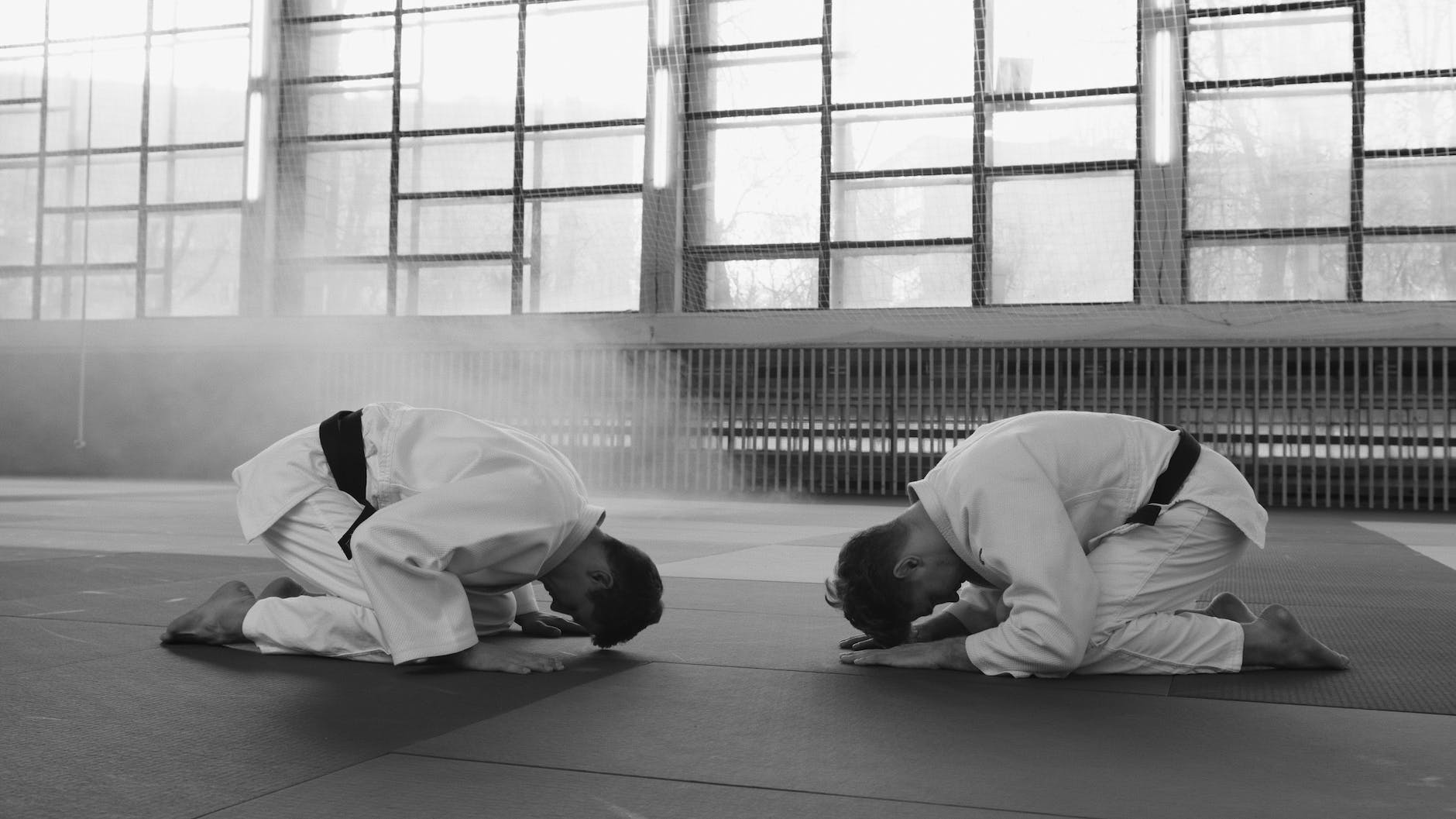
Classes started and ended by lining up and bowing to the teacher.
I (a grown man) had to ask permission from the teacher to have a sip from my water bottle, or if I wanted to leave the mat for any reason. And then ask permission to come back on.
If a black belt asked somebody to roll, they weren’t allowed to say no, even if they had already agreed to roll with another person.
Now we do some of those things in my school too – we line up and bow at the start, for example, and bow onto and off the mat, but some of those things we don’t do. However, they’re all just different versions of showing respect to each other before and during training. We are learning techniques that have the ability to kill and maim, and people could easily get hurt in the training if we weren’t respectful of our partners safety. Building an atmosphere of respect around the training will hopefully instill that in the actual training.
There is something of an uneasy tension in modern martial arts between capitalism and customs. In modern times the people in a martial arts class are usually paying to be there – they are, as modern capitalism likes to call it “paying customers”. The phrase “the customer is always right” has not entirely entered the martial arts vocabulary yet. It still retains these throwbacks to its “traditional” student and master martial arts heritage, for the reasons outlined above.
But let’s not muse on capitalism too much. The point of this post is to draw attention to the blind spots we all have. To return to that BJJ school – the higher belts were technical, but also fighty without being overly aggressive or dangerous, and the instruction was good and clear, the rolls were good too. But I could have done without the undercurrent of tribalism that that had been instilled in the students and was reinforced by the higher belts.
I think it’s worth repeating that all martial arts are cults, and if you think yours isn’t… then isn’t that exactly what a cult member would say? My attitude is to accept the various rules and customs of each particular cult or organisation as the price for them existing. Without any rules anarchy and disorder would break out and there would be no club at all. The Xing Yi classics famously say – “There is only structure, and there is only Chi”. With no structure, the Chi just leaks all over the place, and with too much structure I guess it can’t flow anywhere. A happy medium is what you’re after.
We (human beings) have the same attitude to our own bodies as well – we don’t see our own blind spots. The way we walk feels natural to us, but that might involve pointing the toes outwards at 45 degrees, compromising our lower back, instead of forward, for no good reason except habit. We might have been doing that for 30,40,50 years, and will probably keep doing it until the day we die without question, until somebody comes along and points out our blind spot, at which point it has become our ‘normal’ and it feels weird to walk in any other way.
A little period of self refection on the subconscious and conscious beliefs we hold true, without thinking about them, is always a good thing.
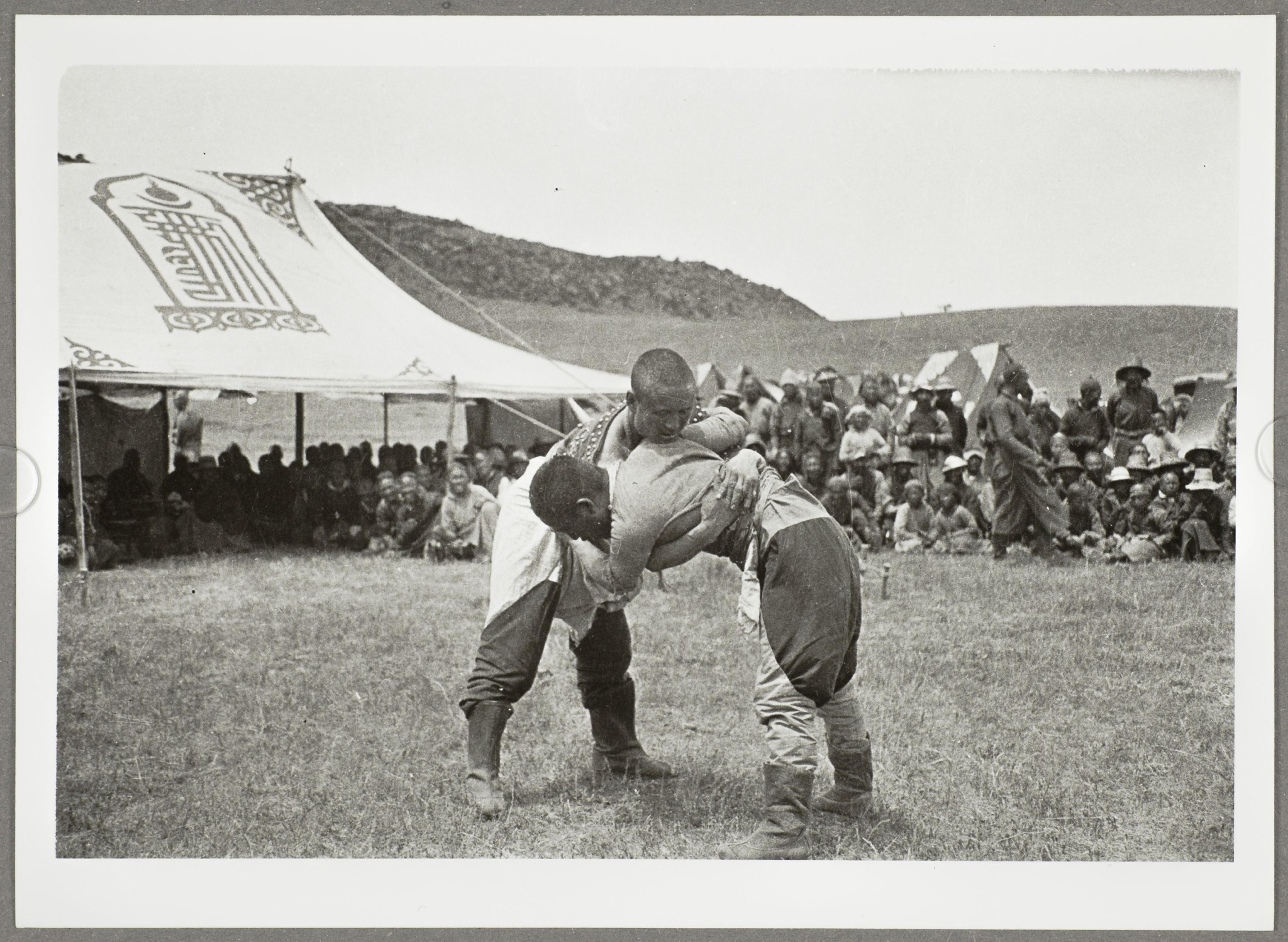
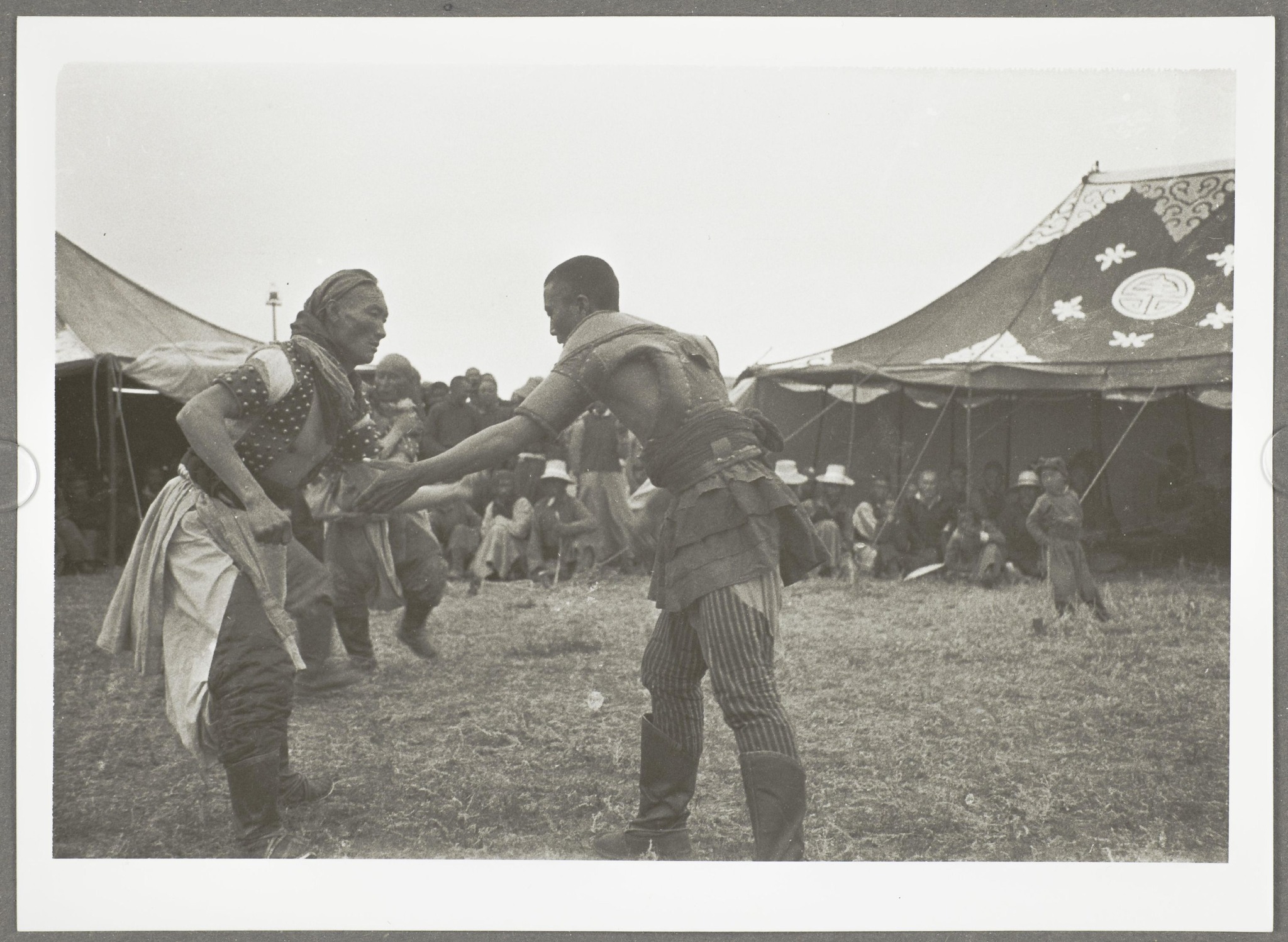
Byron Jacobs of Mushin Martial Culture recently posted some pictures, from his private collection, of wrestlers (and one of archery) on the grasslands from the late Ching Dynasty. They’re fascinating insights into what wrestling looked like at the time, and what clothing was worn. He’s given me permission to post them.
(Image credit: Byron Jacobs)
Byron has produced extensive research into the origins of Shuai Jiao (Chinese wrestling) which all points to it actually being an adaptation of Mongolian wrestling, and not a separate style with any sort of genuine history of its own.
FYI:Owls can rotate their necks up to 270 degrees!
To some Tai Chi people it’s important to know where the eyes are looking when doing a Tai Chi form for slightly esoteric reasons: “your eyes lead your intention and your intention leads your chi.” But I think we can come up with reasons for using the eyes in Tai Chi that require no mention of intention (yi) or chi.
Try this: Sit comfortably. Turn your head slowly to the side, back to the middle then the other side. It’s a typical neck stretching exercise that you’ll find done at the start of your typical Kung Fu, Tai Chi, or Yoga class. It’s good for your neck, but there’s nothing particularly special about it.
Now try this: Instead of just turning your head to the side, actively look to the side. Lead the movement with your eyes looking to the side. Now compare the feeling of doing that to the feeling of just turning your head to the side.
If you’re anything like me you’ll find the experience quite different. When you are looking to the side for a reason your whole body co-ordinates better, not to mention, I think you can turn your head a bit further too. I’m sure there is a scientific word for this purpose driven movement, but I don’t know it.
Think of an owl, when it turns its head to look at something interesting that might potentially be prey – the eyes are always locked in.
When doing the Tai Chi form, try actively looking with your eyes and turning your head in the direction you are going. Hopefully you’ll notice the different in the quality and coordination of your overall movement.
We should stop now and again to look back to see how far we’ve come. The Heretics podcast has reached episode 100! It’s a podcast designed to challenge the way you see the world, hence the name. We cover a lot of religious topics, but also a lot of esoteric topics and martial arts. To celebrate episode 100 we’ve done a 2 hour special on Xing Yi. The first hour is a continuation of our History of Xing Yi series, but the second hour is an off the cuff discussion about Xing Yi that you might enjoy more. Expect some heretical ideas and controversy!
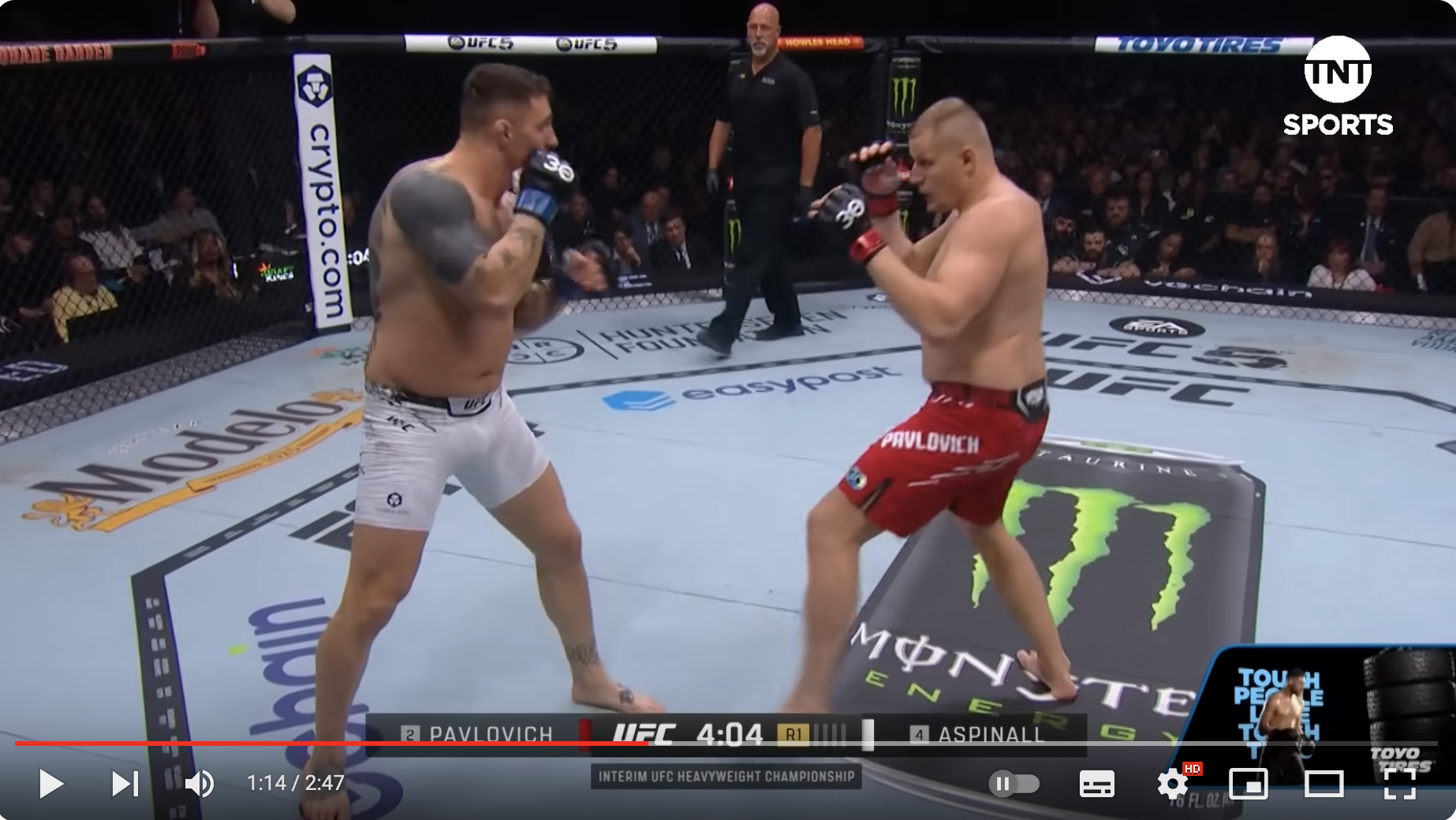
I left the reader with a question at the end… I asked them to take a look at another fight on the same UFC 295 card where British heavyweight Tom Aspinall took the interim heavyweight belt by defeating Sergei Pavlovich. The question was what animal style could we say that Tom Aspinall was a good example of. Take a look at the fight before reading further if, you haven’t already.
So, nobody decided to answer in my comments section but I got a few replies in private groups on Facebook, etc. One person got it half right, but they mixed two animals together in their answer, and only one was right. Interestingly most people seemed to opt for Tom being a rather large Monkey (Hu Xing). I get why, Tom is clearly bouncing in and out on his toes, despite being a massive human, but really that’s where the similarity with monkey ends. Monkey would try to attack from further out than Tom is standing, or from further in – it’s a very ‘in your face’ animal, but also a joker and a trickster. Taking pot shots, then running away. Remember the classic Monkey vs Tiger fight video? That’s Monkey. I can think of at least one modern MMA fighter who is a classic monkey – I’ll post about him in the future.
This charming man
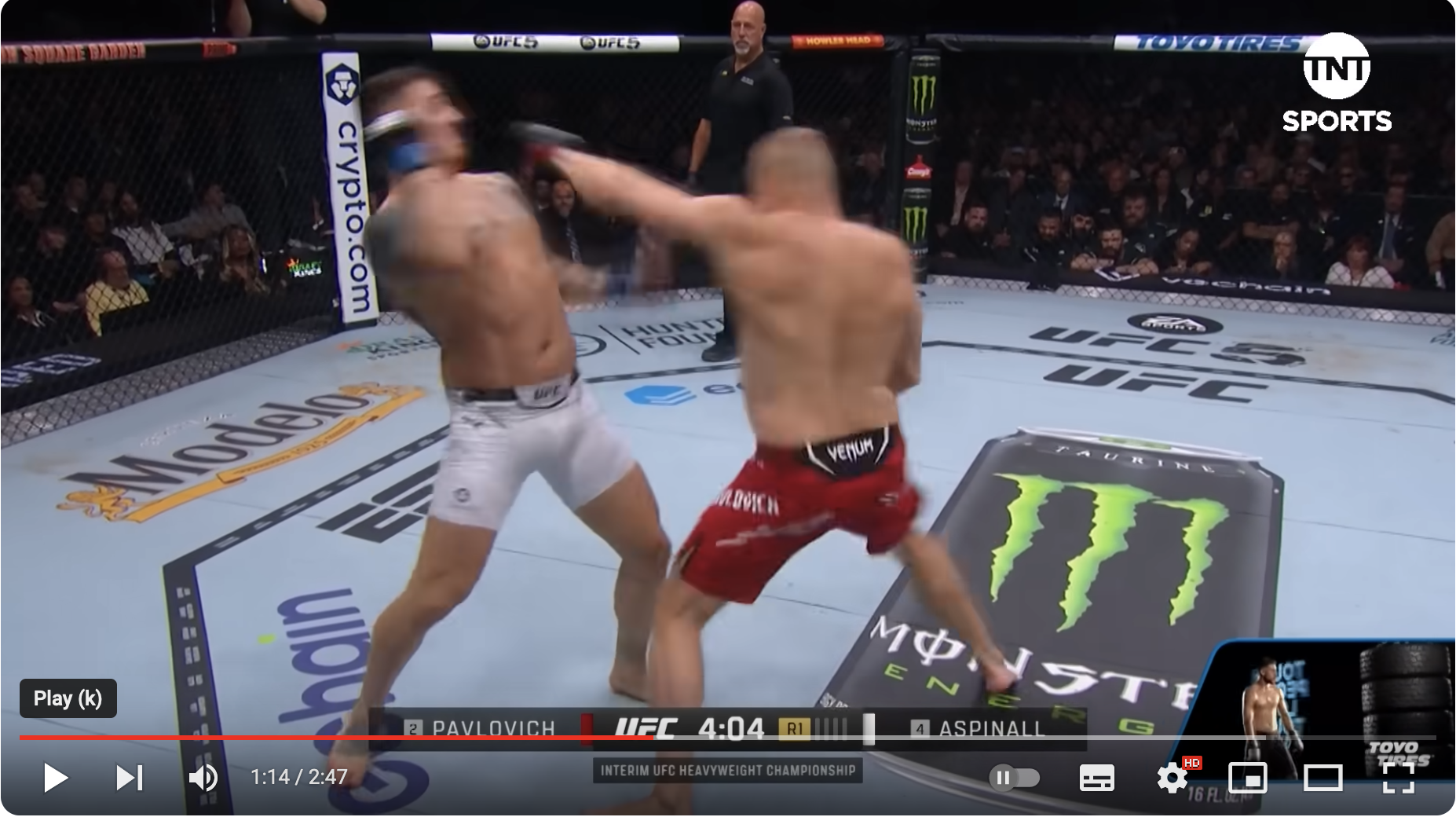
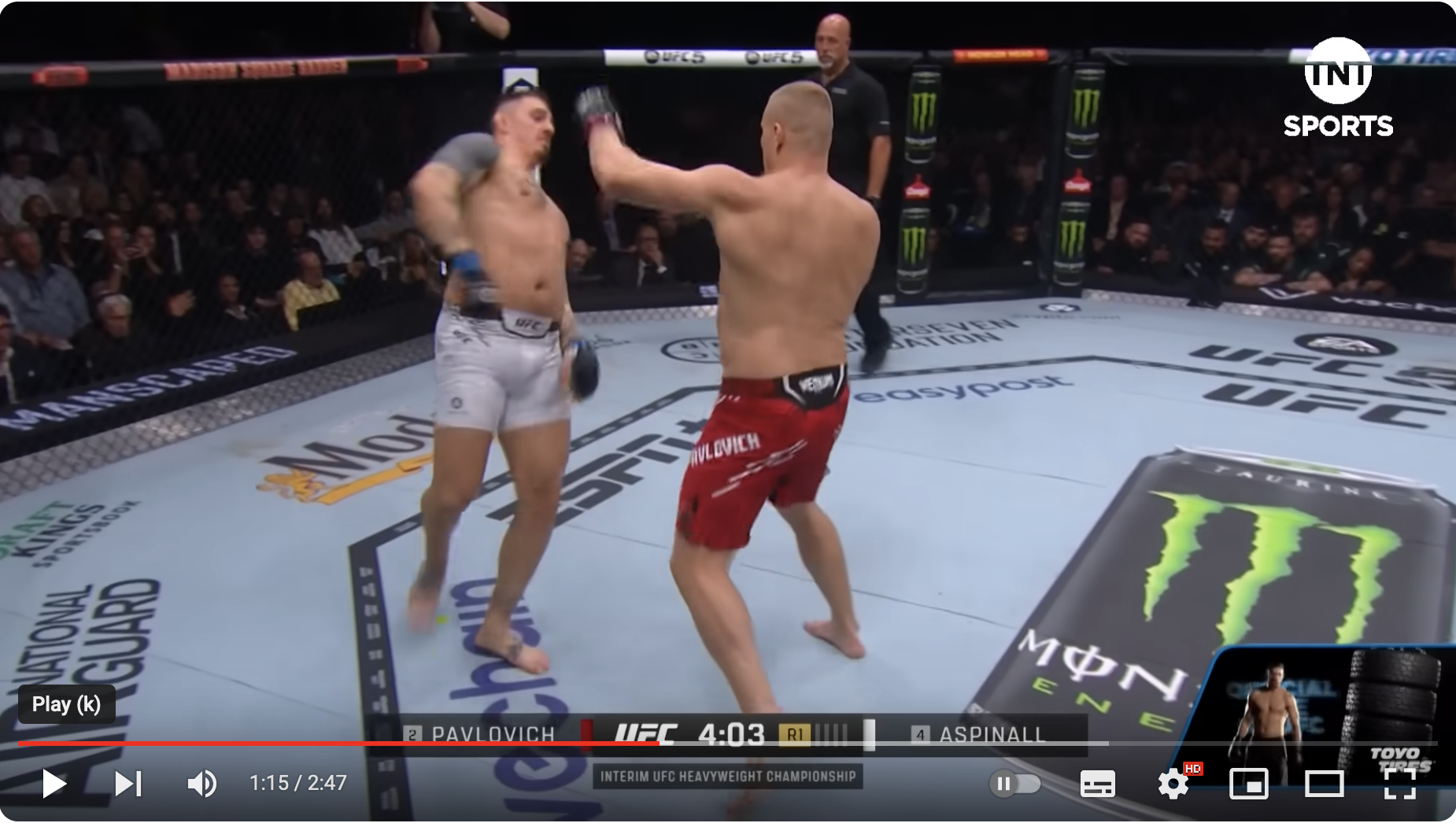
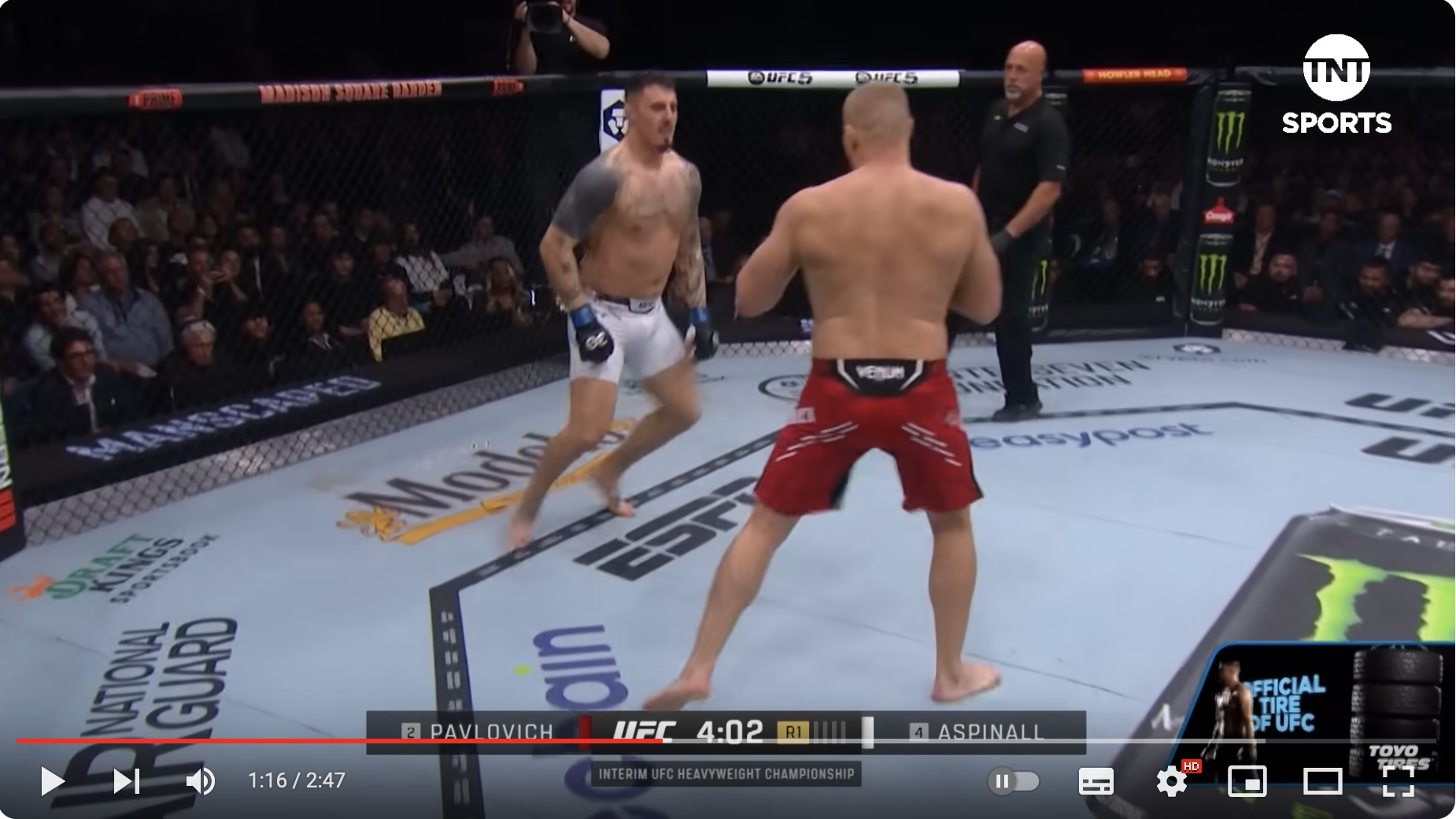
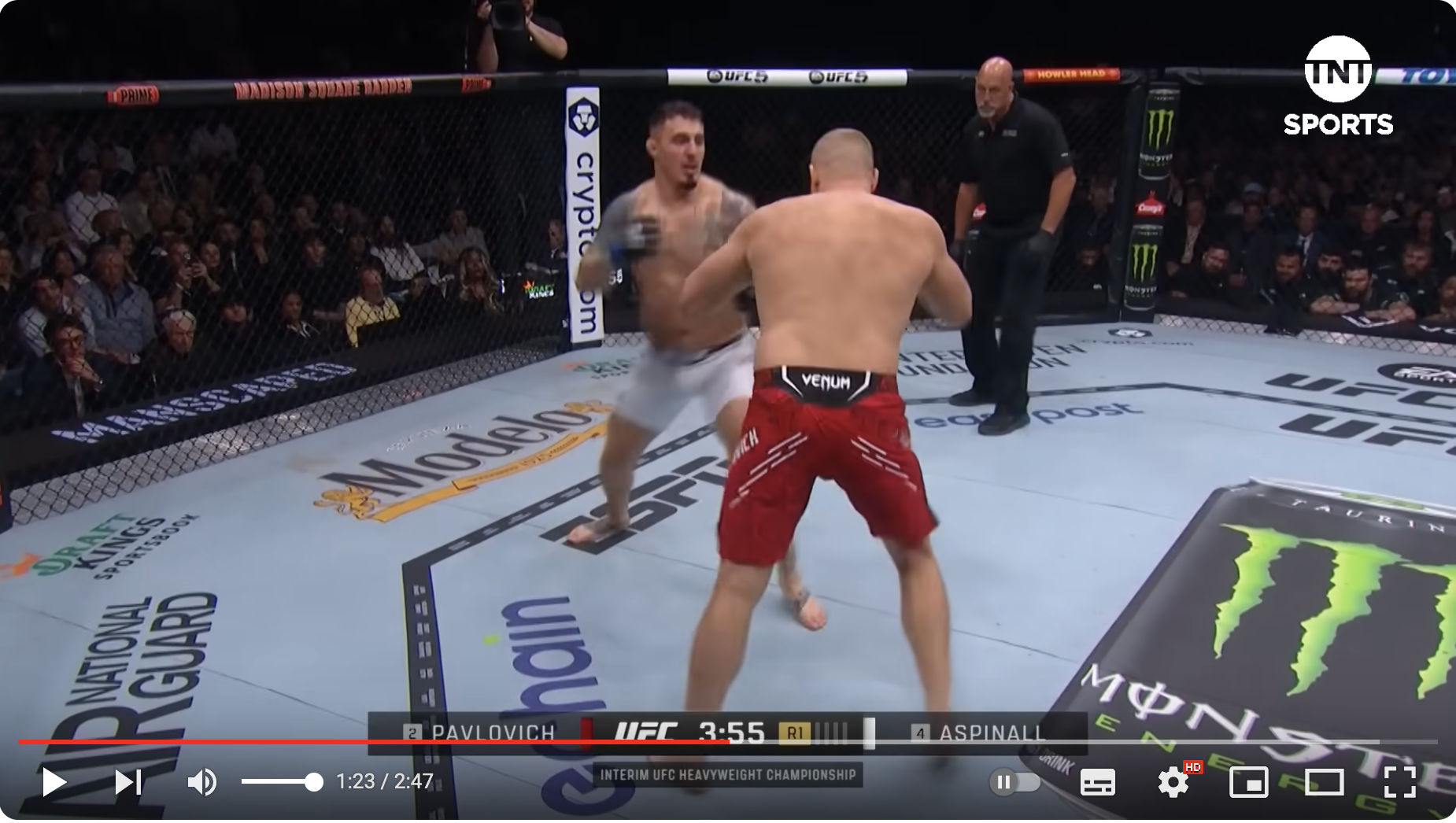
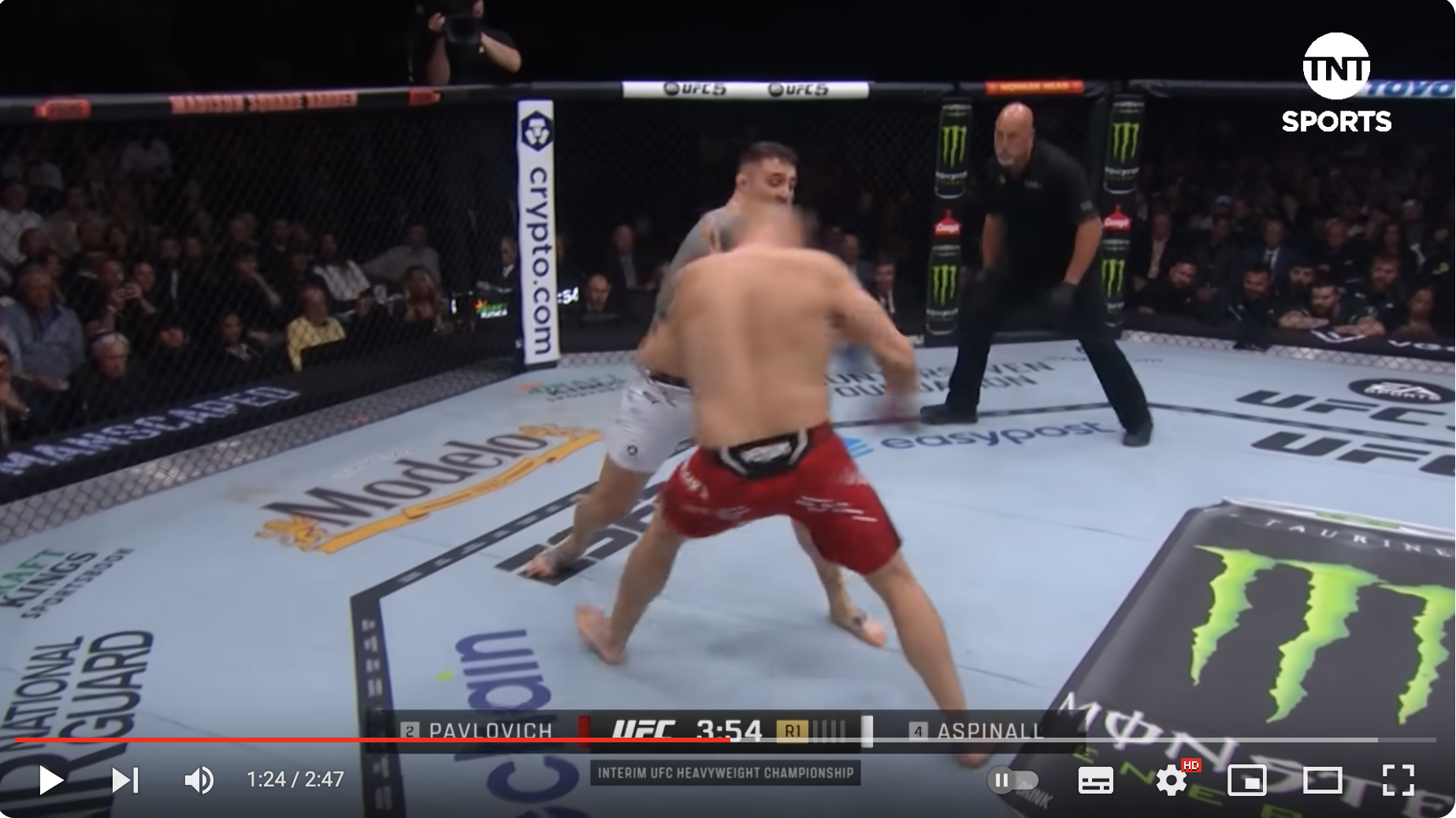
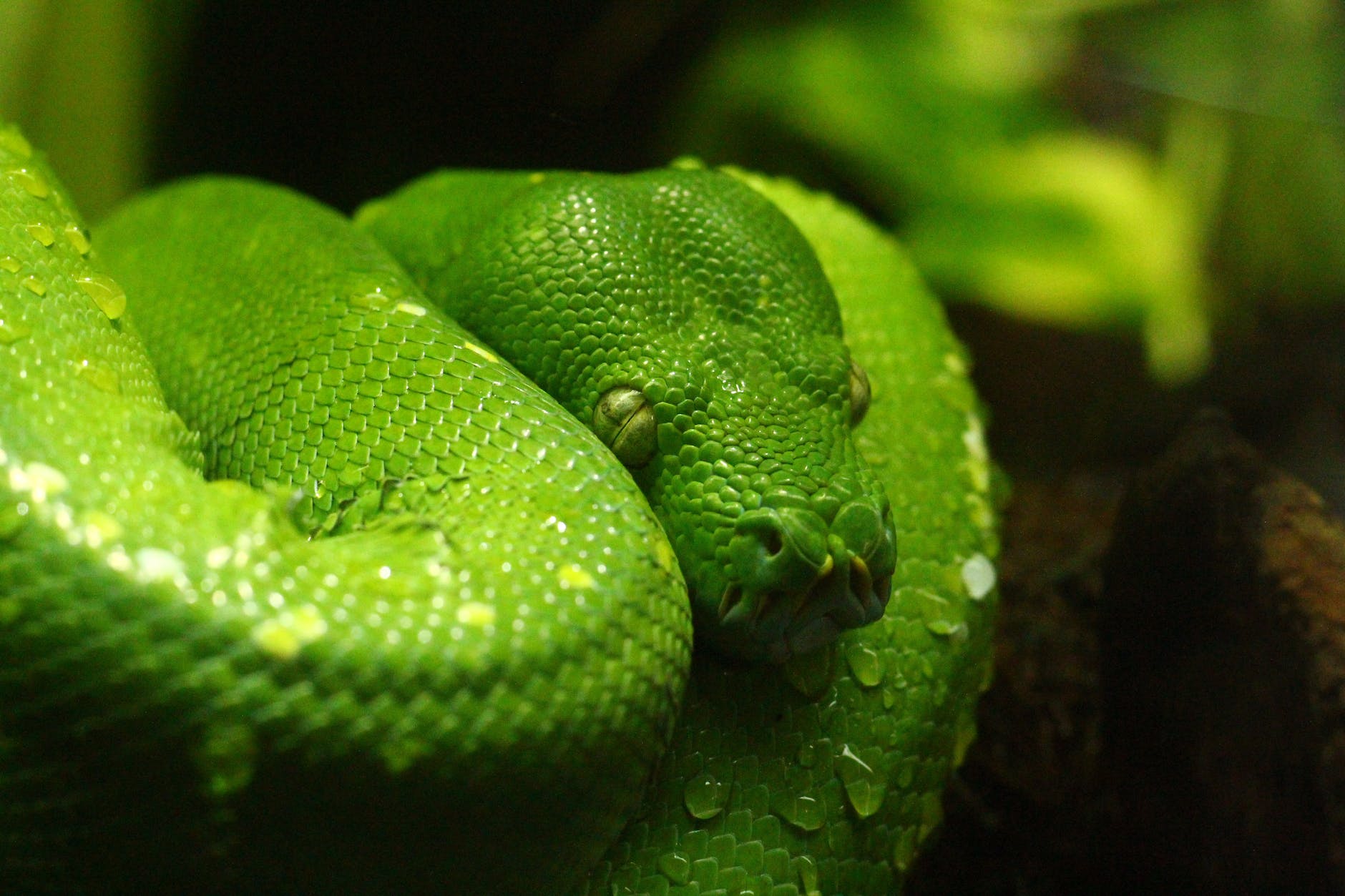
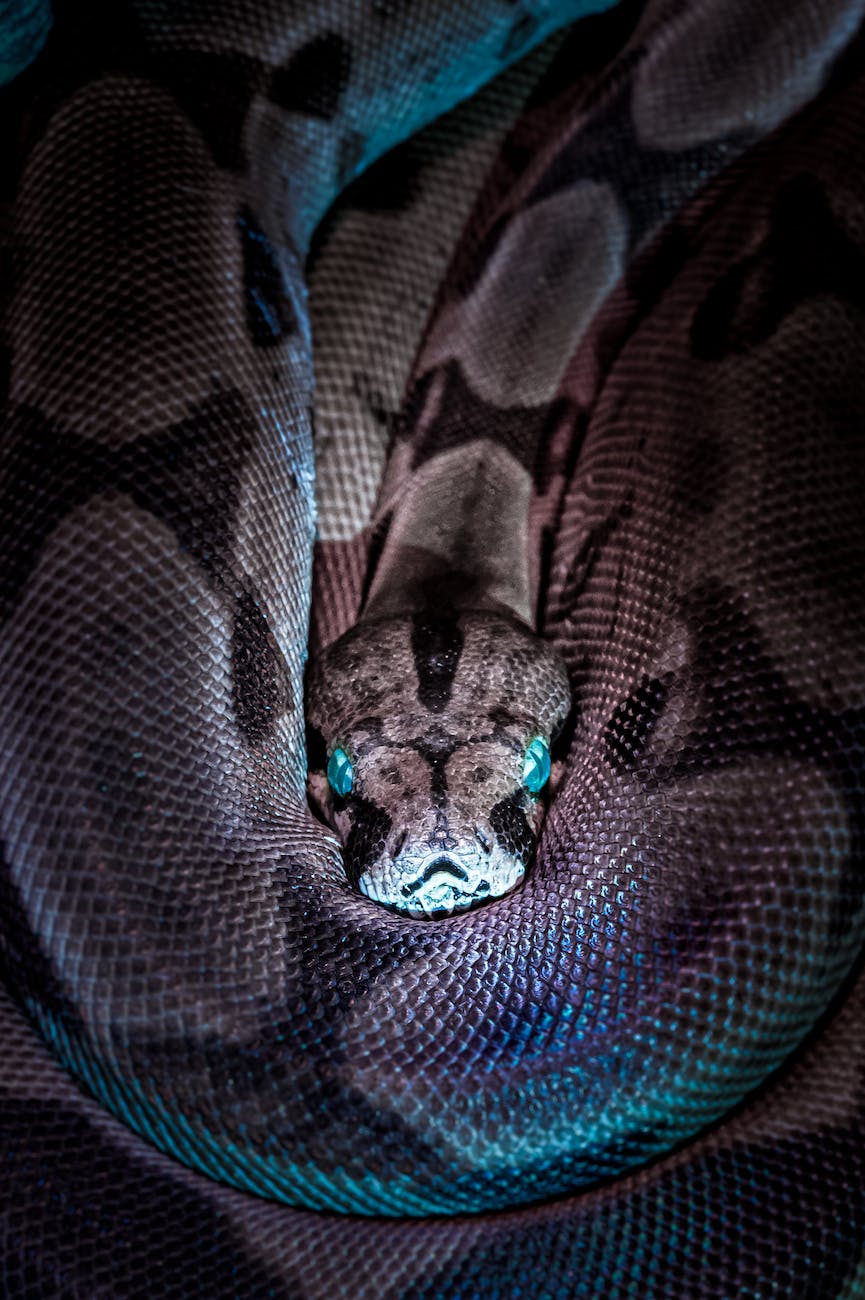
So, let’s look at what Tom actually is. He’s 100% Snake because Snake has Yin and Yang aspects. The key feature of snake is a coiling body, which can be used for either very quick strikes (Yang snake) or wrapping and coiling actions (Yin snake) for defence and grappling/locking. You can see this defensive coil aspect (Yin snake) particularly well when Tom is defending. There’s a little section in the round where he slips punches from Sergei while he coils and winds his body as he circles off – this is classic snake behaviour – just imagine if you were stupid enough to try to grab an angry snake by the neck – it would bend and coil around your hand, particularly if it was a python.
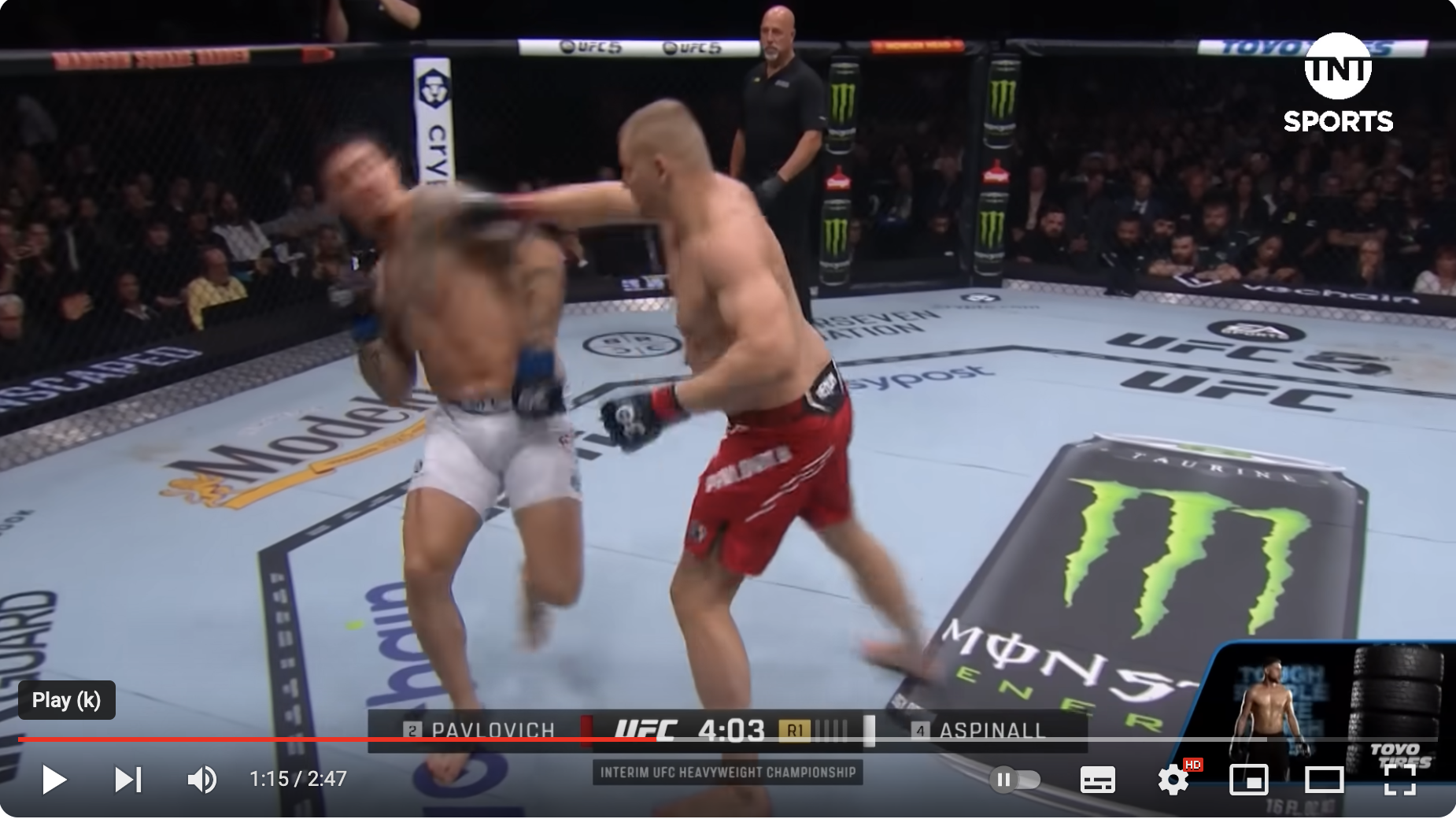
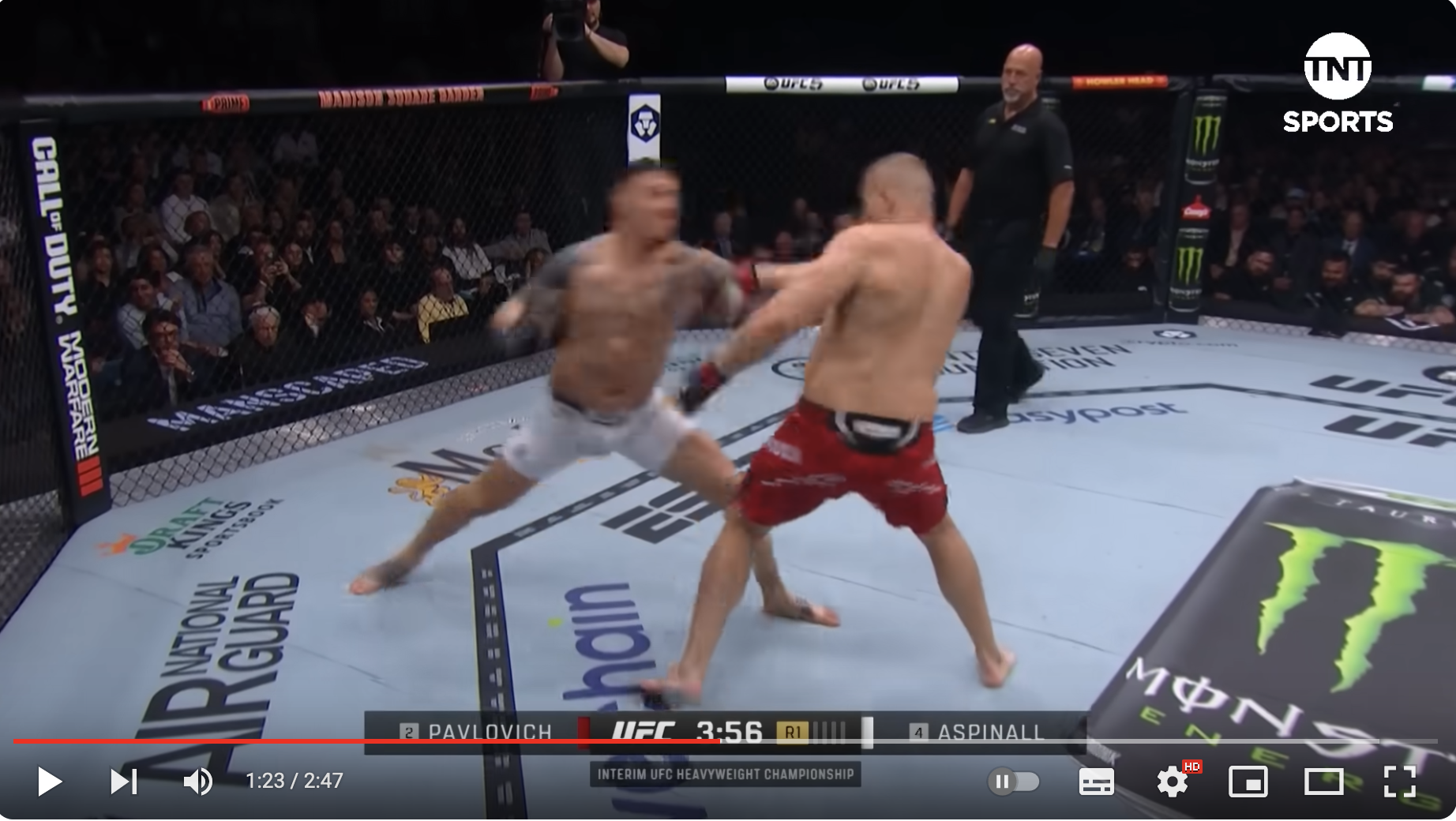
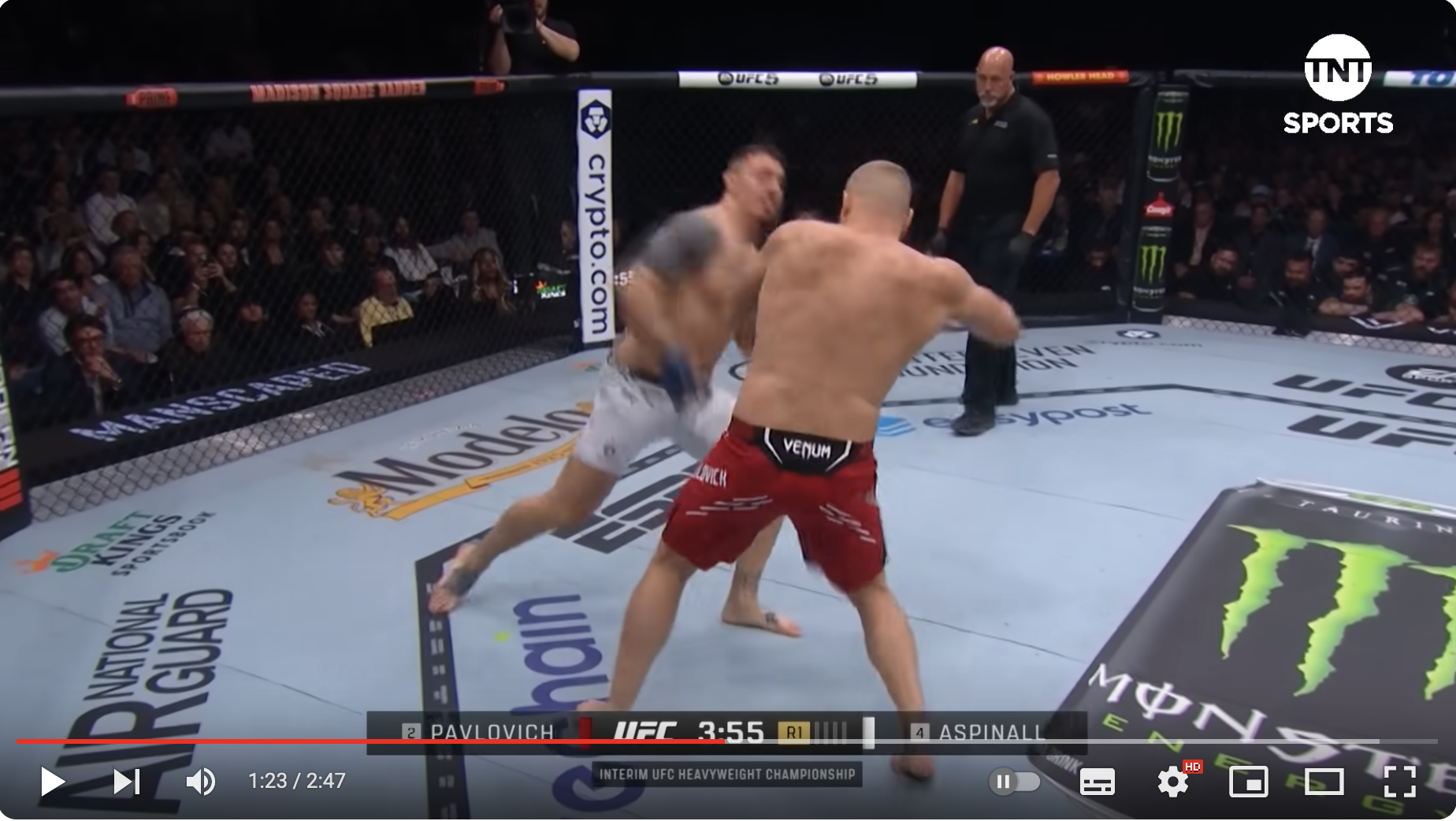
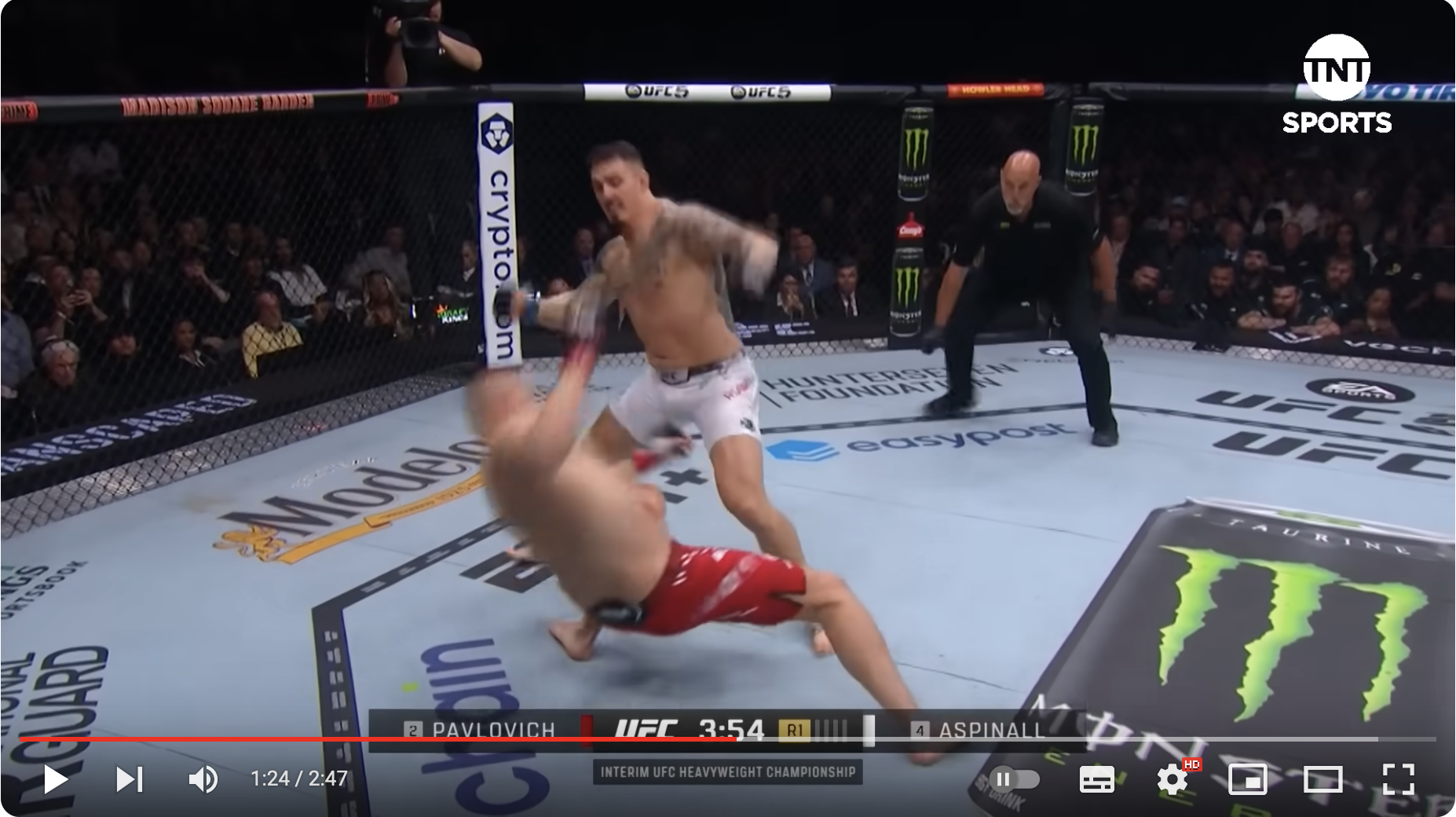
Snake’s are very aggressive, successful predators dating back to the time of the dinosaurs, and they’re always sensing forward, flicking out their tongue, and of course, they have the famous (and sometimes) venomous bite. When a snake bites the action is incredibly fast – you’ll notice that when Tom flicks out his jab the speed catches Sergei completely by surprise. For a big man he punches very quickly. The finish is so fast it’s hard to see, but Tom punches Sergei twice before Sergei can even react, steps back, looks at him, then punches him again sending him to the canvas:
Throughout the fight, Tom is flicking out single jabs and single low kicks too, very quickly.
Snake in Xing Yi is also associated with locking and grappling actions – we didn’t see any from Tom in this fight, but that doesn’t change the character that Tom is showing. (He’s actually a very accomplished grappler as well).
But what about Sergei? Well, we didn’t see much from Sergei in this fight, but from what we saw I’d vote Bear for him. His stepping is short as are his rounded punches. He’s incredibly powerful, and he landed the first strike of the match on Tom, which was so powerful he almost finished it there and then. Luckily for Tom he managed to absorb it. In our style we always include Bear and Eagle together, so I think Sergei’s got the potential for some Eagle strikes too, but the fight simply didn’t last long enough for him to show them.
* I suppose this post needs to end with some sort of “this is just my opinion” type of disclaimer. But I find people tend to get offended about everything they possibly can regarding Xing Yi these days, so I’m not going to loose too much sleep over it. And obviously Tom has probably never heard of Xing Yi – I’m just using it as a tool to analyse his fighting style. And if you want to enter an MMA match then MMA training is obviously the best way to train for it, not Xing Yi.
There are different lineages of Xing Yi, it’s been transplanted to different countries, and it’s very old, so it’s quite possible that none of my understanding of Xing Yi snake resonates with your particular lineage. It’s a sad fact that most Xing Yi animals have become just a set of techniques or moves, that have long since lost any connection to actual biological animals – successive waves of crushing political ideology, (both nationalism and communism) imposed on a marital art at the barrel of a gun will kind of do that. I will say however, that my understanding of Xing Yi snake is not really based on a particular style of Xing Yi, or a way of doing the move, but on tying to get back to what real snakes do. And I won’t say I wrote the book on Xing Yi Snake, but I did write one chapter of it.
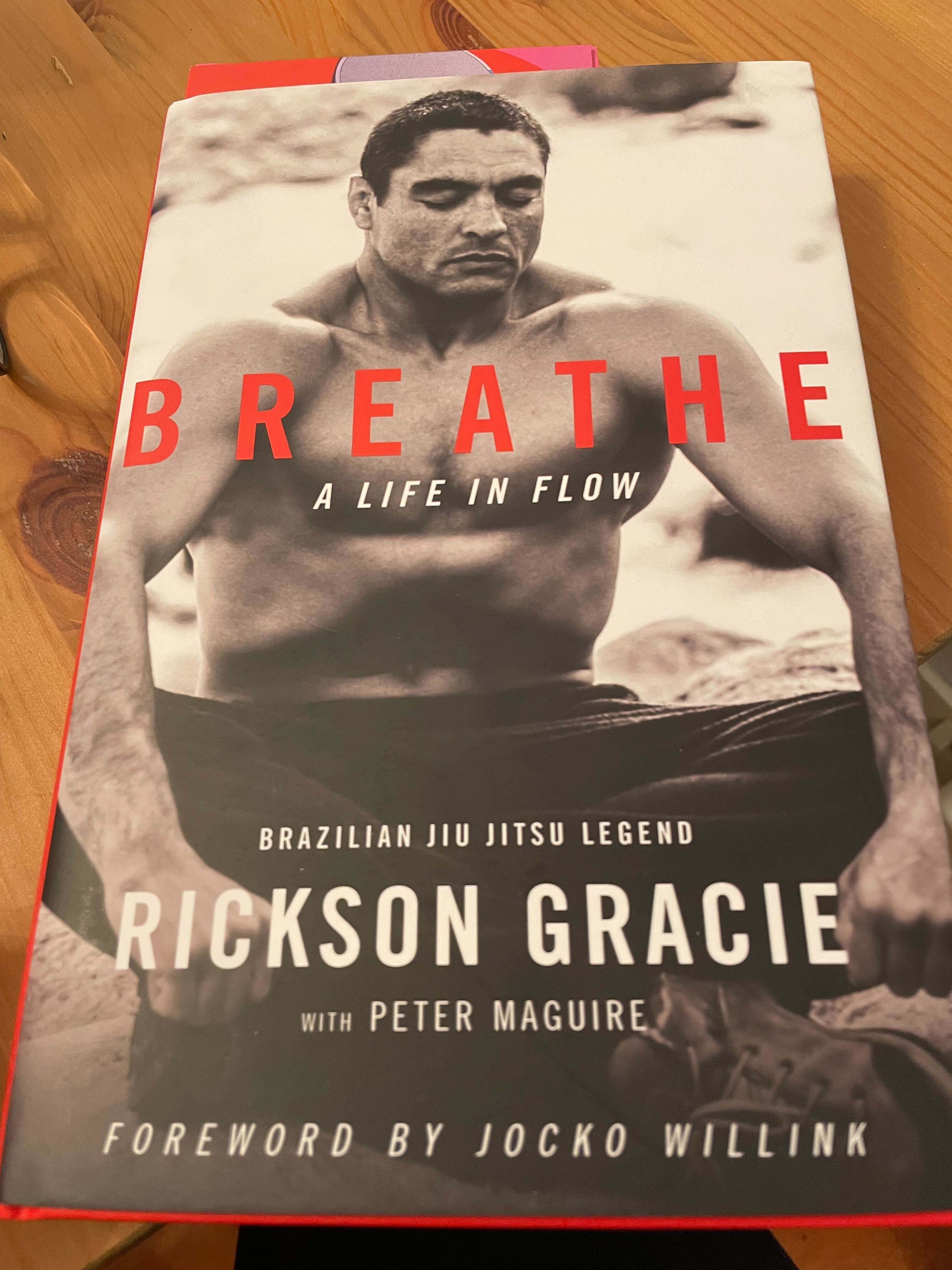
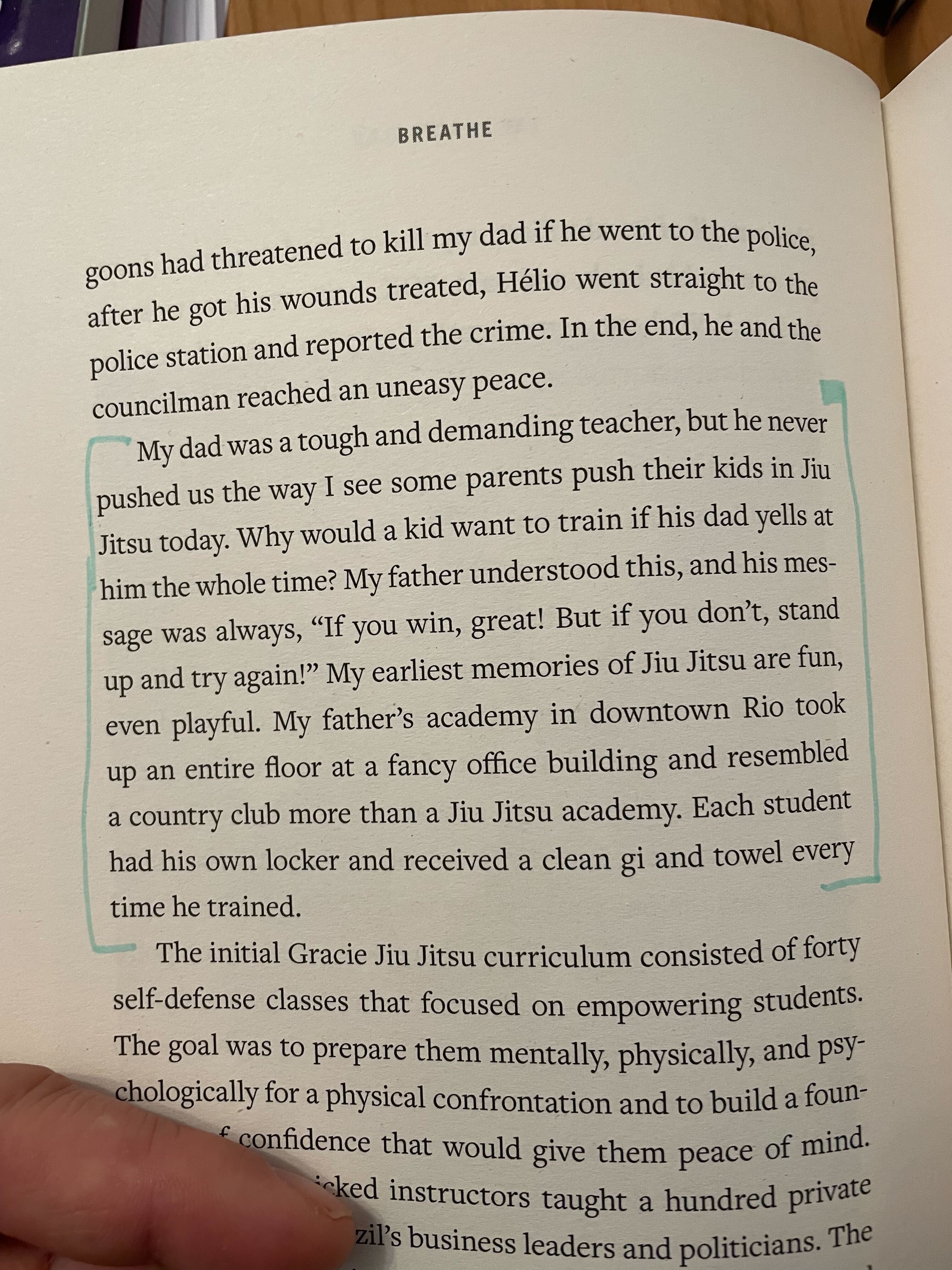
I’ve been finally getting around to reading Breathe by Rickson Gracie, which I got for Christmas last year, just before Christmas, this year 🙂 I found this paragraph near the start that resonated with me.
Over on the Heretics podcast Damon frequently talks about one of his great loves, Mongolian wrestling, and how they create the same relaxed, nurturing training environment, especially for children who start learning through games and just messing around, rather than structured lessons. The child’s natural sense of curiosity and playfulness is encouraged, not shut down, which seems to be the rule in many other ‘martial’ training systems.
The results of this type of training, is that Sumo at the highest levels is dominated by Mongolian-born Sumo wrestlers. The Japanese approach to Sumo training couldn’t be more different to the Mongolian wrestling approach, it is competitive, austere and harsh. The anecdotal evidence is that a more relaxed approach is actually better.
I’m not an expert of Sumo, or even follow it, so I don’t know, but I believe the best Sumo wrestler of all time is generally believed to be Hakuho Sho. Sho was born Mönkhbatyn Davaajargal in Mongolia. If you watch a few of his matches you can see that’s he’s a master of slipping and evading:
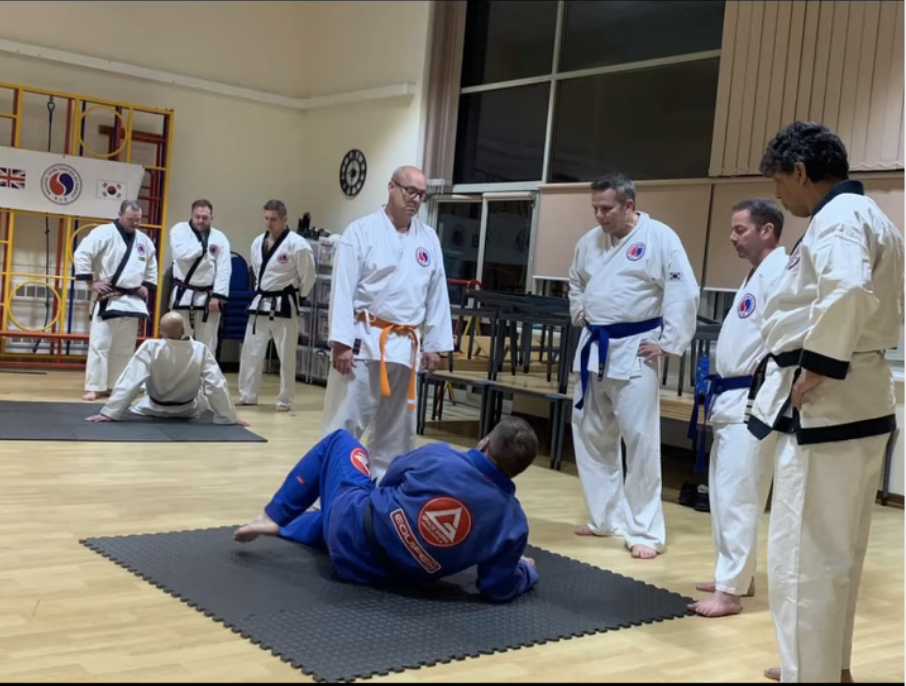
I taught an ‘Intro to BJJ’ seminar for a local Bristol Tang Soo Do group recently – I thought this picture was quite funny. That’s me in blue. They don’t look too happy about joining me down there do they! In the end we had a great time and it was a pleasure to teach with such hard working and dedicated students. We covered all the basics – how to land safely, how to get up safely, how to escape from mount, how to take somebody down to the ground in the easiest way possible, how to control a person and how do a couple of submissions. Osss!
One of the things I like to do when watching UFC fights is to try and analyse what the fighters are doing in terms of Xing Yi’s 12 animals. Now, I’ve got at least one friend who hates when I do this because he believes it makes people think that by practicing a few Xing Yi moves twice a week in your back yard you can somehow be on the level of professional MMA fighters. Yeah, I get that. Comparing martial arts can easily lead to delusion… however, my No. 1 one rule for The Tai Chi Notebook is this: this is my blog and I can write what I want! So, I’m going to do it anyway. But also, I genuinely think that if you’re a Xing Yi practitioner yourself, then trying to analyse MMA fighters in terms of the 12 animals is a really valuable hobby to get into. It will increase your understanding of not only the animals, but also of fighting itself.
Viewed through the modern Xing Yi lens (by modern, I mean, post Boxer Rebellion, from the early 20th century onward) it’s popular to understand the 12 Animals of Xing Yi as merely variations on the 5 Elements. This approach is indicative of the reductive, simplistic, winds of change that blew through Chinese martial arts over that century. It’s not a wrong view technically (the 5 elements are the basics, so of course they are inside the 12 animals), but it’s also a huge misunderstanding. The 12 Animals are more than just variations of the 5 Element fists, they are older and contain the essence of the art. They’re a continuation of a tradition that started back in the Song Dynasty. If you really want to understand that point of view then I’d point you towards the History of Xing Yi series we’ve been doing on the Heretics Podcast for a few years now – and is currently up to part 15, about to start the Ming Dynasty section.
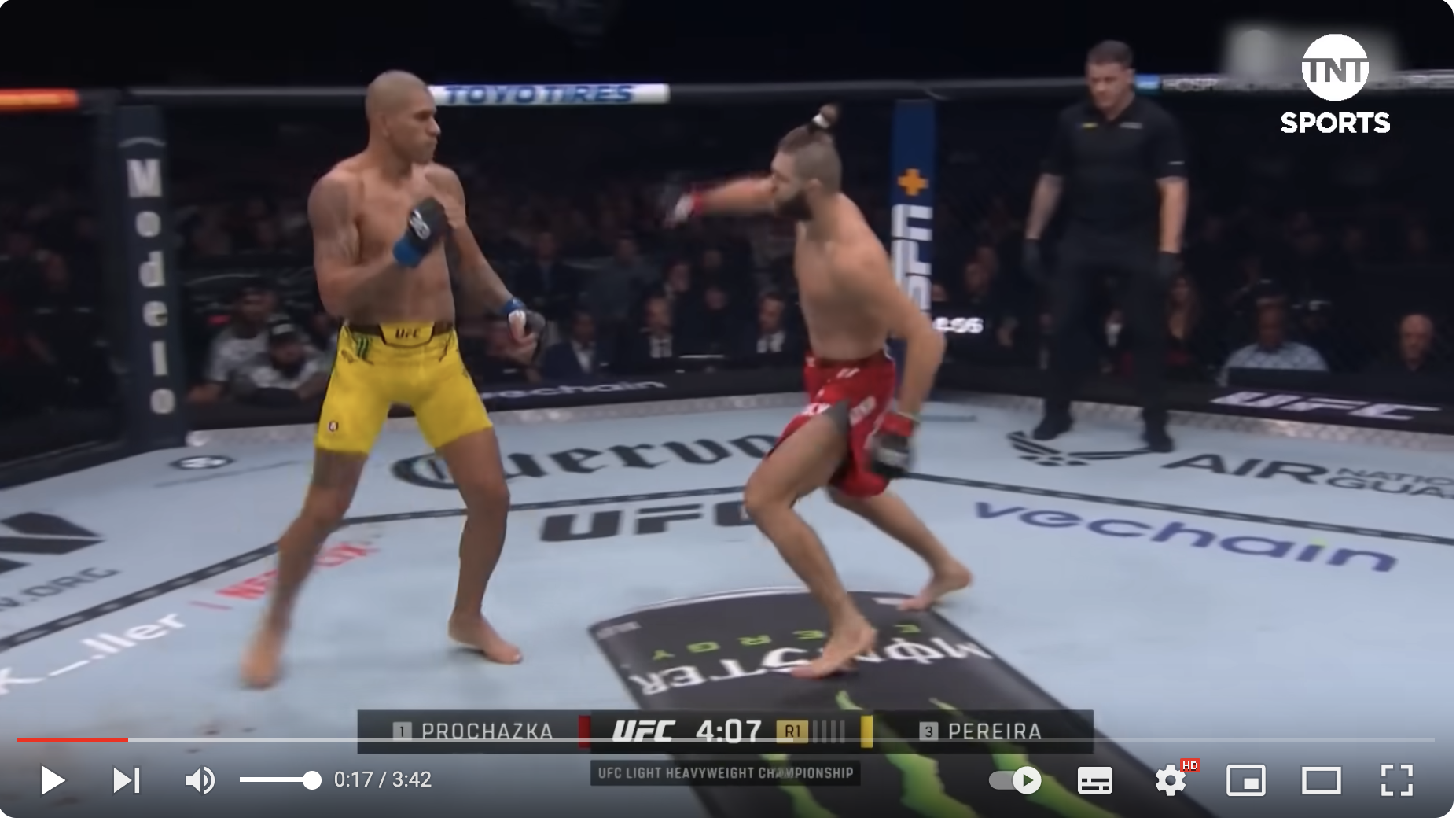
But coming back to the present day, last week saw Alex Pereira vs Jiri Prochazka for the UFC Light Heavyweight belt at UFC 295. It was a great fight resulting in a knockout for Pereira, but honestly it could have gone either way. There was some debate about the finish being an early call from the ref, but Jiri himself said he was out cold, so it was fair. Highlights here:
Looking through my Xing Yi lens at what the fighters were doing, UFC 295 was a good one because it was very clear what animal strategy each of them was using. (Obviously, neither gentleman has probably ever heard of Xing Yi, however, like I said earlier, I’m simply using the 12 animals to analyse fighting styles.)
Swallow (yan xing)
So, on one hand we have Jiri Prochazka (red shorts) whose attacks frequently go from high to low:
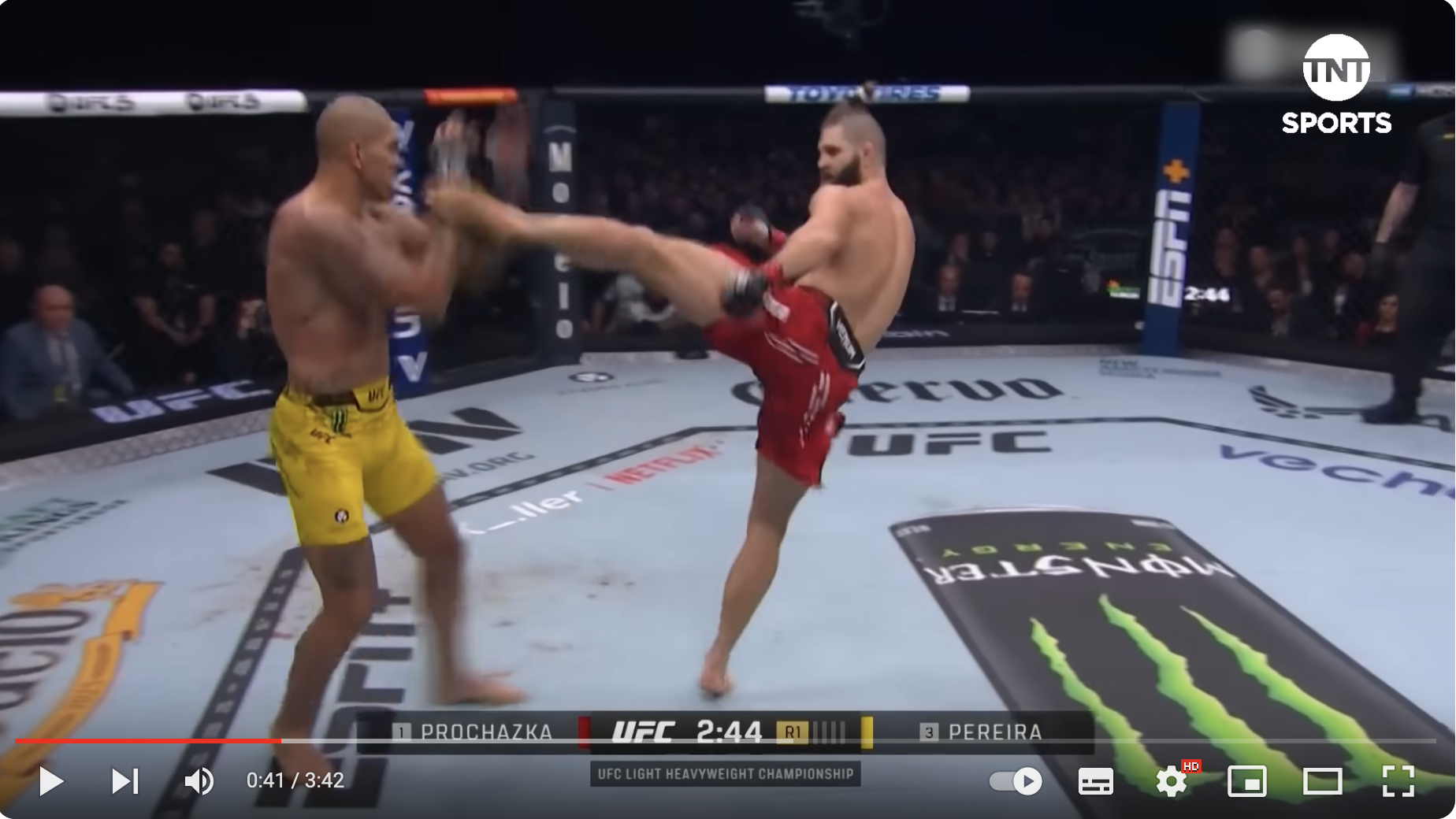
He kicks high to the head, then kicks low to the ankle:
(Obviously a lot, but not all, MMA fighters kick to both heights, but it’s the alternating way he does it, as a strategy, that I’m interested in. It’s not the techniques that make something an animal style, it’s the intent and strategy behind them, but also certain styles lend themselves naturally to certain techniques – which is a subtle point)
He dummys a wrestling shot low but then comes up with an upper cut.
His preferred range is long, and when he punches he throws arcing punches that start low, go high and finish low:
To me this is clearly a Swallow strategy. Swallow is a bird you wouldn’t normally associate with fighting, but it aggressively hunts insects on the wing, and defends its nesting location by dive bombing potential intruders, including humans! Its characteristics are swooping low then going high, particularly over water and “swallow skims the water” is a name often given to a popular swallow movement in forms in Xing Yi, Bagua and Qigong. But the swallow is also famous for its absolutely beautiful aerialacrobatics that are always elegant and graceful.
A swallow defending its nest – I like this clip because you can see the speed that the swallow attacks with, and how unafraid it is of something as big as a human.
The classic “swallow skims water” in action, by the true masters of the art – the swallows themselves.
A typical “swallow skims water” movement found in Chinese martial arts. This one from Cheng style Bagua.
Chicken (ji xing)
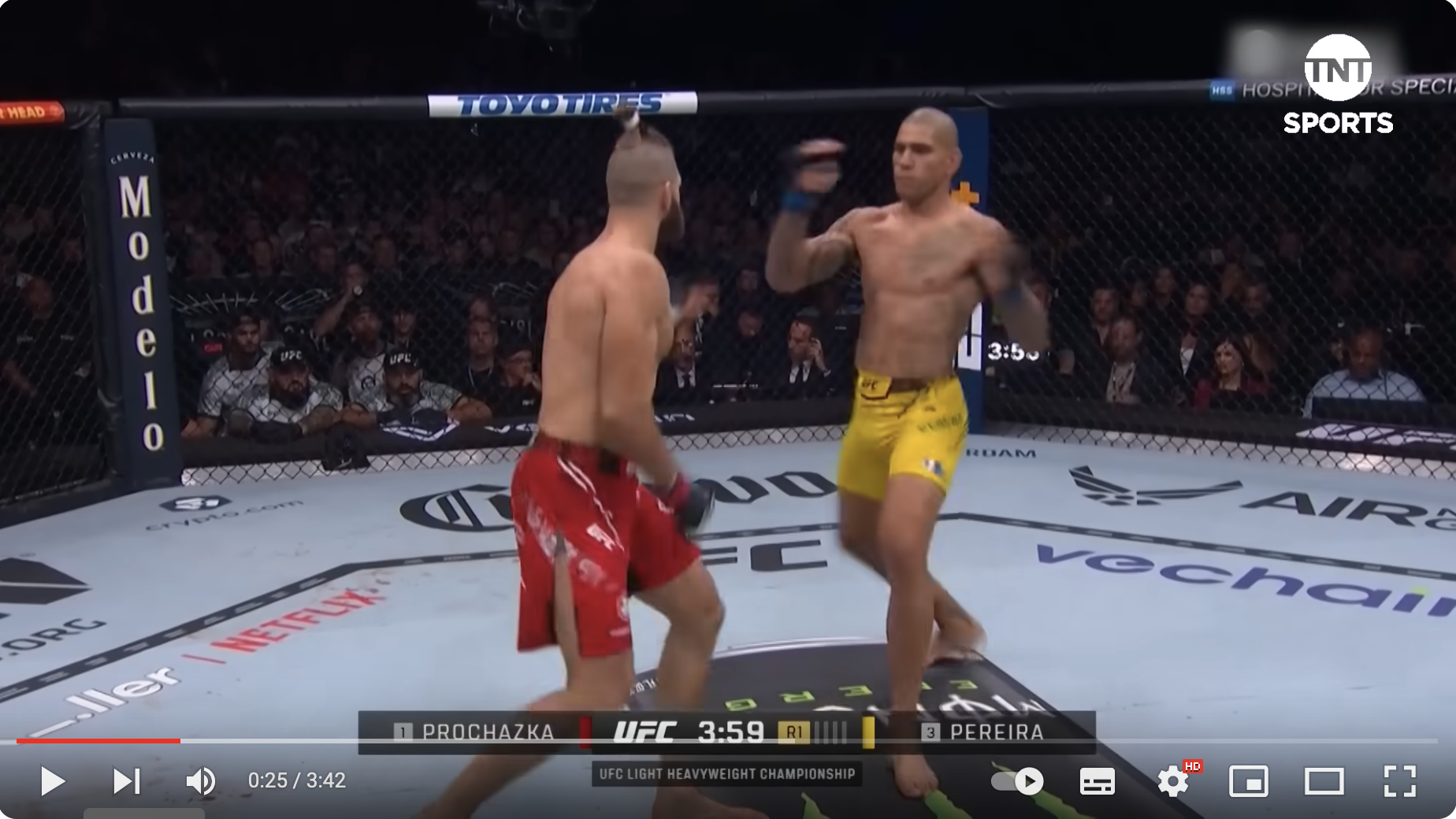
But let’s get back to UFC 295. In contrast his opponent, Alex Pereira is famous for his minimal movement and crushing low calf kicks. There’s a great clip of him playing about with UFC commentator Daniel Cormier taking his low kick:
A native of Brazil, Pereira is also famous for his indigenous face paint he wears to the weigh in events:
(For people that like to argue that Shamanistic things have no part in MMA, I always like to point them to double UFC champion, Alex Pereira!)
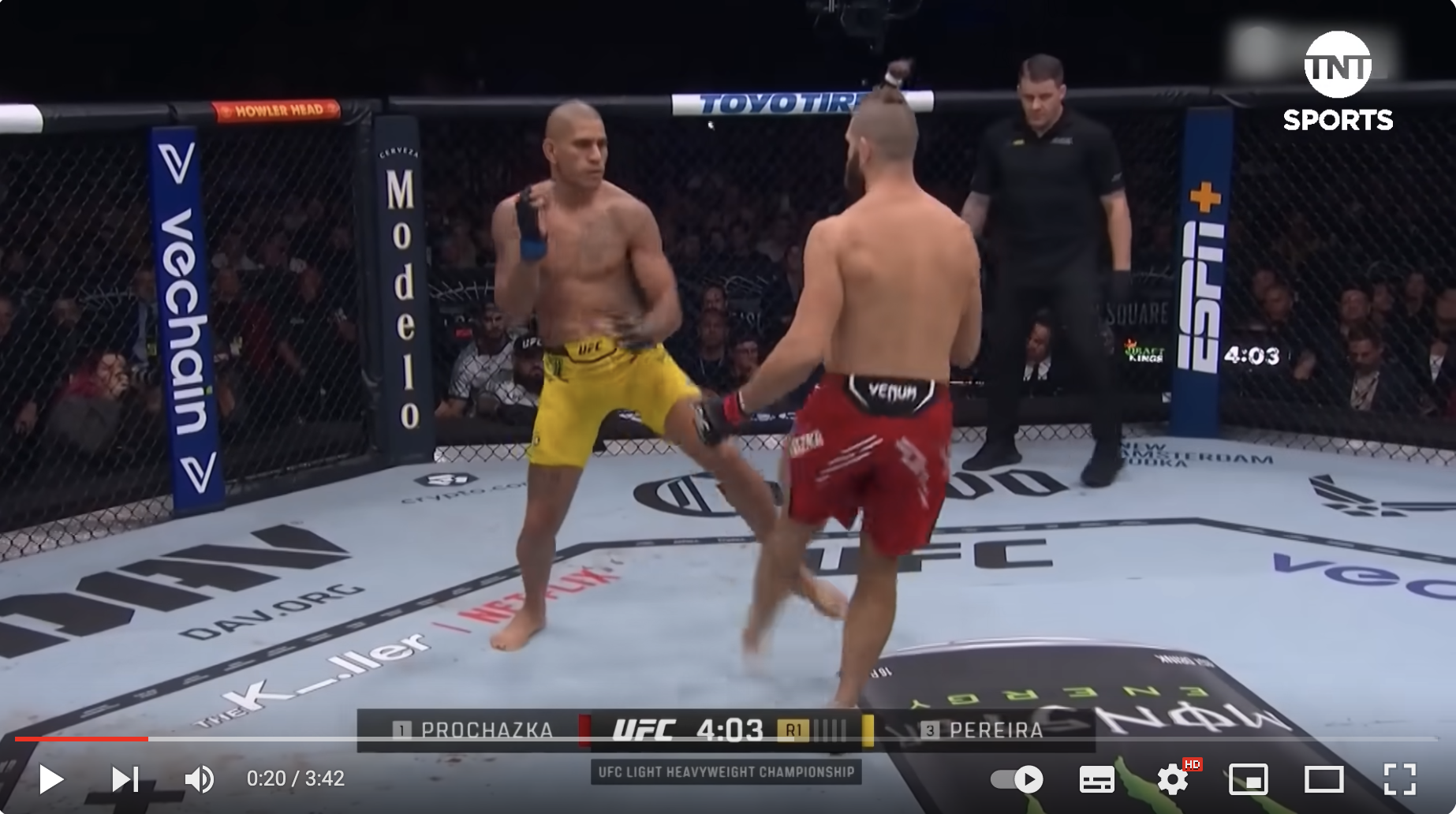
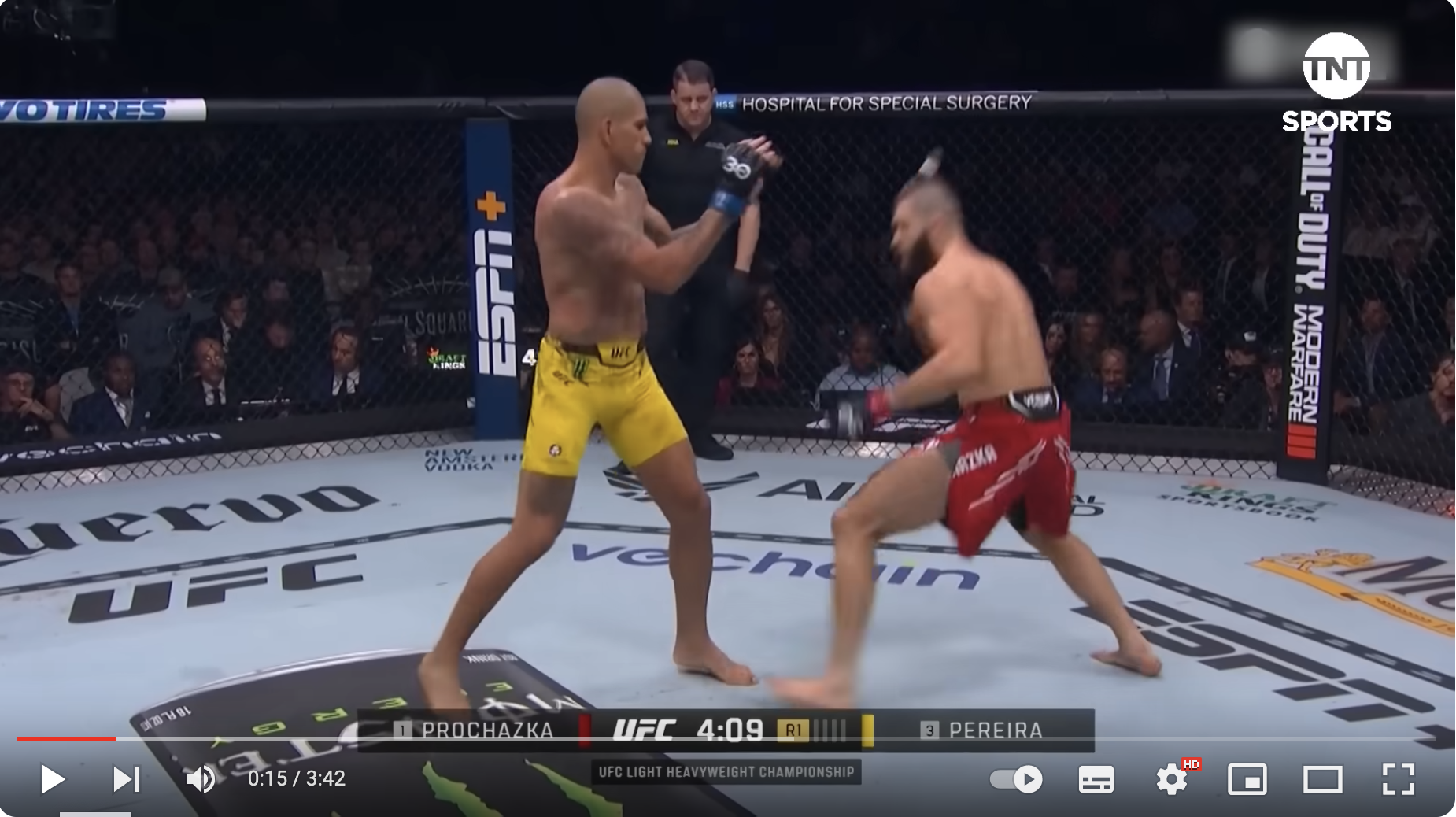
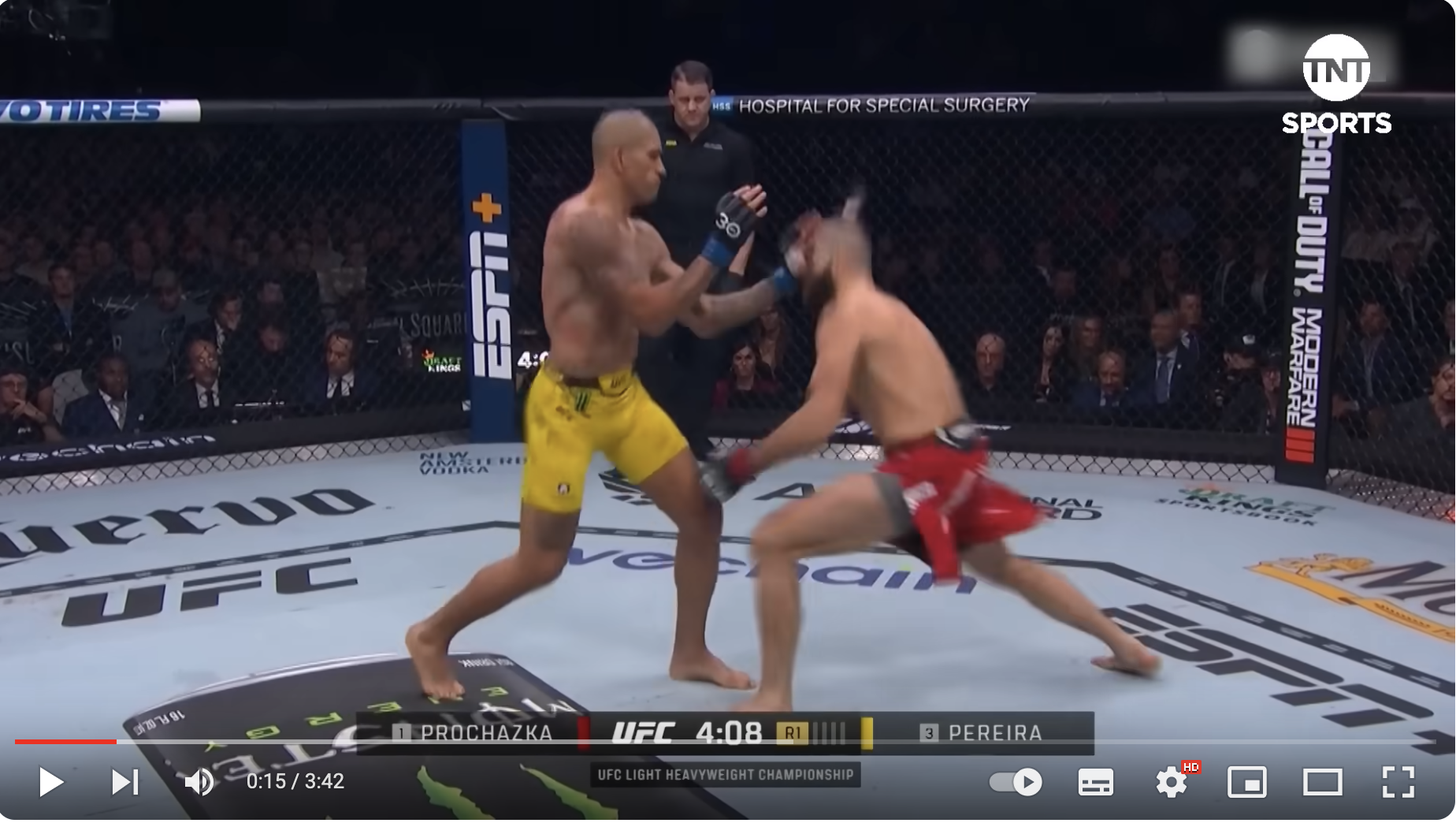
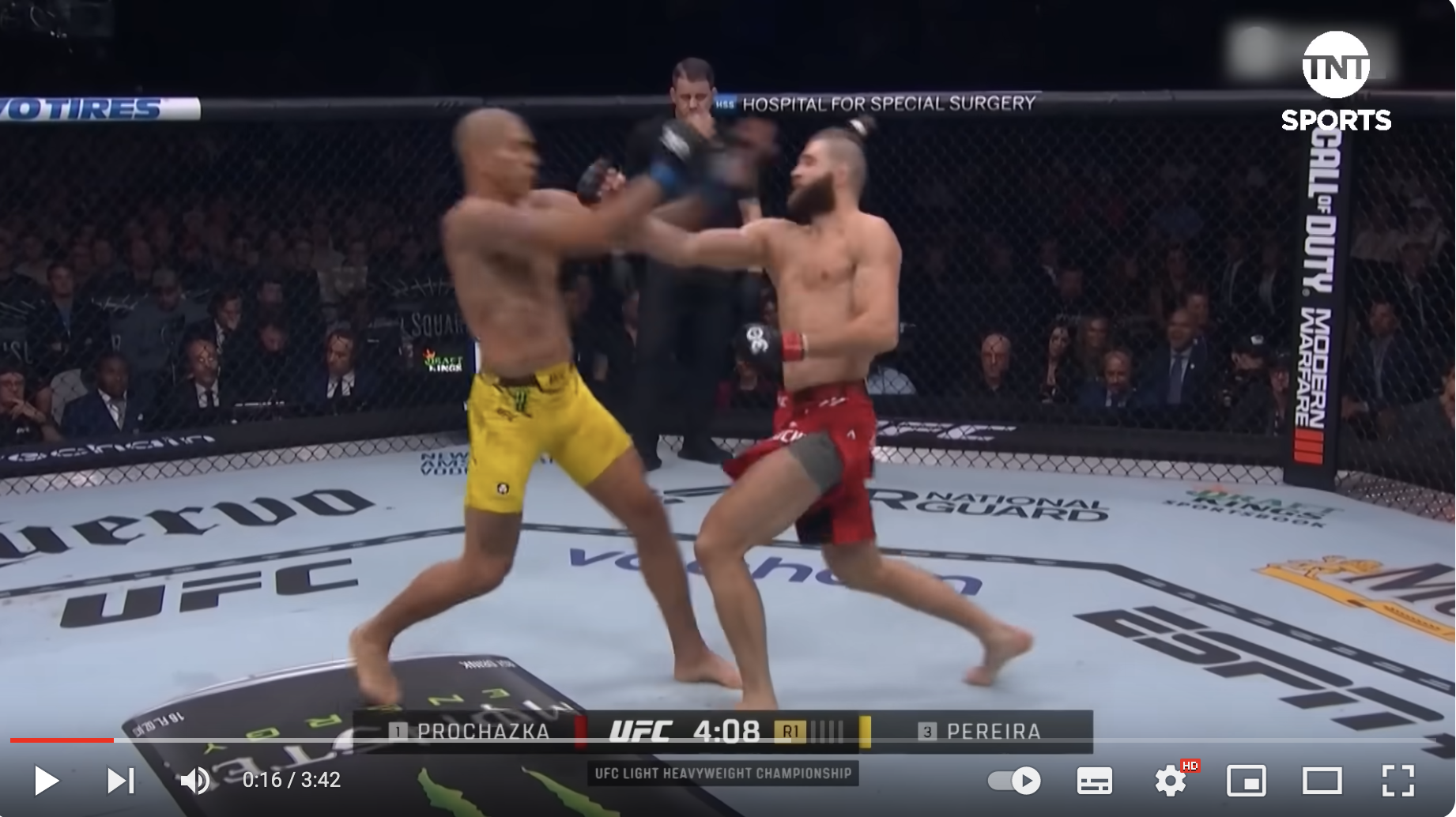
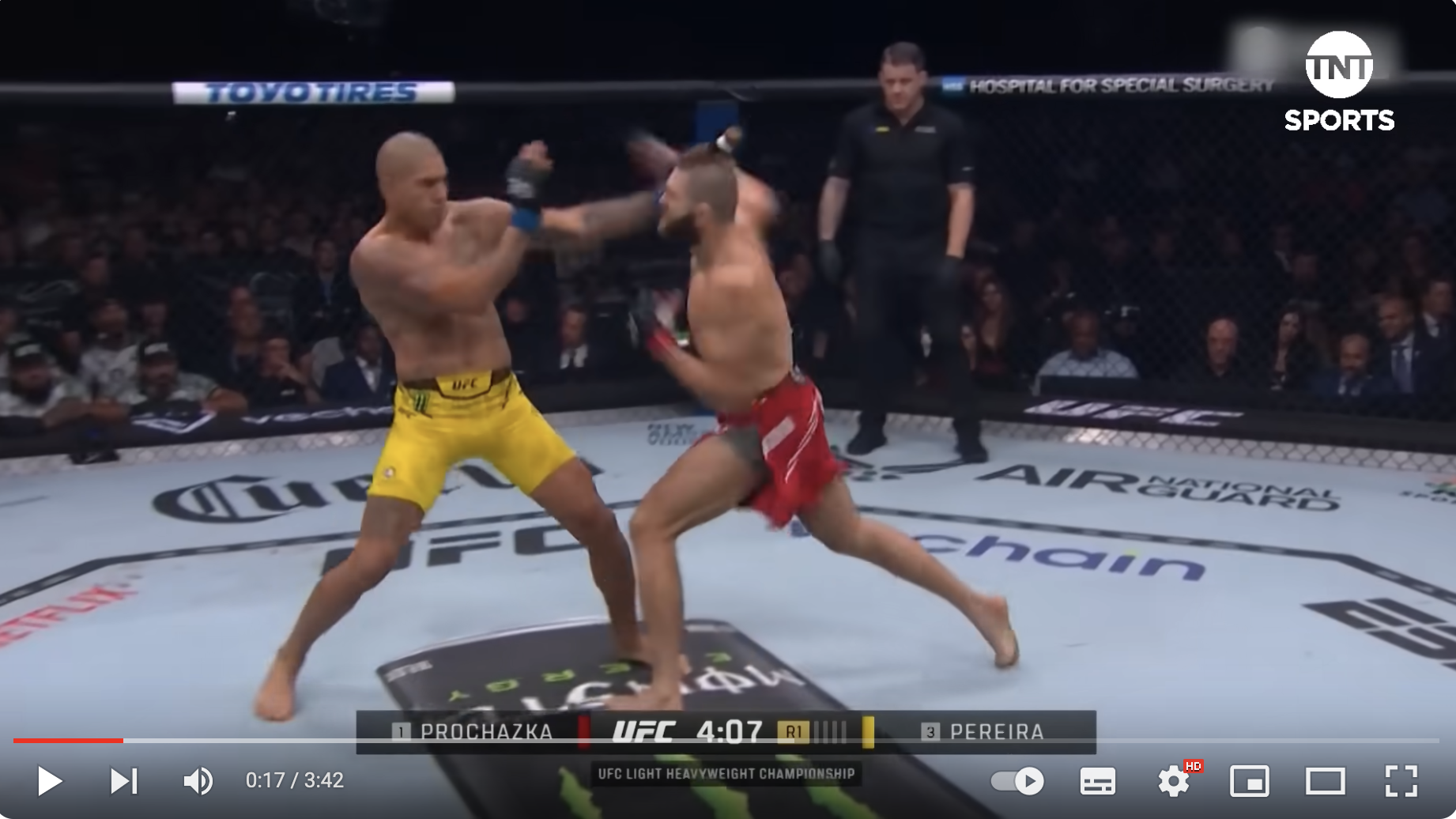
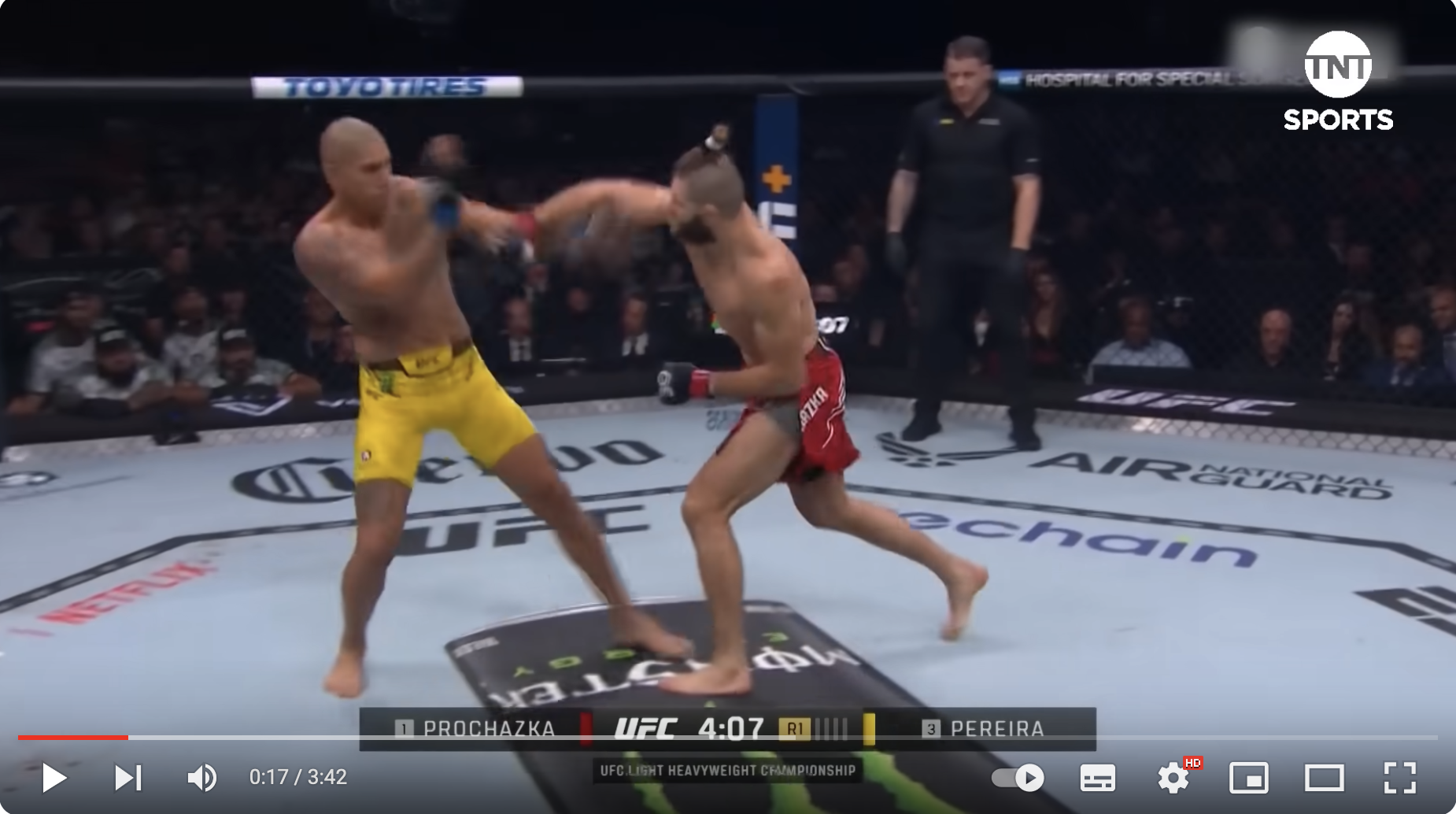
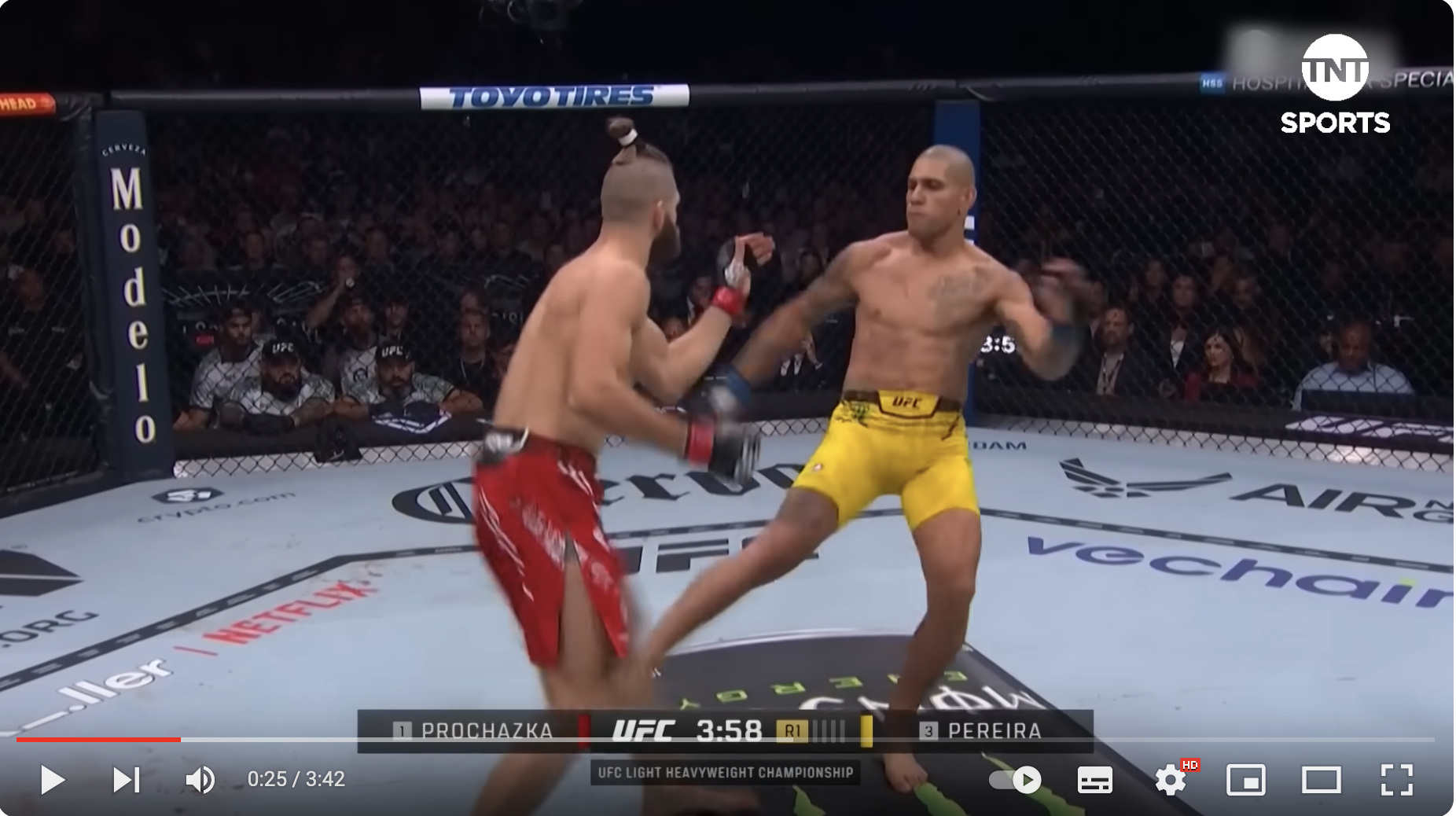
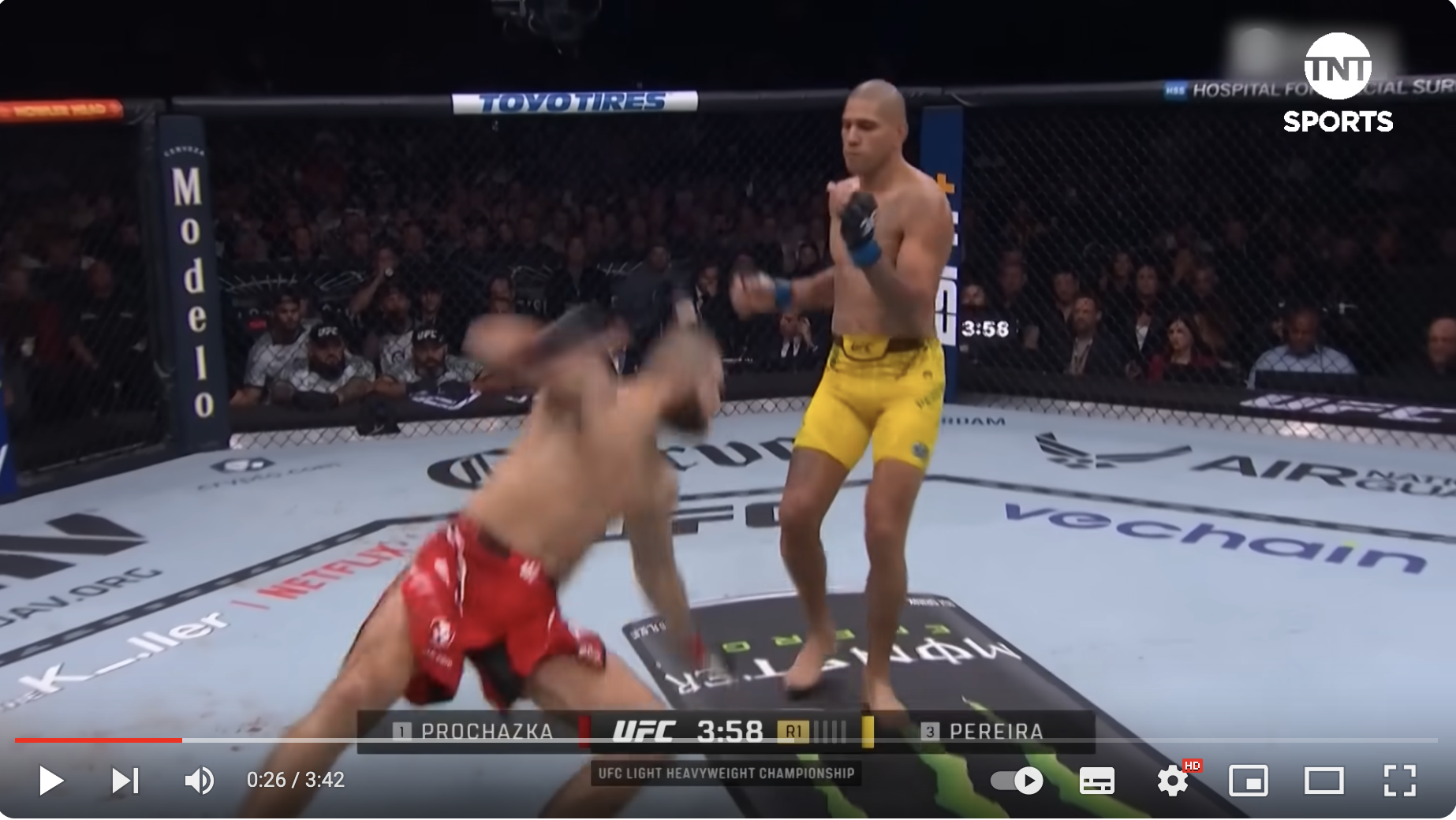
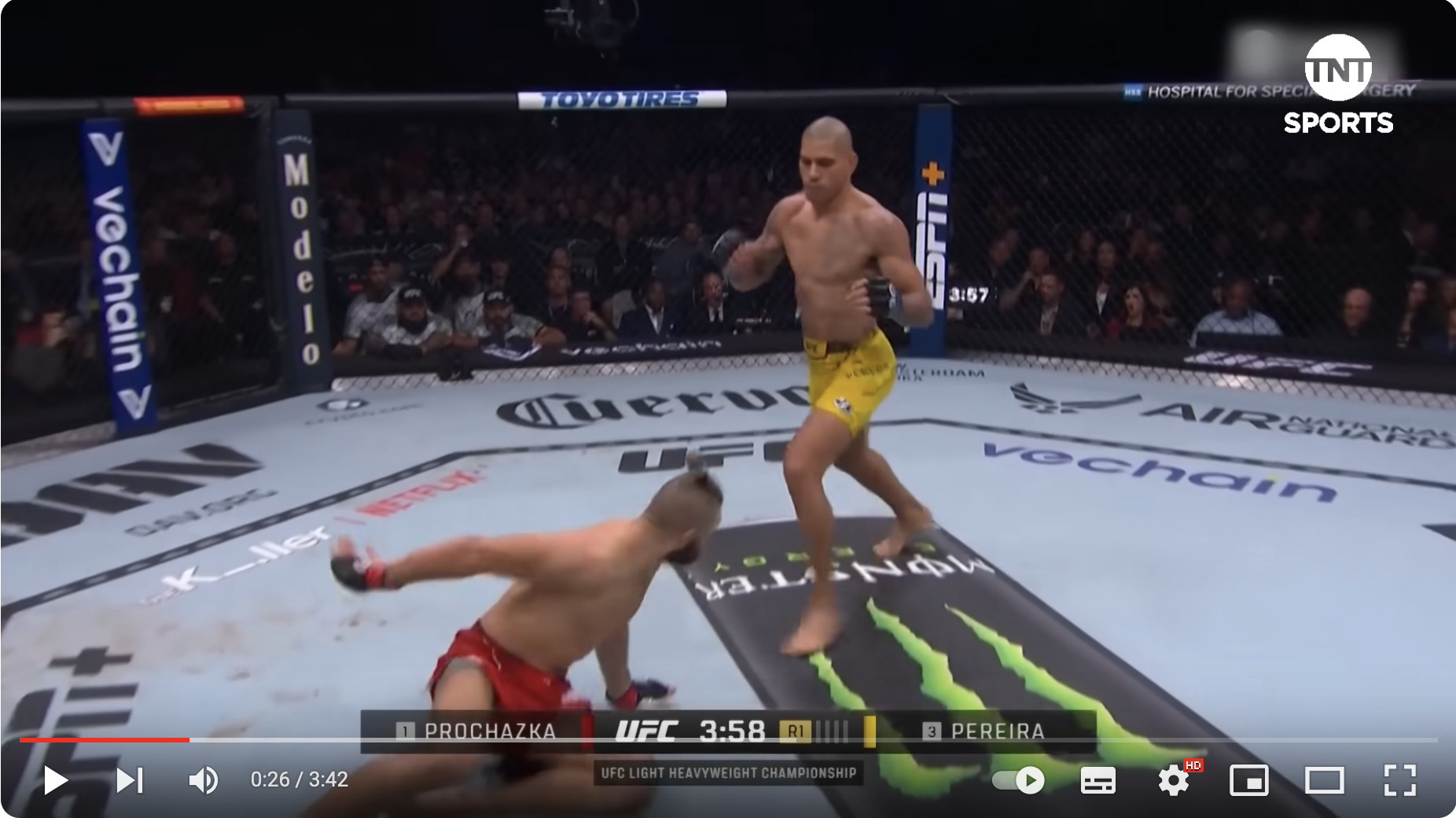
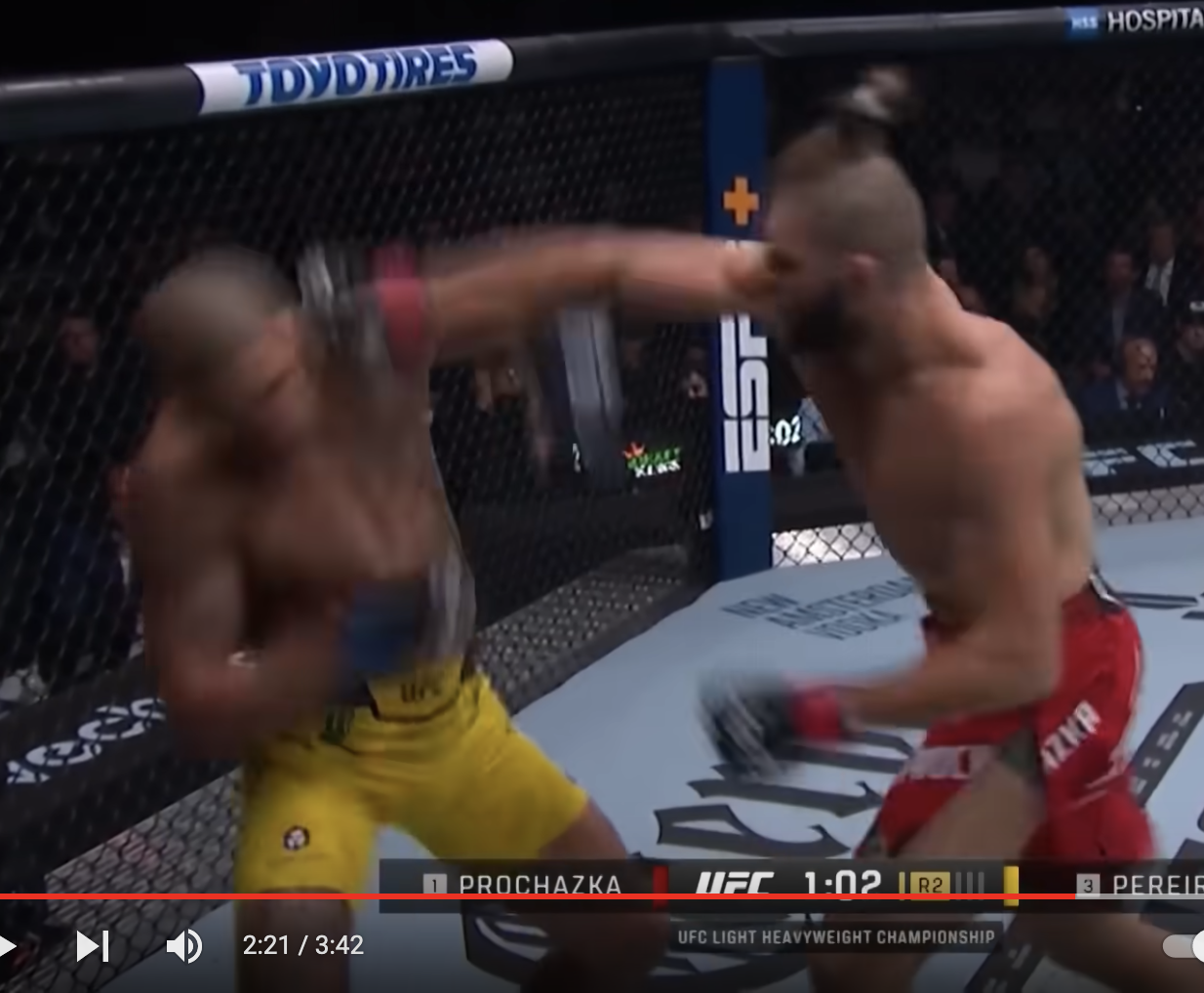
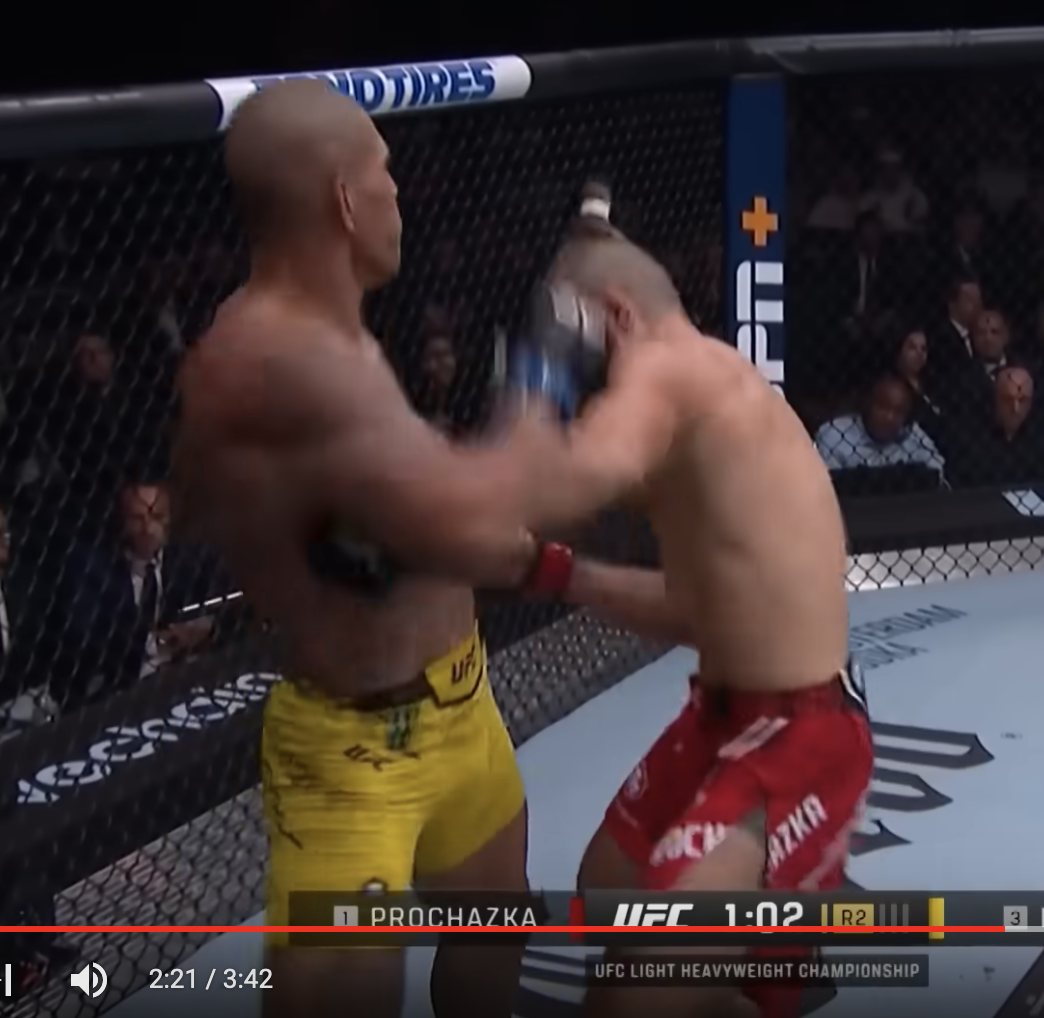
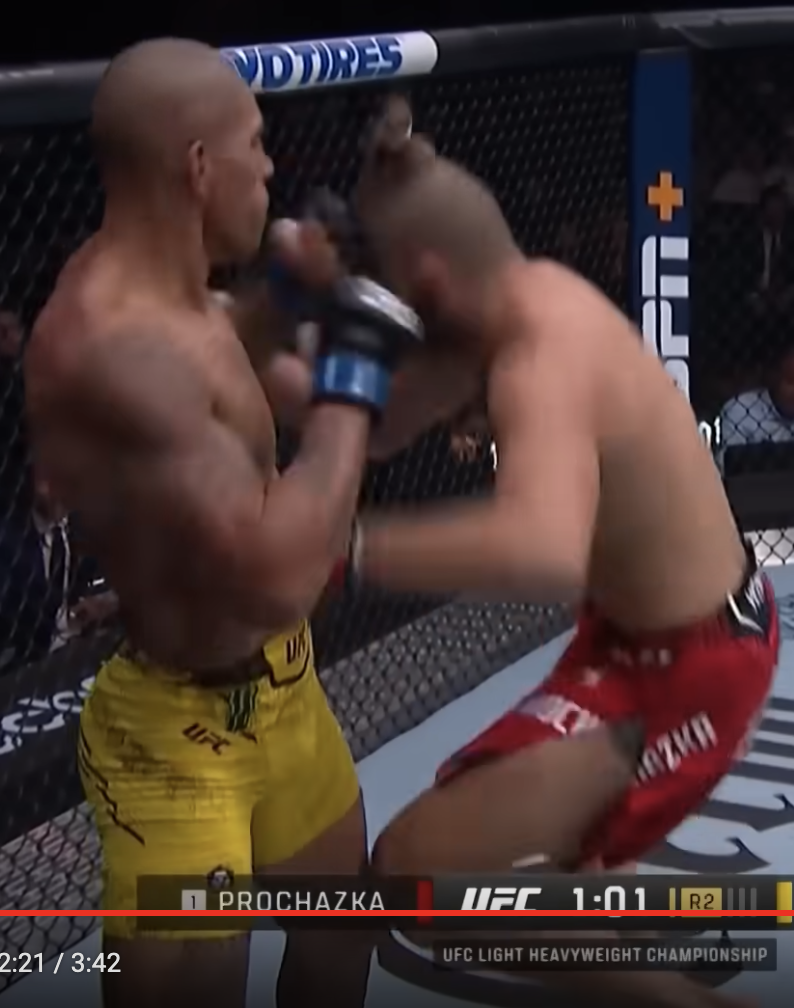
You can see his famous calf kick in action in UFC 295, completely taking Jiri off his feet:
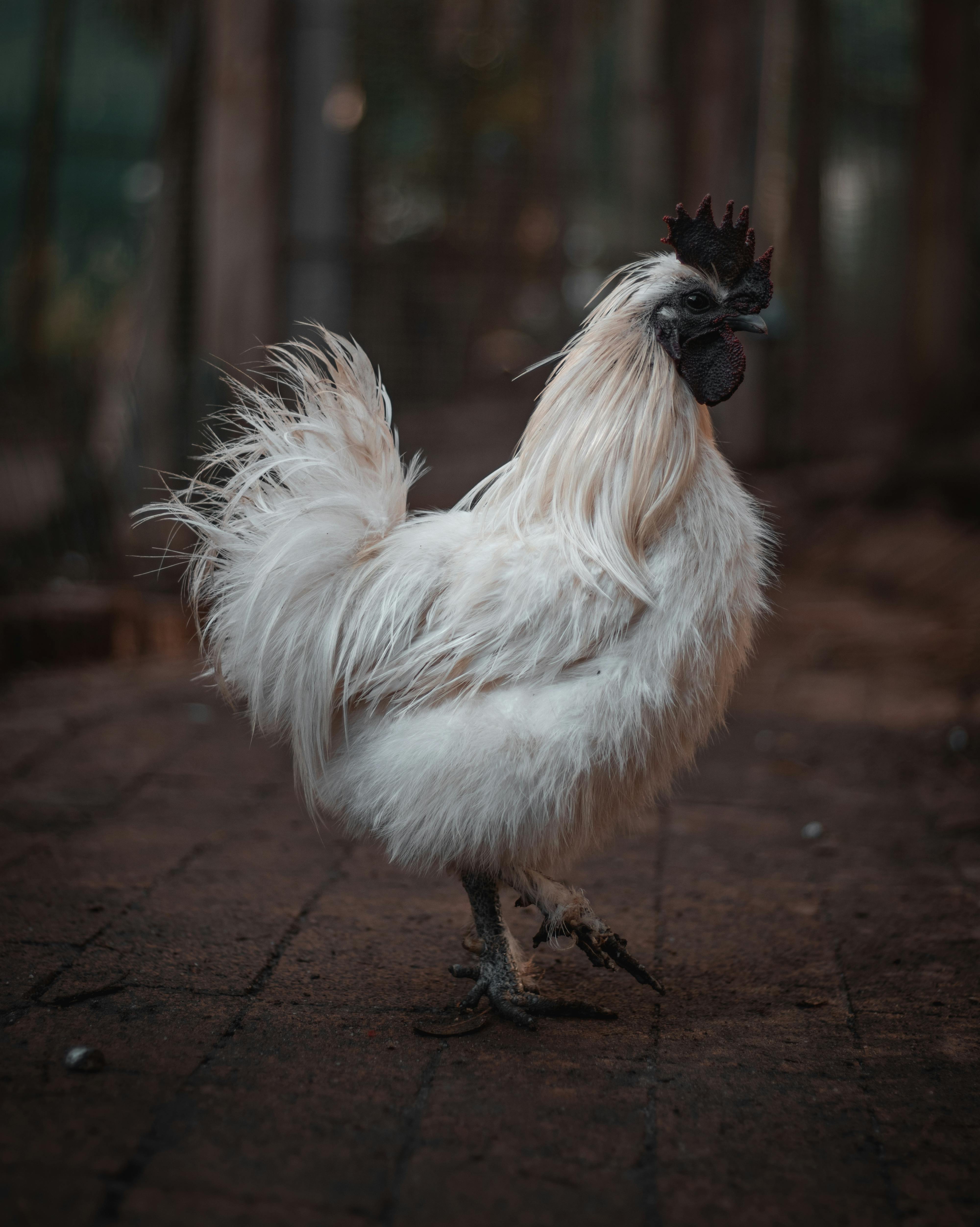
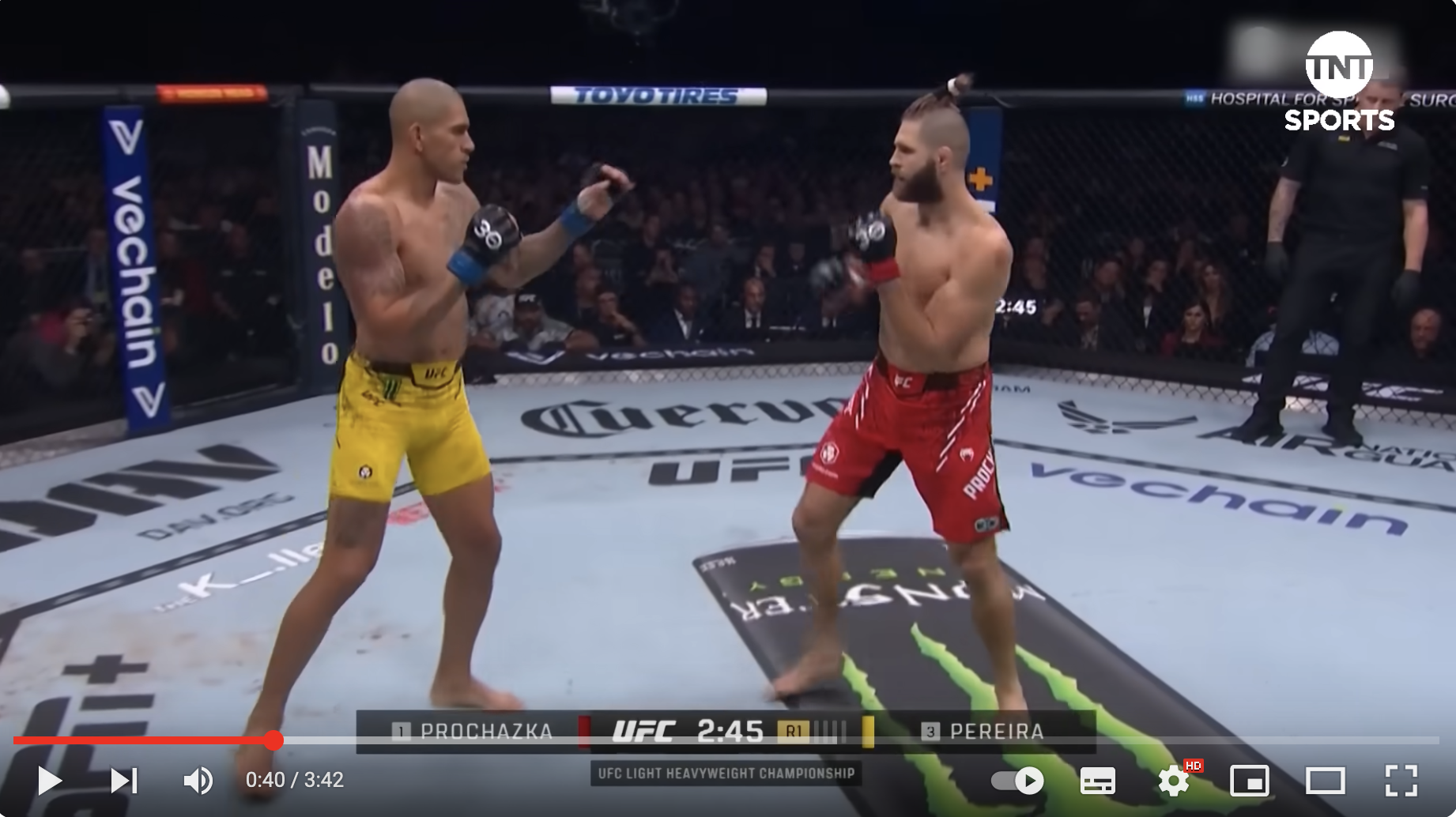
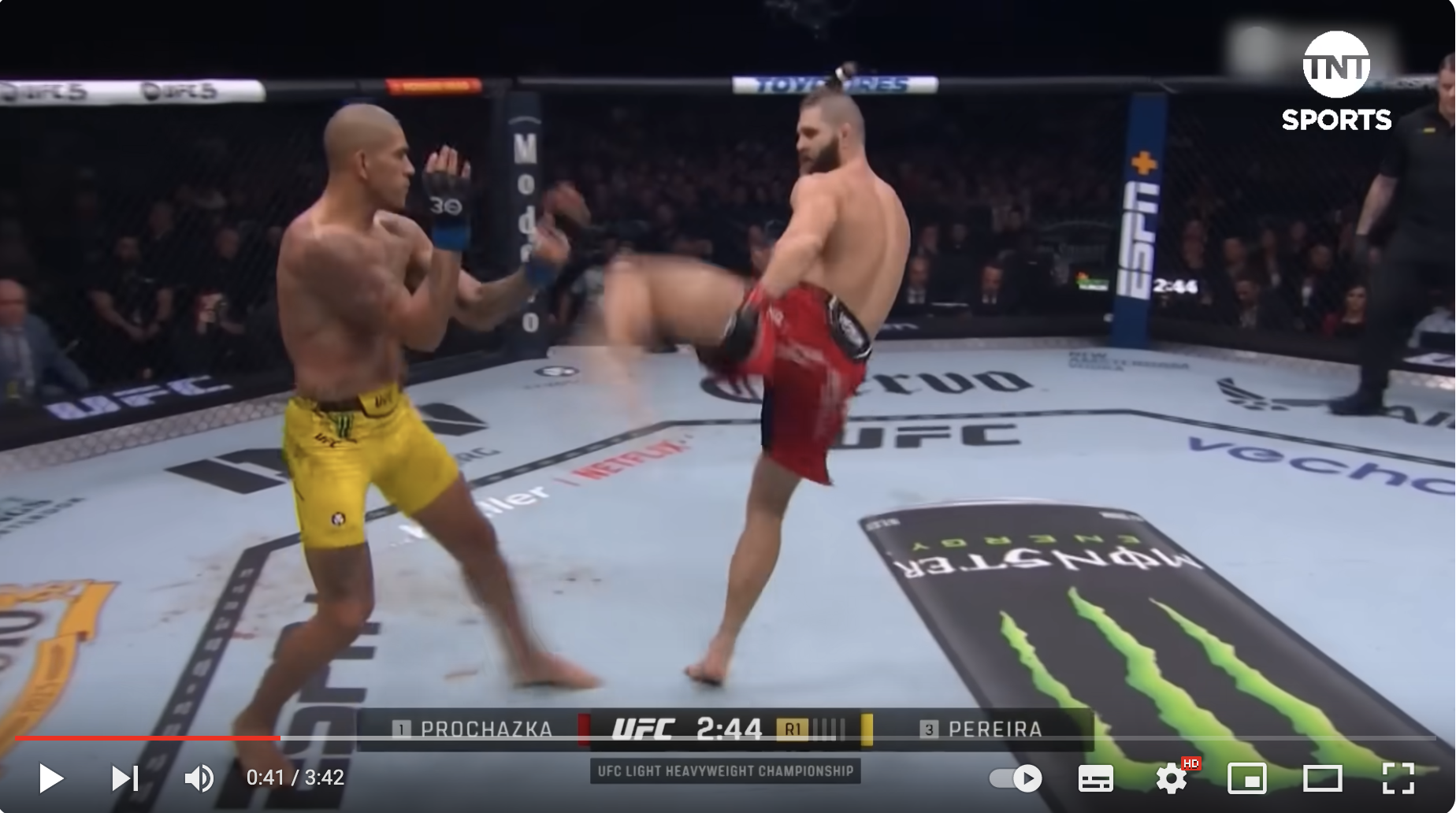
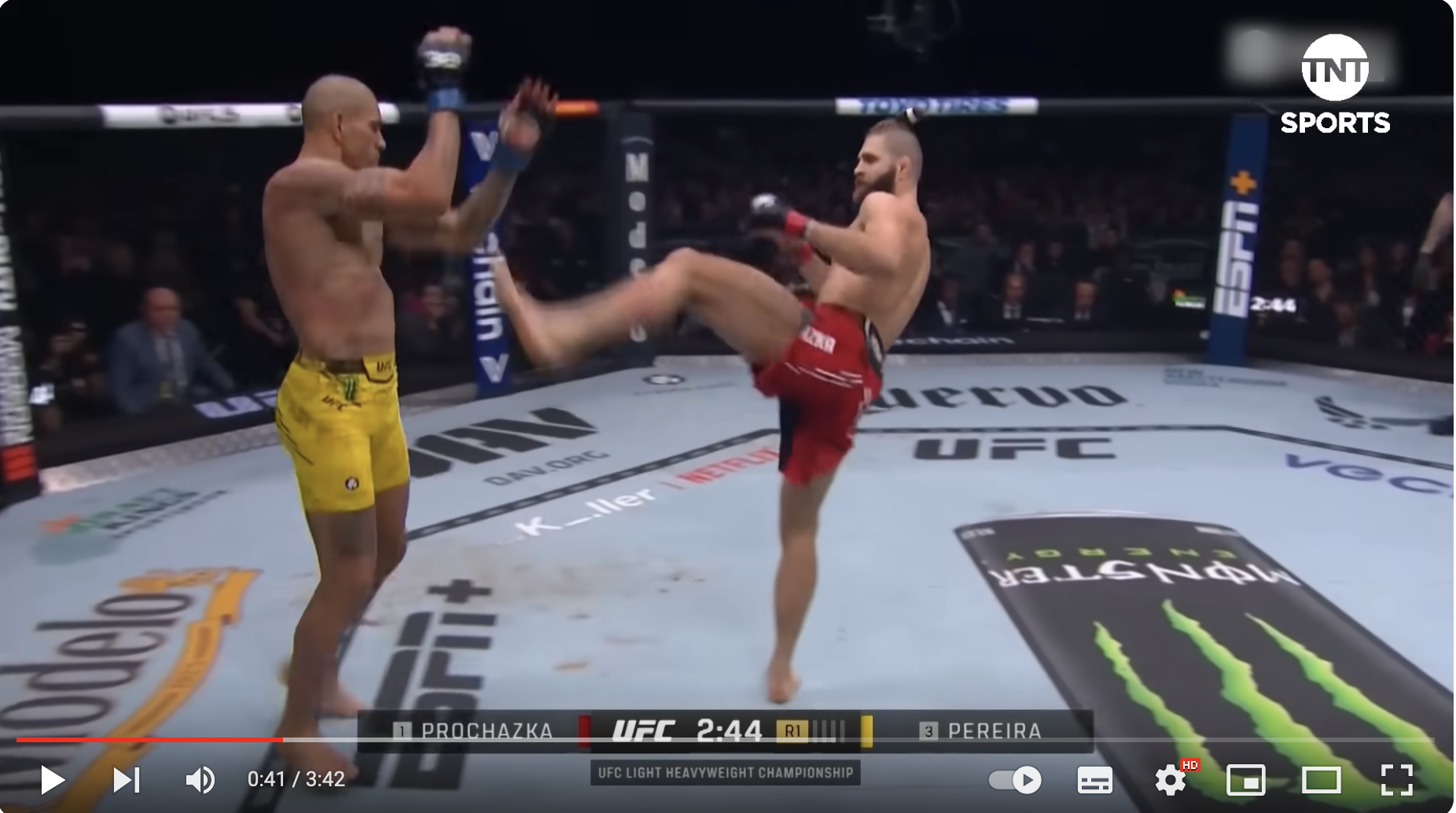
What’s remarkable about the Pereira calf kick is how little wind-up there is, which makes it hard to see coming – he just snaps it out. He does three identical kicks in a row in that part of the fight – the pictures above show the first – but all three hit home. His punches are delivered in the same way – the hand just snaps out with almost no telegraphing movement at all. You can see in the screen captures above of the kick that his body stays facing the opponent at all times. They don’t look like powerful shots, but you can see the deadly effect they have on his opponents. That very tight coil in his body around the spine that he’s using to pop his kicks and punches out is absolutely indicative of Chicken xing. “Chicken shakes its feathers” is a characteristic move of the animal found in Xing Yi links (forms) and somewhat resembles the Fa Jing expression that you see demonstrated in Tai Chi styles:
A chicken shaking its feathers.
Chicken step
When Pereira defends he is using footwork to evade rather than ducking his body – in fact, he stays very upright and his hands are kept high and defensive, just like they are in Xing Yi Chicken, which relies on footwork for evasion.
The blows which set up the finish from Pereira were so fast and minimal they were hard to see in real time, but it was a counter 1-2, again delivered with that very upright body with the hips underneath the shoulders that is so characteristic of Chicken:
The very tight techniques of Chicken in Xing Yi are very metal in nature – sharp and cutting.
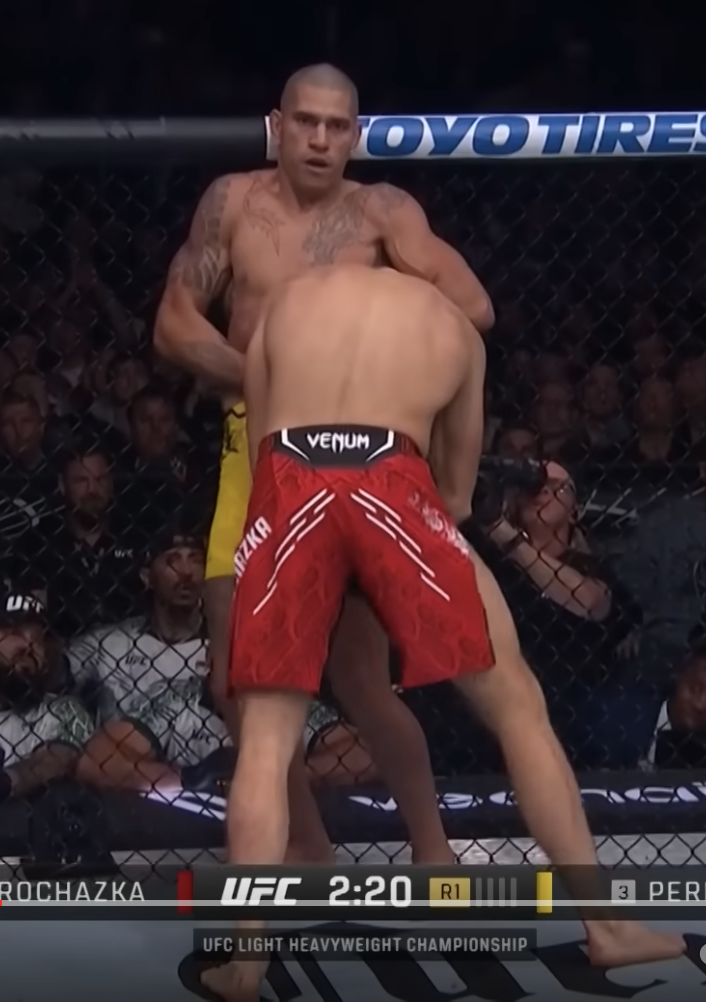
A perfect example of this Chicken style applied to MMA is the standing guillotine. When somebody shoots in for a takedown, wrapping the neck and using your hips to stand tall, with a narrow base is a very chicken-like technique. In fact, Pereira almost finishes the match with Jiri earlier with one:
Standing guillotine attempt from Pereira.
Here’s a video of me doing some Xing Yi Chicken:
As I mention in the video, Chicken is an important animal in Xing Yi because it provides one of the requirements of the San Ti Shi structure – chicken leg.
Another thing Chicken (done by humans) is famous for are the knee strikes, which in real chickens are enhanced by the spurs it has on the back of its legs, and elbow strikes. You see this with fighting chickens especially. My teacher always said that the martial art that most resembles Xing Yi Chicken is Muay Thai, which is famous for knees and elbows.
The finish in UFC 295 was delivered by downward elbows from Alex Pereira and he has finished UFC fights with his famous flying knee before, delivered here in a way that looks very similar to the knee strikes in the Xing Yi link I do above:
Hopefully I’ve made my case.
To repeat: I’m not saying something simplistic like, “UFC fighters are doing Xing Yi”, but that as a tool for analysing fighting styles, I find Xing Yi really useful and the 12 Animals remain really fascinating.
A bit of homework for you…
Finally, I want to leave you with a bit of homework – also on that card that night at UFC 295 was British heavyweight Tom Aspinall. He managed to secure the interim heavy weight championship belt that evening. To me he’s a clear example of another one of Xing Yi’s 12 animals. The question is which one? You have 10 to choose from! Post your answers, compete with your reasoning, in the comments section below and I’ll give a prize for the correct answer (correct according to me, anyway, and I am the final word in this 😉 ).





 The Tai Chi Notebook